The House in the Cerulean Sea by T.J. Klune

An illustration shows a raggedy spit of land above a blue sea, with a red house with lots of windows at its very edge. Windswept trees and a blue and pink sunset sky frame the house.

by Sarah C.

Have you ever read a book that feels like a warm hug? Not just certain scenes either, like the entire story overall, start to finish, feels…happy. Comforting. Wholesome. And despite containing a large variety of themes, concepts and emotions, highs and lows, and a bit of magic, the book still manages to wrap itself around you like a soft, well-loved quilt?

Me neither…until now! To be fair, my preferences are usually hard-hitting realistic teen fiction with some fantasy and sci-fi thrown into the mix, and I tend to avoid gentler, softer stories. Maybe that is why this particular book was so surprisingly engaging for me. Regardless, let me tell you about this charming modern fairy tale of a novel that I had the absolute pleasure of reading.

The House in the Cerulean Sea by T.J. Klune (also available in eBook and eAudiobook format from Libby/OverDrive) was recommended by a colleague who is always on point with their choices, so I assumed I’d enjoy it, but was not prepared to fall in love like I did. Utterly and completely head over heels in love. After staying up late on a weeknight to finish this page turner, I then re-read it slowly over the weekend to savor it…then demanded my friends, my book club, my social media groups, my co-workers, and my family read it. Then I bought it, AND I requested it again from the library because at this point there was a decent waiting list but my copy was almost overdue. I proceeded to suffer greatly waiting for the copy I bought to arrive, so I began reading it yet again, together with my 11-year-old in the evening..and so on and so forth.

Perhaps you might like to hear about the actual book at some point, as opposed to my swooning?

Right, well this is the story of a group of misfit children with different special abilities and backgrounds, and the “normal” adults who play certain roles in their lives. Some try to raise and protect them, some try to control and contain them, while others fear and scorn them. Our main character, Linus Baker, is confused by them but curious and good-hearted, and throughout the book learns to see them for who they truly are and love them more for it. A lonely, rule following caseworker for the Department In Charge Of Magical Youth, Linus lives a dull and dreary life, until he is given a mysterious assignment to investigate the “dangerous” children being cared for at the Marsyas Island Orphanage and identify their threat levels. Without much information to go on, Linus embarks upon what becomes a life-changing adventure, filled with unexpected beauty and memorable characters. There might also be a sassy and insufferable pet cat, which is an added bonus.

Themes include found family, celebrating differences, facing bias and prejudice in ourselves and others, accepting help and love, and recognizing true bravery and learning that it’s never too late to start over or discover something new, with many parallels to today’s world. Darkness lurks around corners in Cerulean Sea as well as our own lives, and the author skillfully acknowledges this, lest the story become too unrealistic.  

As I finish this book for the third time, I am left with a renewed sense of hope for the future. I invite you to fall in love as I did with this intergenerational “must read” for 2021.

While you will have to request the title because it’s so popular right now, the wait will be worth the while!

Sarah is the Teens’ Instructor and Research Specialist at the Savage Branch, where she can be found geeking out over new graphic novels, spotting rainbows and drinking day-old coffee.

Two Big Books

A line drawing in yellow depicts an old-fashioned square microphone and a bed. Black lettering says, "Gmorning, Gnight! Little pepe talks for me & you"

By Cherise T.

What fits in your pocket, can be read in short bursts, and explodes with wisdom and inspiration? Gmorning, Gnight!: little pep talks for me & you and Keep Moving: Notes on Loss, Creativity, and Change. These can be challenging times for mustering emotional strength and sustaining a prolonged attention span. In terms of meeting these challenges, both are big books. 

Fans of Hamilton may recognize the author of Gmorning, Gnight, Lin-Manuel Miranda. With more than three million followers on Twitter, Miranda inspired many fans with his brief awakening and bedtime messages. He joined forces with illustrator Johnny Sun to publish this volume of spirit-raising tweets. Miranda wisdom includes, “Gmorning! No exact recipe for today. Gather all available ingredients and whip yourself up something delicious,” and “Gnight. Don’t wait until low power mode. Close your eyes. Close all unnecessary apps. Recharge.” A theater person with universal appeal, Miranda and his notes are irresistible. “Good night. You are perfectly cast in your life. And with so little rehearsal too! It’s a joy to watch. Thank you.” This title is available at HCLS also as a print book in Spanish, as an eBook in Libby/Overdrive and as an eAudiobook narrated by Lin-Manuel Miranda himself. 

A salmony-pink cover has simple black types and grey lines

Keep Moving grew out of a series of social media posts by the poet Maggie Smith. Smith was struggling with personal and professional self-doubt during the collapse of her marriage and subsequent divorce. She thought readers might find her journey significant to their own lives. “Keep moving” was her daily admonition and cheer to herself, and because her messages resonated, the number of her Instagram and Twitter followers grew exponentially, hence the idea to create a book.  It is available through HCLS in hardcover and in Overdrive as both an eBook and an eAudiobook read by the author.  

Smith gained international attention with her poem, “Good Bones.” Written in 2015, the poem was not published until the week of the shooting at Orlando’s Pulse nightclub in 2016. Readers connected deeply with the poem in the aftermath of that tragic event. Because of how widely it was shared, “Good Bones” was often referred to as the poem of 2016, and it was later published in a book of the same name. The poem’s popularity surges again during times of crisis, such as the current pandemic. It begins: 

Life is short, though I keep this from my children. 
Life is short, and I’ve shortened mine 
in a thousand delicious, ill-advised ways, 
a thousand deliciously ill-advised ways 
I’ll keep from my children. 

The short notes and essays in Keep Moving reverberate with sorrow, joy, empathy, and fortitude. The author conveys that she’s with the reader struggling to start her day and she’s not going to leave that person behind. Together, Smith and her readers will find a way to persevere and grow. “Trust that everything will be okay, but that doesn’t mean that everything will be restored. Start making yourself at home in your life as it is. Look around and look ahead. KEEP MOVING.” 

Cherise Tasker is an Adult Instructor and Research Specialist at the Central Branch. When not immersed in literary fiction, Cherise can be found singing along to musical theater soundtracks. 

The Night Watchman by Louise Erdrich

The book cover has the title and author's name in white lettering against a background of stripes of varying widths in shades of blue, purple, and green.

By Piyali C.

Books have their unique ways of clearing the lenses through which we view life. They tell us stories of people whose struggles may not have found a prominent place in history books. Louise Erdrich’s The Night Watchman revolves around one such nugget of history.

The central theme of the book is the fight against Native dispossession from North Dakota by the Turtle Mountain Chippewa tribe, which was led by Louise Erdrich’s grandfather, Patrick Gourneau. The protagonist of the book, Thomas Wazhashk, is created in the image of Gourneau, who fought against a 1953 bill introduced by Senator Arthur V. Watkins to terminate the rights of the Chippewa tribe over their land in the reservation; Gorneau led a delegation of tribal Council Members in protest. Like Gourneau, Thomas is a night watchman in a jewel-bearing plant, the first factory located near the Turtle Mountain Reservation in rural North Dakota. Thomas spends every night guarding the factory, and during the day he meets with tribal elders as they plan to take their protest against Watkins’ bill to Washington, DC. Their efforts, however, require money the tribe does not have.

Thomas’s wife, Rose, not only supports him in this endeavor, but also is a pillar of the Chippewa community whose identity Thomas and other tribal leaders seek to preserve. Many women from the tribe find employment in the factory, putting beads on jewelry. One of these women is Patrice Paranteau, who happens to be Thomas’s niece. Patrice is a fierce, strong, independent young woman who single-handedly takes care of her mother and brother and continues to look for her sister, Vera, who went to the Cities and never came back. Unlike the other women in the tribe, Patrice is not looking for a husband and children, although there are a few men who desire her affection. She wants self-sufficiency and financial independence so she can stop her alcoholic and abusive father from hurting her mother and brother. Patrice saves every penny to fund her search for her big sister, Vera. Rumor has it that Vera has been seen in the city with a baby. Patrice never gives up hope that Vera will return, even after she finds despairing signs of Vera’s death when she goes to Minneapolis to look for her. During her search for Vera, Patrice encounters extreme violence and ugliness that endangers her own life, yet she remains undaunted. Louise Erdrich does not shy away from showing her readers the violence and exploitation that Native American women are subjected to in real life.

Although the novel revolves around the Chippewa tribe’s determination to stop the Termination Bill, Erdrich weaves a beautiful and sensitive story of love, loss, and hope, with characters who will remain in the heart of readers long after they finish the book. Each character created with utmost love and minutiae is a beautiful composite of the whole Turtle Mountain Chippewa tribe, who band together to fight for their existence and identity under Thomas’s leadership. For me, the character of Patrice Paranteau embodies the indomitable spirit, the fierceness, the mysticism, and the harmony of Native American tribes.

This was a spectacular book, incorporating the struggles of the Turtle Mountain Chippewa tribe as well as their resilience and sensitivity. I am still wandering in the pages of the book where the line between reality and paranormal sometimes became blurry, but it made perfect sense in the world that Erdrich creates for her predecessors. My library-sponsored book club, Global Reads, discussed this book a few weeks ago. We all agreed this was a beautiful story, an important story, a story that needs to be read to learn how people with little power rose up to the all-powerful government to demand what was rightfully theirs.

The Night Watchman by Louise Erdrich is available in print as well as in ebook and eaudiobook format from Libby/OverDrive. Louise Erdrich is the author of seventeen novels and the owner of Birchbark Books, an independent bookstore in Minneapolis.

Piyali is an instructor and research specialist at the Miller Branch of HCLS, where she co-facilitates both Global Reads and Strictly Historical Fiction.

Crooked Letter, Crooked Letter by Tom Franklin

The book cover shows two boys running in silhouette against a dark foreground and blue sky with clouds, between two leafy trees.

by Aimee Z.

In a small, forgotten Mississippi town, a vicious crime and a missing girl are like déjà vu for hapless farmer and hermit, Larry Ott. Decades before, the man the whole town still calls ‘Scary Larry,’ took local girl Cindy Walker on his first and only date. The girl never came home, and her body was never found.

Blame fell on Larry Ott, and he became a pariah to everyone, including his parents. But the one person Larry could not bear to lose was his best friend from childhood, Silas Jones. Silas “32” Jones, a black man, once dirt poor, worked hard over the years to earn the respectability he covets as the town’s lawman.

Now another girl – a politician’s daughter – has gone missing. Once more, the town is certain Larry did it. The last thing Silas needs is anything to do with Larry Ott – until he responds to the 911 call: Larry Ott’s been shot by an intruder and is now in intensive care. It doesn’t look good.

Silas’s struggle to do the right thing is what makes this book a small gem. Readers will settle in to assume that this is another insignificant southern town, bristling with economic despair and racism, but they’ll be wrong. Sure, Franklin creates an oppressive atmosphere where heat and kudzu vines flourish, and neighbors get back at neighbors with the occasional cottonmouth snake in the mailbox. Urban legends, racism, ignorance, child abuse, and the small-town need for a whipping boy abound. We need a hero, and refreshingly, Franklin has given that role to Silas.

At the same time, any connection to Larry Ott could put Silas back on that precipice of racism. But as he investigates and pursues the perpetrator, unearthing the bones of an old crime, Silas’s conflicted emotions press to a breaking point. Will he admit to the complicated part he once played in the harrowing life he shared with Larry Ott? If only he could forget turning his back on Larry when Larry needed him most.

Part thriller, part literary fiction, Crooked Letter, Crooked Letter is still a book I want to press into everyone’s hands. I think it should also be part of the high school curriculum. An eloquent and tender story, it will shape any reader’s collective consciousness regarding race and what it means to be a friend. 

Crooked Letter, Crooked Letter is also available from HCLS as an ebook from Libby/Overdrive, and in audiobook format on CD.

Aimee Z. is part of the adult research staff at HCLS East Columbia Branch. She lives on a lake with her two labs, Dixie and Belle, who enthusiastically approved the content of this review in exchange for a peanut butter and jelly biscuit.

Spring is for Gardening

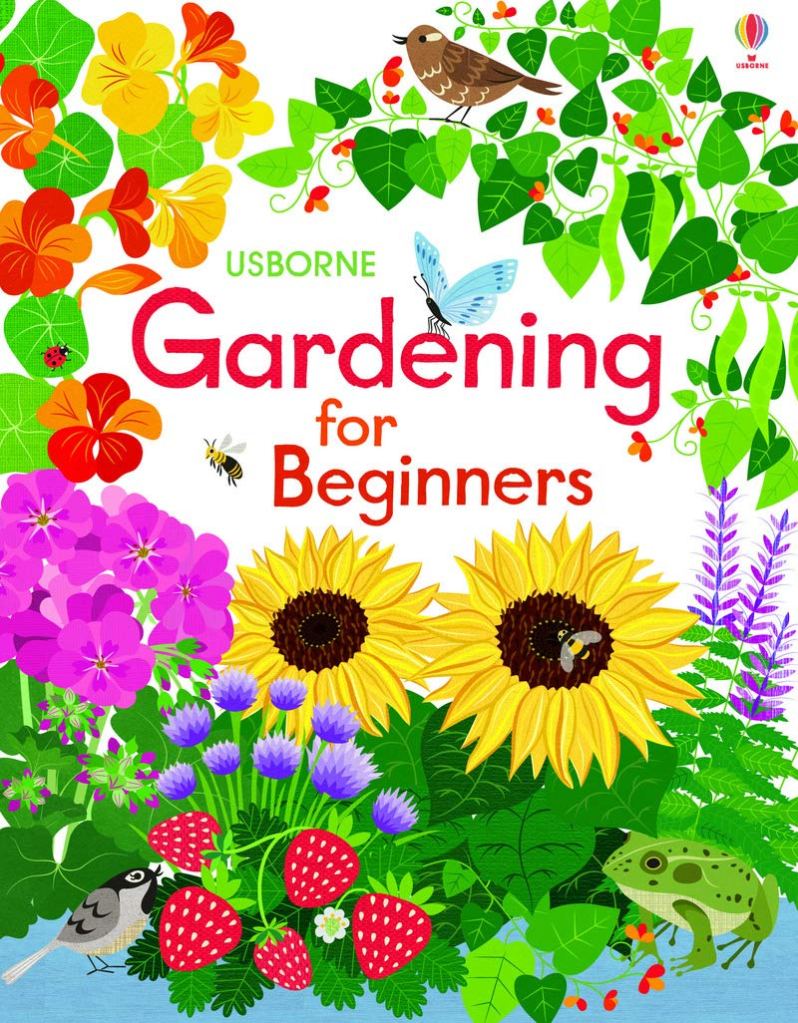
The cover depicts a garden of flowers, vines, and strawberries in bright primary and secondary colors, with birds, a butterfly, a frog, a ladybug, and a bee enjoying the vegetation.

By Laci R.

Spring is here once again – and you know what that means? It’s the perfect time to share these wonderful gardening books with the children in your life. Gardening is a passion of mine for many reasons. It’s become a reliable place of peace and comfort, I get to see a variety of pollinator friends, and I have a permanent seat in a never-ending classroom. I like to encourage others not only to find a way to connect to nature but to look into all the methods and styles of gardening. My garden started with two or three potted plants. Over the past couple of years, my container deck garden has transformed into a whimsical fairytale oasis.

The Imaginary Garden by Andrew Larsen
This story reminds us that our imagination can bring just as much wonder into our lives as anything we experience in the physical world. Join this adorable grandfather and granddaughter as they bring life into the most beautiful imaginary garden. As they paint- brick walls are built for vining plants to climb, crocuses are popping up as the first sight of Spring, and a robin eats a worm for lunch. Later, the granddaughter is left to care for the garden while her grandfather is away on vacation, and she’s determined to make him proud. Imaginary or not, gardens require hard work and a whole lot of love.

Pair With: My Garden by Kevin Henkes (also available as an audiobook on CD)
This book reminds me of Alice in Wonderland as she sits amongst the flowers and describes her perfect world. While the flowers in this book won’t talk with you for hours, they do change colors just by thinking about it. Join an imaginative little girl as she tells you all about her dream garden – including a jellybean bush, invisible carrots, and glowing lantern strawberries.

A Peaceful Garden by Lucy London
Join these two feline friends as they prepare, plant, and tend to their peaceful garden. This book is a great introduction to the joys of gardening through a simple yet sweet story that walks you through what the process might look like to get ready for your own garden. Throughout, you’ll see garden dwellers making an appearance, some that a lot of people try to deter from their space. This peaceful garden is all about making sure everyone knows they’re welcome and cared for. What will you grow in your peaceful garden?

The cover depicts a rooftop garden with a diverse group of people working to plant in the soil. The cityscape is in the background against a sky of oranges and yellows.


Thank You, Garden by Liz Scanlon
The illustrations show a diverse community of children and neighbors working together on a city garden. Through rhyme, you learn about what goes into making a garden so lovely – including the times that call for being silly and playing in water from the hose. This book does a great job of showing the rewards of hard work. While the text isn’t abundant in this story, the artwork tells you more than words ever could.

Pair with: Fox’s Garden by Princesse Camcam
This wordless picture book utilizes mixed media in a dreamy way that will certainly spark a fulfilling discussion. It’s Winter, and Fox is looking for a safe and cozy place to have her pups after being chased out of a village. She comes across a greenhouse and nestles in. Soon, Fox and her pups are greeted by a young boy who gently places a basket of food on the ground before leaving them be. Fox and her pups repay the favor with a beautiful “thank you” waiting to be found in the boy’s bedroom when he wakes the next morning.

The cover depicts a boy and a black cat in a dense garden of flowers and tropical plants, in shades of blue, green, yellow, and mauve.


Tokyo Digs a Garden by Jon-Erik Lappano
Tokyo lives in a small house between giant buildings. Skyscrapers and highways hold the space where hills and trees used to be. Tokyo is determined to help his grandfather have a garden despite the city “eating up the land” years ago. He meets an old woman who gifts him three beans that will become whatever is imagined of them during planting time. What happens next is a beautiful and fast-paced adventure showing how nature behaves in a city. Animals replace cars on the roads and streets become rivers. Will city life and wildlife be able to co-exist? This book is a thoughtful portrait of environmentalism and imagination. At first, this story might seem familiar – beans that you can wish on. I promise you’re in for a treat with this modern story that feels classic.

Florette by Anna Walker
Mae moves to a new home in the city and is forced to leave her beloved garden behind. Once there, Mae starts to realize just how empty this new house feels without a garden to play in and butterflies to chase. She tries to recreate the wonder by drawing and painting flowers on the stacks of boxes filling every room. Realizing she has to search a bit further, Mae sets out on an adventure and finds a lush green botanical shop… but it’s closed. She waits, but the door never opens. In the distance, there’s a small green sprout in a crack between the building and sidewalk where Mae rescues her very own piece of the forest. Is there room for a garden in the city, after all?

Gardening for Beginners by Emily Bone
Learning any new skill can be intimidating at first. This book is an excellent resource for any age and especially perfect for developing a new skill alongside the children in your life. I learned a great deal from this book when I first started gardening and was overwhelmed by information. This book has an easy-to-follow page design, and there is also a breakdown of how to interpret each section of the page in the beginning of the book. The visual appeal of this book makes the information more digestible and easier to retain.

Pair with: Flowers by Gail Gibbons
Gail Gibbons is a favorite for a reason. This book is no exception for anyone interested in learning about flowers. It covers the basics of flower parts, growth, seed travel, pollination, and the various ways flowers are categorized.

I hope this assortment of gardening books brings some green, inspiration, and curiosity into your home.  Gardening is for everyone and doesn’t have one look or motivating factor. I challenge you to grow something this year – whether it’s your family’s favorite tomato or melon, flowers for our pollinator friends, or your imagination.

Laci is a Children’s Instructor and Research Specialist at HCLS. They love a wide variety of music, spending time in the garden, Halloween, cats, and crafting. Their “to read” list is always full of graphic novels and picture books.

Project Literacy

Three adults dressed in black graduation caps and gowns prepare to move their tassles. A Latina woman gazes directly into camera, standing next to a White woman and an older Black man.
Project Literacy Graduation 2018 held at HCLS Miller Branch.

by Ben H.

I work at HCLS Project Literacy. Project Literacy provides Howard County residents from around the globe with the opportunity to practice the thing that they all have in common: English.  

Project Literacy unites people. 

My average workday might involve teaching an English conversation class, managing our program data, helping organize new classes, brainstorming with our awesome staff, (writing a book review for the library’s underrated blog), and sending hundreds of emails.  

Conversation classes always include a lot of laughs, serious talk about cultural differences (especially at the workplace), vocabulary review, and a ton of learning and sharing. 

Tracking, entering, and analyzing data isn’t as bad as it sounds. Now that we work from home, I can enter data with my music of choice and my 15-month-old daughter tottering and warbling behind me. I’ve worked at Project Literacy for four years as the assistant manager and manager of information systems. 

I love it. 

You might cynically think, “he has to write that because this is a library blog,” but you should just trust me when I say I love my job (I am under no duress as I sit here on my couch).  

What does Project Literacy do?  

For starters, we offer one-on-one tutorial sessions for anyone interested in learning English, studying for citizenship, or studying for a high school diploma. We’ve offered tutorial sessions for more than 30 years. During the past 20 years, we’ve used funding from grants to expand our programing. 

Project Literacy now offers four semesters of classes each year. With 30+ classes to choose from, there is something for every step of your English-learning journey. Beginning level ESL classes might focus on numbers, days of the week, or common phrases. While advanced ESL offerings include classes on essay writing, pronunciation, literature, and work communication skills. 

As of this fiscal year, Project Literacy is now a proud home of the National External Diploma Program (NEDP). Through the NEDP, clients who have not received a U.S. high school diploma can earn one. It is a self-paced program that someone can do almost entirely online. We help them study for the entrance tests and coach them through the modules.  

Career Pathways for Skilled Immigrants is another grant-funded program that Project Literacy has recently developed. It exists to help skilled immigrants obtain employment in their field of expertise. The program is highly individualized and tailored to fit each participant’s needs.  

Project Literacy has a core of about 20-30 paid teachers and staff. In a normal year, Project Literacy is lucky enough to have about 40-50 volunteers, but the pandemic significantly reduced our volunteer base. We look forward to welcoming our volunteers back when things return to something like normal. 

350-450 students pass through our doors every year. We currently have around 40 students in our NEDP program, 40 students in our skilled immigrant program, and about 220 in our ESL program. Participants come from the United States and about 50 other countries.  

Every person has a unique story, and it is my great privilege to assist them in one phase of their journey. 

Project Literacy is an international community of learners and full of very cool people. Emma Ostendorp is one of the coolest. She is the program administrator and responsible for making Project Literacy the thriving community it is. She’s also a great boss (still under no duress).  

If I’ve convinced you to become a part of Project Literacy, fantastic! 

Project Literacy always needs volunteers and always wants students. If you would like to become either, please email prolit@hclibrary.org.  

Thank you for your time.  

Ben Hamilton works at Project Literacy, Howard County Library’s adult basic education initiative, based at HCLS Central Branch. He loves reading, writing, walking, and talking (all the basics).

Maybe He Just Likes You by Barbara Dee

The book cover depicts a girl in black silhouette, against a white background with various objects in black and shades of teal, including trumpets, musical notes, a basketball, acorns, seashells, and leaves.

by Carmen J.

I remember this phrase being said to me after I told a friend a boy was being mean to me in middle school. Maybe He Just Likes You. Because that didn’t make sense when I was in middle school, and it wouldn’t make sense today in modern day America. It’s the title of a timely and very thought-provoking book by Barbara Dee. This book was required reading for a work training, and I can’t say I would have stumbled upon it otherwise. I’m glad for the happy accident.

The story follows Mila Brennan, a seventh grader, as she navigates unwanted attention and advances in the forms of a guilt-tripped hug of a fellow male classmate, invasions of personal space on the bus, and not-so-innocent sweater petting. When the perpetrators are her friends and include a star student athlete and first-seat orchestra player, the line between only joking and tween-age Me Too becomes increasingly blurred. It is difficult for Mila to know what is right and what is completely wrong.

Maybe He Just Likes You offers a good and well-written story with characters you’d find as next-door neighbors. The better story is how it brings to light an important conversation to have with our young people regarding consent and what constitutes wanted and unwanted physical advances, as well as how these distinctions can vary so much from person to person, male to female. For example: I have a friend who would rather swallow garbage than have anyone hug her at any time. By contrast, I can’t wait until the pandemic is over so I may start the next bear-hugging movement. (Who’s with me? It’s OK, if you’re not with me).

There is extensive gender pressure for young men to act a certain way toward the opposite sex as early as middle school, maybe late elementary school, as if school cafeterias are the new singles bars. It’s my hope that more conversations are had about de-normalizing this behavior. Pump the breaks, guys and girls. There’s plenty of time for all of this after your childhood has developed. Please. Or better yet? Let’s keep our hands to ourselves. 

Maybe He Just Likes You is also available from HCLS in eBook and eAudiobook format from Libby/OverDrive.

Carmen J. is a teen instructor at HCLS East Columbia. Among her favorite things are great books, all things 80s, shamelessly watching The Bachelor, gardening, and drinking anything that tastes like coffee.

Let’s Grow Potatoes!

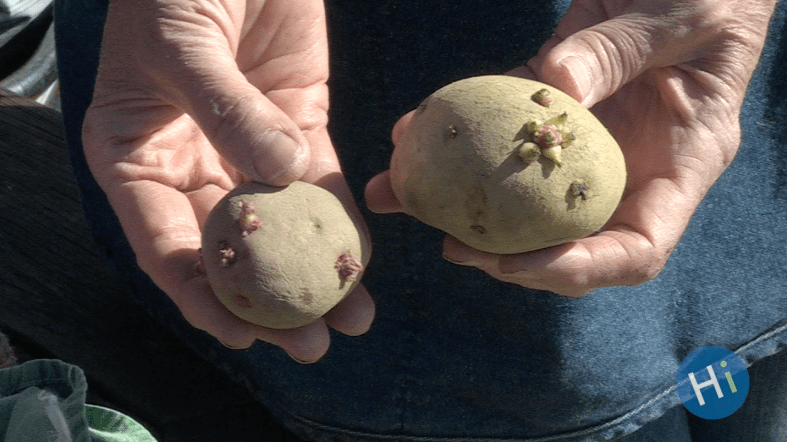
The photograph depicts two hands in the sunlight holding two small seed potatoes with eyes on them.
Enchanted Garden Coordinator Ann holds two seed potatoes.

By Ann H.

Three cheers for the arrival of spring! I am ready to embrace a new season full of hope and fresh, local vegetables. Cool nights, sunshiny days, and plenty of rain signal the right time to plant cool-season crops. First on my list this year are potatoes!

Potatoes are a great family garden project. They come in an assortment of colors, they are easy to grow and as much fun as a treasure hunt to harvest. Sunshine and timing are the first considerations for growing potatoes. You must have a spot that receives six or more hours of sunshine a day. Potatoes should be started from now until early May. Don’t delay! You’ll have little success once the temperatures rise in summer.

Growing potatoes in a container is a good solution for those of us who want to grow food, but are short on space or new to gardening. Containers could be 5 gallon or larger buckets, grow bags, or a large fabric or strong plastic bag that drains. The larger the container the more potatoes you’ll grow. This year I’m experimenting with growing potatoes in a burlap sack. Our friends at Orinoco Coffee Roasters donated some burlap coffee sacks to the Enchanted Garden. They are selling burlap sacks to raise money for the Howard County Food Bank.

Potato plants start with seed potatoes. Seed potatoes are really tubers with eyes or buds. Those buds are the start of new potato plants. Give them soil, water, and the right conditions and you’ll be harvesting potatoes in three to four months. You can purchase seed potatoes locally where you would buy seeds, or you can order them online. Don’t be tempted to try grocery store variety potatoes. Most of those have been inoculated to prevent root growth. You might see eyes on grocery store potatoes, but rarely roots.

Potatoes are filled with antioxidants, fiber, and vitamins. You can prepare them mashed, roasted, fried, or in other creative ways. You can add them to salads, top them with almost anything for a main course, or turn them into latkes. Potatoes store well and feed many. Don’t you want to grow potatoes? To try this project at home, check out my video tutorial that explains all the steps.

Burlap bags: https://www.orinococoffeeandtea.com/product/green-bean-burlap-bag/

For additional information and inspiration, please check out these HCLS resources:

Adult collection:

The Complete Book of Potatoes: What Every Grower and Gardener Needs to Know by Hielke De Jong

Children’s collection:

George Crum and the Saratoga Chip by Gaylia Taylor, illustrated by Frank Morrison (also available as an ebook from Libby/OverDrive)

Ann joined the Miller HCLS staff as the Enchanted Garden Coordinator and Instructor in 2012. When not gardening you’ll find her reading, cooking, and exploring trails in the Patapsco River Valley with her husband and dog.

Introducing… Reads of Acceptance!

Horizontal rainbow stripes with an inset of triangle of white,

by Ash and Angie

C.S. Lewis once said that we read to know we are not alone, which is why many of us look to literature as a source of comfort. Years ago at the library, Angie helped a teen find young adult novels on coming out. The teen quietly said thank you, and afterwards, Angie could not help but notice that she went over to a woman whom she called “mom.” As she showed her the books, the woman hugged her and told her it was going to be okay.

One of the most rewarding opportunities while working in a library is being able to connect customers with reading materials that can make a profound impact in their lives. This holds especially true when dealing with potentially sensitive subject matter such as LGBTQ+ issues, which often come with fear of judgment. In Teri Gross’s All I Did Was Ask: Conversations with Writers, Actors, Musicians, and Artists, she interviews Ann Bannon, one of the first writers of lesbian pulp fiction. In answer to Gross’s question about what it was like to be gay in the 1950s or to write lesbian fiction, Bannon responds:

The big thing was ‘Thank God, I’m not the only one.’
That’s how isolated people were then.
But also that it’s okay to open up a little bit. It can be healthy. It can be a warm, generous, wonderful way to spend your life.
It is scary to walk up to a drugstore counter with your arms full of lesbian paperbacks and survive the stare from the clerk,
pull yourself together, buy them, and walk out with your head held high.

Having your voice heard and knowing there are others out there, both through the books you read and the people you meet and sometimes befriend, can go a long, long way to helping you survive in a world not always friendly to LGBTQ+ people. No matter your age, your background, your outness or your in-ness, you can find comfort in the universality of knowing “you’re not the only one.” That is one reason, among many, it can be so good to find a sense of community.

Howard County Library System’s new LGBTQ+ book club, Reads of Acceptance, holds its first meeting on Monday, April 19 at 7 pm. This monthly book club aims at fostering social support, personal growth, and intergenerational learning for LGBTQ+ adults and our allies. Reads of Acceptance will encourage education, reflection, and respect for LGBTQ+ identities by hosting group discussions that connect literature with our lived experiences.

Pale blue color with the title at the bottom shows a man in a blue suit falling. He is busy writing and papers surround him.

At Reads of Acceptance’s first meeting, we will discuss the Pulitzer Prize-winning Less by Andrew Sean Greer (also available in eBook and eAudiobook format). Funny yet also sad, the novel follows writer Arthur Less while he travels the world on a literary tour to try and get over the loss of the man he loves. Turning 50, Less finds himself struggling with life, including his career as a writer not going where he had hoped it would. Even so, he could handle being a bad writer, but being considered “a bad gay”?

That is so much harder to grapple with. It also speaks to a constant fear for queer people: that your community will reject you on top of everything else. (Source: https://ew.com/books/2018/07/24/less-summer-breakout-essay/) Greer’s writing speaks to an experience so many of us, queer or not, can relate to in a way that says, “Yes, I have been there.”

Relating to media in a manner that resonates with and reassures one’s identity is part of what makes seeing ourselves reflected in art and literature so affirming and powerful. Being able to relate to real-life people can be even more so. Both older and younger people in the LGBTQ+ community have often suffered in silence or experienced ostracism, looking for safe outlets to share their feelings, thoughts, and what they have been through. Reads of Acceptance can be one of those safe outlets. We hope to see you there! Register here.

For a special preview of Reads of Acceptance and an opportunity to meet Ash and Angie, join Book Corner on Friday April 16th @ 11am. Register here.

Angie is an Instructor & Research Specialist at the Central Branch of HCLS.

Ash is an Online Instructor & Research Specialist, also at Central Branch. Their favorite reads often involve magic, nature, queer and trans joy, coming of age, cultural traditions, romance, and cute illustrations.

Author event with Kekla Magoon

Photo of author Kekla Magoon, who has a wide smile, rectangular glasses, and short hair with lots of curls. She's wearing a deep V-neck in a black and white print, pictured with a green yard behind her.

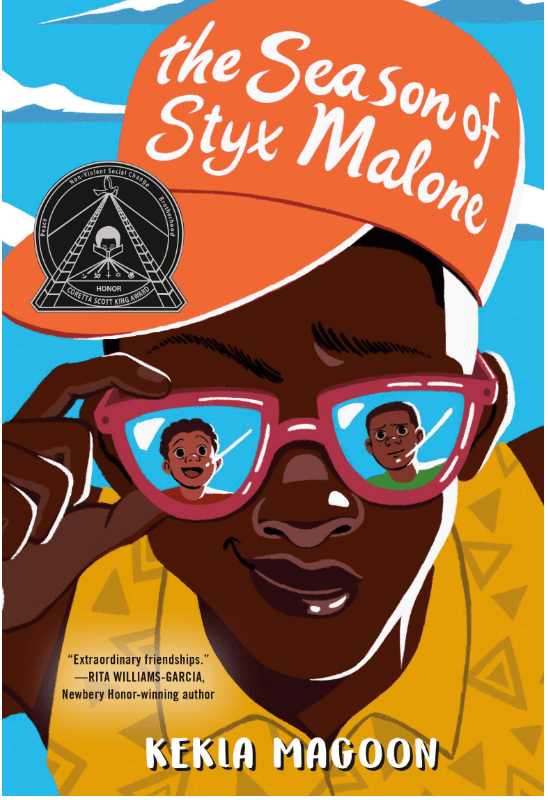
One of this year’s Battle of the Books titles is The Season of Styx Malone by Kekla Magoon. The author is visiting virtually on April 14 for a 30-minute live Q&A! You may type your questions in advance within registration or hold them for the event.

The Season of Styx Malone tells the funny, poignant story about one amazing summer in small-town Indiana, when Caleb and Bobby Gene make friends with the slightly older, way cooler Styx Malone. Let’s be clear: Styx Malone is definitely too cool for school! He knows things… like about elevator trading, where you can essentially make something out of nothing. These boys are going to make a bag of fireworks (obtained by temporarily trading their baby sister) into a green moped. All these brothers want is to see the big city of Indianapolis, but their (maybe overly) protective father wants them to stay close to home in Sutton. The desire for adventure wars against the need for safety throughout the family’s interactions.

The boys follow foster child Styx into one “interesting” choice after another, hoping to achieve their dream of having independent mobility via the green moped, affectionately nicknamed Grasshopper. When things take a turn for the worse, everyone has to reconsider what a happy ending will look like. As Caleb and Bobby Gene lobby for adopting Styx, it turns out that adults can sometimes make good things happen. It’s a delightful book full of good humor from the point of view of three bored friends longing for more from summer than watering holes and doing chores (Mom was not happy about the baby sister trading).

Kekla Magoon is the author of many novels and nonfiction books for young readers, including The Season of Styx MaloneThe Rock and the RiverHow It Went Down, and the Robyn Hoodlum Adventure series

She has received the Margaret A. Edwards Award, the Boston Globe-Horn Book Award, the John Steptoe New Talent Award, three Coretta Scott King Honors, the Walter Award Honor, an NAACP Image Award, and been longlisted for the National Book Award. 

Kekla conducts school and library visits nationwide and serves on the Writers’ Council for the National Writing Project. She holds a B.A. from Northwestern University and an M.F.A. in Writing from Vermont College of Fine Arts, where she now serves as faculty. Visit her online at keklamagoon.com.

Cover art has an illustration of a Black teenager in a slightly off-center ball cap, adjusting his mirrored sunglasses. In the glasses, you can see two other Black kids. The title of the book appear in script on the orange hat.

The book is also available as an ebook, on CD, and as an eAudiobook.