Found Family in Speculative Fiction

By Kristen B.

There’s an old saying that while you can’t choose your family, it’s lucky that you can choose your friends. Some of my favorite stories include found family, where the characters forge tight bonds that go beyond simple friendship into family feeling. These are often the books that live on my comfort reads shelf. It’s also one of the oldest tropes in existence: the band of brothers (or maybe just the band) who live and die for each other. If it can’t actually save the world, friendship can at least make it a better place.

This mostly brown cover features a planet in the background and a chunky spaceship in the front. The title appears in shaded block letters which gradually increase in size.

The Long Way to a Small, Angry Planet by Becky Chambers (also available as an eBook and an eAudiobook from Libby/OverDrive)

This is the book I hand to people who tell me they don’t really like science fiction, but want to try something new. If you ever enjoyed the show Firefly, this novel will feel familiar. Set on an older, slightly beat-up spaceship, the crew represents a wide range of galactic species who pull together as a team, a ragtag group of political and social misfits. The fairly minimal plot focuses on the need to push a new wormhole/jump, which means that one ship has to take the slow voyage to anchor the jump points. It may sound tedious but it’s never boring with all that time to get to know the quirky crew of the Wayfarer. Two of my favorites are the pacifist chef who comes from a species that essentially committed self-genocide through endless war, and Lovey (short for Lovelace), who is the ship’s AI. While not so heavy on forward action, The Long Way to a Small, Angry Planet provides an interconnected set of character studies that leaves you feeling more than a little warm and fuzzy.
A blue cover with an image of Jupiter in the background features a flotilla of different spaceships framing the title across the middle of the image.

A Pale Light in the Black by K. B. Wagers

Some of the most enduring found family stories tell about military outfits whose bonds are stronger than blood – kinda like the A-Team. Meet Max and Jenks, officers (commissioned and non-com, respectively) on the NEO-G ship Zuma’s Ghost. A sort of space-based Coast Guard, NEO-G (Near-Earth Orbital Guard) Interceptor teams run counter-smuggling interdiction operations and rescue missions. Max has recently joined Zuma’s Ghost, after Jenks’ brother is promoted off the ship. Part of the story revolves around Max and Jenks finding a good working relationship during various military actions. Part of the story concerns the Boarding Games annual competition, which happens among teams from all military service branches and which Zuma’s Ghost just missed winning the previous year. Jenks is the all-time champion cage fighter, and Max, navigator extraordinaire, is still discovering what skills she contributes to the team. Underlying all this surface fun, something more sinister lurks that threatens Max, Jenks, and all of Earth. This book rolls with a ton of space opera fun, hitting all the beats you expect and some you don’t. It’s also one of the most inclusive set of characters ever thrown together to save the solar system!
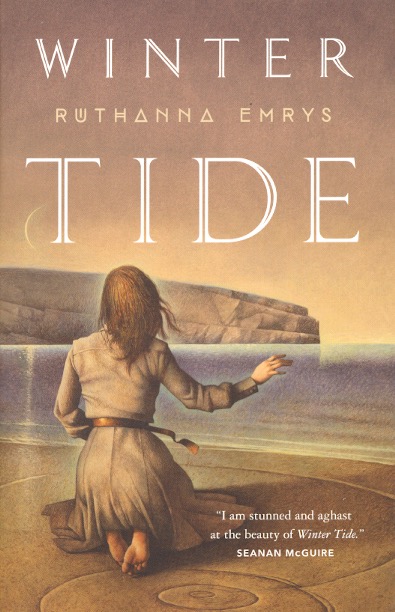
A woman kneels upon a beach gesturing with her right hand toward a flat sea, with symbols traced on the sand beneath her. The palette is muted beiges and blues.

Winter Tide by Ruthanne Emrys (also available as an eBook from Libby/OverDrive)

I must admit to avoiding this title for longer than I should have given its association with the Lovecraft mythos. Lovecraft’s opinions and bigotry have not stood the test of time well, and I was a little apprehensive about diving into the deeps with a Cthulu-inspired novel. How wrong I was! Emrys reconstructs the Lovecraftian milieu into a family saga that demands empathy for the Other. Set in Innsmouth along the shore of the Atlantic Ocean, down the road from Miskatonic University (home to lots of unhelpful white men), Aphra Marsh and her brother Caleb look to reclaim their heritage that was stolen when the government interred her people away from the sea in the desert. The Innsmouth community comes from People of the Water (as opposed to Air or Earth), who eventually leave dry land and evolve to live as Deep Ones in the sea. Aphra needs to find trusted friends and colleagues to re-establish a home at Innsmouth before developers demolish what little remains and to reclaim her people’s heritage from the dim reaches of the university’s library. This quiet, personal novel focuses on staying true to yourself and trusting others who travel the path with you – even if one of them happens to be an FBI agent.
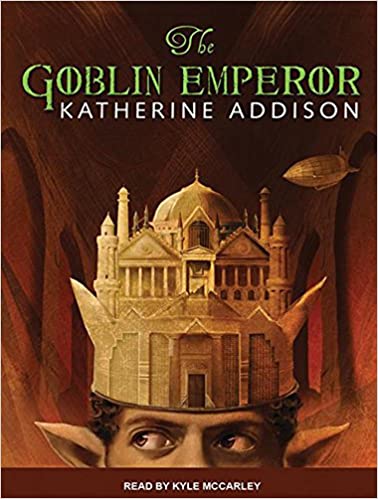
A face with long ears peeks over the bottom of the cover wearing a crown shaped liked a palace.

The Goblin Emperor by Katherine Addison (also available as an eAudiobook from Libby/OverDrive)

Do you love pauper to prince stories? Heroes that go from the kitchen or the farm to the throne? Me too! Half-elf, half-goblin Maya grew up in almost total isolation after the death of his mother, living in a remote marshy estate with an equally outcast, abusive tutor. His father, the Emperor of Elfland, had come to regret his political marriage, exiling Maya and his mother from court. This book opens with Maya receiving news that he is the only remaining legitimate heir after his father and older brothers are killed in a terrible accident. Promising himself to be true to his mother’s precepts of kindness and generosity, Maya tries to maneuver in an imperial court for which he has no frame of reference or requisite education. He makes his way tentatively toward a previously unimaginable royal future, grounded in the adamant idea that he will not continue the cycle of abuse levied against him. Along the way and despite assassination attempts, he finds kindred spirits – helpful councilors, his maternal grandfather (who rules the goblin empire), long-lost aunts and sisters, and devoted bodyguards – to ease the burden of royal privilege and deference. I love this book to pieces, and it only improves with re-reading. The language can be a little dense at first, but stick with it and you will be greatly rewarded with a story of courtly politics and the power of kindness.

Kristen B. is a devoted bookworm lucky enough to work as the graphic designer for HCLS. She likes to read, stitch, and take walks in the park.

Wordless Joy

The cover shows a child and dog at the edge of a marshy pond, surrounded by trees, with herons and deer in the foreground. The pond is in shades of turquoise and the child, animals, and trees are in shades of grey and white with a hint of the turquoise blue; only the dog has a pop of yellow, on its collar and leash.

By Eliana H.

Many stunningly beautiful picture books are available to readers these days. Even if you don’t have young children in your life, you might be surprised at how much you appreciate picture books as an adult! Picture books can include a wide range of writing styles, sometimes with sparse or rhyming text aimed at younger readers, and sometimes with denser, more complex language. For this post, though, I want to highlight wordless picture books. 

The cover is a father and child walking hand-in-hand down a city sidewalk. The illustration is done entirely in shades of black and grey, except for the child's red coat and flowers in blue, yellow, and pink. The father carries a basked of groceries and their are parked cars and historic-looking buildings in the background.

Wordless picture books offer appealing illustrations that tell the creator’s story on their own. They tend to include abundant details that provide renewed enjoyment every time the book is read and reread. If you are a caregiver for a young child, you can use wordless picture books to practice important pre-reading skills. Look through the book together. Talk about what is happening in each of the pictures. Ask the child what they notice on the page. Teach sequencing ideas and language by showing the order of events in the story. Promote the child’s confidence by inviting them to read the story to you! 

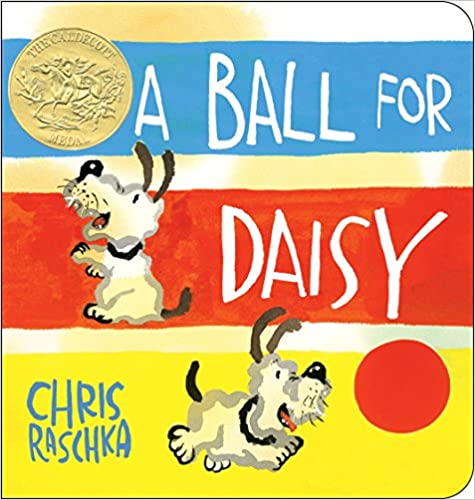
The cover depicts the dog, Daisy, a white dog with brown ears and tail and a black nose. She is shown in two scenes: standing on hind legs as if alert for a treat, and chasing a red ball. There are bands of blue, red, and yellow, with the title and white and the two pictures of Daisy, as well as the gold Caldecott medal for this award-winning book.

Even with older children, opportunities abound for wordless picture books to enhance their literacy experience. As their vocabulary and comprehension develop, children will be able to tell more detailed and complex stories to accompany the images. Repeated experiences with reading other picture books together may inspire them to create a story that sounds very much like a published book! Children can begin analyzing literature by comparing the way a story may be told without words to a version that does include text. 

Of course, the main factor that will determine the impact of sharing a wordless picture book, or one with text, is the connection between a caring adult and a child exploring the story together with joy and love. Take a look at a selection of wordless picture books from our catalog below, or ask library staff at one of our branches on your next visit.

The cover shows a royal blue bluebird against a pale blue sky and a cityscape of buildings in shades of white and grey.

A Ball for Daisy by Chris Raschka

Bluebird by Bob Staake

Delivery by Aaron Meshon

Draw! by Raúl Colón

Field Trip to the Moon by John Hare

The Fisherman & the Whale by Jessica Lanan

Float by Daniel Miyares

Flotsam by David Wiesner

Fossil by Bill Thomson

I Walk with Vanessa by Kerascoët

The Lion and the Mouse by Jerry Pinkney

The Paper Boat by Thao Lam

At the Pond by Geraldo Valério

Sidewalk Flowers by JonArno Lawson

Wave by Suzy Lee

Eliana is a Children’s Instructor and Research Specialist at HCLS Elkridge Branch. She loves reading, even if she’s slow at it, and especially enjoys helping people find books that make them light up. She also loves being outside and spending time with friends and family (when it’s safe).

Flowers and Planters are Great

The photograph shows DIY INstructor Eric seated in a red adirondack chair, with outdoor tools, a hammock, and a kids' swimming pool in the background, and his dog at his side with his feet up on a white DIY planter box he constructed.
DIY Instructor Eric and friend.

By Eric L.

I used to be young and naïve and I didn’t appreciate flowers, or maybe didn’t realize I appreciated them. Deep down, I was probably always the sort of person that would admire beauty around. That said, I’d implore you to get some flowers, plants, vegetation in your life.  

After renovating two entire houses I have come to appreciate the beauty of living space, indoor and outdoor. How one’s surroundings engender certain feelings. My surroundings make me feel comfortable and then calm. I recall the first place that my significant other and I shared, and changed. I felt more comfortable there than I had before. 

I’ll be honest, I used to think that flowers, gardens, and more generally my surroundings at home were sort of a bourgeois waste of time. Why would I spend work attending to these sorts of things, when I could read, hang out with friends, chat, drink at bars, or so many other exciting things? However, my mind has changed with innumerable carpentry projects accomplished, many, many holes dug, trees planted, landscape projects complete, planters made, and a stacked stone wall, literally built from two tons of rough stone (my least favorite project, ever).  

Having trees, flowers, and plants around does indeed make me calm. (There is science to support this). So let’s take it even further: imagine if you’ve selected the plants, then planted them yourself, and watched them grow and or blossom. How about even further: what if you’d made the planter, planter box, or raised bed that holds your plants? While it may not change your life, I think you may feel happy and proud. I do, so why not try it?

Building planters, window boxes, and raised garden beds are all relatively easy DIY carpentry projects. I’ve done these all with groups in person at the HCLS Elkridge Branch DIY Education Center. I don’t mean to oversimplify this, but you’re essentially making a box, one that you spruce up however you like. For example, add some architectural detail, paint it, hand-paint a design, stain it, make it rustic, use pallet lumber. There are myriad possibilities! It is a great way to practice and learn all sorts of carpentry skills. This endeavor is made even easier because you can borrow everything you need from HCLS. 

Please watch the video, and try it out. And it looks as though we’ll be able to do this in person soon at the Elkridge branch! 

There are two men, radical in many respects, and I’m a fan of both, who would receive flowers from fans. I can’t say I thought it was odd, but realize that some may consider it “feminine” for a man to receive flowers. It seems strange that flowers are associated with gender at all; they’re beautiful, please bring them to me!

Eric is a DIY Instructor and Research Specialist at HCLS Elkridge Branch. He enjoys reading, films, music, doing nearly anything outside, and people.

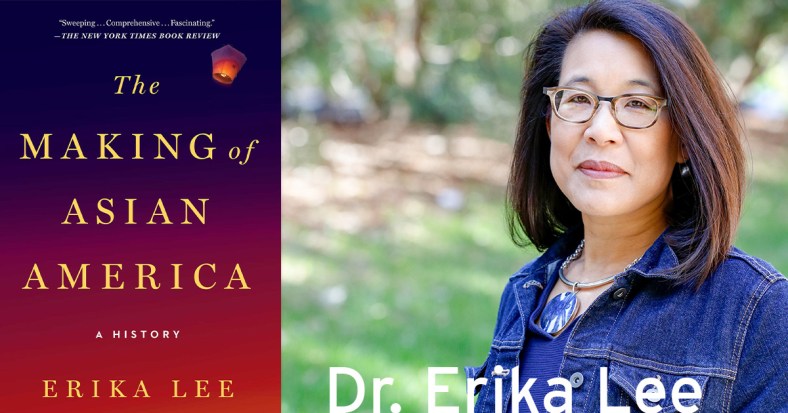
Dr. Erika Lee: The Making of Asian America

On the left, the cover of Dr. Lee's book: The color shades from deep blue to bright red with lettering in gold. A paper lantern floats in the top right corner. On the right: A photo of Dr. Lee wearing a denim jacket and large blue necklace, her hair is shoulder length and she wears glasses. A sunny green yard is out of focus behind her.

Monumental. . . . Lee handles her scholarly materials with grace, never overwhelming the reader with too many facts or incidents. She tells an American story familiar to anyone who has read Walt Whitman, seeking to capture America in all its diversity and difference, while at the same time pleading for America to realize its democratic potential. . . . Powerful Asian American stories . . . are inspiring, and Lee herself does them justice in a book that is long overdue.” ― LA Times

On Wednesday, May 26 at 7 pm, Dr. Erika Lee discusses her acclaimed book The Making of Asian-AmericaIn the past fifty years, Asian Americans have helped change the face of America and are now the fastest-growing group in the United States. As award-winning historian Erika Lee also reminds us, Asian Americans also have deep roots in the country. The Making of Asian America tells the little-known history of Asian Americans and their role in American life, from their first arrival to the present-day.

An epic history of global journeys and new beginnings, this book shows how generations of Asian immigrants and their American-born descendants have made and remade Asian American life in the United States: sailors who came on the first trans-Pacific ships in the 1500s; indentured “coolies” who worked alongside African slaves in the Caribbean; and Chinese, Japanese, Filipino, Korean, and South Asian immigrants who were recruited to work in the United States only to face massive racial discrimination, Asian exclusion laws, and, for Japanese Americans, incarceration during World War II. During the past fifty years, a new Asian America has emerged out of community activism and the arrival of new immigrants and refugees. No longer a “despised minority,” Asian Americans are now held up as America’s “model minorities” in ways that reveal the complicated role that race still plays in the United States.

Copies of The Making of Asian America are available to borrow (also as an eAudiobook) from HCLS or to purchase from Books with a Past. 

A stunning achievement, The Making of Asian America establishes the centrality of Asians to American history, and poses alternatives to US national and immigration histories. Asians, this remarkable text reveals, transformed the face of America, and they locate the US firmly within a hemispheric and global order.” ― Gary Y. Okihiro, Professor of International and Public Affairs, Columbia University

ABOUT DR. ERIKA LEE One of the nation’s leading immigration and Asian American historians, Erika Lee teaches American history at the University of Minnesota, where she is a Regents Professor, a Distinguished McKnight University Professor, the Rudolph J. Vecoli Chair in Immigration History, and the Director of the Immigration History Research Center. The granddaughter of Chinese immigrants, Lee grew up in the San Francisco Bay Area, attended Tufts University, and received her Ph.D. from the University of California, Berkeley. She was recently elected into the American Academy of Arts & Sciences, testified before Congress during its historic hearings on discrimination and violence against Asian Americans, was awarded an Andrew Carnegie Fellowship, and named Vice President of the Organization of American Historians.

Citizen Science and Summer Fun

The photograph shows two orange, white, and black monarch butterflies gathering nectar from a stalk of lavender sage.
Photo by Robert Thiemann on Unsplash.

by Jean B.

Last spring, as a COVID lockdown project, I expanded my backyard garden and planted some milkweed to attract monarch butterflies.  I was rewarded with not only bright orange-yellow flowers throughout the summer, but dozens of striped monarch caterpillars in August and then, the ultimate treasure:  one glittering pale-green chrysalis, from which I watched a monarch emerge one late September day.  Observing this life cycle drama unfold in my backyard was absolutely a pandemic highlight!

As you may know, habitats for monarch butterflies are declining rapidly, threatening their ability to make the incredible migration from Canada to Central Mexico that species survival requires. But there are tangible ways individuals can help monarchs. It can be a wonderful family activity to learn about, observe, and take action to help monarch populations, with help from some fantastic children’s books available at HCLS. Become citizen scientists!  It’s fun, it gets everyone outdoors together, and it’s rewarding. 

First, check out Winged Wonders: Solving the Monarch Migration Mystery. In this book, Meeg Pincus explores how the monarchs’ amazing migration journey was uncovered through the actions of not only scientists, teachers, and explorers but also thousands of volunteers, who helped tag and observe the butterflies to figure out where they went. When the mystery finally was solved, whose achievement was it? As this book joyfully replies, the discovery belonged to “all of them – the scientists, the citizen scientists, the regular folks along the way.”  Learning about that remarkable effort, it’s easier to appreciate how each of us can play a part in helping solve the problems facing monarchs and other struggling species.  

Now we need some specifics to get to work. Check out Citizen Scientists: Be a Part of Scientific Discovery from Your Own Backyard by Loree Griffin Burns, with photographs by Ellen Harasimowicz. This beautiful, family-friendly book guides kids and their grownups through four seasonal projects: tagging monarch butterflies in the fall, counting backyard birds in the winter, frog watching (and listening!) in the spring, and photographing ladybugs in the summer. Each section contains a visually-rich full spread with practical information for “when you go,” including a checklist of equipment, close-up photos of the creature to be observed, and a quick quiz to learn some useful facts.  Links to organizations that collect citizen scientist information are provided, too. It’s every curious and naturally-observant kid’s dream to count, name, and dig around outside to find interesting creatures, right? This book gives just the right blend of guidance and inspiration to harness that excitement to a great purpose.

While you’re outside looking for monarchs, you’re bound to see all kinds of other butterflies, caterpillars, and insects you’ll want to learn more about. Capturing the beauty and wonder of butterflies, the nonfiction picture book A Butterfly is Patient by Dianna Hutts Aston, with spectacular artwork by Sylvia Long, is my favorite guide. It contains fascinating information presented with gloriously colorful and detailed illustrations. It’s available as an eBook from CloudLibrary, too. (And since this summer will be full of cicadas, check out A Beetle is Shy, by the same duo, to boost your beetle appreciation.)

Finally, if you embark on this journey of discovery, be sure to stop in at the HCLS Enchanted Garden located at the Miller Branch, a certified Monarch Way Station. Through the HCLS website and classes, the Enchanted Garden offers more resources to support citizen scientists and monarch watchers.   

Make HCLS your partner as you encourage the budding naturalists in your family this year and maybe you’ll get to see a brand new monarch stretch its wings, too!

Jean B. is a Children’s Instructor and Research Specialist at the Central Branch and loves reading books for all ages when she isn’t enjoying the outdoors.

Valentine by Elizabeth Wetmore

The book cover depicts a dust storm across a dry landscape of orange dirt,  with oil rigs and a solitary tree in the distance and purple stormclouds in the sky above.

by Aimee Z.

Content warning for book: sexual assault

1976, Odessa, Texas. The wild oil boom brings equally wild young transients from as far away as Arkansas and the Carolinas. These “roughnecks” work and play hard, drinking all night at the local cantina. When Gloria, a rebellious fifteen-year-old Mexican girl, accepts a truck ride from such a blue-eyed stranger who calls her “Valentine,” she doesn’t expect to be raped, beaten, and left for dead on the dusty Texas range.

She surely doesn’t expect to awake at dawn, shoeless, black-eyed, her spleen ruptured, ribs and jaw busted, watching her rapist sleep off his drunk in the cab of his old truck. But she does. Stealthily, Gloria wills herself over sagebrush and shale, to what first seems a mirage – a farmhouse. 

Gloria bangs on the door and a child answers followed by one of the most gloriously grounded characters in recent fiction, the very pregnant Mary Rose. Gloria is in the worst shape Mary Rose has ever seen. She sees something else, too – way out on that dusty red road, a sky blue truck is racing toward her. 

Mary Rose yanks Gloria inside, shushes her little girl, and waddles out to the front porch to meet Gloria’s sweet-talking rapist with her rancher husband’s Winchester .22.  He’s intent, too, in getting back “his little Mexican gal.”

I found the prose taut and gorgeously written by first-time novelist Wetmore, whose affection for Texas is only surpassed by her fierce and pragmatic women — Mary Rose, Corrine, Gloria, and more. You’ll love them for their pushback, for their ‘Me Too” attitude against the structural racism and ingrained misogyny that defined West Texas oil boomtowns in the 70’s.

Elizabeth Wetmore’s Valentine is also available in eBook and eAudiobook format from Libby/OverDrive. 

Aimee Z. is part of the adult research staff at HCLS East Columbia Branch. She lives on a lake with her two labs, Dixie and Belle, who enthusiastically approved the content of this review in exchange for a peanut butter and jelly biscuit.

Ancient History: The Silk Road

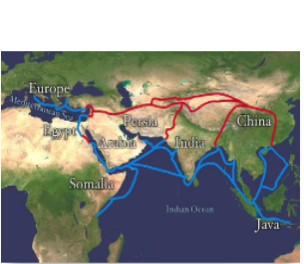
The public domain map in green, blue, and tan shades depicts the Silk Road Route that ran from China through India and Persia and into Europe,, as well as a more southerly route that encompassed modern-day Malaysia and Singapore, the coast along the Indian Ocean, and eastern Africa up to Europe via the Red Sea.
Map of the Silk Road Routes (Public Domain)

Formally established during the Han Dynasty of China, the Silk Road was a vast network of trade routes that was the lifeline of commerce from 130 BCE – 1453 CE. Many different branches comprised this road connecting China, India, and Persia, with Persia being a gateway further into Europe. The main route of the Silk Road was established much before the Han dynasty; known as the Persian Royal Road during the Achaemenid Empire, it connected north Persia (modern-day Iran) to Asia Minor (modern-day Turkey). The Persian Road was maintained with a system of postal stations and gradually expanded into the Indian sub-continent across Mesopotamia and into Egypt.  

Howard County Library System and the Walters Art Museum present a fascinating class that looks at works from the Walters Art Museum that illuminate the expansive story of the Silk Road. 

May 17 from 12 – 1 pm. Register here.  

A manuscript page with Arabic script at the top, featuring a shade tree, bamboo, and a man in a turban studying with writing tools surrounding him. A smaller figure kneels in the bottom right hand cornder.

The term “Silk Road” wasn’t coined until 1877, when German geographer and historian Ferdinand von Richthofen first used it to describe the trade routes. Historians now prefer the term “Silk Routes,” which more accurately reflects the fact that there was more than one thoroughfare. 

Many different goods including gunpowder, precious stones, and ivory were traded along this route; however, it was the exotic silk that gave its name to this road. Many of the goods traded across this route had a great impact on the cultural development of the world. Paper and gunpowder, both developed in China, and the rich spices from India contributed to both European culture and warfare. Similarly, techniques for making glass migrated eastward to China from the Islamic world. However, silk continued to be the most sought-after and expensive commodity, especially in Rome. The Byzantine emperor Justinian (327-565 CE) sent emissaries to steal the closely guarded secret of silk and bring it back to initiate the Byzantine silk industry. In 1453 CE, the Byzantine Empire fell to the Ottoman Empire which closed the Silk Road and cut ties with the west.  

The legacy of the Silk Road is the impact on art, religion, technology, science, and language that fostered a growth and enrichment of world civilization. Unfortunately, disease also traveled along and the bubonic plague of 542 CE was thought to have spread to Constantinople via the Silk Road. Famous Italian explorer Marco Polo traveled overland on the Silk Road to the Mongol Empire ruled by Kublai Khan in 1275 and wrote the epic The Travels of Marco Polo (also available as an eBook from Libby/OverDrive). 

The closing of the Silk Road in 1453 forced traders to explore sea routes and discover new ports. This was the beginning of the Age of Discovery which led to a new era with the rise of seafaring nations. Join us for the class with a docent from The Walters Art Museum to learn more.

Wolf in White Van

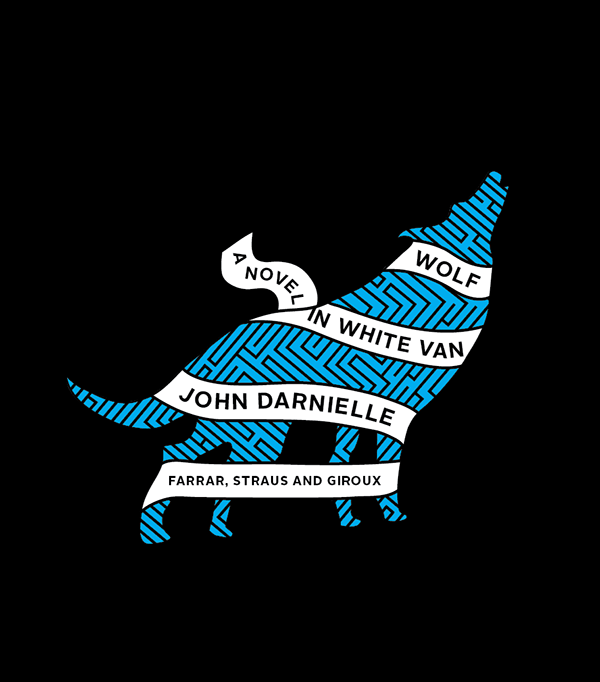
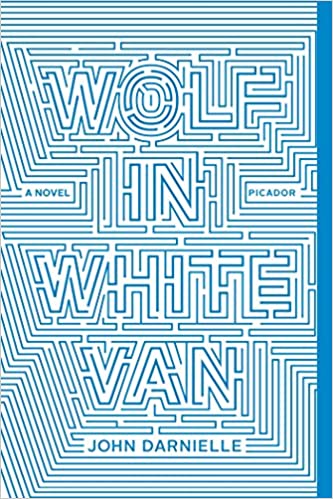
The book cover has the title in turquoise blue against a white background, the letters forming a labyrinthine maze.

By Ben H.

When I was a child, my mind wandered a lot, and most often it would wander to the dark places, as though drawn there by instinct 

Sean Phillips

I am a huge fan of John Darnielle, the author of Wolf in White Van. He records music as The Mountain Goats and released two stellar albums in 2020. New albums aside, the album that matches best with Wolf in White Van is 2012’s Transcendental Youth; more on that later. 

More pertinent to this review, John Darnielle is an accomplished novelist and a 2020 judge for the National Book Awards. His 2014 novel Wolf in White Van, also available from HCLS as an eAudiobook from Libby/OverDrive, is what this review is really all about. 

Wolf in White Van is kind of a tragic novel filled with darkness, piercing insights, humor, and a lot of unanswered or unanswerable questions. Is Sean Phillips, the protagonist of the book, the titular wolf? That is the question that I kept asking myself after I finished reading it.  

Present-day Sean lives alone. A traumatic event in his past left him disfigured and dependent on daily visits from a nurse. He is self-employed as the creator and manager of a pen and paper role-playing game called Trace Italian. Young Sean hatched the idea for a role-playing survival game that participants play through the mail during his long stay in the hospital recovering from the event.

Players pay Sean to explore his vision of a post-apocalyptic future where they chase the rumor of a safe haven called Trace Italian. Monthly or weekly they send him their moves and he tells them what happens next and gives them options for their next move. Two of Sean’s most dedicated players recently suffered a tragic accident because of decisions they made inspired by his game, and he faces the real-life consequences of their actions.

Young Sean is an enigma. Friends and family demand logic, reason, motivation, and rational explanations for his eccentric behavior, but he can’t provide his family with the answers they seek. The reader follows young Sean through episodes that inexorably move him toward the trauma that will change his life.

The novel has a fuzzy quality. The jumps from the present to episodes in the past keep the reader off-balance. The alternate reality of Sean’s role-playing game adds to the uneasy feeling of the novel. Some chapters jump into Trace Italian and describe how players navigate the harsh realities of Sean’s created world. I don’t want to give away the twists and turns, so I’ll stop.

The novel is the story of Sean, Sean’s family and friends, and the people playing Sean’s game. It is also filled with nostalgia. John Darnielle is a collector. He collects memories and feelings. That feeling you got when you watched static on the TV late at night in a kind of trance? John Darnielle remembers it and writes about it. That weird C-movie you watched on Saturday afternoon when you were a kid and no one else remembers ever existing? He remembers it. In fact, he has a VHS copy around here somewhere. 

I don’t think Sean is a wolf in a white van. I mentioned earlier that Transcendental Youth might be the best album to pair with this book, and I think that is because of a certain thematic cohesion. On the first track, a track named after the late Amy Winehouse, John Darnielle sings:

Let people call you crazy for the choices that you make 
Climb limits past the limits, jump in front of trains all day
And stay alive
Just stay alive

Wolf in White Van is full of people making choices that are A: hard to understand for everyone else, and B: dangerous or harmful. Darnielle doesn’t celebrate harmful choices, but he does explore life around those choices. Darnielle writes episodes of levity, kitsch, and nostalgia, but overall this is a book filled with more questions than answers and leaves the reader with the feeling that there might not be answers to some questions.

Ben Hamilton works at Project Literacy, Howard County Library’s adult basic education initiative, based at HCLS Central Branch. He loves reading, writing, walking, and talking (all the basics).

Authors and Stories For You and Me

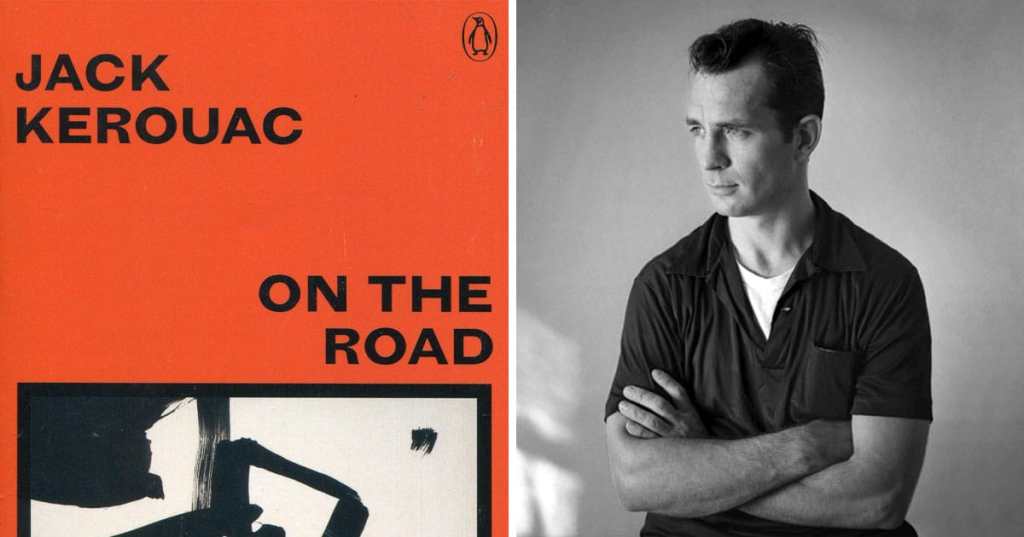
Orange cover of On The Road by Jack Kerouac on the left with a black and white photo of the author on the right with his arms crossed.

By Eric L.

I like books and authors a lot, and periodically I will get on a kick and start reading books by a particular person and then read about the person.  

Jean-Louis Lebris de “Jack” Kerouac has always been one of my favorites, and he was one to celebrate jazz and the outdoors. Kerouac is the person that in theory personifies the “beat generation,” the beatniks, and the counterculture of 1950s America that inspired so many in the 1960s counterculture (which could be argued led to the push for progress in America).  

As a white Catholic from a middle-class background with a deep interest in the counterculture, his work spoke to me. I could feel his guilt for not conforming and appreciate his conservative Catholic hang-ups. His conflicted mind, introspective nature, desire for freedom, and the understanding that he was in some ways the observer and documentarian of counterculture and not so much the progenitor attracted me. 

Revisiting his work over the years, it always changes as the world changes, and more importantly as I change. Thank goodness, I’ve always grown more! I have recently been reading books and articles about Kerouac, re-reading the The Dharma Bums (available in eAudiobook format from Libby/OverDrive) after seeing it quoted in two books I was recently reading. The quote in one was, “Someday I’ll find the right words, and they’ll be simple.” I like this sort of searching and desire for simplicity. 


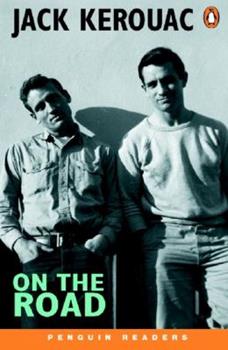
The book cover is a blank and white, bluish-tinted photograph of Jack Kerouac and fellow writer Neal Cassady.
Kerouac and fellow Beat Generation writer Neal Cassady, the inspiration for Dean Moriarty in On the Road.

I also re-watched the recent film adaptations of On the Road and Big Sur, both of which I’d recommend. The former HCLS owns in DVD format; the latter you can borrow using Interlibrary Loan. Some consider Big Sur one of his best novels. It’s the semi-autobiographical account his struggle with fame, depression, and addiction a decade after the publication of his most famous work, On the Road. The raw reality of addiction is sad to be sure, but it’s also a good read and viewing for the description and images of Big Sur. 

To be sure, there’s a lot not to like about Kerouac. The books and film adaptations are misogynistic, self-involved, and privileged in some respects. He drank himself to death at the age of 47, he never found the time know his own daughter, and had become truculent and seemingly illiberal near the end of his life. I could probably find some additional foibles. Conduct an internet search for his appearance on William F. Buckley’s Firing Line in the late 1960s; it’s pretty sad. 

For some reason, many of his contemporaries publicly and negatively commented on him, although John Updike later admitted he was jealous of his fame. James Baldwin described Kerouac’s work as “absolute nonsense, and offensive nonsense at that.” Charles Bukowski, another “beat” writer and poet who is controversial in many ways and the subject of several films, said Kerouac wasn’t that great of a writer, but suggested his fame came from the fact that he looked like a “rodeo star.”  

I’d disagree with Bukowski; there is some poetry in Kerouac’s prose and the performance aspect of it is amazing. Hearing and seeing him read his own work, which was inspired by jazz, is marvelous. His handsomeness certainly did not hurt his celebrity. I was reminded of his style while watching the young Amanda Gorman read and perform her great poem The Hill We Climb at the inauguration.

It was a pretty radical endeavor to hang out in a jazz club in the late 1940s, and I was curious what was so great about this thing called jazz. I now know. Moreover, books concerning his romantic relationships with African Americans and his close relationships with openly gay people were verboten at the very least, and illegal in many places in the US in the 1950s. Moreover, Kerouac’s attraction to and writings about Buddhism interested me very much as a fellow Catholic. 

Kerouac’s explicit mentions of Walt Whitman, Marcel Proust, and other authors piqued my curiosity about these people, and his books gave me a point of reference when reading James Baldwin’s perspective of a similar counterculture from the African American point of view. Really, his work just got me reading, dreaming, and thinking differently than I’d done before. In other words, I’d like to think I was better for it. And I’m fairly certain that these are the reasons why On the Road is still in our reading list section and assigned by English teachers.

I had this conversation with the members of my book group, and they assuaged my guilt a bit for still liking Kerouac. But the times they change, and we change, and maybe Kerouac would’ve changed, too, but maybe not. 

In some cases, there are things that should be left in the past, but I’d contend we shouldn’t dismiss the progressive nature of all art pell-mell. All of us are flawed in some way, and this makes us interesting in my opinion. Indubitably the merits of Kerouac’s work and his reputation are debatable. But Kerouac did reject the conforming ethos of post-war America (something many now want to return to). And personally, he made me feel as though others were attracted to things that don’t quite fit into mainstream American culture. 

My hope is that this bolsters the case for diverse stories, viewpoints, and authors. Everyone needs characters and stories they can relate to and find themselves in. I think it’s a magical feeling to realize there are people that are like you, that feel like you do. So keep reading to find relatable characters and stories. Come by the library and tell us about your interests. We might be able to help, or know someone who can, find the books and authors for you! 

Eric is a DIY Instructor and Research Specialist at HCLS Elkridge Branch. He enjoys reading, films, music, doing nearly anything outside, and people.

Welcome Back to the Enchanted Garden

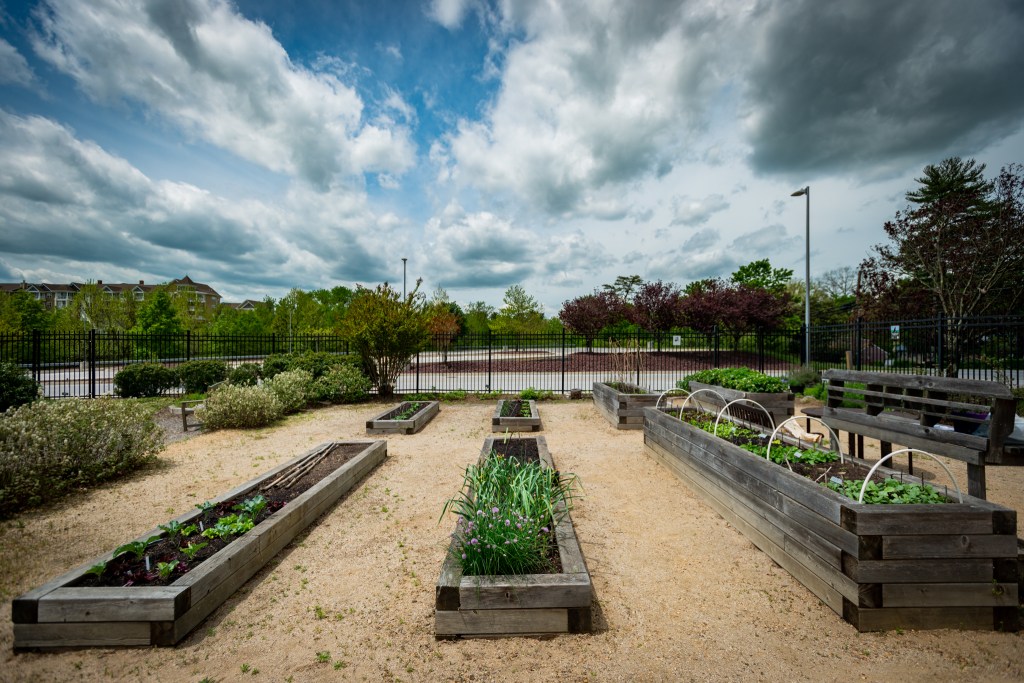
Long shot of raised beds under blue skies and white fluffy clouds.

By Ann H.

It’s time to plan a visit to the Enchanted Garden at the Miller Branch!  We are thrilled to invite visitors back to the garden beginning Saturday, May 8. Come and see what’s growing in our demonstration area, enjoy the blooms of the season, and feel the calming touch of nature.

How much food can we grow in the Enchanted Garden? This year we plan to find out! Our raised beds will be devoted to growing food to donate to the Howard County Food Bank. You’ll find a variety of lettuce, radish, broccoli, and cauliflower happily growing while we thwart the efforts of a nibbling bunny. The strawberries are bursting with blooms, potato shoots are poking up through the soil, and the peas are reaching for their trellis. We have greens galore in an assortment of bib and leaf lettuce.  Plus, we’re busy preparing more beds for summer crops like tomatoes, peppers, cucumbers, and squash.  

Close of young green growing leaves and

A garden bed once devoted to summer annuals will be transformed into an edible landscape. We’re curious about ways to maximize our food yield, provide season-long blooms for the pollinators, and offer beauty to the beholder. Can you picture kale, chard, and basil side-by-side with zinnias, sunflowers, and marigolds? By combining annuals and vegetables in one patch, we hope to create a garden that challenges notions about what makes a garden and what is fitting for the front yard.

Look to the left of the front gate to see our newest garden bed. Thanks to the Howard County Garden Club, we have a new pollinator-themed garden filled with wildlife-friendly native plants and cultivars. Our new garden will support pollinators like bees, butterflies, and moths. We hope it will inspire visitors and budding youth gardeners to garden for wildlife.  

Photo of Enchanted Garden Coordinator Ann Hackeling with a trellis. She's wearing a bright pink shirt, a floral scarf, a blue apron, and a straw hat while smiling at the camera.

Our Enchanted Garden is thriving with the help of many volunteers. We have more weeding and clean-up to do, but we think you’ll enjoy seeing what we’ve accomplished so far. There are new garden beds to behold and so many spring vegetables that you’ll work up an appetite. We look forward to seeing you in the garden soon!

The Enchanted Garden will open during library hours Monday – Saturday, 10 am – 6 pm; Thursday, 10 am – 8 pm. Masks are not required in the Enchanted Garden. Visitors are expected to maintain social distance.

Ann joined the Miller HCLS staff as the Enchanted Garden Coordinator and Instructor in 2012. When not gardening you’ll find her reading, cooking, and exploring trails in the Patapsco River Valley with her husband and dog.