Joan is OK

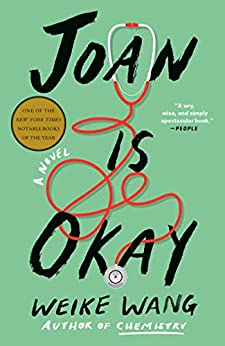
The book cover shows the title in black lettering against a pale green background, with a doctor's stethoscope in silver and salmon tones coiled through the letters of the title.

By Gabriela P.

When we meet Joan, the titular heroine of Wang’s novel, the first assessment might be that her story starts where others potentially end. She has everything: she’s in her mid-thirties, living in Manhattan, and a brilliant attending I.C.U. physician. She is ticking off her American Dream checklist, seemingly without a hitch. Having grown up in California with poor immigrant parents, Joan views professional success as a great equalizer. “The joy of having been standardized,” she says, “was that you didn’t need to think beyond a certain area. Like a death handled well, a box had been put around you, and within it you could feel safe.”

But is Joan, or Jiu-an, OK? Of course she says she is. After all, doesn’t she tell her coworkers so everyday, during their brief and polite interactions? Yet they never feel connected with her and would be the first to doubt her response as genuine. While there is concern from some, as when Human Resources reaches out over her excessive shifts, there are also those who delight in her seemingly irreplaceable work ethic. The hospital director calls Joan, “a gunner and a new breed of doctor, brilliant and potent, but with no interests outside work and sleep.” In the first few pages we spend with her, upon receiving news of her father’s death, she flies to Shanghai for the funeral and back in only 48 hours.

Joan’s wealthy older brother, Fang, thinks she needs to give up the Upper West Side for the safety of the suburbs and start a private practice. His wife, Tami, thinks it’s high time Joan gets married and starts a family, because, “a woman isn’t a real woman until she’s had a child.” Her mother fails to connect with her through shopping, and even her neighbor is a habitual overstepper. To everyone in her orbit, Joan is someone who has to be taught how to live.

But as the story progresses, Joan ends up having to reflect on her obsession with productivity as she takes a hard look at her relationships to family and society. “Was it harder to be a woman? Or an immigrant? Or a Chinese person outside of China?,” she asks herself. “And why did being any good at any of the above require you to edit yourself down so you could become someone else?”

The developing Covid pandemic looms over the few months we spend with Joan, which impacts her personally as well as professionally. Wang details the news coming out of Wuhan and elsewhere matter-of-factly — increasing case counts and deaths, border and business closings — sparking a sense of dread in readers who know all too well what’s coming. Joan deadpans: “Some government officials also believed that it was important to keep the American people informed and reminded of where the virus really came from. So, the China virus, the Chinese virus, the kung flu.” Online she starts to see, “clips of Asian people being attacked in the street and on the subways. Being kicked, pushed and spat on for wearing masks and being accused of having brought nothing else into the country except disease.”

Joan is angry. If there is one thing that Wang knows is important for her character, it’s to keep her emotions unmuted to the reader. While cool on the surface, Joan bubbles underneath. Her deeper self only seeps through via dry comebacks that leave others chuckling uneasily.

So Joan probably isn’t OK. She’s a bit awkward, tense, and has complicated relationships with family as well as an affinity for work that others can’t seem to wrap their heads around. But Wang gives us a character so unapologetically true to herself that you can’t help wanting to get to know her, even when it’s pretty clear that she wants nothing more than to be left alone.

Wang’s narrative poses subtle questions about belonging and the definition of “home.” There are moments of unexpected tenderness and reminders of the devastating toll the pandemic had on communities and the individuals within them. And of course, the reader has to ask themselves at the end whether anyone is really OK, and if it’s such a bad thing to be.

Gabriela is a customer service specialist at the Miller Branch. She loves long walks, reading with her dog, and a good cup of coffee.

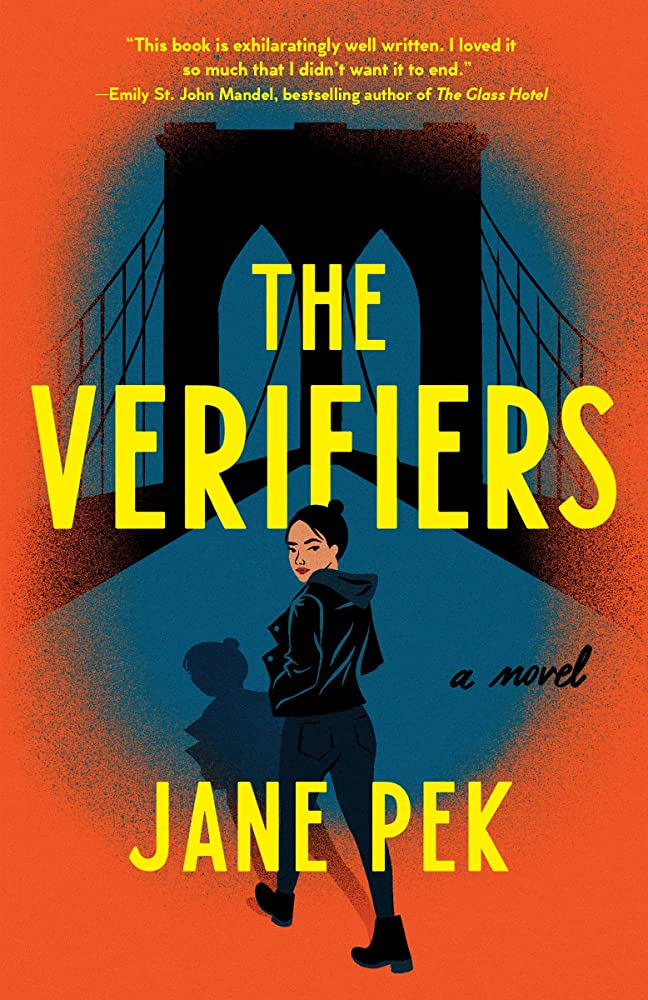
The Verifiers by Jane Pek

An illustrated cover shows a woman dressed all in black, casting a stark shadow, heading over a suspension bridge. The image is blurred into a bright orange background.

by Angie E.

Jane Pek’s The Verifiers is a mix of speculative fiction and whodunit, and it takes place in a world where people rely on matchmaking services to find their soulmate. Sounds familiar, right? But in this book, these services are on steroids. They use algorithms more complicated than a Rubik’s cube and are worshipped by society.

Claudia Lin is no stranger to bucking her family’s traditional expectations; she has no desire to pursue a conventional career or to follow her mom’s dream of finding a “nice Chinese boy.” She’s also accustomed to keeping secrets from them, such as being gay and her recent recruitment by Veracity, an exclusive online-dating detective agency. A master of uncovering lies, having honed her skills through a lifetime of reading detective fiction, Claudia has never used a dating site or had much to do with the digital world.

That all changes when Iris Lettriste, a mysterious client, hires her to investigate two suitors, one of whom she’s never even met. The company who hired her is ready to put Claudia’s expertise to the test. But Claudia’s lack of experience with the digital world and her devotion to detective fiction make her an ill-suited candidate for the job. Her specialty is exposing liars, but this task requires more than just uncovering deceitful spouses, job applicants, and online daters.

Even so, Claudia’s got a hunch that something fishy is going down with Iris. Then Iris disappears from both the real world and the digital world, leaving Claudia high and dry. To make matters worse, Iris deletes all her profiles. What’s going on here? Claudia’s adventure is starting to sound like something straight out of her favorite fictional detective ‘s playbook:

  • Was Iris killed?
  • Did she harm herself?
  • Was she even Iris at all?
  • Maybe she was her own sister?
  • And what’s the deal with her being a broke, heartbroken dropout from journalism school?
  • Or was she a fearless investigative reporter about to expose the dating industry?

Pek takes an already intriguing, sometimes zany, mystery up a notch with a protagonist who’s smart and sarcastic but also rather a bit of an underachiever. The family drama is complex and juicy, and there’s social commentary on how much technology is taking over our lives. Claudia is all about classic noir elements: the mysterious client, the amateur sleuth, and all those pesky red herrings. But here’s the kicker – this book puts a modern spin on things that’ll have you hooked from page one.

If you’re not already one of those people always questioning whether the people you meet online are really who they claim to be, you will be. The Verifiers is also about whether we’re letting algorithms control our lives and if we’re sacrificing our freedom for the sake of convenience and fantasy. I mean, sure, we could just delete our apps and stop searching for truth and happiness online, but who’s really going to do that?

Reads of Acceptance book discussion group meets virtually. Register to join the discussion of The Verifiers on Thursday, April 27 at 7 pm. Books are available for pick-up from the Central Branch; ask for a copy at the Customer Service desk.

Angie is an Instructor & Research Specialist at Central Branch and is a co-facilitator for Reads of Acceptance, HCLS’ first LGBTQ-focused book club. Her ideal day is reading in her cozy armchair, with her cat Henry next to her.

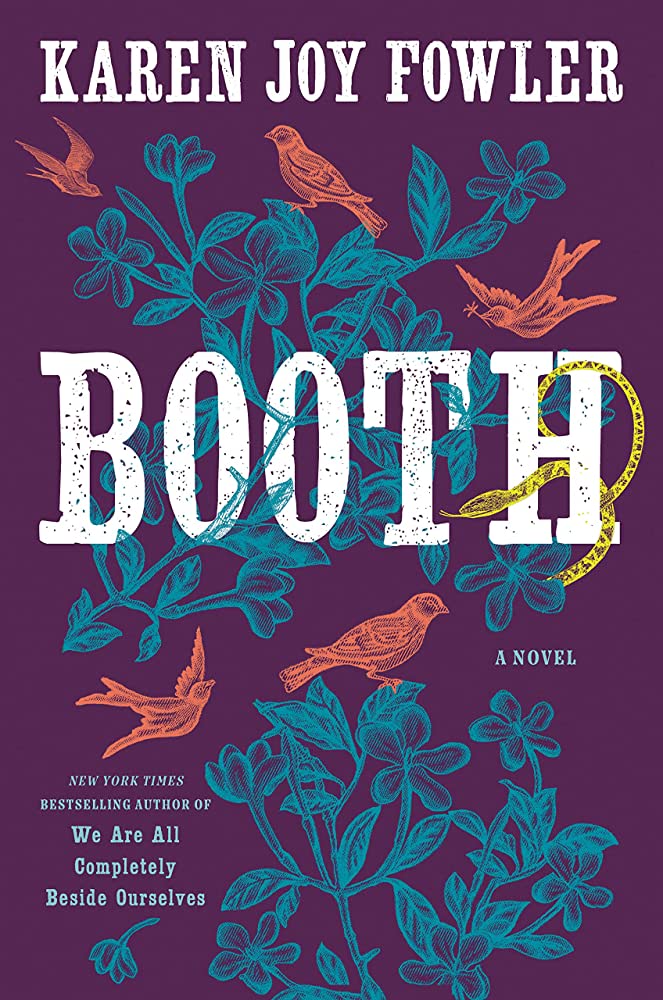
A Ballad of Booth 

Against a deep indigo cover, naturalist sketches of teal flowers and orange swallows intertwine with the big block letters of the title. A yellow snake appears in the H.

by Cherise T.

Notorious. Home to many historical figures, Baltimore lays claim to one of the most reviled, John Wilkes Booth. Legendary. The pinnacle of theatrical performance, Shakespearean acting claims Junius, John’s father, and Edwin, John’s brother, as two of its finest. Radical. One of the highest acts of rebellion, the Underground Railroad claims Richard Booth, John’s grandfather, as one of its aides.  

Booth, by Karen Joy Fowler, explores these, and many other, aspects of an infamous family. The bestselling author of We Are All Completely Beside Ourselves, Fowler has written another dysfunctional family novel. Booth will engage readers interested in local Maryland history, the Lincoln assassination, and disturbing tales of family legacy.  

Enraged by the gun violence epidemic, yet not wanting to glorify an assassin, Fowler began researching the Booth family. With the goal of placing John Wilkes Booth in a broader sociological context, Fowler presents a detailed portrait of Booth’s first-degree relatives as well as his ancestry. I marveled at how the Booth family was at once isolated from and central to the politics surrounding the Civil War. We discover the abolitionist leanings of the majority of the Booth family and gain a limited glimpse into John’s radicalization. I learned a lot but was also left wanting to know more about John’s motivations and the repercussions for his family after the assassination. 

Fowler documents the timeline of Abraham Lincoln’s life alongside the lives of the Booths. We see the violent partisanship that has always been woven into the fabric of US history. At times I wondered why this book had not been written as narrative nonfiction instead. Similar to a solid history text, Booth documents significant quotes, historical events, and primary sources. We learn that Junius Booth frequented the Green Dragon Tavern, a Boston bar where you can still grab a drink. Fowler describes the construction of Tudor Hall, the Bel Air home of the Booths that remains open for tours.  

At the heart of the novel are the stage actors in the family, Junius, Edwin, John, and Junius, Jr. Both Junius and Edwin were internationally renowned for their stagecraft and self-destructive alcoholism. One of the joys of the novel is found in figuring out the sources of Shakespeare quotes the family members use as part of their daily communications. They are a theater family at their core. John was the ninth of ten children, four of whom died before reaching adulthood. Fowler traces these deaths to the lasting impact on the fates of family members. She depicts John as the light of his mother’s life, the golden child born to help ease the family’s pain. 

The novel is well researched, beautifully written, and provides a unique perspective on the Civil War in the context of one family’s experience. The reader connects with the men and the women in the family, as well as their associates, friends, and love interests. Booth would be an excellent choice for a book group discussion.  

Cherise Tasker is an Adult Instructor and Research Specialist at the Central Branch. When not immersed in literary fiction, Cherise can be found singing along to musical theater soundtracks. 

A Season of Spectacular Beginnings

Spring Picks for Little Kids

The photograph is a collage of the six books in the blog post: Garden Day!, Muncha! Muncha! Muncha!, The Hidden Rainbow, On a Snow-Melting Day: Seeking Signs of Spring, Spectacular Spring, and Seeds, Bees, Butterflies, and More. All are against a background of a blue cloudy sky with tall green grasses and pink and white flowers with yellow centers.

By Sylvia H.

Though it is difficult to know if we’ve had our complete winter experience, signs of spring are beginning all around. If you’re ready to welcome spring, here is a selection of books for young children to get you started. As always, if you’re interested in more recommendations, visit your local branch. We will be happy to help!

Spectacular Spring: All Kinds of Spring Facts and Fun by Bruce Goldstone

“Spring is a season of spectacular beginnings.” In the book, Spectacular Spring by Bruce Gladstone, readers are introduced to facts about the season of spring, including answers to questions like, “How do umbrellas work?” and “How do baby birds hatch?” Following a preview to “Super Summer,” the book ends with instructions for six spring-themed activities, including seed jars, dirt for dessert, and mud painting. Striking photos with bright and bold text make this nonfiction book a great selection for elementary-aged children.

Garden Day! by Candice Ransom

Join the brother and sister duo from Apple Picking Day! and Pumpkin Day! as they prepare their garden for spring along with their parents. From gathering tools to watering their plants, the family works together, having fun along the way. With large print, colorful illustrations, and simple, rhyming text, Garden Day! by Candice Ransom is a great choice for emerging readers.

The Hidden Rainbow by Christie Matheson

Winter is melting away, and one little bee is ready to eat! In Christie Matheson’s adorable story, The Hidden Rainbow, the reader is invited to help the little bee find the colors of the rainbow hidden throughout the garden. Tickle tulip leaves, blow flower buds, and more, as this interactive picture book combines the concepts of colors, counting, and simple lessons about bees and flowers. Preschool readers can enjoy the watercolor illustrations, and everyone will learn something about the importance of bees and pollination.

Muncha! Muncha! Muncha! by Candace Fleming

It’s the most anticipated battle of the spring: Mr. McGreely versus three hungry bunnies! Mr. McGreely prepares the garden of his dreams, filled with lettuce, carrots, peas, and tomatoes. He is not, however, prepared for the obstacles he will face trying to protect his garden from the sneaky bunnies enjoying the yummy veggies. Determined to make his garden bunny proof, Mr. McGreely works to make his garden bigger and better. Will it be enough to stop those “pesky puff-tails”? Readers can enjoy cheering for the bunnies or Mr. McGreely in this silly and enjoyable story.

On a Snow-Melting Day: Seeking Signs of Spring by Buffy Silverman

How do we know when spring is on its way? In this book, readers are introduced to some of the various signs of spring, from the drifting of ice and drooping of snowmen to the warming of flowers and singing of blackbirds. The back of the book provides informative descriptions about the subjects mentioned in the book, great for discussing with preschool and early elementary-aged children. With astounding photography and simple, rhyming text, young readers will enjoy learning how to search the world around them for signs of spring.

Seeds, Bees, Butterflies, and More! Poems for Two Voices by Carole Gerber

What can be better than learning about the wonders of springtime? Learning about the wonders of springtime through interactive poetry! The poems in this book are made to be read aloud by two voices, delineated through spacing on the page and colors of the text. Readers are introduced to a variety of information about the plant and insect worlds, including seed germination and pollination, in an enjoyable format with bright, beautiful illustrations.

Sylvia is a Children’s Instructor and Research Specialist at the Miller Branch. She enjoys crafting, listening to audiobooks, naps, and walks with her dogs in 75 degree-ish weather.

The Singing Hills Novellas

The three novella coves in a row, in pinks, oranges, and blues.

by Kristen B.

Novellas have gained in popularity recently, and I suspect it’s because you get the satisfaction of a complete story without committing to a doorstop of a book. This holds particularly true in the speculative fiction genre, where 500+ page tomes are the norm. Nghi Vo is a master of this short form.

She has crafted a series of stories that follow cleric Chih of the Singing Hills Monastery as they travel, collecting stories as they go. Singing Hills specializes in history and folklore. The most reliable way Chih can elicit a story from someone happens when they tell one version of a tale. Their listener often says something to the effect of, “that’s not how I heard it,” and proceeds with the “correct” version. Chih is accompanied by a talking hoopoe bird with perfect recall named Almost Brilliant – but their interactions are entirely so. You can enjoy three installments to date, with a fourth coming this fall.

The Empress of Salt and Fortune (which won Hugo and Locus awards for best novella) is an amazing story of empire and ambition, with important details found in what is omitted as much as in what is overt. Chih visits a mostly abandoned country estate, where the only person living there happens to be the maidservant (and lover) of the former empress. She certainly has a story to tell our Singing Hills cleric! It’s one well worth the price of mild disorientation as you put the pieces of a major event together with Chih. Vo recounts this seemingly unimportant woman’s story in elegant, poetic language and imagery.

When the Tiger Came Down the Mountain may offer the best example of survival by asking for the corrected version of a story. As long as Chih keeps the tigers talking, they stay (mostly) safe until an expected contingent of mammoths can arrive to scare the hunters away. Tigers, you see, are proud creatures, clearly superior to humans. Just ask them. They also fall in love and prey to tricky foxes. The glory of this installment comes from understanding tigers as people – who are also hungry animals who regard Chih as a snack. It’s a wonderful story about relationships, empire, and living up (or down) to expectations.

Into the Riverlands brings Chih into the orbit of a group of travelers. This time they are in the riverlands, a delta area full of braided streams and marshlands where many rival martial arts masters co-exist – sometimes peacefully, often not. Here, Almost Brilliant shines by having a familiarity with the legendary personalities and combat styles involved. Again, beginning a story often elicits other versions and corrections. This installment offers more adventure, starting with the initial brawl in a tavern and ending with a spectacular battle. Many clues and inferences come together for an entirely satisfying conclusion.

I can’t wait to see where Chih and Almost Brilliant go next. Several colorful threads stitch these stories together: a non-Western milieu in the fantastical empire of Ahn; mostly humble, working-class protagonists, who nonetheless make a difference in their world; and cheerful acceptance of a generally queer outlook on the world. Beyond Chih’s non-binary identity, the books celebrate that love comes in many forms. We must all be true to our hearts, which is not a bad theme for some light-hearted books.

Kristen B. is a devoted bookworm lucky enough to work as the graphic designer for HCLS. She likes to read, stitch, dance, and watch baseball in season (but not all at the same time).

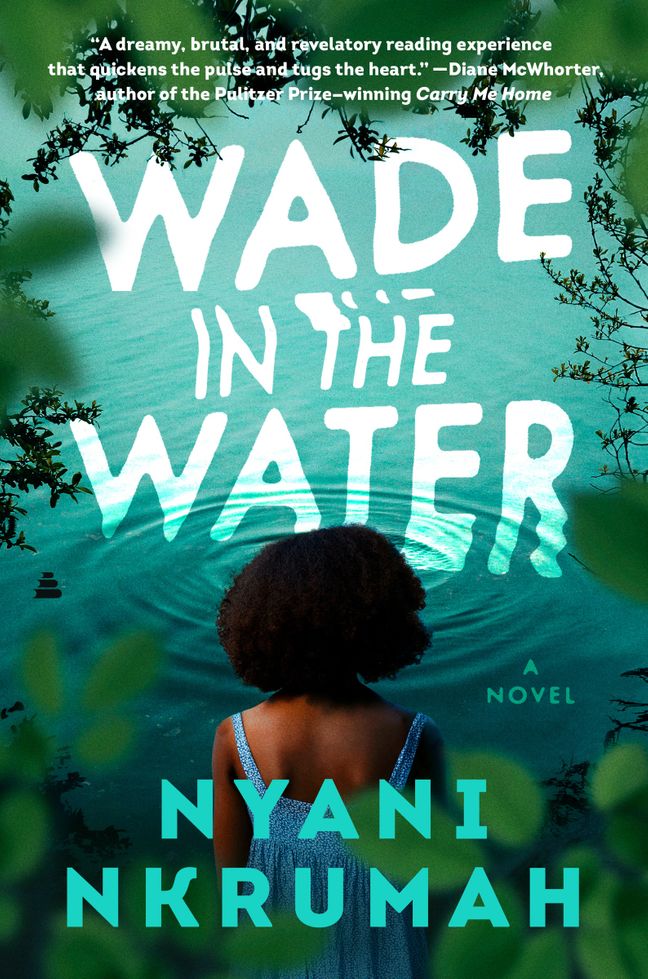
Meet Nyani Nkrumah, Author of Wade in the Water

The viewer peers through leaves at a young Black girl standing at the edge of water where ripples circle.

“Stunning…The author is supremely gifted at bringing both her characters and their close-knit rural town to life. Readers will eagerly await more from this writer.” — Publishers Weekly (starred review)

Mon, Mar 27; 7 – 8 pm
HCLS Miller Branch and online
Register at bit.ly/AuthorNyaniNkrumah

Resonant with the emotional urgency of Alice Walker’s classic Meridian and the poignant charm of Sue Monk Kidd’s The Secret Life of Bees, this gripping debut novel of female power and vulnerability, race, and class explores the unlikely friendship between a precocious black girl and a mysterious white woman in a small Mississippi town in the early 1980s.

More from Publisher’s Weekly:

Nkrumah’s stunning debut revolves around an unlikely friendship between an 11-year-old Black girl and a middle-aged white woman in 1982 Ricksville, Miss., and the segregated town’s fraught history. Intelligent, questioning Ella stands out in her light-skinned Black family because she is the result of her mother’s fling with a much darker-skinned man. Her ne’er-do-well stepfather Leroy is seldom home, but when he is, he takes out his rage and humiliation by sexually abusing Ella, while her mother treats her with contempt and frequent whippings. Meanwhile, a white Princeton University professor named Katherine St. James, who was raised in Mississippi, stirs things up when she moves into the Black half of town for a research project. Though it’s been almost 20 years since the killings of three voting-rights activists nearby, the case remains unsolved and racial tensions still run high. Against this backdrop, Katherine becomes a tutor and mother figure to the love-starved Ella, but as shocking revelations emerge about Katherine’s past in 1960s Mississippi, Nkrumah leads readers to reflect on the limits of the professor’s good intentions. The author is supremely gifted at bringing both her characters and their close-knit rural town to life. Readers will eagerly await more from this writer.

Nyani Nkrumah was born in Boston and grew up in Ghana, West Africa, and later Zimbabwe. Nyani graduated from Amherst College, has a Masters from the University of Michigan, Ann Arbor, and earned a Ph.D from Cornell University. A Fulbright Fellow, she lives in the Washington, DC area with her family and works in international development.

For the Love of Irish Poets

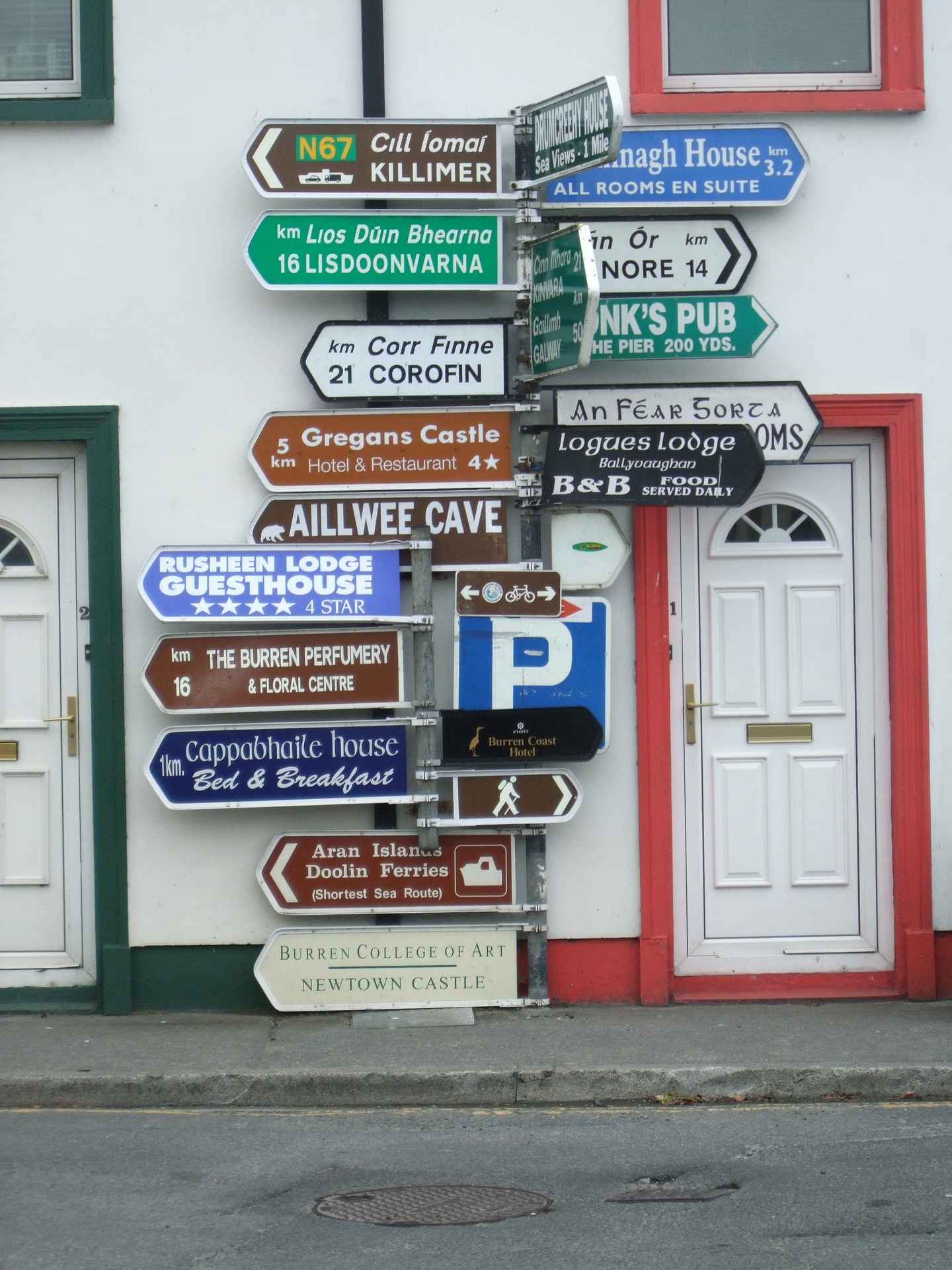
A road sign between two doors, with full post of signs in English and Gaelic.

by Cherise T.

Where tales be told, words be woven, and music be made, an Irish poet can be found. Indulge in the glorious Irish literary tradition by exploring the riches of Boland, Heaney, and Yeats. One of Ireland’s, and the English language’s, most famous poets, William Butler Yeats won the Nobel Prize in 1923 for his works such as “The Second Coming,” where the phrase “Things fall apart; the centre cannot hold” was born. His poems embrace the mythological, the historical, and the political while adhering to traditional verse structures. An excellent starting point for those new to Irish poetry is the anthology, The Collected Poems of W.B. Yeats.

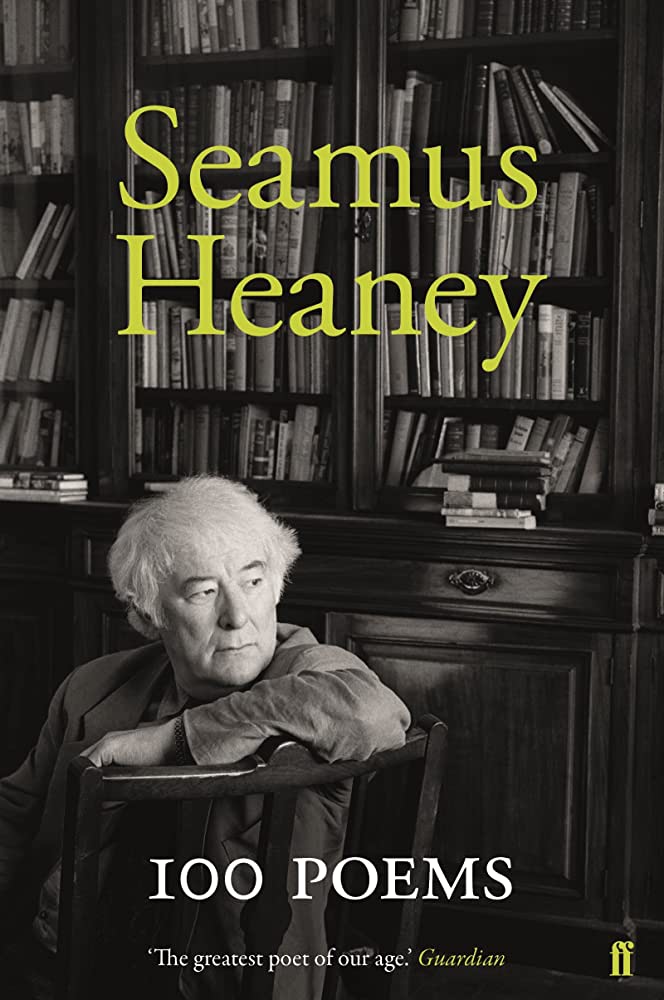
Poet Seamus Heaney sitting in front of full bookshelves, looking over the back o

Scaffolding by Seamus Heaney

Masons, when they start upon a building,
Are careful to test out the scaffolding;

Make sure that planks won’t slip at busy points,
Secure all ladders, tight bolted joints.

And yet all this comes down when the job’s done
Showing off walls of sure and solid stone.

So if, my dear, there sometimes seems to be
Old bridges breaking between you and me,

Never fear. We may let the scaffolds fall
Confident that we have built our wall.

Written in 1966 around the time of Heaney’s marriage, ”Scaffolding” is a unique expression of love and devotion. Heaney was awarded the Nobel Prize in 1995, and while his writing also leans toward history, much of the content is personal. Feast on the rich, precise language in his compilation, 100 Poems. The collection includes an excerpt from “The Cure at Troy” where this renowned stanza is found:

History says, Don’t hope
On this side of the grave,
But then, once in a lifetime
The longed-for tidal wave
Of justice can rise up,
And hope and history rhyme.

Eavan Boland, the most contemporary of the three, subverts tradition, exploring women’s daily lives in the context of feminism and Irish history. In A Woman Without a Country, Boland addresses a range of women, from Eurydice to her own daughter. In the eponymous poem sequence, she writes about her grandmother, “What troubled me was not whether she had included her country in her short life. But whether that country had included her.”

Our online collection includes the Gale LitFinder resource. At hclibrary.org, go to the Research tab and select the Literary Criticism & Analysis section. In LitFinder, use the search term “Irish poetry” or enter an author name, subject, or document type (such as “sonnet”) to explore additional classical through contemporary works by Irish poets.

Cherise Tasker is an Adult Instructor and Research Specialist at the Central Branch. When not immersed in literary fiction, Cherise can be found singing along to musical theater soundtracks. 

Relax and Align with the Healing Flame Collective

Members of the Healing Flame Collective posing with their instruments.

By Holly L.

Do you want to give meditation and mindfulness practice a try, but don’t know where to begin your journey? 

Join us on Saturday, March 18 from 1-3 pm at HCLS Miller Branch for an afternoon of informal meditation and mindfulness in an open setting brought to you by The Healing Flame Collective.  

Founded by musical team Janice Buerkli (known in her community as “Janice B.”) and Maurice Carroll, The Healing Flame Collective is a group of musicians, sound healers, and energy workers united by the common cause of healing. According to Janice B., “the concept and purpose of the group is to help as many people as possible with the combined healing power of music, meditation, energy work, and vibrations in a live experience.”   

Attendees of the free session on March 18 experience guided meditation and breath work, sound healing vibrations, and a mini seated Reiki session. For those new to Reiki, it is a Japanese technique for stress reduction and relaxation that promotes healing. Reiki is based on the idea that “life force energy” flows through us and causes us to be alive. If one’s “life force energy” is low or blocked, then we are more likely to get sick or feel stressed. Sound Healing also works with energy and uses a variety of singing bowls, tools, and instruments in specific frequencies and vibrations designed to promote healing. Benefits of Reiki and Sound Healing include a reduction in stress, anxiety, and depression, alleviation of physical and emotional pain, an increase in gamma brain waves which aids in cognitive function, and increased relaxation. Participants should feel encouraged to participate at their own comfort level and have the opportunity to ask questions. All who attend should emerge from the session feeling more relaxed and aligned. Janice B. describes the event as, “a great opportunity to try out these healing modalities without committing to the time and cost of a full in-person session.”

Learn more about the Healing Flame Collective at www.thehealingflamecollective.com  

Holly is an Instructor and Research Specialist at the Miller Branch. She enjoys knitting, preferably with a strong cup of tea and Downton Abbey in the queue.

Library’s Got Game

A single orange basketball sits on a wooden court.

by Brandon B.

March Madness historically has been known as one of the most exciting sporting events of the calendar year. Before you fill out your bracket for the men’s and women’s NCAA basketball tournaments, consider brushing up on your basketball bona fides with the Library. Sixty-eight teams earn spots in the men’s tournament and 32 teams for the women every year. All teams compete in the three-week basketball tournament in their respective regions, vying to make it through to the Sweet Sixteen and Final Four on their way to the Championship game.

Read some terrific accounts celebrating the joy of the game from HCLS’ collection. Former NBA player and ESPN analyst Jalen Rose wrote Got to Give the People What They Want to explain his experiences as a student-athlete at the University of Michigan. Rose was a part of the first college basketball team to start five freshmen in a season.

Kwame Alexander’s Newbery Award-winning The Crossover is a great book for teens who have a passion for sports and poetry. The Crossover is available in a number of accessible formats for teens. The original novel is available as a print book, an audiobook on CD, an e-book and an e-audiobook from Libby/OverDrive, and as an e-book from CloudLibrary. The 2019 graphic novel version, which was a nominee for the Black-Eyed Susan Award, is available in print and as an e-book from Libby/OverDrive.

Cover of Sum It Up by Pat Summitt, with a close up of her face looking to the right.

University of Tennessee coach Pat Summitt’s book Sum it Up: 1,098 Victories, a Couple of Irrelevant Losses, and a Life in Perspective (also available as an e-audiobook from Libby/OverDrive) chronicles her life journey and legendary career, which resulted in eight national championships. In her memoir, Pat Summitt also shares her battles with Alzheimer’s disease and cancer.

You can also watch some of the great basketball films to get in the spirit. The classic film Hoosiers, starring Gene Hackman, showcases a team that battles adversity and triumphs just like all the colleges in the NCAA tournament. Love and Basketball stars Sanaa Lathan and Omar Epps and tells the story of two childhood friends who share their love for each other through their basketball journey.

Just like a great novel or film, the end or destination is not the best part but the journey. When the champion is crowned at the NCAA tournament this year, hard work, determination and adversity, are important characteristics that will help them succeed. It’s time for the tip-off; enjoy the games!

Brandon is a Customer Service Specialist at HCLS Central Branch who loves reading, football, and taking nice long walks around his neighborhood.

March is Women’s History Month

Two large flowers: a pink hibiscus above a white plumeria, with other yellow petals behind the plumeria and a blue background above the hibiscus. Overall, a bright pastel compostion.
Georgia O’Keeffe, Hibiscus with Plumeria, 1939, oil on canvas, Smithsonian American Art Museum, gift of Same Rose and Julie Walters, 2004.30.6

By Emily B.

In honor of Women’s History Month, let’s take a closer look at the “Mother of American Modernism,” Georgia O’Keeffe. One of the most prolific artists of the 20th century, O’Keeffe is best known for her large-scale paintings of flowers.

O’Keeffe was born in Wisconsin in 1887, the second of seven children. By age 10, O’Keeffe decided she would be an artist. Her big break came in 1916 when, unbeknownst to her, famed photographer Alfred Stieglitz presented her art in New York City. This marked the beginning of O’Keeffe and Stieglitz’s tumultuous relationship. O’Keeffe would soon move to New York and become Stieglitz’s muse, appearing in hundreds of his photographs. The pair would go on to marry, following an intense affair.

O’Keeffe’s marriage to Stieglitz, who was 23 years her senior, was far from perfect. Though Stieglitz provided O’Keeffe with studio space and connections in the art world, there was a major power imbalance and he was not faithful. His long-term affair with another photographer took a toll on O’Keeffe’s mental health. Despite this, the pair remained married until Stieglitz’s death in 1946.
In the 1920s, O’Keefe began creating large-form flower paintings. Almost immediately, male art critics began to assert that the “essence of very womanhood permeates her pictures.” While her husband promoted and capitalized off these remarks, O’Keeffe was not comfortable with the claims. She said, “…when you took time to really notice my flower, you hung all your own associations with flowers on my flower and you write about my flower as if I think and see what you think and see of the flower — and I don’t.”

O’Keeffe’s artistry was highly sought after. In 1938, she was sent to Hawaii on an all-expenses paid trip, where she was meant to produce a pineapple painting for an advertisement campaign. After nine weeks in Hawaii, O’Keefe had the beginnings of many beautiful works depicting Hawaii and its flora, but there was nary a pineapple painting. She would not complete the contracted pineapple painting until the fruit was shipped to her in New York City.

Through her career, O’Keeffe would befriend other artistic greats. O’Keeffe and Ansel Adams had a friendship spanning 50 years, no doubt bonding over their deep passion for the natural world. O’Keeffe befriended Frida Kahlo in 1931 and there is evidence to suggest they perhaps were romantically involved.

Throughout her life, Georgia’s passion for art never wavered. Even as she grew frail and her eyesight began to deteriorate, continued painting with assistance and even learned to work with clay. O’Keeffe’s appreciation for nature is timeless and is surely why she has remained one of the most beloved American artists.

Artwork by Georgia O’Keeffe and her artist friends is available to borrow from the Art Education Collection at the Central and Glenwood branches.

Emily is an Instructor & Research Specialist at the Central Branch. She enjoys puzzling, reading, listening to music, and re-watching old seasons of Survivor. 

Selected Women’s History Month Classes

Creating the Legacy
For adults. Register here.
In the world of codes and ciphers, women have always played a role. Throughout American history, women have provided vital information to military leaders, searched for enemy secrets, and pioneered new scientific fields. Learn about the contributions and talents women have brought to cryptology. Presented by Jennifer Wilcox, Director of Education for the National Cryptologic Museum.
Sat, Mar 11; 3 – 4 pm
Savage Branch

Forgotten Women Writers of the 17th Century and Beyond
For adults. Register here.
Women’s History Month provides the perfect time to recognize that for every Austen, Dickinson, and Bronte, another unheard-of author lived who was every bit as good! Discover new-to-you women authors to add to your To Be Read list.
Wed, Mar 15; 7 – 8 pm
Central Branch

Women’s History Month Button Making
For all ages; under 12 must be accompanied by an adult. Register here.
Votes for Women! Celebrate the historical significance of buttons in the women’s suffrage movement by making one. Design your own or use a template featuring historical women’s suffrage slogans and important women throughout history.
Wed, Mar 22; 7 – 8 pm       
Central Branch

Amazing Women: How Did They Build That?
Ages 6-10, 45 minutes. Ticketed; free tickets available in branch 15 mins before class.
Learn about artist/architects Maya Lin and Zaha Hadid, the innovative structures they created, and how they stay up. Design and build structures with various materials.
Fri, Mar 31; 2 – 2:45 pm
Central Branch