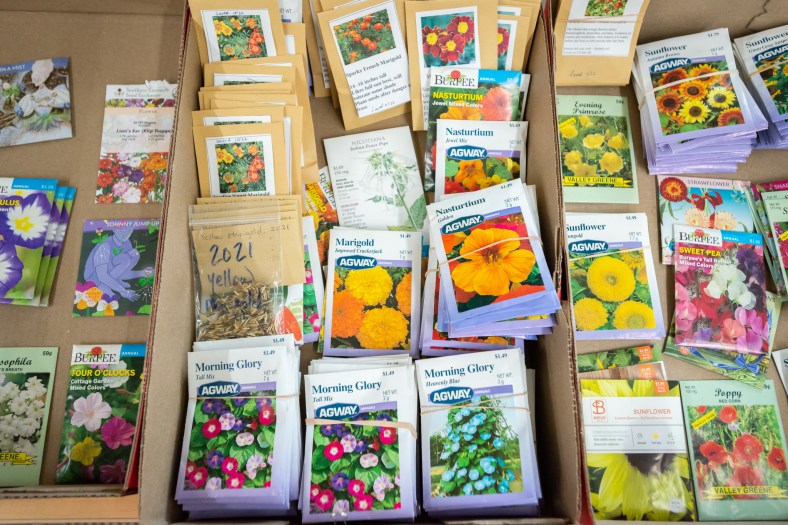
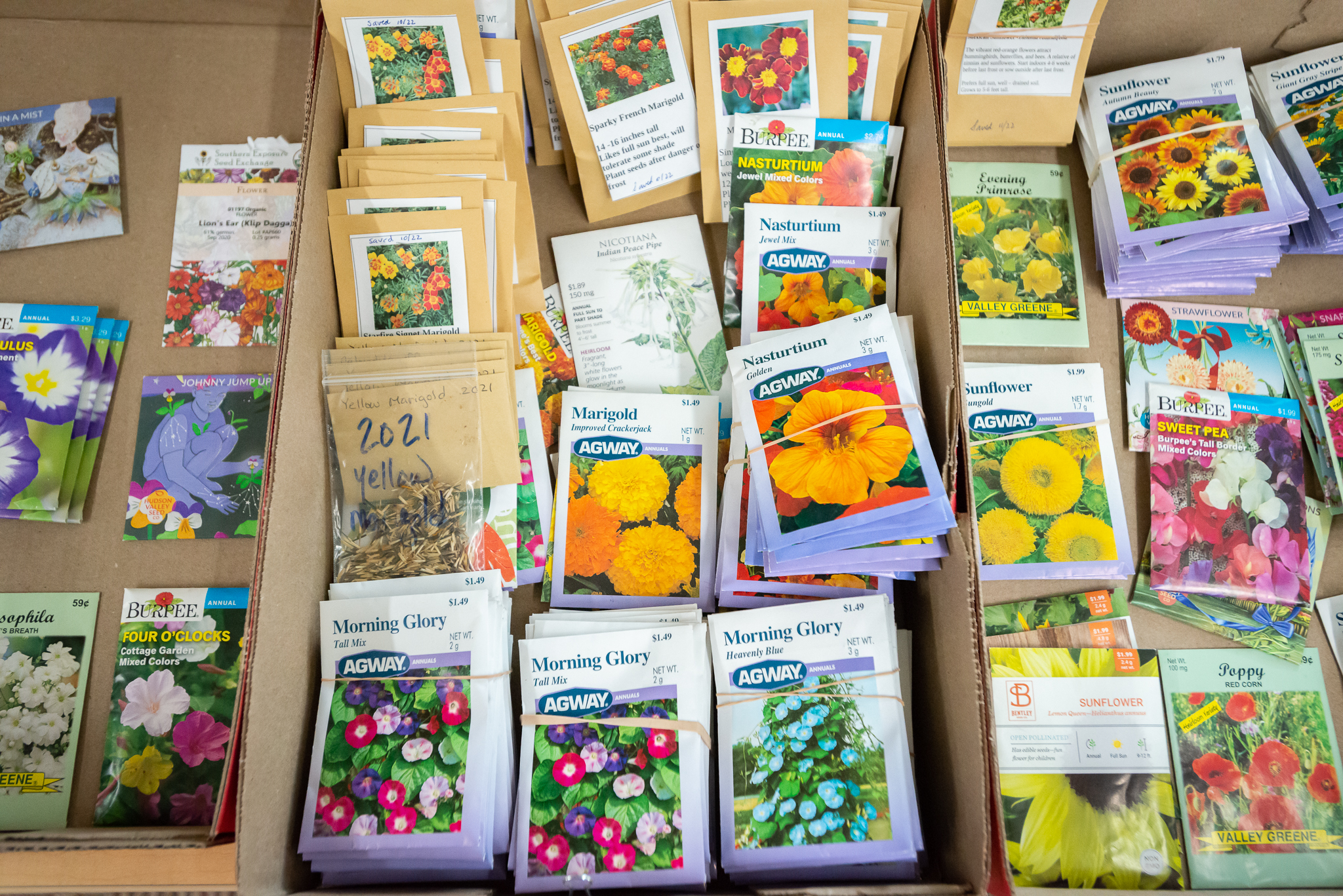
The 2nd Annual Howard County Seed Share event is in the books! 

Howard County Seed Share held at HCLS Miller Branch.

by Erica C.

The outdoor temperature of a chilling 25 degrees Fahrenheit did not stop us from gathering at the Miller Branch on Saturday afternoon to plan, learn, and discuss all things gardening. We distributed thousands of free seed packets collected from local gardeners around the county and seeds donated from companies like Baker Creek, Southern Exposure, and Seed Savers Exchange. The offerings included vegetables (from asparagus to zucchini), herbs, perennials (with a focus on native varieties), and annuals.  

Customers look at seed packets laid out on long tables during the seed swap.

There were demonstrations for participants to learn how to start flower and vegetable seeds in milk jugs or compost in their own backyards, and tables to learn more about local greening organizations. Over 300 attendees ranged from budding gardeners and novices to Master Gardeners who have been growing for over 20 years.
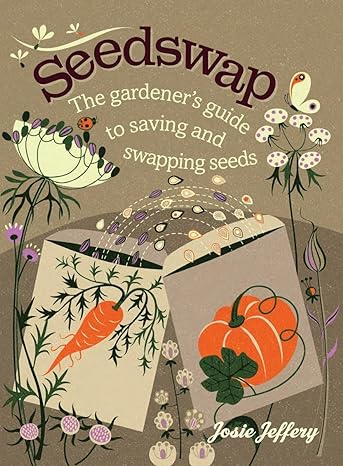
The book cover illustrates two cardboard containers of seeds, one decorated with a carrot and one decorated with a pumpkin, with seeds flying between them whimsically, as if the containers are "swapping" their seeds. Surrounding them are several flowers in shades of white, purple, and green, an orange ladybug resting on one of the flowers, and an orange and white butterfly on another flower.

Seed sharing and seed starting are excellent activities for gardeners to work on during the cold winter months in Maryland. When snow is still on the ground and temperatures are icy, germinating seeds under a grow light is a fun, rewarding activity for adults and children alike. If you are interested in these topics, HCLS has a wide array of resources in our collection for you to choose from:

Thank you to the many partners, volunteers, and participants who made this event a huge success. We can’t wait to see you next year.

Erica C. is in her dream role as the Enchanted Garden Instructor at the Miller Library. When she’s not tending to the garden, you can find her cycling along the C & O Canal, experimenting with new recipes from around the world, or curled up with her coffee and a good read.

Expressing Your Creativity

by Sahana C.

With the start of the new year comes the chance to start afresh, to explore new interests or hone old skills, and to follow through on resolutions that allow you to unlock your creativity. What better place to get inspired than the library? Across our branches, we’ve got innovative technology and tools to make your creative visions come to life. From the Makerspace at Glenwood Branch to the DIY Education Center at Elkridge Branch all the way to the A/V Lab at Savage Branch, there’s plenty to inspire your imagination.

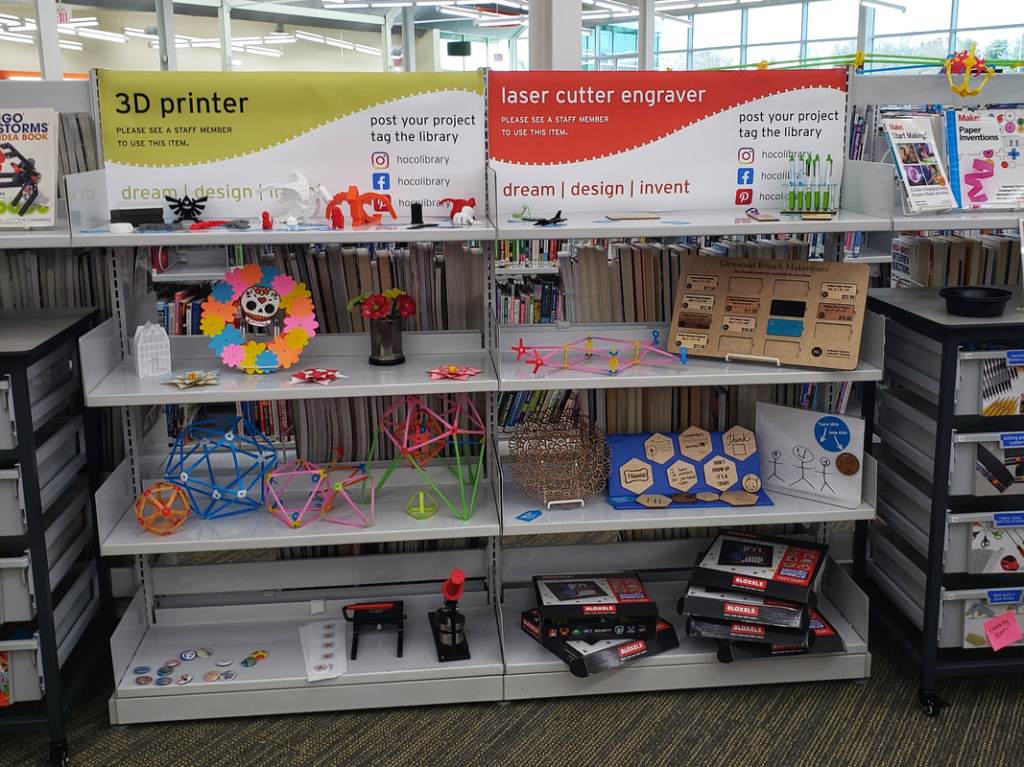
Signs advertising a 3D printer and laser cutter engraver, with examples of projects created by them on the shelves beneath, including keepsake ornaments and 3D printed flowers.
Creations from the Makerspace at HCLS Glenwood Branch.

The Makerspace at Glenwood is a one-stop shop for all things design. With tinker bins, there’s opportunity for crafting and inventing in all sorts of innovative ways. The 3D printer is a professional grade machine and with a Glowforge, Cricut, large-format printer, a digital memory station, and a recording booth, there’s plenty to explore. The Makerspace area serves people ages eight and up, but for younger folks, the Builder’s Barn is a great place to bring designs into life. While some of the Makerspace products have associated costs for materials, you can design from start to finish. You can take Makerspace classes at Glenwood Branch. If you don’t have time to make your project, though, the Maker-To-Order system allows for HCLS staff to print or cut your fully designed files.

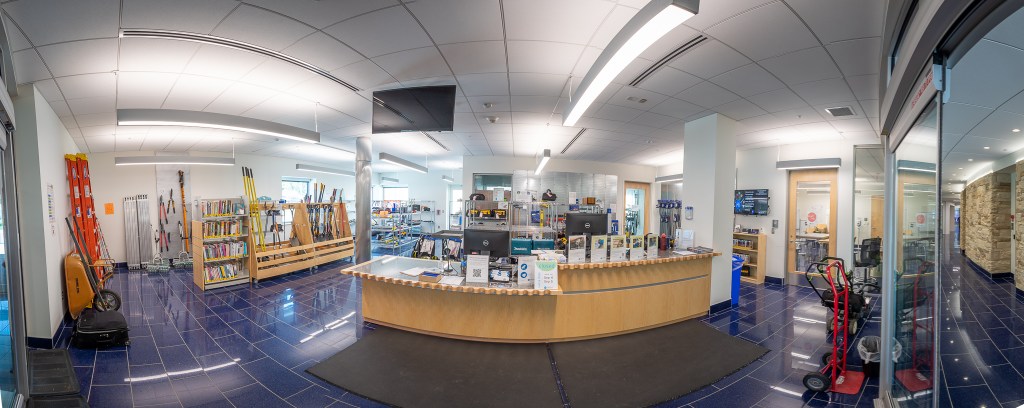
The photograph centers the customer service desk at the Elkridge branch's makerspace, with a wheelbarrow, ladders, and an array of books and tools to the left and behind, and a dolly and other equipment to the right.
The DIY Education Center at HCLS Elkridge Branch.

The DIY Education Center boasts a vast collection of tools for all ages, ranging from baking, biking, camping, crafts, gardening, or home improvement. The instructors are always excited to help those interested in engaging with the available tools at DIY classes held at Elkridge. The DIY Education Center even has a studio, a “mess-friendly” classroom, and a workspace. To borrow from the DIY collection, you must have a DIY library card, available to those 21 and older, who live, work, or attend school in Maryland.

Library customers stand outside a recording booth, which contains a microphone and a set of headphones draped over the mic stand.
Recording booth in the A/V Lab at HCLS Savage Branch.

The A/V Lab at Savage Branch also boasts a recording booth and 3D printer. During regular A/V Lab hours, a staff member can answer basic questions about the computer software. You can use the instruments in place, and as always, classes cans help familiarize you with each tool. Schedule a one-on-one appointment at the Savage Branch & STEM Education Center page on hclibrary.org.
If you want to find out more about how to unlock your creativity at the library this year, check out our classes, and visit us at the Makerspace, the DIY Education Center, or the A/V Lab.

Craft Works
For adults. Register here.
Let your creativity shine in a relaxed and welcoming environment. Each month, learn about different art media and explore new techniques.
Classic Book Flowers
Tue Feb 8 2-3:30 pm Central Branch.

A/V Lab
For teens and adults. Registration preferred here.
Drop-in to use the equipment in the A/V Studio. Record and mix music or create and edit movies with the help of a HiTech instructor. Walk-ins welcome.
Every Wednesday 5 – 7 pm Savage Branch.

Book Earrings and Charms
For teens & adults. Register here.
Make unique jewelry inspired by your favorite books.
Tue Feb 27 7 – 8:30 pm Elkridge Branch.

Sahana is an Instructor and Research Specialist at the Savage Branch. They enjoy adding books to their “want to read” list despite having a mountain of books waiting for them already.

Evening in the Stacks and Branch Raffles

A Flower-full Evening in the Stacks
February 24, 2024 | 7 – 11 pm
HCLS East Columbia Branch
hclibrary.org/stacks

Tickets on sale now! January 10: $100
February 1: $125 for one/$225 for two

Entice your senses at this lush affair filled with dreamy enjoyment and delight. Refresh at the open bar, bloom on the dance floor with DJ Bugatti, and enjoy a bouquet of activities with our Flower-full Mart and photo ops.

  • Entertainment features dancers and drummers, including Stepping Stones Performers.
  • Gourmet cuisine by Rouge Catering
  • Libations by The Wine Bin and Sobar
  • Cocktail attire (floral touches welcome), black tie optional

This year’s proceeds benefit HCLS’ early childhood initiatives that help our community’s budding learners grow.

Friends & Foundation of HCLS Branch Raffles

Raffle tickets are $5 each and you can win any of these prizes:

  • Six branch community baskets with donations from area businesses.
  • Two tickets to Evening in the Stacks on February 24 (in branch sales only)
  • Grand prize: PS5 gaming console 

Last day to purchase raffle tickets is February 21. Winners will be drawn by February 26 and notified by email.

The Miller Branch raffle basket containing a variety of gift cards, treats, and Cat in the Hat and Thing One and Thing Two stuffed toys. The baskets are tied up with cellophane and red ribbon and are resting on the Miller Branch checkout counter with the raffle ticket boxes in front of them.
HCLS Miller Branch’s raffle basket.

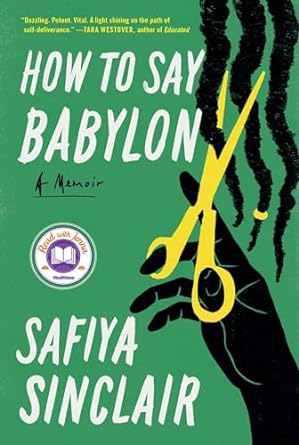
How to Say Babylon by Safiya Sinclair

The cover shows a hand holding a pair of yellow scissors and cutting three dreadlocks that are dangling from above; one has a yellow bead at the end.

by Piyali C.

Babylon, according to the strictest sect of Rastafari, is the corrupting influence of the Western world on Black people. Safiya Sinclair’s father, a follower of the religion’s most militant faction, was obsessed with the purity of his three daughters and determined to keep the immorality of Babylon from touching them. Howard Sinclair, who later took the name Djani to feel closer to his Rastafarian beliefs, was a staunch follower of Haile Selassie. He wanted to sing reggae songs, never touch his dreadlocks, and seek livity – the Rastafarian concept of righteous living. The precept meant he should raise his children in the Rastafarian tradition and live a life of harmony with his partner, Esther, the mother to his four children.

Djani was a musician with big dreams. After being rejected by his own mother for following the Rastafarian religion, after repeated failed attempts to make a name for himself in the music world, and finally, after having to relegate his music to being a source of entertainment for rich tourists (baldheads, as he called them, due to the lack of dreadlocks) visiting his homeland of Jamaica, Djani grew increasingly militant in his belief in the harmfulness of Western influences. Safiya, his oldest child, bore the brunt of his obsession with keeping the deceitful ways of Babylon out of his gate.  

Safiya’s childhood was spent near the sea and seemed almost idyllic. Her father left home every day to play his music at the hotels, and her mother nurtured her and her siblings with love and nourishment. Her parents met at the tender age of 18, found commonality in their Rastafarian beliefs, and never married but decided to make a life together. Esther became a demure Rastafarian woman who stayed home to nurture their children, cook Ital food, never disagree with her man, and do every household chore silently. Despite her quietude, she instilled a culture of hard work and a desire to achieve excellence in all of her children.

As a result, Safiya and her siblings excelled in school, scoring the highest grades in their exams. Djani continued to play music in hotels and even made a couple of trips to Japan to form a music band. He was the undisputed leader of his household just as his religion dictated. Safiya accepted this dynamic in her childhood, but Djani’s obsession about Safiya’s purity took a dangerous turn as she became an adolescent. Held captive by her father’s vicious efforts to keep her body and mind pure, Safiya turned to writing poetry to express her confusion, anger, and helplessness. The beautiful expression of her suffering through her art started resonating with the outside world, and Safiya won accolades and fame for her poetry. Gradually, Safiya grew into the woman that she wanted to become and not the woman her father envisioned her to be – another duty-bound and voiceless Rastafarian wife to a Rastafarian husband.

How to Say Babylon is a brutally honest portrayal of a life that initially felt nourishing and enriched with a lot of laughter, love, and filial admiration, but which soon turned into one of oppression and control. This is a story of a courageous woman’s endeavor to dictate the course of her life on her own terms, despite the shackles that threatened to hold her captive. While telling her own story in radiant, lyrical prose, Sinclair also paints a picture of the oppression of Black people by the Western world, the racial injustice, and the voices of women that are forcibly silenced by patriarchy. Yet those voices are still finding a way to ring free. Sinclair’s memoir recounts the history of Rastafarian religion– a religion that started as love and benevolence but which turned to fanaticism and radicalism on the part of some who wanted to use it to their own benefit and to control women. How to Say Babylon is also Safiya Sinclair’s love letter to her beloved Jamaica, her mother Esther, and her siblings Lij, Ife, and Shari.

As I read, I felt Sinclair wrote in order to set herself free and embark on a path to find forgiveness in her heart for the man who wronged her in a most cruel way. Writing a memoir is such a brave thing to do. Authors who write about their innermost pain, fear, and experiences allow themselves to be completely vulnerable. Such vulnerability is the first step towards healing, strengthening, and growing. In author Tara Westover’s words, How to Say Babylon is “Dazzling. Potent. Vital. A light shining on the path of self-deliverance.” I could not put this book down. 

How to Say Babylon by Safiya Sinclair is available in print, large print, e-book and e-audiobook formats. 

Piyali is an instructor and research specialist at HCLS Miller Branch, where she facilitates Light But Not Fluffy and co-facilitates Global Reads. She keeps the hope alive that someday she will reach the bottom of her to-read list.

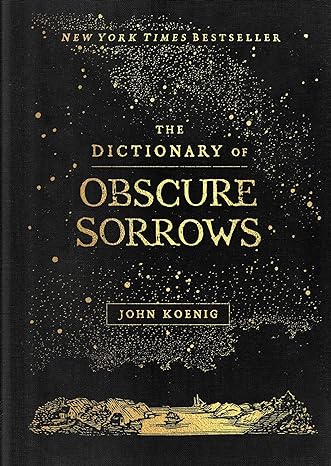
The Dictionary of Obscure Sorrows by John Koenig

The book cover depicts boats on a body of water running between two hilly stretches of land, with a brilliant dark sky full of stars above.

by Angie E.

In The Dictionary of Obscure Sorrows, John Koenig goes deep into feelings that often have no definition. The words aren’t just definitions; they’re like secret passageways to whole new worlds of feelings. It’s like they are saying: “Hey, check out these emotions you never knew you had names for!” 

Each entry is like a mirror showing emotions we didn’t know we had. “Sonder,” for instance, is the sweet yet sad realization that every random person out there has a life as wild and complicated as yours. There’s also “opia,” that vulnerable moment when eye contact makes you realize that there’s a whole universe of unspoken stuff between souls. 

But the one that hits me the hardest is “moledro: a feeling of resonant connection with an author or artist you’ll never meet, who may have lived centuries ago and thousands of miles away, but still can get inside your head and leave behind morsels of their experience.” 

Koenig’s ambiance is all about busting out of the silent jail that locks up our feelings, pushing us to chat about the gaps between us. In a world where tech connects and disconnects us, The Dictionary of Obscure Sorrows is like a rock, keeping us grounded in the crazy, beautiful ride of being human. 

With every page turn, Koenig holds our hand, guiding us on this epic trip—a journey of connection, finding ourselves, and realizing that we’re all on the same ride in the wide world of feelings. At the end of the day The Dictionary of Obscure Sorrows isn’t just a book; it’s like this crazy venture into what makes us human. It’s like having a quiet chat with your soul, an invite to get cozy with all the feelings that make us who we are. 

As the author writes in his introduction: “It’s a calming thing, to learn there’s a word for something you’ve felt all your life but didn’t know was shared by anyone else. It’s even oddly empowering—to be reminded that you’re not alone, you’re not crazy, you’re just an ordinary human being trying to make your way through a bizarre set of circumstances. That’s how the idea for this book was born, in that jolt of recognition you feel when learning certain words for emotions, especially in languages other than English: hygge, saudade, duende, ubuntu, schadenfreude.” 

The Dictionary of Obscure Sorrows is available in print, e-book, and e-audiobook.

Angie is an Instructor & Research Specialist at Central Branch and is a co-facilitator for Reads of Acceptance, HCLS’ first LGBTQ-focused book club. Her ideal day is reading in her cozy armchair, with her cat Henry next to her.

Life-Giving Giants

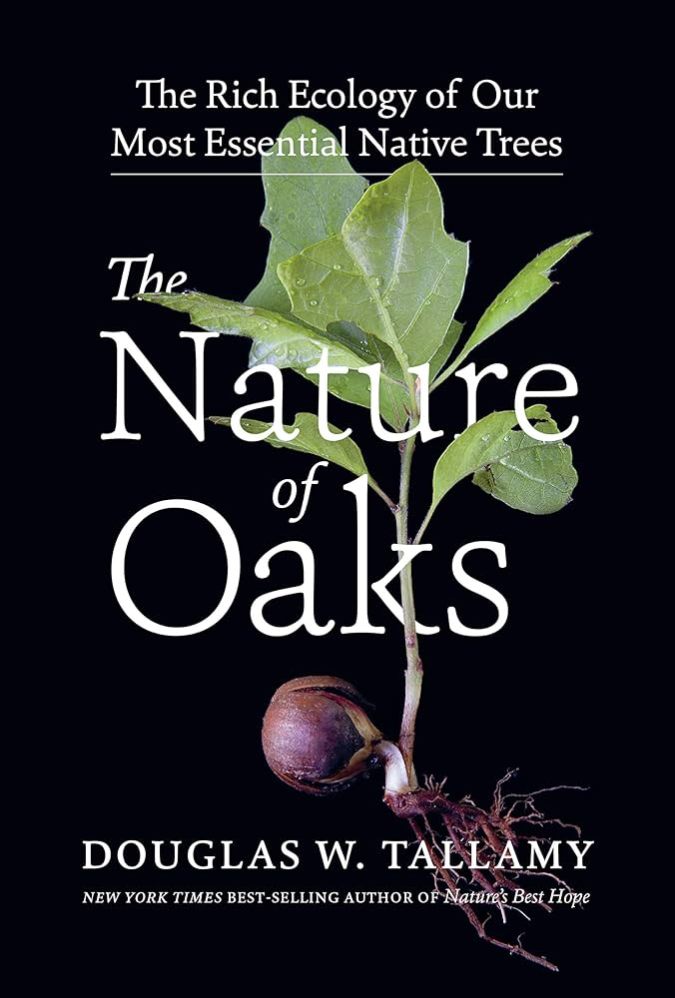
A black cover features a clear photograph of a sprouting acorn with a set of oak leaves.

By Erica C.

Doug Tallamy has established himself as one of the conservation movement’s most esteemed advocates, and he shows us how we can make a difference in the future of the planet. I recently attended one of his talks, “Nature’s Best Hope” named after his New York Times best-selling book. Through captivating storytelling, Tallamy transforms a topic that often sends me into a spiral of despair into one of optimism by offering effortless solutions to environmental restoration, like leaving your leaves or thinking twice about calling Mosquito Joe.

I was moved by his talk so I immediately reserved his books from the library. I started with The Nature of Oaks: The Rich Ecology of Our Most Essential Native Trees. An oak tree alone supports 511 species of moths and butterflies, 100 more than its closest competitors, the native cherries, and 487 more than the beloved redbud. Only three species have been found on crepe myrtles and one on Callery pear (both non-native to North America). (Tallamy, 2021). That is not to say we shouldn’t plant a variety of native trees species, it simply demonstrates an oak’s life-supporting potential. The mighty oak not only sustains a complex food web, its enormous root system provides ecosystem services like carbon sequestration, watershed management, and soil stabilization. The Nature of Oaks is filled with fascinating stories, highlighting some of nature’s wonders and giving readers a new appreciation for the natural world. If you are called to learn how you can play a role in environmental conservation, look no further than Tallamy’s delightful reads.

This movement will not be successful in silos, rather, it has to be a collective effort. Consider visiting the upcoming Howard County Seed Share to pick up native seeds and chat with local gardeners on the afternoon of January 20 at HCLS Miller Branch.

On February 20, you can hear Tallamy speak at the Sustainability Symposium hosted by Landscape Contractors Association. Register for the event here.

Finally, mark your calendar for April 13 when Howard County hosts Green Fest, the county’s largest celebration of Earth Day, connecting residents with resources that can help anyone be a good environmental steward. Join HCLS for gardening and environmental classes throughout the year. To see our upcoming event schedule, search for Gardening & Environment in the Library’s calendar. 

Tallamy, D. (2021). The Nature of Oaks. Portland, Oregon: Timber Press.

Erica C. is in her dream role as the Enchanted Garden Instructor at the Miller Library. When she’s not tending to the garden, you can find her cycling along the C & O Canal, experimenting with new recipes from around the world, or curled up with her coffee and a good read.
Global Neighbors Series: Lunar New Year

Paper cut image of a panda.

The staff here at the Miller branch have had such fun highlighting the cultures of the different countries from which many of our community members come through our Global Neighbors Series. Not only have we put in a lot of work to display the different traditions of the countries we have spotlighted but our wonderful community members have volunteered their time and talents as well to exhibit their cultures by performing their traditional dances, music, martial arts, recitation, and crafts for us. Through the Global Neighbors series, our community has had the chance to peek into our neighbors’ lives and celebrate our diversity. We believe the more we know about each other’s cultures, the better we understand each other to create a more cohesive community. 

 We learned about Korea in May, about India in October and we will get a glimpse of the rich cultural heritage of China as we celebrate Lunar New Year with one of the largest demographics in Howard County. Howard County Library System is partnering with Chinese Parent Association of Howard County (CAPA) to bring to you traditional Chinese music and dance, senior choir, Peking Opera, tai chi, wushu (another form of Chinese martial art), Chinese calligraphy, and Chinese paper craft.

We invite you to join us on February 3 at 2 pm at Miller Branch to enjoy the performances by our community members and celebrate Lunar New Year in Global Neighbors Series – China.

Register for the event. Registration is preferred, not required. 

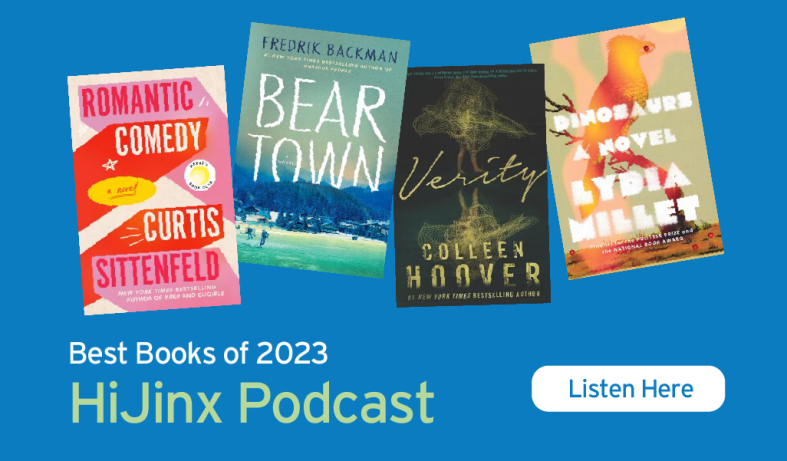
HiJinx Podcast: Best Books of 2023

The photograph shows four book covers selected from the podcast list against a blue background.

By Jessica L.

“Tsundoku” is a whimsical Japanese term for collecting books in piles… to be read… eventually. You may have been practicing this without knowing there was a term for it! So, how did you do with your “To Be Read” pile this past year? Are you ready for more recommendations? Here you go!

Listen to our recent Hijinx podcast, Best Books of 2023, featuring voices from HCLS staff and community members. Past episodes can be found here.  

Favorite Books Read in 2023 from HCLS Staff & Customers 

The book cover depicts a figure standing at the top of a set of stairs in an alcove, hands behind back, looking at a large painting on a wall.

All the Beauty in the World: The Metropolitan Museum of Art and Me by Patrick Bringley

Beartown Trilogy (Beartown, Us Against You, The Winners) by Fredrik Backman 

Belle of the Ball by Mari Costa 

The book cover depicts a bird with something round like a berry in its mouth, sitting on a branch, in shades of orange and gold against a hazy green background.

Dinosaurs by Lydia Millet 

Hell Followed with Us by Andrew Joseph White 

The book cover depicts trees, branches, and undergrowth in the foreground and a lake and hills in the background, all in blue and white like a woodcut style that has been colorized.

Landmarks by Robert MacFarlane 

Leg by Greg Marshall 

Lone Women by Victor Lavalle 

The cover is in grey lettering against a black background, with a black snake winding in and out of the letters in the title.

Ninth House by Leigh Bardugo 

Remarkably Bright Creatures by Shelby Van Pelt 

Romantic Comedy by Curtis Sittenfeld 

The book cover depicts a woman with long hair and a bouquet of flowers in an off-shoulder white dress, sitting on a broomstick in front of a full moon in a dark sky.

Slewfoot: A Tale of Bewitchery by Brom

The book cover depicts snow falling on the roofs and chimneys of houses in a village or town. The snow is white and the buildings and background are emerald green.

Small Things Like These by Clarie Keegan 

The Sweetness of Water by Nathan Harris 

The Ten Thousand Doors of January by Alix E. Harrow 

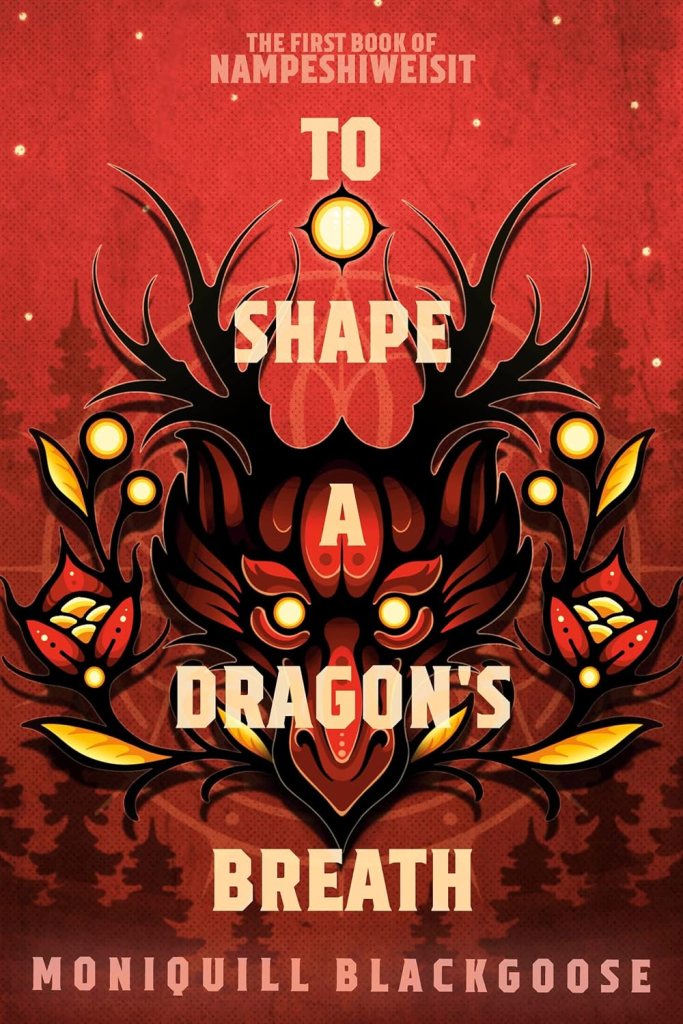
A illustration of a dragon like mask with horns. Pine trees are in the background.

To Shape a Dragon’s Breath by Moniquill Blackgoose 

Verity by Colleen Hoover (#1 Book requested and borrowed in 2023) 

The book cover depicts a cat, a pile of books, a coffee cup with a polar bear design, a white pillow with pink trim, and a leafy green plant in a terracotta pot, all framed by a black window frame against a blue sky and outdoor scene of other buildings and a tree with pink foliage.

What You Are Looking for Is in the Library by Michiko Aoyama 

JP has worked at HCLS since 2006. She is disappointed that the original Muppet Babies cartoon series is unavailable for streaming anywhere.  

AI and the Future of Work and Business with Adam Davidson

Adam Davidson wears a pink button down shirt and has his arms crossed. He stands in front of a large yellow smiley face.
Adam Davidson

Wed, Jan 24 | 7 – 8 pm online
For adults. Register here.

Adam Davidson is an expert at demystifying complex topics, and he applies these skills to the most crucial issue of our time: the rise of AI. This talk is geared towards curious laypeople—from college students to business decision-makers—who know that AI is likely to transform their careers and business and need a clear framework to understand this new revolutionary technology. AI, he explains, will create massive new winners and, yes, a bunch of losers, as it rewrites our economic rules.

Davidson is the co-founder of NPR’s Planet Money podcast and a staff writer at The New Yorker, where he covers economics and business. Previously he was an economics writer for The New York Times Magazine. He has won many of journalism’s most prestigious awards, including a Peabody for his coverage of the financial crisis. All of his work has been focused on making the complex, confusing, sometimes depressing news about the economy it clear to a broad audience.

His work has appeared in The Atlantic, Harper’s, GQ, Rolling Stone, and other publications. He has served as a technical consultant in Hollywood, including to Adam McKay, co-writer and director of the Academy Award-winning film The Big Short.

Career Success Month
Jan 22 – Feb 23, 2024
Find a full listing of events here.
Maryland public libraries launch a new year with a month of programs on entrepreneurship and job advancement. During this month, classes focus on financial skill building and digital knowledge to navigate our rapidly changing work environment. These impactful, results-driven classes and programs occur in a mixture of in-person, virtual, and hybrid formats.
Hosted at library branches throughout Maryland and sponsored by the Maryland State Library Agency, these programs provide information from subject-matter experts.

Examples include:

  • Design thinking for entrepreneurs
  • How to work the gig economy
  • The joy of owning a small business in retirement
  • Learning Canva
  • Mindfulness at work
  • Speed mentoring
  • Resume building and interview preparation


Studying to Succeed

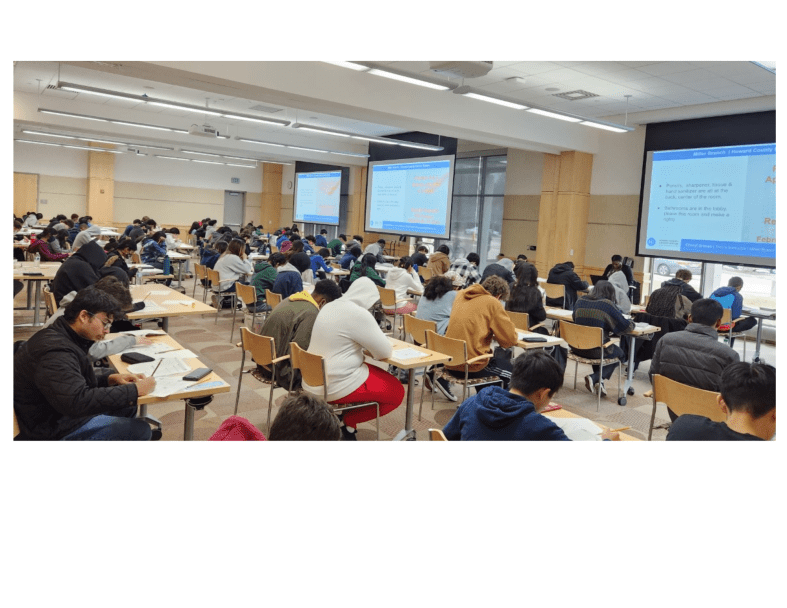
The photograph shows students in an SAT test prep class at HCLS Miller Branch taking the practice test in three meeting rooms.

by Cherise T.

Do you ever wonder where all those navigation tabs at hclibrary.org go? One of the answers is homework help! Adult, teen, or child: you have access to library resources to bolster your learning needs. FREE experienced help is available online via Brainfuse with online tutors in many subjects, daily from 2 – 11:55 pm.

  • math through calculus II
  • science through college introductory biology, chemistry, and physics
  • language arts
  • social studies

You can also access test prep for the SAT and ACT. The platform includes Spanish Foreign Language Lab, GED practice tests, and a Writing Lab. Brainfuse tutors also review resumes, cover letters, and academic papers. Students can submit homework questions for tutor guidance and followup. Brainfuse even provides flashcards in hundreds of subjects and allows you to create new sets.

Under the Research tab, you can find the Test Prep, Practice Exams, and Career Research section with Peterson’s Test & Career Prep and LearningExpress Library. Both include practice tests, study modules, and e-books to boost student skills and confidence from grade school through career advancement. Topical practice tests are available for:

  • high school and college entrance exams
  • graduate, nursing, medical, dental, and law schools
  • Armed Services Vocational Aptitude Battery (ASVAB)
  • Praxis

For students who require additional professional support in the classroom, an IFSP (Individualized Family Service Plan) and IEP (Individualized Education Program) may be recommended. Two books, Nolo’s IEP Guide: Learning Disabilities and The Complete IEP Guide: How to Advocate for Your Special Ed Child, offer direction in successfully arranging educational services. They include definitions, sample forms, and guidelines for resolving disputes. Each child and each school district is unique, so understanding your student’s rights facilitates academic success.

On Wednesday, Jan 17 at 11 am, HCPSS Early Intervention Services offers a Zoom class to educate parents on the IFSP and IEP. Register here.

Cherise Tasker is an Adult Instructor and Research Specialist at the Central Branch. When not immersed in literary fiction, Cherise can be found singing along to musical theater soundtracks.