
By Piyali C.
On July 19, 2022, educator and school librarian Amanda Jones spoke up against censorship at a Livingston Parish Library Board of Control meeting in Louisiana. Her speech focused on inclusivity, the freedom to read, and the importance of representation of diverse thoughts, beliefs, experiences, and community in a public library’s collection. Little did she know that her speech about her public library’s collection would result in a storm of bigotry, hatred, and vitriol against her, on a personal level. What followed can only be termed a nightmare. Members of nationalist, White Christian groups started bullying Amanda Jones mercilessly on social media, accusing her of grooming children and putting sexually graphic content in the hands of children.
Jones writes about how she was affected: how the defamation took a toll on her health and her personal life, and how she found inner strength with the support and love of her family, friends, and wider community members locally and nationally. She rose above the fray of pettiness of the individuals who bullied her for her speech and her fight to preserve intellectual freedom. She fought her way through, stood up straight, and discovered her strengths and weaknesses in the process. She did not ask to be a hero, but she fought back, instead of backing down, when she was so wrongfully attacked by ultra-conservatives for defending everyone’s freedom to read. She made mistakes, but she eventually learned to respond with meticulous fact-gathering, background-checking and analyzing, and most importantly, with grace. All that she learned at library school about curating information came in handy in her campaign against ignorance and bigotry.
It was an excellent read, especially because I believe in everyone’s right to read whatever they want to with all my heart. Like Amanda Jones, I believe that representation matters. Kids, and everyone, deserve to see themselves in the materials they read. It is the responsibility of parents to monitor what their child is reading, not the library’s. There is a due process in place to ask a library to reconsider any material in the collection, and customers should avail themselves of that if they want to request libraries to remove materials – but one individual (or a group of them) who does not agree with the content should not take priority over the need for representation.
My only criticism of this book is not its message but that some ideas were repetitive. It seemed like some of the chapters were written as essays and the same idea was repeated, and the repetition took the edge off the author’s important message. I would rather have the message of intellectual freedom being reiterated than not.
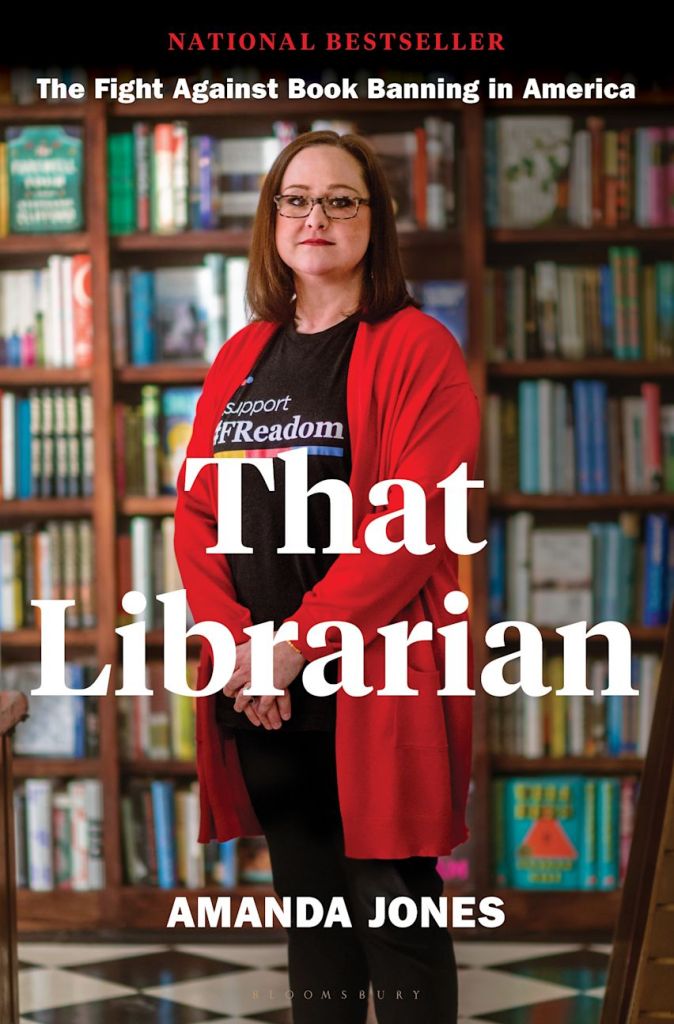
That Librarian: The Fight Against Book Banning in America by Amanda Jones is available from Howard County Library System in print, large print, and e-book formats.
Piyali is an instructor and research specialist at HCLS Miller Branch, where she facilitates two book discussion groups: Light But Not Fluffy and Global Reads. She keeps the hope alive that someday she will reach the bottom of her to-read list.
 CHAPTER CHATS