
by Ash B.
Every year, instructors from HCLS Central Branch put together the Books for Discussion list and promote titles from it at our annual Book Club Revue. (If you missed it, you can watch this year’s Book Club Revue on YouTube.) Titles are selected from both established and debut authors across all genres, with consideration of whether the book is ‘discussable.’ Books that yield great discussions often have compelling characters and thought-provoking themes, leading to conversations not only about the story itself but also current events and readers’ own experiences. (For more book club tips, check out our Community Book Clubs page.)
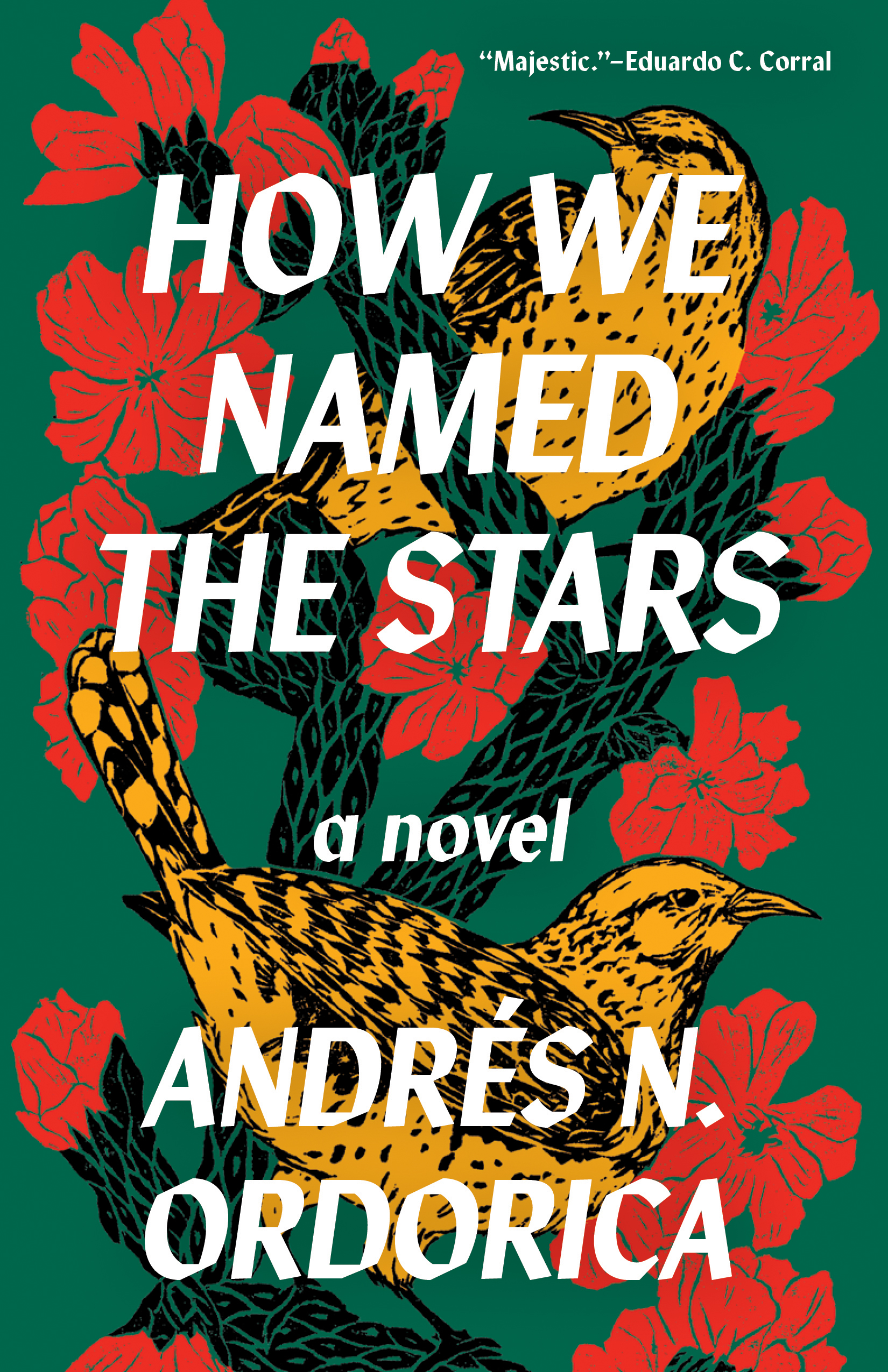
Out of a hundred titles on the list, the one I’m championing most often is How We Named the Stars by Andrés N. Ondorica. If there is one novel I want you to read before year’s end, it is this one! Ordorica has waltzed into my heart as one of my new favorite authors with this debut, and the characters he created will have a special place in my heart for years to come. Set in his first year of college, the protagonist Daniel is a first-generation Mexican-American creative writing student who develops an unexpected closeness with his roommate Sam. Over the course of the novel, Daniel navigates insecurities, queer desire, grief, and self-discovery.
Ordorica writes the type of atmospheric prose that I want to crawl into, curl up, and live inside forever. While this book is deeply tragic, it is thoughtfully so, and it defies the tropes you might expect of queer or Latino characters (which was very welcome and refreshing). Despite immense heartbreak, Daniel’s story is ultimately so hopeful and healing. It reminds me of my long-time favorite YA novel, Aristotle and Dante Discover the Secrets of the Universe by Benjamin Alire Sáenz. While their plots are quite different, they are both tender, lyrical coming-of-age stories that include friends-to-lovers romance and nuanced family dynamics. They also explore the particular challenges and joys of being both gay and Mexican-American, influenced by the lived experiences of their respective authors.

Aristotle and Dante is set in 1980s Texas – a notably difficult time and place to come out as gay – with the boys approaching the end of high school. How We Named the Stars is more contemporary – while never specified, it is likely set in the 2010s – and it begins at an East Coast university, where there is a queer community for Daniel to explore. Whereas Aristotle must come to terms with being gay over the course of an entire novel, and in isolation, Ordorica’s Daniel more-or-less understands he is gay from the outset. His story shows a journey towards outwardly claiming and living that label, first in community with other queer people, secondly in relation to an intimate partner, and finally, as an out gay man to his Mexican family. Both novels are valuable contributions to the growing canon of queer Mexican American literature, and I recommend both wholeheartedly.
Aristotle and Dante was one of the first LGBTQ books I read as a teenager, and it helped me inch towards realizing that I was part of that community. Fast forward to 2024: reading How We Named the Stars in my late twenties helped validate the struggles I faced in early adulthood. If I could go back in time and give my college-aged-self one book to read to help me get through life’s challenges, it would be this one. If you want a book that fills up your heart, shatters it into pieces, and then puts it back together again, How We Named the Stars is a perfect book for you.
Ash is an Instructor and Research Specialist at the Central Branch with a passion for information literacy and community engagement. They love music, gardening, hiking, and cuddling with their golden retriever.
 CHAPTER CHATS