
by Angie E.
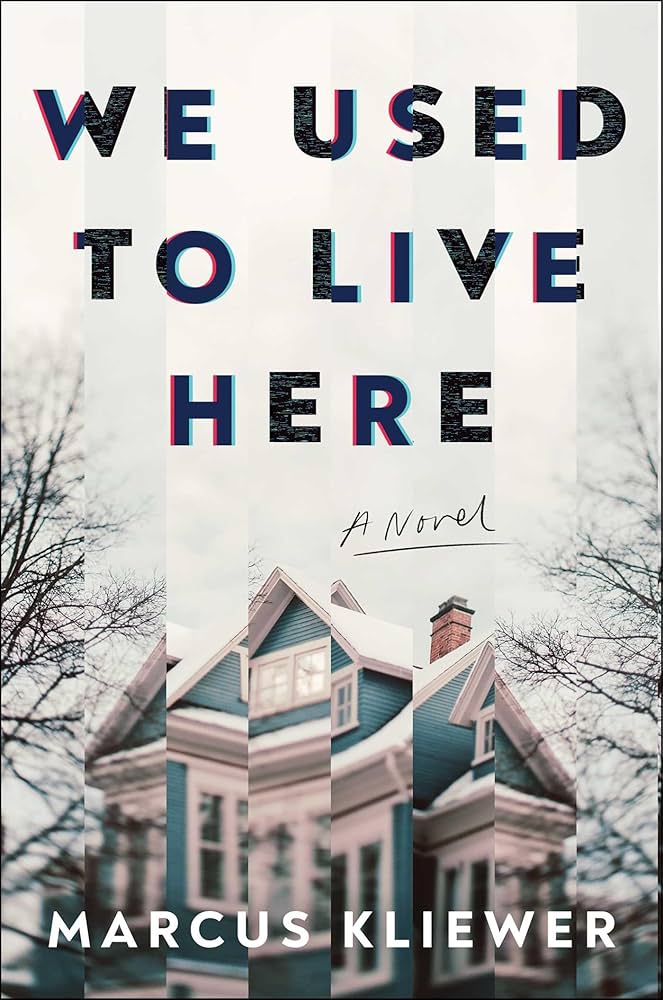
At first glance, the premise of We Used to Live Here by Marcus Kliewer feels familiar: a woman named Eve, living in a quiet, isolated home, receives a knock at the door. A family of five stands outside, the father claiming they used to live there and asking if they can take a look inside. It’s an unnerving request, made even more disturbing by the sheer passivity of Eve, as she ends up letting them in. Her submissiveness makes Eve the perfect vessel for the horror that unfolds.
“Of course, a well-adjusted individual would’ve simply told him no, she thinks to herself. But self-destructive people-pleasing was another of her plentiful idiosyncrasies. She had a crippling fear of disappointing anyone, even complete strangers—even people she disliked.“
Unlike a protagonist who fights back, she simply lets the story consume her, and in doing so, the reader is dragged down alongside her. It’s this very helplessness that enhances the eeriness of We Used to Live Here. From that moment on, the story moves into a confusing, almost dreamlike descent where nothing feels solid, and the very idea of escape seems out of reach. The family who has arrived at her door isn’t just intruding, they are manifesting something deeper, something perhaps inevitable. Whether they are ghosts, memories, or simply an extension of Eve’s own unraveling mind, their presence marks a shift where logic disintegrates, and the rules of the world no longer apply.
Eve never feels fully present, never takes decisive action, and ultimately, that’s what makes her experience so scary. She doesn’t fight to escape because escape might not even be real. We Used to Live Here isn’t just about horror, it’s about uncertainty, about the way reality itself can be manipulated, distorted, or perhaps even erased. It refuses to give us clarity, instead leaving us in a disorienting space where what is real and what isn’t can never be firmly decided. And maybe that’s the true horror, not ghosts, not violence, but the realization that sometimes, reality isn’t as solid as we think it is.
We Used to Live Here by Marcus Kliewer is on the 2025 summer reading booklist for adults (mystery & thriller). It is available (after a short wait) in print, e-book, and e-audiobook.
Angie is an Instructor & Research Specialist at Central Branch and is a co-facilitator for Reads of Acceptance, HCLS’ first LGBTQ-focused book club. Her ideal day is reading in her cozy armchair, with her cat Henry next to her.
 CHAPTER CHATS