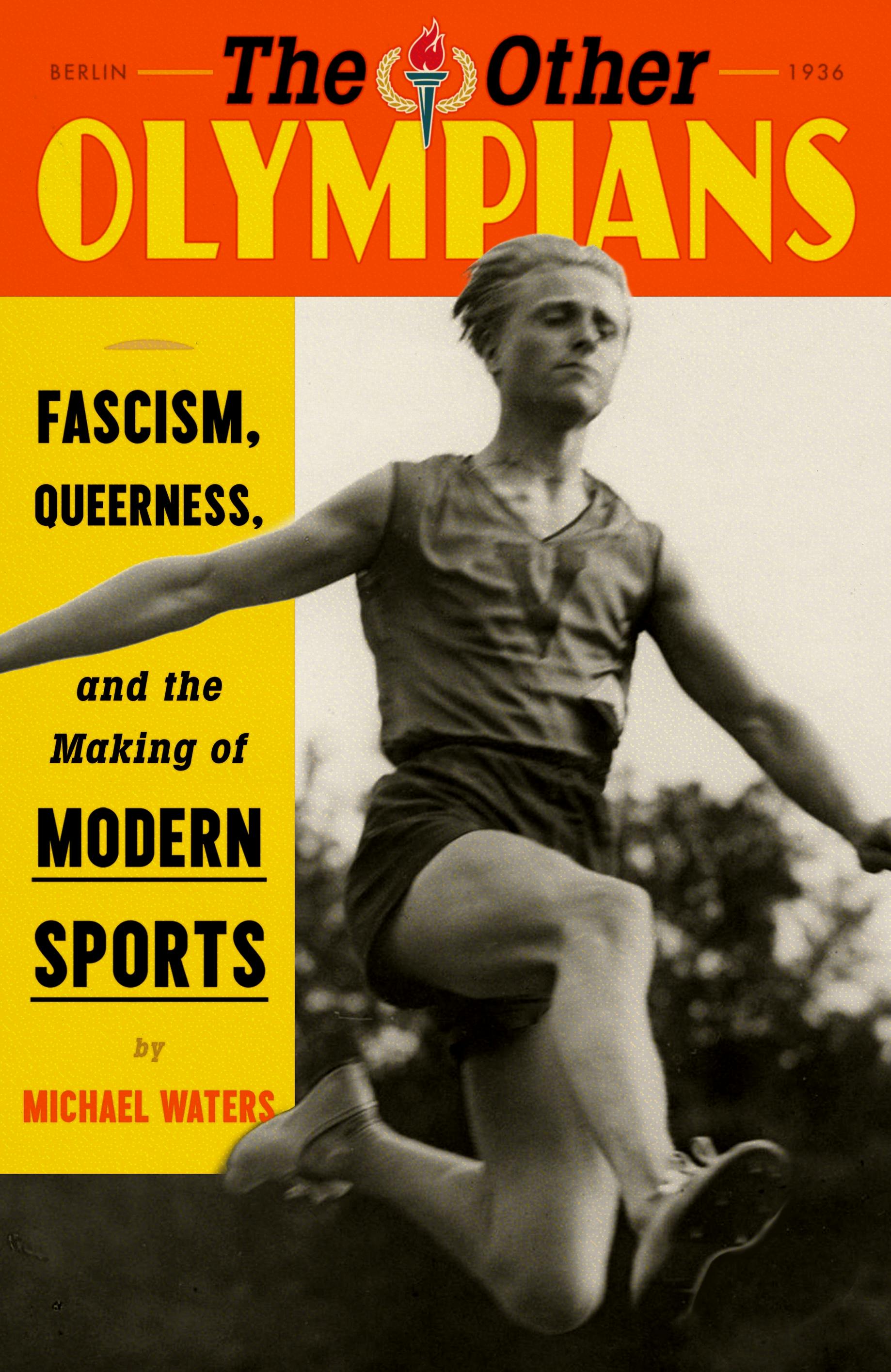
The Other Olympians: Fascism, Queerness, and the Making of Modern Sports by Michael Waters

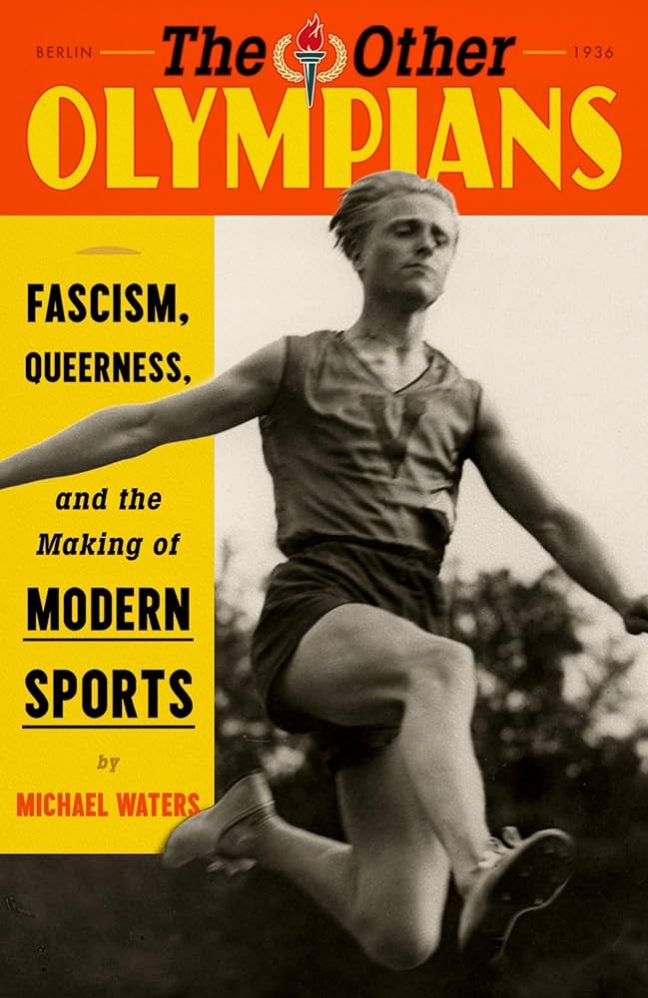
The book cover depicts Olympian Zdeněk Koubek participating in a jumping event, leaping into the air with arms spread wide and hair blown back.

By Ash B.

To say that “men” in women’s sports is a hot-button issue would be an understatement. 

Many individuals have a knee-jerk emotional reaction to this topic; far fewer know the facts about transgender or intersex athletes. I’d bet even fewer know that gender anxieties in relation to sports are nothing new – in fact, they date back over a century. For example: mandatory medical exams, to ‘prove the womanhood’ of female athletes, were first popularized by a Nazi sports physician for the 1936 Olympics. Sex testing would become more prominent in the following decades, particularly in the context of the Cold War. Such is one bit of history unveiled in The Other Olympians: Fascism, Queerness, and the Making of Modern Sports by Michael Waters.

As indicated by its title, this nonfiction book addresses political, social, cultural, and scientific developments in the early twentieth century. Waters digs deep into the history of professional, international athletics, exploring the forces that impacted where, and by whom, sports could be played – particularly at the 1936 Berlin Olympic Games in Nazi Germany. The idea of women playing sports, whether leisurely or professionally, was enough to cause public (primarily male) concern and outrage in this time period. The founder of the modern Olympics, Pierre de Coubertin, declared that female athletes did not, “constitute a sight to be recommended before the crowds I gather for an Olympiad.” 

On a surface level, it’s not difficult to imagine why there’s a patriarchal bias regarding athletics – consider how current broadcasts of women’s sports get less viewership and the teams get fewer resources than their male counterparts. Dig a bit deeper, and you quickly run into norms about what a female body is ‘supposed’ to look like. Notice how women are ridiculed and called “manly” when they are seen as too muscular? Think about how many people now accuse female athletes with ‘masculine’ characteristics – a square jawline, a broad nose, wide shoulders, a small chest – of being male. 

This is the cruel irony of the anti-trans “defending women’s sports” issue; it doesn’t just target trans people. It significantly harms cisgender women by policing their bodies and appearances, too, especially women of color and intersex women. This fixation on gender conformity in sports – specifically women being ‘feminine’ enough – can be traced back decades, to when women were discouraged from playing sports at all. Fear-mongering abounded regarding the ‘masculinizing’ effects that playing sports, especially sports that were accessible to working-class women. As Waters paraphrases the British paper The Daily Herald, “women who participated in ‘masculine’ sports like soccer or track and field risked creating a third category of sex.”

These cultural fears were elevated by news of Zdeněk Koubek and Mark Weston – each assigned female at birth and raised as girls – publicly transitioning to living as men, in 1935 and 1936 respectively. Because both Koubek and Weston had formerly won titles in the Women’s World Games, an international competition similar to the Olympics, their gender revelations had significant influence on discourse regarding women’s sports, including paranoia that male athletes could ‘pose’ as women to win professional competitions.

With an engrossing narrative approach, Waters traces the histories of Koubek and Weston along with the stories of key bureaucrats in the sports world, such as Alice Milliat, founder of the Women’s World Games, and Avery Brundage, an American sports administrator who climbed his way to Olympic leadership. Whether you’re interested in athletics, politics, or gender, you’re sure to glean knowledge from Waters’ depth of research. This is a great read for all history lovers who relish in learning little-known facts, woven together in personal and national narratives, as well as anyone who is concerned (or simply confused) about the culture wars around gender and women’s sports.

The Other Olympians is available in print and as an e-audiobook from Libby.

Interested in a brighter side of queer history? Learn about drag history and makeup on June 17, 7 – 8:30 pm at HCLS Central Branch for You Betta Werk! The Art & History of Drag. Free makeup will be given to attendees, while supplies last, on a first-come, first-served basis.

Ash is an Instructor and Research Specialist at HCLS Central Branch with a passion for information literacy and community engagement. They love music, gardening, hiking, and cuddling with their golden retriever.
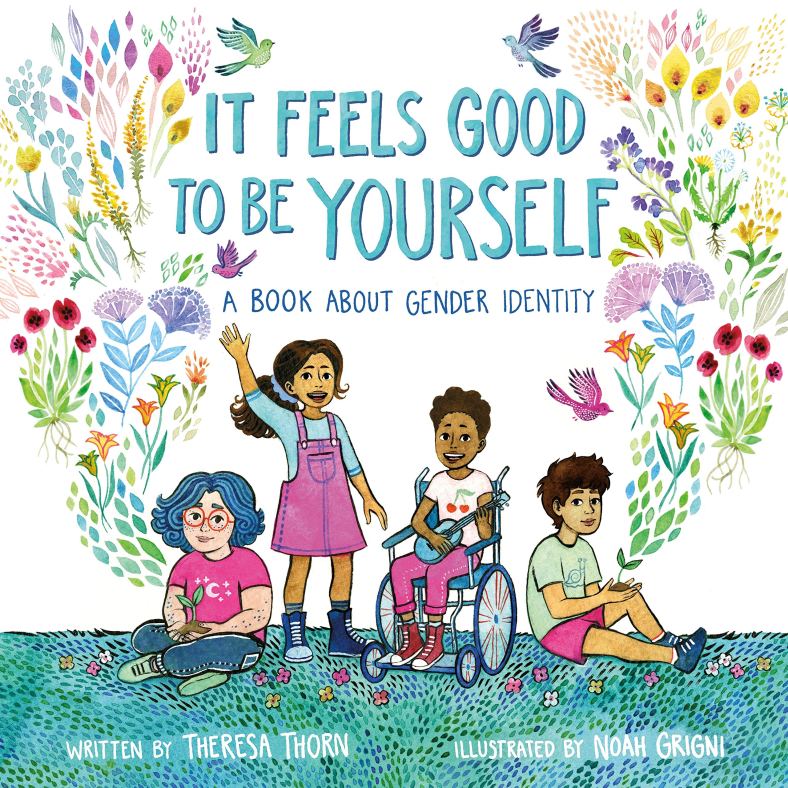
Reading List for Trans Visibility

A colorful illustrated cover shows many children framed by sprays of flowers, with the title above them.

By Ash B.

Since 2009, March 31 has been recognized internationally as Transgender Day of Visibility. Created by trans community member Rachel Crandall-Crocker, the day is meant to spark hope and spread awareness of trans lives, especially through trans joy. 

General awareness of trans-ness has increased in the past 15 years; however, visibility does not always mean progress. Over the past three years, Americans (across all political parties) have grown less supportive of policies that support trans people (ex. protection against job and housing discrimination) and more supportive of policies that cause harm and restrict trans rights, particularly relating to athletics, restrooms, and healthcare (Pew Research).

The majority of Americans, particularly those aged 50+, report they do not personally know a transgender person. Perhaps that’s why the trans community has become such an easy target for disinformation and scapegoating. If a sizeable majority of the population personally knew trans and nonbinary people – truly knew us, as peers and coworkers and friends, as humans trying to live our lives as best we can – then perhaps we would be guaranteed more safety and bodily autonomy.

In the spirit of trans joy, all are invited to celebrate the trans community at the following events: 

This Friday (Mar 28), join HCLS for a free Trans Day of Visibility celebration hosted by the Howard County LGBTQIA+ Commission, in partnership with the Office of Human Rights and Equity. The event takes place at the Elkridge 50+ Center from 4 – 7:30 pm with read-alouds, arts and crafts, games, and a dance party. More info here. 

On Monday, March 31, 10 am – 12 pm & 3 – 5 pm, join us at Central Branch to make buttons, zines, collages, and vision boards. From 4 – 5 pm, a representative from Community Allies of Rainbow Youth (CARY) shares resources and answers questions.

Below is a robust roundup of titles from our collection, most of them authored by trans people. Regardless of your gender identity and personal background, there’s something here for everyone; I hope you check one out and learn something new! 

Trans 101 Information

Anthologies to Better Understand Transgender Experiences

Trans History

If You’re a Parent (whether or not you currently have a trans child) 

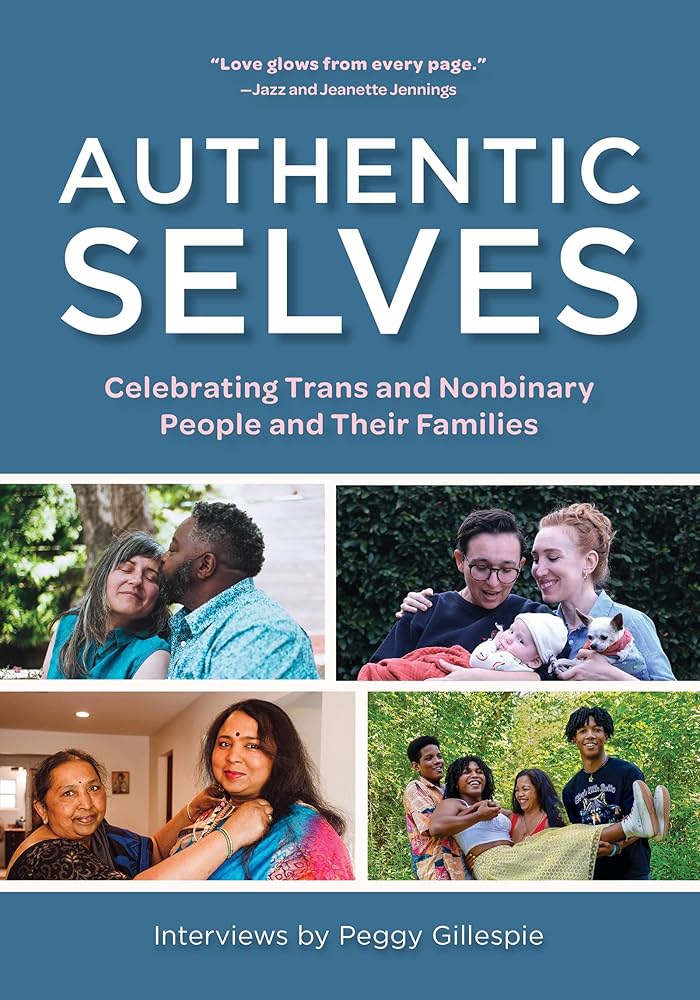
Inclusive Picture Books

Middle Grade Fiction

Young adult novels & graphic novels

Adult Fiction

Need more book recommendations? Feel free to contact us, and if we don’t own a title you’re looking for, you can Suggest an Addition to the Collection.

For more resources and organizations to connect with, here are the resource lists from Community Allies of Rainbow Youth and PFLAG Howard County.

Ash is an Instructor and Research Specialist at HCLS Central Branch with a passion for information literacy and community engagement. They love music, gardening, hiking, and cuddling with their golden retriever.
The Twenty-Something Coworking Club 

Two people working separately at the library, in the same space.
HCLS Central Branch

by Ash B.

Howard County is known to be a great place for raising a family. Between the public school system, parks, and recreational opportunities, there’s a significant draw for folks with school-aged children.  In fact, in recent years, Columbia has been ranked at the top of lists such as “Best Places to Raise a Family” (in 2023 by Wallethub and 2024 by Niche) and “Best Cities for Young Families” (by GOBankingRates in 2024). On the other end of national rankings, Columbia has been dubbed one of the “worst cities for singles” (in 2024 by Wallethub).

This comes as no surprise, especially to a single person in their late twenties such as myself. The family-oriented vibe of HoCo results in fewer social structures tailored towards unmarried, child-free adults. There are bars and breweries in the area, sure, but those aren’t everyone’s vibe – especially for sober folks like myself – and such places typically have a price tag attached.  

Enter… the library!

Our library system’s new mission, per the Strategic Plan, is to be a place for everyone to learn, grow, and connect. With the launch of The Twenty-Something Coworking Club this month, I’m looking to create a space for emerging adults to do just that. 

The term “emerging adult” typically refers to someone in their late teens (18-19) or twenties (sometimes stretching into mid-thirties). The concept of emerging adulthood, as a distinct stage of development, was coined and developed by psychology scholar Dr. Jeffrey Arnett. Emerging adulthood is an “in-between” stage: no longer an adolescent, but not fully feeling like an adult yet (due to a variety of social and economic changes over the past 30+ years).  

Current emerging adults – the youngest of Millenials and the older half of Gen Z – have often graduated high school without being taught essential life skills, like budgeting and meal planning. Economic trends have left many young people underpaid and underemployed from the beginning of their careers. Not to mention the impacts of COVID-19, climate change, and enumerable instances of sociopolitical chaos over the past decade. 

It’s a particularly tough time to be emerging into adulthood. That said, it’s a little easier to navigate when you’re not alone. “Coworking” is simply the act of working in proximity to other people; you’re working separately from each other, but the proximity to another working person improves motivation and focus. This method can be especially helpful for neurodivergent people because of the executive functioning required to start and complete tasks. The term “body doubling,” often used by folks with ADHD, has essentially the same meaning as “coworking,” but with emphasis on completing a boring or difficult task by planning to do it in the presence of another person. 

So, if you (or someone you know) is struggling at all with “adulting” – or just wants to connect with other emerging adults – I hope you’ll stop by the Twenty-Something Coworking Club, which starts on March 25. We meet on the top floor of the Central Branch, every 4th Tuesday, from 6:30 – 8:30 pm in the Central Studio.

Bring whatever you’d like to work on, and anything that helps you focus: your favorite water bottle, headphones, fidget toys, etc. The library and I will provide the space, snacks, hot tea, structured check-ins, and good vibes.

Note: You’re welcome to come and go on your own schedule, but please arrive at 6:30 pm to participate in group introductions. Want an event reminder? Register through our class calendar.

Ash is an Instructor and Research Specialist at HCLS Central Branch with a passion for information literacy and community engagement. They love music, gardening, hiking, and cuddling with their golden retriever.

How We Named the Stars by Andrés N. Ordorica

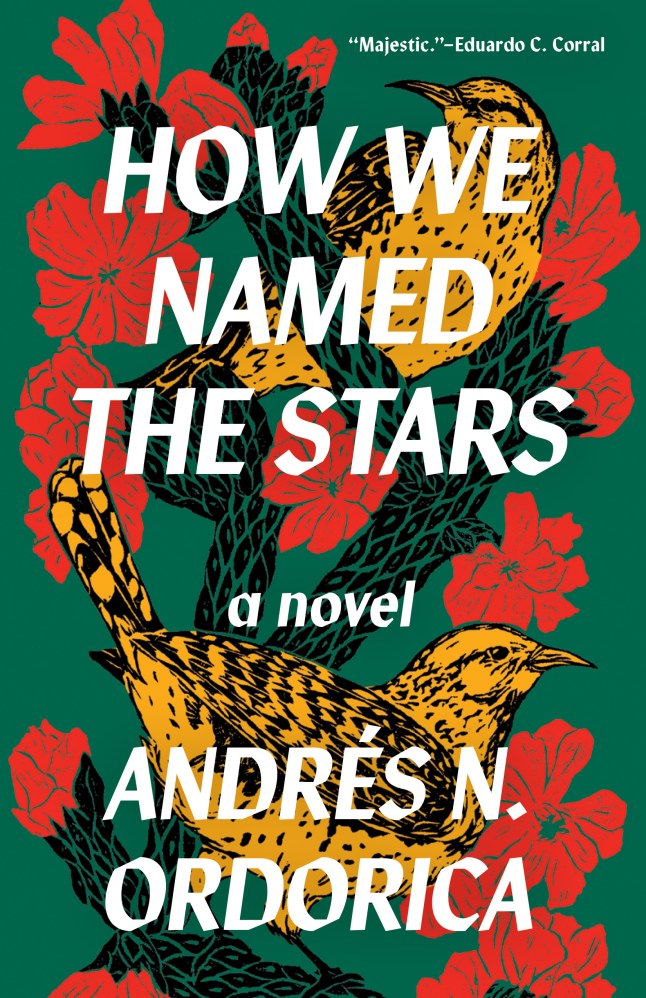
The green backgroup shows off bright red flowers and two yellow birds.

by Ash B.

Every year, instructors from HCLS Central Branch put together the Books for Discussion list and promote titles from it at our annual Book Club Revue. (If you missed it, you can watch this year’s Book Club Revue on YouTube.) Titles are selected from both established and debut authors across all genres, with consideration of whether the book is ‘discussable.’ Books that yield great discussions often have compelling characters and thought-provoking themes, leading to conversations not only about the story itself but also current events and readers’ own experiences. (For more book club tips, check out our Community Book Clubs page.)

Out of a hundred titles on the list, the one I’m championing most often is How We Named the Stars by Andrés N. Ondorica. If there is one novel I want you to read before year’s end, it is this one! Ordorica has waltzed into my heart as one of my new favorite authors with this debut, and the characters he created will have a special place in my heart for years to come. Set in his first year of college, the protagonist Daniel is a first-generation Mexican-American creative writing student who develops an unexpected closeness with his roommate Sam. Over the course of the novel, Daniel navigates insecurities, queer desire, grief, and self-discovery.   

Ordorica writes the type of atmospheric prose that I want to crawl into, curl up, and live inside forever. While this book is deeply tragic, it is thoughtfully so, and it defies the tropes you might expect of queer or Latino characters (which was very welcome and refreshing). Despite immense heartbreak, Daniel’s story is ultimately so hopeful and healing. It reminds me of my long-time favorite YA novel, Aristotle and Dante Discover the Secrets of the Universe by Benjamin Alire Sáenz. While their plots are quite different, they are both tender, lyrical coming-of-age stories that include friends-to-lovers romance and nuanced family dynamics. They also explore the particular challenges and joys of being both gay and Mexican-American, influenced by the lived experiences of their respective authors.  

The title is in script set off within white margin doodles in a big twiligh sky above a red pickup truck in a field.

Aristotle and Dante is set in 1980s Texas – a notably difficult time and place to come out as gay – with the boys approaching the end of high school. How We Named the Stars is more contemporary – while never specified, it is likely set in the 2010s – and it begins at an East Coast university, where there is a queer community for Daniel to explore. Whereas Aristotle must come to terms with being gay over the course of an entire novel, and in isolation, Ordorica’s Daniel more-or-less understands he is gay from the outset. His story shows a journey towards outwardly claiming and living that label, first in community with other queer people, secondly in relation to an intimate partner, and finally, as an out gay man to his Mexican family. Both novels are valuable contributions to the growing canon of queer Mexican American literature, and I recommend both wholeheartedly. 

Aristotle and Dante was one of the first LGBTQ books I read as a teenager, and it helped me inch towards realizing that I was part of that community. Fast forward to 2024: reading How We Named the Stars in my late twenties helped validate the struggles I faced in early adulthood. If I could go back in time and give my college-aged-self one book to read to help me get through life’s challenges, it would be this one. If you want a book that fills up your heart, shatters it into pieces, and then puts it back together again, How We Named the Stars is a perfect book for you. 

Ash is an Instructor and Research Specialist at the Central Branch with a passion for information literacy and community engagement. They love music, gardening, hiking, and cuddling with their golden retriever.

Community Plant Swap

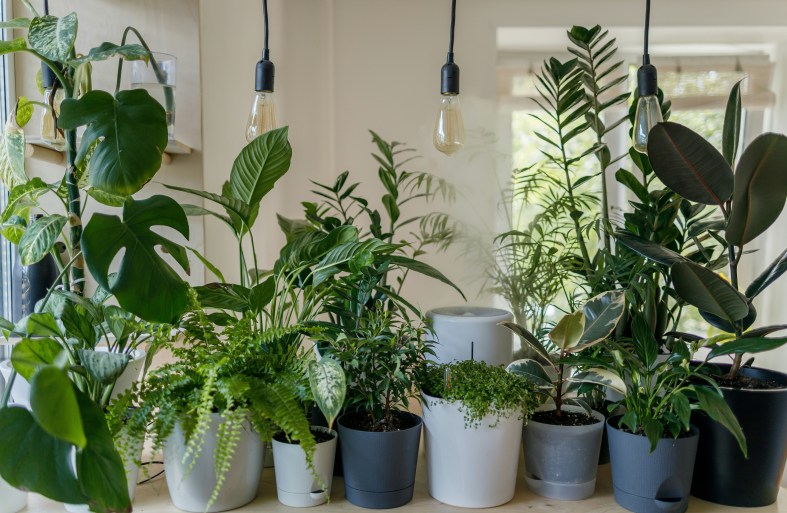
The photograph shows an array of green houseplants in white, gray, and black pots, underneath three suspended light fixtures with Edison bulbs. They are placed on a wooden table in a white room and there is a window with light coming through in the background.
Photo by vadim kaipov on Unsplash.

Calling all plant lovers and the plant-curious! Join us for our (free!) first plant swap at HCLS Miller Branch on Saturday, July 13 from 2-4 pm. In addition to spaces to give, take, and trade live plants, we’ll also have informational stations about how to propagate common houseplants, how to set your plants up for success, and more! The Community Plant Swap is a great opportunity to meet, chat with, and learn from other community members who propagate and grow plants in their households, and it’s also an eco-friendly way to minimize plant waste.

Have an abundance of healthy seedlings, cuttings, bare-root or potted plants? Bring them to the Take-a-Plant area so they can find a new home. Attendees also have the option to bring suboptimal-looking plants to the Plant Rehab station.

Want to expand your plant collection without breaking the bank? Bring a box or other container(s) to gather and take home new plant friends.

Interested in negotiating a direct trade with fellow plant enthusiasts? Head to the Trade-a-Plant area for 1-on-1 plant swaps, perfect for rare plant collectors.

Interested in gardening tools? Weather permitting, the Enchanted Garden will have a “Tool Shed” station where attendees can give and take tools and other supplies, with a volunteer available to explain different purposes and techniques for using tools.

Items we WILL accept: 

  • Potted plants 
  • Bare root plants 
  • Plant cuttings or “babies”  
  • Mid-season – late-season seedlings/starts for vegetable gardens 
  • Gardening tools 
  • Pots, vases, and containers 
  • Small, sealed bags of potting soil, coco coir, vermiculite, etc. (ex. 8 qt bag of all-purpose potting mix)
  • Plant food/fertilizer 
  • Bulbs 
  • Seeds to donate to our new Seed Library (coming soon)!

We will NOT accept: 

This event is drop-in and first-come, first-served. Register here if you’d like to receive event updates and reminders.

Get ‘Schooled’ on Board of Education Elections 

A bright green rectangle with white type: Because informed citizens are engaged voters. Libraries Transform. ALA logo on the short side to the right.

by Ash B.

In election season, media coverage often focuses on presidential and congressional races. However, local elections – such as County Council and Board of Education (“school board”) races – can significantly impact local communities. Howard County Council and Board of Education (BOE) are nonpartisan races, meaning candidates are not separated by party. You do not have to be registered with a political party to vote in this race – even in the primary. And, because these local races are decided by a smaller voting body, your vote often holds considerably more weight. 

Howard County contains five Councilmanic Districts, also known as “Council Districts.” Each district corresponds to one of five County Council members and, as of the 2020 election, one of seven members on the BOE. To determine your Councilmanic District, use the Voter Lookup at https://voterservices.elections.maryland.gov/VoterSearch 

Previously, all open BOE seats in an election year were voted upon by all registered voters. However, in 2019, the Maryland General Assembly passed legislation requiring, “that certain members of the Howard County Board of Education be elected by the voters of certain districts.” Now, five school board members are elected by voters in their respective Councilmanic Districts, and the remaining two members are elected at-large, meaning any registered voter can vote for them. 

A map of Howard County, with the five council districts in colored tints.

BOE members serve four-year terms on a staggered basis, with elections held every two years and no term limits. In 2022, there were two seats on the ballot, specifically the at-large positions voted upon by the entire county. This year, five BOE positions are up for election – one for each district.  

As of the time of writing this post, the following candidates are running: 

  • District 1: Andre Gao, Pravin Ponnuri, Meg Ricks  
  • District 2: Larry Doyle, Antonia Watts (Incumbent) 
  • District 3: Jolene Mosley (Incumbent)  
  • District 4: Hiruy Hadgu, Julie Kaplan, Jen Mallo (Incumbent) 
  • District 5: Catherine Carter, Andrea Chamblee, Trent Kittleman 

The Primary Election 

Only Districts with three or more candidates will be included in the Primary Election. The top two candidates from each district advance to compete in the general election. So, Howard County voters in Districts 1, 4, and 5 have (nonpartisan) BOE choices on their primary ballot this May.

Five Tips for Researching the Candidates 

1. How does each candidate present themselves on their platform(s)? 

All candidates appear on the State Board of Elections website with their contact information, campaign website, and official social media accounts. Take a look at what they list as priorities, what types of policies they’d want to enact if elected, and how they express their views across online platforms. 

2. Watch candidate forums and debates.

Live or recorded, virtual or in-person, candidate forums offer a great way to learn about the candidates’ views and priorities. The public speaking format demonstrates how a candidate communicates under pressure.

On April 18, the League of Women Voters (LWV) of Howard County hosts three virtual forums to address each one of the districts that will have a primary for the Board of Education. They take place on Zoom, with livestreams on Facebook and YouTube. Recordings available online through the May 14 Primary Election. Other local organizations, such as PTAs, also hold BOE candidate forums. Check with your local school or watch the recording of the 2024 PTA Council of Howard County BOE Forum on YouTube

Another upcoming BOE candidate forum will be hosted by Dar Al-Tagwa (the Muslim community center) on Sunday, April 21. You can submit questions to the candidates in advance at this link.

Am advertisement listing all of the candidates and the designated forum date, time, and location: Sunday, April 21, 2:30-4:30 PM, at Dar Al Taqwa, 10740 Route 108, Ellicott City, MD

3. Read candidate questionnaires and surveys.

While you might get a better sense of a candidate listening to them speak live, candidate questionnaires are another resource for learning more about candidates’ perspectives on relevant topics. As you research, do you find that each candidate is consistent in their views? Are their answers specific and thorough?

The Howard County LWV Primary Voter’s Guide is now available online, and includes candidate answers to five questions regarding parent and student input, safety, facilities, challenges, and the Blueprint for Education goals. If you prefer to compare answers between the candidates for one district at a time, head over to Vote 411, a project of the League of Women Voters Education Fund. When you enter your address, the site generates a ballot with candidate information based on your address.

Other local organizations, such as Community Allies of Rainbow Youth, also send questionnaires to candidates, sometimes focused on the concerns of the demographic(s) served by the organization. If you’re involved with any nonprofits, PTAs, religious/faith groups, etc., check to see if they’re distributing a candidate questionnaire.

Ballotpedia has a candidate survey, though none of the HoCo BOE candidates have completed this at this time.

4. Is the candidate endorsed by, or associated with, any (non-partisan or partisan) organizations? 

A good way to see if a candidate’s values align with yours is to see what organizations they’ve been endorsed by and/or are associated with, and assess whether your values align with that organization. This can provide further insight on the professional, political, and sociocultural background of each candidate.

Organizations may decide who to endorse by conducting an interview process with candidates. Written answers to a questionnaire may also be part of the process; the Howard County Education Association (HCEA) is an example of a nonpartisan, professional association that publicizes the questionnaires of the candidates they’re endorsing.

Note: Not all organizations are legally able to endorse candidates. 501(c)3 nonprofit organizations cannot endorse candidates, but they can hold candidate forums, interview candidates, and share candidate survey answers.

5. Read local news coverage – and discuss within your communities!

Because articles about school board candidates are unlikely to be front-page news, especially during the primary, you might have to dig a bit for good information. Searching “Howard County school board” on the websites of local news outlets can help, including (some require subscriptions):

You can always talk with neighbors, family, friends, and colleagues. Ask if folks are familiar with any of the candidates and if they can point you to any helpful sources. Discussing your opinions on candidates can feel taboo, but local and nonpartisan races are prime opportunities to engage in dialogue with fellow voters.

Why should I care about the Board of Education? 

Even if you do not have school-aged children, the well-being and success of students and staff should be the concern of the entire community. Then consider the nationwide rise of book bans and challenges to curriculum material, and there’s a strong case for getting invested in what’s going on with your local school board.

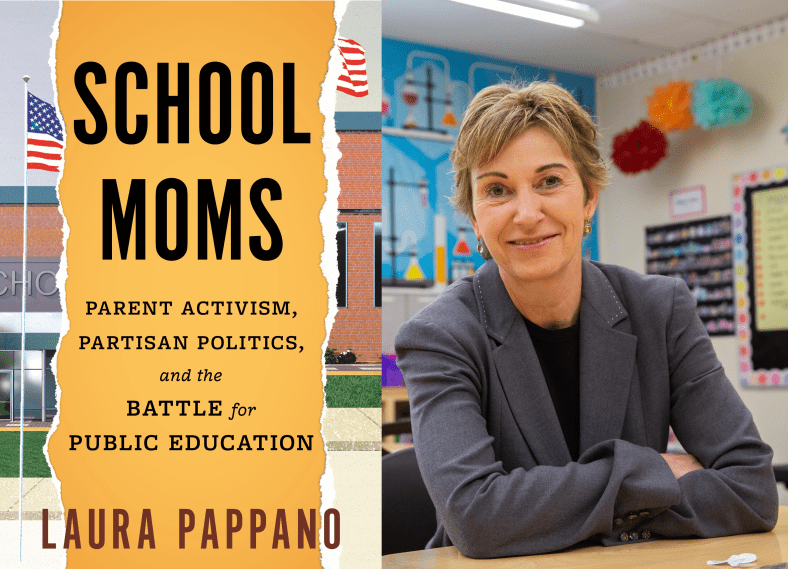
If you’re interested in learning more about the increasing politicization of school boards and conflicts over public school policies, join us on April 26 at the Elkridge Branch for an author visit with Laura Pappano, an award-winning education journalist. She discusses the key findings in her new book, School Moms: Parent Activism, Partisan Politics, and the Battle for Public Schools. 

Author Laura Pappano pictured in an elementary school classroom. Book cover reads: School Moms: Parent Activism, Partisan Poli

Finalize Your Voting Plan 

Whether you want to vote early, by mail, or in-person on election day… make sure you have a voting plan!

Check your voter registration status, determine your voting method, and preview your ballot at Vote 411.  The Howard County Board of Elections also has useful information on their site, including the polling locations for early voting (May 2 – 9) as well as Mail-In Ballot Drop Box locations.  

Ash is an Instructor and Research Specialist at the Central Branch with a passion for information literacy and community engagement. They love music, gardening, hiking, and cuddling with their golden retriever.

I Kissed Shara Wheeler by Casey McQuiston

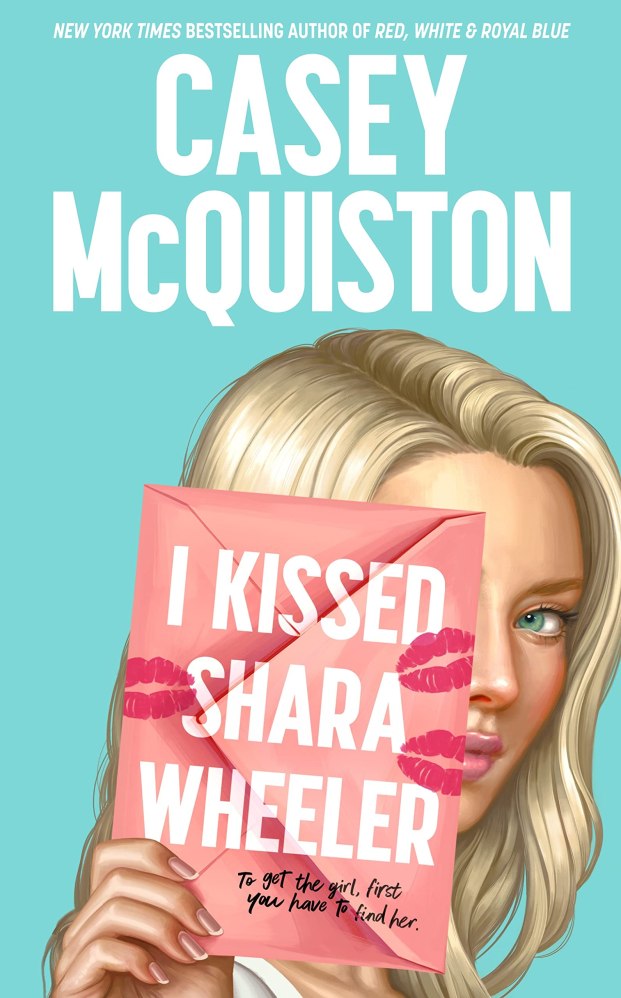
A pale blue background shows a blonde girl holding up a a pink envelope with three red "kisses" around the title. The envelope reads, "To get the girl, first you have to find her."

by Ash B.

I previously shared a review for Casey McQuiston’s One Last Stop, and I’m happy to report that their YA debut, I Kissed Shara Wheeler, is an absolute pleasure to read as well.

A contemporary coming-of-age story with a mystery twist, I didn’t want to put down this temptingly readable book once I was pulled into the story. Popular girl Shara Wheeler has the audacity to pull a disappearing act a month before graduation. Chloe Green, academic rival of Shara and protagonist of the novel, wants nothing more than to bring her back in time to see Chloe win valedictorian – because what’s the point of winning without a worthy competitor?  

For better or worse, Shara left behind a trail of clues designed specifically for the three people she kissed before disappearing – her quarterback boyfriend Smith, the boy-next-door Rory, and quite shockingly, Chloe. Shocking mostly because Shara – little miss perfect, daughter of the principal, and “it girl” of their small Alabama town – is, as far as anyone knows, entirely straight. However, the set-up of the novel makes it pretty clear that this is an enemies-to-lovers type of situation. The rivalry and frustration Chloe feels regarding Shara – really a mask for their magnetic attraction – is high-grade narrative fuel. What made me fall in love with the story, however, is the friendships that Chloe develops with Smith and Rory. 

Chloe, Smith, and Rory come from different tiers of the Willowsgrove High hierarchy. They don’t appear to have anything in common, aside from a connection to Shara. However, the more time they spend together, the more the dynamic shifts, and the more they learn about each other and themselves. By spending time with Smith and Rory, and their respective friend groups, Chloe realizes that the way she’s looked at many of her peers has been flawed. 

When it comes to stories set in high school cliques, I often proverbially roll my eyes, unconvinced that heavy-handed stereotypes of jocks, nerds, goths, prom queens, and such represent the average teen experience. I Kissed Shara Wheeler incorporates student group dynamics in a way that feels realistic and reminds me of my high school experience (Mt. Hebron, Class of 2015, what’s up!). The different social circles are often based on interests and activities – student athletes, band kids, and theater kids. However, each of those kids is nuanced, and the groups can overlap.  

For example, Ace plays on the football team with Smith. He tried out for the school play and snagged the lead, and Chloe’s group of artsy, queer, nerdy friends assumed Ace did it as a joke. However, Ace is a big musical theater fan and always dreamed of being in the school’s productions. He was nervous to audition, let alone star, mainly because he was concerned about being teased by the football crew. There certainly are some rude, insufferable jocks at their school – one in particular displays misogynistic, sexually objectifying behavior towards Chloe. There are also jocks like Ace and Smith, who are kind, who try to shut down the misogyny of their peers, and who have other interests besides sports… but are pigeonholed. It’s very much like Nick (the love interest) in Heartstopper by Alice Oseman

One of my favorite scenes happens at the senior theater party, where we hear Ace confess to Chloe about auditioning and preparing for the school musical. It shifts Chloe’s perspective about Ace, and it opens her mind to what all her other peers might be going through. Also, we get a lovely interaction when Ace and Smith get their makeup done by Chloe’s artsiest friend Ash, who happens to be nonbinary – which results in a conversation about gender that leads Smith to start questioning his gender identity:

“You know… if being a guy feels like something you have to do, like it’s an obligation or something,” Ash says carefully. “Maybe think about that.” 

I’m not going to lie; it’s pretty cool to see a fellow nonbinary Ash reflected in a book I love, especially when the character gets lines like this. I lived for this conversation! 

Overall, this was such a fun, joyous read. McQuiston relied on beloved tropes and archetypes that feel both familiar and fresh, thanks to the way they are subverted. Serious subjects are explored without being insensitive. The dramatic tension quickly propels the narrative forward, but there are also plenty of laughs along the way to keep the reader from feeling too stressed. (Seriously, how is CMQ so seemingly-effortlessly funny in their writing?)  

Perhaps best of all, the queer friendships are exactly what I think many readers will hope for. The ending is satisfying, with the youth banding together and standing up to ‘the system,’ and starting the work of unlearning the harmful messages that they’ve internalized so they can fully accept themselves and each other. If you’re interested in a compelling mystery full of warmth, hilarity, and character growth, check out I Kissed Shara Wheeler by Casey McQuiston in print, e-book, or e-audiobook.

Ash is an Instructor & Research Specialist at Central Branch and is a co-facilitator for Reads of Acceptance, HCLS’ first LGBTQ-focused book club. Their favorite place to read is spread out on a blanket under the shade of the tree. 

DeadEndia & Dead End: Paranormal Park

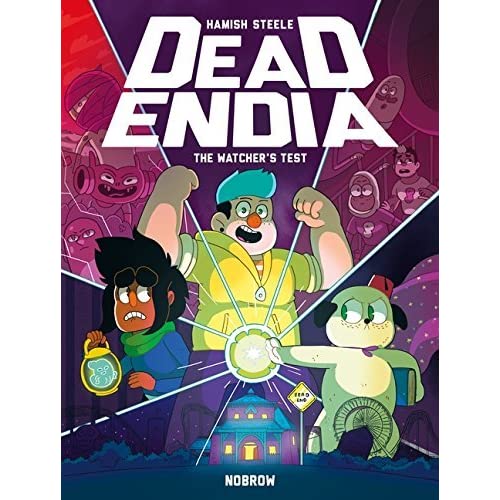
The main characters of DeadEndia: The Watcher's Tesst appear against a segmented background of devilish figures.

by Ash B.

Set in haunted amusement park themed around the life and career of fictional actress-superstar Pauline Phoenix, the world of DeadEndia is full of spooky, supernatural fun. If you’ve got a Netflix account and a kid older than 7, or you’re fan of cartoons with great representation, you’ve probably heard about Dead End: Paranormal Park. The Netflix show was adapted from a graphic novel series called DeadEndia, which you can borrow from the library.

The main characters of Norma, Barney, and Pugsley began as an animated web short for Cartoon Hangover. Creator Hamish Steele used this as inspiration for a new webcomic, which, in turn, became DeadEndia: The Watcher’s Test and DeadEndia: The Broken Halo graphic novels. The third and final book is anticipated to release next year.

I was first introduced to the world through the graphic novels – so, imagine my excitement when one of my favorite reads became an extremely well-adapted animation! The show diverges quite a bit from the graphic novels in some ways, particularly how the main characters meet and the story begins. From there, the first episode of the show lines up pretty closely with the first chapter of DeadEndia: The Watcher’s Test. The demon king is summoned and possesses Barney’s dog, Pugsley, instead of one of the humans as planned; Norma cleverly figures out how to defeat the demon king; Pugsley is left with magical powers, including the ability to talk. The story continues with a balance of paranormal adventures, such as “monster of the week” style demon-fighting episodes/chapters, along with the emotional rollercoasters of personal identity, mental health, romance, and family struggles.

The novels strongly resonated with me because of the way Barney’s transmasculine experiences were included. In both the comics and the show, we find out that he was primarily interested in getting a job so that he could gain independence from his parents. The show allows for more development of Barney’s relationship, though. I think the cast and crew nailed it, with a family that goes through realistic misunderstandings and growing pains, but makes it through the rough patch to fully embrace the LGBTQ+ kid. 

The graphic novels have a special place in my heart for certain heartwarming details. For example, Barney gives Pugsley a copy of The Very Hungry Caterpillar as he learns to read, and Pugsley compares Barney to the titular caterpillar. Pugsley eventually clarifies: “My comparison was due to the fact that we all start off looking and sounding a little different to how we turn out. Some more than others. But that doesn’t change who we are on the inside.” This line, especially in the context of the rest of the chapter (which I won’t spoil here), is so gentle and comforting to a trans reader like me. 

Probably the most notable point of difference between the show and comics is the target audience. The comics are aimed at young adults (ages 14+), with Barney, Norma, and their peers being in their early twenties. When adapted for the small screen, the characters were aged down to be in their teens and the material made suitable for a younger audience. The graphic novels can be enjoyed by teens and adults alike, and you can borrow them in print from HCLS. 

Ash is an Instructor & Research Specialist at Central Branch and is a co-facilitator for Reads of Acceptance, HCLS’ first LGBTQ-focused book club. Their favorite place to read is spread out on a blanket under the shade of the tree. 

The Last True Poets of the Sea by Julia Drake

The cover shows line drawings of ocean vegetation floating against a background of blue water. The title is lettered in shades of pink, orange, and yellow.

by Ash B.

Not to be dramatic, but The Last True Poets of the Sea by Julia Drake is one of the most underrated novels I’ve read. It received positive reviews from Booklist, Kirkus, School Library Journal, and Publisher’s Weekly – and yet it still seems like not many people know about it. That’s why I eagerly recommend it whenever I can! 

Violet Larkin is a wild child – partying and doing all manner of things that a 16-year-old girl probably shouldn’t be in New York City. After her younger brother attempts suicide and her own reckless behavior worsens, her family sends her to stay with her uncle for the summer in the small coastal town of Lyric, Maine.  

Descended from a shipwreck survivor who supposedly founded Lyric, Violet is convinced that disaster runs in her blood. As she struggles with inner turmoil, she becomes determined to uncover the long-lost location of that shipwreck and the truth of her family history. With the help of new, unexpected friends, Violet discovers so much more – about herself, about love in all forms, and about surviving the emotional wrecks of life. 

After Violet starts working at the local aquarium in Lyric, the story seems like it might include a very “boy meets girl” romance with her coworker, but it delightfully diverges into something more refreshing. While there is a slow-burn teen romance with a bit of a “twist” love interest, that is far from the focal point of the book. I would say the core of the story is the complexity of mental health and the importance of allowing oneself to be (safely) emotionally vulnerable. The narrative balances the mending of relationships within Violet’s family, the importance of Violet building new friendships in Lyric, and the development of Violet’s relationship with herself. 

It is such a beautiful story of healing and connection. I really appreciated how Violet, an amazingly complex teen protagonist, opened my eyes to how mental illness and trauma can impact and manifest in such different ways depending on each person. For someone such as myself, anxiety typically causes retreating into oneself, isolating, and fearing the outside world. Social anxiety and generalized anxiety can really go hand-in-hand in this way, at least in my experience.  

However, for Violet, her anxiety – the storm she feels inside but doesn’t know how to healthily cope with – is sometimes the catalyst for her extroverted, often-risky behaviors such as partying, (underage) drinking in social settings, and flirting with much older men. Over the course of the novel, I grew to understand why someone like Violet might engage in those types of behavior (that would personally make my anxiety even worse) as a means of trying to avoid their inner struggles. 

This is a YA novel that I think can help so many people, teens and adults alike. It shows the importance of communication, self-love, healthy interpersonal relationships, and being kind to oneself while growing up. It challenges the idea that teens who “act out” are “bad” or “broken,” instead showing the nuanced reasons why unhealthy coping behaviors are used by young people who are struggling. Not to mention that it is beautifully written with crossover appeal for both YA and adult fiction readers. 

The characters of The Last True Poets of the Sea settled into my heart and have made a permanent home there. I read this book for the first time over a year ago and I still can’t stop thinking about it. When a book lingers with you long after you finish the final page, that tends to be a good sign. I loved it so much, I bought my own copy and I’m planning on re-reading it during my own trip to Maine this summer! If you’re interested in a contemporary coming-of-age story, I really hope you give this one a read.

Ash is an Instructor & Research Specialist at Central Branch and is a co-facilitator for Reads of Acceptance, HCLS’ first LGBTQ-focused book club. Their favorite place to read is spread out on a blanket under the shade of the tree. 

Equity Resource Collection and New Brave Stories Exhibit

by Ash B. and Christie L.

Enrich your summer at the Equity Resource Center! Visit for the books, movies, music – and exhibits. The space upstairs at Central Branch purposefully has plenty of room for exhibits that focus on equity issues. If you missed our previous one, Undesign the Redline, you can still view a video tour on YouTube. Make time to see the new show and attend the related classes:

BRAVE STORIES EXHIBIT 

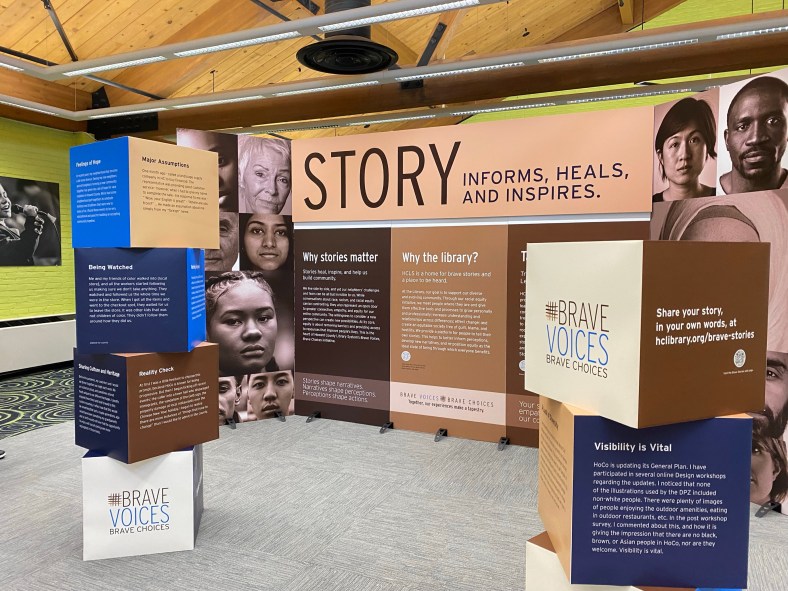
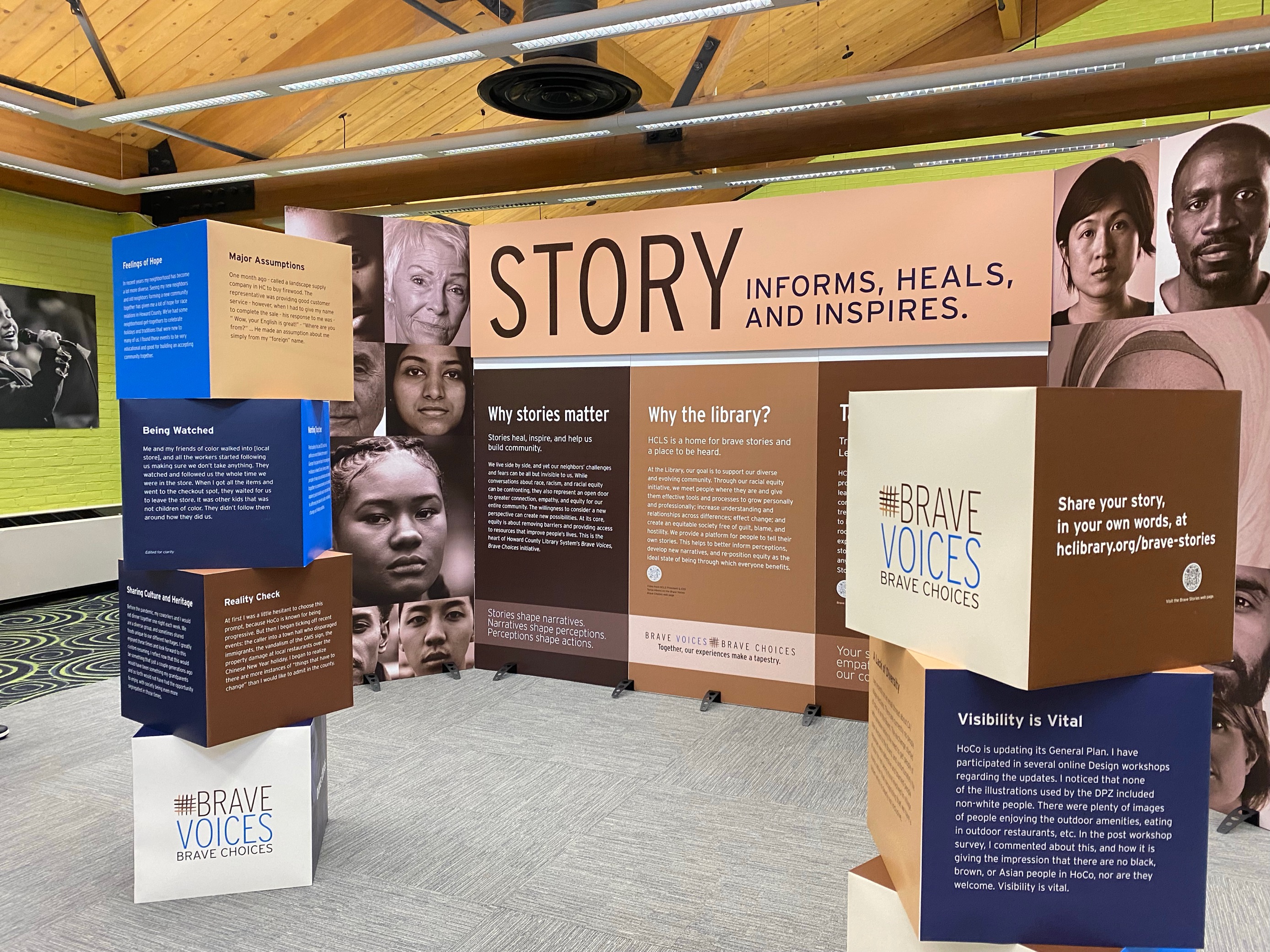
View of Brave Voices display at Central Branch, header read Story informs, heals, and ins

Stories shape narratives. Narratives shape perceptions. Perceptions shape actions. 

Whether they are told around a campfire, around a kitchen table, or online, stories have the power to move people to tears of sadness or tears of joy and to action. At Howard County Library System, we are a home for brave stories and a place to be heard. We provide a platform for people to tell their stories. This helps to better inform perceptions, develop new narratives, and re-position equity as the ideal state of being from which everyone benefits.  

HCLS is a safe space for racial equity work, but real progress begins with you. You have the power to lead, share, and connect. As we move forward as a community in Howard County, we have the chance to extend equitable treatment to those around us. How are you helping to improve life in Howard County?  

Start by making room for new stories. Visit the new Brave Stories exhibit in the Equity Resource Center at the Central Branch. Read about your neighbors’ experiences. Take the time to listen to their Brave Stories—and share your own. 

We invite you to respond to the exhibit in a series of art workshops, each using a different material, with facilitators from Notre Dame of Maryland University’s Art Therapy Department. Attend one or both workshops: Tuesday, Jul 26 and Thursday, Aug 4.

We also invite you to share your own stories in a facilitated circle. Bring your experiences and insights, listening ears, and an open mind and heart to one or more sessions: Wednesday, Aug 3; Saturday, Aug 13, and Saturday, Aug 20.

EQUITY RESOURCE COLLECTION

If you haven’t already read it, you might want to check out my previous post about the Equity Resource Collection.

Adult Fiction 

A collage of adult novels found in the Equity Resource Collection.

The second floor at Central Branch houses the adult fiction of the Equity Resource Collection, along with its adult nonfiction, DVDs, and CDs. More than 900+ adult fiction titles span all genres, including classics, bestsellers, contemporary fiction, historical fiction, romance, mystery, fantasy, and science fiction. 

Like other areas of the Equity Resource Collection, some of these titles specifically center equity issues such as racism, whereas others feature diverse characters and authors. Whatever genre or style of novel you enjoy, there is a great read for you here. One of my favorites is Open Water by Caleb Azumah Nelson, which I actually reviewed in-depth in a previous blog post. If you like poetic and tender novels, this is a must-read. 

Adult Nonfiction 

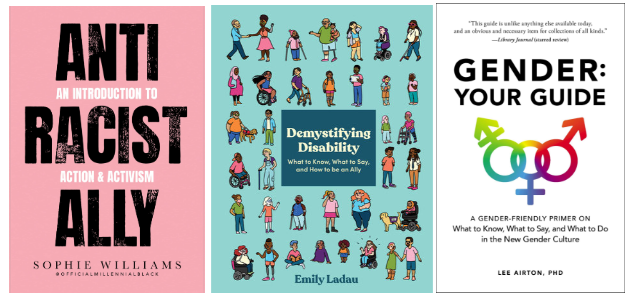
Three race and gender titles found in the Equity Resource Collection: Anti-Racist Ally, Demystifying Disability, and Gender: Your Guide

As excited as I am about fiction, I’m even more interested in the nonfiction section – partially because of how many of these titles are exclusive to the Equity Resource Collection. While these items can be requested for pickup at any HCLS branch, browsing in person offers the opportunity to find an amazing book more by chance. 

When you head into the Equity Resource Center, the nonfiction collection rests to the right. You can find introductory guides to equity issues, history books, academic texts, memoirs and biographies, art books, cookbooks, and more.  

For folks who are beginning to explore these topics, I recommend: 

For readers who are ready to delve deeper, some terrific title: 

Audio-Visual 

A collage of movies found in the Equity Resource Collection.

Are you more of a film lover than a reader? Well, no worries. The ERC has you covered, too.

From indie films to big-budget productions, you have a variety of choices from multicultural movies and movies that center Black history. While most titles are for adults and teens, there are kid-friendly favorites such as Moana and Coco as well. 

If you’re interested in TV series or nonfiction DVDs, look for the shelving close to adult nonfiction. With titles from distributors such as HBO and PBS, including Stonewall Uprising and The Central Park Five, this section is worth checking out if you appreciate a good documentary. 

For the music lover, the ERC includes CDs, shelved next to the nonfiction DVDs, from artists past and present, across genres. For the pop fan, check out Sawayama by Rina Sawayama, a contemporary singer-songwriter who is Japanese-British and bisexual.

If you like rock, blues, soul, or gospel, a must-listen is Shout Sister Shout by Sister Rosetta Tharpe, “The Godmother of Rock’N’Roll,” who pioneered music in the 30s, 40s and 50s by combining electric guitar with spiritual lyrics – providing the foundations for subsequent artists like Chuck Berry and Elvis Presley. 

Whether you’re a fan of Latin music or someone in your family still can’t get enough of the Encanto soundtrack, check out Cumbiana by Carlos Vives, the beloved Colombian singer-songwriter whose song “Colombia, Mi Encanto” plays at the end of the 2021 Disney hit movie. 

Think our collection is missing an important title? Go to hclibrary.org/contact-us/ and “Make a purchase suggestion” – after you submit the online form, it will be reviewed by one of our materials selectors as a potential addition.  

Ash is an Instructor & Research Specialist at Central Branch and is a co-facilitator for Reads of Acceptance, HCLS’ first LGBTQ-focused book club. Their favorite place to read is spread out on a blanket under the shade of the tree. 

Christie is the Director of Communication and Partnerships for Howard County Library System. She loves walking through the network of pathways in Columbia, sitting on the beach, and cheering for the Baltimore Orioles and Texas Aggies football team.