In 1984, during eighth grade, I readThe Standby Stephen King for the first time. Like many other readers of that doorstop novel, I found myself deeply affected. I very well might have read it at too young an age, but don’t horror and middle school often go hand in hand?
The Stand began my fascination with apocalyptic fiction. The genre is like a magnet for our minds, pulling us into worlds where everything we know crumbles. Whether it’s the adrenaline rush of survival, the hope of a new beginning, or the fascination with our own resilience, apocalyptic tales keep us hooked.
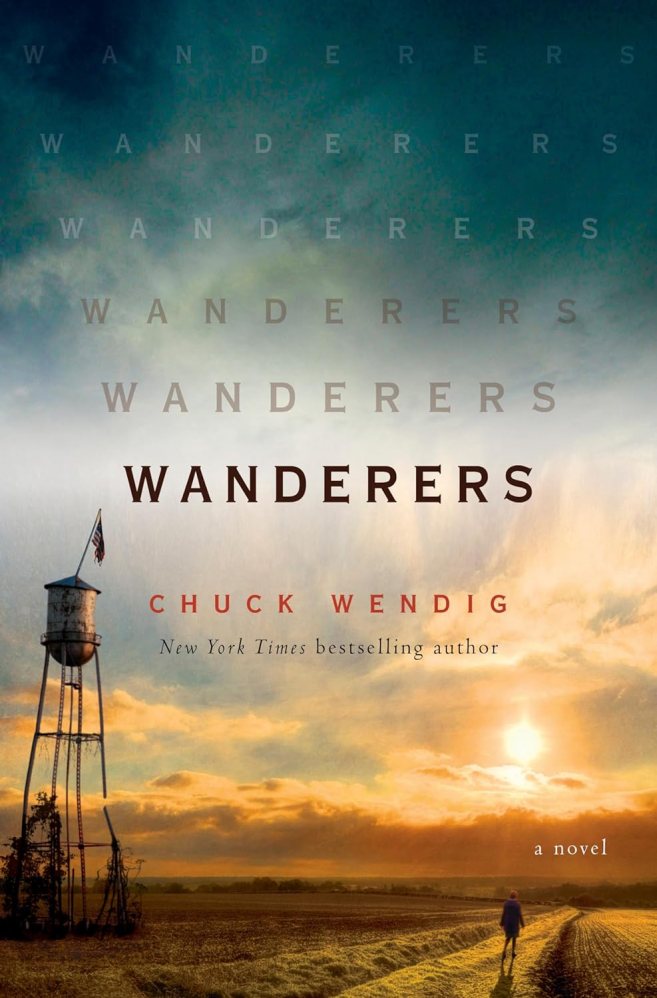
Wanderers by Chuck Wendig is a worthy contender in the genre, being a gripping science fiction novel that weaves together mystery, suspense, and a touch of dark humor. The tale begins with Shana, who wakes up one morning to discover her little sister afflicted by a strange condition, sleepwalking, unable to communicate, and inexorably drawn toward an unknown destination. Soon, Shana realizes that her sister is not alone; other sleepwalkers from across America join the mysterious journey. These sleepwalkers are accompanied by “shepherds” who protect their loved ones during this perilous passage. As the sleepwalking phenomenon spreads, terror and violence grip America.
The real danger isn’t the epidemic itself, but the fear it instills. Society collapses, and a brutal militia threatens the sleepwalkers. Wanderers introduces a game-changing shock halfway through the book, and Wendig’s smooth prose and dark humor keep the narrative engaging, even as it explores the end of the world. His storytelling keeps readers hooked from start to finish, making him a worthy contemporary of the master himself, Stephen King.
Angie is an Instructor & Research Specialist at Central Branch and is a co-facilitator for Reads of Acceptance, HCLS’ first LGBTQ-focused book club. Her ideal day is reading in her cozy armchair, with her cat Henry next to her.
In her book Spinster: Making a Life of One’s Own, Kate Bolick invites us into a thoughtful consideration of remaining single. She weaves her own experiences with those of pioneering women from the past century, women who defied societal norms and forged their paths. These women include:
Neith Boyce: A columnist who challenged conventions.
Maeve Brennan: An essayist whose wit and insight left an indelible mark.
Charlotte Perkins Gilman: A social visionary who advocated for women’s autonomy.
Edna St. Vincent Millay: A poet whose passion resonates across time.
Edith Wharton: A novelist who crafted stories of love, longing, and independence.
Bolick’s exploration reminds us that the pursuit of a good life transcends societal expectations. Whether young and unencumbered or middle-aged and free, our years are ours to savor, not bound by convention.
One of the most liberating aspects of Spinster is its rejection of the notion that a woman’s worth is in and of itself tied to her marital status. Bolick celebrates the idea that a woman can lead a fulfilling and meaningful life without adhering to traditional expectations. She eloquently challenges the societal pressure to conform and encourages women to define their own paths, unapologetically.
Her exploration of solitude as a source of strength rather than a symptom of loneliness is especially affecting. In a society that can still view unmarried women past a certain age with pity or suspicion, Spinster is a rallying cry for independence, self-determination, and the dismissal of societal pressures.
As a 21st century old maid, I find comfort in the words of Kate Bolick and her celebration of the unconventional. And while I am all for defending singlehood at any age and claiming my cat lady status with pride, I have to confess to a part of me that loves fiction, especially romantic, which features old maids and spinsters who end up in love after all. The following are just a few titles that tickle my fancy:
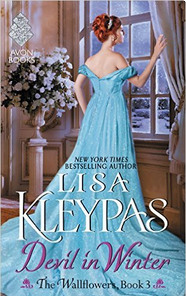
Heroine: Evangeline Jenner, a shy and unconventional woman Plot: Evangeline proposes a marriage of convenience to the notorious rake, Sebastian St. Vincent.
Heroine: Penelope Featherington, a witty wallflower Plot: Penelope secretly writes a gossip column while harboring feelings for her best friend’s brother, Colin Bridgerton.
Heroine: Lady Calpurnia Hartwell, a spinster with a list of daring adventures Plot: Calpurnia seeks adventure and love, breaking society’s rules along the way.
Heroine: Poppy Delamare, who flees an “odious” betrothal to live in London as quiet and unassuming Flora Deaver Plot: Poppy agrees to marry the Duke of Langham to save her younger sister, but that’s only the beginning!
Being a cat lady and embracing spinsterhood doesn’t mean missing out on love. It means defining love on your terms, just as the heroines in these novels do. So, raise a cup of tea (or a cat) and embrace the joy of being unapologetically you! 📚🐾
Angie is an Instructor & Research Specialist at Central Branch and is a co-facilitator for Reads of Acceptance, HCLS’ first LGBTQ-focused book club. Her ideal day is reading in her cozy armchair, with her cat Henry next to her.
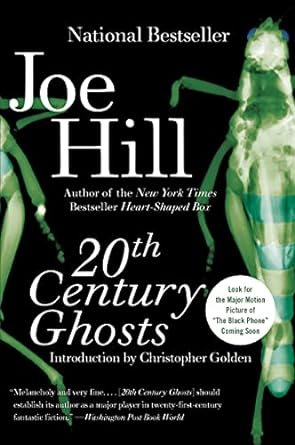
I like Joe Hill’s fiction, no matter which selection it is. I am particularly drawn to and sometimes revisit his amazing anthology 20th Century Ghosts. The collection comprises 15 short stories, each with its own unique theme and style. Joe Hill’s versatility shines through as he explores various aspects of horror, from traditional ghost stories to psychological thrillers. The stories are infused with elements of fantasy, science fiction, and dark humor, creating a diverse and engaging reading experience.
The opening story, “Best New Horror,” sets the tone for the entire collection. It tells the tale of a jaded horror fiction editor who stumbles upon a manuscript that takes him on a horrifying journey into a world he could never have imagined. Hill’s use of meta-fiction in this story adds layers of complexity to the narrative, leaving readers with much to ponder.
Joe Hill’s ability to create compelling characters makes his fiction unforgettable. Whether it’s a young boy who can transform into a living comic book character in “Pop Art” or the ghost of a movie projectionist in “The Projectionist,” his characters have a depth and humanity that gives the supernatural elements all the more a stirring and relatable feel. Hill’s skill in creating atmospheric settings also permeates the collection. Whether it’s a creepy movie theater, a haunted tunnel, or a sinister roadside attraction, the locations in these stories are as much a part of the narrative as the characters themselves. The sense of place adds to the overall immersion and tension in each tale.
While horror is its primary genre, 20th Century Ghostsdoesn’t rely solely on scares. Many of the stories delve into deeper emotional territory, exploring themes of love, loss, and the complexities of human relationships. “Better Than Home” and “Voluntary Committal” are poignant examples of Hill’s ability to tug at the heartstrings. Joe Hill’s imaginative storytelling is a defining feature of this collection. He doesn’t rely on clichés or tired horror tropes; instead, he constantly surprises the reader with fresh ideas and innovative twists. “My Father’s Mask” and “The Black Phone” are prime examples of his originality and the ability to keep readers on the edge of their seats.
The titular story, “20th Century Ghosts,” is a beautiful and melancholic piece that serves as a fitting conclusion to the collection. It explores the idea that we are all haunted by the past in one way or another, and Hill’s prose resonates long after the final page is turned.
Angie is an Instructor & Research Specialist at Central Branch and is a co-facilitator for Reads of Acceptance, HCLS’ first LGBTQ-focused book club. Her ideal day is reading in her cozy armchair, with her cat Henry next to her.
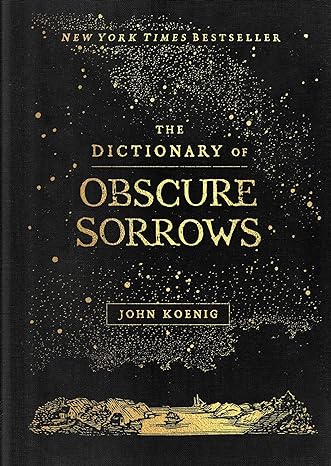
In The Dictionary of Obscure Sorrows, John Koenig goes deep into feelings that often have no definition. The words aren’t just definitions; they’re like secret passageways to whole new worlds of feelings. It’s like they are saying: “Hey, check out these emotions you never knew you had names for!”
Each entry is like a mirror showing emotions we didn’t know we had. “Sonder,” for instance, is the sweet yet sad realization that every random person out there has a life as wild and complicated as yours. There’s also “opia,” that vulnerable moment when eye contact makes you realize that there’s a whole universe of unspoken stuff between souls.
But the one that hits me the hardest is “moledro: a feeling of resonant connection with an author or artist you’ll never meet, who may have lived centuries ago and thousands of miles away, but still can get inside your head and leave behind morsels of their experience.”
Koenig’s ambiance is all about busting out of the silent jail that locks up our feelings, pushing us to chat about the gaps between us. In a world where tech connects and disconnects us, The Dictionary of Obscure Sorrows is like a rock, keeping us grounded in the crazy, beautiful ride of being human.
With every page turn, Koenig holds our hand, guiding us on this epic trip—a journey of connection, finding ourselves, and realizing that we’re all on the same ride in the wide world of feelings. At the end of the day The Dictionary of Obscure Sorrows isn’t just a book; it’s like this crazy venture into what makes us human. It’s like having a quiet chat with your soul, an invite to get cozy with all the feelings that make us who we are.
As the author writes in his introduction: “It’s a calming thing, to learn there’s a word for something you’ve felt all your life but didn’t know was shared by anyone else. It’s even oddly empowering—to be reminded that you’re not alone, you’re not crazy, you’re just an ordinary human being trying to make your way through a bizarre set of circumstances. That’s how the idea for this book was born, in that jolt of recognition you feel when learning certain words for emotions, especially in languages other than English: hygge, saudade, duende, ubuntu, schadenfreude.”
Angie is an Instructor & Research Specialist at Central Branch and is a co-facilitator for Reads of Acceptance, HCLS’ first LGBTQ-focused book club. Her ideal day is reading in her cozy armchair, with her cat Henry next to her.
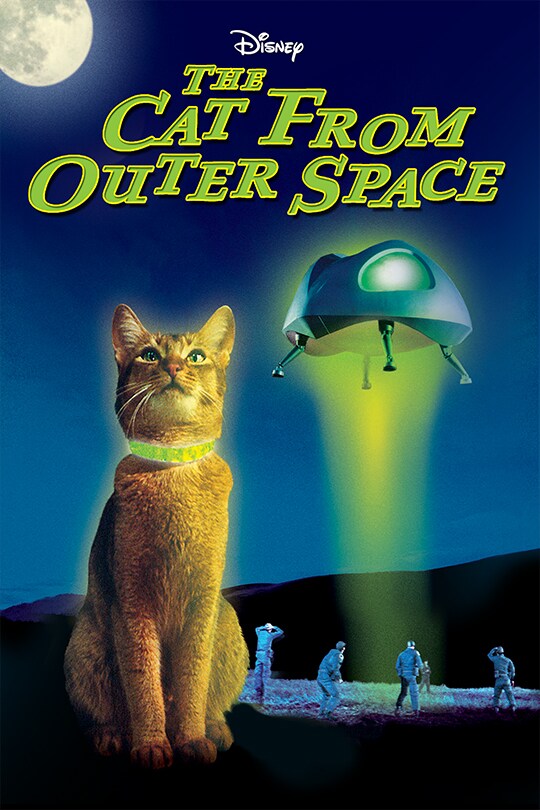
I apologize in advance for the puns, but I can’t help but hold a very special place in my heart for a movie I first saw in 1978 with my mom and my sister at the Security Square Mall theater…back when Spencer Gifts and the smell of kettle corn were a big thing and the multiplex was not. Unless my memory is completely fooling me, this movie jump-started my deep love of and for cats.
The Cat From Outer Space is a purrfectly out-of-this-world cinematic experience that will have you feline fine! This intergalactic tail, I mean, tale, stars a su-purr-naturally talented cat from another galaxy, and it’s a claw-some adventure from start to finish.
From the moment our furry, four-legged friend crash-lands on Earth, you know you’re in for a wild ride. With a collar that’s basically a space-age Swiss Army knife and a penchant for piloting UFOs, our extraterrestrial feline is the cat’s meow of interstellar travelers. The human cast is equally entertaining, with their over-the-top reactions to the incredible abilities of our whiskered visitor. They’re all in on the secret, but they don’t seem to mind. Who can blame them? I mean, if a cat could fix your car and whip up a gourmet meal with the flick of its tail, you’d keep the secret too!
The special effects might not be up to today’s standards, but that’s part of the charm. It’s like a time capsule from a bygone era of film-making. You’ll marvel at the “cutting-edge” technology and laugh at the adorable alien. You’ll witness one fur-midable showdown between our feline friend and a military general with a penchant for paw-sitively dramatic speeches. It’s an epic showdown that will have you on the edge of your seat, or should I say, scratching post?
So, if you’re in the mood for a nostalgic, campy, and uproarious adventure that’s as delightful as a basket of kittens and so silly you’ll find yourself embracing it fully, look no further. The Cat From Outer Space is the cat-astrophic, uh, I mean, fantastic film you’ve been waiting for! Grab your popcorn and get ready to be whisker-ed away into a world of cosmic comedy and kitt-tastic capers!
Angie is an Instructor & Research Specialist at Central Branch and is a co-facilitator for Reads of Acceptance, HCLS’ first LGBTQ-focused book club. Her ideal day is reading in her cozy armchair, with her cat Henry next to her.
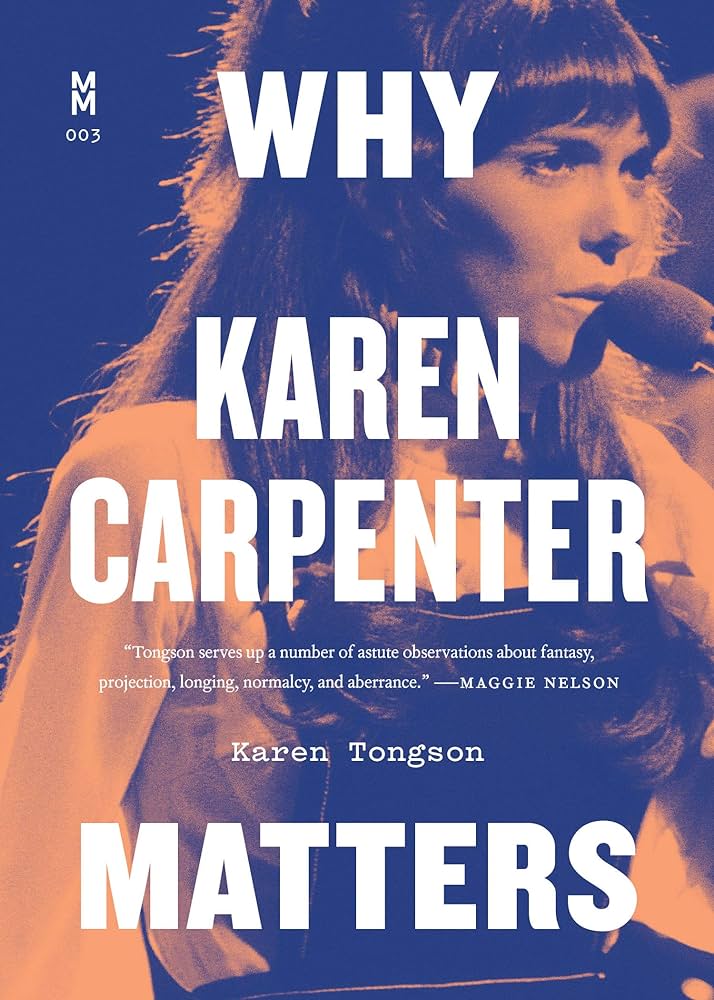
In Why Karen Carpenter Matters, the author writes about something she calls “the Karen effect,” being “the capacity to make you feel something, to make you believe in a spiritual undoing and trembling beneath the polished arpeggios and vacuum-sealed harmonies.” She speaks for many fans, I am sure, in describing the distinct sound of one of the most gifted vocalists of all time.
Author Karen Tongson (named after the singer) is a Filipino-American cultural critic, writer, and queer studies scholar. In this moving and often riveting half memoir/half biography she intertwines cultural analysis and personal anecdotes, creating a rich mix of insight and emotion into the life of Karen Carpenter.
The Carpenters’ music was immensely popular in the Philippines and other parts of Asia during the 1970s and beyond. Their songs had a significant impact on Filipino culture, and Tongson grew up with a deep appreciation for their music.“To be corny is to be mawkishly old-fashioned; tiresomely simple and sentimental,” Tongson writes, explaining part of the reason of her love for Karen Carpenter, who ultimately became the tether to the Philippines.
Tongson also navigates the sensitive topic of Karen’s eating disorder with grace, shedding light on the societal pressures that contributed to Karen’s tragic struggle. She emphasizes that Karen’s story is not just one of personal struggle, but a reflection of the larger issues women faced during that era, and still to this day, a powerful reminder of the need for compassion and understanding.
One of the most striking aspects of Why Karen Carpenter Matters is its examination of the intersection of race, gender, and music. Tongson studies the ways in which Karen Carpenter’s voice transcended cultural boundaries and challenged stereotypes, making her an unexpected icon in the LGBTQ+ community. Karen’s voice, as the writer beautifully describes, became a “sonic balm” for those who found solace and identity in her music.
I have loved the Carpenters since I was a kid and find Why Karen Carpenter Matters to be one of the most authentic and soulful nonfiction reads ever, not just on Karen Carpenter, but on any person or subject. I can still feel sad when I hear a song of hers on the radio or my music streaming, but that doesn’t take away the power or comfort or loveliness of one of the most sincere voices I have ever heard in music. From all accounts written about her, from everything friends of hers have said, Karen was a fun and funny woman, sweet and a genuine person.
For more about the Carpenters: Carpenters: The Musical Legacy is an enchanting journey through the timeless melodies of Karen and Richard Carpenter. There are lots of fascinating tidbits about recording sessions and songs chosen for albums and what Karen and Richard thought about their music and about music in general.
Lead Sister: the Story of Karen Carpenter is not owned by HCLS, but is well-worth tracking down through Marina. A 2023 release, it takes a more artistic look at her life and how much more there was to her in her musical life than that magical voice. Karen herself once said that she thought of herself as a drummer who sang, not a singer who played the drums. I think she would like this book a lot.
Angie is an Instructor & Research Specialist at Central Branch and is a co-facilitator for Reads of Acceptance, HCLS’ first LGBTQ-focused book club. Her ideal day is reading in her cozy armchair, with her cat Henry next to her.
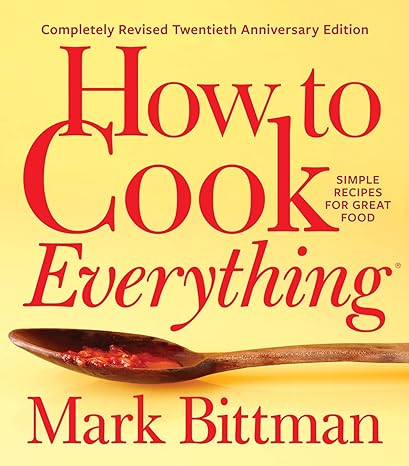
If you’ve ever felt like a lost soul in the kitchen, fear not, because Mark Bittman’s How to Cook Everything (also available as an e-book) is your culinary guardian angel. This book is a lifesaver for those of us who often find ourselves struggling to whip up a decent meal or decode complex recipes.
With its straightforward approach and comprehensive coverage, it’s like having an understanding, all-knowing mentor guiding you through the culinary maze. Recently, I got a new stove and it has inspired me to cook full-heartedly again. In some ways I feel like I’m starting over from scratch with cooking and baking, and this book is helping me get back on track.
One of the most remarkable aspects is its clarity. Mark Bittman breaks down each recipe into simple, easy-to-follow steps that even the most inexperienced cook can grasp. From basic knife skills to advanced techniques, he covers it all with patience and precision. As someone who often struggles with what seem like convoluted cooking directions, I can’t stress enough how much I appreciate his straightforward approach. How To Cook Everything lives up to its name. It truly covers everything you’d ever want to cook. Whether you’re a meat lover, vegetarian, or somewhere in between, this book caters to all tastes and dietary preferences. The recipes range from classic comfort foods to international delights, making it an priceless resource for any chef, amateur or otherwise.
Bittman provides valuable time-saving tips and shortcuts. He gets that not everyone has hours to spend in the kitchen, so he offers matter-of-fact suggestions to streamline the cooking process without sacrificing flavor. These tips are a windfall for those days when you’re short on time but still crave a homemade meal. One of the biggest challenges for a helpless cook is not having the exact ingredients a recipe calls for. Bittman encourages flexibility, offering alternative ingredients and substitutions. This approach inspires you to experiment and adapt recipes to suit your pantry’s contents, making cooking less stressful and more enjoyable.
Perhaps the most crucial aspect of How To Cook Everything is how it boosts your confidence in the kitchen. Bittman’s writing style is encouraging and motivating. He makes you feel like you can conquer any recipe, no matter how intimidating it may seem.
Angie is an Instructor & Research Specialist at Central Branch and is a co-facilitator for Reads of Acceptance, HCLS’ first LGBTQ-focused book club. Her ideal day is reading in her cozy armchair, with her cat Henry next to her.
Hello there, fellow horror enthusiasts! If you’re on the hunt for a bone-chilling, pulse- pounding read to get you into the Halloween spirit, look no further than Julia by Peter Straub (print and e-audiobook). The author emerged as a rising star in the 1970s alongside his friend and sometimes collaborator, Stephen King. Together, they revitalized the horror genre, redefining its bounds with The Talisman (print and e-audiobook) and Black House (print and e-audiobook).
Despite this early success, Straub and his individual contributions to literature have often taken a backseat to the towering presence of King. However, his unique writing style, masterful storytelling, and depth of character development make him a force to be reckoned with, especially in stories like Julia – about a woman with a haunting past and a dark secret. As the narrative unfolds, you’ll find yourself drawn deeper into the web of her life, unable to escape its sinister grip. Straub’s character development is top-notch; you’ll feel like you know Julia intimately, yet she remains shrouded in mystery, making her all the more compelling.
What makes Julia a standout Halloween read is its ability to mess with your mind. Straub has this knack for creating an atmosphere so thick with dread that you can practically taste it. The line between reality and the supernatural blurs, and you’ll start questioning everything you thought you knew. Is it ghosts, madness, or something even more sinister? The pacing is relentless. The tension keeps ratcheting up, and Straub’s prose is beautifully haunting, painting vivid, unsettling images in your imagination. You’ll be right there with the characters, wandering the eerie, fog-shrouded streets of their world.
The novel is not just about cheap thrills and jump scares. Straub explores profound themes like guilt, redemption, and the nature of evil. It’s a thinking reader’s horror novel that will haunt your thoughts long after you’ve finished it. Julia is the perfect spooky holiday read, as it’s a master class in psychological horror, filled with unforgettable characters, a chilling atmosphere, and plenty of twists and turns. So, grab your favorite blanket, and prepare for a Halloween night you won’t soon forget.
Angie is an Instructor & Research Specialist at Central Branch and is a co-facilitator for Reads of Acceptance, HCLS’ first LGBTQ-focused book club. Her ideal day is reading in her cozy armchair, with her cat Henry next to her.
Good horror scares me, but great horror breaks my heart and mind, seeping into me and playing in my head like a found footage trope. I find solace in horror somehow, and I know I’m not alone because others feel this way, too, even if they are quiet about it (“Why do anxious people love scary movies?”).
The first horror fiction I ever read was The Mist by Stephen King (e-book on Libby), which first appeared in a 1980 anthology called Dark Forces (an outstanding collection of stories I cannot recommend enough). It is hard to come by these days, but you can check interlibrary loan. Director Frank Darabont took The Mist and gave it an unimaginable, twisty, emotionally devastating ending – hence the heartbreak.
The Cabin at the End of the World by Paul Tremblay evokes similar feelings of heartache, and, like The Mist, captures themes such as faith and trust and how both can be warped by strangers we have the fortune (or misfortune) to meet under trying circumstances. Do we take a chance on others, or ourselves, or possibly a mash-up of both? A contributor to the website Bloody Disgusting sums up what could easily be said about both Tremblay’s and King’s novels, saying that a complete lack of faith can be just as insane as a fanatical sense of faith.
The novel invites readers into the lives of Eric and Andrew, a couple vacationing at a remote cabin with their young daughter Wen. Tremblay’s sensitive storytelling allows us to witness their love and vulnerability, amplifying the impact of the anguish that unfolds. Their journey takes an unexpected turn when a group of mysterious strangers appear at their door, whose mission (they say) is to save the world from an impending apocalypse. Their ominous beliefs shatter the tranquility of the cabin, leaving the family trapped and frightened.
The strangers demand an impossible choice: sacrifice one of their own to stop the apocalypse. As fear and uncertainty overcome them, the bond between Eric, Andrew, and Wen deepens, revealing the strength of their love and the resilience of the human spirit. You’ll find yourself empathizing with the family’s plight, feeling their fear, and grappling with the moral dilemmas they face.
Ultimately, The Cabin at the End of the World is not just a horror story; it’s an exploration of family ties, sacrifice, and the will to protect those we love. Like The Mist, The Cabin at the End of the World has a haunting film based on it: Knock at the Cabin. Both novel and film create an air of mystery and seclusion, but they do so subtly, evoking different atmospheres.
Knock at the Cabin may appear superficial, but it carries a sense of abruptness, brevity, and vagueness distinct from Tremblay’s novel. The former hints at the story’s initiation and leaves us questioning, “Who’s there?” The Cabin at the End of the World explicitly suggests apocalyptic themes. Both titles succeed in unique ways, captivating the audience with their enigmatic allure.
I could go on about both Tremblay and King, but I won’t. If you also seek out heartbreak in your reading, though, consider the following:
Frankenstein by Mary Shelley: Published in 1818, this classic Gothic horror novel tells the tragic story of Victor Frankenstein and his creation. The creature’s isolation, rejection, and search for acceptance evoke profound empathy from readers.
Dracula by Bram Stoker: From 1897, the epistolary novel delves into themes of loss, love, and the consequences of immortality. The tragic fate of some characters, such as Lucy Westenra, leaves a lasting impact on readers.
The Road by Cormac McCarthy: This post-apocalyptic novel from 2006 depicts the journey of a father and his young son through an ashen landscape. The bleakness and desolation of their surroundings combined with the father’s love and determination to protect his son create an emotionally compelling narrative.
Beloved by Toni Morrison: While not typically thought of as a horror novel, the 1987 Pulitzer Prize-winning work incorporates ghostly, supernatural elements. Set in the aftermath of slavery, the book explores the haunting effects of past trauma, loss, and the desperate longing for freedom.
These masterpieces blend elements of horror with deep emotional resonance, leaving readers with a poignant sense of heartbreak and empathy for the characters’ experiences.
Angie is an Instructor & Research Specialist at Central Branch and is a co-facilitator for Reads of Acceptance, HCLS’ first LGBTQ-focused book club. Her ideal day is reading in her cozy armchair, with her cat Henry next to her.
Also known as street lit or hood lit, urban fiction focuses on the gritty realities of life in the inner cities and the raw, unfiltered experiences that expose the highs and lows, the triumphs and tragedies of urban life. It emerged in the late twentieth century as a genre centered in urban communities, primarily among African American authors. While being vibrant and compelling, it often finds itself grappling with preconceived notions and stereotypes. Despite its popularity and cultural significance, it is often dismissed or misunderstood.
From street hustlers and drug dealers to determined mothers and aspiring entrepreneurs, these individuals often navigate morally ambiguous situations, creating a nuanced narrative. By examining the motivations and inner conflicts of its characters, urban fiction humanizes those who may be pigeon-holed, encouraging readers to challenge their preconceptions and recognize the complexity within individuals.
The genre has played an important role in amplifying underrepresented voices and providing a space for authors to share their lived experiences. Featuring protagonists from diverse backgrounds and communities, urban fiction offers a refreshing departure from other contemporary literature, which has historically been dominated by a narrow set of perspectives.
If you’re looking to get started with reading urban fiction, you can’t go wrong with Tracy Brown (whom, I was saddened to hear, recently passed away).
Her books, which are set in Staten Island and focus on women who triumph despite adversity, have been Essence magazine and USA Today bestsellers. Tracy Brown also started and ran a nonprofit organization known as We Are Ladies First, which serves to inform, inspire, and empower young women.
Set in the 80s and 90s, White Lines portraysauthentic and multifaceted characters. Jada, the protagonist, is a beautifully flawed individual whose journey is heart-wrenching. Brown writes her with depth and vulnerability. As the narrative unfolds, we meet a diverse cast of characters, each with their unique stories and motivations. From Jada’s childhood friend Born, who walks a fine line between right and wrong, to the mysterious and captivating Cuban, whose connection to Jada sparks a whirlwind romance, these characters leave a lasting impression.
Beyond its compelling characters, White Lines delves into thought-provoking themes that confront societal issues head-on. The exploration of the drug epidemic, the impact on families, and the consequences of choices made under desperate circumstances are handled with a delicate balance of compassion and realism. Brown’s narrative serves as a powerful reminder of the human toll that addiction can exact on individuals and their communities.
While the story deals with heavy subject matter, Brown’s storytelling keeps the pacing engaging throughout. The plot twists and turns, keeping readers on their toes, and the emotional depth of the narrative never falters.
Angie is an Instructor & Research Specialist at Central Branch and is a co-facilitator for Reads of Acceptance, HCLS’ first LGBTQ-focused book club. Her ideal day is reading in her cozy armchair, with her cat Henry next to her.









 CHAPTER CHATS