Why does the United States celebrates Labor Day on the first Monday of September? As a child, I never gave it much consideration. Any importance was overshadowed by having the day off from school. The answer lies in the checkered history of the American labor movement, which is as much about setbacks as it is about resilience. Workers fighting for their rights, from the railroads to the streets of Chicago, were often met with violent resistance. Nonetheless, those hard-won victories have shaped the experience of modern workers to this very day.
American labor is by its nature intersectional, with roots in the economic and social divides that culminated in the Civil War and shaped the centuries to follow. It is a history where the shop floor, Sunday service, and the union hall shared the same spaces. The advancement of technologies, from railroads to steel drills, brought both opportunity and exploitation. These emerging conditions forced workers to organize, not just for wages but for dignity. As these struggles unfolded, they drew upon the power and potential of immigrant communities, civil rights groups, preachers, and artists alike.
Music has been a constant companion of the laborer, carrying meaning and messages farther than words alone. From the plantations and fields came spirituals like Go Down, Moses, which turned suffering into a promise of deliverance. John Henry commemorates the toil of railroad laborers and transforms it into a ballad of defiance. Folksingers gave voice to the dignity of ordinary folk, whose effort and struggle sustain the very functioning of our society. Later artists like Pete Seeger and Woody Guthrie would carry this tradition forward, inspiring generations of protest music.
If you’re interested in learning more about the labor movement in the United States, check out this list of resources available at HCLS.
From Factories to Folksongs For adults. Register here. Celebrate Labor Day through the exploration of the music, industrial advancements, and struggles that define this long history. Fri, Sep 5 | 11:30 am – 1 pm HCLS East Columbia Branch
Ian Lyness-Fernandez is not quite used to being an Instructor at HCLS East Columbia Branch. He hopes his passion for learning can somehow translate into a skill for teaching.
As we celebrate the library as a space of learning and community, and honor AAPI Month as a time to uplift Asian voices and stories, it is worth asking: what makes something literature? The shape of the story, the seriousness of its tone, its prestige? Or is it about seeing something deeper, something about the world or the human condition? Across corners of every continent, stories take shape in countless forms: in prose, poetry, images, screens, and panels.
Perhaps, literature isn’t defined by medium or legacy. It’s shaped by how we engage with a work. When we treat literariness as something a reader brings to the page, not something a story inherently owns, we begin to find meaning in places we’ve often overlooked, like one of those Japanese comic books you might find in the teen section.
Manga is Japanese graphic storytelling that pairs image and text across serialized chapters. It continues a long East Asian tradition of visual storytelling. Its reach, however, is global. Manga is a major literary and commercial force in France, a cultural touchstone across Latin America, and a stylistic influence on everything from fashion to hip-hop. Its narratives, aesthetics, and emotional tones have shaped how stories are told, and who gets to see themselves in them.
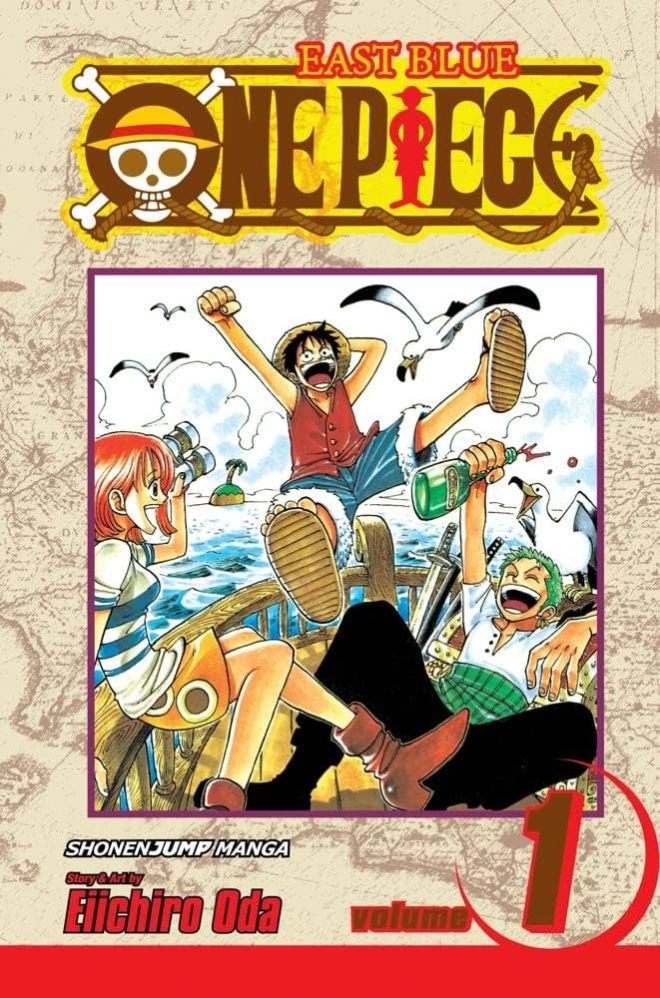
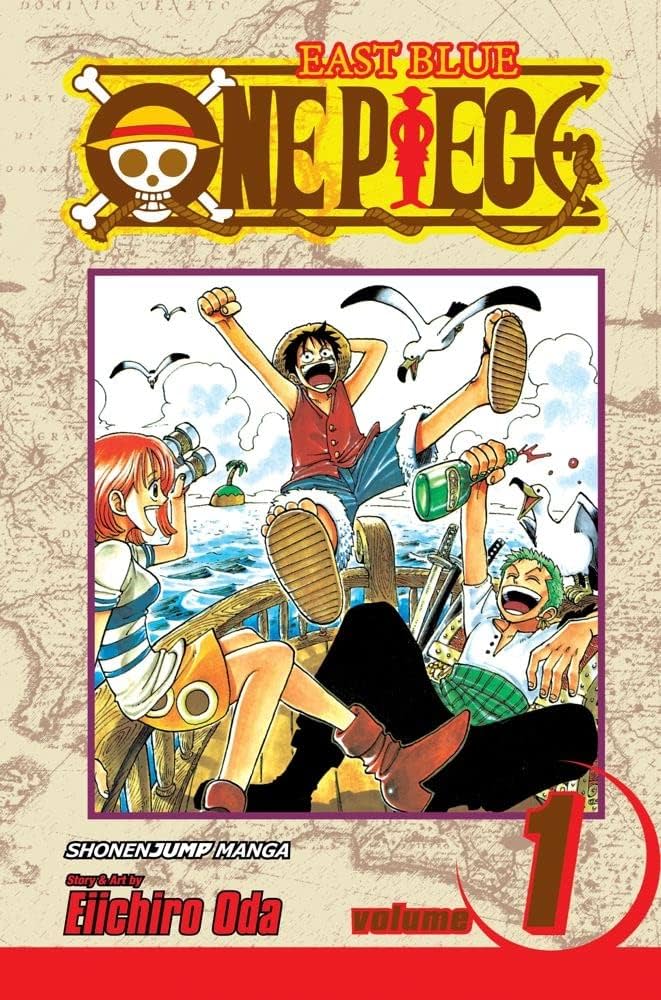
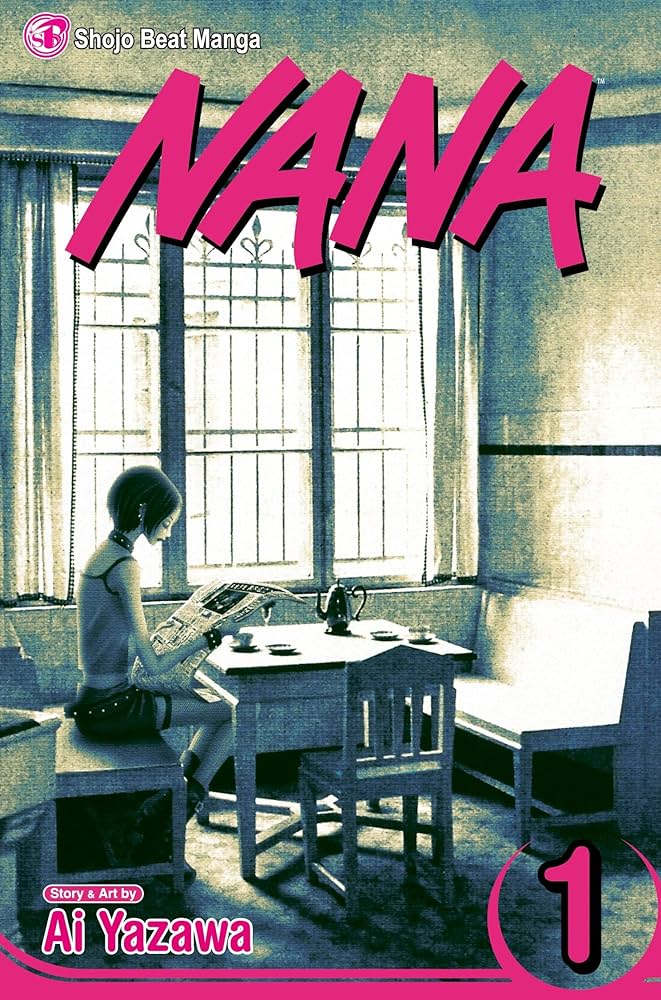
One vivid examples can be found in One Piece by Eiichiro Oda. What begins as a chaotic pirate adventure becomes a vast meditation on justice, memory, and history. The series offers a reminder that joy can be defiant, and freedom contagious. Manga’s depth doesn’t end with epics. Nana by Ai Yazawa offers a raw portrayal of friendship and identity, or Goodnight Punpun by Inio Asano, a surreal coming-of-age spiral, shows how the medium holds hope, loss, and emotional complexity with equal grace. These stories speak to something real and something human, but we need to be willing to listen.
You can find them all at the library — where stories of every kind wait side by side, ready to be read with curiosity, care, and imagination.
History of Comics in Asia Tue, May 6 | 7:30 – 8:30 pm HCLS Savage Branch For adults. Explore the world of comics new and old! East Asian comics have exploded in popularity and dominate today’s reading environment. Whether you’ve read them all or have never picked one up, learn about their history before getting a chance to draw your own.
Ian Lyness-Fernandez is not quite used to being Instructor at the East Columbia Branch. He hopes his passion for learning can somehow translate into a skill for teaching.
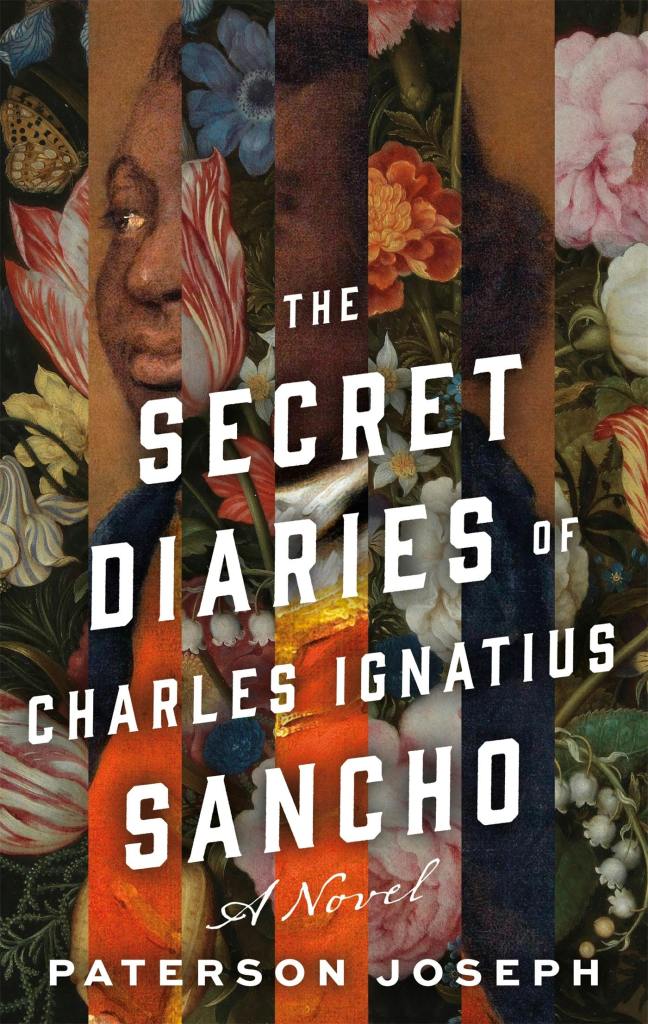
Paterson Joseph & The Secret Diaries of Charles Ignatius Sancho Tue, Apr 15 | 7 – 8:30 pm HCLS Miller Branch For adults. Register at bit.ly/Paterson-Joseph
“[T]he rollicking fictionalized memoirs of a real-life Black British trailblazer … An entertaining portrait that also illuminates rare opportunities for Black people in 18th-century London.” ~ Kirkus Review
The Secret Diaries of Ignatius Sancho is Paterson Joseph’s debut novel and is a story that begins on a slave ship in the Atlantic and ends at the very center of London life. It is a lush and immersive tale of adventure, artistry, romance, and freedom set in 18th-century England and based on the true story of the first Black person to vote in Britain, who fought to end slavery. Joseph channels the writing style of the day and draws on the real-life Sancho’s diaries to give voice to his hero’s interior life.
Joseph is a beloved British actor and writer. Recently seen on Vigil, Noughts + Crosses, and Boat Story, he has also starred in The Leftovers and Law & Order UK. He also plays Arthur Slugworth in the Wonka movie. He has won the Royal Society of Literature’s Christopher Bland prize and the Historical Writers’ Association Debut Historical Crown 2023 award. Books available for purchase and signing.
More About the Era of Charles Ignatius Sancho by Ian L-F Often celebrated as the Age of Enlightenment, the 18th century is regarded as an era of immense scientific progress, with philosophy and reason expanding the boundaries of thought that, at times, challenged authority. However, the radiant optimism of this period must be understood alongside its darker tendencies, where ideals of liberty coexisted with systemic exploitation. England’s economic rise, framed as a triumph of innovation and industry, was fueled by the profits of slavery and European imperialism.
Following the War of Spanish Succession, Britain was granted by treaty the asiento de negros, a monopoly on the sale of enslaved people to Spain’s colonies, solidifying its position as the largest slave-trading nation by 1730. Despite slavery being nominally outlawed in England since the 12th century, Britain, like other European powers, externalized its reliance on slavery to their colonies. This policy enabled them to condemn the trade morally while still reaping its profits, in every cup of sugared coffee and nutmeg-spiced delicacy.
Amidst this sea of madness, Charles Ignatius Sancho emerged as a beacon of erudition and resilience. Born on a slave ship and sold into bondage in New Granada, Sancho overcame incredible odds to achieve freedom and defy the prejudices of his time. A self-educated man of letters, a composer, and a businessman, he became a celebrated voice in Britain’s abolition movement. Yet, opposition to slavery in Britain remained scarce until the late 18th century, and as W.E.B. DuBois later observed, abolitionist efforts often aligned with economic interests: “The moral force they represented would have met greater resistance had it not been working along lines favorable to English investment and colonial profit.”
The 18th-century era contended with forces not too dissimilar from our own. In echoes of history’s tribulations and the lives of remarkable individuals, we find lessons that challenge us to confront injustice, question power, and strive for a more equitable world. If your interest in history has been piqued, our online research tools, like Gale OneFile’s World History database, are a fantastic starting point for an educational journey.
Ian is an Instructor and Research Specialist at HCLS East Columbia Branch. He is a huge nerd with too many interests to list here. Currently, he is fixated on the interconnection between history and fiction. His favorite kind of stories are stories about stories.
October is the season of frights and jump-scares. If you are anything like my friends and I, it means setting aside time to indulge in the shivers, chills, and heart palpitations that come with quality horror.
Over the years, my relationship with horror has evolved in surprising ways. As a child, the game Animal Crossing scared me so badly with a cheeky Easter egg that I ripped the disc from my GameCube and banished it to the farthest corner of my basement closet. Yes, the quaint, whimsical game about quirky animal neighbors and paying off a mortgage once sent me into a panic. As an adult, however, I’ve grown to love horror.
To celebrate the season, I wanted to share a brief list of media that use horror in fascinating and effective ways (as opposed to cliché or tired tropes). This selection of my favorites showcases how horror can transcend traditional scares, confronting us not just with fear but with deeper questions about meaning, control, and survival. Whether it’s through surreal absurdity, cosmic dread, or psychological unraveling, each of these works leaves a mark that lingers long after the story ends. Happy Halloween!
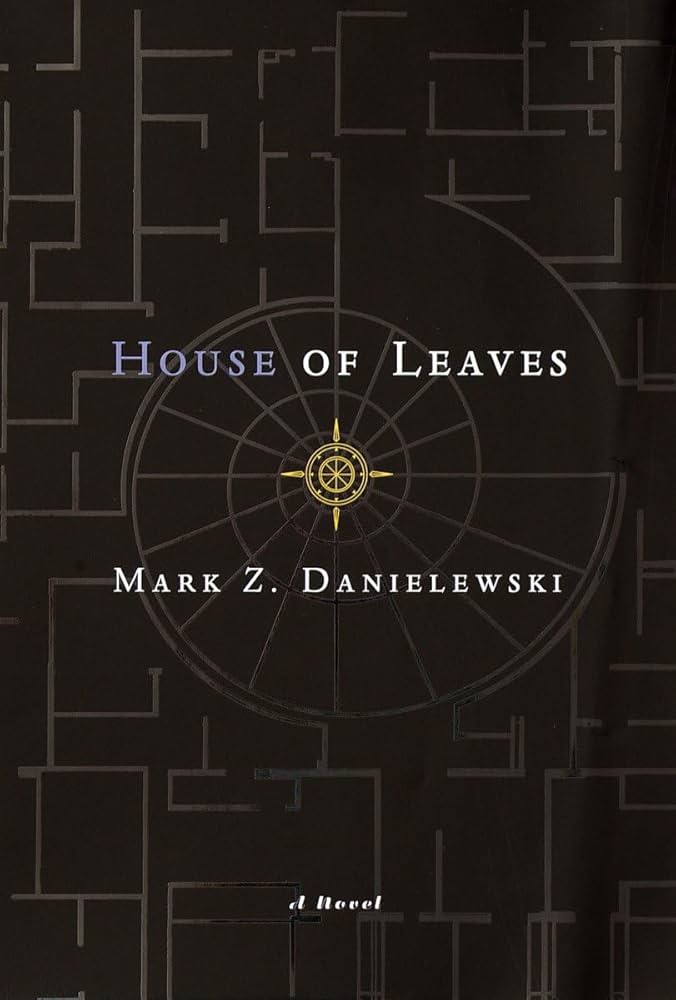
House of Leaves is one of the best pieces of fiction I have ever read – a wild, shifting text as concerned with the construction of meaning through language and signs as it is with the emotional turbulence of love, security, and existential dread. At its most succinct, House of Leaves is a book about an essay about a movie about a house that does not exist – and that house is also the book itself.
The story begins with Johnny Truant, a troubled, erratic young man living recklessly, burning the candle at both ends. One day, Johnny is invited into the apartment of his recently deceased neighbor, Zampanò. In the disheveled, eerie apartment, he discovers Zampanò’s final work: an academic treatise on a film called The Navidson Record. The catch? Zampanò had been blind for years, and The Navidson Record – a documentary by renowned photographer Will Navidson chronicling his family’s search for peace in a new home – does not seem to exist.
The house on Ash Tree Lane, as depicted in documentary, reveals itself to be bigger on the inside than the outside. As Will and a growing team investigate, the house grows endless, until the gravity of this impossibility threatens to undo everything. As you read, Johnny Turant does too – editing Zampanò’s fragmented manuscript while unraveling under his own troubles, which may all stem from the manuscript itself. Is the house real? Is it a curse? These questions spiral outward, pulling the reader into a labyrinth where certainty slips away leaving behind nothing at all —and perhaps the absence of anything is the most terrifying thing of all.
Greek filmmaker Yorgos Lanthimos has enjoyed international acclaim with films such as The Lobster, The Killing of a Sacred Deer, and Poor Things. Lanthimos excels at the strange and unsettling, crafting horror from the surreal and the absurd.
Case in point: Dogtooth centers on a family—a husband, wife, and their adult children—who live in complete isolation within a barricaded compound. The children have never left the confines of their home. They are raised on a manipulative regime of misinformation and control, where their parents deliberately distort language, knowledge, and their reality. Words are redefined to remove meaning. A ‘zombie’ is a small yellow flower. Cats are the most dangerous predator known to man. An adult is someone who has lost their dogtooth and is ready to leave the house. Fear of the outside is instilled with brutal efficiency to maintain compliance.
The result is a deeply unsettling exploration of control, isolation, and the fragility of identity. As the children struggle to conform to this artificial reality, cracks begin to form—revealing the horror that lies in the breakdown of personal autonomy. Dogtooth offers a stark, absurdist look at the consequences of power unchecked, leaving viewers disturbed not by monsters or supernatural forces, but by the cruelty of manipulation and the terrifying plasticity of human perception.
Junji Ito masterfully exposes the stark horror lurking within the mundane. Uzumaki follows the residents of a small Japanese town cursed by spirals—patterns that begin to consume not just the environment, but the minds and bodies of the people.
The father of the protagonist’s boyfriend becomes obsessed with spirals, collecting spiral-shaped objects, bathing in whirlpools, and only eating spiral-shaped noodles. He stares into spiral patterns for hours until even his eyes twist in opposite directions. Eventually, he dies attempting to twist his own body into a spiral. At his funeral, the crematory smoke spirals upward—only to shift and coalesce into a grotesque, grinning image of the man’s face, spiraling downward as if to envelop the town.
And from that moment, everything begins to unravel.
Junji Ito, a master mangaka, explores his work episodically in a sort of slice-of-fear narrative. Each chapter plays with the themes of the work, as it also delivers high quality and terrifying artwork. Uzumaki’s exploration delves into the erupting terror of grappling with forces beyond one’s control or comprehension. The horror of Uzumaki is mindless and indifferent, transforming even ordinary things—snails, ears, and babies—into sources of visceral dread. In Ito’s hands, the spiral becomes the embodiment of an absurd, indifferent universe where nothing is safe from corruption.
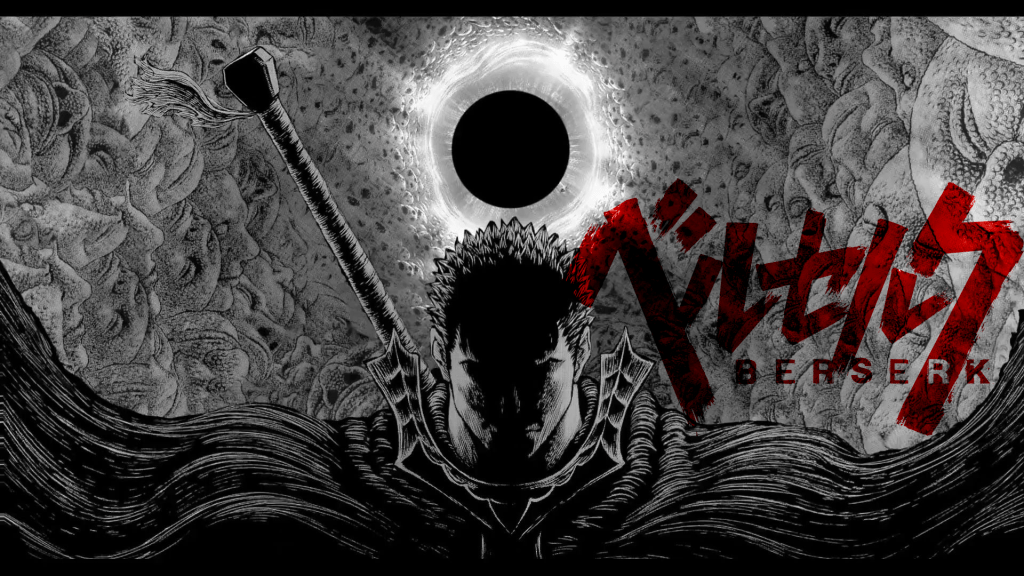
Berserk is a masterpiece: an amazing, serious, and beautiful piece of art.
Miura blends dark fantasy, psychological horror, and cosmic dread into one stunning and harrowing tale. Berserk follows Guts, the Black Swordsman and lone mercenary, as he battles through a relentless horde of monsters and demons. What begins as a journey of survival transforms into a profound meditation on trauma, betrayal, and the price of ambition.
The horror of Berserk lies partly in its grotesque monsters and their monstrous actions, but these monsters are rarely fully inhuman. This tension between humanity and power is central to the narrative, exemplified in “The Eclipse”—the most grueling, nightmarish scene in the story. This sequence rivals the most terrifying moments in any medium, where betrayal, loss, and monstrous transformation collide, leaving an unforgettable mark on both the characters and the audience. I do not say this lightly.
Berserk’s resonance and impact go beyond its grotesque (and frankly beautiful) artwork or the epic battles between Guts and the demon apostles. Its characters are written with profound psychological depth. Guts may present as a stoic, muscle-bound warrior, dismissing his problems with grim resolve, but that could not be further from the truth. His struggle is both external—hunted by the evil Godhand and their legion of apostles—and internal, as he wrestles daily with despair and rage. These emotions stem from what he and his comrades endured at the hands of someone they once trusted as their leader.
Berserk is not just horror for the sake of horror—it is tragic, beautiful, and unforgettable. It reminds us that even in the face of overwhelming darkness, the struggle to endure can be its own kind of victory.
Berserk contains highly intense themes and disturbing scenes that may be difficult for many readers. If you’re considering reading it, I strongly recommend looking into its content beforehand to ensure you’re comfortable with the material. Berserk offers incredible depth and artistry, but it is not a story to approach lightly—you should know what you’re getting into.
Ian Lyness Fernandez is an instructor and research specialist at East Columbia Branch. Although he first engaged with most of these works in high school, he wants to emphasize that these recommendations are intended for adults—adults who want to be horrified, to boot. Dead dove: do not eat, and so on.
Comparatively Lit Tuesdays, Aug 6 & 20 7 – 8:30 pm Meets online. Register to receive a link.
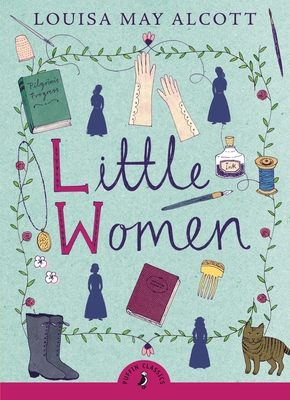
Comparatively Lit, a virtual book club hosted by HCLS East Columbia Branch, compares literary classics and newer works they have inspired. We focus first on Little Women by Louisa May Alcott and March by Geraldine Brooks, a modern companion novel focusing on the March patriarch as he serves as a Union chaplain in the Civil War.
When I was first brainstorming this class, I knew I wanted to cover “great works of literature” – whatever that means. Literature is a fraught term, one that often coveys snobbery and presumed superior merit. This ivory-tower elitism has always bugged me. If there was a meritocracy to writing and literature, at the very least it would be a more open field than many have historically treated it.
This is where Little Women enters our discussion. Truthfully, I had not read Little Women before setting up this class. It had always existed in the periphery of my literary journey. Perhaps because many of my professors had a bias for British literature, Little Women did not receive the same focus as the works of Jane Austen or the Brontë sisters. Yet, despite its century and a half of constant publication and adaptations to screen and stage, Little Women was likewise shunned by American academics for many decades. Its potential meaningfulness and impact were at best misunderstood, if not deliberately ignored.
Today, there is no real argument against considering Little Women a classic of American literature. The novel carries the weight of a pivotal period of our national history, as the horror of the Civil War looms around it. The flourishing and evolving philosophies of Transcendentalism and First-Wave Feminism define this work. The struggles the March sisters endure mirror the struggles our nation faced (and continues to face). None of this overshadows that Little Women is also a wholesome and cozy story that people have returned to for inspiration and insight for more than a century. Its popularity and impact persist into the present day.
Among the myriad adaptations of Little Women, we examine March by Geraldine Brooks. In the original tale, Mr. March is serving as a chaplain within the Union Army, remaining absent for most of the novel. March refocuses the story from his point of view as he struggles with the brutality of war. He wants to shield his family from this reality, but his shaken conscious threatens to unravel him. Brooks’ story has an exceptionally different tone, less cozy to be certain.
Comparatively Lit looks explore how narratives interact and how these works reflect our worlds. When we examine stories with common foundations, what can we learn? Do the respective time periods of their authorship inform differences in their themes? Despite the time difference, are there messages that echo between them? What does each say about America or being American?
This new book group meets online for two sessions. Tuesday, August 6 features our discussion of Little Women, which expands to include March on August 20. Please register to receive the link.
Ian Lyness-Fernandez is not quite used to being Instructor at the East Columbia Branch. He hopes his passion for learning can somehow translate into a skill for teaching.
“This is some kind of a plot, right?” Slothrop sucking from a velvet pipe.
“Everything is some kind of plot, man,” Bodine laughing
“And yes but, the arrows are pointing all different ways,” Solange illustrating with a dance of hands, red-pointed fingervectors. Which is Slothrop’s first news, out loud, that the Zone can sustain many other plots besides those polarized upon himself . . . that these are the els and busses of an enormous transit system here in the Raketenstadt, more tangled even than Boston’s – and that by riding each branch the proper distance, knowing when to transfer, keeping some state of minimum grace though it might often look like he is headed in the wrong way, this network of all plots may yet carry him to freedom. He understands that he should not be so paranoid of either Bodine or Solange, but ride instead their kind underground awhile, see where it takes him. . . .
By Ian L.
I fear, dear reader, that in even attempting to describe the manifold plots contained within Gravity’s Rainbow, the constraints by which I am bound have already caused me to fail in my endeavor. Which is to say, this book is a challenge to read but even more so to describe. This novel challenges your understanding of what a novel should be.
Gravity’s Rainbow, described as the least-read must-read of the English literary canon, is perhaps the post-war post-modern novel. Anthony Burgess, of A Clockwork Orange fame, described the novel as, “the war novel to end all others.” It is often spoken about alongside James Joyce’s Ulysses, another book notorious for being considered either a great work of literature or completely incomprehensible. I am sympathetic to the former, but I understand how people believe the latter. The narrative and prose are confusing from the launch. Gravity’s Rainbow plays with its narrative distance in much the same way that our brains do while we are dreaming. A scene might open on one character and follow them for a beat; then, the focus flies into the head of another and digs deep into their individual psychology, history, or worldview.
While we are following these various and sundry characters, many of whom are not our “main” character (which itself is a harder question to answer than you might expect), the narrative is also running along a track parallel to our real history. Pynchon’s prose is impeccably diverse, in both its form and subject. The story is interspersed with poems and songs sung by and about the people who populate this novel. Several of the “chapters” could easily be independent short stories. The narrative meanders and diverges into reveries on myriad topics: historical events, artistic movements, psychology, chemistry, physics, genocide, philosophy, and even esoteric “sciences.” Pynchon’s words manage to be witty and evocative, beautiful, and hilarious, as well as harrowing and even vulgar. Truly so. I do not have the digital real estate to expand on that point, let alone most aspects of this novel.
Ostensibly, Pynchon’s novel is set during the final stages of World War II. The German military has been rapidly manufacturing and deploying the V-2 rocket, the first ever long-range guided ballistic missile. It screams across the sky so fast you only hear it if you survive. An initial ensemble of secret intelligence operatives catches word of a strangely serialized rocket and an unknown device included in its schematics. The 00000 Rocket and the mysterious Schwartzgerät form the central gravity well around which this novel’s narrative revolves. It is an awesome medley of carefully researched facts mixed with Pynchon’s creative labyrinth of fiction. The novel is initially disorienting, by design, aimed at confusing the reader’s understanding of what is “actually happening” within the narrative. The characters experience this feeling, too.
One recurrent theme throughout the novel is the ever-mounting presence of paranoia. The characters struggle under overarching and competing plots. They buckle under the questioning of whether anything they have ever done has helped anyone. The War has consumed them, and only too late do they realize the War Machine does not exist on both sides. It is a superposition that collapses all sides into itself. This maddening descent is humanized by Pynchon through his characters, who are irrevocably altered by their situation. Each undergoes a derangement of the self, a severing and mutilation of their minds and bodies, or for some, their souls.
If there was a word we could use as a through line for the vast wasteland that is Gravity’s Rainbow, it might be “Preterite.” Grammarians probably recognize this word as a fancy term for the simple past tense. I imagine most people are not thinking about Christian Eschatology in their day to day. To put it simply, the Preterite, according to Calvinist doctrine, are those who are not predestined for salvation. The characters we follow are among the Preterite, the passed-over and forgotten who are used by the Elite and the Elect. Those who must live in the wake of what war wrought. It would seem trite to state something so simple as “War is Bad.” Gravity’s Rainbow is full of themes that can seem stupidly obvious when stated outright. It is not these answers that earn Pynchon his accolades, but how he moves toward his answers. That is something that must be experienced, not explained.
Much like the end of the novel, I want to close this out with an abrupt pivot toward the mystical. Within many mystical traditions, whether hermetic or religious, lies the belief that profound truths cannot be readily grasped by the uninitiated or faithless. To expose these truths too hastily is to rob them of their power. To put it another way, for a revelation to be of any consequence, its content must first be hidden.
Knowledge is like light; the ten-tons of rocket-powered symbolism and the concentric layers of narrative are a prism which refracts and disperses the light into a visible rainbow. Without the prism the light is visible but unfiltered. The diverse cast of characters, the disparate circumstances they find themselves in, even the story of Byron (the sentient immortal light bulb), are all pieces of the prism. Pynchon expertly constructed this obfuscating puzzle to reveal something prescient about the world we inherited. Despite being published 50 years ago, I would wager its relevance has never been less in question. More than ever, we live under the shadow of Gravity’s Rainbow.
Gravity’s Rainbow is available in print, as well as an e-audiobook and an audiobook on CD. The audiobook, skillfully narrated by George Guidall, brings Pynchon’s words into great relief and were an indispensable aid in completing the book.
Ian is an Instructor and Research Specialist at East Columbia Branch. After finally finishing Gravity’s Rainbow, he is not sure what to do with himself. Infinite Jest stares at him dauntingly from his shelf. If anyone asks, he – never – did the “Kenosha,” kid.
This is a True story. The events depicted took place in Minnesota in 2006.
At the request of the survivors the names have been changed.
Out of respect for the dead, the rest has been told exactly as it occurred.
What defines the ‘truth’ of a story? Is it accuracy to the literal account of events, or that it resonates with a more elusive truth about our perceptions of ourselves and the world? Every episode of Fargo opens with the passage above, adjusted for the specific time and place of the season’s focal bedlam. Each season is independent, although loose connections unite each season into a shared world with Easter eggs for the eagle-eyed viewer. But each season is a ride along, a shocking and surreal crime wave that disrupts the deceptively quaint communities of the Midwest.
Watching Fargo is like having an intimate view into two trains hurtling towards an inevitable collision. It is tense and dramatic, unpredictable and quirky. As if the trains were full of seemingly supernatural criminal murderers and diffident Minnesotan house-spouses who would use phrases like “You betcha” and “Aw Jeez” even as the world burns down around them. A mix of crime drama and magical realism with a substantial dose of Minnesota Nice, all brought to a boiling point.
I cannot overstate my love for this series. The creative aesthetics behind the production are unlike anything else on TV. The sets are gorgeous; nigh-eternal winters loom over the Midwestern plains, enhancing a sense of stasis that stands in contrast to the rupturing of the status quo. The music fills the show with an exciting dynamism. The theme song is stellar, evoking a kind of folk melody that is nostalgic, yet somber and plaintive. As it pertains to the larger show, the music is curated to great effect. The soundtrack is a diverse mix of iconic songs of the time and original compositions, which all serve to influence the emotions of any given scene.
However, it is the writing that stands above all else. The framing device which opens each episode always fills me with anticipation. Borrowed from the original Coen Brothers’ film, the statement “This is a true story” calls to mind Truman Capote’s creative nonfiction novel In Cold Blood, which itself serves as a founding inspiration for true crime as a literary genre. Stories about crime have always drawn audiences, but true crime’s magnetism is unique. The next two lines of the opening comment on respect, for the living and the dead. The contrasting means of showing this respect are wryly humorous. One wouldn’t be remiss in wondering if the calls for respect are a means to an end so that the story can be told. Perhaps elements of these stories compel us to share them, as a lesson to be learned or a chance to understand something better.
However, contrary to the opening lines, Fargo is fiction. Many of us are familiar with films that take liberties with their claims of truthfulness (looking at you, The Conjuring). Fargo is different. The show revels in the contradiction of this deliberate and ironic narrative choice. This narrative flourish prepares the audience for a cavalcade of untrustworthy narrators. Truth is, unfortunately, not easily uncovered.
The police investigations which act as a through line for the series are not the pinnacle of competent detective work. There is neither a Sherlock nor a Hercule Poirot to be found. Instead, we are presented with a motley crew of eccentric characters possessed each by their own perspective, and everyone is wrestling for control. Their actions are influenced by their respective worldviews and the lengths they will go to ensure their particular truths remain unimpeachable. When these characters are pitted against each other, their perspectives paint a dynamic portrait of what it looks like to live in our world.
This interplay reveals discussions on all manner of philosophical and political topics. Uncovering the reference behind each episode title is a fun bonus game for an active viewer. I want to focus on one particular example from Fargo’s second season entitled “The Myth of Sisyphus.” Season two takes place in 1979 and covers the grisly collision between a hapless couple who accidentally killed a member of the local Gerhardt crime family, the vengeful crime family in question, the encroaching Fargo mob, and the state troopers who are trying to prevent the violence from spreading. The season opens with the words of Jimmy Carter:
It is a crisis of confidence. It is a crisis that strikes at the very heart and soul and spirit of our national will. We can see this crisis in the growing doubt about the meaning of our own lives. And in the loss of unity and purpose.
Fargo places Carter’s crisis of confidence in direct conversation with Albert Camus’ essay on Absurdism, “The Myth of Sisyphus,” with a handful of characters reading the essay.Camus’ essay discusses how we crave meaning and purpose in our lives but are confronted by a world that has no meaning and is defined by chaos. In the classic myth, Sisyphus was cursed to push a boulder up hill, which ultimately rolls back down once it reaches the top. Sisyphus must then return to the boulder and begin pushing it again. Forever. The myth represents futility and the struggle against meaninglessness. Arguably, none of the characters gained a great comprehension of this essay. Some of them flatly reject the framework of the essay, but nonetheless act in ways that exemplify Camus’ different propositions for responses to the Absurd. Through the contrasting reactions to the text and the responses to increasingly absurd circumstances, we see the show develop its philosophical inquiry into the issue.
This inquiry is not accomplished without a lot of heart. Fargo is ultimately hopeful. The largest source of friction, the catalyst of all chaos, stems from the inability to communicate and the resulting misunderstanding chips away at our sense of unity. Giving up is not an option, or at least, not a particularly good one. We make meaning in our lives through the things we cherish, that we wish to protect or pay our attention to. Whatever trial or tribulation, we face those challenges to preserve what is valuable. To do otherwise is tantamount to letting it fade.
Fargo is special for how it juggles this stylistic blend. It presents humor and horror together with sentimentality. None overshadows the other. Fantastic casting choices breathe life into the writing. No matter how quirky the characters may be, they embody a sense of realism that makes the world feel alive and not too distant from our own, especially now in our own bizarre and heightened reality. Sometimes, even truth must be disguised for others to regard it. Fargo uses the medium of fiction to bypass our skepticism and take us on a journey through and around the strange heart of the modern world. And it makes sure that the journey is going to be wild and fun along the way.
If your interest is piqued, the good news you can borrow the first three seasons of Fargo on DVD. Season 5 of Fargo is currently airing on FX and select streaming services.
Ian is an Instructor and Research Specialist at East Columbia Branch.He is a huge nerd with too many interests to list here. Currently, he is fixated on the interconnection between history and fiction. His favorite kind of stories are stories about stories.










 CHAPTER CHATS