Several More Selections to Finish Summer Reading

The book cover shows someone with long, streaming hair across their eyes, dressed half in a knight's chain mail and half in a ball gown. Moths and flower blossoms float in the foreground.

By Howard County Library System staff

We’re getting even closer to the start of school. If you enjoyed our last compilation, there’s still a little bit of time left to read and we’re still full of suggestions! Whether you’re looking for a narrative to take with you for Labor Day weekend or a thoughtful novel to share with your book club this autumn, our staff continues to share their recent summer reading recommendations. And remember, readers’ advisory is one of our favorite ways to make connections with readers in the community – so if none of these suit your tastes or your reading goals, please stop by any branch and ask the instructors and research specialists for more reading ideas!
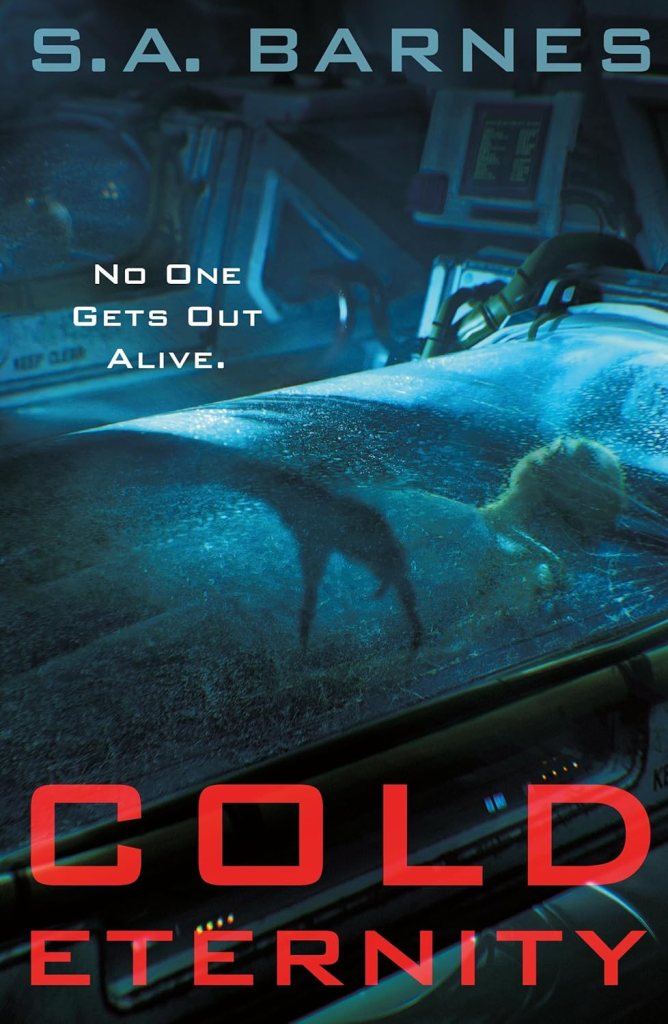
The book cover shows a body frozen in a space capsule with what looks like a clawed hand extending across the top of the capsule.

Cold Eternity by SA Barnes

Space horror is my new favorite genre mash-up, and SA Barnes has cemented herself as the queen of this space. Her newest, Cold Eternity, is a creepy story about a woman on the run who takes a job on ghost ship filled with dozens of cryogenically frozen passengers.

The Knight and the Moth by Rachel Gillig

Rachel Gillig is back with another decadent and enthralling romantasy after wrapping up her debut duology that began with One Dark Window. In The Knight and the Moth, a priestess must team up with a heretical knight when her fellow priestesses start disappearing. 

~ Alex H., Teen Instructor and Research Specialist, Glenwood Branch

The book cover depicts a woman with her head covered with a cloth, holding a rosary, her head haloed as if she were a saint. The colors are bright and there are hot pink flames in the foreground.

Now is Not the Time to Panic by Kevin Wilson

During the summer of 1996, awkward teens Frankie and Zeke create a mysterious poster and plaster it all around their town, leading to chaos and mass hysteria. The teens go their separate ways after that fateful summer, now known as The Coalfield Panic of 1996, and their secret exists only between them until a journalist begins poking around 20+ years later. The characters feel fully-realized as does the setting. This is the first book I’ve read by Kevin Wilson and I can’t wait to read more!

American Rapture by CJ Leede

A sudden zombie outbreak sends sheltered teen Sophie on an action-packed road trip across the Midwest in search of her twin brother, who was sent away to a conversion camp by their ultra-religious parents. A coming-of-age story filled with horror, heartbreak, and gore — think The Last of Us with a dash of religious trauma.

~ Emily B., Adult Instructor and Research Specialist, Central Branch

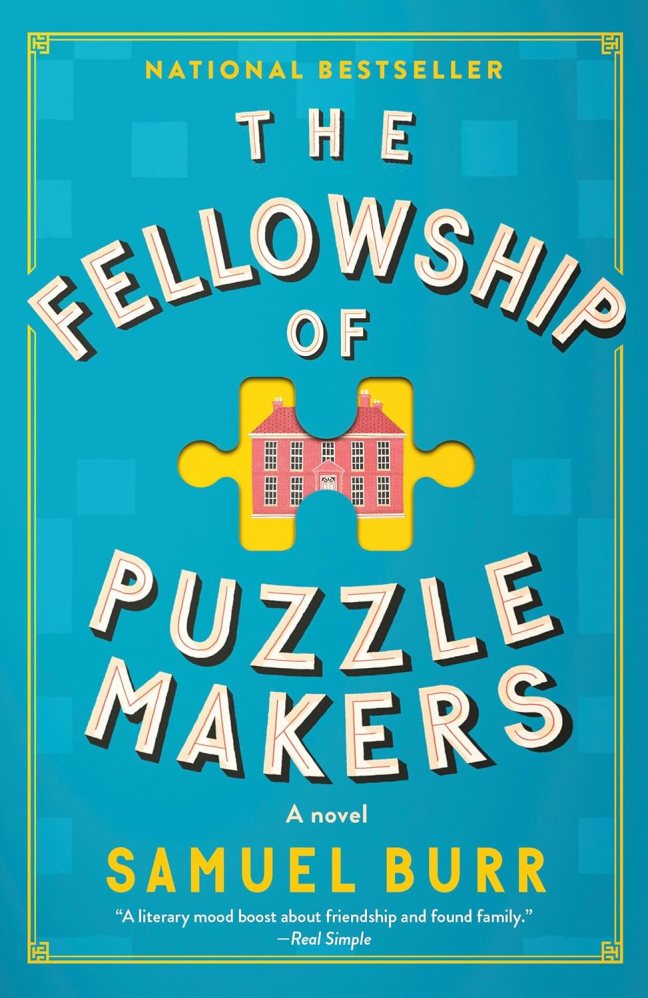
The book shows a mansion with ten windows and several chimneys, displayed inside a puzzle piece.

The Fellowship of Puzzlemakers by Samuel Burr

Love a good puzzle do you? Well, what if your entire life… was a puzzle?

Meet Clayton Stumper—found as a baby with nothing but a cryptic note and raised by a secret British society of puzzle geniuses. When Clayton turns 25, his mysterious past decides it’s time to be solved. This debut is a heartwarming, brain-tickling mystery packed with eccentric characters, emotional twists, and riddles. It’s reads as if The Da Vinci Code put the kettle on, got all warm and cozy, and joined a Sudoku club in the Cotswolds. If you like your fiction with clues, codes, and a dash of emotional catharsis—add this one to your TBR pile!

Long Island Compromise by Taffy Brodesser-Akner

What happens when a picture-perfect, ‘nice neighborhood’ life gets a little… kidnapped? Meet the Fletchers: wealthy, neurotic, self destructive, greatly traumatized — and that’s before the father is abducted from their own driveway! In Long Island Compromise, the American Dream gets duct-taped, stuffed in a van, and ransomed back to you — but somehow, the cost is even more than before. It’s equal parts hilarious, devastating, and deeply Jewish, yet somehow makes existential despair and generational trauma feel kind of warm and fuzzy.

~ Wendy C., Adult Instructor and Research Specialist, Central Branch

Ladder of Years by Anne Tyler

Wives and mothers of a certain age can completely relate to Anne Tyler’s heroine, Delia Grinstead, who suddenly flips a switch while on family vacation at the beach. Delia, frustrated and feeling isolated, just walks away, finding a new life in a small rural town; as she says to her mother-in-law, “because I just like the thought of beginning again from scratch” (139).

But is Delia just re-enacting her suburban life and hoping for a different outcome? When her daughter, Susie, invites her home for Susie’s wedding, we’re all waiting to discover the answer – and, I have to say, I had no idea what would happen, even just a few pages from the end. With her delightful sprinkles of local color and her deep, deep understanding of human nature, Ladder of Years truly is near-perfection.
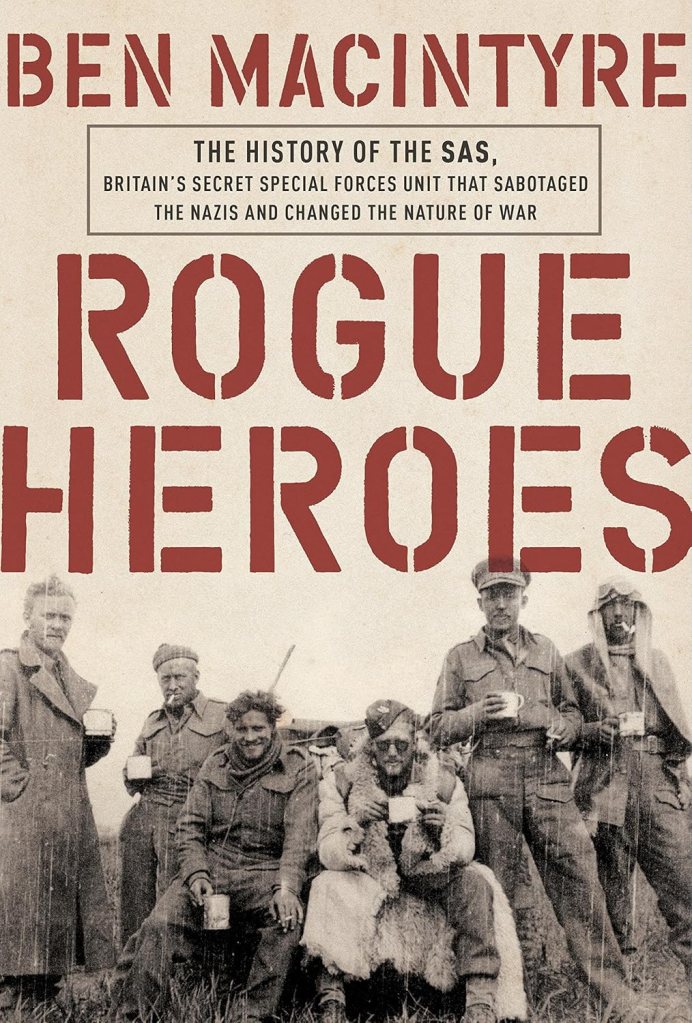
The book cover shows members of the British Special Air Service during World War II, seated and standing in a group, wearing overcoats and holding cups of coffee.

Rogue Heroes: The History of the SAS, Britain’s Secret Special Forces Unit That Sabotaged the Nazis and Changed the Nature of War by Ben Macintyre

This is narrative nonfiction that reads in many places like the screenplay for an action/adventure movie, in only the best sense. Author Macintyre puts us right in the thick of the action in North Africa during World War II, as the newly-minted Special Air Service trains in the desert and embarks on daring behind-the-lines raids to destroy German supplies and equipment, particularly planes in their airfields.

Despite some resistance from the upper brass, the men who led and trained the group, David Stirling and Paddy Mayne, end up making a huge difference in the fate of the fight against Rommel, and they inspire feats of bravery and moments of true courage among their ruffian-like band of recruits. The author makes clear that the SAS were innovative game-changers who did things others couldn’t or wouldn’t even attempt. A really great story, told well.

~ Julie F., Adult Instructor and Research Specialist, Miller Branch
Several Selections to Finish Summer Reading

The title depicts a swirling circular staircase from above, with someone ascending carrying an assortment of dishes on what appears to be a tea tray.

By HCLS Staff

The fourth of July may seem like a distant memory and school is revving up again soon – perhaps too soon for some! – but summer reading at Howard County Library System is still in full swing. If you’re a teen or an adult in search of a book full of fun, fantasy, or escape, summer reading is for you, too! Check out this list of recommendations from our instructors and complete your summer reading adventure, now through August 31.

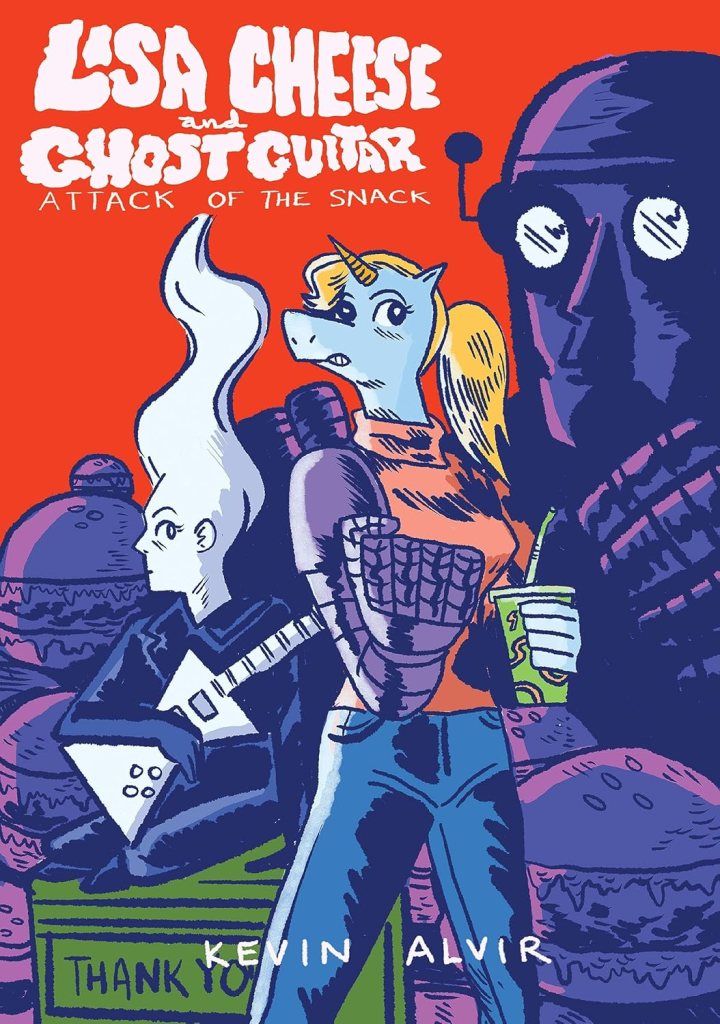
The book cover depicts the title's cyborg unicorn, Lisa Cheese holding a drink with the other hand clenched in a fist, an alien-like humanoid holding a guitar, and the face of someone wearing headgear and goggles.

Lisa Cheese and Ghost Guitar: Attack of the Snack by Kevin Alvir 

Lisa Cheese is a unicorn girl who finds herself drawn into a battle between an evil burger corporation and a mom-and-pop restaurant. This quirky graphic novel is perfect for fans of vintage comics, 90s pop rock and grunge, and anyone looking for a delightfully zany story that’ll keep them guessing until the last page. 

The Listeners by Maggie Stiefvater 

Stiefvater’s adult debut blends history with a touch of magic to bring you a glamorous hotel in the mountains of West Virginia that is forced to house dozens of Axis diplomats during World War II. Plus, there are dachshunds! 
-Alex H., Teen Instructor and Research Specialist, Glenwood Branch 

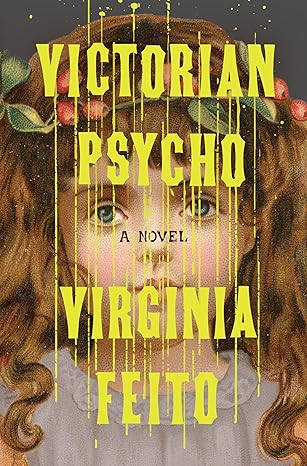
The book cover depicts a painting of a Victorian-era child with long curls and a floral wreath in her hair, wearing a white dress, gazing out at the viewer with streaks of yellow dripping from the above the title like rain streaks on a window.

Victorian Psycho by Virginia Feito 

The deliciously dark tale of a deranged, psychopathic governess named Winifred. She’s just arrived at Ensor House to tutor Drusilla and Andrew, but how long will she be able to keep her violent impulses at bay? This snarky and dark gothic tale is a fabulous entry in the historical horror subgenre. 

The Guncle by Steven Rowley  

GUP aka Gay Uncle Patrick takes in his niece and nephew for a summer in Palm Springs after their mother, and his college best friend, Sara, passes away from cancer. Though it deals with heavy topics like grief, addiction, and the loss of a parent, Rowley balances the heaviness with humor. Packed with fun pop culture references, this one is sweet with substance! 
-Emily B., Adult Instructor and Research Specialist, Central Branch

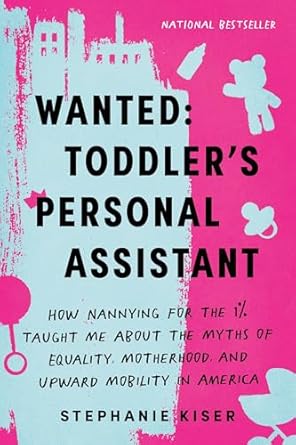
The book cover depicts a building in silhouette with a baby carriage close by, with other silhouetted items - a pacifier, a rattle, a teddy bear, and a baby bottle - flying through the air above and adjacent to the building.

Wanted: Toddler’s Personal Assistant: How Nannying for the 1% Taught Me about the Myths of Equality, Motherhood, and Upward Mobility in America by Stephanie Kiser 

Ever wonder how the one-percenters live? Where toddlers have gluten-free meal plans, and certain celebs skip the school pickup line? Stephanie Kiser serves up a hilariously sharp—and deeply human memoir, about life behind the velvet stroller ropes. Think The Nanny Diaries meets The Devil Wears Pull-Ups! 

With wit, grit, and just the right dose of heartbreak, Kiser lifts the curtain on what it means to chase the American Dream. It’s a tale of diaper duty meets social disparity—of love for children in a world that treats its caregivers like invisible help. Take a peek into a world of privilege, parenting, and personal revelations. Bittersweet and brutally honest. 

This Motherless Land by Nikki May 

Imagine you’re juggling grief, secrets, and enough emotional baggage to fill Heathrow airport and still manage to look fabulous! That’s the vibe in this Nigerian-English, very loose retelling of Jane Austen’s Mansfield Park, but with teeth and a much bigger bite. It’s scandals, secrets, ambition, and betrayal—woven into a tapestry of identity and belonging. Jane Austen’s decorum meets generational trauma, and the result? An emotional and messy exploration of what happens when home isn’t where the heart is, but where the hurt was. 

If you like tons of family drama, fierce women, and a plot that hits you harder than your auntie’s side-eye at the dinner table, this one’s for you! 
-Wendy C., Adult Instructor and Research Specialist, Central Branch

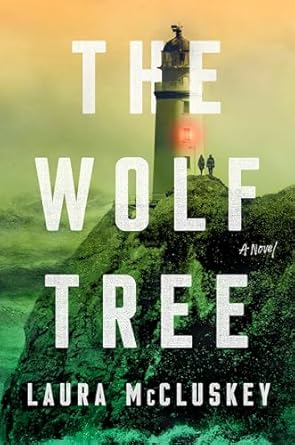
The book cover depicts a distant lighthouse on a cliff against a cloudy sky, with waves crashing below and two people approaching the lighthouse.

The Wolf Tree by Laura McCluskey 

The Hebridean island setting of Eilean Eadar is atmospheric and gloomy, foreboding in its isolation. Mysterious disappearances from the local lighthouse took place a century ago and the current residents are a curious mix of standoffish yet welcoming. The islanders don’t want the presumed suicide of a young man to be investigated by Glasgow detectives Georgina “George” Lennox and Richie Stewart. The author carefully juggles characters and subplots to keep the reader guessing what happened to him (and also to the missing lighthouse keepers from 1919). Fans of folk-horror will be intrigued and unable to put it down! 

Nosy Neighbors by Freya Sampson 

When the decaying flats at Shelley House are scheduled for demolition, the secrets of the residents start to unravel, and one of them is the victim of a crime. Prickly, 25-year-old Kat, a loner and a bit of a stray waif, and 77-year-old Dorothy, a meddling, nosy woman who has lived there longer than anyone, become unlikely allies as they try to figure out what happened to kind, gentle Joseph, a dog owner who has sublet a room in his flat to Kat. A delightful mix of cozy mystery and found-family story, with just a hint of romance. You will root for the characters despite their quirks, and as their stories are revealed, they become closer to one another and form a true community. 
 -Julie F., Adult Instructor and Research Specialist, Miller Branch

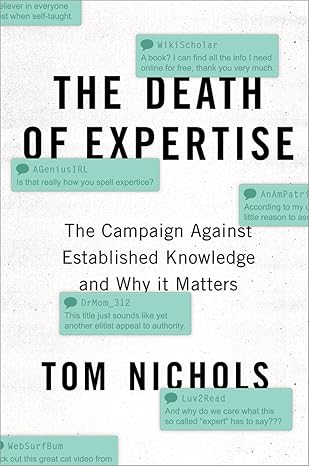
The Death of Expertise by Tom Nichols

The book cover includes seven speech bubbles or fragments of speech bubbles from writers with different user names, such as "DrMom_312" stating, "This title just sounds like yet another elitist appeal to authority" and "WikiScholar" saying "A book? I can find all the info I need online for free, thank you very much." All of them slyly support the premise of the book.

By Julie F.

Tom Nichols is a staff writer at The Atlantic, a professor, and a policy professional; I have followed him on social media and read his opinions for years. In this thoughtful analysis, he considers the death of expertise: the sense that previously acknowledged experts aren’t to be trusted and that the layperson can navigate their own way through a sea of information (and mis/disinformation). Looking at the disciplines of education and journalism, the rise of the internet, and the experts themselves (who consult with and influence policymakers), he traces the ways that citizens in our democracy have decided that they have the expertise to make decisions about a host of issues that were previously deferred to specialists (doctors, professors, and other expert advisors).

Nichols convincingly demonstrates how confirmation bias, the commodification of higher education, anti-intellectualism, and millions of web pages with uncurated, dubious information have enabled this often-misguided attitude. Librarians and library workers, take heart! You will appreciate his deep understanding of the nature of our work. My favorite quotes are from (not surprisingly) his chapter on the internet, called “Let Me Google That For You: How Unlimited Information Is Making Us Dumber”:

“The Internet, however, is nothing like a library. Rather, it’s a giant repository where anyone can dump anything, from a first folio to a faked photograph, from a scientific treatise to pornography, from short bulletins of information to meaningless electronic graffiti” (110).

“Research requires the ability to find authentic information, summarize it, analyze it, write it up, and present it to other people. It is not just the province of scientists and scholars, but a basic set of skills a high school education should teach every graduate because of its importance in any number of jobs and careers” (111).

Although his exploration of these concerns left me a little anxious at times for the future of our republic, Nichols wasn’t as cynical as I’d expected, and at the end of The Death of Expertise: The Campaign Against Established Knowledge and Why It Matters, he sums up similar situations we’ve recovered from in the past, when Americans were “capable of shrugging off their self-absorption and isolation and taking up their responsibilities as citizens” (237). Hopefully, a resurrection in interest in participatory democracy and the education of our citizenry will speed that process along.

The Death of Expertise: The Campaign Against Established Knowledge and Why It Matters is available from HCLS in print and as an e-audiobook from Libby.

Julie is an instructor and research specialist at HCLS Miller Branch who finds her work as co-editor of Chapter Chats very rewarding. She loves gardening, birds, crime and espionage fiction, all kinds of music, and the great outdoors.

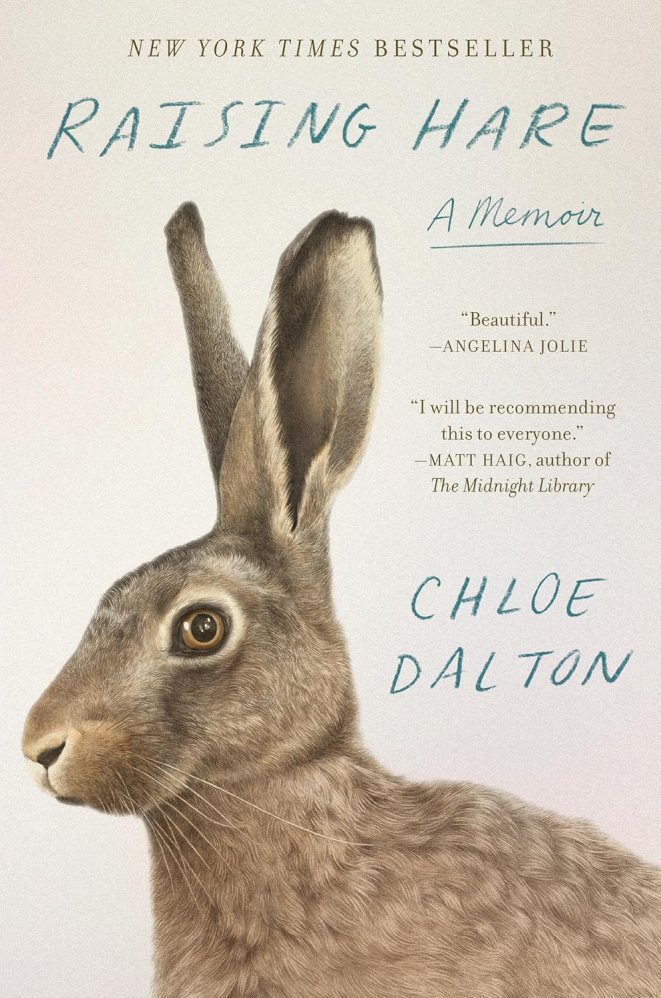
Raising Hare: A Memoir

The book cover is a colored illustration of a hare in profile, with its ears alert and its whiskers extended. The viewer sees one golden-brown eye staring back at them.

By Julie F.

Chloe Dalton, the author of Raising Hare: A Memoir, is a writer, political adviser, and foreign policy specialist who decided to escape London during the pandemic. In February 2021, while still getting used to the lay of the land and the run-down home she purchased in the dead winter landscape, she discovers a leveret (a baby hare) in her garden. Not knowing anything about the species, but determining that the mother is not close and may not return, she brings it in and sets about trying to keep it alive.

There is a lovely, intimate prologue from the perspective of the mother hare that offers one explanation for how the leveret, which she has carefully hidden from predators, might have come to be separated from her. Dalton is clearly the kind of person who listens to the landscape and tries to discern what it wants to communicate. She tries very hard to ensure that the leveret stays wild. She bottle-feeds it and then offers it porridge oats, but then she plans to release it into the wild. Although the leveret ventures into her garden, and then eventually over the garden wall, it never becomes fully wild (nor fully tame), and it returns again and again–delivering the next litters of baby leverets in the garden, and even later in the house, where she feels safe and they grow up feeling even safer, having been born on the floorboards.

The memoir is a lovely meditation on what is tame and what is wild, the tenuous but loving connection between humanity and nature, and how slow, deliberate observation can teach us so much about a species. Dalton knew next to nothing about hares when she began and is surprised to learn that there’s not that much information out there; most of what she learns is gleaned from the poet William Cowper, whose period of depression in 1774 was relieved when he was gifted a three-month-old hare and later acquired two more, all of whom he adored. She says, “I doubt that Cowper imagined his poems might be used as a guide to raising a leveret nearly 250 years later, but his words were in many ways the most useful of any I found” (53). This is particularly true in relation to feeding and shelter; though Cowper kept his leverets in pens at night, she didn’t keep the leveret locked in, “never want[ing] it to feel trapped inside, nor barred from coming in” (53).

This is a tour-de-force–beautifully written, resonant, humorous, and charming at times, but full of emotional and philosophical heft. I can’t say enough good things about it, and it’s such an accomplished first book from a thoughtful, skilled, and talented author. If you enjoy audio, the narration by Louise Brealey is also accomplished and is a beautiful accompaniment to the text (if you like to listen as you read along as I did). The illustrations by Dublin-based artist Denise Nestor are also full of wonder and beauty. Near the end of the book, she talks about the impact of the hare on her life, and her description is a wonderful summation of the emotions you feel while reading her story. I’ll conclude with her words, because my own are inadequate in comparison:

“She has taught me patience. And as someone who has made their living through words, she has made me consider the dignity and persuasiveness of silence. She showed me a different life, and the richness of it. She made me perceive animals in a new light, in relation to her and to each other. She made me re-evaluate my life, and the question of what constitutes a good one. I have learnt to savour beautiful experiences while they last–however small and domestic they may be in scope–to find the peace to live in a particular state of feeling, and to try to find a simplicity of self. The sensation of wonder she ignited in me continues to burn, showing me that aspects of my life I thought were set in stone are in fact as malleable as wax, and may be shaped or reshaped. She did not change, I did. I have not tamed the hare, but in many ways the hare has stilled me” (275).

Raising Hare: A Memoir is available in print and as an e-book and e-audiobook from Libby.

Julie is an instructor and research specialist at HCLS Miller Branch who finds her work as co-editor of Chapter Chats very rewarding. She loves gardening, birds, crime and espionage fiction, all kinds of music, and the great outdoors.

To Marry and To Meddle

The book cover shows a Regency gentleman dressed in blue and a Regency lady dressed in gold, facing each other beneath a theatre curtain. Her arms are crossed and a handkerchief trails from her hand.

By Julie F.

Are you a historical romance fan who is waiting impatiently for the next season of Bridgerton? A reader of Loretta Chase or Sarah MacLean on the hunt for a new author? Look no further than Martha Waters and her Regency Vows novels.

There are five books in this loosely linked series. The first two, To Have and To Hoax and To Love and To Loathe, are delightful stories with witty conversation and clever turns of plot. To Marry and To Meddle, however, is my favorite so far. Not being a regular romance reader (I’m more of a British police procedural fan), I’ve been pleased to find them all so clever and enjoyable.

Lady Emily has always deferred to a very proper mother who is full of (unreasonable) expectations for her daughter; Lord Julian is a ne’er-do-well who owns a theatre and is practically disowned by his father for doing so. When the two acquaintances are thrown together at a country house party, a hasty marriage of convenience ensues. Julian helps her escape her domineering family, and Emily cloaks him in respectability – but will their relationship develop further, and will their families come to accept them as they are? Of course, the lovers are at cross-purposes for much of the novel; Julian, who initially views Emily’s interest in his business as her opportunity “to meddle,” may or may not come to accept and even value Emily’s innovative ideas and contributions to his theatre. Emily, in turn, hopes that her status as a young bride will give her time with her new husband and a chance to make a difference outside the traditional, accepted realms of ballroom and drawing room.

I liked the sharp wit and also the gentle playfulness of the story – including antics involving a stray kitten nicknamed Cecil Beelzebub Lucifer by his lordship. The main characters, who are winsome and intelligent, are exceptionally strong and well-rounded; even though they live in a very different time and place, the author is skilled at making them relatable, creating deft portraits of real people with both dilemmas and personal triumphs through dialogue and description.

Author Martha Waters does a great job of tying the series together through each set of lovers in a broader group of aristocratic English friends, and I’m already looking forward to the next one, To Swoon and To Spar – which will feature Viscount Penvale and his uncle’s ward, Jane Spencer – followed by To Woo and To Wed.

To Marry and To Meddle is available in print and as an e-book from Libby.

Julie is an instructor and research specialist at HCLS Miller Branch who finds her work as co-editor of Chapter Chats very rewarding. She loves gardening, birds, crime and espionage fiction, all kinds of music, and the great outdoors.

National Library Workers Day

The title "National Library Workers Day" shows several library workers in silhouette against the title letters as a backdrop, including one with a clipboard, one reading to children, one at a desk, and one working on a laptop computer next to a stack of books.

By Julie F.

Libraries work because we do! Today is National Library Workers Day, part of the ongoing celebration of National Library Week taking place from Sunday, April 6 through Saturday, April 12. On January 25, 2003, a resolution was proposed:

“That in order to recognize the hard work, dedication, and expertise of library support staff and librarians that the Tuesday of National Library Week be designated National Library Workers Day; and, that on that day, interested library workers, library groups, and libraries should advocate for better compensation for all library workers and, if the day coincides with Equal Pay Day, these individuals, groups, and libraries should recognize both days together.”

Every day, Howard County Library System workers are busy using their specialized expertise and skills to serve our community and facilitate our mission as your place to learn, grow, and connect. HCLS offers all members of the community an opportunity to transform their lives through education and lifelong learning. From Project Literacy to kindergarten visits, from book clubs for adults to crafting classes for teens, there is something for everyone at the library, and HCLS staff makes it happen. In service of our vision for an empowered community where all people reach their potential, we are committed to helping you meet your goals and actively seeking ways to partner with the community.

National Library Workers Day is a great time to see what’s new at the library! If you stop by a branch or our administrative offices this week, please take a moment to thank a member of our talented, hardworking team and to highlight the critical role library workers play in keeping our libraries running.

Julie is an instructor and research specialist at HCLS Miller Branch who finds her work as co-editor of Chapter Chats very rewarding. She loves gardening, birds, crime and espionage fiction, all kinds of music, and the great outdoors.

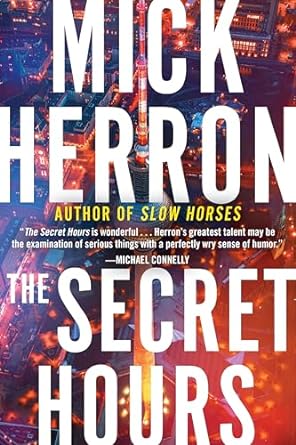
The Secret Hours by Mick Herron

The image depicts a cityscape lit up at night, from above, as if viewing from an airplane or helicopter.

By Julie F.

The Secret Hours opens with a thrilling pursuit: Max, a retired academic living in remote Devon, experiences a home invasion. The reader is privy to Max’s thinking in this first scene; he’s calm and collected enough to evade capture, at least immediately, and it’s clear that he has some background with the intelligence services. Max is now on the run, and the reader’s task is to figure out how his story matches up with the other tale author Mick Herron is telling – a look into what, at first, seems like ancient history.

In 1994, a newly-minted MI5 agent, Alison, is sent to cold war Berlin by David Cartwright to oversee and report back on the work of a somewhat abrasive, difficult agent named Miles. Cartwright is second-in-command in the Service and Alison isn’t sure why he distrusts Miles. In the present day, decades later, Alison is telling the civil servants on the nearly-defunct, investigative Monochrome commission the story of her sojourn in Berlin – how agents died and how the situation was rife with betrayals. The reader gradually comes to realize that her story might have something to do with Max and his pursuers. Of course, all the threads come together at the end and we get a glimpse of the manipulators behind the curtain who pull them for their own benefit. Herron’s unpredictability is one of his strong suits; the good guys don’t always come out on top, so it’s interesting to learn whether those maneuvering behind the scenes will get their comeuppance.

Mick Herron is a master – of character development, of mood and theme, and of plotting above all. I’ve loved the Slough House books in varying degrees, but this book – which is really Slough House-adjacent, involving none of Jackson Lamb’s present-day agents but clarifying many important questions from prior books – is utterly fantastic. If the acclaimed Apple TV series tackles this novel, it will be fascinating to see how they handle the flashbacks and resolve them in the modern storyline that features Lamb and his motley crew.

The tagline from Lee Child on the book cover says it better than I could: “Great Britain has a long, rich history of how-it-really-works espionage fiction, and Mick Herron – stealthy as a secret agent – has written himself to the very top of the list.” I’ve reread Slow Horses already, but as I’ve worked my way through the series, I’ve become convinced that there are so many little details and asides that are easily missed yet turn out to be consequential later on. I rarely re-read series (just because there is so much new fiction out there to discover), but this is one that is worth a second go – not just The Secret Hours, but all nine of the Slough House novels to date, as well as the excellent collection, Standing by the Wall: The Collected Slough House Novellas.

My favorite quote, from Miles to Alison: “You want to serve your country, right? What did you think that involved, dressing up and playing parts? This job is about betrayal. About persuading people to betray other people. Their countries, their friends, those they work for. And in return, we betray them too in the end” (295). It’s worth noting that, despite what he says about playing parts, the narrator tells us at the end that “for a moment they were back in their old lives, the ones that had turned out to belong to other people, or at any rate, to no longer belong to them” (349). Everyone has a hidden identity or motive; everyone is playing a part.

If you’re already a Slough House aficionado, good news: the wait will be up next year. Soho Crime currently plans to publish Clown Town, the tenth book, on September 2, 2025. And if you need something between now and then and have run through the entire series, Herron wrote two standalone novels that, like The Secret Hours, are set in the world of MI5 and MI6 concurrent to the adventures of Jackson Lamb’s Slough House crew: Reconstruction and Nobody Walks.

Julie is an instructor and research specialist at HCLS Miller Branch who finds her work as co-editor of Chapter Chats very rewarding. She loves gardening, birds, crime and espionage fiction, all kinds of music, and the great outdoors.

Everyone Give It Up for America’s Favorite Fighting Frenchman: Lafayette

by Angie Latham Kozlowski, Co-Chair, Franco-American Memorial Committee, Col. Thomas Dorsey Chapter, National Society Daughters of the American Revolution

Revered Revolutionary War figure Gilbert du Motier, the Marquis de Lafayette, left France at age nineteen to aid America’s battle for independence from the British Monarchy. He was determined to fight for the American cause against the wishes of his father-in-law and the prohibition of France’s King Louis XVI. On December 7, 1776, while in Paris, Lafayette received a commission of Major General in the Continental Army, which was approved by the Continental Congress on July 31, 1777. As Lafayette began making travel plans, he purchased a ship with an experienced crew, along with twelve handpicked fellow French officers, and absconded to Spain. The ship was called the “Victoire,” and it set sail for America on April 20, 1777.

Lafayette risked his life in notable battles such as Brandywine and Yorktown, earning admiration from Americans and fellow soldiers alike. His enlightened views on equality and zealous support for American independence endeared him to General George Washington, who reportedly came to treat Lafayette as a son. Lafayette’s steadfast commitment to the American cause and his ideals of liberty cemented his legacy as one of the Revolution’s most beloved figures.

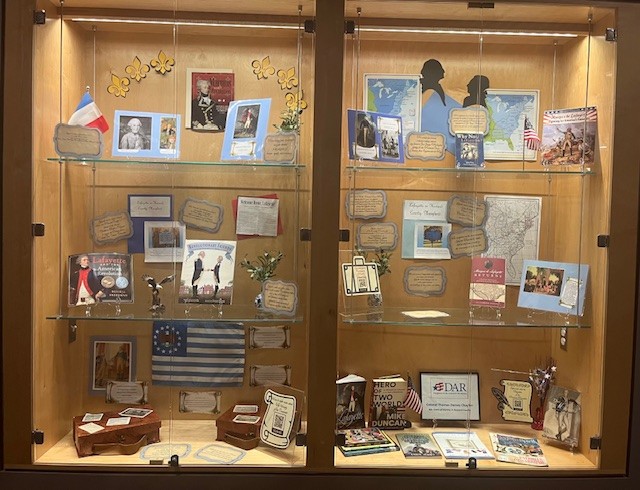
The photograph is of the display cases in the Miller Branch hallway, which contain documents, maps, photographs, books, and artifacts related to Lafayette and his visit to America.

Celebrating Lafayette’s Bicentennial as Guest of the Nation

In 1824, President James Monroe invited the 67-year-old Lafayette, the last surviving major general of the Continental Army, to return to America as the “Guest of the Nation.” His year-long Farewell Tour rekindled the nation’s gratitude and admiration. To commemorate the 200th anniversary of this historic visit, the Bicentennial of Lafayette’s Farewell Tour began in New York City on August 15, 2024. The tour retraces Lafayette’s original route and celebrates his profound impact on the young America.

Lafayette and his entourage visited Howard County with a stop in Lisbon on December 29, 1824, en route to Frederick. There is a commemorative Lafayette Tour marker, with an inscription that notes that an arch was erected by the community to welcome him.

The photograph is of the display cases in the Miller Branch hallway, which contain documents, maps, photographs, books, and artifacts related to Lafayette and his visit to America.

Explore Lafayette’s Legacy at the Miller Branch Library

The Bicentennial celebration recreates Lafayette’s tour as it unfolded in 1824 and 1825. The community can learn more about Lafayette and his return to America from the Colonel Thomas Dorsey Chapter of the Daughters of the American Revolution General Lafayette’s Farewell Tour Exhibit at HCLS Miller Branch this December.

Visit the exhibit to learn more about Lafayette’s extraordinary life, his role in America’s fight for independence, and the enduring significance of his Farewell Tour.

Deliver Me From Nowhere by Warren Zanes

The book cover is a photograph of two sets of stairs with railings, creating a zigzag pattern; Bruce Springsteen is walking up the second set of stairs, with mostly just his face visible, facing down at the camera.

By Julie F.

It’s 1982 and rock and roll musician Bruce Springsteen is reeling from triumph after triumph. He experienced phenomenal acclaim and commercial success with three successive albums (Born to Run, Darkness on the Edge of Town, and The River), two show-stopping worldwide tours with the E Street Band, and a massive hit single on the radio that’s still on the lips of his multitude of fans today – everybody’s got a hungry heart, right? But there were disappointments and challenges, too. A failed romantic relationship, as well as exhaustion from a bitter legal fight with his onetime manager, Mike Appel, left Bruce questioning the direction of the band and, more importantly, how he envisioned his future as an artist and songwriter.

1982 was a year of tremendous change in the music industry; MTV had launched in August of 1981, and Michael Jackson’s Thriller, still the best-selling album of all time, changed the way record producers thought about hit singles and short-form videos. Everything was splashy, colorful, and calculated to grab your attention. But Bruce had a different ethos altogether.

Enter Nebraska, with its black-and-white cover and photographs: Bruce’s album of rootlessness and isolation, a lonely place with a “dark highway where our sins lie unatoned,” as he says in the lyrics of “My Father’s House.” With its stripped-down sound and Woody Guthrie-esque lyrics, Bruce wanted to plumb the soul of rural American culture. He wrote about the forgotten and spiritually lost: from the Starkweather killings, to the decline of Atlantic City in his home state, to the inner musings of a worried police officer whose brother couldn’t stay out of trouble with the law. Originally recorded in his bedroom as a series of demos on a four-track TEAC recording machine, the album baffled a lot of people in the record industry and caused a few headaches for the engineers trying to mix those primitive tracks down into some semblance of a releasable recording. But when the band tried, and failed, to make the demos into E Street-style rock-and-roll anthems, Bruce knew that the tracks had to be released as they were. Warren Zanes was the guitarist for The Del Fuegos and a contemporary of Springsteen’s; as a writer who is also a musician, he does a wonderful job of telling the story of that process, with descriptions of the technical detail that are fascinating for music aficionados but which won’t overwhelm the casual reader.

Near the end, Zanes is discussing Elvis Presley and his impact on Springsteen as a child, and states that, “His [Presley’s] end would suggest that what might start as an American dream can become a deal gone very wrong” (273). Reading about how Springsteen wrestled with issues of identity and belonging, as well as personal depression, it’s clear that the songs on Nebraska were his attempt to reconcile his American dream – success and the freedom and escape that rock and roll represented – with the decline of the cultural touchstones like Presley who inspired him. As Zanes asks earlier in the book, “who should fight to expose all that was hidden from view?” (78). The answer is artists like Springsteen, driven by their artistry to answer our questions, expose our flaws and contradictions, and illuminate our common truths. He continues to do so today, decades into his journey as a musician and songwriter.

Author Warren Zanes looks not just at the making of Nebraska, but also at the cultural landscape it emerged from and the lasting impact it had on the musicians and fans with whom it resonated. Filled with interviews with musicians I admire – Rosanne Cash, Richard Thompson, and Dave Alvin, among others – as well as excerpts from Peter Ames Carlin’s Bruce and extensive interviews with Bruce himself, this is a well-researched and deeply thought-out tribute to a great album, one very specific to its moment and place in music history.

Deliver Me From Nowhere: The Making of Bruce Springsteen’s Nebraska by Warren Zanes is available from HCLS in print.

Julie is an instructor and research specialist at HCLS Miller Branch who finds her work as co-editor of Chapter Chats very rewarding. She loves gardening, birds, crime fiction, all kinds of music, and the great outdoors.

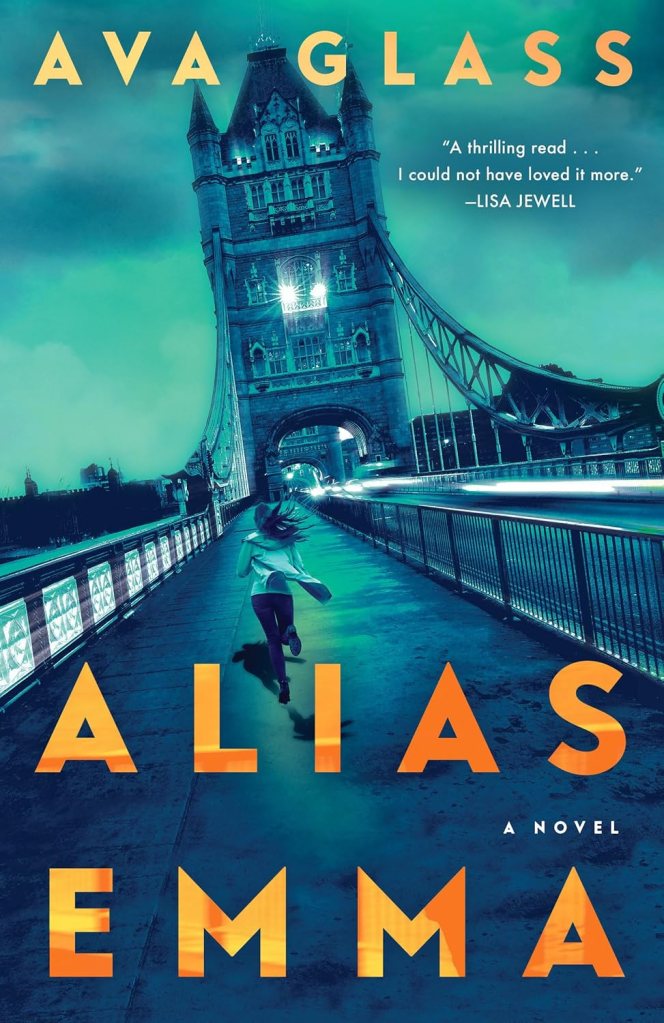
Alias Emma by Ava Glass

The book cover depicts a woman running across London Bridge at night, with her coat and long hair flying out behind her and several bright lights emanating from the bridge above her, shown against a cloudy, dark blue-green sky.

By Julie F.

Alias Emma by Ava Glass is a strong debut novel, a spy thriller with a lot of clever nods to the history of the genre. Even though Kim Sherwood has recently published two books in her series about a woman in the double-O universe (Double or Nothing and A Spy Like Me, both authorized by the Ian Fleming estate), you could reasonably consider Glass’s main character, Emma Makepeace, as part of a tradition of propulsive action and daredevil exploits reminiscent of Fleming’s James Bond. In terms of Emma’s quick thinking and survival skills, there are also shades of Emma Peel from The Avengers. Finally, Emma’s handler, Ripley, might make you think of two disparate characters who nonetheless pull all the strings and hold most of the cards in their respective fictional espionage worlds: the enigmatic George Smiley from John Le Carre’s novels and Mick Herron’s obnoxious but brilliant head of Slough House, Jackson Lamb. (Side note: It’s a testimony to the acting skill of Gary Oldman that he has portrayed both Lamb (Slow Horses) and Smiley (Tinker Tailor Soldier Spy) to great acclaim. Both are fantastic performances and well-crafted productions.)

Ava Glass sets a remarkable pace from the start in this non-stop story of a day in London, with Emma working to avoid compromised CCTV cameras (and the Russian spies who are monitoring them) as she tries to get across the city to the headquarters of the covert agency that secretly employs her. She’s towing a reluctant traveler along with her: Michael Primalov, a doctor whom the enemy has already attempted to kidnap or kill. Michael needs to be in witness protection because of his mother’s past history as a Russian scientist who traded secrets. Emma uses all of her smarts, tradecraft, gadgets, and skills to outwit the villains at every turn. The duo hope to connect with Emma’s supervisor, Ripley, but when they don’t know who to trust, even communication via regular secret channels is fraught with danger. At moments, this wild tale might make the reader feel like the pair couldn’t possibly cope with one more setback as Emma and Michael avoid explosions, are chased by Russian assassins, and even take a detour into the famous tunnels of subterranean London. If the reader is willing to suspend their disbelief a little bit, a fun thrill ride full of bravery and energy also reveals something meaningful about the two people at the heart of the tale and the changing dynamic between them. Emma takes the lead, but Michael makes improvised use of his physician’s skills as well, and they grudgingly learn to trust one another – at least enough to get them through this arduous journey across the city.

The book cover depicts the Shaftesbury Memorial Fountain in Piccadilly Circus, London, surmounted by a winged statue of Anteros and popularly known as Eros. There are silhouettes of people standing and moving around the fountain, dressed in 1940s-style clothing, and a hazy blue fog permeates the illustration.

If you like spy stories with women protagonists, I highly recommend the following novels:

Restless by William Boyd

Red Widow and Red London by Alma Katsu

Transcription by Kate Atkinson

Sweet Tooth by Ian McEwan

American Spy by Lauren Wilkinson

And if you read Alias Emma and enjoy it, there’s great news: Ava Glass has already published a sequel, The Traitor, and there’s a third book (The Trap) coming in fall 2024. Sounds like a series that’s ripe for a film adaptation – perhaps Gary Oldman will be available to play Ripley!

Julie is an instructor and research specialist at HCLS Miller Branch who finds her work as co-editor of Chapter Chats very rewarding. She loves gardening, birds, crime fiction, all kinds of music, and the great outdoors.