The Wren in the Holly Library by K. A. Linde

Deep blue cover with a decorative metal filigree of holly leaves and a small bird.

by Kristen B.

Maybe you’ve heard? Romantasy is IT! Nevermind that it’s really a newly coined termed for something that has existed for a long time (romance in your fantasy or fantasy in your romance). If you like to read on trend, you should take a peek at The Wren in the Holly Library by K. A. Linde, published by the same group that brought you the Fourth Wing series.

The idea that the world is full of monsters is not new, whether in real life or urban fantasy. In New York, sometime in the near future, the Monster Wars have ended and the vampires, goblins, wraiths, and werewolves have signed peace accords with humanity. Basically, it’s a pact of non-interference even though everyone is in each other’s business anyway, but life has begun to return to some semblance of normality – complete with tourists in Times Square. As always, there’s more than meets the eye. I have to say that the idea of troll toll-takers in the subway made me smile.

Kierse, master-thief and child of the streets, is clearly a New Yorker, one who loves the neighborhoods and byways of her city. She’s involved in a heist to steal a huge diamond that would provide financial security for herself and two best friends. As she sneaks into a wealthy brownstone in the Upper West Side, she can’t believe there’s seemingly so little security at the mysterious Holly Library. The unthinkable happens when, despite all her preparation and all her skill, Kierse gets caught. Graves owns the Holly Library, and he is the beast in the shadows with an agenda all his own.

This Beauty and the Beast tale, complete with library and helpful staff, takes off from there. It not only follows the classic story’s desire to rehabilitate the monster, it also contains a wild mashup of another, bigger heist, training sessions, a house party, sexy times, meaningful friendships, and ancient Irish legends. For the most part, the author manages to combine it all seamlessly into the bigger picture. I could wish for fewer side stories that distract from the main action, but it’s a fun book.

Kierse and Graves are the heart of the story – beautiful and beastly each in their own way. Trust is an issue, as is loyalty. Can you have the second without the first? Tragic personal histories haunt both main characters, but in the end you can’t help but be in their corner. The ending leaves the story wide open for at least one more installment, and I’m already looking forward to it.

The Wren in the Holly Library is available in print, e-book, and e-audiobook.

Kristen B. is a devoted bookworm lucky enough to work as the graphic designer for HCLS. She likes to read, stitch, dance, and watch baseball (but not all at the same time).

The Great Gatsby: Revised and Reimagined

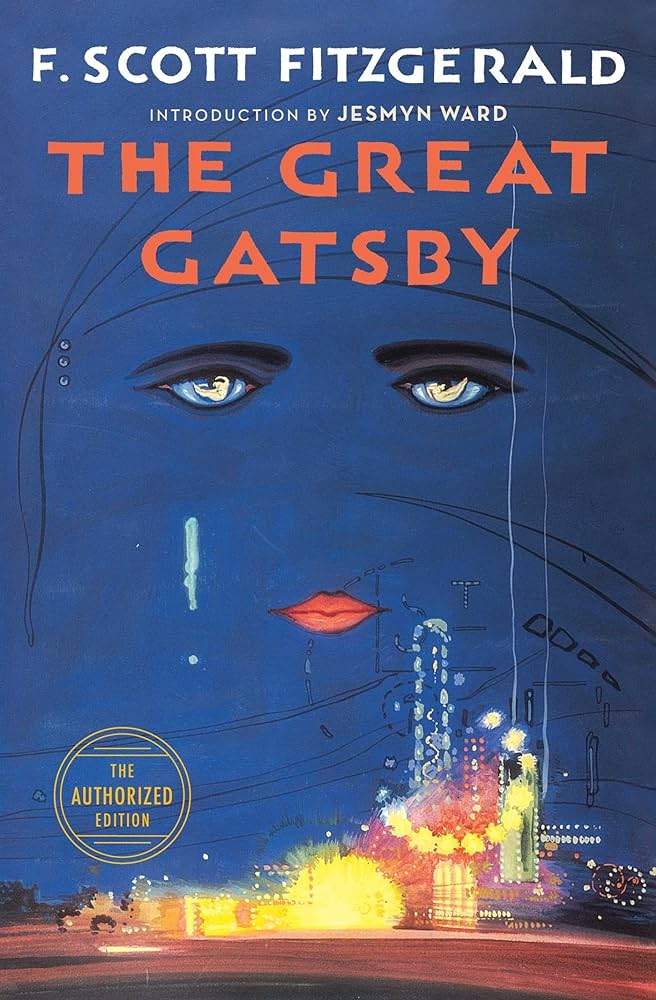
Deep blue cover has disembodied eyes and both above a lit up cityscape.

by Kristen B.

F. Scott Fitzgerald’s masterpiece, The Great Gatsby, has always struck me as a story about selfish people doing terrible things, in the service of nothing much at all. It’s one of the books that most of us first encounter as assigned reading in high school or college. However, I find myself returning to it and continuing to be fascinated, as well as a bit repulsed. The slim novel packs of a lot of punch and has proven itself worth revisiting and even re-imagining.

In high school, we were given the dark blue cover with a lit-up city-scape and disembodied eyes looming above it all (see above). It haunts me. The jazz age fable recounts a tale of obsession and excess, capturing the essence of the 1920s. It also plays with some quintessential idea of the American Dream, but one that’s gone a little seedy and unappealing at the edges. After all, everyone seemingly aspires to the life of the rich and famous, spending summers in East or West Egg, driving fast cars, and attending Gatsby’s extravagant parties along with the up and coming, dreadfully naive Nick Carraway. But (again, but), there’s a cost.

The story takes place during one hot summer in New York, fitting for seasonal reading. The pivotal scene happens when the exhausting weather drives the main characters, Gatsby and Nick, Daisy and Tom Buchanan, and Daisy’s friend Jordan Baker into the city, hoping for respite and entertainment at The Plaza. From there, all the carefully maintained charades and illusions come apart, leading to unresolved tragedy. The book ends with a deep yearning for what might have been, if only other choices had been possible.

An Asian woman's with a short bob, wearing black gloves and holding a cigarette, is posed among white leaves.

What brought me back to Gatsby recently was The Chosen and the Beautiful by Nghi Vo. She is one of my current favorite authors (see The Singing Hills novellas), who turned this well-known story on its axis. The retelling stars professional golfer Jordan Baker and her lifelong friendship with Daisy, as opposed to newly-minted businessman Nick Carraway and his bewilderment with Jay Gatsby. Plus, the subtle (and not-so) metaphors of Fitzgerald’s text became all too real with the inclusion of magical realism. They really do float about in white linen in the opening scenes. Tom Buchanan continues to provide the White, patriarchal establishment’s status quo against which all their boats beat back so fruitlessly, but he is even less appealing through the female gaze. While everyone is still privileged to the point of carelessness, the feminine emphasis makes the book slightly more sympathetic and tragic.

It’s still a good idea to have the original under your belt before enjoying the other variations. I recently (finally) watched the 2013 movie, starring Tobey Maguire and Leonardo DiCaprio in a Baz Luhrmann production. It certainly does the story justice, and in some ways conveys the outrageous excesses better than the book with all the lush visuals and big scenes. The text and the film complement each other well. As is true for most Luhrmann movies, the soundtrack was amazing.

If you’re looking to refresh your memory of the story, without perhaps reading the original, consider the graphic novel adaptation by K. Woodman-Maynard. It does a good job of mixing the bare bones of the story with some of Fitzgerald’s more luscious prose. The illustrations and the placement of the words within the images makes some of the more subtle, interpersonal nuances more obvious.

The Great Gatsby, the ultimate tale of reinvention and breath-taking chutzpah in the name of love and ambition, is one of the cultural touchstones of the American literary canon. It’s worth retelling, to reconsider what else it can convey to audiences almost a century after it was published. If you aren’t familiar with it, summer is a great time to devote some time to those books that you have always meant to read.

Kristen B. is a devoted bookworm lucky enough to work as the graphic designer for HCLS. She likes to read, stitch, dance, and watch baseball (but not all at the same time).

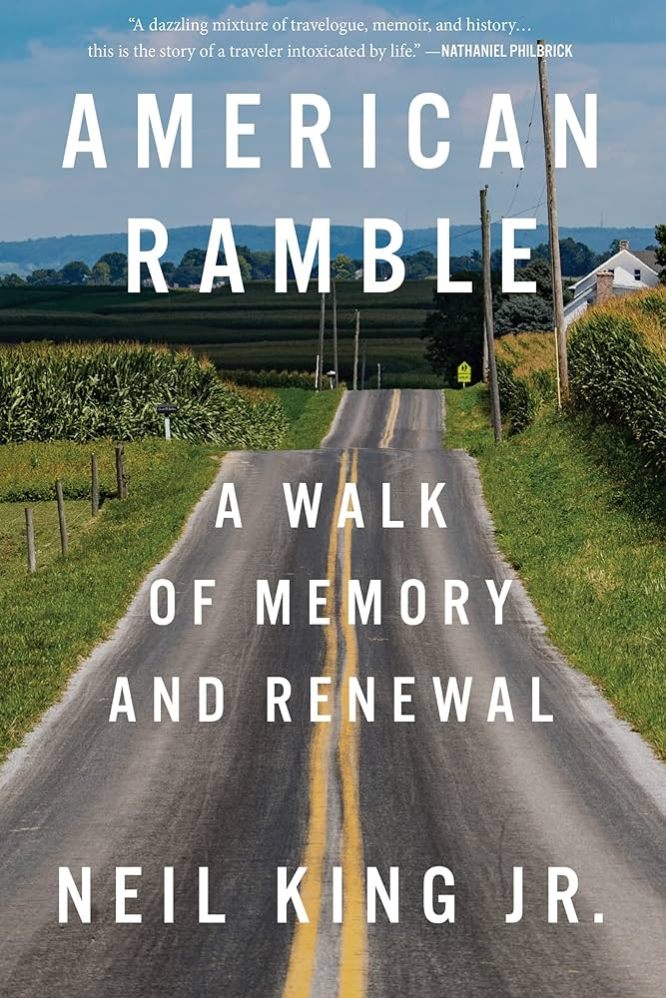
American Ramble by Neil King, Jr.

A two lane road with a double yellow line runs through rolling corn fields with blue hills in the background.

by Kristen B.

Author Works
Thu    Jul 11  7 – 8 pm   Miller
Register now.

According to Chaucer, April is the proper month for pilgrimage. Neil King agreed, and in 2021 he walked from Capitol Hill in Washington, DC to Central Park in New York, NY. His route traced up Rock Creek Park and Wisconsin Avenue through the suburbs, across Woodstock (MD), over the Mason-Dixon Line into York, PA and Amish country, then to Valley Forge, across the Delaware River, through New Jersey while finally crossing under Interstate 95, and into New York.

In his travelogue and memoir, American Ramble, he refers to these areas as “mini-nations,” and often relates them to the early history of the American colonies. He meets a wide variety of people along the way, who account for many of the anecdotes that drive the story. Some people instantly understand and bless him along his way. Others can’t even be bothered to offer the sojourner the basic necessity of water. Each night, he stays safely at planned spots – usually an AirBnB.

He acknowledges the privilege of making the trip as a White man, with the resources to finance the trip and the connections that further him along the way. He fully recognizes that not everyone would be safe on a similar trek. He also has a lifetime of travel experience and wanderlust behind him, so a month-long journey isn’t particularly daunting. Rather, it’s a fundamental reclamation of his preferred mode of living, after the pandemic and an ordeal with cancer.

King often refers back to Chaucer and other travels, and this month away from ordinary life is truly a pilgrimage for him. Not after only his own medical difficulties; he is also dealing with his brother’s diagnosis. He had been a Wall Street Journal reporter on 9/11, and the trip connects his present and his past – DC and NY. So, after the Covid pandemic and the racial unrest in the wake of George Floyd’s death, the author walked to reconnect with America itself. His goal was to meet all sorts of people where they are and to remember that we’re all part of the fabric that makes America.

At a quick 360-ish pages, the book is a delightful read. King leans into his journalism background to paint sketches of people and places. Some of my favorite anecdotes took place in Pennsylvania: one where he comes across a gaggle of Mennonite school kids playing softball, and another when he’s at the Eastern State Penitentiary in Philadelphia. His reflections upon the connections between pilgrims and penitents are particularly well done. The other moment that has stayed with me was how he solved crossing the I-95 corridor, to continue traveling eastwards, but I don’t want to spoil the episode with more detail.

The author has a personal distinction about how some people (like himself) are from – and at home in – Anywhere, while others (like myself) are home-bodies who occupy Somewhere. Whichever you are, American Ramble has some lovely moments for you to enjoy and ponder.

The author is an older White man wearing a tweed driving cap and medium grey zip up jacket, with grey clouds behind him.

Neil King, Jr. discusses his trip and his book at an upcoming event at Miller Branch. American Ramble is available in print and e-book.

Thu    Jul 11  7 – 8 pm   Miller
Register now

Kristen B. is a devoted bookworm lucky enough to work as the graphic designer for HCLS. She likes to read, stitch, dance, and watch baseball (but not all at the same time).
The Hunter by Tana French

A small white house sits alone in a field with billowing red clouds behind it.

by Kristen B.

Reading a Tana French novel is a bit like riding an old-fashioned roller coaster. First, you have the huge anticipation of slowly, so slowly, tracking up that first big hill, complete with some hitches and wiggles to keep things interesting. Then, the pause at the top before plummeting down headlong into the fast thrills of bumps and twists and loops.

French excels at that slow build of nerves and excitement, teasing you along the way with hints of danger and drama. Her latest, The Hunter, continues the story of American ex-cop Cal Hooper, retired to the west of Ireland, and local teenager Trey Reddy. It picks up two years after the events of The Searcher (Chapter Chats review), with the two still in close contact doing carpentry and other projects. The “townland” figures Cal as a decent foster parent for young Trey and approves of her having a path toward responsible adulthood. Lena Dunne provides the other part of this found family unit, along with the dogs.

All is well until Trey’s dad, Johnny Reddy, blows back into Ardnakelty talking treasure. Sure, and it’s an awful hot summer with no rain with everyone looking for a little distraction. Playing along with Johnny’s con seems like a grand opportunity – even if only for its entertainment value. But matters don’t stay there (because they never do), and the stakes are steeper than anyone realizes.

Still waters run deep, and Trey has never forgiven or forgotten how things ended two years ago. To her, the whole new situation seems, as most cons are, too good to pass up. She’s after the chance to get back a little of her own. The decisions that affect her relationships with the adults in her life – in her families of birth and choice – offer a rare and wonderful study of a traumatized young woman on the edge of adulthood. The Hunter, at its base, is Trey’s book, and it shines even without all the other shenanigans.

This book follows the first one fairly closely if you want to appreciate all the nuances, but you could read it on its own. Most of the characters from The Searcher return, in fine form and fettle. The language and dialogue evoke the rhythms of small town life, especially how there are no real secrets – and ones that remain could be worth their weight in gold, literally.

There’s a bit of a holds list, so you might want to borrow The Searcher first anyways – available in print, large print, e-book, e-audiobook, and audiobook on CD. (Sure, and it will be good fer ya.)

The Hunter by Tana French is available in print, large print, e-book, e-audiobook, and audiobook on CD.

Kristen B. is a devoted bookworm lucky enough to work as the graphic designer for HCLS. She likes to read, stitch, dance, and watch baseball (but not all at the same time).

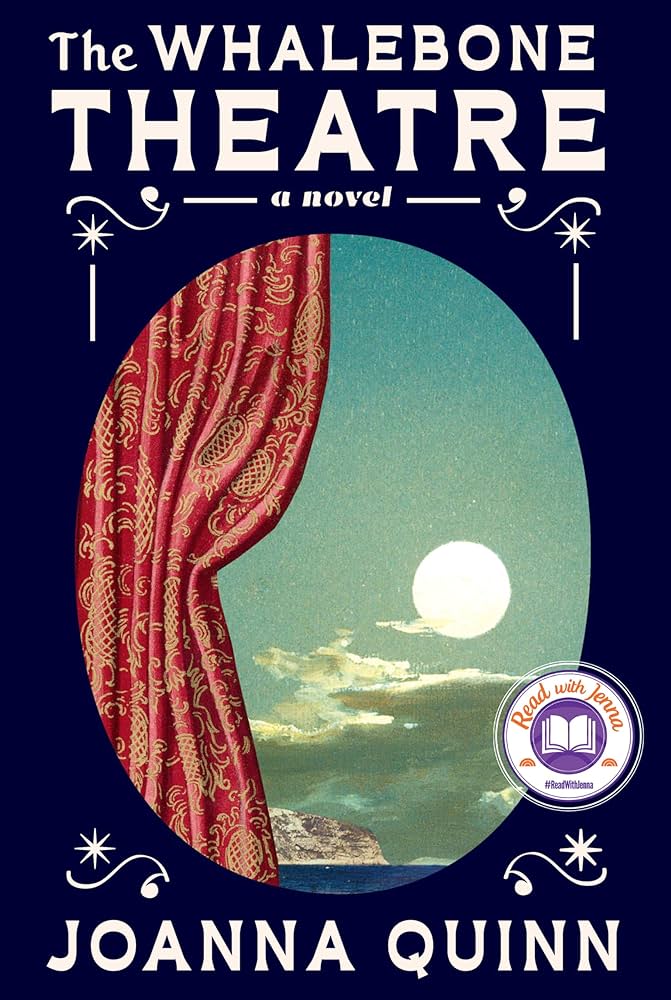
The Whalebone Theatre by Joanna Quinn

Within an oval frame, a red curtain pulls back to the left to show the cliffs of Dover beneath t

by Kristen B.

A friend suggested a good rule for reading: only one World War II-adjacent book each year. Well, I’ve already spent this year’s allowance, and it was a good one!

The Whalebone Theatre by Joanna Quinn begins during the interwar period, set at a grand country estate, Chilcombe, on the southern coast of England. Cristabel Seagrave is a lonely little girl with an immense imagination. Her mother died in childbirth, and the story gets underway with her father bringing home a new bride. England’s laws being what they are, the family needs a male heir to keep the estate. A set of minor tragedies and expected resolutions ensue, all of which lead up to the day that Cristabel discovers a dead whale on Chilcombe’s beach.

With this highly cinematic scene, set against a quiet sea and a rising sun, the book finally gets underway. Cristabel hauls herself up the side of the leviathan and plants her flag, literally, in its blubber as her two younger stepsiblings turn up to watch and cheer her on. It’s clear that the trio of Cristabel, Flossie, and Digby make a minor clan in and of themselves, running mostly feral as their adults are caught up in the bohemian lifestyle of the rich and entitled in the Roaring Twenties. Interestingly enough, her stake cannot stand because all sea-washed flotsam automatically belongs to the Crown. In the end, the Crown doesn’t want it and the poor whale spends the rest of the summer slowly rotting upon the shore, much to the entertainment of the children.

Also discovered upon the beach that day is Taras – an itinerant Russian painter living a risque, socially liberal life-style. His paramours are old friends with Flossie and Digby’s mother, and so ensues a longstanding relationship between both parents and children. Taras eventually has the grand idea of moving the whale’s ribs to build a theater within Chilcombe’s estate. Under Cristabel’s direction, the children, their adults, and other willing locals stage a variety of plays, including a retelling of the Iliad and Shakespeare’s The Tempest. One of the Bard’s final plays, The Tempest carries certain themes throughout the book – including shipwreck and exile, civilization and monstrosity, and power and integrity. The book glosses over the 1930s with a set of newspaper clippings detailing the annual summer performances at the theater.

When the story recommences, World War II is well underway. One of the adults who came and went from Chilcombe turns out to be a high-ranking member of the British intelligence ministry. He enlists first Digby, then Cristabel into becoming agents in occupied France. Meanwhile, Flossie maintains the home estate and becomes a Land Girl as the war rages on. The story careens through the final years of the conflict, with uncertainty and anxiety at every turn as our intrepid trio make their separate, but always inter-connected, ways in the world.

In the end, it all comes together back at Chilcombe. No one is quite the same in the aftermath of war – family, friends, servants, and locals. I greatly enjoyed the book with its gorgeous language, despite its quiet devastations that rang absolutely true to me. At the end of The Tempest, Prospero says, “Now my charms are all o’erthrown, And what strength I have’s mine own.” What strength remains belongs solely to the women of this story, home at last. I suspect this is a title I will linger over and think about at odd moments. Certainly, it resonated with other recent books adjacent to WWII where the smaller stories and sacrifices carry the story.

The Whalebone Theatre by Joanna Quinn is available in print, e-book, and e-audiobook.

Kristen B. is a devoted bookworm lucky enough to work as the graphic designer for HCLS. She likes to read, stitch, dance, and watch baseball (but not all at the same time).

Meet the Author: Ira Marcks

A group of kids are posed in a movie poster group with a large shark behind them and a lighthouse below. It's a colorful cover with sunset colors above a clear

Wednesday, Apr 3
5 – 6 pm
HCLS Central Branch
Ages 10-17.

Mystery, Adventure, and Friendship in Ira Marcks’ Graphic Novels: Shark Summer and Spirit Week

by Ahmad Ndir

Ira Marcks’ graphic novels Shark Summer and Spirit Week combine mystery, adventure, and friendship in different settings. Both books feature young protagonists who are drawn into solving a local legend or curse with the help of unlikely allies. The stories are fast-paced, engaging, and full of twists and turns that keep readers on the edge of their seats.

Shark Summer is set on Martha’s Vineyard, where a Hollywood film crew arrives with a mechanical shark and a youth film contest. Gayle, a disgraced pitcher, sees a chance to turn her bad season into the best summer ever by making a movie about the island’s phantom shark. Along the way, she teams up with Elijah, an aspiring cinematographer, and Maddie, a moody director. Together, they uncover the truth behind the shark and the history of the island. The book has a vivid sense of place and a nostalgic vibe that pays homage to classic movies like Jaws and The Goonies.

Spirit Week takes place in the Underlook Hotel in Estes Park, Colorado, a famous landmark that belongs to the reclusive horror writer Jack Axworth. Suzy, an aspiring engineer, is invited to tutor Jack’s son, Danny, but instead she finds herself investigating a local curse that threatens the hotel. With the help of Elijah, an amateur filmmaker, and Rena, the hotel’s caretaker, Suzy tries to save the hotel and the town from the shadows of the past. The book has a creepy and dark tone that draws inspiration from horror stories like The Shining and The Haunting of Hill House.

Both books are well-written and illustrated, with expressive characters and colorful scenes. The themes of acceptance, belonging, and finding your family intertwine throughout the stories, as the characters overcome their personal challenges and grow closer to each other. The books are suitable for middle grade and young adult readers who enjoy graphic novels, mystery, and horror. I would recommend them to anyone who likes a good scare along with a good laugh.

Author is posed in front of a book case and he is adjusting the collar of his sweater.

Award-winning graphic novelist Ira Marcks visits HCLS on April 3 at 5 pm at Central Branch. He discusses how he plans, writes, and draws a long form comic story by engaging hands-on using the three essential elements of storytelling – characters, setting, and theme. Followed by book sales and signing.

Ahmad Ndir is a Teens’ Instructor & Research Specialist at the Central Branch at HCLS. Along with helping young learners discover new books, he is an avid reader of teen fiction and nonfiction titles on different aspects of psychology. He strives for positivity for himself and those around him, in both his personal and work life.


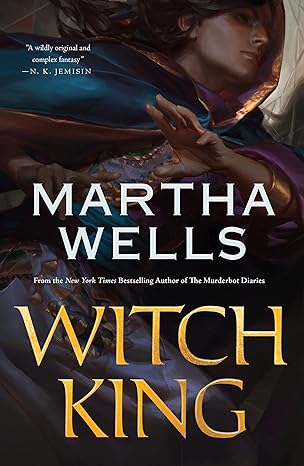
Witch King by Martha Wells

The cover image depicts a person in blue, purple, and gold finery, turned in one direction with eyes closed and hands extending in the other direction.

by Kristen B.

He’s not just a demon, he’s THE demon. And honestly, Kaiisteron is one of my favorite characters from the past year. Maybe not quite in possession of “a heart of gold,” he nonetheless loves his friends and tries to do right in the world.

Witch King by Martha Wells opens with Kai returning to consciousness, confused and worried about being disembodied – basically a ghost. It’s a disorienting start to a mystery full of politics and betrayal, as we have to figure out what’s going on along with the demon. He immediately resolves the need for a body (and revenge) and goes looking for his best friend, Ziede. She is a Witch who can no longer sense her wife, Tahren – a nearly immortal being who switched sides in the last war. Kai and Ziede, along with an abandoned orphan and other people picked up along the way, immediately set out to find Tahren and figure out what has happened in the year they were imprisoned.

From that point on, the novel intersperses the current timeline with the story of how all these powerful people met each other and changed the world. They were part of a rebellion, upending the power-hungry Hierarchs who were conquering the world. As usual, Martha Wells provides world building that’s miles deep and centuries long. This world feels real and lived in, so the stakes matter. Except that the full, entire stakes are not crystal clear until past and present come together in a surprising, satisfying ending with plenty of twists and turns.

This book definitely rewards a second read. The first time through I was more concerned with figuring out who was who and what was happening. Wells throws you into the deep end and slowly parcels out clues and details. The stakes are so much higher than a missing spouse or a betrayed friendship. The second time, I could appreciate the sheer genius of how the two timelines fit together and inform each other. Once again, Kaiisteron’s actions and his loyalty to the man who saved him changes the fate of his world. I hope Wells writes more in this world, but this is a fantastic standalone as is.

Kristen B. is a devoted bookworm lucky enough to work as the graphic designer for HCLS. She likes to read, stitch, dance, and watch baseball in season (but not all at the same time).

A Master of Djinn by P. Djeli Clark

A lone figure is seen walking up a backlit staircase, with an elaborate clockwork structure above the title.

by Kristen B.

It’s an alternative history, magical, buddy cop, police procedural romp of a story, complete with a little romance. If you’re looking for fun, A Master of Djinn has it!

Set in 1912 in an alternative Cairo, Egypt, the story begins with the horrific mass murder of the Hermetic Brotherhood of Al-Jahiz, a group of British men dedicated to the return of al-Jahiz, an almost mythological mystic. Only almost, though, because al-Jahiz did exist, and he upended the world order when he brought djinn and all sorts of magical creatures back into the world. He’s regarded equally as hero, genius, and dangerous iconoclast. It would appear that al-Jahiz has returned, and he’s working to upset the balance of powers yet again. Or has he?

Fatma el-Sha’arawi is an agent of the Ministry of Alchemy, Enchantments, and Supernatural Entities, and she’s called immediately to the Brotherhood’s mansion, home of the Worthington family. Fatma wears beautiful, flashy Western-style suits and a bowler hat, and she carries a sword in her cane. She is met at the crime scene by her unexpected, new partner Hadia, a recent addition to the Ministry. The interplay between the seasoned professional and the newbie who can “handle herself” provides terrific exchanges and some genuinely funny moments. Hadia has a cousin for every circumstance and wears modern, colorful hijabs. The third amazingly competent woman who contributes to solving the crime is Fatma’s mysterious lover, Siti, who worships Sekhmet of the old Egyptian pantheon. These three women of color make a formidable team with their intelligence, various connections, and genuine affection for one another.

The Worthingtons, on the other hand, seem rather hapless and ineffectual. The patriarch, whose murder launched the investigation, had an attachment to all things Egyptian that bordered on obsession. None of his offspring share his interests, and his heir starts to disentangle the family fortunes in order to return to England’s greener shores. The friends and flunkies around them serve to reinforce the suggestion of incompetent colonialists trading on wealth and social standing, but the investigation keeps leading back to the estate.

The unraveling of the whodunnit involves lady thieves, a worldwide peace summit being hosted by the Egyptian king, old gods, and new technology. It’s a fantastic mix – in all senses of the word. Layered among all the action and adventure, author Clark sneaks in commentary on colonialism, sexism, classism, colorism, and all manner of other social constructs. However, he never throws these strong women a challenge they can’t overcome in this highly cinematic, fast-moving novel.

A Master of Djinn by P. Djeli Clark is available in print, e-book, and e-audiobook.

Kristen B. is a devoted bookworm lucky enough to work as the graphic designer for HCLS. She likes to read, stitch, dance, and watch baseball in season (but not all at the same time).

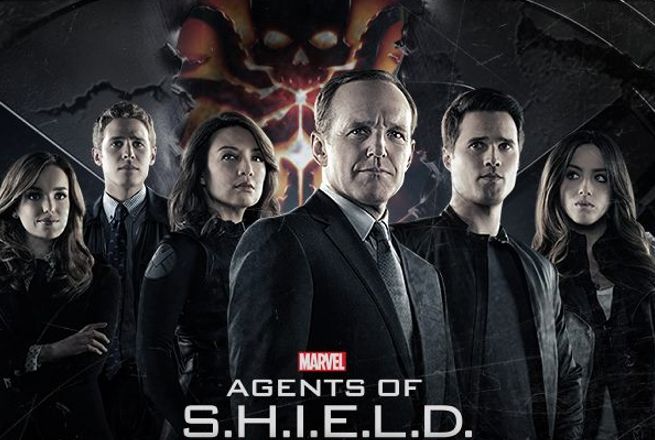
Agents of S.H.I.E.L.D.

The main characters of Agesnts of SHIELD posed with Phil Coulson at the cneter and the Hydra symbol behind them.

by Kristen B.

In a fit of boredom or maybe nostalgia this fall, I decided to rewatch the entirety of Agents of S.H.I.E.L.D. on Disney+. Baseball was done for the year; I needed something to do. Lucky for you, you don’t need a subscription service to do the same thing, because you can borrow them on DVD for free from the library.

The show is a wild ride of storytelling and subverting expectations. Of all the Marvel properties, this one seems closest to its comic book roots, maybe due to the inherent serialization of the format, and the fact that death never seems to keep a character down for long. (side note: I wish the MCU movies would consider rebooting some favorite – particularly female – characters.)

Over the course of seven seasons, the show progresses from being tied closely to the MCU timeline to becoming more of an independent property. The main characters are Agent Phil Coulson, introduced in the Iron Man and The Avengers movies, and his team of special agents whose mission is to track and contain enhanced humans – people with special powers who are not always good guys like Captain America or Thor. The mission is continually threatened and thwarted by SHIELD’s nemesis, Hydra. The core team of five characters makes it through all seven seasons, more or less: including Melinda May, all around warrior with some deep real world experiences; science boffins Fitz and Simmons, who make as good a team as their names suggest; and Skye, whose growth and transformation carries the first three seasons of the show. Other characters stick around for a season or two, and sometimes return at unexpected moments. It keeps the series both comfortable and fresh.

The series’ creators (Whedon, et. al.) took all kinds of risks with the show, to greater and lesser successes. I would argue that the first and last seasons are the best, with a few in the middle becoming unnecessarily complicated and dark. All in all, though, it’s a terrifically fun show. You honestly don’t know what’s coming next, from the inclusion of Ghost Rider to AI robots that control an immersive virtual reality. You can always count on decent fight choreography and the good guys achieving their goals – eventually, despite the odds. The last two seasons took on the big ideas of time travel and alternate timelines, which actually comes back into concordance with what’s happening in the MCU’s Multi-verse stories.

Baseball’s Opening Day is coming soon, but you may need something to do in the meantime.

Kristen B. is a devoted bookworm lucky enough to work as the graphic designer for HCLS. She likes to read, stitch, dance, and watch baseball in season (but not all at the same time).
Evening in the Stacks and Branch Raffles

A Flower-full Evening in the Stacks
February 24, 2024 | 7 – 11 pm
HCLS East Columbia Branch
hclibrary.org/stacks

Tickets on sale now! January 10: $100
February 1: $125 for one/$225 for two

Entice your senses at this lush affair filled with dreamy enjoyment and delight. Refresh at the open bar, bloom on the dance floor with DJ Bugatti, and enjoy a bouquet of activities with our Flower-full Mart and photo ops.

  • Entertainment features dancers and drummers, including Stepping Stones Performers.
  • Gourmet cuisine by Rouge Catering
  • Libations by The Wine Bin and Sobar
  • Cocktail attire (floral touches welcome), black tie optional

This year’s proceeds benefit HCLS’ early childhood initiatives that help our community’s budding learners grow.

Friends & Foundation of HCLS Branch Raffles

Raffle tickets are $5 each and you can win any of these prizes:

  • Six branch community baskets with donations from area businesses.
  • Two tickets to Evening in the Stacks on February 24 (in branch sales only)
  • Grand prize: PS5 gaming console 

Last day to purchase raffle tickets is February 21. Winners will be drawn by February 26 and notified by email.

The Miller Branch raffle basket containing a variety of gift cards, treats, and Cat in the Hat and Thing One and Thing Two stuffed toys. The baskets are tied up with cellophane and red ribbon and are resting on the Miller Branch checkout counter with the raffle ticket boxes in front of them.
HCLS Miller Branch’s raffle basket.