The House of Eve by Sadeqa Johnson 

A woman in a blue shirt dress, wearing pearls, has her purse crooked into one elbow and an old fashioned suitcase in the other hand. She is walking away from a large house. She is pictured only from the ne

by Piyali C.

Sadeqa Johnson’s late grandmother became pregnant with her mom at the age of fourteen. Her grandfather, however, did not marry her grandmother since he was very light skinned, and he was from the ‘right’ side of the tracks. She was dark skinned and poor. Johnson writes in the Author’s Note that the idea for this book, The House of Eve, came to her as a what-if. What if her grandmother had the money and opportunity to have the baby in a home for unwed mothers, gave the baby up for adoption, and went on to fulfill her dreams?  

The House of Eve by Sadeqa Johnson is a beautiful, searing novel about two young Black women in alternating narratives. It is 1948. Ruby Pearsall is on track to be the first in her family to go to college and accomplish her dream of becoming an optometrist. Ruby struggles to find even the few cents for bus fare to get to her ‘we rise‘ program in school so she can earn a scholarship to college. She is from the poorest area of North Philadelphia and comes from an extremely impoverished family. Although her mother, Inez, is indifferent to her needs, she has her aunt and grandmother who support her with love, shelter, and encouragement even though they cannot help her financially. They want their girl to go to college, become someone important, and make the family proud. But a love affair threatens to destroy her dreams to rise out of poverty. It also threatens to perpetuate the cycle of abuse and financial desperation. 

Eleanor comes from a blue-collar family. Her parents have given their all to send her to Howard University to get a good education and rise up in life. Eleanor appreciates and values the sacrifices of her parents and is determined to excel in school. However, she falls in love with a medical student, William, whose family is one of the most successful Black families in the Washington, D.C. area. William Pride’s mother, Rose Pride, does not let anyone enter their elite circle. Eleanor wonders if a pregnancy might give her an entry into their magical kingdom and perhaps she will feel like she belongs. Ruby and Eleanor’s lives will collide in unexpected ways and the decisions they make will change the course of their lives. 

With the magic of her words in this magnificent work of historical fiction, Johnson transports the readers to the rough neighborhoods of north Philadelphia, the campus of Howard University, elegant ballrooms in Washington, D.C., and the depressing interiors of homes for women who became pregnant out of matrimony. She also depicts the racial segregation that impacted lives of Black people as well as the consequences that women of any color suffered due to unplanned pregnancies at that time. The book paints a horrific picture of the homes run by nuns where unwed women and girls went to give birth; subsequently, the babies were given to wealthy families in exchange for hefty donations to those homes. Themes like colorism, wealth disparity, and social stratification among the Black community are intricately woven into the story, as are mentions of some real-life people and organizations. These make the book authentic and also give readers a glimpse into a slice of 1950s life that the Black community experienced in the United States.

The House of Eve by Sadeqa Johnson is available from Howard County Library System in print, e-book, and e-audiobook formats.

Rough Sleepers by Tracy Kidder 

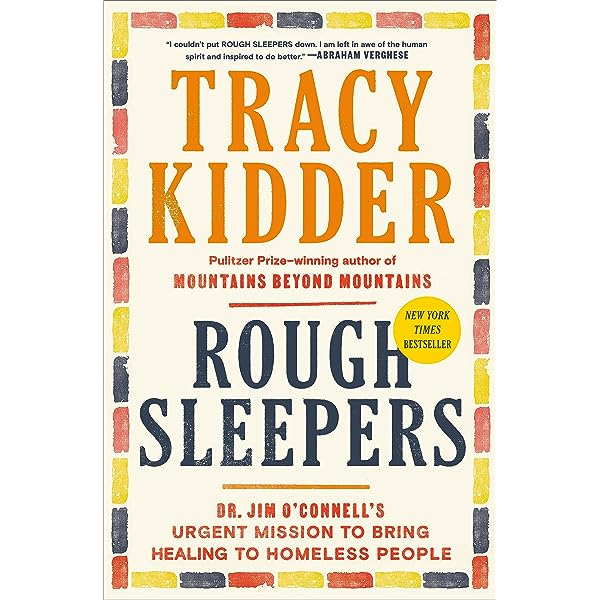
A colorful border of blue, red, and yellow bricks surrounds the author and title.

by Piyali C.

After graduating from Harvard Medical school and towards the end of his residency, Dr. Jim O’Connell, a brilliant and gifted man, was approached by the Chief of Medicine of Massachusetts General Hospital to help in an organization to provide health care for the homeless population of Boston. “Rough sleepers” is a British term for someone who is homeless and sleeps without adequate shelter or protection. Dr. O’Connell decided to defer a prestigious fellowship at Memorial Sloan Kettering hospital for a year to devote his time to developing the Boston Health Care For The Homeless Program, which, at the time, was primarily run by nurses. He was not convinced this was his life’s calling but he could not refuse his superior’s plea for help.

The first day he walked into the clinic at Pine Street Inn Shelter, he had his stethoscope around his neck. A nurse at the shelter, Barbara McInnis, asked him to put his stethoscope away and instructed him to soak the feet of the patients. While Dr. O’Connell did not understand the significance of the instruction at the time, he did what he was told. As he soaked each individual’s feet for several days, they gradually started opening up to him. The homeless population had an ingrained mistrust of physicians because they had been treated disrespectfully for so long. Once he put away his stethoscope, people slowly started telling him about their other ailments. Dr. O’Connell listened and treated but only if they were willing to be treated. He respected their choice about their own health.  

Thus began Dr. Jim O’Connell’s lifelong journey of providing not only medical care but friendship and respect for the human dignity of the homeless people of Boston, whom he encountered in his long tenure of providing medical care. Pulitzer Prize winning author Tracy Kidder followed Dr. Jim for five years as he rode his Street Team van to seek out individuals who needed medical attention on the streets. If not medical help, he handed out blankets, warm socks, a sandwich, Dunkin Donut gift cards, or hot chocolate. He offered treatment or shelter for a chilly night but always left the choice to the individual whom he was trying to help. He emphasized a style of medicine where the patients came first. The providers and the patients created a ‘circle of friends’. Throughout his career Dr. O’Connell viewed his patients in their totality. He heard their stories. He came to know they were incredibly brave, they were difficult, they were charming, they could be obnoxious under the influence of alcohol or substance abuse, and when the effect wore off, they were kind, clever and funny.  

This is one of those books that changed the way I thought about the homeless population. Each person I see living on the streets has a story. I had stopped seeing them in the true sense of the word. I was desensitized to their presence, often getting annoyed by their panhandling. After reading the book, I was aware of my part in perpetuating the process of robbing a person of dignity by not “seeing” them. 

Rough Sleepers is inspiring, thought provoking, and a beautifully written documentation of the lives of some individuals who have truly hit the rock bottom in life and those who are trying their best to help them and give them the human dignity that everyone deserves. 

Rough Sleepers by Tracy Kidder is available in print, e-book and e-audiobook formats. 

Piyali is an instructor and research specialist at HCLS Miller Branch, where she facilitates Light But Not Fluffy and co-facilitates Global Reads. She keeps the hope alive that someday she will reach the bottom of her to-read list.

Someone Else’s Shoes by Jojo Moyes

The bright red cover contains large text and a skyline made in shades of blue along the bottom.

by Piyali C.

I attribute partial credit to Jojo Moyes for my job at the library. It was 2012 when I interviewed for Instructor and Research position at Miller Branch. One of the assignments was to present an author to the interview panel for a fictional author visit. I had just finished reading Me Before You by Moyes, and I did not hesitate for a moment to decide which author I would be presenting. I got the job. Since then, I have read almost all of her novels partly because I feel indebted but mostly because I love her style of writing and her stories. When I discovered her latest book, Someone Else’s Shoes was coming out, I put my name on the wait list early. 

I was not sure I would like this book when I first started reading it. It seemed too predictable – a story of two middle-aged women, diametrically opposite in character, social standing, and circumstances. Nisha Cantor is the wife of a billionaire whose husband drops her like hot potato, leaving her penniless, for a younger woman. Nisha is relentless in her anger to get back what she has lost. She has no money, no prospects, and is on the verge of being homeless, yet she has her attitude, her brusqueness, her determination, her optimism, and her resilience. Despite her situation, she does not get my sympathy. I do not believe Moyes wanted the reader’s sympathy for Nisha Cantor. She is almost unlikeable, insensitive. She is forceful and not in a good way. A woman wronged, she will have her revenge. Love her or hate her, you cannot ignore her. 

Samantha, the opposite of Nisha, is beaten down by life. Her husband, Phil, is severely depressed; her boss at work is a pathetic, misogynistic man who constantly disrespects Sam despite her excellent work. Sam, however, needs the job since Phil can hardly get up from the couch due to his mental health. She has arrived at that precarious age when women start becoming invisible. Sam holds up her family single-handedly yet slowly fades as an individual. She is bullied, ignored, taken for granted, and yet she sees no way out. 

One day at the gym, Sam mistakenly takes Nisha’s bag instead of her own, which contains a pair of red Christian Louboutin shoes. Those shoes become a catalyst for many changes in this novel’s characters. The pair of Louboutin shoes not only changes lives, fosters friendships, and brings justice but it also serves as a double entendre to show what it means to step into other people’s shoes and see life through a different lens.  

This book is a lighthearted read that explores various emotions – love, female friendship, empathy, humanity, to name a few. The readers will, perhaps, know that the end carries no surprises, but I did not mind. As I read on, I got deeply invested into the lives of the two protagonists. I started to care. If you are in between heavy books or going through a reading slump and need a light yet engaging read, this may be the book for you. 

Someone Else’s Shoes by Jojo Moyes is available in print, e-book, e-audiobook, and cd audiobook formats. This book is also included in our Adult Summer Reading 2023: Fiction (Relationships) list.  

Piyali is an instructor and research specialist at HCLS Miller Branch, where she facilitates Light But Not Fluffy and co-facilitates Global Reads. She keeps the hope alive that someday she will reach the bottom of her to-read list.

Be part of HCLS’ Summer Reading Adventures.

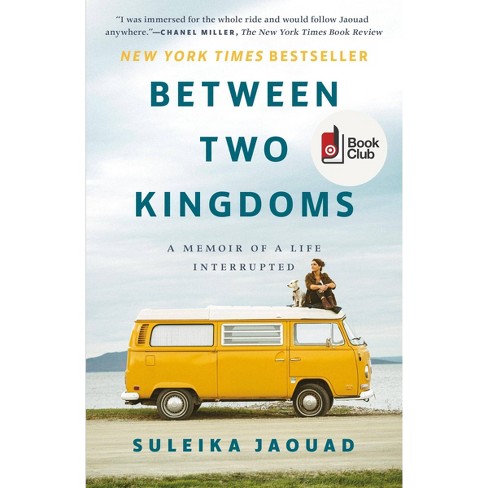
Between Two Kingdoms: A Memoir of a Life Interrupted by Suleika Jaouad 

by Piyali C.

A woman and her small white dog sit atop a VW camper/bus

“I used to think healing meant ridding the body and heart of anything that hurt. It meant putting your pain behind you, leaving it in the past. But I’m learning that’s not how it works. Healing is figuring out how to coexist with the pain that will always live inside of you, without pretending it isn’t there or allowing it to hijack your day. It is learning to confront ghosts and to carry what lingers. It is learning to embrace the people I love now instead of protecting against a future gutted by their loss.” (P.312) This passage from Suleika Jaouad’s inspiring memoir, Between Two Kingdoms: A Memoir of a Life Interrupted, resonated so much with me that I had to write it down. 

At the tender age of twenty-two, when Suleika’s peers were looking forward to their futures, she was diagnosed with leukemia with a 35 percent chance of survival. It started with an intolerable itch all over her body, followed by mouth sores and extreme fatigue. When the diagnosis came down like a heavy anvil, she was, understandably, shattered. Thus began a tremendously painful journey of chemotherapy, clinical trials, a bone marrow transplant, waiting for biopsy results, and interminably long stays at the cancer ward in hospitals. During those stays, Suleika felt she had limited time left on this earth so she decided to do something meaningful while she still could. After her anger at the unfairness of her fate dissipated some, she took up writing blogs geared towards young adults suffering from cancer. The New York Times published her blogs under the column Life, Interrupted. She got an outpouring of letters and emails of support from people from various parts of the country.  

After three years of painful struggle, her cancer finally went into remission. However, Suleika discovered that she did not know how to come back to a life without cancer – the kingdom of healthy people. She found herself at a junction where she needed to relearn how to integrate into regular life again. Such a close brush with her mortality made her aware that life is much more than what she had envisioned at twenty-two, before she got sick. Like any young adult, Suleika had hoped for a successful career and love. After her remission, her definition of success changed. She adopted a puppy, Oscar, borrowed a friend’s car, learned to drive, and embarked upon a 100 day, 15,000 mile road trip across the country to meet with some people who had sent her letters of love and support when she was sick. 

Between Two Kingdoms: A Memoir of a Life Interrupted is about Suleika’s fight against cancer, and so much more. It explores what living truly means and how to emerge to the other side of pain stronger with a clearer vision of the meaning of life. This book is about new beginnings. 

We read books for many reasons. Personally, I love reading because books teach me empathy. They allow me to understand that everyone is fighting their own battle and I need to extend grace. In this particular book, Jaouad’s struggle against cancer was painful to read, however, I drew inspiration from her resilience, her fierce determination to win, her understanding and respect for other people’s pain, and by the love and support that held her up. The love came not only from her immediate family – her parents, brother, boyfriend, friends but also from complete strangers who never met her. The innate goodness of humanity shone brightly in this memoir, and it gave me hope. 

Between Two Kingdoms: A Memoir of a Life interrupted by Suleika Jaouad is available in book, e-book, and e-audiobook formats.

Piyali is an instructor and research specialist at HCLS Miller Branch, where she facilitates Light But Not Fluffy and co-facilitates Global Reads. She keeps the hope alive that someday she will reach the bottom of her to-read list.

Light But Not Fluffy – New Book Club

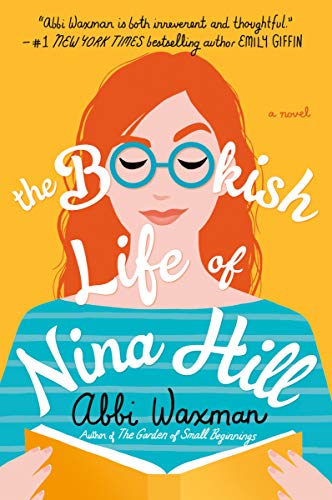
The cover shows a woman with long red hair and turquoise blue glasses frames with matching striped top reading an open book with a yellow cover that she holds in her hands.

by Piyali C.

While Covid ravaged the world, I went into a reading slump. I love to read literary fiction, historical fiction, and other thought-provoking books that are deep, engrossing and have messages for me to decipher. But Covid took up so much of my mental bandwidth. There was not much left in me to devote to complicated plots and complex characters in a novel or to focus on nonfiction. I craved happy stories – stories that gave me hope.

I shared that thought with a like-minded friend and colleague. She could relate. We both started reading books that were lighter in content than our usual fare but had issues to discuss and ponder. We read books that ended with “happily-ever-after” or with the hope of “happily ever after.” We suggested titles to each other and then began a list, jotting those titles down. We wondered if there were others out there who felt like us – who needed page turners with a purpose and were willing to discuss them. But starting a book club, at that time, was just a dream.

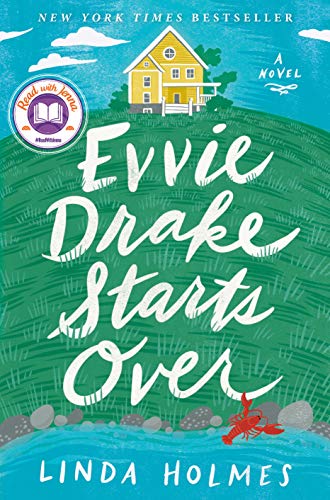
The book cover shows a yellow A-frame house in the background, against a turquoise sky with four fluffy white cumulus clouds. The house has green deciduous trees behind it. The eye descends from the house on top of the hill across a green expanse to the bottom, where a red lobster floats in blue water against a shoreline of grey rocks and pebbles in varying shades, shapes, and sizes.

However, the dream became a reality recently. I am starting a book club called Light But Not Fluffy on March 16, 2023. We will meet on the Third Thursday of every month at Miller Branch from 2 – 3 pm. The selected titles will be available for pickup 4 weeks prior to the discussion date from the Customer Service Desk at Miller Branch.

We will read books that talk about love, grace and, most importantly, hope. The books will include humor and perhaps some snark as well, to spice things up. If the thought of reading lighter books and joining in a discussion that will, hopefully, leave us feeling happier appeals to you, join us. 

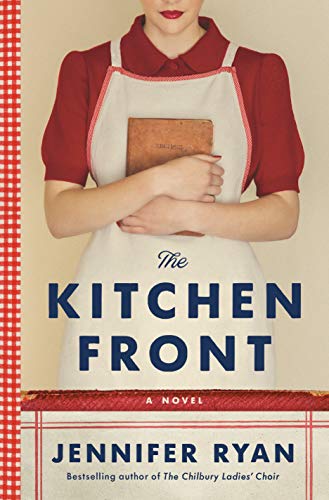
The book shows a woman, facing the camera, from her nose to her hips. She holds a bound brown leather book against her chest with both hands. She is wearing a red shirt or dress with a white apron trimmed in a paler red over top. Her dark red lipstick matches her fingernails.

Below are the dates and titles for Spring:

March 16 – The Bookish Life of Nina Hill by Abbi Waxman (also available in e-book and e-audiobook format from Libby/OverDrive) – previously reviewed on Chapter Chats.

April 20 – Evvie Drake Starts Over by Linda Holmes (also available in e-book and e-audiobook format from Libby/OverDrive)

May 18 – The Kitchen Front by Jennifer Ryan (also available in e-book and e-audiobook format from Libby/OverDrive) – previously reviewed on Chapter Chats.

Registration is preferred, not required. Click here to register.

Piyali is an instructor and research specialist at HCLS Miller Branch, where she facilitates Light But Not Fluffy and co-facilitates Global Reads. She keeps the hope alive that someday she will reach the bottom of her to-read list.

World Language Karaoke

The photograph depicts a woman in traditional Indian clothing of red, black, white, holding a microphone with arm outstretched as if belting out a song. She stands in two spotlights shining on her from above, and in front of a representation of the globe with the words "World Language Karaoke" surrounding the globe in yellow. All of this is against a backdrop of twinkling stars against in the darkness of outer space.

by Piyali C.

“Reading is not really my thing. I don’t come to the library.” My customer told me this as he waited for me to find a book that he needed for his school project. He was honest with me about his preferences. He was only at the library because his teacher made him come.

“Do you like music?” I asked him.

“Oh yes. I love music.” He replied enthusiastically.

“Did you know that we are having a class called World Language Karaoke ” I asked him.

“WHAT? You can do karaoke in a library?” He was incredulous.

The idea of library being a quiet place filled with books is a thing of the past. To quote Paula Poundstone, libraries have truly become, “raucous clubhouses for free speech, controversy, and community.” And we love to celebrate our diverse community every chance we get. Our community speaks so many different languages. It makes us smile as we walk around our library and hear the plethora of languages being spoken around us. We thought, why not celebrate all these different languages and bring everyone together for an evening of music? After all, Henry Wadsworth Longfellow did say that “music is the universal language of humanity.”

Join us on Thursday, January 26 at 7 pm for World Language Karaoke at Miller Branch to sing songs in the language that you prefer, INCLUDING ENGLISH.

When you register, please tell us the song or songs that you are going to sing in the ‘Special Notes’ field, so we can create a playlist before the class and keep it ready for you to belt it out!

Register for the class here.

Piyali is an instructor and research specialist at HCLS Miller Branch, where she co-facilitates Global Reads and facilitates Light But Not Fluffy (starting in March 2023!) and keeps the hope alive that someday she will reach the bottom of her to-read list.

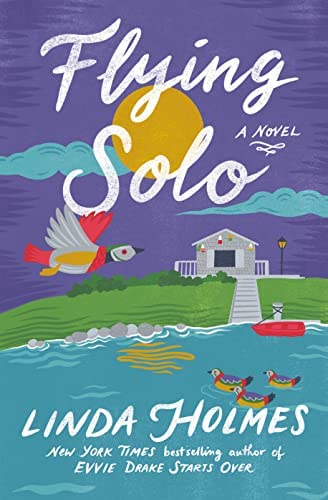
Flying Solo by Linda Holmes

The cover of the book shows a stylized, cartoonish wood duck flying above a lake, with several wood ducks floating beneath along with a canoe tied up to a dock on a rocky shore.  In the background are steps leading up to a small cottage with a streetlight and a railing behind it.  The sun is reflected in the water and hovers in a purplish sky with two fluffy blue clouds.

by Piyali C.

I have discovered many beautiful reads while shelving carts at our branch. Sometimes, I check out more books from the cart than I put on the shelf (that is somewhat of an exaggeration, but not by much). Evvie Drake Starts Over by Linda Holmes was one such discovery. I loved that book so much that I was excited when I found out the author was publishing her next novel, Flying Solo. This time I was prepared, and I requested a copy right away. After I finished Flying Solo in two sittings, I was in a dilemma. Which one did I love more? Bottom line – I like this author’s stories. I like how she does not tie everything in a neat bow at the end, because life is messy and our problems do not resolve beautifully all the time. However, she leaves us with hope, and what better resolution is there than to remain hopeful?

In the new title, whenever Laurie needed a break from her obnoxiously noisy brothers during her childhood, she went to her great Aunt Dot’s big, quiet house for refuge. Dot’s house was only a short bike ride away from her loving but loud family in a small, seaside town in Maine. Young Laurie was Dot’s favorite niece and best friend. When Dot dies at 93, Laurie is the one who takes up the responsibility of going through Dot’s possessions and readying her house for sale, since the rest of her family does not have time to deal with it. Laurie is now on the cusp of 40, she has broken her engagement, and she is going through a midlife crisis as she tries to figure out what she wants. The huge responsibility of sorting through Dot’s photos and belongings is somewhat of a distraction when her own life is falling apart.

Laurie discovers a beautifully carved wooden duck decoy lovingly stored in a chest under some blankets. Puzzled about the significance of the duck, so fondly hidden, Laurie sets out to learn more. In her quest to uncover the mystery of the duck, she falls victim to a con artist and rekindles a romance with her high school sweetheart, who is (and this was important to me) the beloved town librarian with terrific research skills (what could be more attractive than that?). Laurie also comes in contact with some genuine and unforgettable characters who become important parts of her life as she tries to uncover the mystery of the decoy and, in the process, learns more about the hidden aspects of her great aunt’s life. This journey not only reveals the colorful life of charismatic Dot, who flouted societal norms set for women and lived her life on her own terms, but it also helps Laurie discover what she actually wants in life and perhaps reconciles her to the idea of flying solo.

Told in a lucid voice, the story is a relatively light read, yet it makes the readers think about their own relationships and what they want out of them.

Flying Solo is available at Howard County Library System in print, large print, e-book, and e-audiobook formats.

Piyali is an instructor and research specialist at the Miller Branch of HCLS, where she co-facilitates Global Reads and facilitates Light But Not Fluffy (starting in Spring 2023!) and keeps the hope alive that someday she will reach the bottom of her to-read list.

No Exit by Taylor Adams

A hand print appears smeared across a frosty blue window. The cover fades to black at top and bottom, with title and author in

by Piyali C.

It was almost 1 am when I let out a long breath. I did not even realize I was holding my breath and at the edge of my seat till I read the last page of No Exit by Taylor Adams. This is the kind of thriller I like to read – one that allows me ‘no exit’ until I finish the last page. A thriller that is crisp, fast paced and yes, thrilling. In one word – unputdownable! 

Darby Thorne, a sophomore at CU-Boulder, gets a message from her sister Devon that their mother has been diagnosed with pancreatic cancer and is, most likely, at the last stage of her life. Darby, who was determined not to venture ‘any further off campus than Ralphie’s Thriftway’ (p.4), finds herself racing down the highway in the middle of a fierce blizzard in the Colorado Rockies to reach her dying mother in Utah. Darby’s old Honda Civic does not have snow chains on the tires and the last sign that Darby read before heavy snow obliterated her vision was ‘CHAINS MANDATORY’.  Darby is forced to pull in to a desolate rest stop to wait out the raging snowstorm. She discovers, much to her dismay, there is no cell reception at that rest stop. There are, however, a coffee machine, a vending machine and….. four complete strangers taking refuge, just like her. 

The charge in Darby’s phone is at 17 percent and rapidly depleting. She is desperate to talk to her sister to know more about her mother’s condition so Darby goes out in the snow to search for signal. As she tries to hold her phone up near the cars parked in the parking lot of the rest stop, she sees a little hand – the hand of a child in the back window of one of the parked cars. Shocked at this discovery, Darby moves closer to the car and tries to look inside. The inside is dark and she can detect no movement or sound. She convinces herself that the hand she she saw was nothing more than a trick of light and gets ready to go inside. But before she goes, she wants to put her suspicion to rest so she directs the LED light from her phone inside the back of the car. A child’s face stares back at her. The little girl is confined in a dog kennel in the back of a car in a raging snow storm. 

Darby has no way to call for help and no idea how to rescue this little girl. It is clear that one of the strangers inside the rest stop is a kidnapper who may come out any moment and discover that Darby has uncovered his or her secret. Thus begins a chilling and suspenseful tale of young Darby’s effort to unmask and outsmart a psychopath in an increasingly dangerous and alienating situation as the snow piles up and threatens to bury them in the rest stop at the edge of civilization. 

Darby must keep the little girl alive and stay alive herself to save the child. As the odds pile against her, her determination and will to save the kidnapped child increase exponentially. But is her determination enough to defeat the kidnapper who has an answer for all the challenges that Darby throws their way?

This book is not for the faint of heart. If you enjoy a chilling, suspenseful, edgy thriller that will keep you reading late at night, this is the book for you! No Exit by Taylor Adams is available in print and Large Print formats.

Piyali is an instructor and research specialist at the Miller Branch of HCLS, where she co-facilitates both Global Reads and Strictly Historical Fiction and keeps the hope alive that someday she will reach the bottom of her to-read list.

Author Works with Naima Coster: What’s Mine and Yours – 2022 One Maryland One Book 

By Piyali C.

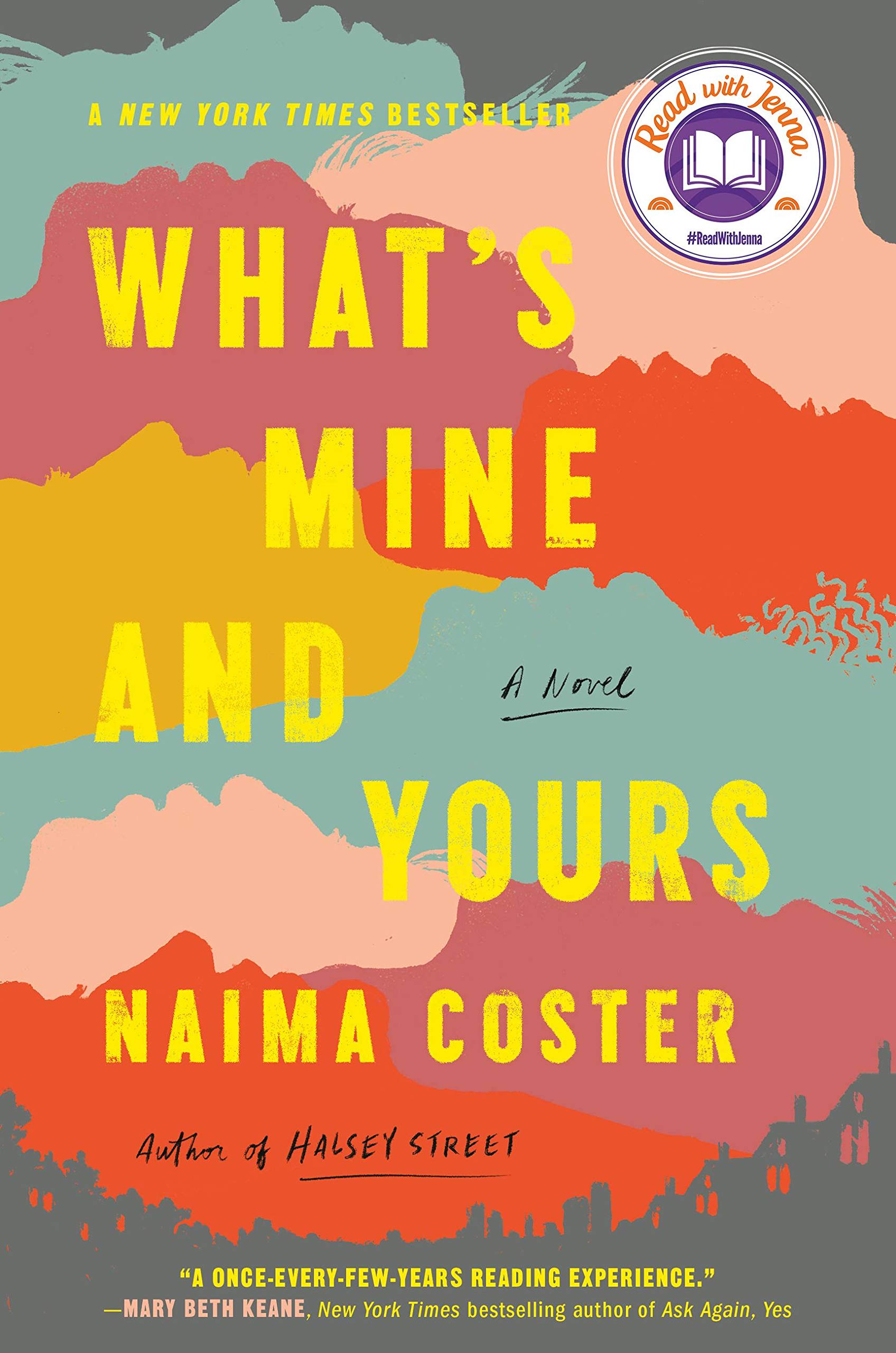
Swatches of color in pale green, beige-pink, cranberry, orange read, and yellow are layered above the silhouette of a town. The swatches resolve to be

Tue, October 4 | 7 – 8 pm
HCLS Miller Branch
Register at this link. 

The theme for One Maryland One Book this year was “new beginning.” As a member of the selection committee, I was assigned to read What’s Mine and Yours as a potential title. It took me a while to recognize the theme in this story, but I realized that instead of the theme being overarching, hope or a new beginning, operates somewhat cyclically in this novel.  

The story opens with the prospect of new beginnings – two men stand at the cusp of a beautiful, happy life. Two fathers share a cigarette and a brief conversation one day about their dreams surrounding the amazing lives that they envision for their children. However, disaster strikes soon after and the lives of both those families take vastly different turns than what the fathers dreamed.  

The story revolves around two families who confront each other over a busing initiative in 2002 in Piedmont, North Carolina. Jade has suffered an immeasurable loss in her life already. Now she wants her only son, Gee, to get all the opportunities that she did not have so he can become a successful, sensitive Black man in America. After her husband is incarcerated, Lacy May, a White woman, is equally determined to keep children like Gee away from her White-passing, biracial daughters. She does not want them influenced by the children from the east side of town at their predominantly white school.

However, Gee and Noelle, Lacy May’s eldest daughter, become friends, which soon turns into more when they meet during a school play. The lives of these two families intersect despite the mothers being on opposite sides of the debate over the county’s decision to enforce integration. The busing initiative provides the primary conflict, with the repercussions manifested in the adult lives of the central characters – Jade and Gee, Lacy May and her three daughters. Despite the different directions each character grows, they all manage to find their new beginnings by the end of the book, in big ways and small.  

Although the story begins in Piedmont, North Carolina, the issues addressed in What’s Mine and Yours are relevant to other parts of United States, including in Maryland and even Howard County. The theme of school desegregation to address socioeconomic disparity is especially pertinent as The Baltimore Sun reports, by 2014, Maryland was the third most racially segregated state in the nation, with one-quarter of its schools considered highly segregated.  

The integration efforts described in the book will touch a relatable chord and inspire interesting and, hopefully, productive discussions. While the story revolves around an effort to desegregate schools, the book explores other, hugely relevant issues, such as the struggles of Black teens trying to prove that they are good enough to be in a White-dominated world, the question of why they have to prove that they are good enough, White-passing biracial people and issues that they deal with, complicated relationships between lovers, sisters, LGBTQIA+ identity, infidelity, abortion, and miscarriage – all things relevant to our present moment. 

We are thrilled that Howard County Library system is the only public library in Maryland on author Naima Coster’s six-stop tour! 

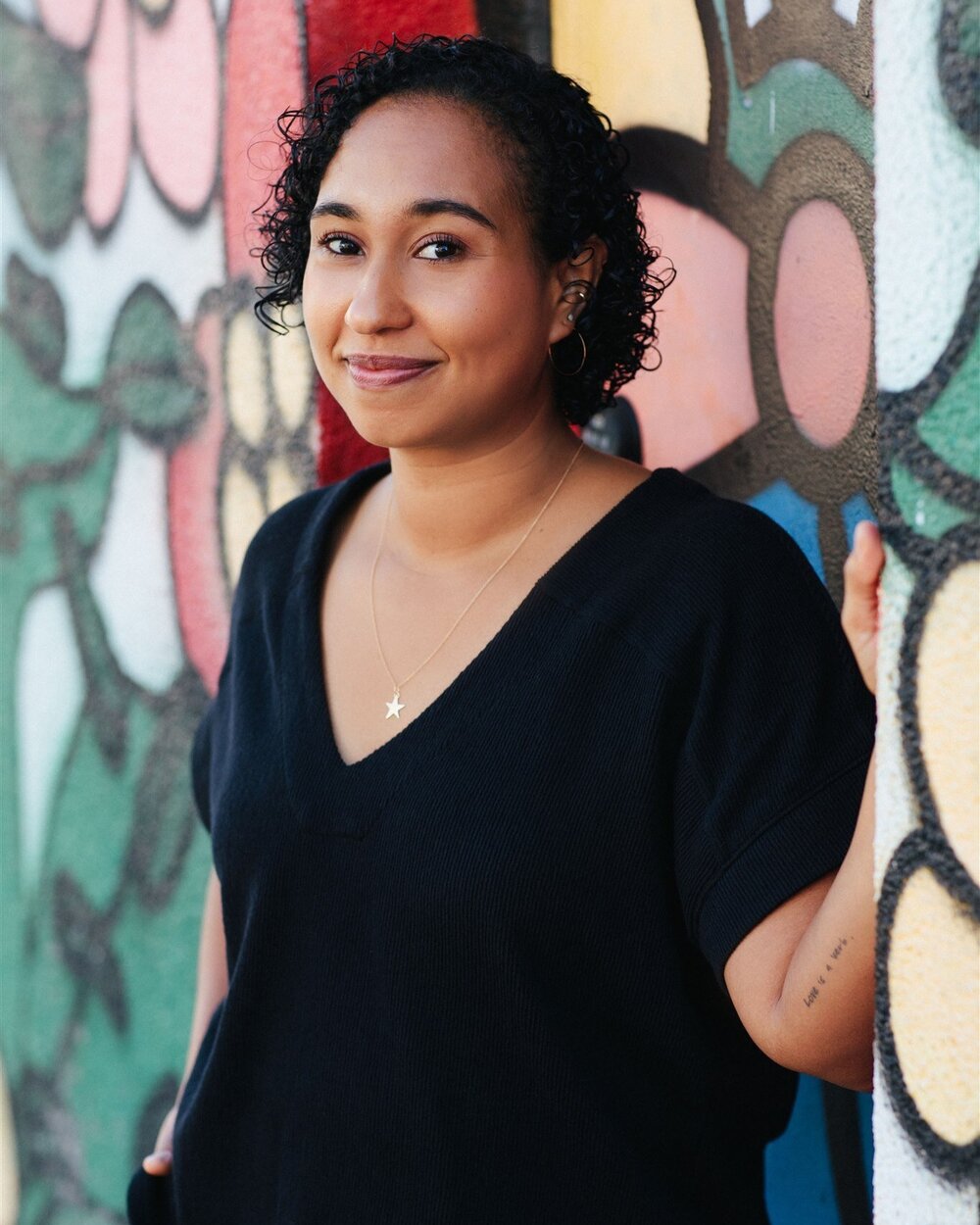
A young Black woman with short curly hair, wearing a black V-neck shirt stands by a wall painted in flowers.

Naima Coster is a graduate of Yale University, Fordham University, and the Columbia University School of the Arts where she earned her MFA. She has taught writing for more than a decade in community settings, youth programs, and universities. She currently teaches in the low-residency MFA program at Antioch University in L.A. She is a 2022 mentor for the Periplus Collective.

One Maryland One Book is a program of Maryland Humanities. This project was made possible in part by the Institute of Museum and Library Services and the Maryland State Library. We would also like to thank our valuable partners Howard County Poetry and Literature Society (HoCoPoLitSo) and the Office of Human Rights & Equity (OHRE) and the Last Word bookstore.  

What’s Mine and Yours is available in print and e-audiobook

Piyali is an instructor and research specialist at the Miller Branch of HCLS, where she co-facilitates both Global Reads and Strictly Historical Fiction and keeps the hope alive that someday she will reach the bottom of her to-read list.
 

Mrs. England by Stacey Halls

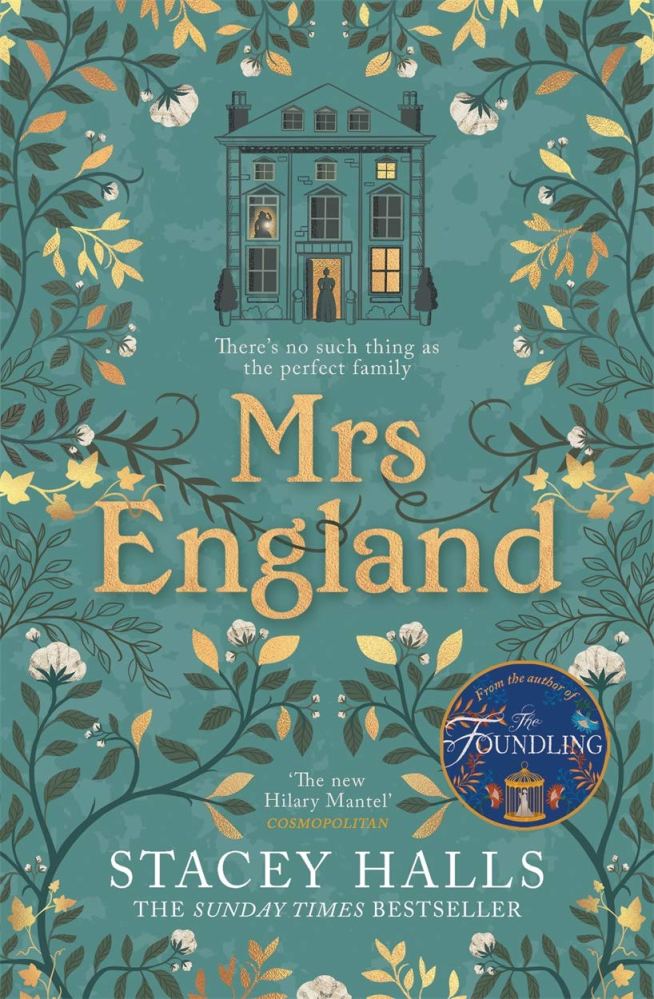
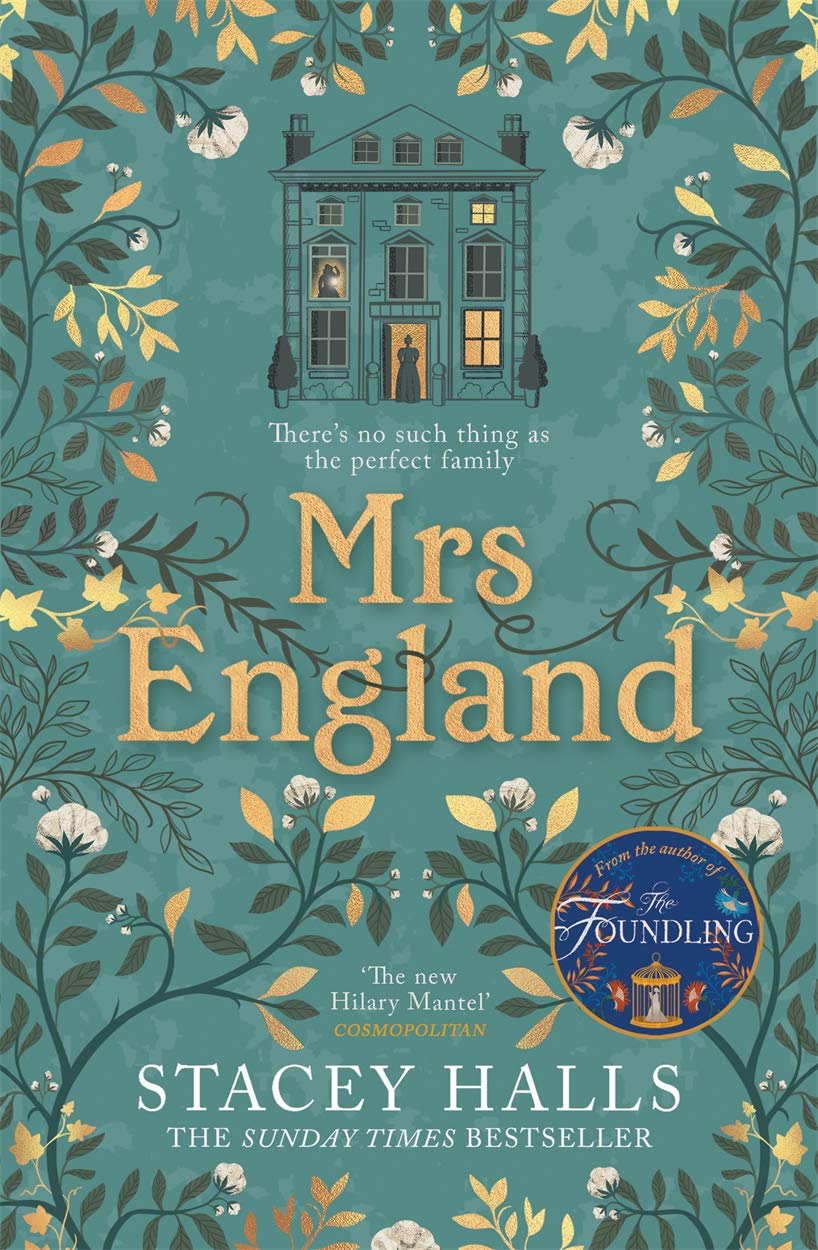
A spruce green cover has botanical illustrations framing a manor house with a woman silhouetted in the doorway.

by Piyali C.

One of my favorite quotes about friendship is the famous one by C.S Lewis: “Friendship is born at that moment when one person says to another: ‘What? You too! I thought I was the only one.” My friendship began with my library colleague who introduced me to Stacey Halls in the same way. We bonded over Daphne Du Maurier, our mutual love for Jane Austen, historical fiction, and literary fiction. So, when she brought The Familiars by Stacey Halls to my desk and said, “Here read this. I know you will like it,” I knew I should drop everything and read it. I did not like it – I loved it.

The Familiars is a story of two women in early seventeenth century England, both fighting for survival. Mistress Fleetwood Shuttleworth is determined not to lose her fourth baby like the ones before and Alice Gray needs to prove she is not a witch during the infamous Pendle Hill witch trial of 1612. Alice is a skilled midwife with extensive knowledge of herbs, and Fleetwood needs her help to save her unborn baby as well as her own life. When Alice is accused of witchcraft and imprisoned, Fleetwood is ready to go to any lengths to prove her innocence. Not only is the story superbly written and well-paced, it shows tremendous character development of the protagonist. One may wonder if all the steps taken by Fleetwood in her quest to free Alice are plausible given the time period, but I embraced her actions wholeheartedly and willed her on to succeed. 

In Mrs. England, Norland Institute graduate Ruby May is looking for a fresh start after the family she worked for emigrates to United States. Although the Radlett family would dearly love their Nurse May to travel with them to America, she is unable to do so for a reason undisclosed at the beginning of the story. In 1904 women from the upper echelon in England are completely dependent on nurses for the care of their children, preferably from the prestigious Norland Institute. Nurse May gets her second assignment without much delay. However, she will have to travel to cold, foggy West Yorkshire to take charge of four children of a wealthy couple, the Englands of a mill dynasty. After reaching her destination, she is surprised to find that she is taking directions about the children’s routine from the friendly and easy-going Mr. England, while Mrs. Lilian England is aloof, cold, and withdrawn. While Ruby develops a nurturing and loving relationship with the children, she simply cannot figure out the mysterious couple for whom she works. When she feels the lives of the children are in danger, she must dig deep within her and ultimately face her fears. While caring for the England children and figuring out the power dynamic in the Edwardian marriage of the Englands, Ruby learns to make peace with her past and only then can she break free from the chains that hold her captive psychologically. 

Fans of Daphne Du Maurier will love this atmospheric, gothic tale and the shroud of mystery surrounding both Nurse May as well as Charles and Lilian England. Although Nurse May’s character is likeable, the readers know she is hiding a secret so a niggling doubt about her reliability as a narrator remains in the readers’ minds. When we get introduced to the England family, the readers have a challenging time believing the authenticity of Charles England’s affability. There is something inauthentic about his outward friendliness. Lilian England is easy to dislike due to her coldness towards her children. Yet there is a vulnerability in her which questions even our dislike for her. Readers vacillate between who to believe – the charming Mr. England or the aloof Mrs. England. And just when we think the mystery has been resolved, we read the last line – just one single line and get a jolt. All the twists and turns that captivated us and kept us turning pages, all that we believed was resolved gets thrown into question and as we finish the book, we start rethinking the whole mystery all over again. 

Mrs. England is available in print, in ebook and in eaudiobook. 

Piyali is an instructor and research specialist at the Miller Branch of HCLS, where she co-facilitates both Global Reads and Strictly Historical Fiction and keeps the hope alive that someday she will reach the bottom of her to-read list.