Pathogenesis by Jonathan Kennedy 

A primitive-style illustration shows people stewn about a barren lansdscape with

by Sahana C.

Four years after the start of the COVID-19 pandemic, it still felt a bit too soon for me to sink my teeth into this title, but I’m so glad I persevered. I’m on a mission to read more nonfiction this year, to make myself a more well-rounded reader (who knew that there were just as many genres of nonfiction as there are of fiction?! Mr. Dewey Decimal, I suppose). This was a satisfying, fascinating read to satiate my sci-fi loving heart. It’s a testament, I think, to the ways that fiction can only go so far – the real world always has something more unimaginable, more bizarre to throw at us. 

Jonathan Kennedy made it easy in this absolutely fascinating read. I am no science buff, so some of the more nuanced language about the ways that viruses exist was lost on me. But it was so worthwhile to struggle through some of the more technical descriptions of the bacterial and viral elements to understand the social implications of the plagues, as promised by Kennedy.

The premise this book asserts is that viruses have had a lasting impact on humanity, and beyond, shaping history through the ages. I won’t say that I feel like the world can attribute much of its development and evolution to plagues as Kennedy seems to assert, but I also can never again claim that plagues did not have a major role to play in the evolution of our understandings of race, class, and capital. Beyond the obvious examples of the ways in which architecture and city planning changed after events like the Black Plague and advancements in healthcare, Kennedy also lays out clear paths to explain the ways things like mercantilism and the slave trade emerged and the impact viruses had on them.  

Seeing the world through this public health lens has made me step back and consider all of the other intersections and influences that I might not have clocked as important – but for this fascinating study of the history of the ways we became what we are now through the perspective of viral history. It made the fall-out from our most recent (and ongoing) plague feel less “unprecedented” and more like something that can and will shape us moving forward. It’s not about “returning to normal” and all about looking to the future to see how we evolve, as we move, slowly, forward.  

Pathogenesis is available in print, e-book, and e-audiobook.  

Sahana is an Instructor and Research Specialist at HCLS Savage Branch. They enjoy adding books to their “want to read” list despite having a mountain of books waiting for them already.

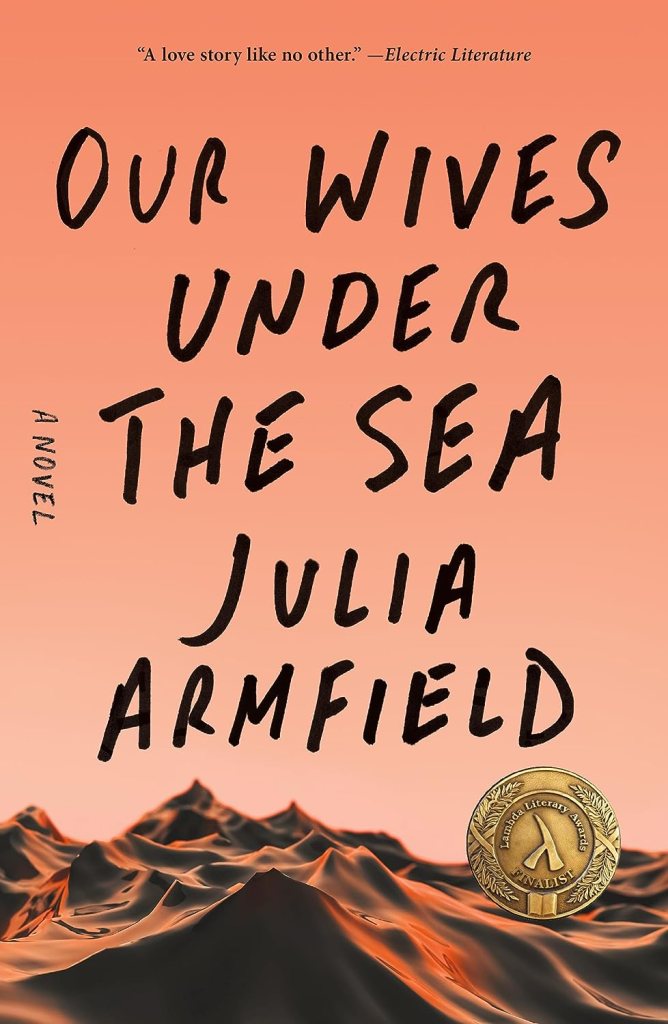
Our Wives Under the Sea by Julia Armfield

The book cover depicts waves against a reddish-orange background, possibly as if the sun is shining down on them.

By Sahana C.

There are books that belong in discussion, that beg to be read in community. Then there are books like this, that I don’t know if I’ll really be able to talk about in a meaningful way. But you deserve to know about it, so I’ll try my best.  

I’ll tell you first that I read this in one sitting. Each turned page made it evident that this book was heart-wrenchingly, desperately, tenderly romantic, and just as tragic. I was reminded of Rebecca by Daphne du Maurier in a lot of ways – the story of the protagonist, Miri, starts in the middle of an existing tragedy, with fog and haze over the order of events in such a way that everything feels like a dream. The classic gothic element where the setting acts as a main character is incredibly present as well – the sea takes its due, from Miri and from her partner Leah, and it is greedy with what it has. The home is a center, as in most gothic tales, and the sea takes the place of home for both Miri and Leah. Armfield writes, “To know the ocean, I have always felt, is to recognize the teeth it keeps half-hidden.”  

Miri thinks something is not quite right about her marine biologist wife, Leah, who has just returned from six months on a deep sea mission that did not end well. Despite Miri’s best efforts, Leah cannot seem to return to life as normal. Miri does what she can, but she can’t escape the fact that she feels she is losing Leah to the sea, somehow, inexplicably. There is a real sense of the liminal throughout the book, but especially in the first chapters as Miri begins to tell the story. Armfield herself says it perfectly, writing about loss but inadvertently summarizing the themes of the novel: “It’s not grief…it’s more like haunting.”  

This idea of haunting is compounded by the ways we learn about Miri and Leah’s relationship throughout the story, in fleeting moments and flashbacks, woven together with this real sense of longing for a time that cannot return, with desperation mounting, and mounting, and mounting, as we need to know what has happened, what will happen, what’s next.  

At some points, this book had a similar energy to one I’ve written about before, Emily Austin’s Everyone In This Room Will Someday Be Dead, with a smattering of “anxious” fiction interspersed among the more gothic notes. The characters are so unfortunately lovable, too, in their desire for one another, and that’s the real tragedy in the novel – Armfield wonders aloud “what happens when love isn’t enough?” The readers are left begging her to stop asking the question.

This book deserves to be read. I read a lot of books; I’m surrounded by them all day, and I can tell you, with full assurance, that this book will make you feel. You’ll bear witness to the love that was there, that was lost, that had something unbelievable change it, and instead of that love living on the paper, in the book, it will belong to you instead.  

Our Wives Under the Sea is available from HCLS in print and as an e-book.

Sahana is an Instructor and Research Specialist at HCLS Savage Branch. They enjoy adding books to their “want to read” list despite having a mountain of books waiting for them already.

Recipe Exchange: Dumplings!

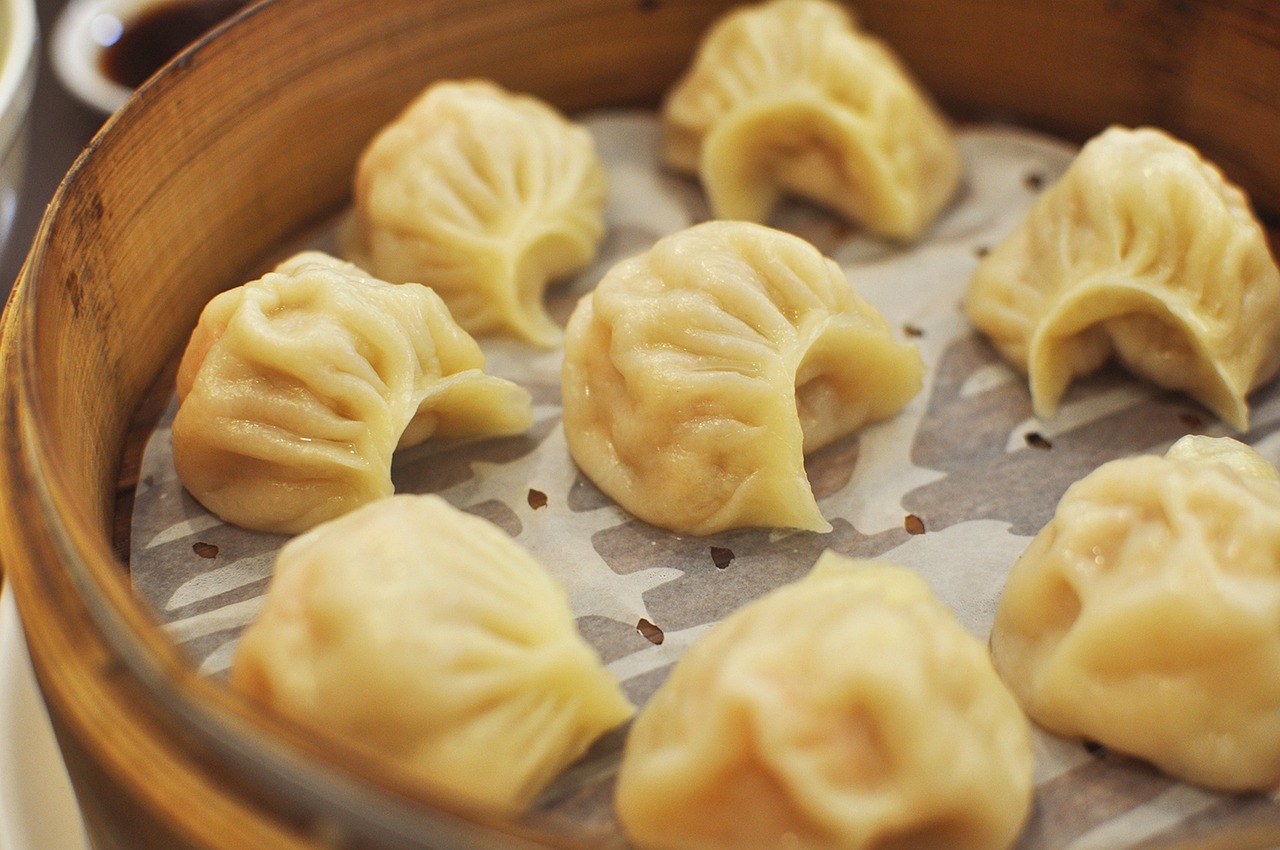
A set of steamed Asian dumplings sit in a wooden steaming basket.

by Sahana C.

Recipe Exchange: Dumplings Around Asia!
Saturday, May 25 | 1 – 2 pm
HCLS Savage Branch
Register

Hands down, my favorite way to learn about new cultures is through food. And food tells so much about a place – whether wheat or rice or corn are the most prominent starch, how people chose to work the land, how people divided labor, how different climates react to different weather, whether people use utensils or their hands. We reflect all sorts of nuances about ourselves in the ways we eat. Growing up in Howard County exposed me to cuisines from all over the world, and there’s nothing better to me than trying something new, loving it, and immediately knowing that I need to try to make it myself. Gathering new recipes with other people is such a rewarding, communal pastime, and it’s lovely to be able to talk through cooking with other foodies!

For our Recipe Exchange class during AAPI Month, I wanted to honor one of humanity’s strongest, truest impulses: to take a protein, or a hearty base, cover it in dough of some kind, then fry, steam, or bake it to perfection, resulting in a bite sized bundle of delight. That’s why we’ll be discussing Dumplings Around Asia, as well as sampling some varieties.  

I graduated from college during the early days of the pandemic. When I was sent home, my university sent me a senior gift that included a dumpling making kit. I’m not sure if they knew what they were doing with that gift but I’ll tell you what the result was: homemade gyoza once a week. Tortellini made from scratch that took me six hours. Handmade samosas that I air fried instead of deep-frying. Dumplings of all sorts from all around the world, handmade in my kitchen. Dumplings are a passion of mine, and I can’t wait to discuss all the best ways to prepare such a simple but delectable food.

Bring your own dumpling recipe – or favorite dumplings!– and we’ll have a great conversation about the ways we can speed-run making dumplings, the history of the perfect crimp, and of course, share some of the best recipes for different dumpling styles found across the Asia. While it might not be a comprehensive list of every style of dumpling to ever exist, it’s going to be a great introduction to less popular dumpling styles, and a great chance to grab a snack at the library.  

Register here to get emails and updates about class.

Sahana is an Instructor and Research Specialist at HCLS Savage Branch. They enjoy adding books to their “want to read” list despite having a mountain of books waiting for them already.
May is AAPI Month: Events and Book Clubs

by Sahana C. and Piyali C.

As the days get ever longer, and late spring graces us with sunshine and the promise of summer, celebrating the vibrant, colorful nature of Asian American culture aligns with the spirit of the season. At the library, we love to explore and learn through stories, whether they come to us in book form or from community knowledge, through crafts, cooking, and artwork. Take an adventure through a story to explore Asian American and Pacific Island cultures with us.

Celebrity chef Jet Tila holding a bowl of food, against a dark background. The table in front of him holds a pineapple full of fried rice and other dishes.

Taste the Tradition: Exploring Asian Cuisine with Jet Tila

Tue, May 21 | 7 – 8 pm
online
To receive the Zoom link, register here.

Celebrate AAPI Heritage Month with an unforgettable evening featuring celebrity chef Jet Tila. He shares his personal story, culinary insights, and favorite recipes. From traditional flavors to modern twists, immerse yourself in the rich tapestry of Asian cuisine and culture.

A bestselling author, Tila has been nominated for Emmy and James Beard awards. His cookbooks include 101 Asian Dishes You Need To Cook Before You Die (also available as an e-book) and 101 Thai Dishes You Need To Cook Before You Die (also available in e-book format). He grew up in the first family of Thai food, then attended both French and Japanese culinary school. A born educator and storyteller, he was appointed as the inaugural Culinary Ambassador of Thai cuisine by the Royal Thai Consulate, the first-ever chef to represent his country’s culture and cuisine.

He appears as a host, co-host, judge, and competitor on many Food Network shows, such as Tournament of Champions, Iron Chef America, Cutthroat Kitchen, Chopped, Beat Bobby Flay, and Guy’s Grocery Games. He also holds six culinary Guinness World Records.

International Grocery Store Tour: Shopping for Chef Jet Tila’s Cooking Demonstration

Mon, May 20 | 4 – 5 pm
Meets at H-Mart (3301 North Ridge Rd., Ellicott City)
Adults, plus teens with adults.
Register here.

Want to cook one of Jet Tila’s recipes? Shop for all the right ingredients at the local H-Mart with a knowledgeable guide. Discover the perfect fresh and frozen items to cook like a chef. The tour is not required to attend Chef Jet Tila’s online cooking event.

To escape in a book, join one of our many book discussion groups around the system. If book discussion groups are your thing, we’ll be reading across Asia this month:

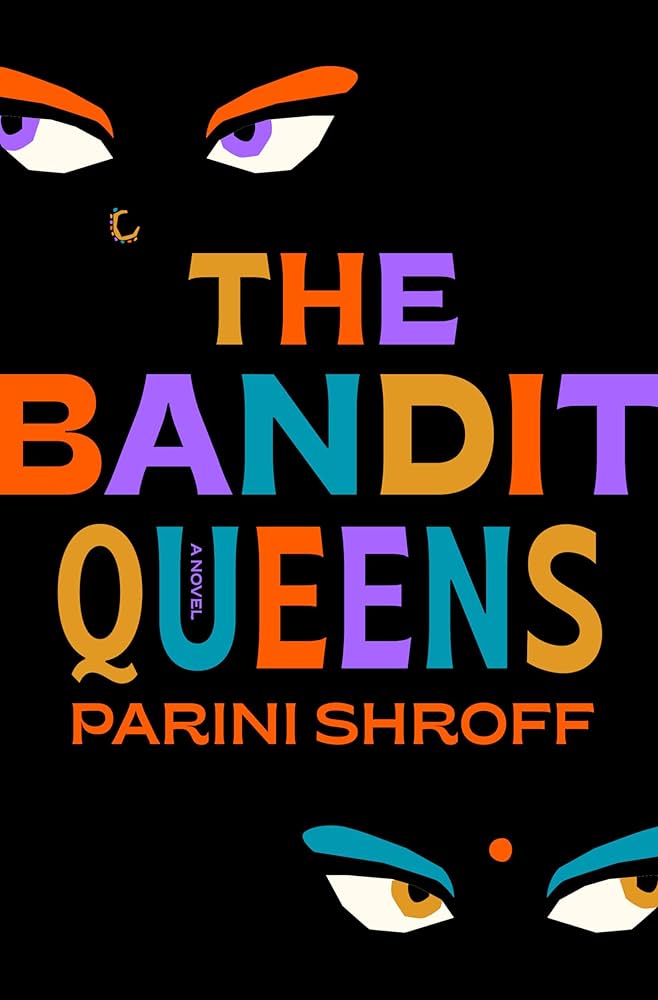
Between the Lines, hosted at Brewing Good in the Savage Mill, reads and discusses Parini Shroff’s The Bandit Queens and celebrates India on May 17.

On May 20, the Asian American Literature Book Club reads Mott Street by Ava Chin, which explores the time around the Chinese Exclusion Act.

In Other Worlds, a science fiction book club, meets on May 27, in person and online, to talk about Iron Widow by Xiran Jay Zhao, a futuristic novel that has close ties to East Asian history.

If anime or manga suits you, make sure to check out our anime clubs at HCLS Savage Branch. The Advanced Anime Association for adults meets on June 6, and Anime & Game Hangout for teens meets on May 7 and May 21.

Drop in and make a craft on May 14 from 11 am to 12 pm and from 2 to 3 pm at HCLS Miller Branch, inspired by AAPI artwork.

If you’re a foodie and want to experience the world through food, check out the first of our potluck style Recipe Exchanges on May 25 at Savage Branch, where we’ll talk about dumplings and noodle dishes across Asia and enjoy some as snacks.

An Indian woman wearing an elaborate red and multi-colored embroidered dress raises her arms, with her hands flexed above he head. Background is purple and blue.

We bring back our popular Rock on With Bollywood class to teach the community the basic steps of this famous form of dance from India. Beloved Bollywood dancer Jaya Mathur is gearing up to demonstrate and teach the basic steps of Bollywood dance. Jaya breaks down the steps for beginning dancers; don’t hold back even if you are just starting your Bollywood dance journey. And if you are an expert, come and show how it is done.

Rock On With Bollywood is happening on Wednesday, May 8 at 7 pm at HCLS Miller Branch. Seats are limited, so register here to claim your spot. You must be 18 or older and need to sign a waiver.

As we get close to summer reading and celebrate Global Adventures, head to the library to make a start, traveling across Asia from our own backyards!

View the full listing of AAPI-related classes here.

Sahana is an Instructor and Research Specialist at HCLS Savage Branch. They enjoy adding books to their “want to read” list despite having a mountain of books waiting for them already.

Piyali is an instructor and research specialist at HCLS Miller Branch, where she facilitates Light But Not Fluffy and co-facilitates Global Reads. She keeps the hope alive that someday she will reach the bottom of her to-read list.

Ancient History, Modern Tradition

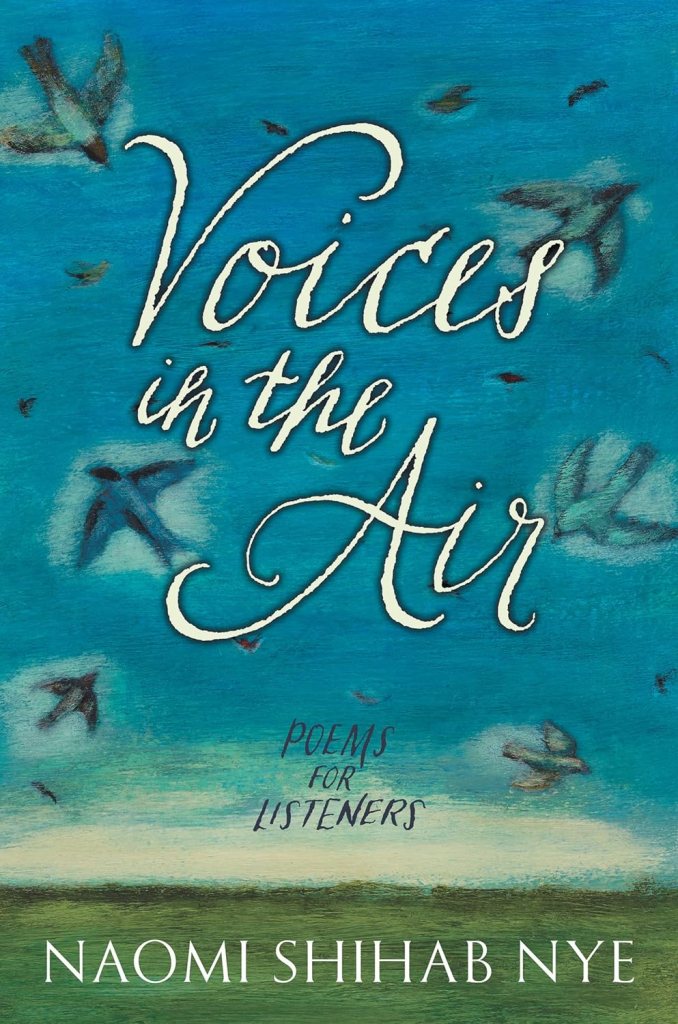
The book cover shows a number of birds that resemble swallows flying and swooping against a blue sky, with clouds in the distant background, low to the ground, and a grassy green landscape at the bottom.

by Sahana C.

I’m not a high school English teacher, so I rarely have an audience that will listen to me lecture about poetic tradition, but April is National Poetry Month, so there’s no better time to try. What if you pick up a book of poetry?

“Which one?” you ask me, as I thought you might.

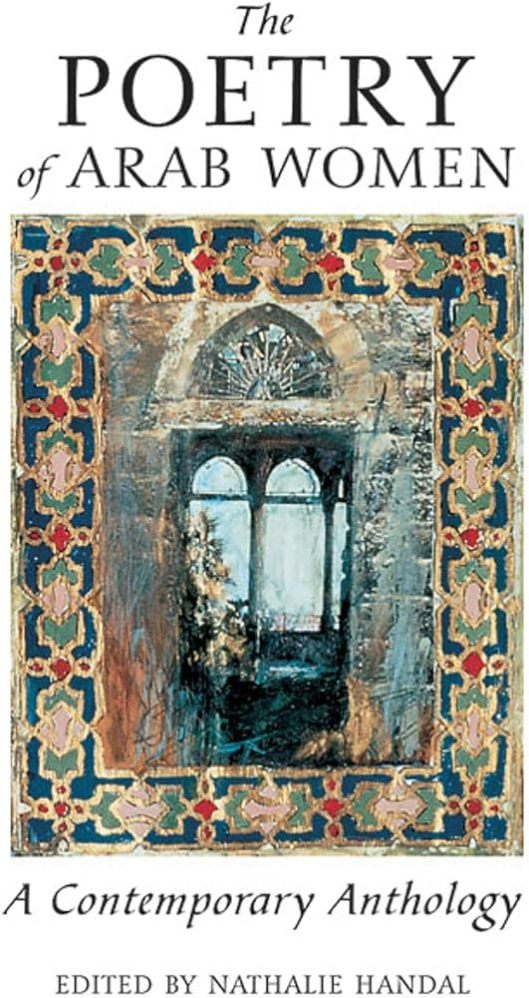
The book cover shows a view through arched window panes of a tree with white blossoms and a blue sky. The wall surrounding the window is constructed of brick and stone and is surrounded by a colorful geometric border in blue, green, and red.

Great question. Did you know that April also happens to be National Arab American Heritage Month?
One of the earliest forms of Arabic literature was poetry, but the oral tradition of Arabic poetry extends far beyond that. Flow, expression, and verbiage are singular in Arabic and the language was chosen by UNESCO as “the language of Poetry and Arts.” It only feels appropriate, then, to celebrate National Arab American Heritage Month alongside National Poetry Month. To highlight the perfect modern continuation of the ancient history, here are some Arab and Arab American poets to get you started:

  • Naomi Shihab Nye is the first Arab American Young People’s Poet Laureate and has several books for teens and children in our collection.
  • The Poetry of Arab Women: A Contemporary Anthology is deeply evocative, tying together the heritage mentioned above and making it accessible in the West, blending established poets and emerging voices.
  • Mahmoud Darwish is a prolific author, world-renowned for his lyrical work and vivid imagery.
  • Charif Shanahan wrote Trace Evidence about intersectional Arab American themes, a sense of place, queerness, and intimacy with oneself and one’s heritage.
  • Written by a wide variety of authors, This Is Not a Border: Reportage & Reflection from the Palestine Festival of Literature contains poems and essays reflected on PalFest and the power of culture.
  • Salim Barakat’s Come, Take a Gentle Stab is a compilation of Barakat’s most lauded work, and is translated to English from Arabic, drawing attention to the power of testing the limits of language.
  • Finally, one of the most celebrated Arab American authors, Etel Adnan’s work, Sea and Fog, cannot be omitted from this list; it’s a tour de force about individualism, place, and interconnectedness.
The abstract book cover, in shades of dark blue, turquoise, and grey, is painted in thick brushstrokes that could represent the ocean and/or bodies of land with a grey foggy sky in the background.

Check out the works above from your closest branch or online, and try poetry this month – there’s a reason poetry has such an ancient history, and it still hasn’t gone away.

Sahana is an Instructor and Research Specialist at the Savage Branch. They enjoy adding books to their “want to read” list despite having a mountain of books waiting for them already.

Poet Hayes Davis on Beautiful Objects and Unbridled Joy

by Sahana C.

National Poetry Month blossoms with the Spring. This year, we’re lucky enough to be celebrating all month long, and especially with the 2022 Maryland State Arts Council Independent Artist Award Winner and 2023-24 HoCoPoLitSo Writer in Residence, Hayes Davis.

Be sure to register for Hayes Davis’ workshop, Beautiful Objects and Unbridled Joy on Saturday, April 13 from 1 – 2 pm, and come back to the Savage Branch in two weeks to turn your creations into self-published booklets at our Poetry Zine Workshop! For even more, check out the library calendar for poetry events happening throughout the month at HCLS. Happy writing!

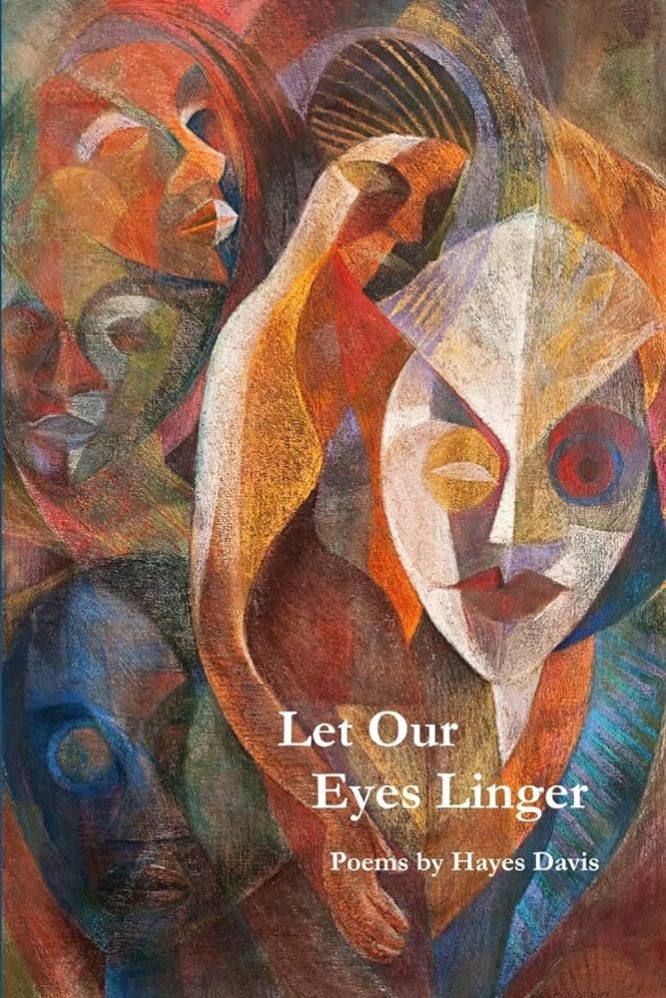
The modern painting cover of the poetry collection seems to be a collage of faces or masks, in many warm hues.

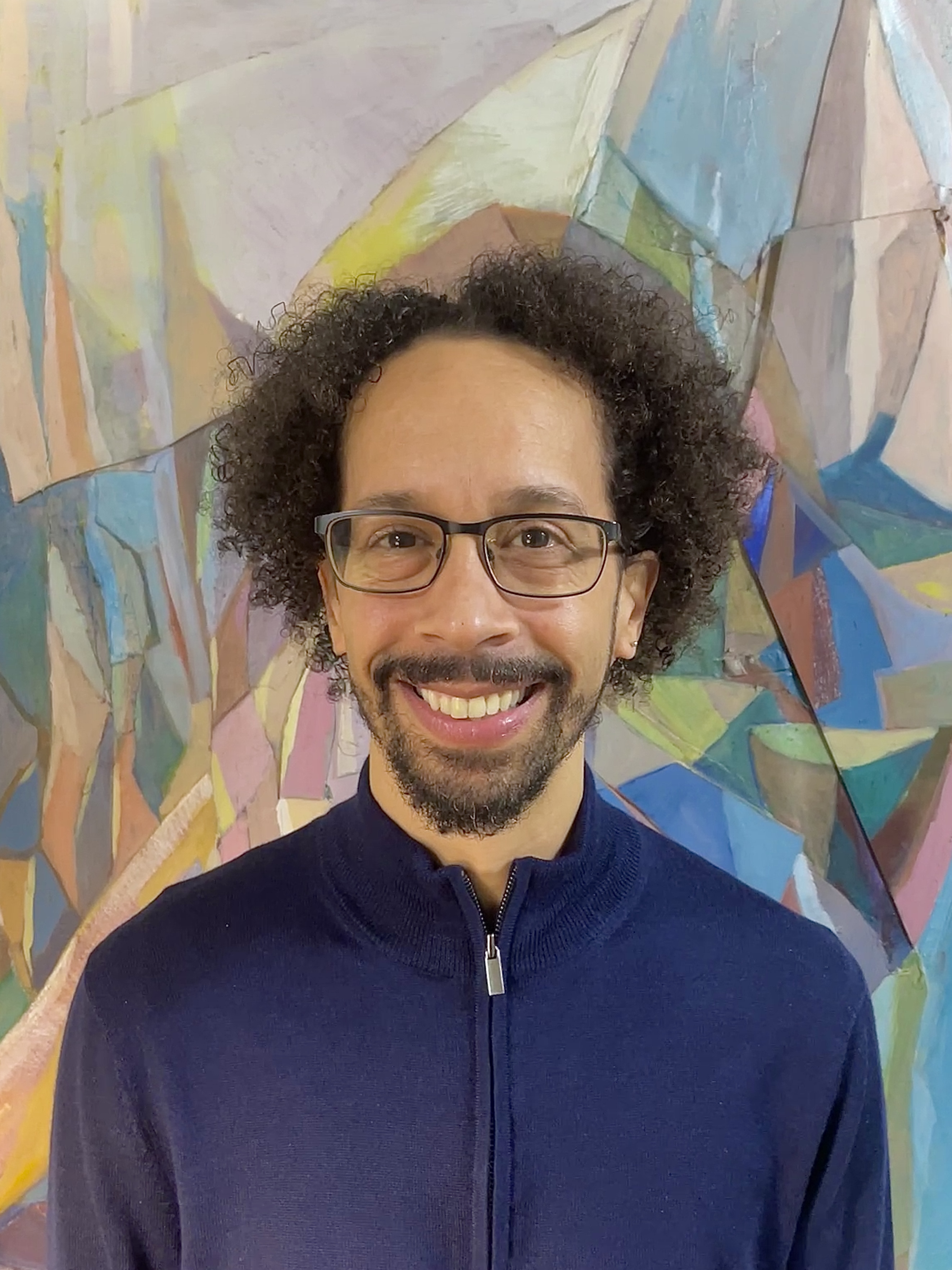
Hayes Davis is the author of Let Our Eyes Linger (Poetry Mutual Press). He is currently serving as the Howard County (MD) Poetry and Literature Society Writer in Residence. His work has appeared in New England Review, Mom Egg Review, and several anthologies. He was a member of Cave Canem’s first cohort of fellows. An education administrator and English teacher, he lives in Silver Spring with his wife, poet Teri Ellen Cross Davis.

Here’s Hayes, in his own words, talking a little bit about his process, poetry, and what brings him joy!

The poet appears against a coloful painted backdrop.

What inspires you to write? 
Lots of things inspire me, most of them related to being human and living in the world as I do. I am a biracial man, a biracial Black man, a parent, a school administrator, a teacher, a parent of school age children, a stutterer, a lover of nature. All of those different roles have influenced my work during my career, and some of them are particularly present both in my first book and my second manuscript.

As a poet and a teacher, what resources do you think are the most important for aspiring poets? Is there any advice you would like to share? 
The number one thing I say to young writers is “You have to read.” If you’re going to call yourself a poet, you have to have some knowledge of what poetry was in the world before you started writing. I am often asked, “What/who is in your poetic lineage?” or “Who do you list as influences?” A poet who can’t answer those questions hasn’t been doing the work of a poet.

Is there a particular poet, poem, or collection that helped shape your writing and thinking? 
Three of the poets I read earliest were Quincy Troupe and Lucille Clifton. I would say the main influence they had on my work was the straight-forwardness of their language. I believe in plain-spoken poetry, that is, work that doesn’t obscure its meaning but still rewards multiple readings and works on multiple levels. Later, I became a fan of Linda Pastan, Cornelius Eady. 

What themes or subjects motivate you to write? 
My first book is a lot about being a parent, being a teacher, and to a lesser extent stuttering. My second manuscript focuses more on the stuttering, and on parenting in a different way–trying to live into a different mode of parenting than I inhabited early on. I’ve also written, at this point, far more poems about nature than I thought I ever would. In some ways that’s a reflection on the pandemic, which slowed me down enough and made me stressed out enough to take even more joy in the natural beauty that surrounds me at home and now where I work (Sandy Spring Friends School), which sits on 140 acres of land, much of it wooded. 

And finally, the theme of the workshop you’ll be running at Savage is “Beautiful Objects and Unbridled Joy”. What’s one thing that’s bringing you joy today? 
Building on my last answer, the sky brings me joy many days, whether because of the brilliant cobalt that accompanies a cloudless day, or the endless variety of clouds that complement that blue. The expressions of beauty of which humanity is capable bring me joy–music, visual art, movies–I love looking at how other people see our world and process it artistically. 

Sahana is an Instructor and Research Specialist at the Savage Branch. They enjoy adding books to their “want to read” list despite having a mountain of books waiting for them already.

The Wager by David Grann

The book cover depicts a sailing ship caught in a storm, with grey clouds in the background and a rough, windswept turquoise sea beneath.

By Sahana C.

Land lubbers beware – this one was made for sea-lovin’ folk.  

I grew up obsessed with shipwreck stories. The might and fury of the ocean, the hubris of all those little people attempting to cross her, and their inevitable failures along the way always felt like the ultimate story of man versus nature.

Between Daniel Defoe’s Robinson Crusoe, Jonathan Swift’s Gulliver’s Travels, and Johann David Wyss’ The Swiss Family Robinson, I felt like I was preparing myself in case something wild happened and my account was needed to tell the story. I wrote field notes, carried a compass with me, and also carried a little kit full of tools in case I was caught off guard and thrown into the wilderness. It was like I was doomsday prepping, but I was eleven and only prepared for a night or two on my own.  

The Wager: A Tale of Shipwreck, Mutiny and Murder by David Grann, nonfiction though it may be, is the same kind of rollicking, wave-crashing tale of survival that I devoured growing up, and the most titillating part is that it was all real. Lord Byron (yes, that one)’s grandfather was a prolific note-taker, and some of the other crew documented their own experiences through war with men and nature aboard the Wager, as well as their fight for survival after the shipwreck.

You want mutiny? Piracy? A Lord of the Flies-style attempt at societal structure and subsequent breakdown? You want nautical tales and stories of the open sea? The Wager has all of that and more. Grann weaves together a narrative from such disparate perspectives, he allows a reader feel as though they, too, are looking at this 18th-century phenomenon as it occurs. It’s a captivating, engrossing read, and I can’t recommend it highly enough. 

The audiobook is narrated in an absolutely compelling way; the book contains actual pictures of Wager Island from Grann’s own travels. No matter how you choose to read this work, you’re guaranteed to be sucked into the story. And more than that: you might be tempted, like I was, to start your own logbook – just in case something wild happens. 

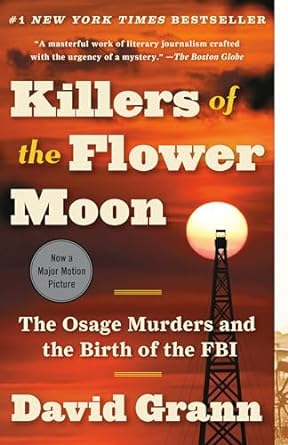
The book cover depicts an oil rig against the background of a setting sun and an orange sky.

David Grann also wrote Killers of the Flower Moon, which was recently adapted into a film, if that gives you any hint to how cinematic his books are. In The Wager, he weaves into a cohesive story the images of waves and barren island, the brutal fight for survival, and humanity laid bare.  

The Wager is available in print, large print, e-book, and e-audiobook.  

Sahana is an Instructor and Research Specialist at the Savage Branch. They enjoy adding books to their “want to read” list despite having a mountain of books waiting for them already.

Gods of the Upper Air by Charles King

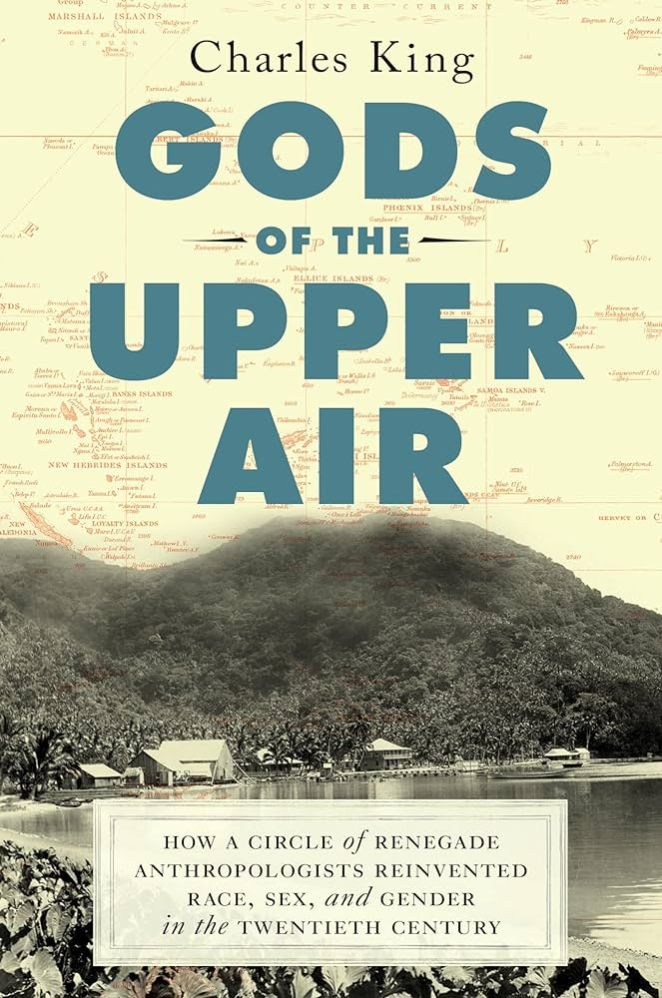
A monotone photo of an island cove sits below a map, with the title in slate bue.

by Sahana C.

I’ll admit to some bias here: I was an anthropology major as an undergraduate. That’s part of why this book called to me – I recognized so many of the names, and it felt familiar. This might not be everyone’s cup of tea, but stick with me.

It’s the 1920s, and so much culture is up in the air, so much of the world is more accessible than ever, and there is so much burgeoning diversity in America that it seems to require classification. Of course, those doing the classifying are the people in power. They’ll do whatever they can to keep that power in place, even if it means creating dangerous, harmful institutions with staying power. 

Enter Franz Boas, affectionately termed as Papa Franz, and the father of American anthropology. That man singlehandedly taught almost every single major American anthropologist and mentored the founding polycule behind cultural relativism. He basically invented the field as he went along, and his students are credited with many of the ground-breaking, society-forming theories and practices that are foundational to modern academia. The fact that a whole discipline grew up around one dude and his ducklings is remarkable.  

And King takes us through it. The heroes of the story are the aforementioned Boas, Ruth Benedict (one of the most published of the Boasian circle, Papa Franz’ right hand and one of Mead’s lovers), Margaret Mead (a popularizer of anthropology as a social science – though the term popularizer was used as an insult in her time, I think it’s quite complimentary), and Zora Neale Hurston (yes, *that* one).  

Each of them, purely by happenstance, lived between worlds, slightly outside of social norms. They were all square pegs in a world of round holes, and that, alongside a pervasive curiosity and belief in people, led them to anthropology as a discipline. Boas was a German Jew and an immigrant with limited English. Benedict was 1) a woman, 2) almost certainly a lesbian by modern definitions, and 3) partially deaf. Mead was 1) a woman, 2) bisexual, and 3) polyamorous before it was cool (and as such, was involved with so many of the leading figures in anthropology). And Hurston was a Black woman who realized that her private schooling put her in a different world than the people back home, that her language had changed entirely by virtue of her access to “elite” spaces, as she moved between her school life, her fieldwork, and the Harlem Renaissance.   

Armed with a passion for data and a desire to understand rather than merely classify people into archetypes, Boas and his disciples pushed back against so many of the long-held cultural assumptions about race as strict category, about eugenics, and about unjust and immoral legislation like Jim Crow and Japanese internment. They coined the term and practice of “cultural relativism,” understanding of culture through its own lens rather than the lens of a foreigner.

There is a bit of hero worship and a bit of fluffy, “these were the coolest, wokest, most progressive people to live!” vibe in the book that King does little to combat. But truthfully, much of the impressive and progressive thinking did actually belong to the people listed above. They had massive roles in shaping modern understandings of culture, race, and society. So, it is easy for me to forgive the embellishment on King’s part – these people were undeniably impressive for both their time and ours.  

Gods of the Upper Air is available in print and e-audiobook. If you are at all interested in learning about how society began the move away from eugenics and towards a more relative understanding of the inherent value our differences hold, how understanding our differences helps to puzzle out how we are the same, and what makes us human, this book will help you start.  

Sahana is an Instructor and Research Specialist at the Savage Branch. They enjoy adding books to their “want to read” list despite having a mountain of books waiting for them already.
Expressing Your Creativity

by Sahana C.

With the start of the new year comes the chance to start afresh, to explore new interests or hone old skills, and to follow through on resolutions that allow you to unlock your creativity. What better place to get inspired than the library? Across our branches, we’ve got innovative technology and tools to make your creative visions come to life. From the Makerspace at Glenwood Branch to the DIY Education Center at Elkridge Branch all the way to the A/V Lab at Savage Branch, there’s plenty to inspire your imagination.

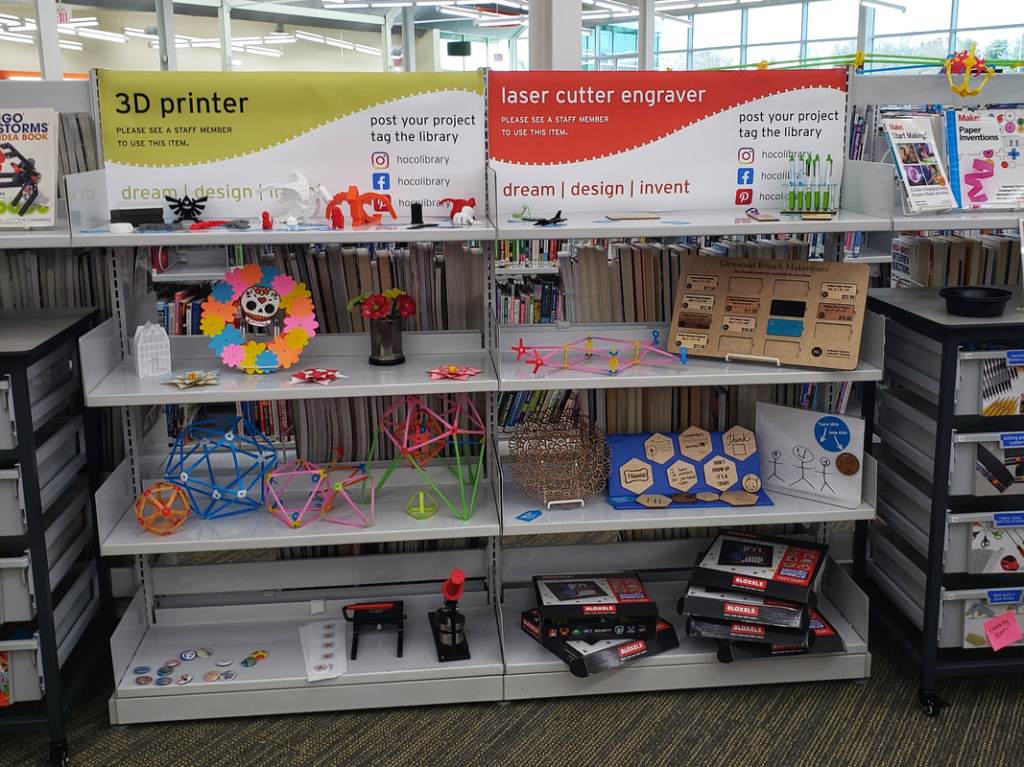
Signs advertising a 3D printer and laser cutter engraver, with examples of projects created by them on the shelves beneath, including keepsake ornaments and 3D printed flowers.
Creations from the Makerspace at HCLS Glenwood Branch.

The Makerspace at Glenwood is a one-stop shop for all things design. With tinker bins, there’s opportunity for crafting and inventing in all sorts of innovative ways. The 3D printer is a professional grade machine and with a Glowforge, Cricut, large-format printer, a digital memory station, and a recording booth, there’s plenty to explore. The Makerspace area serves people ages eight and up, but for younger folks, the Builder’s Barn is a great place to bring designs into life. While some of the Makerspace products have associated costs for materials, you can design from start to finish. You can take Makerspace classes at Glenwood Branch. If you don’t have time to make your project, though, the Maker-To-Order system allows for HCLS staff to print or cut your fully designed files.

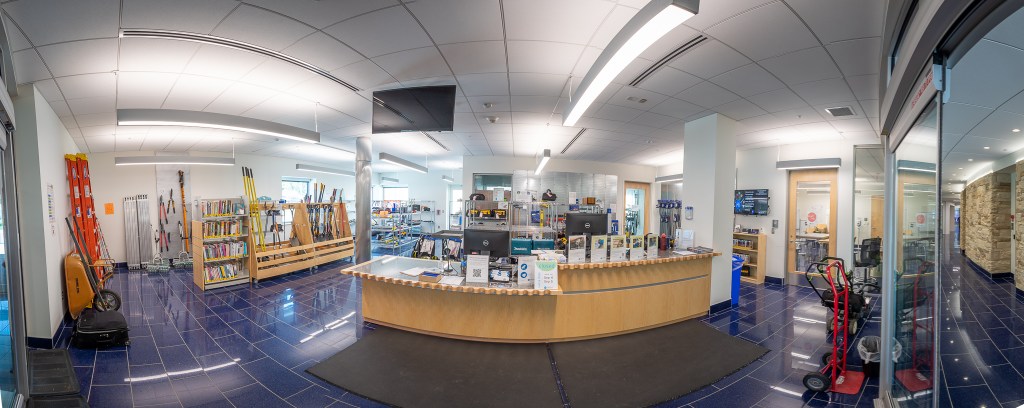
The photograph centers the customer service desk at the Elkridge branch's makerspace, with a wheelbarrow, ladders, and an array of books and tools to the left and behind, and a dolly and other equipment to the right.
The DIY Education Center at HCLS Elkridge Branch.

The DIY Education Center boasts a vast collection of tools for all ages, ranging from baking, biking, camping, crafts, gardening, or home improvement. The instructors are always excited to help those interested in engaging with the available tools at DIY classes held at Elkridge. The DIY Education Center even has a studio, a “mess-friendly” classroom, and a workspace. To borrow from the DIY collection, you must have a DIY library card, available to those 21 and older, who live, work, or attend school in Maryland.

Library customers stand outside a recording booth, which contains a microphone and a set of headphones draped over the mic stand.
Recording booth in the A/V Lab at HCLS Savage Branch.

The A/V Lab at Savage Branch also boasts a recording booth and 3D printer. During regular A/V Lab hours, a staff member can answer basic questions about the computer software. You can use the instruments in place, and as always, classes cans help familiarize you with each tool. Schedule a one-on-one appointment at the Savage Branch & STEM Education Center page on hclibrary.org.
If you want to find out more about how to unlock your creativity at the library this year, check out our classes, and visit us at the Makerspace, the DIY Education Center, or the A/V Lab.

Craft Works
For adults. Register here.
Let your creativity shine in a relaxed and welcoming environment. Each month, learn about different art media and explore new techniques.
Classic Book Flowers
Tue Feb 8 2-3:30 pm Central Branch.

A/V Lab
For teens and adults. Registration preferred here.
Drop-in to use the equipment in the A/V Studio. Record and mix music or create and edit movies with the help of a HiTech instructor. Walk-ins welcome.
Every Wednesday 5 – 7 pm Savage Branch.

Book Earrings and Charms
For teens & adults. Register here.
Make unique jewelry inspired by your favorite books.
Tue Feb 27 7 – 8:30 pm Elkridge Branch.

Sahana is an Instructor and Research Specialist at the Savage Branch. They enjoy adding books to their “want to read” list despite having a mountain of books waiting for them already.

Ready to See the World? We Can Help!

The photograph shows a map of the world with various objects lying across it, including cameras, a passport, photographs, sunglasses, a string of light bulbs, and a coffee cup.
Photo by Charlotte Noelle on Unsplash.

by Sahana C.

The library is the home of adventure, with new unknowns to explore with every turn of a page. Visiting the library can leave you with a wealth of knowledge about a new place from every book you borrow.

But sometimes, reading about another far-off place or watching a movie set in a distant land isn’t enough. Sometimes, you’re looking for a more immersive experience, and your imagination just isn’t cutting it – it’s time for the real deal. Planning trips can be exhausting, though, and finding where and how to start can be the hardest part. Let us help plan your trip! Between travel guides, our passport centers, and ways to brush up on your language skills, the library can get you ready for your next big adventure. You’ve dreamed about it, book in hand, so let us help you get there.

Wander down the travel aisle at any of our six branches, and starting with the 914s, you’ll find inspiration for all sorts of far-off places to begin your journey, whether that be on the other side of the world, or just on the other side of the country. Once you’ve discovered your destination and decided it’s time to go, our Passport Centers in HCLS East Columbia and Glenwood Branches will accept your passport application and help you through the whole process.

In the meantime, while your passport is processed, use our language resources, Mango and Rosetta Stone Online for the adults in the family, as well as Little Pim and Muzzy Online for our younger friends! Practice your newfound language skills in the community at East Columbia and Miller Branches at our monthly World Language Cafés, working with native language speakers and other language learners.

To avoid missing us while you’re gone, make sure to pick up a Flat Booker from your closest branch too, and take pictures to show us once you return, so we can share in the adventure too.

Practice Before You Go with World Languages Café
For adults.
Meet to practice a world language with fellow community members, facilitated by a native or fluent speaker of that language. Please indicate in the registration comments field the language you would like to practice. In partnership with Columbia Association.
At East Columbia: register here.
Tuesday, Nov 28
7 – 8:45 pm

At Miller: register here.
Thursday, Dec 14
7 – 8:45 pm

Sahana is an Instructor and Research Specialist at the Savage Branch. They enjoy adding books to their “want to read” list despite having a mountain of books waiting for them already.