This book defies genre. Is it a sly satire or a hard-hitting social commentary? Is it a sharp page-turning thriller or contemporary literature at its best? A witty and playful debut or a manual for code-switching? I could not slot it into just one category. It is the book you will be discussing with your friends and neighbors. Right, Linda?
Zakiyah Dalila Harris’s novel debuted as a Most Anticipated Book of 2021 by Time, TheWashington Post, Harper’s Bazaar, Entertainment Weekly, Marie Claire, Bustle, BuzzFeed, Parade, Goodreads, Fortune, and the BBC. Deservedly so. The Other Black Girl is an electric debut about the tension that unfurls when two young Black women meet against the starkly white backdrop of New York City book publishing.
Written with wit and incisive humor, this book delves into the modern corporate atmosphere with its microaggressions, isolation, and manipulations. Working at Wagner Books as the only black editorial assistant, Nella Rogers is very excited when one morning, she looks through a small crack in a cubicle and sees what she calls “the flash of a brown hand.” Enter Hazel-May McCall. Nella finds a confidante in Hazel and someone who finally gets it. But it doesn’t take long for Nella to realize there’s something off about Hazel, even if she can’t quite put her finger on it. And then, shortly after Hazel’s arrival, the first anonymous note arrives on Nella’s desk: “Leave Wagner Now.” Hazel? And if not Hazel, then who? Nella begins searching for answers—and in the process, finds herself at the center of a dangerous conspiracy that runs far deeper than she ever could have known
I thoroughly enjoyed Zakiyah’s sparkling style of writing and her ability to paint office dynamics in nuanced shades of privilege and discrimination, while juggling an un-put-down-able mystery: a mystery that leaves your insides twisted at the end. In her review in The Washington Post, Naomi Jackson says, “One of the pleasures of “The Other Black Girl” is its unapologetic appeal to Black female readers. From references to 90s Black culture to ample servings of hair-related angst, conversations and plot points, Black girls will appreciate how their experiences, perspectives and quirks are centered in this novel.”
We are excited to host Zakiyah on June 23 at 7 pm. Listen to Zakiyah Harris and bring your questions. Register here.
Rohini is the Adult Curriculum Specialist with HCLS. She loves literature and rainy days.
Dance is an ancient and celebrated cultural tradition in India and its origins go back into the ancient times. There are eight schools of classical Indian dance, each of which can be traced to different parts of the country. Register to join us on Wednesday, June 16 at 7 pm to learn more about these dance forms from Jaya Mathur.
During an enlightening and entertaining evening of virtual Indian Classical Dance class, Jaya Mathur, of ‘Rock on with Bollywood’ fame, will share an overview of the history of two famous dance forms from India – Kathak and Bharatnatyam, as well as her personal journey of continuing these traditional dance forms as a first-generation American. She will demonstrate some mudras: the portrayal of mood through facial expression and hand gestures, and the audience will have the opportunity to experience dance performances through videos.
According to kathadance.org, the Kathak form of Indian classical dance originated in Hindu temples in the northern part of India to aid in worshipful storytelling, portraying the epic tales of Ramayana and Mahabharata (the two grand Indian epics). However, this particular dance form was not confined within the walls of temples for long. Nomadic Kathak dancers and storytellers took this dance and traveled throughout the nation with added emotions and theatricality, and it soon transitioned to a means of storytelling and entertainment. Over time, Kathak became an integral part of court culture under the patronage of Mughal kings and, as a result, this dance form imbued within itself influences of both Hindu and Islamic traditions.
Bharatnatyam, according to nrutyashala.com, was performed in the temples of southern India by devadasis, or dancers dedicated to God. The devadasis were women who were trained in this dance form since childhood, and they dedicated their lives to performing in front of idols in temples. They were educated in Sanskrit and were trained to perform as well as choreograph Bharatnatyam, accompanied by singers and musicians. Over the years, Bharatnatyam also underwent changes as devadasis lost their status in society and rajnartakis (or court dancers), under the patronage of Hindu kings in southern kingdoms in India, continued this form of dance in courts to entertain kings and royalty.
Bharatnatyam and Kathak remain two very popular forms of Indian classical dancing to this day in India and are practiced by Indians all over the world. Jaya has performed at many different venues, including the Kennedy Center for the Performing Arts and Wolf Trap National Park for the Performing Arts. Locally, she has choreographed with the Kinetics Dance Theater.
Piyali is an instructor and research specialist at the Miller Branch of HCLS, where she co-facilitates both Global Reads and Strictly Historical Fiction.
I used to be young and naïve and I didn’t appreciate flowers, or maybe didn’t realize I appreciated them. Deep down, I was probably always the sort of person that would admire beauty around. That said, I’d implore you to get some flowers, plants, vegetation in your life.
After renovating two entire houses I have come to appreciate the beauty of living space, indoor and outdoor. How one’s surroundings engender certain feelings. My surroundings make me feel comfortable and then calm. I recall the first place that my significant other and I shared, and changed. I felt more comfortable there than I had before.
I’ll be honest, I used to think that flowers, gardens, and more generally my surroundings at home were sort of a bourgeois waste of time. Why would I spend work attending to these sorts of things, when I could read, hang out with friends, chat, drink at bars, or so many other exciting things? However, my mind has changed with innumerable carpentry projects accomplished, many, many holes dug, trees planted, landscape projects complete, planters made, and a stacked stone wall, literally built from two tons of rough stone (my least favorite project, ever).
Having trees, flowers, and plants around does indeed make me calm. (There is science to support this). So let’s take it even further: imagine if you’ve selected the plants, then planted them yourself, and watched them grow and or blossom. How about even further: what if you’d made the planter, planter box, or raised bed that holds your plants? While it may not change your life, I think you may feel happy and proud. I do, so why not try it?
Building planters, window boxes, and raised garden beds are all relatively easy DIY carpentry projects. I’ve done these all with groups in person at the HCLS Elkridge Branch DIY Education Center. I don’t mean to oversimplify this, but you’re essentially making a box, one that you spruce up however you like. For example, add some architectural detail, paint it, hand-paint a design, stain it, make it rustic, use pallet lumber. There are myriad possibilities! It is a great way to practice and learn all sorts of carpentry skills. This endeavor is made even easier because you can borrow everything you need from HCLS.
Please watch the video, and try it out. And it looks as though we’ll be able to do this in person soon at the Elkridge branch!
There are two men, radical in many respects, and I’m a fan of both, who would receive flowers from fans. I can’t say I thought it was odd, but realize that some may consider it “feminine” for a man to receive flowers. It seems strange that flowers are associated with gender at all; they’re beautiful, please bring them to me!
Eric is a DIY Instructor and Research Specialist at HCLS Elkridge Branch. He enjoys reading, films, music, doing nearly anything outside, and people.
“Monumental. . . . Lee handles her scholarly materials with grace, never overwhelming the reader with too many facts or incidents. She tells an American story familiar to anyone who has read Walt Whitman, seeking to capture America in all its diversity and difference, while at the same time pleading for America to realize its democratic potential. . . . Powerful Asian American stories . . . are inspiring, and Lee herself does them justice in a book that is long overdue.” ― LA Times
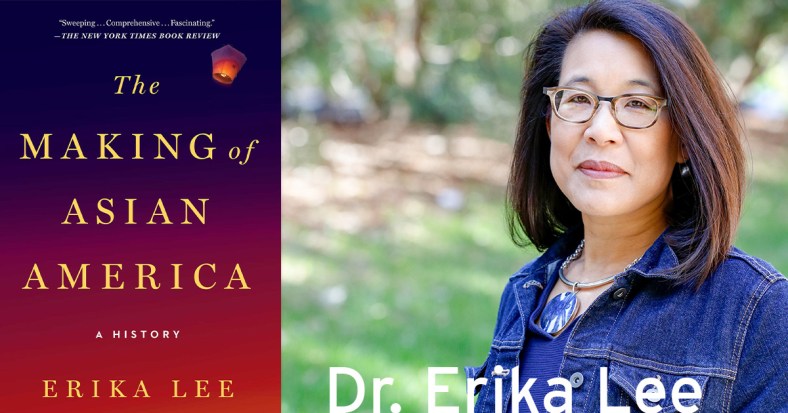
On Wednesday, May 26 at 7 pm, Dr. Erika Lee discusses her acclaimed book The Making of Asian-America. In the past fifty years, Asian Americans have helped change the face of America and are now the fastest-growing group in the United States. As award-winning historian Erika Lee also reminds us, Asian Americans also have deep roots in the country. The Making of Asian America tells the little-known history of Asian Americans and their role in American life, from their first arrival to the present-day.
An epic history of global journeys and new beginnings, this book shows how generations of Asian immigrants and their American-born descendants have made and remade Asian American life in the United States: sailors who came on the first trans-Pacific ships in the 1500s; indentured “coolies” who worked alongside African slaves in the Caribbean; and Chinese, Japanese, Filipino, Korean, and South Asian immigrants who were recruited to work in the United States only to face massive racial discrimination, Asian exclusion laws, and, for Japanese Americans, incarceration during World War II. During the past fifty years, a new Asian America has emerged out of community activism and the arrival of new immigrants and refugees. No longer a “despised minority,” Asian Americans are now held up as America’s “model minorities” in ways that reveal the complicated role that race still plays in the United States.
“A stunning achievement, The Making of Asian America establishes the centrality of Asians to American history, and poses alternatives to US national and immigration histories. Asians, this remarkable text reveals, transformed the face of America, and they locate the US firmly within a hemispheric and global order.” ― Gary Y. Okihiro, Professor of International and Public Affairs, Columbia University
ABOUT DR. ERIKA LEE One of the nation’s leading immigration and Asian American historians, Erika Lee teaches American history at the University of Minnesota, where she is a Regents Professor, a Distinguished McKnight University Professor, the Rudolph J. Vecoli Chair in Immigration History, and the Director of the Immigration History Research Center. The granddaughter of Chinese immigrants, Lee grew up in the San Francisco Bay Area, attended Tufts University, and received her Ph.D. from the University of California, Berkeley. She was recently elected into the American Academy of Arts & Sciences, testified before Congress during its historic hearings on discrimination and violence against Asian Americans, was awarded an Andrew Carnegie Fellowship, and named Vice President of the Organization of American Historians.
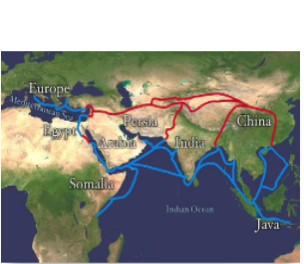
Formally established during the Han Dynasty of China, the Silk Road was a vast network of trade routes that was the lifeline of commerce from 130 BCE – 1453 CE. Many different branches comprised this road connecting China, India, and Persia, with Persia being a gateway further into Europe. The main route of the Silk Road was established much before the Han dynasty; known as the Persian Royal Road during the Achaemenid Empire, it connected north Persia (modern-day Iran) to Asia Minor (modern-day Turkey). The Persian Road was maintained with a system of postal stations and gradually expanded into the Indian sub-continent across Mesopotamia and into Egypt.
Howard County Library System and the Walters Art Museum present a fascinating class that looks at works from the Walters Art Museum that illuminate the expansive story of the Silk Road.
The term “Silk Road” wasn’t coined until 1877, when German geographer and historian Ferdinand von Richthofen first used it to describe the trade routes. Historians now prefer the term “Silk Routes,” which more accurately reflects the fact that there was more than one thoroughfare.
Many different goods including gunpowder, precious stones, and ivory were traded along this route; however, it was the exotic silk that gave its name to this road. Many of the goods traded across this route had a great impact on the cultural development of the world. Paper and gunpowder, both developed in China, and the rich spices from India contributed to both European culture and warfare. Similarly, techniques for making glass migrated eastward to China from the Islamic world. However, silk continued to be the most sought-after and expensive commodity, especially in Rome. The Byzantine emperor Justinian (327-565 CE) sent emissaries to steal the closely guarded secret of silk and bring it back to initiate the Byzantine silk industry. In 1453 CE, the Byzantine Empire fell to the Ottoman Empire which closed the Silk Road and cut ties with the west.
The legacy of the Silk Road is the impact on art, religion, technology, science, and language that fostered a growth and enrichment of world civilization. Unfortunately, disease also traveled along and the bubonic plague of 542 CE was thought to have spread to Constantinople via the Silk Road. Famous Italian explorer Marco Polo traveled overland on the Silk Road to the Mongol Empire ruled by Kublai Khan in 1275 and wrote the epic The Travels of Marco Polo (also available as an eBook from Libby/OverDrive).
The closing of the Silk Road in 1453 forced traders to explore sea routes and discover new ports. This was the beginning of the Age of Discovery which led to a new era with the rise of seafaring nations. Join us for the class with a docent from The Walters Art Museum to learn more.
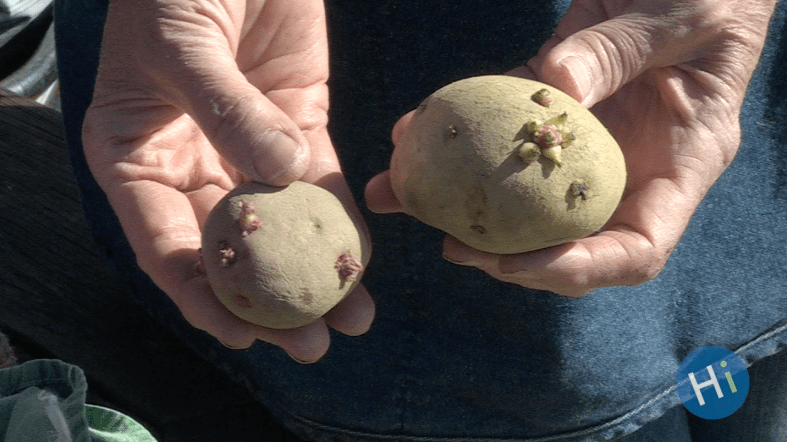
Enchanted Garden Coordinator Ann holds two seed potatoes.
By Ann H.
Three cheers for the arrival of spring! I am ready to embrace a new season full of hope and fresh, local vegetables. Cool nights, sunshiny days, and plenty of rain signal the right time to plant cool-season crops. First on my list this year are potatoes!
Potatoes are a great family garden project. They come in an assortment of colors, they are easy to grow and as much fun as a treasure hunt to harvest. Sunshine and timing are the first considerations for growing potatoes. You must have a spot that receives six or more hours of sunshine a day. Potatoes should be started from now until early May. Don’t delay! You’ll have little success once the temperatures rise in summer.
Growing potatoes in a container is a good solution for those of us who want to grow food, but are short on space or new to gardening. Containers could be 5 gallon or larger buckets, grow bags, or a large fabric or strong plastic bag that drains. The larger the container the more potatoes you’ll grow. This year I’m experimenting with growing potatoes in a burlap sack. Our friends at Orinoco Coffee Roasters donated some burlap coffee sacks to the Enchanted Garden. They are selling burlap sacks to raise money for the Howard County Food Bank.
Potato plants start with seed potatoes. Seed potatoes are really tubers with eyes or buds. Those buds are the start of new potato plants. Give them soil, water, and the right conditions and you’ll be harvesting potatoes in three to four months. You can purchase seed potatoes locally where you would buy seeds, or you can order them online. Don’t be tempted to try grocery store variety potatoes. Most of those have been inoculated to prevent root growth. You might see eyes on grocery store potatoes, but rarely roots.
Potatoes are filled with antioxidants, fiber, and vitamins. You can prepare them mashed, roasted, fried, or in other creative ways. You can add them to salads, top them with almost anything for a main course, or turn them into latkes. Potatoes store well and feed many. Don’t you want to grow potatoes? To try this project at home, check out my video tutorial that explains all the steps.
Ann joined the Miller HCLS staff as the Enchanted Garden Coordinator and Instructor in 2012. When not gardening you’ll find her reading, cooking, and exploring trails in the Patapsco River Valley with her husband and dog.
C.S. Lewis once said that we read to know we are not alone, which is why many of us look to literature as a source of comfort. Years ago at the library, Angie helped a teen find young adult novels on coming out. The teen quietly said thank you, and afterwards, Angie could not help but notice that she went over to a woman whom she called “mom.” As she showed her the books, the woman hugged her and told her it was going to be okay.
One of the most rewarding opportunities while working in a library is being able to connect customers with reading materials that can make a profound impact in their lives. This holds especially true when dealing with potentially sensitive subject matter such as LGBTQ+ issues, which often come with fear of judgment. In Teri Gross’sAll I Did Was Ask: Conversations with Writers, Actors, Musicians, and Artists, she interviews Ann Bannon, one of the first writers of lesbian pulp fiction. In answer to Gross’s question about what it was like to be gay in the 1950s or to write lesbian fiction, Bannon responds:
The big thing was ‘Thank God, I’m not the only one.’ That’s how isolated people were then. But also that it’s okay to open up a little bit. It can be healthy. It can be a warm, generous, wonderful way to spend your life. It is scary to walk up to a drugstore counter with your arms full of lesbian paperbacks and survive the stare from the clerk, pull yourself together, buy them, and walk out with your head held high.
Having your voice heard and knowing there are others out there, both through the books you read and the people you meet and sometimes befriend, can go a long, long way to helping you survive in a world not always friendly to LGBTQ+ people. No matter your age, your background, your outness or your in-ness, you can find comfort in the universality of knowing “you’re not the only one.” That is one reason, among many, it can be so good to find a sense of community.
Howard County Library System’s new LGBTQ+ book club, Reads of Acceptance, holds its first meeting on Monday, April 19 at 7 pm. This monthly book club aims at fostering social support, personal growth, and intergenerational learning for LGBTQ+ adults and our allies. Reads of Acceptance will encourage education, reflection, and respect for LGBTQ+ identities by hosting group discussions that connect literature with our lived experiences.
At Reads of Acceptance’s first meeting, we will discuss the Pulitzer Prize-winning Less by Andrew Sean Greer (also available in eBook and eAudiobook format). Funny yet also sad, the novel follows writer Arthur Less while he travels the world on a literary tour to try and get over the loss of the man he loves. Turning 50, Less finds himself struggling with life, including his career as a writer not going where he had hoped it would. Even so, he could handle being a bad writer, but being considered “a bad gay”?
That is so much harder to grapple with. It also speaks to a constant fear for queer people: that your community will reject you on top of everything else. (Source: https://ew.com/books/2018/07/24/less-summer-breakout-essay/) Greer’s writing speaks to an experience so many of us, queer or not, can relate to in a way that says, “Yes, I have been there.”
Relating to media in a manner that resonates with and reassures one’s identity is part of what makes seeing ourselves reflected in art and literature so affirming and powerful. Being able to relate to real-life people can be even more so. Both older and younger people in the LGBTQ+ community have often suffered in silence or experienced ostracism, looking for safe outlets to share their feelings, thoughts, and what they have been through. Reads of Acceptance can be one of those safe outlets. We hope to see you there! Register here.
For a special preview of Reads of Acceptance and an opportunity to meet Ash and Angie, join Book Corner on Friday April 16th @ 11am. Register here.
Angie is an Instructor & Research Specialistat the Central Branch of HCLS.
Ash is an Online Instructor & Research Specialist, also at Central Branch. Their favorite reads often involve magic, nature, queer and trans joy, coming of age, cultural traditions, romance, and cute illustrations.
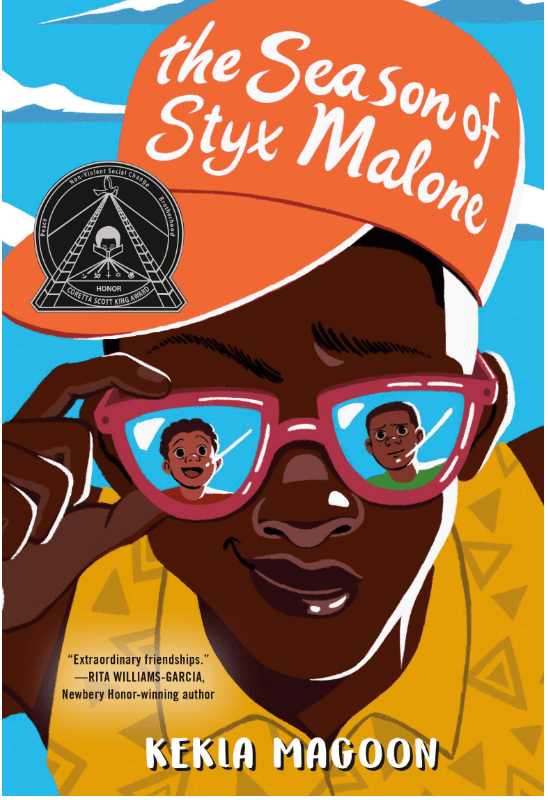
The Season of Styx Malone tells the funny, poignant story about one amazing summer in small-town Indiana, when Caleb and Bobby Gene make friends with the slightly older, way cooler Styx Malone. Let’s be clear: Styx Malone is definitely too cool for school! He knows things… like about elevator trading, where you can essentially make something out of nothing. These boys are going to make a bag of fireworks (obtained by temporarily trading their baby sister) into a green moped. All these brothers want is to see the big city of Indianapolis, but their (maybe overly) protective father wants them to stay close to home in Sutton. The desire for adventure wars against the need for safety throughout the family’s interactions.
The boys follow foster child Styx into one “interesting” choice after another, hoping to achieve their dream of having independent mobility via the green moped, affectionately nicknamed Grasshopper. When things take a turn for the worse, everyone has to reconsider what a happy ending will look like. As Caleb and Bobby Gene lobby for adopting Styx, it turns out that adults can sometimes make good things happen. It’s a delightful book full of good humor from the point of view of three bored friends longing for more from summer than watering holes and doing chores (Mom was not happy about the baby sister trading).
She has received the Margaret A. Edwards Award, the Boston Globe-Horn Book Award, the John Steptoe New Talent Award, three Coretta Scott King Honors, the Walter Award Honor, an NAACP Image Award, and been longlisted for the National Book Award.
Kekla conducts school and library visits nationwide and serves on the Writers’ Council for the National Writing Project. She holds a B.A. from Northwestern University and an M.F.A. in Writing from Vermont College of Fine Arts, where she now serves as faculty. Visit her online at keklamagoon.com.
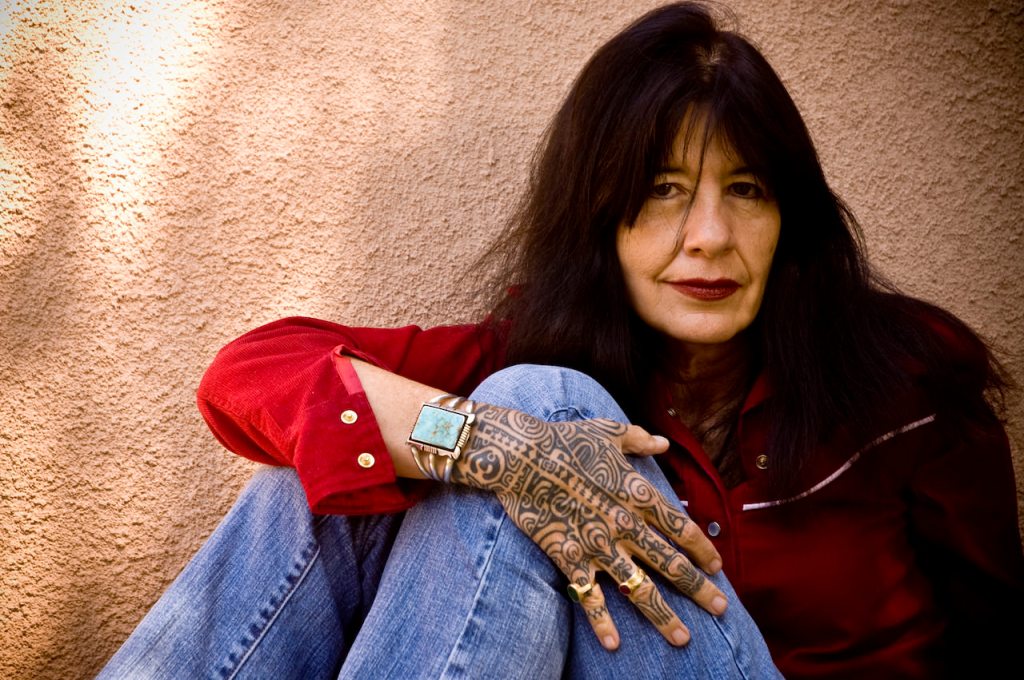
Photograph of poet laureate Joy Harjo by Paul Abdoo
by Susan Thornton Hobby and Rohini Gupta
Have lunch with the poets during National Poetry Month.
“I don’t write out of what I know; I write out of what I wonder. I think most artists create art in order to explore, not to give the answers. Poetry and art are not about answers to me: they are about questions.” — Lucille Clifton
Lots of people think they need to know what a poem means. Sometimes professors and experts dissect a poem so much that a poem dies before we allow it to live. But what if a poem was written not to answer questions, but to ask them?
Lucille Clifton, a National Book Award-winning poet, wrote from her home office in a townhouse in Columbia for decades until her death in 2010. And she never stopped asking questions with her poetry.
Sometimes, when we talk about poetry, people’s eyes glaze over. Occasionally (or more often) poetry just seems impenetrable. But it doesn’t have to be. Clifton’s poetry is accessible, understood at a first reading, with meaning that grows deeper with a second or third reading, prompting those questions that bring readers to her poetry over and over again.
Once we’ve hooked you with Clifton’s work, we have plenty of other ideas of where to start with poetry. Perhaps with Amanda Gorman’s performances at President Joe Biden’s inauguration and at the Super Bowl, more people are intrigued about poetry, but don’t really know where to go for good poetry beyond inspirational quotes on Instagram. We’ve got your poetry questions covered.
Soon after the Howard County Library’s Central Branch opened in 1981, Clifton read her poetry with three other amazing poets, William Stafford, Roland Flint, and current Maryland Poet Laureate Grace Cavalieri. HoCoPoLitSo (Howard County Poetry and Literature Society) brought those poets and library customers together forty years ago, and we’re still collaborating today. Across those decades, we have together sponsored movies about Gwendolyn Brooks and Seamus Heaney, organized readings by poets such as Josephine Jacobsen and Stanley Kunitz, judged student poetry contests, and even staged a play about poet Emily Dickinson, “The Belle of Amherst.”
Since National Library Week (April 4-10) coincides with National Poetry Month in April, HoCoPoLitSo and Howard County Library System thought it would be the perfect time to launch a new program. Every Tuesday in April, HoCoPoLitSo and the library collaborate to bring you a lunchtime buffet of poetry, virtually.
Join HoCoPoLitSo and Howard County Library System for their newest program, a lunch break of poetry every Tuesday in April. At Noon: Poetry Moments. Register here.
When the pandemic closed everyone’s doors, HoCoPoLitSo created a new video series, both to reach out to people at home who were hungry for the arts, and to amplify the voices of Black poets who have visited HoCoPoLitSo audiences since 1974. With the help of Howard Community College’s Arts Collective, and director Sue Kramer, we produced the Poetry Moment series. Local actors Chania Hudson, Shawn Sebastian Naar, and Sarah Luckadoo offer introductions, then famous poets like Clifton and Kunitz and Heaney and Brooks read their work, with selections extracted from archival video. Ellen Conroy Kennedy, the late founding director and heart and soul of HoCoPoLitSo, started this archive in 1986 when she began documenting the poetry and literature programs she was producing. The Writing Life resulted, with more than 100 full interviews with authors carried on HoCoPoLitSo’s YouTube page.
In April, every Tuesday at noon, we’ll gather virtually to talk poetry. We’ve grouped the poems by theme for each week, and will talk a little about poetry, then watch the videos together and discuss.
Here’s our poetry hit parade:
April 6: We’ll talk about grief, something many people are dealing with this year. Poems we’ll be discussing include “Elegy” by Linda Pastan, “My Deepest Condiments” by Taylor Mali, and “The Long Boat” by Stanley Kunitz.
April 13: History is this week’s theme, and we’ll talk about Sterling Allen Brown’s “Southern Road,” read by poet Toi Derricotte, “In the Tradition” by Amiri Baraka, and “Requiem” by Anna Akhmatova, read by poet Carolyn Forché.
April 20: Many contemporary poets turn to their families as sources for poetry. The poems we’ll read this week are “good times” by Lucille Clifton, “The Pomegranate” by Eavan Boland, and “A Final Thing” by Li-Young Lee.
April 27: Our last week is centered on pep talks in poetry, verse to lift us up and give us strength. We’ll discuss “The Solstice” by W. S. Merwin, “For Every One” by Jason Reynolds, and “I Give You Back” by Joy Harjo.
HoCoPoLitSo and the HCLS are happy to collaborate in bringing poetry to all who ask questions, to any who believe, like we do, that words can change the world.
If we hook you on poetry, consider tuning in to the April 29 Blackbird Poetry Festival, featuring Ilya Kaminsky and sponsored by Howard Community College and HoCoPoLitSo.
Susan Thornton Hobby is a proud library volunteer and HoCoPoLitSo board member and consultant, and with the library’s support, she coordinated this April poetry feast. Rohini Gupta is the Adult Curriculum Specialist with HCLS.
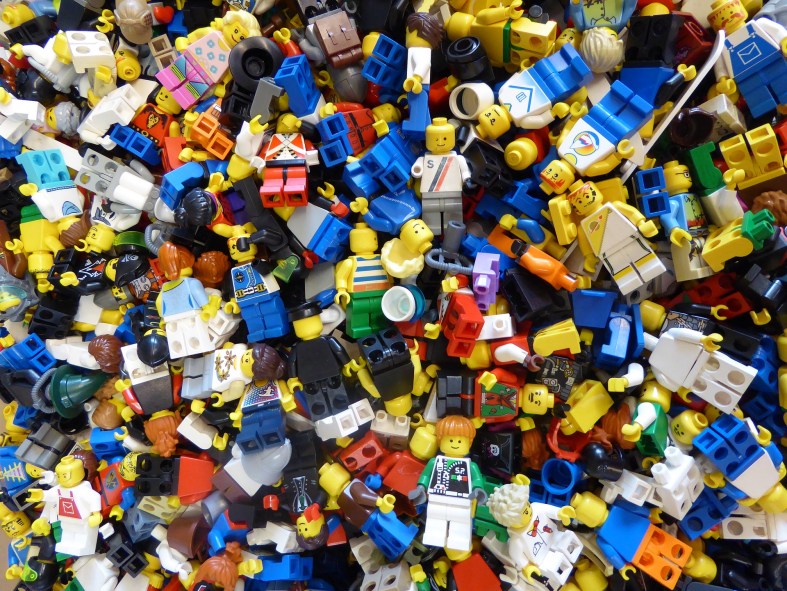
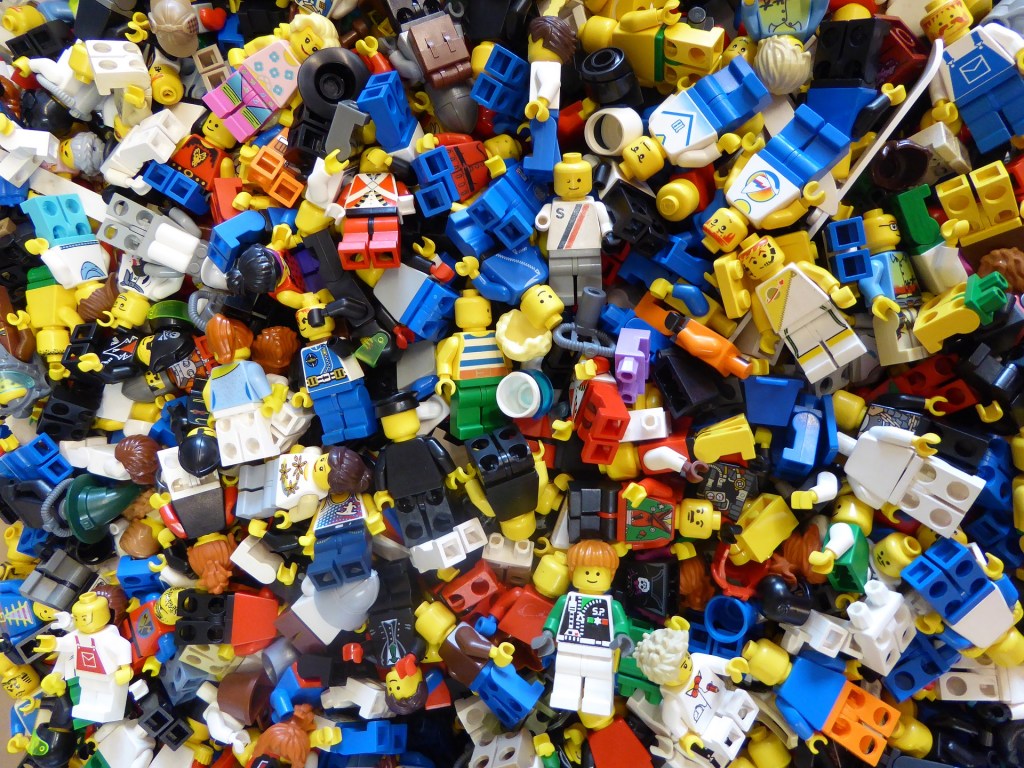
Did you know that there are more than 100 LEGO pieces per person on the planet? The word Lego comes from an abbreviation of the Danish words leg and godt, which mean play well. Lego was founded in 1932, and since then their “play well” philosophy continues to inspire citizens the world over. This universal building block connects generations and bridges language barriers – anyone can build Lego. Here are just a few resources from HCLS to inspire Lego fans of all ages – whether you’re an AFOL (adult fan of Lego), TFOL (teen fan of Lego), or KFOL (kid fan of Lego), here are some finds to get you in the mood to build!
A Lego Brickumentary is a fun and fact-filled foray into the fandom that is Lego. In a documentary that the whole family can watch together, animated Lego scenes are interspersed with interviews and awe-inspiring Lego builds. It explores the history and evolution of the world’s second biggest toy company and how it has become a catalyst for innovation. I was inspired through the artists, master builders, designers, architects, and therapists that have utilized this simple building brick to transform ideas and imagination into reality. This film runs 1 hour and 35 minutes, is rated G, and is available on DVD from HCLS.
Beautiful Lego is a full color portfolio of Lego artworks from 77 different contributors and a compendium of so many fantastical designs – from minimalism to monsters. This gorgeous book boasts more than 200 pages of inspiration. I loved the incredibly detailed model of an imaginary extraterrestrial city – the same one featured on the cover art. The book features unusual usage of different types of bricks in creating textures, expressions, and models of everyday objects. For fans of art, fans of Lego, and fans of both.
100 Ways to Rebuild the World is a children’s book full of ideas of how to encourage kindness, positivity, community, and responsibility. It features fun bright Lego illustrations and issues challenges to inspire kids to care about themselves, others, and the planet. My favorite challenges were “Start a chain of creativity” and “Step into their shoes.” It is a great resource for parents who are looking for ways to help their children connect with the community and the world around them.
A collage of the creative work of participants in the Lego Engineering Challenge class.
Lego Engineering Challenge is a biweekly prerecorded class produced by Ms. Julie. She issues four unique challenges in every class – encouraging children in grades K-8 to use their imagination and problem solving skills to complete fun tasks. After each session, Ms Julie compiles participants’ submissions and shares them to encourage budding engineers and artists. Pictured are just a few submissions from past classes. It is always fun to see so many creative solutions to the same challenge. Find the next class by clicking here, then register to receive a link to the next session.
Brick by Brick: How Lego Rewrote the Rules of Innovation and Conquered the Global Toy Industry is an eAudiobook available on Cloud Library. It explores the business management and innovation practices of the Lego Group through anecdotes and case studies. This book was written to be an inspiration for business owners as a model of how innovation practices evolved at the Lego Group, and how the company used their 2003 brush with bankruptcy to realign, reconnect, and reemerge as a leader in the toy industry.
Inspired to create your own Lego masterpieces? Share them with the world through the Lego Ideas website. This is one of the Lego Group’s most successful innovations. A crowd-sourced idea generator, it began in 2008 as Lego Cuusoo (Cuusoo means “imagination” or “wish” in Japanese, and it still available as an archive here). On the Lego Ideas website, you can submit your own proposals for new Lego sets, vote on global submissions, and participate in activities and contests with other Lego lovers.
Kimberly J is a DIY Instructor and Research Specialist at the HCLS Elkridge Branch. She enjoys reading, photography, creating, crafting, and baking.













 CHAPTER CHATS