Hispanic Heritage #OwnVoices

By Carolina W. and Gabriela P.

Tomorrow marks the final day of Hispanic Heritage Month, and in culmination and in the spirit of #OwnVoices, HCLS presents two book reviews written by Latina staff members about Hispanic authors. Read to the end to find out about classes this week in celebration of Hispanic Heritage!

By Gabriela P.

The House of Broken Angels by Luis Alberto Urrea sweeps the reader away with the timeless intimacy of a family chronicle. Absolutely stunning prose brings irresistible characters to life as they move through physical borders, family relationships, and personal struggles. The novel presents a Mexican-American family recounting their family’s history with bittersweet humor. The predictable immigration tale set-up is given a fresh makeover with the uninhibited and blunt depiction of a complicated reality.

Urrea doesn’t shy away from presenting a raw clumsiness in the characters’ interactions. Their emotions came across so authentically that I often felt myself getting goosebumps while reading! I was happy to discover that the theme that struck me the most was completely unexpected. Others who have reviewed the book frequently comment on the hierarchy, since a lot of the narrative revolves around “Big Angel”, the patriarch of the family. But I found that it was, in fact, the women of the family who drove the story. Though easily missed in favor of the more dramatic plot points, as the family’s history is recounted, the women’s strength and resiliency is cemented. Without giving the ending away, I can say that I was delighted to see women in roles usually reserved for men, and even more so that their strength was recognized.

I can find parallels to my own family’s history in the novel, and I definitely found myself identifying with one of the characters…but I won’t say which one!

The House of Broken Angels is also available as an ebook and eaudiobook through OverDrive/Libby.

Gabriela is a customer service specialist at the Miller Branch. She loves long walks, reading with her dog, and a good cup of coffee.

By Carolina W.

In Like Water for Chocolate by Laura Esquivel, Tita De La Garza, the youngest daughter in a family living in Mexico at the turn of the twentieth century, is born in her kitchen, establishing her connection to cooking. Pedro Muzquiz asks for Tita’s hand in marriage but Mama Elena, Tita’s tyrannical mother, says Tita is forbidden to marry because of family tradition. Pedro then marries Tita’s sister, Rosaura, to be close to Tita. Gertrudis, the eldest daughter of Mama Elena, escapes the ranch after reacting mysteriously to one of Tita’s recipes. Rosaura gives birth to a son, Roberto, who is delivered by Tita, who treats him as her own. After Mama Elena arranges for Rosaura’s family to move to San Antonio, Texas, Tita is devastated when several tragedies challenge her health and sanity. The ending is hopeful, however, as John Brown, a local American doctor, patiently restores love and health to her life and helps rehabilitate her soul.

As a Latina who grew up in Texas near the Mexican border, it was natural to be drawn to read Laura Esquivel’s novel, Like Water for Chocolate. I was fascinated to find out about the Mexican culture’s family traditions, particularly because my family cherishes traditions so strongly. The main conflict in this novel is a family custom which forbids the youngest daughter from marrying so that she will be free to take care of her mother. This dilemma sincerely captured my attention as did the delicious recipes which are used to represent the characters’ feelings and situations and Tita De La Garza’s and Pedro Muzquiz’s tragic, passionate love story.

Like Water for Chocolate is also available in Spanish in our World Language collection.

Carolina is a customer service specialist at the Miller Branch. She loves Mexican food, having fun, and adventure.

HCLS offers the following three classes in recognition and celebration of Hispanic Heritage Month. Please join us (follow the links to register)!

Latinx/Hispanic Heritage Month Fall Teen Trivia! (Online)

Latinx/Hispanic Heritage Month Kahoot! Trivia on Zoom

Hispanic Heritage: A Celebration of Stories (Online)


What next? Books for Discussion @ Book Corner

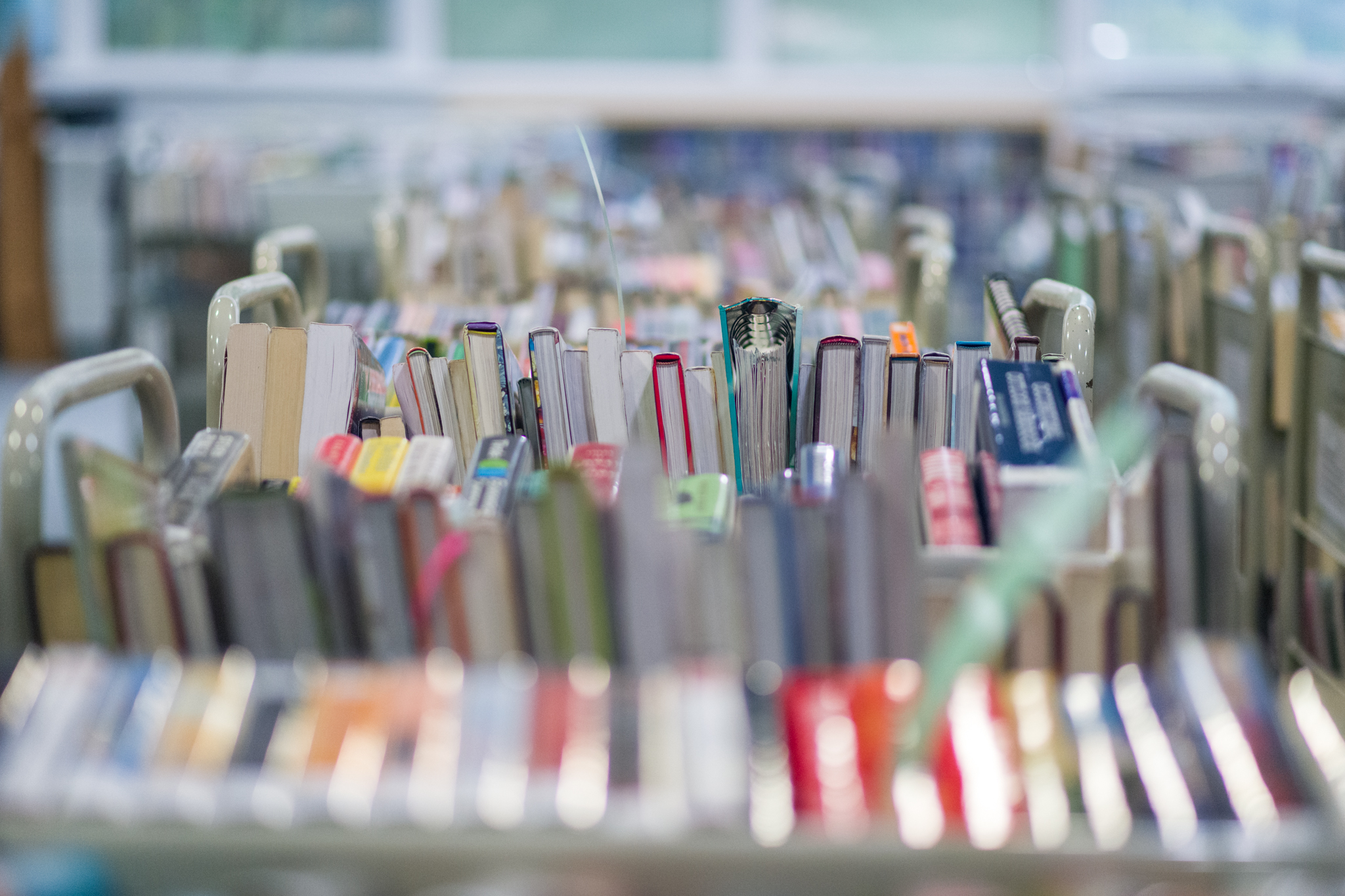
Rows of book carts fully piled with books.
Central Branch BTS

By PIyali. C.

As our doors at Howard County Library closed at the beginning of the pandemic, we understood the need of the community to stay connected virtually despite the fact that we had to stay apart physically. Many of our library sponsored book discussion groups, along with other library classes, pivoted to meet online right away. Several of our community book clubs also started meeting and discussing books online. At the start of the pandemic when the library was closed, our community book club members made use of our eBooks or eAudiobooks through Overdrive, Cloudlibrary and Hoopla for their discussions. Now, they are able to pick up books in print through the contactless pickup service.

We are lucky to be part of a community who loves to read. However, there always comes a time when members of book clubs start looking for suggestions for their next titles to discuss.

Join us on October 16 at 11 am by registering for Book Corner: Books for Discussion 2021 where some of our Adult Instructors introduce the sure-to-be-in-demand HCLS Books for Discussion 2021 list, which suggests recent adult fiction and nonfiction titles that we all want to talk about. HCLS Instructors will promote some of their favorite new “discussables.” Participants will have the opportunity to share theirs as well in our most anticipated class for book clubs or even for your own personal reads.

See you in our Corner!

Piyali is an instructor and research specialist at the Miller Branch of HCLS, where she co-facilitates both Global Reads and Strictly Historical Fiction.

Virtual Visit with Lisa See

On a sea blue background, two Korean women stand ready to dive. The title and author information interweaves with line drawings of water grass and squids.

On Tuesday, October 6 at 11 am, 2020 One Maryland One Book author Lisa See visits virtually to discuss her book The Island of Sea Women. She will be in conversation with Laura Yoo, Professor of English at Howard Community College and a board member of Howard County Poetry and Literature Society. Register to receive a link to this free event.

Spanning generations, and set against the backdrop of the Japanese occupation of Korea, the Korean War, and the broader geopolitics of the Cold War, The Island of Sea Women takes place on the island of Jeju. It focuses on haenyeo – female divers, who cooperated to create a matrifocal society. These women were the primary earners in their families, while their husbands took on more domestic roles. However, the complexity of the narrative captures the broader theme of nearly 70 years of friendship.

See writes, “No one picks a friend for us; we come together by choice,” and such was the case for Young-sook, the daughter of the chief haenyeo, and Mi-ja, an orphan whose father was a Japanese collaborator. Young-sook’s family, in spite of being wary of Mi-ja’s stained reputation, practically adopts her, and their friendship is a beautiful and rare sort. It is, “not tied together through ceremony or the responsibility to create a son; we tie ourselves together through moments. The spark when we first meet. Laughter and tears shared. Secrets packed away to be treasured, hoarded and protected. The wonder that someone can be so different from you and yet still understand your heart in a way no one else ever will.” Such deeply shared moments, secrets, and experiences define the nature of their friendship.

As the girls reach adulthood, the prospect of their respective arranged marriages begins to strain their friendship. Mi-ja looks to marry the wealthy and handsome son of a Japanese collaborator, who resides in the city, while Young-sook has an understanding with a neighbor boy, Jun-bu. Yet, their friendship further solidifies through the shared experiences of their “leaving-home water-work” in Russia’s Vladivostok and motherhood.

The looming backdrop of the Korean Crisis and the 4.3 Incident (the massacre of thousands of Koreans on April 3, 1948 in response to a communist rebellion) at the hands of the new Korean government brought into power by the United States results in crimes against humanity and atrocities being committed against the innocent. The novel’s major dilemma revolves around Young-sook’s struggle with the traumatic and rather graphic barbarity of the 4.3 Incident and her subsequent rejection of Mi-ja’s friendship. 

While the novel deals with several themes, the overarching theme of friendship intersects and interacts with some of the other themes like male hegemony in Korean society, motherhood, religion and spirituality, war, injustice and finally, loss, betrayal and forgiveness. This book has much to teach about female companionship, trust, and, more importantly, the necessity to hear a friend without judgment. 

Review by Rohini G., who is an Adult Curriculum Specialist with Howard County Library System and is a member of the selection committee for One Maryland One Book

If you wish to discuss the novel, several HCLS Book Discussion groups have chosen it for upcoming meeting. Register to receive a Zoom link.

Stories of the World on Monday, Oct 5 at 7 pm

Books on Tap on Wednesday, Oct 7 at 6 pm

The Thursday Next Book Club on Thursday, Oct 8 at 7 pm

ELK Excellent Reads on Tuesday, Nov 10 at 12:30 pm

Teens! Protect Your Bacon!

Six strips of cooked bacon on a black griddle.

By Deborah B.

“Stop! You can’t eat that bacon! It’s bad.” 

You pause and look at the stranger. “It’s bacon. Even bad bacon is good.” 

“No, I mean it’s bad for you.” And with that, the stranger whips your plate of crispy bacon off the table and tilts the contents into an oversized Hefty. You:  

  1. Apologize to the clearly well-meaning stranger and hand over the offending pork. 
  1. Shoot your hand into the bag, fish around, grab a fistful of what feels like bacon, and jam it into your mouth. 
  1. Throw your body atop the table, effectively blocking brunch, or something equally dramatic.

While there may be solid arguments against bacon as a factor in health and wellness, most people – clever teenagers especially – would agree the choice of what to eat should belong to the eater or (maybe) the parents of said eater. Thus, bacon becomes my tasty, non-vegetarian metaphor for censored materials in honor of Banned and Challenged Books Week. 

Banned and Challenged Books Week is an international celebration of the freedom to read and the right to open access of information. Libraries around the globe host events during the last week of September designed to expose and oppose the suppression of ideas, even those many consider unpopular, unorthodox, or downright yucky. HCLS contributes with The First Amendment, a news literacy class exploring the legal protections, exceptions, and precedents of that Constitutional powerhouse.  

The American Library Association launched Banned and Challenged Books Week in 1982, following the verdict in Board of Education, Island Trees Union Free School District No. 26 v. Pico by Pico. In brief, the local school board deemed certain books in their district’s collection “filthy” and removed them. A group of students took issue with this unilateral action and sued. Yes, teens sued the school district and won, albeit narrowly. The Supreme Court ruled that while governing boards had discretion over their collections, that discretion, “must be exercised in a manner that comports with the transcendent imperatives of the First Amendment.”   

So, can books and materials still be banned? Yes, but there should be a formal process, called a challenge, which requires written documentation explaining the nature of the objection. The respective board of the organization or company, be it a library, museum, or even a store, must evaluate the contested material and assess whether to retain, remove, or relocate it. Every year the ALA’s Office of Intellectual Freedom collects and publishes a list of the most challenged books. Most are titles for children and teens. 

Are you listening, teens? People want to take your bacon! How about, instead, an act of quiet rebellion? Read a Banned or Challenged book. Then join the conversation. Here a few examples that may interest you:

Drama by Raina Teglemeier has been challenged repeatedly for “LGBTQ themes. ” Other titles receive similar treatment for “sexually explicit” (Merriam-Webster’s 10th edition for the term ‘oral sex’), racisim, violence, profanity, or religious or political viewpoints. Some are simply considered “unsuited to any age group” (Captain Underpants), which is a catch-all for material considered to have no redeeming value. For the record, the ALA (and HCLS) understands that humor is a matter of opinion. However, we have a problem with stealing those laughs from others who want them. 

Brightly has a list of suggestions to get you started: https://www.readbrightly.com/15-banned-books-every-tween-teen-read/ 

Deborah B. loves certain Banned Books more than others, but is an equal opportunity consumer of pork products.  

Tackling National History Day

NHD initials above two red bars, interspaced with National History Day text

By Deborah B.

It’s not cheating! 

September is around the bend, bringing refrigerators adorned with leaf collages, stink bugs, and virtual football parties with snacks of imaginary calories. It also catapults middle and high school students into the vast expanse that is the National History Day Project, a year-long exploration of an historical topic where students analyze the topic’s immediate and long term impact and its connection to the annual theme, then create a structured presentation model showcasing their extensive research and conclusions in a national competition for grades, glory, and potential monetary awards. Piece of cake.

Parents, do not hit the liquor cabinet! We are here to help! Seriously, it is not cheating for students to get research and analysis assistance. Teachers and parents are frequently tapped, but there is a local, free, natural habitat for history and research nerds eager to help search for buried sources… Howard County Library System.

This year’s theme is Communication in History: The Key to Understanding. How do people exchange information and interact with each other? Think of the act of communicating, the motivation for the communication, the who or what the communication affects. Think of how we struggle with conveying meaning today, even without Zoom calls.

Our virtual classes such as Topic Development and Maximize Your History Day Research offer insights into these questions and others relating to the theme. In October, the NHD Thesis Workshop is a safe mosh pit for students to deconstruct, reconstruct, and beat the heck out of their arguments until they are honed enough to substitute as historical reenactment weapons. Well, maybe not that sharp. Our classes, databases, and collection resources are also not cheats. National History Day encourages students to create a reliquary of history-hunting tools.

Also, these classes are not exclusive to NHD students! We welcome parents and teachers and all teens interested in upgrading their critical thinking skills. In addition, we will host a complement of news literacy performance training. Beware aged opinions. Ideas and thinking can stagnate, even ideas originally based on empirical evidence. Have there been new discoveries? Is there new data? Healthy, critical thinking requires stimuli and exercise, and we coach students through bias obstacles and teach strategies to combat fallacies and fear of opposing viewpoints.

In the next few weeks, somewhere in the county, a child will be assigned a NHD project. There is hope! Our mission, aside from mixing as many metaphors as possible in this blog post, is to help students achieve their academic potential. A small donation of the student’s time rewards them with research guidance and alleviates a librarian suffering from an overabundance of historical minutia. So, go online or call to register for one of our fall NHD classes as soon as they open.

Remember, it’s not cheating.

Deborah B. is a triple threat nerd of books, history, and actual triplets. 

The Longest (Virtual) Table with Daryl Davis

There’s a place for you at the Longest (virtual) Table on Saturday, October 17 from 5:30 – 8 pm for some great conversation with folks in the community. We really look forward to our annual dinner date and didn’t want to cancel altogether, so for all the 2020 reasons, the event is going virtual. And, it’s FREE!

This year, we are excited to introduce a guest speaker: Daryl Davis, acclaimed jazz musician and race relations expert. Through interactions with a fan, Davis gained access – as a Black man – to meeting with Ku Klux Klan members. He eventually became the recipient of robes and hoods from Klan members who came to rescind their beliefs after getting to know him. Davis has received acclaim for his book, Klan-Destine Relationships, and his work in race relations from many respected sources, including: CNN, CNBC, Good Morning America, The Learning Channel, National Public Radio, The Washington Post, The Washington Times, and The Baltimore Sun. He is the recipient of the The American Ethical Union’s Elliott-Black Award, The Washington Ethical Society’s Bridge Builder, and the Search for Common Ground Award, among others.

After Davis talks to us about his encounters, we connect with new friends to discuss issues facing our community in small breakout rooms with no more than 10 people (probably fewer). Other elements enliven what promises to be an exciting evening. You can enter the online event at 5:30 pm to watch HCLS’ art instructor Jereme Scott’s video demonstrating drawing techniques.

Order and pick up dinner from one of our restaurant partners (place your own order directly with the restaurant) or make your own meal and join us at the table! “Secret menu suggestions” for our event:

  • Anegada Delights Caribbean Cuisine – Jerk Chicken (Spicy) w/ two sides – $12.99; side choices: rice and peas, mac and cheese, cabbage, plantains, zucchini, (jerk mac and cheese $1.99 extra)
  • Cured | 18th & 21st – Cedar Plank Salmon with bacon braised collard greens, sweet potato hash, maple glaze, crispy leeks – $27.21; large sides $8 each: paprika fries, house side salad, sweet potato fries
  • Roving Radish meal kit – Kit includes ingredients for two meals for four people – $38 ($18 subsidized); Week 26 menu options will include an Apple Cider Chicken meal and vegetarian meal. All orders must be placed before Sunday, October 4 at midnight and picked up by Wednesday, October 14. Please allow time for at-home meal preparation prior to the start of event.

Longest Table T-shirts are also on sale for $25; proceeds benefit HCLS’ commitment to diversity, inclusion, and equity.

Reserve your place at the table today!

Plastic Bags Upcycling

by Kimberly J.

many plastic bags
“Many Plastic Bags” by Keng Susumpow is licensed with CC BY 2.0.

In the United States alone, it is estimated that 100 billion plastic bags are consumed each year. I’m guessing that we all have a few extra laying around the house, saved up from the last grocery trip, or hiding in a cupboard or box. Why not try upcycling them? Upcycling is the process of turning trash into treasure. These DIY projects and ideas help to reduce waste by reusing items that are destined for the landfill and transforming them into something new, useful, or beautiful. Two instructors from Howard County Library System have filmed classes for ideas on how to upcycle plastic bags into something useful. They are available on HCLS’s YouTube channel, which is full of On-Demand classes.

In the first video, the Central Branch’s Tamarah Nuttle gives a step-by-step tutorial on how to make plarn. Plarn is a heavy duty plastic yarn that can be created with all types of plastic bags. She demonstrates two methods for transforming them using scissors – creating loops and knotting them together, or making a continuous strip with the bag. The plarn can then be knitted or crocheted for endless practical purposes. Some ideas include rolled mats for the homeless or a sit-upon for camping or outdoor activities. If you’ve got experience with knitting or crocheting, you should check out Tamarah’s plarn tutorial here:

Upcycling Plastic Bags – Making Plarn

Not a knitter? No worries! Another video has been produced by Kimberly J, who is an instructor at the Elkridge Branch’s DIY Educational Center. She too has practical tips on how to upcycle plastic bags. Kimberly’s tutorial involves cutting loops and then braiding the plastic strands into a rope. She then uses this rope to make fun coasters using a hot glue gun. Watch her tutorial using simple steps for this crafty upcycle here: https://youtu.be/utMvzWsoS7s

Looking for more ways to reuse plastic bags? Check out the link below for a list of ideas for your household, home improvement, crafts, and more: https://tinyurl.com/ReusingPlasticBags

Kimberly is a DIY Instructor and Research Specialist at the HCLS Elkridge Branch. She enjoys reading, photography, crafting, and baking.

Virtual Author Visit with Fredrik Backman

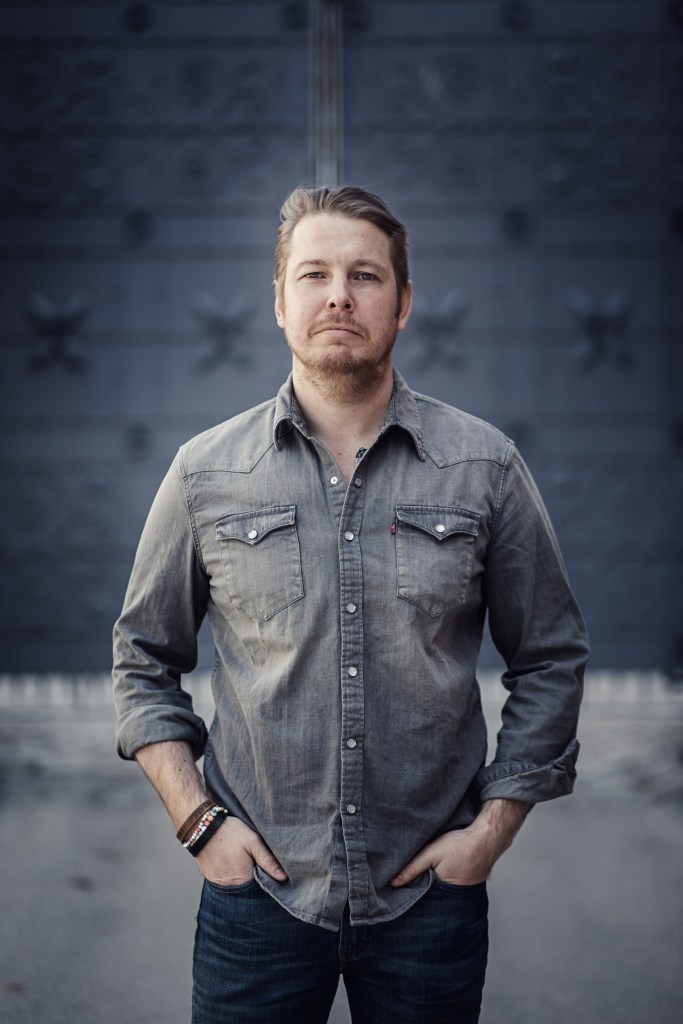
The author, dressed in a dark grey button down shirt, stands with his hands in his jeans pockets. He has short brown hair, and a slight beard.

Frederik Backman discusses his newest book, Anxious People, on Thursday, September 10 at 5 pm. Signed copies of Anxious People are available for online pre-order through the Curious Iguana bookstore. This poignant comedy tells the story of a crime that never took place, a bank robber who disappears into thin air, and eight extremely anxious strangers who find they have more in common than they ever imagined.

Rich with Backman’s, “pitch-perfect dialogue and an unparalleled understanding of human nature,” according to Shelf Awareness, Anxious People’s whimsical plot serves up unforgettable insights into the human condition and a gentle reminder to be compassionate to all the anxious people we encounter every day. 

Backman is the New York Times bestelling author of A Man Called Ove, My Grandmother Asked Me to Tell You She’s Sorry, and Britt-Marie was Here, among other titles. He lives in Stockholm with his wife and two children.

A Man Called Ove is the classic story of a curmudgeon, but with a twist: he didn’t develop this attitude in old age, he’s been “a grumpy old man since he started elementary school.” As we learn more about Ove through glimpses of his past, we realize that the rule-following, the caustic comments, the meticulous planning, all ensue from a beautiful love story and Ove’s resulting losses. With dismayingly unconventional new neighbors, can he find a path forward and live up to the example of his wife, Sonja, a wonderful woman whose thoughtfulness and kind nature would welcome them with open arms? Or will he continue to be his cantankerous, resistant self? Read this delightful story to find out, if you are not already one of the millions who have loved this book full of hilarity and heart.

My Grandmother Asked Me to Tell You She’s Sorry describes a touching relationship between 7-year-old Elsa and her 77-year-old Grandmother. The two of them have a secret world, where they escape to tell stories and play make-believe (or so you think). The regular world holds many scary realities for a precocious little girl, including big dogs, bullies, impending new siblings, and cancer. Sometimes grandmothers, even the eccentric ones, know exactly what their grand-daughters need. This story rewards the reader’s patience, as all the seemingly disparate pieces slowly form a highly satisfactory, emotional resolution.

Whether you jump in with the newest book or treat yourself to some of Backman’s older titles, you will be entertained and enlightened. Register now for the online author event!

The event is cosponsored by Maryland Humanities, Frederick County Public Library, Curious Iguana, and the Weinberg Center for the Performing Arts.

I Am An E-book Convert

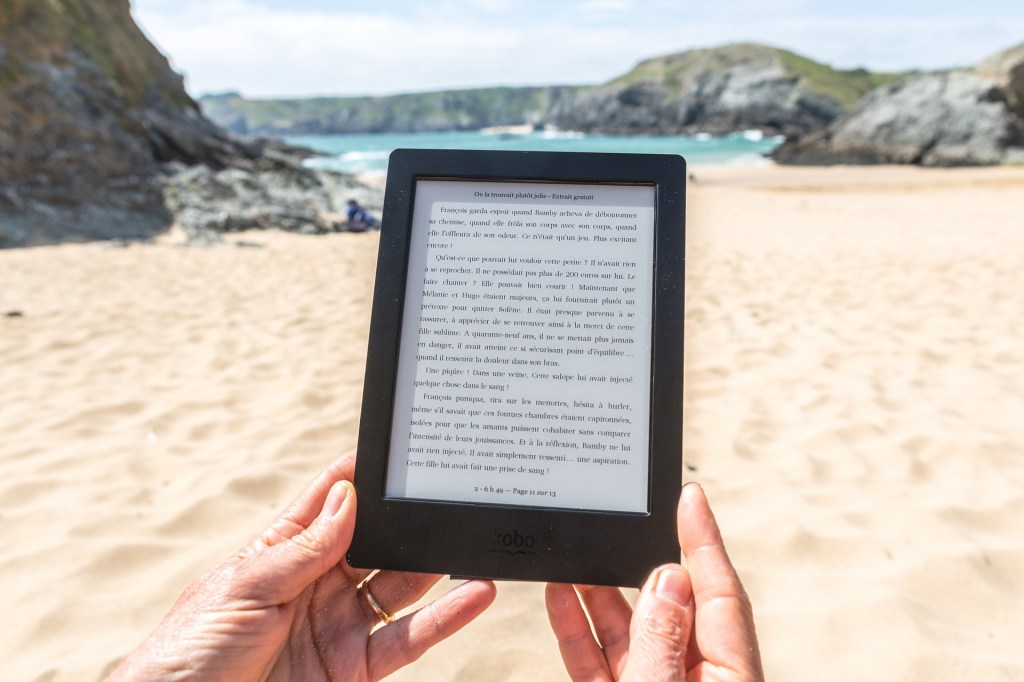
The image shows a pair of hands holding an ereader with a remote sandy beach, rocky hills, and a turquoise sea and hazy blue sky in the background.

By Alan S.

I am a recent convert to the pleasures of an e-book. I appropriately played the T-Rex who needed help in a recent Facebook video. I have always preferred physical books over eBooks, enjoying the feel of holding a book in my hand more than the feel of a tablet or phone. I resisted the call of eBooks for a while. Working in a library, all of those printed books were right in front of me. Why choose to look at a screen? What would ever make me choose to read a book on a device?

The first thing that changed my feelings about the electronic version was packing for trips, especially those requiring plane travel. When taking a road trip, it is easy to fill a bag with books and throw them in the trunk. This is not so simple when you are packing for a plane ride. I started packing one or two physical books, then downloading a few e-books as a backup. I still usually take at least one physical book on a trip, but tend more toward eBooks when traveling. I’m sure my family likes the extra space to pack other things.

An increase in the number of audiobooks I listened to also led to an increased use of eBooks. My car is still equipped with a CD player, so a book on CD is an option, but there are benefits to an eAudiobook. The biggest is the lack of a need to change CDs. I hated listening to a book in the car and getting to the end of a CD with no safe way to change to continue the book. With eAudio, the book continues without your help. I have also learned the joy of increasing the speed on some books. When reading for an assignment, or if the reader reads very slowly, I can listen at a faster speed and still enjoy the book (I might also be a tad impatient).

If you are ready to join me as an eBook convert, see HCLS’ resources.

If you need help accessing your eBooks or with any of our other online resources, please join us for live Online Tech Time Wednesday, July 22 at 11:30 am. Other sessions of this useful class will be offered in the future.

Alan has worked for HCLS for just under 25 years, currently at the Savage Branch. He enjoys reading, television, and most sports.

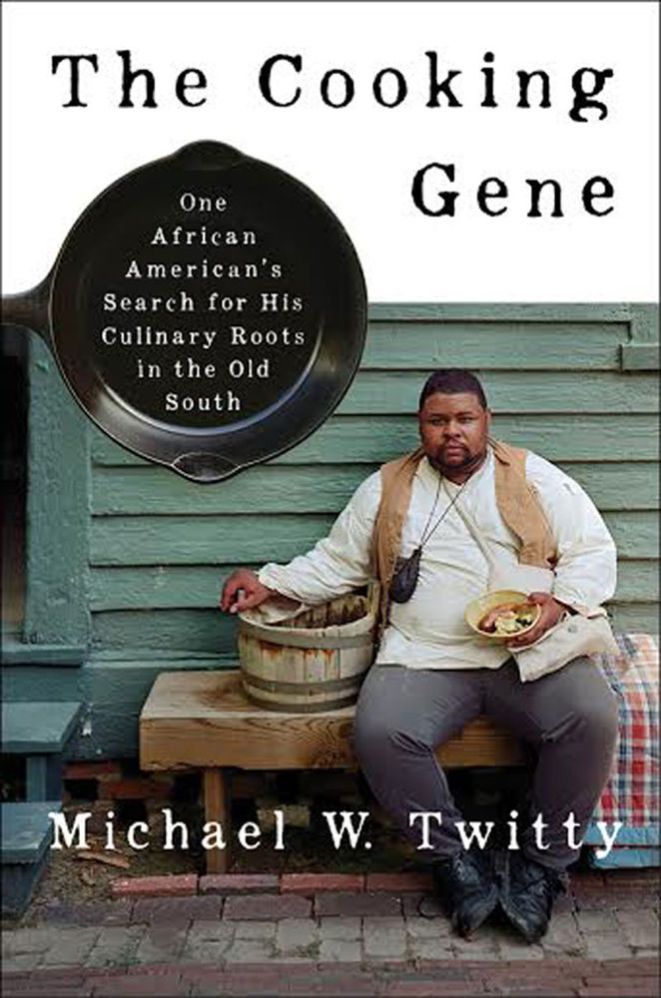
The Cooking Gene: A Journey Through African American Culinary History in the Old South by Michael W. Twitty

The author sits on a rustic bench against a green shingled wall holding a plate of food in one hand and resting the other on a small wooden bushel basket. He is dressed in a linen shirt, a beige vest, and grey pans. A cast iron skillet hangs over the upper left corner with the subtitle in it.

Review by Kristen B.

The James Beard Award-winning book, The Cooking Gene, defies categorization: part memoir, part highly researched historical account of Southern foodways, and part genealogical research into the author’s ancestry. It also includes recipes. By no means an easy book to read in its themes or storytelling, Twitty takes us on journeys throughout the American colonies with the contributions of enslaved Africans front and center. The book generally follows the history of the American South, but other bits work their way in, too. Personal experiences and family stories intersperse with long lists of ingredients found at plantation feasts. It’s like having an extremely learned docent talking about all his favorite subjects, which is a fair assessment of the situation.

Michael Twitty is a gay, black, Jewish man who interprets historical Southern cooking, particularly from the pre-Civil War era. His book recounts some of those experiences, intermingled with a wealth of knowledge about how “soul food,” that indelible American cultural touchstone, came to be. As human beings made the Middle Passage from Africa to America, food and culture naturally travelled with them. The Cooking Gene presents a fascinating dissection of slave-holding states and their regional variations, from the Chesapeake area along the Low Country of the Carolinas and Gullah-Geechee to the deep South of Louisiana and Alabama. Each area offered something new and different into the country’s cooking lexicon, and most of those old kitchens were run by slaves … some of whom were even trained in Paris to further increase the standings of the families they served.

Twitty focuses on food as a way to explain the people: yams, corn, rice, greens, tobacco, and more. As part of the food history, he also details the different eras of human commerce and wrote a sentence that stopped me cold in my tracks and that I’ve thought about ever since:

The black body was the single most valuable commodity in the American marketplace between the years 1790 and 1860 (p. 321).

The other major thread winding through this astounding book is what Twitty calls his Southern Discomfort Tour. He, with the help of genetic testing and professional genealogists, has traced more than eight generations of his family’s history in America. He located records of his ancestors’ lives along the North Carolina/Virginia border, as well as deeper into the South. He found receipts of their sales and how they were listed among assets of landowners. From his genetic testing results, he could identify which regions and tribes his family belonged to in West and Central Africa. His racial heritage also includes more than a quarter European descent, which led him to travel to London and Dublin to claim those parts of his heritage, too. I realized that Twitty’s family has been in America longer than just about anyone’s I know. Twitty pulls very few punches recounting the terrors and sordid realities of life for slaves. The genius of this book is that the author puts so much of himself into the telling that the reader must do him the respect of listening.

I learned so much, including the sheer diversity of the African population that made the Middle Passage and how – truly, in every way – African-Americans built our country. They were the field hands, builders and master craftsmen, knowledgable farmers and hunters, and yes … the cooks who fed everyone. I learned about the history of our country’s foods and about a diversity that we lack in our modern era of packaged foods and monocultures. In my family, as in so many others, food is love. The Cooking Gene is nothing short of Michael Twitty’s love letter to his culture, his family, and the foodways of the American South.

This title is available in the collection as a book, eBook, and eAudiobook, both via Overdrive and RB Digital, which has the “always available” audio as part of its Anti-Racism reading list.

If you are interested in learning more about the African-American experience and anti-racism, join us for an online conversation on Monday, July 20 with Ibram X. Kendi on “How to Be an Anti-Racist.” Registration required.

Kristen B. has worked for HCLS for more than 15 years, and currently hosts the Books on Tap discussion group at Hysteria Brewing Company. She loves reading, Orioles baseball, and baking.