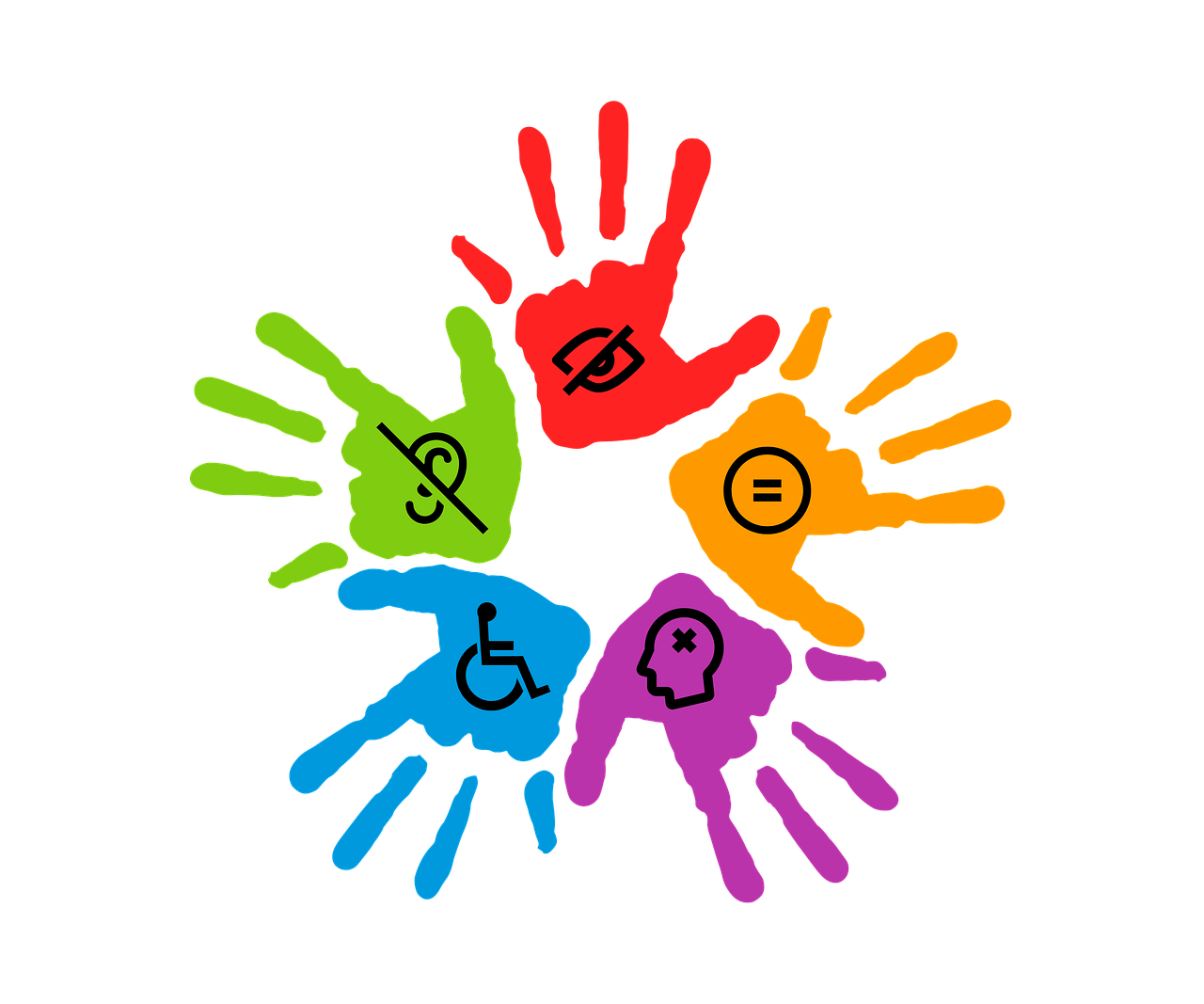
In 1990, the American Disabilities Act was signed into law, and since then, we’ve celebrated Disability Pride Month in July. The American Bar Association calls Disability Pride Month a way to ensure that we are “accepting and honoring each person’s uniqueness and seeing it as a natural and beautiful part of human diversity.”
Disability Pride Month is even more than that — it is a time to reject shame and internalized ableism, to uplift members of the community, and to provide another chance for allies to take stock of what types of work can be done to make spaces truly more accessible. It’s also a time to consider how race, class, and gender impact people with disabilities, and what intersectional approaches can be taken to meet those needs.
At HCLS, we take seriously our mission of public education for all — we want to do this inclusion work, both inviting everyone into our physical spaces, and simultaneously making those spaces as easy and accessible as possible. We’re constantly working to improve, and, in part, it happens because of suggestions from our community. In case you haven’t seen already, we’re including a request for ASL interpreters upon registration for our classes, which is a new part of the process. Launched in May, the streamlined process makes it so our Deaf and Hard of Hearing community members don’t have to work harder — it is built in.
Whenever classes and library activities are planned, we take accessibility into account. We try to make this community space open to everyone, from how we arrange the room during classes to how we distribute library materials. We have sensory friendly visit bags, which contain noise canceling headphones, a liquid timer, and fidget toys, and can be borrowed for the duration of a visit to the library.
We have an American Sign Language collection at Central Branch, with DVDs of movies in sign, DVDs teaching sign, as well as materials on Deaf history and culture. We have a Pajama Time class at Savage Branch that has ASL instruction. Our collection, which is ever-growing, includes fiction and nonfiction stories about a whole range of identities, experiences, and abilities, so community members can see themselves reflected in the stories they consume.
We collaborate with our partners throughout the state, like the Howard County Autism Society, the Maryland Deaf Culture Digital Library, and the Maryland State Library for the Blind and Print Disabled, to name a few. And we’re constantly working to improve, because inclusion work cannot be stagnant. The library is a community center, and if there’s anything you’d like to see, any suggestions on how the library can better serve you this Disability Pride Month and always, please let us know.
Sahana is an Instructor and Research Specialist at the Savage Branch. They enjoy adding books to their “want to read” list despite having a mountain of books waiting for them already
As you celebrate, take the opportunity to include the library. The Fourth of July holiday commemorates the signing of the Declaration of Independence, in which the American colonies sought their freedom from England’s authority. The Equity Resource Center located at our Central Branch provides access to information on famous people like Ida B. Wells, Malcolm X, and Gandhi. In addition, you can borrow great films that celebrate freedom and equality such as, Guess Who’s Coming to Dinner, Schindler’s List, Philadelphia, and Freedom Writers.
As people traveled to America to embark on a new journey, they came from all races and cultures to find life, liberty, and the pursuit of happiness. Unfortunately, everyone’s journey to the United States was not a pleasant experience. InFrederick Douglass and the Fourth of July by James A. Colaiaco, he illustrates the extraordinary story of a slave turned distinguished gentleman.
Born in Maryland to a white father and black mother, Frederick Douglass was an abolitionist who taught himself how to read and write, which almost cost him his life. Through self-education and resilience, Douglass became one of the greatest orators and writers in American history. Frederick Douglass was invited to speak to the citizens of Rochester, New York on July 5, 1852 at the Corinthian Hall. In the speech that would be later entitled “What, to the Slave, is the Fourth of July,” Douglass explained how it was difficult to celebrate a holiday that symbolizes freedom and independence for Americans, even when many blacks were lynched, beaten, and sold as property. Douglass states in his speech, “What, to the American slave, is your 4th of July? I answer; a day that reveals to him, more than all other days in the year, the gross injustice and cruelty to which he is the constant victim.”
As you enjoy your great family barbecues, parades, concerts, and spectacular fireworks shows, consider what look the Fourth of July looks like from many points of view.
Brandon is a Customer Service Specialist at HCLS Central Branch who loves reading, football, and taking nice long walks around his neighborhood.
What greater place to celebrate the Juneteenth holiday than with the library? Juneteenth (short for “June Nineteenth”) is the day on which federal troops traveled to Galveston, Texas in 1865 to free all enslaved people. Even though this happened two years after the Emancipation Proclamation was signed, we honor Juneteenth as the day that slavery officially ended everywhere in the U.S.
Since 2021, Juneteenth marks the federal holiday when we celebrate Black freedom and liberation. However, we still have a way to go toward true equity, with continued violence toward Black people by law enforcement, discrimination in job and housing opportunities, and the lingering consequences of slavery. In addition, many school districts have now decided to pull Black authors and titles from their curriculum due to fear of critical race theory. If you have an HCLS library card, you have the opportunity to acquire knowledge which can facilitate change.
At Central Branch, visit our Equity Resource Center which offers inspirational books, DVDs, and audio materials for all ages. One informative book to read is The Kaepernick Effect: Taking a Knee, Changing the World by Dave Zirin, which explains how former NFL quarterback Colin Kaepernick risked his career and became an activist for Black social justice. Another great read is the 1619 Project by Nikole Hannah-Jones, which provides an historical analysis of the first people of African descent who arrived in the U.S.
Juneteenth by R.J. Bailey gives children a great understanding of why Juneteenth is significant. Ways to Welcome by Linda Ashman is another wonderful children’s book, illustrating how creating a friendly and welcoming environment can have a lasting impact on a child’s life.
At the end of the day, Juneteenth is also an opportunity for the country to heal and reflect. Can America cure our racial divide? Or do we just continue to live our lives, business as usual? Please consider these ideas and thoughts as you enjoy and celebrate this Juneteenth holiday.
Brandon is a Customer Service Specialist at HCLS Central Branch who loves reading, football, and taking nice long walks around his neighborhood.
Come talk food with us! Wednesday, May 24 at 7 pm | Savage Branch Register here.
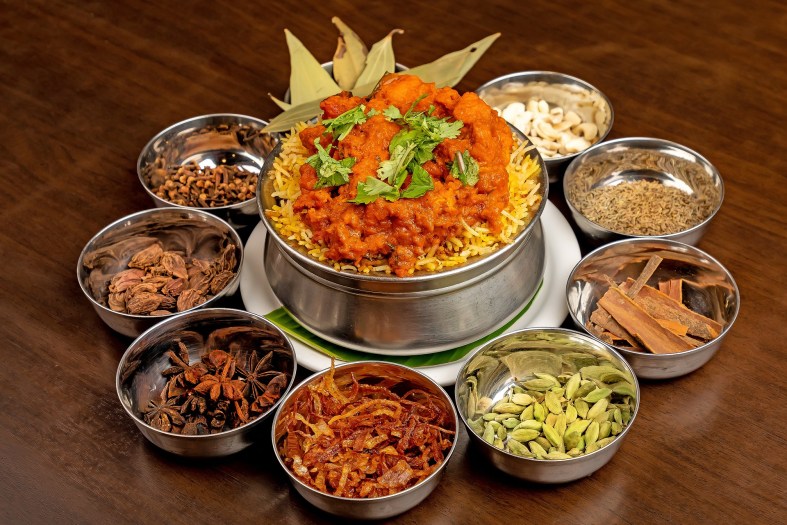
In Asian American households, food is a love language. Sliced fruit, set gently next to a workspace, is an invitation to take a break, or an apology. Homecomings are ushered in by welcome feasts, and almost every restaurant occasion ends with a polite battle over the bill. Food is affection, and especially in immigrant households, it is a connection to family, to a far-away home, and it is a consistent way of showing (but not telling) love.
Growing up with my Bengali mother, rainy days off meant khichdi (a mix of rice, lentils, and vegetables) and aloo bhaja (thinly sliced fried potatoes) for lunch. My brother and I would scrap over the last few aloo bhaja in the bowl, before our mother would smile indulgently and take a few from her plate to split between us. I’d sit in the kitchen as my mother cooked big, elaborate, multi-course meals, watch her season and spice, and wait for the oil to sputter specifically, never once consulting a recipe. She would have one of her aunts on speakerphone, talking about family back home and interjecting with quick questions on what to substitute to make our American ingredients taste as close as possible to the Indian ones.
I grew to appreciate food, to understand cooking, and to have a standard repertoire of recipes after learning from my mother. It was a common language we shared, this mutual culinary interest. And it’s only grown. I cook with and for friends, I follow cooking blogs and sites and social media accounts, I favorite every restaurant I pass by with an interesting-looking menu, and most of all, I like to talk about food with people. On desk at the library, I’ll see someone flipping through a cookbook I’ve read, and I’ll want to stop and talk. I’ll notice someone looking at a book written by one of my favorite food personalities, and I can’t help but smile at it. And most of all, I love when people share their recipes with me, when I can hear about the food, the stories, and the cuisines that influence them.
It’s important, also, to know about innovators. To know about the people who are pushing the cuisine, who are changing it, who are going back to the roots of a tradition or practice to better understand it. There are so many Asian American chefs who are pushing the envelope on what elevated Asian American cuisine looks like, and there are just as many Asian American chefs who are looking to create the most traditional experience they can with their food. All of that is what makes the cuisine not just Asian, but Asian American. It’s the blend of respect for culture and tradition, and the simultaneous push to the modern that makes Asian American food so unique.
To celebrate all of the above, we’re having a Recipe Exchange on Wednesday, May 24, from 7-8 pm at the Savage Branch. It’s themed around Asian American chefs and Asian American cuisine, where we’ll look at a few highlighted chefs and some of their most popular recipes. I’d love for you to join us and bring a recipe of your own to share. We’ll discuss our favorite tips, tricks, and techniques in community, and do it all the way food was meant to be enjoyed – together.
Sahana is an Instructor and Research Specialist at the Savage Branch. They enjoy adding books to their “want to read” list despite having a mountain of books waiting for them already.
Have you or someone you know and love ever experienced symptoms of depression resulting in contemplating ending your/their life? Chances are you, or someone you know, has had these thoughts and experienced feelings of hopelessness and overwhelming sadness.
Suicide and attempted suicide are widespread in this country. Suicide was the twelfth leading cause of overall death in the United States in 2020, claiming the lives of more than 45,900 people. Suicide was the second leading cause of death among 10 to 14 year olds and 25 to 34 year olds, and the fourth leading cause for people between the ages of 35 and 44 (NIH).
In 2020 alone, the US had one death by suicide every 11 minutes. Despite the prevalence, suicide is a topic that most people feel uncomfortable talking about; one that, unfortunately, carries a great deal of stigma. Those suffering in silence often do not reach out for and receive the help they need, when they need it. A person struggling with thoughts and feelings of suicide is in a deeply painful and dark place, often not knowing how or where to turn for assistance and relief.
In July of 2022, to provide a resource – indeed, a lifeline – for those struggling, the federal government mandated that the National Suicide Prevention Lifeline change its ten digits to a new, 3-digit number: 988. Making this change has increased awareness, providing more equitable and accessible crisis services to people across the country. The 988 helpline is confidential, free, and available 24/7/365 for anyone experiencing mental health, substance use, or suicidal crisis.
Trained mental health counselors are available through landlines, cell services, and voice-over-internet devices for conversations on the phone or through texts and chats. The counselors are available to listen to each caller, assess their level of need, identify whether they are in a crisis state, and provide them with the connections and resources to help. 988 is a helpline for everyone, of any age, anywhere in the US, regardless of their situation and circumstances.
It is sometimes difficult to know who is suffering or how to help those struggling with overwhelming feelings of stress, anxiety, depression, grief, and/or any number of other stressors and emotional challenges. For this reason, it is important and necessary for everyone in our communities to share the 988 resource with family, friends, neighbors, colleagues – everyone in our social circles. No one is alone in their struggle. Help is here.
In partnership with Grassroots Crisis Intervention Center, HCLS Miller Branch is offering QPR (Question, Persuade, and Refer) Suicide Prevention Training Monday, May 15 at 6:30 pm. Some key components of QPR training include:
How to help someone who is considering suicide
The common causes of suicidal behavior
The warning signs of suicide
How to get help for someone in a suicide crisis
Register here for this training, specifically designed for people who do not have experience in suicide intervention.
In light of HCLS’ community partnership with Howard County General Hospital, Chapter Chats is pleased to have Laura Torres, LCSW-C, as a guest blogger today. Laura is the Behavioral Health Program Manager with the Population Health Department at Howard County General Hospital.
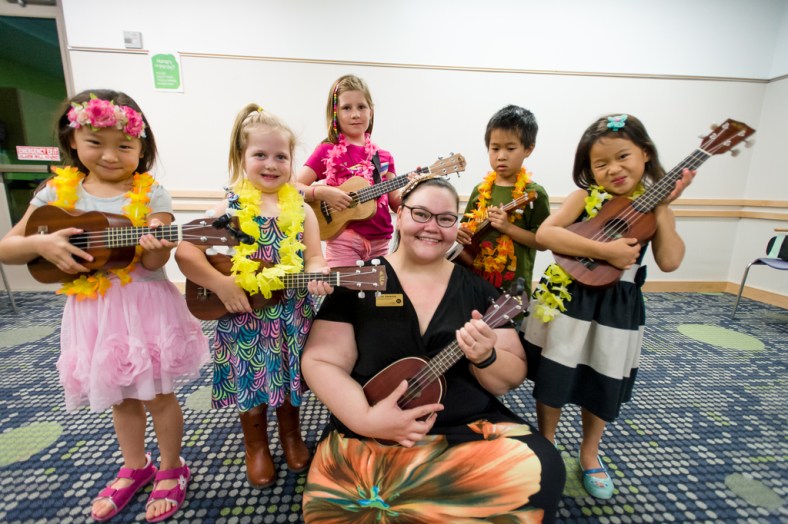
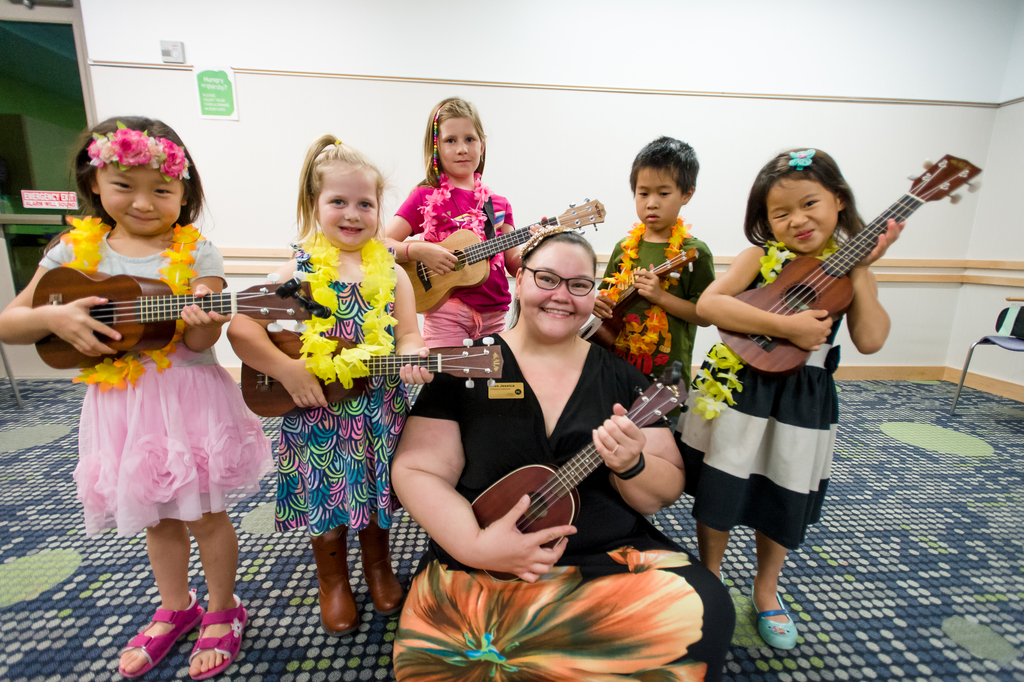
Ukulele series Play, Practice & Perform, HCLS Savage Branch.
by Sahana C.
This Asian American and Pacific Islander Heritage Month celebrate the incredible diversity and cultural influence of folks under the AAPI umbrella. AAPI culture has become more prominent recently, though it has long been an integral part of our community and our county. Going from K-Pop to Bollywood, from Vietnamese cuisine, Thai food, and Chinese staples, to things like ukuleles and tattooing that hail from the Pacific Islands, there are traces of and homages to AAPI influence across society. Howard County Library System has a World Language Collection, and while the specific materials may differ between branches, we have DVDs, books, and other materials in a wide variety of languages, including Bengali, Chinese (Mandarin and Cantonese), Hindi, Korean, Japanese, Tagalog, Thai, and Vietnamese, to name a few.
I grew up listening to Bollywood and watching Bollywood movies that we would bring home from the library. Having the World Language Collection as a staple within the library has always been incredibly significant to me. It’s a tangible connection to my culture. I try always to recommend that folks looking for new and different movies give Bollywood a try, and the expanse of our World Language selection makes that possible.
This spring we have a wealth of classes to highlight AAPI authors, traditions, art, food, and culture. We’ll jam out at Savage Branch using ukuleles (that can be requested and borrowed!) with Savage Ukes. We’ll create origami flowers and learn about the history of kusudama, participate in Anime Clubs at Savage and Miller branches to talk about our favorite anime and manga, and read books like Interior Chinatown together (with the Reading Human Rights book discussion group) so that we can discuss in community.
We would love to see you at the branches, attending any of our events. Discover more on our classes and events calendar.
Asian Cuisine Made Easy! For adults. Register here. Thu Huynh, a registered dietitian nutritionist with the Health Living Team at Giant Food, presents seven top tips on how to incorporate Asian cuisine and lifestyle into your life. Wed, May 3 | 7 – 8 pm online
Nonfiction Addiction For adults. Register here for the in-person session and here for the online/hybrid session. bit.ly/econfa11 Explore the genre of nonfiction. In May: The Best We Could Do by Thi Bui. Thu, May 18 | 7 – 8 pm East Columbia Branch
Glenwood Goes to Hawaii Ages 0-5. Ticketed; free tickets available 15 mins before class starts. Shake off winter blues and go Hawaiian as we catch a wave. Enjoy tropical music, games, and stories under palm trees on beach blankets. Tropical attire encouraged. Fri, May 19 | 10:30 – 11:15 am Glenwood Branch
High Tide in Hawaii: A Magic Tree House Special Ages 6-10. Ticketed; free tickets available 15 mins before class starts. Join Jack & Annie in the Magic Tree House as they escape high tide in Hawaii. Enjoy games, music, and a craft under palm trees and sunny skies. Tropical attire encouraged. Catch a wave! Fri, May 19 | 2 – 3 pm Glenwood Branch
National Museum of Asian Art All ages. Investigate scenes and objects of daily life in works of art across Asia to discover what people in the past valued and how they celebrated through food and rituals. Through the objects you examine, compare daily life in the past to today. Fri, May 19 | 2 – 3 pm Elkridge Branch
Global Neighbors – Republic of Korea All ages. Experience the culture and contributions of one of the largest demographics in our community. Enjoy a presentation and celebration showcasing traditional Korean music, Taekwondo, Korean Fan Dance, K-Pop dance demonstration, and Korean origami and calligraphy. Celebrate the diversity of our community! Sun, May 21 | 2 – 4 pm Miller Branch
Craft Pop-up Shop: AAPI Heritage Month Edition Ages 4 and up. Allow 15 minutes. Drop in. Pop in and make a craft inspired by AAPI Heritage Month. Tue, May 23 | 5:30 – 7 pm Miller Branch
Recipe Exchange: Asians Chefs and Asian American Cuisine For adults. Learn about Asian chefs and the history of Asian American cuisine. Meet other foodies to learn new recipes or share some your favorites. Wed, May 24 | 7 – 8 pm Savage Branch
Sahana is an Instructor and Research Specialist at the Savage Branch. They enjoy adding books to their “want to read” list despite having a mountain of books waiting for them already.
In 2013, I was living overseas as a military spouse and was struggling with my mental health. Desperate for help, I did a quick internet search to find the number for the Mental Health Services on base. The first question asked was, “Are you active duty?” When I replied that I was not, the response I got was, “Then we can’t help you.” Hearing those words was devastating to my despairing mind and I felt defeated in that moment. The person on the other end then asked, “Are you experiencing suicidal thoughts or do you feel that you might harm yourself or others?” My reply was, “If I was, I’d be in trouble, since you just said you can’t help me!” I made it past the lies that depression was telling me and the very insensitive message that I received that day. I have been traveling a road of healing for the last 10 years. Some days are hard, but I now know that there is help.
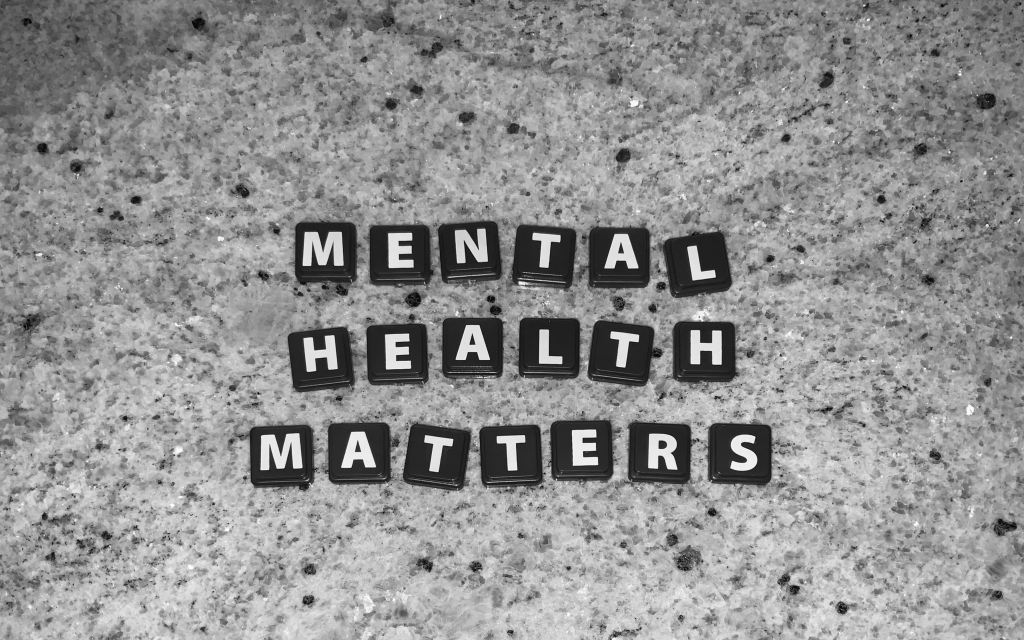
May is Mental Health Awareness Month and I want to begin by saying three things:
1. You are not alone.
2. Help is always available.
3. You (and your mental health) matter.
You Are Not Alone
Almost everyone knows someone with a mental illness. Understanding the prevalence of mental health conditions is important in destigmatizing it. Nearly 450 million people worldwide are currently living with a mental illness. In the United States, one in four adults suffer from a diagnosable mental disorder. Almost half of adults in the US will experience a mental illness during their lifetime. The three most common diagnoses are anxiety disorders, depression, and post-traumatic stress disorder (PTSD).
Life can be challenging, but every day shouldn’t feel out of control. Take time to ask yourself about your thoughts, feelings, and behaviors to see if this is part of a pattern that may be caused by a mental health condition. Here are some questions to get you started:
Have things that used to feel easy started feeling difficult?
Does the idea of doing daily tasks like making your bed now feel really, really hard?
Have you lost interest in activities and hobbies you used to enjoy?
Do you feel irritated, possibly to the point of lashing out at people you care about?
If your answers to the any of the above are yes, start a conversation with your primary care provider, a trusted friend, or a family member about your mental health. Please note: A mental health provider (such as a doctor or a therapist) can give you a full assessment and talk to you about options for how to feel better.
Help is Always Available – Free Community Resources
988 – Suicide and Crisis Lifeline – offers free 24/7 call, text, and chat (988lifeline.org/chat) access to trained crisis counselors who can help people experiencing suicidal thoughts, substance use, mental health crisis, or any other kind of emotional distress. Just text or call 988 nationwide. People can also dial 988 if they are worried about a loved one who may need crisis support. While text and chat are available in English only, calling services are in English and Spanish and use Language Line Solutions to provide translation services in over 250 additional languages.
211 Marylandis the state’s most comprehensive health and human services resource database. With more than 7,500 resources, individuals with essential needs can get connected to local help 24/7/365.
211, Press 1 is an immediate, always-on-call suicide prevention, substance use intervention, and mental health emergency assistance line available in the state of Maryland. Dial 211 and Press 1. 211 specialists are also available to chat or text. For text services, text your ZIP code to 898-211.
211 Health Check – provides proactive mental health check-ins to support those with anxiety, stress, and depression. The weekly connections provide one-on-one support with the goal of preventing suicide and other mental health emergencies. If requested, the 211 specialist can connect the caller with mental health resources. To sign up for weekly mental health checks, text MDMindHealth to 898-211.
MD Young Minds is a new resource for teens and adolescents who are struggling with their mental health. It sends supportive text messages, with a focus on teen and adolescent concerns and worries. To sign up, teens should text MDYoungMinds to 898-211. The ongoing messages also remind youth that immediate mental health support is always available through 211, Press 1.
Local Mental Health resources are available through the Howard County Health Department by visiting this website.
You (and your mental health) Matter
Mental health is an important part of overall health and well-being. Mental health includes our emotional, psychological, and social well-being. It affects how we think, feel, and act. It also helps determine how we handle stress, relate to others, and make healthy choices. Mental health is important at every stage of life, from childhood and adolescence through adulthood.
No matter your age or stage in life, you and your mental health are important. If you’re looking for resources to help make self-care part of your routine, the library can help get you started.
The Little Book of Rest: 100 Ways to Relax and Restore Your Mind, Body, and Soul by Stephanie Thomas is a book that can help you formulate your own actionable self-care plan. Everyone is unique, so make a self-care routine that works for YOU. This book is divided into four sections, with plenty of ideas for each category: physical, mental, emotional, and spiritual exercises to give yourself time and space to focus on wellness.
In The Self-Healing Mind, Dr. Gregory Brown advocates for a holistic approach to mental health treatment. Dr. Brown supports integrating conventional treatments (medication and talk therapy) with lifestyle changes that he calls the pillars of self-care: breathing mindfully, sleep, spirituality, nutrition, and movement.
Mindful Moments for Kids is an audio CD that is broken down into one-minute “mind breaks” – including guided meditations, relaxing music, nature sounds, and breathing exercises. Using these moments can help calm, focus, and inspire mental health as an everyday practice.
As a form of self-care, you can also try out meditation with some beginner’s meditation classes on HCLS’ YouTube Channel. There are three meditation sessions available:
Finally, HCLS Miller Branch is offering Suicide Prevention Training on Monday, May 15 at 6:30 pm, in partnership with Grassroots Crisis Prevention Center. Register here (starting Monday, May 8) for this training, which will show you how to recognize the warning signs of a suicide crisis and is designed for people who do not have experience in suicide intervention.
These are just a few of the resources and opportunities available at Howard County Library System.
If you are thinking about harming yourself or attempting suicide, tell someone who can help right away. Call 911 for emergency services. Go to the nearest hospital emergency room. Call or text 988 to connect with the 988 Suicide & Crisis Lifeline. The Lifeline provides 24-hour, confidential support to anyone in suicidal crisis or emotional distress. Support is also available via live chat. Para ayuda en español, llame al 988.
Sources: ADAA.org, hopkinsmedicine.org, mhanational.org, National Institute of Mental Health
Kimberly J is an Instructor and Research Specialist at the HCLS Glenwood Branch. She enjoys reading, photography, creating, crafting, and baking.
April is National Poetry Month. We need at least that long to appreciate all the wonderful poets and poems that enrich our lives. Poetry allows us the see the world in new ways. The rhythms and allusions of poetry open views or thoughts that ordinary prose simply cannot elicit through standard structures. Whether recounting lengthy epics like the Iliad or appreciating life’s little joyous moments with Mary Oliver, poetry’s language can transport us.
Do you have any favorites? Do any memorized pieces live in your mind? I first read Dylan Thomas‘ “Do Not Go Gentle Into That Good Night” the year my father was diagnosed with cancer. “Rage, rage, against the dying of the light” has been with me ever since. In less fraught circumstances, my sister memorized Shel Silverstein‘s “Sick” when she was in elementary school – it’s still fun to recall its whimsical truth as adults. I know quite a few people who can recite all the nonsensical words of the heroic “Jabberwocky,” from Lewis Carroll’s classic story, Through the Looking Glass – famously performed by the Muppets, in case you haven’t seen it.
We invite you to celebrate a month of poetry. Whether you borrow a volume or anthology of poetry, or attend a class, we hope that you take a moment or two to enjoy some wonderful words. And, on April 27 – official Poem in Your Pocket Day – you can keep handy an old favorite or a new, original composition to share throughout the day.
Creating from Wounds: A Generative Workshop Adults. Register. The power of poems is that they allow us to create from disaster, making something out of the brokenness to process and cope. In this workshop, Meg Eden shares tools that she has used in writing her latest poetry collection. Compose using interactive prompts, then receive resources to continue with your writing. Sat, Apr 15 12:30 – 1:30 pm Savage Branch
Poets Corner Ages 6-11, 45 minutes. Ticketed; free tickets available 15 minutes before class starts. There’s a poem in your head just shouting to come out! Discover the tools poets use to create verses that sparkle and shine. Read, write, and have fun sharing poems! Sat, Apr 22 2 – 2:45 pm Elkridge Branch
Playful Poetry Ages 6-9, 45 minutes. Ticketed; free tickets available 15 minutes before class starts. April is National Poetry Month – celebrate by joining us to hear and share fun poems from a variety of creators. Participants are welcome to bring a poem they love to share with the group. Maybe you will even be inspired to compose a poem of your own! Thu, Apr 27 5 – 5:45 pm Elkridge Branch
Kristen B. is a devoted bookworm lucky enough to work as the graphic designer for HCLS. She likes to read, stitch, dance, and watch baseball in season (but not all at the same time).
March Madness historically has been known as one of the most exciting sporting events of the calendar year. Before you fill out your bracket for the men’s and women’s NCAA basketball tournaments, consider brushing up on your basketball bona fides with the Library. Sixty-eight teams earn spots in the men’s tournament and 32 teams for the women every year. All teams compete in the three-week basketball tournament in their respective regions, vying to make it through to the Sweet Sixteen and Final Four on their way to the Championship game.
Read some terrific accounts celebrating the joy of the game from HCLS’ collection. Former NBA player and ESPN analyst Jalen Rose wrote Got to Give the People What They Want to explain his experiences as a student-athlete at the University of Michigan. Rose was a part of the first college basketball team to start five freshmen in a season.
Kwame Alexander’s Newbery Award-winning The Crossover is a great book for teens who have a passion for sports and poetry. The Crossover is available in a number of accessible formats for teens. The original novel is available as a print book, an audiobook on CD, an e-book and an e-audiobook from Libby/OverDrive, and as an e-book from CloudLibrary. The 2019 graphic novel version, which was a nominee for the Black-Eyed Susan Award, is available in print and as an e-book from Libby/OverDrive.
You can also watch some of the great basketball films to get in the spirit. The classic film Hoosiers, starring Gene Hackman, showcases a team that battles adversity and triumphs just like all the colleges in the NCAA tournament. Love and Basketball stars Sanaa Lathan and Omar Epps and tells the story of two childhood friends who share their love for each other through their basketball journey.
Just like a great novel or film, the end or destination is not the best part but the journey. When the champion is crowned at the NCAA tournament this year, hard work, determination and adversity, are important characteristics that will help them succeed. It’s time for the tip-off; enjoy the games!
Brandon is a Customer Service Specialist at HCLS Central Branch who loves reading, football, and taking nice long walks around his neighborhood.
Georgia O’Keeffe, Hibiscus with Plumeria, 1939, oil on canvas, Smithsonian American Art Museum, gift of Same Rose and Julie Walters, 2004.30.6
By Emily B.
In honor of Women’s History Month, let’s take a closer look at the “Mother of American Modernism,” Georgia O’Keeffe. One of the most prolific artists of the 20th century, O’Keeffe is best known for her large-scale paintings of flowers.
O’Keeffe was born in Wisconsin in 1887, the second of seven children. By age 10, O’Keeffe decided she would be an artist. Her big break came in 1916 when, unbeknownst to her, famed photographer Alfred Stieglitz presented her art in New York City. This marked the beginning of O’Keeffe and Stieglitz’s tumultuous relationship. O’Keeffe would soon move to New York and become Stieglitz’s muse, appearing in hundreds of his photographs. The pair would go on to marry, following an intense affair.
O’Keeffe’s marriage to Stieglitz, who was 23 years her senior, was far from perfect. Though Stieglitz provided O’Keeffe with studio space and connections in the art world, there was a major power imbalance and he was not faithful. His long-term affair with another photographer took a toll on O’Keeffe’s mental health. Despite this, the pair remained married until Stieglitz’s death in 1946. In the 1920s, O’Keefe began creating large-form flower paintings. Almost immediately, male art critics began to assert that the “essence of very womanhood permeates her pictures.” While her husband promoted and capitalized off these remarks, O’Keeffe was not comfortable with the claims. She said, “…when you took time to really notice my flower, you hung all your own associations with flowers on my flower and you write about my flower as if I think and see what you think and see of the flower — and I don’t.”
O’Keeffe’s artistry was highly sought after. In 1938, she was sent to Hawaii on an all-expenses paid trip, where she was meant to produce a pineapple painting for an advertisement campaign. After nine weeks in Hawaii, O’Keefe had the beginnings of many beautiful works depicting Hawaii and its flora, but there was nary a pineapple painting. She would not complete the contracted pineapple painting until the fruit was shipped to her in New York City.
Through her career, O’Keeffe would befriend other artistic greats. O’Keeffe and Ansel Adams had a friendship spanning 50 years, no doubt bonding over their deep passion for the natural world. O’Keeffe befriended Frida Kahlo in 1931 and there is evidence to suggest they perhaps were romantically involved.
Throughout her life, Georgia’s passion for art never wavered. Even as she grew frail and her eyesight began to deteriorate, continued painting with assistance and even learned to work with clay. O’Keeffe’s appreciation for nature is timeless and is surely why she has remained one of the most beloved American artists.
Artwork by Georgia O’Keeffe and her artist friends is available to borrow from the Art Education Collection at the Central and Glenwood branches.
Emily is an Instructor & Research Specialist at the Central Branch. She enjoys puzzling, reading, listening to music, and re-watching old seasons of Survivor.
Selected Women’s History Month Classes
Creating the Legacy For adults. Register here. In the world of codes and ciphers, women have always played a role. Throughout American history, women have provided vital information to military leaders, searched for enemy secrets, and pioneered new scientific fields. Learn about the contributions and talents women have brought to cryptology. Presented by Jennifer Wilcox, Director of Education for the National Cryptologic Museum. Sat, Mar 11; 3 – 4 pm Savage Branch
Forgotten Women Writers of the 17th Century and Beyond For adults. Register here. Women’s History Month provides the perfect time to recognize that for every Austen, Dickinson, and Bronte, another unheard-of author lived who was every bit as good! Discover new-to-you women authors to add to your To Be Read list. Wed, Mar 15; 7 – 8 pm Central Branch
Women’s History Month Button Making For all ages; under 12 must be accompanied by an adult. Register here. Votes for Women! Celebrate the historical significance of buttons in the women’s suffrage movement by making one. Design your own or use a template featuring historical women’s suffrage slogans and important women throughout history. Wed, Mar 22; 7 – 8 pm Central Branch
Amazing Women: How Did They Build That? Ages 6-10, 45 minutes. Ticketed; free tickets available in branch 15 mins before class. Learn about artist/architects Maya Lin and Zaha Hadid, the innovative structures they created, and how they stay up. Design and build structures with various materials. Fri, Mar 31; 2 – 2:45 pm Central Branch












 CHAPTER CHATS