My Friends by Fredrik Backman

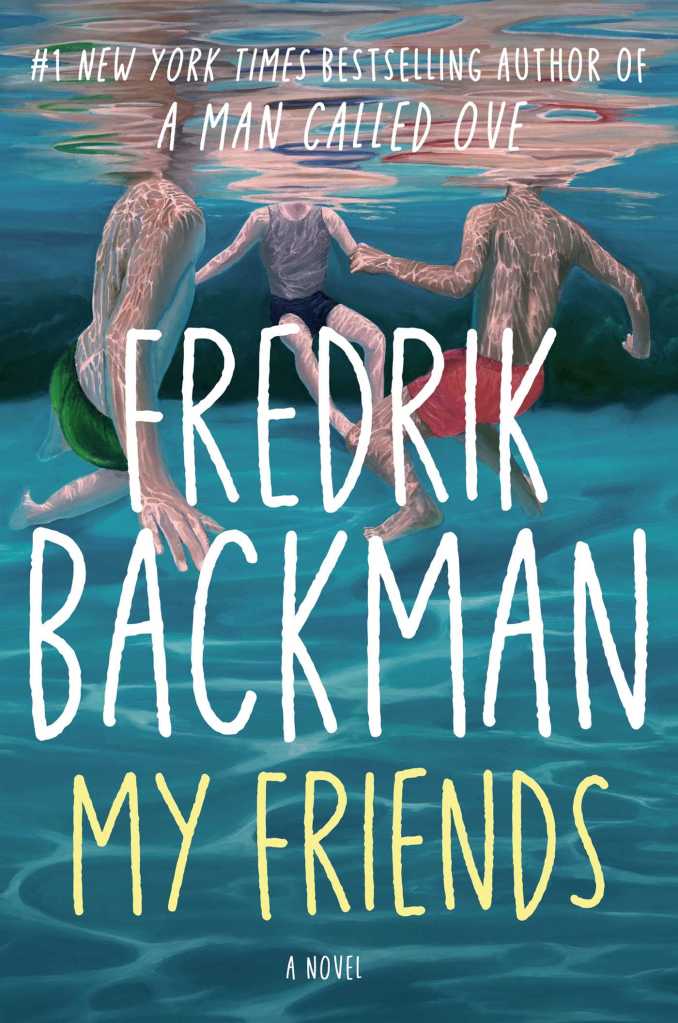
A sort of underwater shot, but illustrated, of three people in a swimming pool - three men in standard bathing trunks. Type treatment of title and author in the usual skinny handwriting style of Backman's books.

Our next chapter starts soon when the blog moves to the newly redesigned hclibrary.org. All the same great reviews and news, plus more library information!

by Kim J.

Once I read my first Fredrik Backman book, I couldn’t stop. I devoured each of his titles in quick succession and recommended them to anyone who would listen. Each of Backman’s books is a snapshot of humanity: character-driven stories that weave together timelines and perspectives with honesty and emotional depth. While reading his novels, I laugh, I cry, and sometimes I laugh until I cry. His characters feel so real that I become genuinely invested in their lives, making it bittersweet when their stories end. One of my favorite parts of reading Backman is his gift for language. His turns of phrase are fresh, ringing true and making me marvel at the mind that created them. 

Some favorites: 

  • “A lack of self-confidence is a devastating virus. There’s no cure.” – My Friends
  • “Boats that stay in the harbor are safe, sweetheart, but that’s not what boats were built for.”   – Anxious People
  • “Having a grandmother is like having an army. This is a grandchild’s ultimate privilege: knowing that someone is on your side, always, whatever the details.” – My Grandmother Asked Me to Tell You She’s Sorry

When I heard Backman had a new book out this year, I immediately added myself to the holds list. My Friends is the newest addition to Backman’s repertoire, and it did not disappoint. One of the main characters, Luisa, is a 17-year-old who has run away from her latest foster home. She loves art, and her favorite painting is about to go up for auction. She’s determined to see it in person at least once in her life. While she’s excellent at making plans, life has a way of surprising her. Her story is interlaced with the backstory of how her favorite painting came to be. What follows is an adventure filled with creativity, love, grief, friendship, found family, inside jokes, and storytelling. I highly recommend My Friends if you like humor, heartfelt depth, and a warm, bittersweet ending. However, it does need some content warnings: the story touches on several heavy topics including domestic violence, sexual assault, physical abuse, and bullying. In the end, it’s a story that stays with you long after you turn the last page. 

While you may have to wait for My Friends (available in print, large print, e-book, e-audiobook), you can explore other equally wonderful titles by Fredrik Backman: 

Anxious People 

Beartown Trilogy: Beartown, Us Against You, The Winners 

A Man Called Ove 

My Grandmother Asked Me to Tell You She’s Sorry 

Britt-Marie Was Here 

Kimberly J is an Instructor and Research Specialist at the HCLS Glenwood Branch. She enjoys reading, photography, creating, crafting, and baking.
The Teller of Small Fortunes by Julie Leong

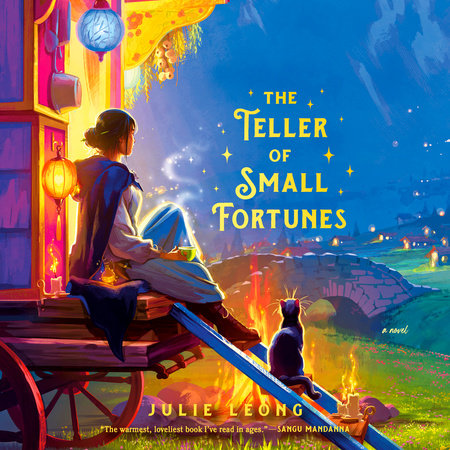
The colorful cover illustration shows a young woman sitting on the back of a caravan, with a cat at her feet, in front of a small campfire gazing out at a small town and a night sky.

by Kristen B.

Cozy fantasy is such a wonderful antidote to real life stress and chaos. The Teller of Small Fortunes brings all the good vibes. It’s a story full of found family and small stakes – but ones that become more important as the story progresses. Sometimes, one person making good decisions at the right inflection point can truly make a difference. I really need to believe that these days.

Tao travels in her custom-made wagon with her mule as her sole companion, setting up shop to tell regular people their small fortunes. Nothing too momentous, but important just the same. She brings a little happiness and diversion from mundane days. It’s a good life, if at times a little lonely. When she finds her road blocked by a tree, two new friends come into her life who also provide a little extra security – Mash and Silt, who used to campaign together and now are life-long friends. They are looking for Mash’s missing daughter and happen to be traveling in the same direction. Silt is a bit of a rogue, and Mash is one of the best friends anyone could wish for.

At their next stop, they meet Kina, the baker’s apprentice whose wares taste delicious but don’t always look particularly polished. She wants to see the world, or at least more than her seaside town that smells overwhelmingly of fish. Eventually, the group picks up a stray cat – who might be magical or might just be a cat. In one of my favorite episodes, Kina and Tao invent fortune cookies to sell in places where Tao’s magic might be less welcome.

As the travels continue, the small group forms tight friendships. It also becomes clear that there’s more to Tao than just small fortunes as their group is hounded by a representative from the kingdom’s official magicians. Tao doesn’t want to be involved in large scale politics, mostly because of bad childhood memories and her mother’s reaction to her magic. She just wants to be left alone to live her chosen life – but sometimes, friendship encourages us to overcome our fears and work for the greater good. For every problem introduced, a resolution comes along through a combination of good will, assuming the best, and being a good friend. If only it worked as well as that in real life.

The Teller of Small Fortunes by Julie Leong is available as a book, e-book, and e-audiobook.

Kristen B. is a devoted bookworm lucky enough to work as the graphic designer for HCLS. She likes to read, stitch, dance, and watch baseball (but not all at the same time).

Our next chapter starts soon when the blog moves to the newly redesigned hclibrary.org. All the same great reviews and news, plus more library information!

The End of the World as We Know It

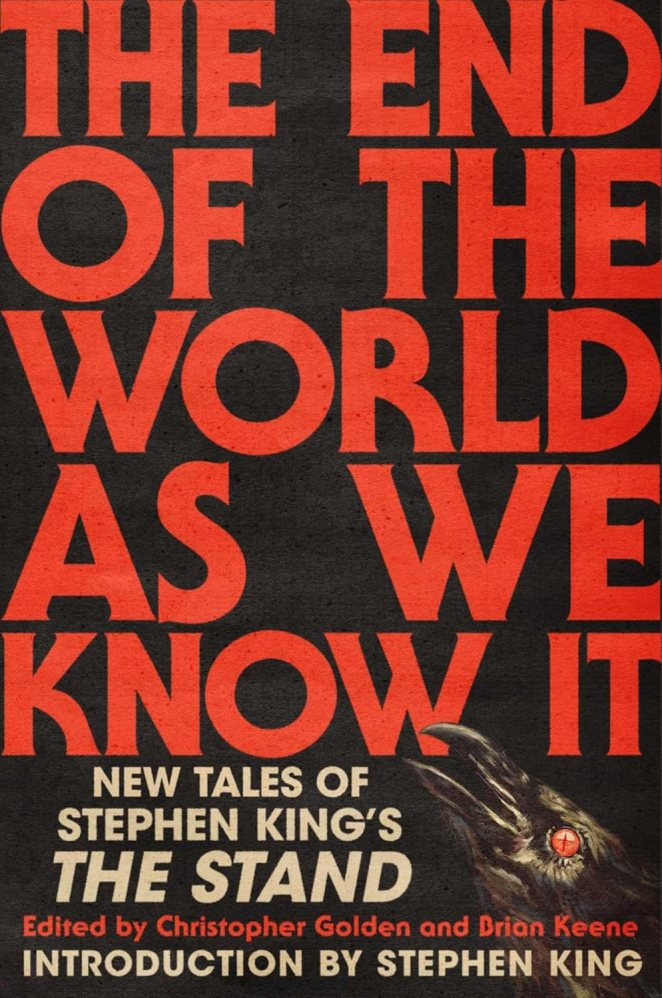
The book cover has a raven with a reddish-orange eye in the lower right corner, with its open beak extended up and looking directly at the viewer.

by Angie E.

In a year that feels like it’s testing every emotional fault line, some readers crave escape through lighthearted rom-coms or cozy mysteries. But for others, especially those feeling raw, anxious, or on edge, those stories can feel like a slap in the face. When the world feels broken, sometimes the only thing that makes sense is reading about the end of it. Two recent releases offer radically different but equally powerful takes on apocalypse: one fictional, one factual, both deeply human. 

For the first time ever, Stephen King has authorized other writers to expand the world of The Stand, his iconic 1978 novel about a pandemic that wipes out most of humanity and pits survivors in a battle between good and evil. Edited by Christopher Golden and Brian Keene, The End of the World as We Know It features 36 all-new stories from a dazzling lineup of authors: Wayne Brady, Caroline Kepnes, Tananarive Due, Paul Tremblay, Alma Katsu, and many more. 

The stories span the initial outbreak, the migrations to Boulder and Las Vegas, and even decades beyond the original novel’s timeline. They’re terrifying, philosophical, and sometimes heartbreakingly tender. For readers who feel like they’re living through their own version of The Stand, this anthology offers catharsis, community, and a reminder that even in collapse, there’s room for hope. 

The book cover shows a shooting star seemingly exploding above a cityscape in shades of blue and yellow, against the backdrop of a night sky and many stars.

If The End of the World As We Know It is a fictional dive into the apocalypse, Everything Must Go by Dorian Lynskey is its nonfiction counterpart, a sweeping, witty, and surprisingly comforting cultural history of how we’ve imagined the end across centuries. Lynskey explores everything from religious prophecies to pandemic fiction, climate collapse, rogue AI, and nuclear dread. He name-checks everything from The Road to Children of Men, The Twilight Zone to The Purple Cloud, weaving together pop culture, science, and philosophy into a rich tapestry of our collective anxieties. 

What makes this book so compelling is its insight: apocalyptic stories aren’t just about destruction, they’re about transformation. They reflect our fears, but also our longing for clarity, justice, and rebirth. For readers struggling in 2025, these books offer more than just entertainment. They offer validation and say: You’re not alone in feeling like the world is ending. And they do it without sugarcoating or false cheer. Instead of asking you to pretend everything’s fine, they invite you to sit with the chaos—and maybe even find meaning in it. 

Angie is an Instructor & Research Specialist at Central Branch and is a co-facilitator for Reads of Acceptance, HCLS’ first LGBTQ-focused book club. Her ideal day is reading in her cozy armchair, with her cat Henry next to her.

Our next chapter starts soon when the blog moves to the newly redesigned hclibrary.org. All the same great reviews and news, plus more library information!

Bauder Book Talk: Meet two of the authors of Blackout

A black illustrated cover where two people standing holding hands, backs to the viewer, with a sketched city in front of them and lots of small windows lit up.

by Carmen J.

What do you get when you have six talented young adult authors, a pandemic, and a beautiful excuse to celebrate many versions of black love and romance? You get Blackout written by Dhonielle Clayton, Tiffany D. Jackson, Nic Stone, Angie Thomas, Ashley Woodfolk, and Nicola Yoon. Even better, you’ll get to see two of the featured authors (Clayton and Woodfolk) at the third annual Bauder Book Talk event on November 6 from 4:30-6:30 pm at HCLS’s East Columbia Branch.

Written and inspired during the 2020 pandemic and set in New York City during a blackout, each author contributes connecting narratives — which can stand alone — about Black teens in the midst of their unique, complicated, joyful, sometimes simple, often spontaneous, intense, surprising romantic journeys. Whether it’s two young men catching feelings on a stalled subway, a couple who must talk through their past relationship over a long walk across town, two girls whose chance encounter ignites a spark in a nursing home, each interwoven story shines to a satisfying conclusion at a Brooklyn block party. 

In particular, Woodfolk’s “Made to Fit,” Clayton’s “All the Great Love Stories … and Dust,” and the closing story titled “Seymour and Grace” (written by Yoon) are stand-outs. Bonus points for Blackout’s inclusion of queer love and the acceptance of the adults in their lives (Made to Fit). The warmth and feel-good feelings of Blackout remain long after the lights are back on.

EVENT HAPPENING ON NOVEMBER 6: Register now!

Celebrate the voices of young Black girls in literature at this year’s Bauder Book Talk. Dhonielle Clayton and Ashley Woodfolk share how their stories center joy, magic, and truth while creating space for Black teens to see themselves on the page. 

Clayton is a New York Times bestselling author and former middle school librarian whose work celebrates Black joy, magic, and possibility. She is the author of The Belles series and the Conjureverse series.

Woodfolk is the critically acclaimed author of The Beauty That Remains and When You Were Everything. Her work explores love, loss, friendship, and the complexities of finding one’s voice. A former publishing professional, Woodfolk is celebrated for her lyrical prose and heartfelt storytelling that resonates deeply with teens. 

Carmen J. is a teen instructor at HCLS East Columbia Branch. Among her favorite things are great books, all things 80s, shamelessly watching The Bachelor, gardening, and drinking anything that tastes like coffee.

Popeye the Movie: Nostalgia for Spinach and Silliness

A can of spinach advertises the movie Popeye, starring Robin Williams.

by Alex P.

You may dimly remember that there was a Popeye live action movie in the eighties starring Robin Williams. You may have seen the box on our shelves and been amused by the cover or just remembering that it exists. The movie, like the character it adapted, seems banished to somewhere deep in our cultural unconscious, a quaint memory.  

Popeye feels like a movie destined not to work. When Paramount and Disney sought to adapt the 1930s cartoon sailor for a 1980s crowd, they chose Robert Altman to direct, who was primarily known for edgy, subversive Hollywood films like M*A*S*H* and The Last Goodbye. Not only that, but they asked for him to make a musical film, and not only that, but pop musician Harry Nilsson was hired to write the songs. This seems like a series of missteps out of which no normal film could emerge, but thankfully, Robert Altman was a director who thrived on unusual circumstances.  

Truly, though, the casting is kismet. Robin Williams stars in only his second-ever feature film, fresh with success playing Mork in Happy Days and Mork & Mindy. Here he dons huge prosthetic forearms and mugs constantly while performing a passable Popeye impression. Shelley Duvall was practically destined to play the gangly and shrill Olive Oyl and brings a physicality almost as good as Williams’.

The real star is the town the crew built in Malta (it still stands today!) on the side of a cliff in a small bay. The ramshackle town combined with constant slapstick gags give the town an energy that really embodies the cartoons. Altman’s style is notable for having almost constant comic dialogue in all of his films (it can only be described as “muttering”), and I found that it actually did end up resembling the cartoons. There are many direct references to visual gags from the cartoons that work surprisingly well in live-action – my favorite image is when Bluto shoves Shelley Duvall into a large deck-level pipe in a raft, and only her head is visible, the rest of her body impossibly disappears below the surface as she floats along.

The songs are by far the weakest part of the film. Each one is horribly underdeveloped, the lyrics comprise of phrases like “I’m Mean” or “He’s Large” or “Blow Me Down” and little else, except for muttering. The reason for this is that Altman chose, unlike most musical films, to record the singing on-set, so the vocals are always indistinct and seem to trail off amid the choreography and gags. 

Nobody seemed to know what to make of Popeye on its release. It was modestly successful at the box office but not the big success that executives were expecting, and it left critics flummoxed, which was enough to tank director Robert Altman’s career for the next decade. I was charmed by it. I am personally a huge fan of Altman’s films and found it to be a great vehicle for his unique energy. It also a particular joy to watch the cartoon violence that ensues with Bluto and Popeye, smashing through walls and destroying furniture and eating spinach. 

Popeye is available on to borrow on DVD and stream on Kanopy for free with your library card. 

Alex Pyryt is an IT Systems Support Specialist at the Administrative Branch of the Howard County Library System. 

The Hardest Job in the World: Providing for Loved Ones and Their Caregivers

By Maryam S.

Caretaking for elderly adults with limited mobility demands physical strength, mental flexibility, and proper education, as I have learned from personal experience. A caretaker is not there only as a nurse but also as financial and emotional support. When my octogenarian loved one was diagnosed with an incurable illness, her amazing medical team showed up for her in the hospital but left me on my own to figure out how to tend to her needs once she was discharged.

I received numerous messages from the close circle of my kindhearted friends who kept reminding me to make sure I was taking care of myself, too. As one put it: caregiving for an elderly adult is the hardest job in the world. It’s a marathon, not a sprint. Those were the words of wisdom I wish I had taken to heart before caregiving started taking its toll on me. I experienced setbacks numerous times. One day I would be more hopeful for her, but the next day would push me back to the verge of despair.

While still at the hospital, her case manager found a rehab facility to keep my patient as long as she needed – but after visiting and seeing the sad reality of how the rehab center functioned, I realized that I would not be able to forgive myself if I made that choice. I told myself: lets see how much I can expend from myself in terms of taking some time off from work to manage my patient’s house as well as her medical needs to ultimately try to make her life as comfortable as possible.

A large bowl of healthy soup surrounded by individual ingredients sits on a grey wooden table. The title information appears in bold red and orange stripes above the bowl, "The Cancer Fighting Kitchen: Nourishing Big-Flavor Recipes for Cancer Treatment and Recovery"

For nutrition, I took from my experience of cooking from different recipes around the world. At Howard County Library System, a large selection of cookbooks for special diets with medical conditions not only made my personal daily goals more enjoyable, they helped me share the idea behind each meal with my patient, who could see these efforts help her feel better despite having a very small appetite. One I can recommend is The Cancer-Fighting Kitchen: Nourishing, Big-Flavor Recipes for Cancer Treatment and Recovery by Rebecca Katz with Mat Edelson. A considerable number of self-help books about caretaking and related topics gave me a broader view of how to react in different situations (see list below).

During many sleepless nights while watching my patient, I found an opportunity to work on my delayed handmade projects. While working quietly on my crafts, e-audiobooks from Libby, cloud library, and Hoopla became my late-night companions. The handmade world was like a sweet scent of cinnamon and cardamom sprinkling over the world, as opposed to the unpleasant smell of medications, pain, sadness, and uncertainty. I learned that I had to fill my own cup first; you can’t pour from an empty cup. For me, I needed to work on my art and being creative, doing exercise, writing, singing – essentially any hobby that can keep the hands and mind occupied.

Hoopla with its various fitness channels also helped me to do my daily workout without being interrupted by unrelated advertisements on social media. I had limited time for myself every day and I had to keep my spirit and physical health in a better condition in order to help my patient. Technology became a useful tool to bring some discipline to my loved one’s daily recovery routine. I found workout videos online from the different universities for the public view to help a loved one practice healthy movement at home.

During this journey, I also learned about the Howard County Office on Aging and Independence, who offer classes and group conversations for caregivers dealing with elderly adults with dementia, cancer, and other conditions. These events are free of charge and encourage caregivers to participate and take benefit from the services of this department. During my conversations with them, I learned how to reach a representative once I face questions that my patient’s medical team may not be available to answer.

I share my experiences for those who may be going through similar experiences. You are not alone. You have so many good resources through HCLS, along with other resources that life provides for you. We all gain a lot of experiences in life by trying different things for ourselves and for our families. We lose and we gain over and over – because it’s all about the patient that we spending our time with. It’s something that doesn’t happen to everyone but happens to many. I call it becoming more.

October is Mental Health Awareness Month, and here are some of many resources available at the library that helped me in my mental health journey while caregiving:

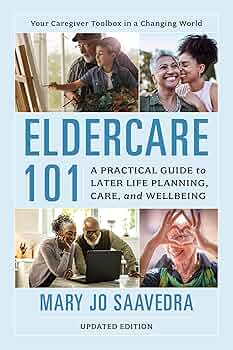
Eldercare 101: a Practical Guide to Later Life Planning, Care and Wellbeing by Mary Jo Saavedra

It’s OK That You’re Not OK by Megan Devine

The Art of Dying Well: A Practical Guide to a Good End of Life by Kathy Butler

The American Cancer Society New Healthy Eating Cookbook by Jeanne Besser

Life After the Diagnosis: Expert Advice on Living Well with Serious Illness for Patients and Caregivers by Steven Z. Pantilat, MD

Maryam S. is a customer service specialist at HCLS Miller Branch. She loves traveling near and far and loves to cook and bake from new recipes.

Read Babel in 2025 (while waiting for Katabasis)

An illustration that looks like a highly detailed, black and white print shows a tall, classic tower set against a stormy sky. The title and author's name appear in gold copperplate lettering.

By Julia M.

If you’re a fiction reader, you have probably heard buzz about R.F. Kuang’s latest book, Katabasis. While you’re waiting for your hold on Katabasis to be delivered, I’ll make my case for you to pick up Kuang’s 2022 hit, Babel: or the necessity of violence: an arcane history of the Oxford Translators’ revolutionIf you’ve been yearning for the kind of book hangover that makes it impossible to pick up anything else because your mind is plagued with thoughts of the book you just finished — this is the book for you. (True story: I finished Babel over a month ago and haven’t stopped thinking about it since.) 

Babel is set in a historically re-imagined 1800s Oxford, England. We first meet the main character, Robin, as he’s dying of cholera in Canton, China. A professor from Oxford, Richard Lovell, comes to save his life with magic — but only after Robin’s mother passes away from the illness. From then on, Robin is raised as Professor Lovell’s ward, and spends the rest of his childhood being prepared for a higher education at Oxford University’s Royal Institute of Translation, also known as Babel. At Babel, Robin meets fellow year-mates Ramy, Victoire, and Letty, who become an inseparable band of friends throughout their education. He discovers a secret society that sparks the rumbles of revolution on campus — and whose connections run deeper than first meets the eye. 

If you’ve read The Poppy War or Yellowface, you’ve already become familiar with the pattern of R.F. Kuang’s books — she constructs a setup that is exciting, endearing, alluring, and which might be a book of its own in the hands of another writer. After she makes you fall in love with her characters, she does something that sets her apart: she swings the pendulum of reality in your face. You’re made to face brutalities that exist in our real-world society and shatter any delusions of a happily-ever-after for the characters you’ve grown to love.

R.F. Kuang writes with candor about colonialism, racism, language, academia, and power. To weave in elements of fantasy is an added bonus that makes the world rich and makes you wish you could stay in its happy places longer. For better or for worse, you’ll fall in love with the group of four hopeful students we meet at the onset of the story; I can’t say more about them without spoiling the story, so go ahead and read for yourself.

Babel by R. F. Kuang is available in print, e-book, and e-audiobook formats.

Julia is a Teen Instructor & Research Specialist at the Central Branch. They love reading YA books, playing the cello, practicing martial arts, trying new cookie recipes, and generally squeezing as many hobbies into a day as possible. 

The Scarlet Letter by Nathaniel Hawthorne

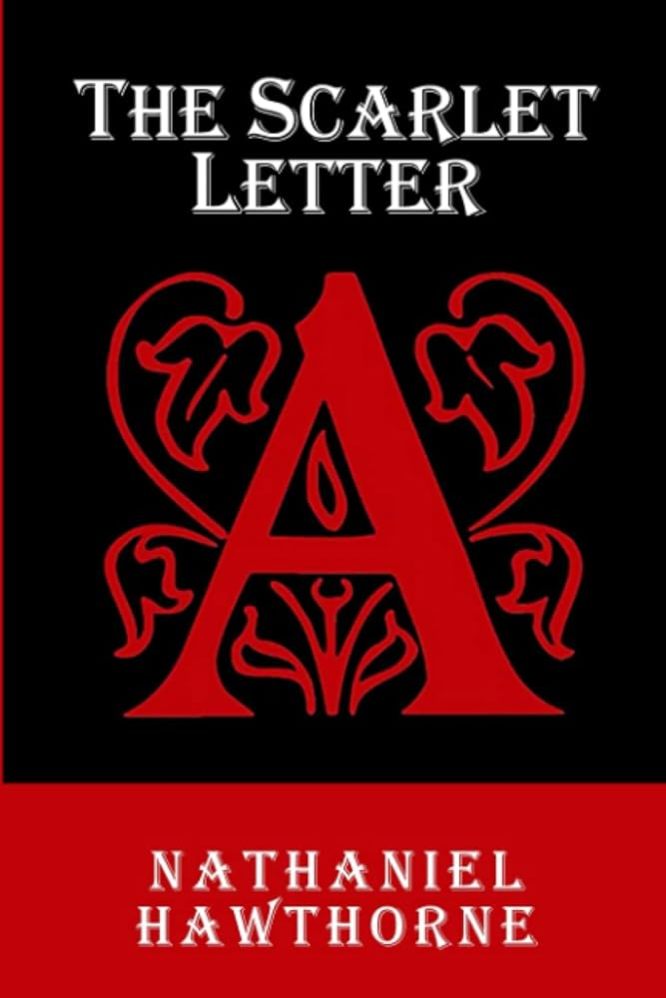
An ornate capital letter A in deep red against a black background sits beneath the title in white.

by Angie E.

The poet W.H. Auden once said, “a classic is a book that survives generations because it continues to speak to us in new ways.” Classics persist because they challenge, provoke, and resonate, especially when the world feels uncertain or unjust. Nathaniel Hawthorne’s The Scarlet Letter is one of my favorite books of all time. I can feel some of you wincing but before you scoff, I highly recommend you ignore the opening “Custom-House” chapter and go straight to the good stuff and then, maybe, you’ll see what I mean. 

Not only do I love it a bit more than most people probably would, but my love for it is directly related to my favorite Halloween memory from 1989 when I won third prize in a costume contest my sophomore year at college. Dressed as Hester Prynne with a long dark cloak with a bold red A smack dab in the middle, I kept getting mistaken for Alvin the Chipmunk so when I got to the microphone to clarify what my costume was I said “I’m Hester Prynne.” 

“Who?” Several people yelled out in the crowd. 

“Hester Prynne from The Scarlet Letter. Nathaniel Hawthorne? Puritan times?” 

No one in the audience appeared to have ever heard of any of it so I finally yelled, “I am with child and a woman of sin!” as I waved my baby bunny stuffed animal in the air. It seemed like everyone roared with laughter, most likely because I was painfully shy at the time and I went against type or maybe I just really could not shatter their Alvin the Chipmunk illusions and hopes. My other favorite book is Washington Square by Henry James. I agree with everything James once said of The Scarlet Letter: “It is beautiful, admirable, extraordinary; it has in the highest degree that merit which I have spoken of as the mark of Hawthorne’s best things—an indefinable purity and lightness of conception…One can often return to it.” 

I know The Scarlet Letter is not an easy sell, I really do. For many, the book is tangled up with high school English class, dense prose, and the frustrating ambiguity of Arthur Dimmesdale. It’s often shelved as a classic American novel, a historical piece, or even—bafflingly!—a romance.  I have never been able to see it that way, especially with its eerily Puritan version of #MeToo vibes. To call this story a romance is to fundamentally misunderstand its brutal, brilliant heart. This isn’t a tale of love triumphing over adversity. It’s a forensic examination of power: who has it, who wields it, and who is crushed by it.

Reading it today, in our world of public shaming and relentless scrutiny of women’s bodies and choices, Hester Prynne’s story feels less like a history lesson and more like a reflection. Margaret Atwood has acknowledged The Scarlet Letter as one of the texts she considered while writing The Handmaid’s Tale. In fact, she has acknowledged that her dystopia was built from historical precedents, not fantasy. Hester Prynne’s punishment for adultery and forced isolation echoes the way Atwood’s handmaids are reduced to reproductive vessels under a theocratic regime. 

The central injustice of Hawthorne’s novel has always taken my breath away. One person bears the visible, lifelong mark of their shared “sin,” while the other is celebrated, pitied, and ultimately forgiven for his private struggle. The community’s wrath is laser-focused on the woman, the visible proof of the transgression, while the system effortlessly protects the man. This is not a romance. This is a blueprint for how societal structures (legal, religious and social) are designed to punish women disproportionately. This is where Hester’s story becomes so starkly modern. We may not brand women with a literal scarlet letter anymore, but we have our own versions. 

Hester’s quiet, stubborn resilience is what makes her my hero. She doesn’t crumble under the weight of the ‘A’. She does something far more radical: she reclaims it. She takes the symbol meant to annihilate her and, through sheer force of character, transforms it. She becomes “Able.” She survives, she raises her daughter, she thinks for herself. She endures, not with passive acceptance, but with a powerful, silent defiance. She is not waiting for a man to save her. She is saving herself. 

That’s why I keep returning to this difficult, profound book. It’s not a comfortable read, but it is an essential one. It’s a reminder that the battles women fight over their own bodies and narratives are not new. They are ancient. It’s a testament to the incredible strength it takes to wear a label you didn’t choose and rewrite its meaning through your own grace and power. So, if you haven’t read The Scarlet Letter since you were assigned it in school, I urge you to pick it up again. Don’t read it looking for a love story. Read it looking for Hester. Read it for every woman who has ever been judged more harshly, held to a different standard, or forced to wear a scarlet letter of someone else’s making. 

You might just find, as I did, that it’s one of the most relatable books you’ll ever read. 

The Scarlet Letter by Nathaniel Hawthorne is available in print and large print, e-book and e-audiobook. There’s also audiobook on CD, Playaway and a manga adaptation.

Angie is an Instructor & Research Specialist at Central Branch and is a co-facilitator for Reads of Acceptance, HCLS’ first LGBTQ-focused book club. Her ideal day is reading in her cozy armchair, with her cat Henry next to her.

The Queen’s Thief series by Megan Whalen Turner

The covers of all six books of the Queen's Thief series.

by Kristen B.

A long time ago, when I first started working for the library, I was trading “have you reads” with another staff member. She asked if I – and my then elementary-aged children – had yet read The Thief. We had not but quickly rectified the situation, and I have spent the past two decades recommending that book and its sequels in turn. I re-read them this summer, one after the next as a complete series, and was blown away all over again. There are six books, and each one is excellent in its own way. They may have call numbers that place them in Children’s and YA fiction, but these books are for everyone. Honestly, I do not understand this marketing at all – these books tackle freedom, politics, religion, disability, war, espionage, being true to yourself, falling in love, friendship, loyalty, and so much more.

Part of the delight of these books comes from the fact that the author excels at turning the tables; things are often not quite what they appear. We learn in the first book not to trust the main character Eugenides, the Queen’s Thief of Eddis, any farther than you can throw him – but also, you can trust him with your life. The next five books continue to play with expectations and appearances. I don’t want to ruin the pleasure of discovery – so here’s a quick peek at each book in the series:

The Thief
We are introduced to a small peninsula of three countries, Attolia, Eddis, and Sounis, trying to survive in a world where large empires are greedily subsuming smaller states. Hamiathes’ Gift, a divine object, conveys the right to rule the mountain kingdom of Eddis, except it’s been lost for generations. A wise man, his apprentices, a guard captain, and a notorious thief removed from prison go on a quest to recover it.

The Queen of Attolia
What happens when the Thief gets caught? Eugenides suffers horrible personal consequences and must overcome them to advance his own interests and to keep the allied countries free from the Mede Empire. This book is not for the faint of heart, as it portrays dismemberment and consequent depression. However, it offers an amazing look at how people can suffer major setbacks and continue to achieve their dreams.

The King of Attolia
What happens when the Thief gets what he wants? This is my absolute favorite book of the series, mostly because it’s funny to read about Eugenides coming to terms with the life he has literally begged, bartered, and stolen for. This installment also expands the cast from the point of view of a new character, the soldier Costis, and it is better for it.

A Conspiracy of Kings
Once again, the narrative shifts to a new character – Sophos, the heir of Sounis. His coming-of-age story has larger ramifications for the little peninsula. The Medes continue to encroach, the local barons continue to scheme, and Sounis has to decide if he’s up to the task of being king. Eugenides still figures greatly, if not obviously.

Thick as Thieves
So … about those Medes. The fifth book seems like a side story, until you realize exactly how far Eugenides will go for some revenge. After all, why have only one reason to do something when you can have many? The story follows Kamet, who had a minor role previously, as he escapes his enslavement with the help of our favorite Attolian guard. Only, Kamet has no plans to leave his powerful position until he thinks he has no choice.

The Return of the Thief
Not many series get an ending as excellent as this one – and it’s just about perfect! All of the threads and themes from the previous five books come together in this stunning conclusion. War comes at a price, and that price is paid in many ways by many people.

Eugenides and the rulers are the common elements across the series, but mostly it’s about the titular Thief. It’s a fascinating look at how someone raised and trained to work outside of the conventional hierarchy behaves once he becomes synonymous with said power structures. On the other hand, these books contain some of the best stories written in the past decades, filled with humor, adventure, and a rip-roaring good time. You should read them!

Kristen B. is a devoted bookworm lucky enough to work as the graphic designer for HCLS. She likes to read, stitch, dance, and watch baseball (but not all at the same time).

Greeking Out

The book cover depicts cartoon versions of various characters from classical Greek mythology, including the Cyclops, Athena, Zeus, and three snakes.

by Jean B.

Greek myths are having a moment. From the Percy Jackson series where Greek gods inhabit today’s world, to Madeline Miller’s feminist novel Circe, to the blues and jazz songs driving the hit musical Hadestown, ancient stories keep popping up in new guises.

There’s a reason myths have stuck around for thousands of years. The core elements – the heroes, quests, relationships, life lessons – are memorable and timeless, but not static. These stories can be told in endless ways and the details suited to the times in which we live. They’re riveting and relatable whether recounted around a fire, in a book, on a stage, or even – in our electronic age – on a podcast.  

Enter the epically popular creators of Greeking Out, a National Geographic Kids podcast and book series. This fall, Kenny Curtis, a 30-year veteran of kids’ radio, and his daughter, Jillian Hughes, are bringing their funny, family-friendly renditions of classic world myths to HCLS. The Greeking Out podcast started in 2019 as an extension of the National Geographic book series, Zeus the Mighty, but gained great popularity in its own right and now includes three print books, each a collection of 20 stories and associated sidebars (silly, snarky, informational), as well as comic illustrations, a glossary of people and places with pronunciation guides, and maps of ancient places referenced in the tales. Whew!  Material of mythic proportions! Irresistible titles like “Three Scary Old Ladies and One Dirty Eyeball” and “The Princess, the Cow, and the Giant with 100 Eyes,” instantly pull in readers, young and old alike.

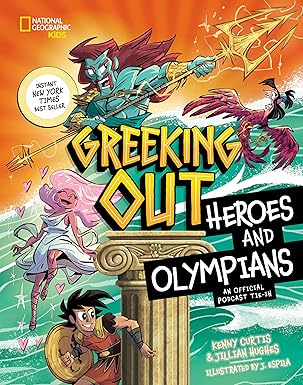
The book cover depicts cartoon images of characters from classical Greek mythology, including Poseidon, Aphrodite, Perseus, and a harpy.

I saw this for myself on September 17, when an enthusiastic crowd at HCLS Central Branch listened with delight to Curtis’s rendition of Persephone’s story. Maybe you think you know it? Probably not like this! How did she really feel about the Underworld? Was she tricked or was she the trickster? Curtis gave his listeners lots to think about. And while the storyteller helped the audience see different perspectives and possibilities, he didn’t have free rein with the facts. Fortunately, the Oracle of Wi-Fi (modern descendant of the one that resided in Delphi, and bearing a close resemblance to Jillian Hughes) weighed in regularly to bestow all-knowing wisdom, definitions, cultural tidbits, and little-known facts. For example, did you know that strawberries are NOT berries? And acorns are fruit?   

An exciting takeaway, for sure, but even more noteworthy was the atmosphere in the room. Demonstrating the power of myth and storytelling skills, Curtis and Hughes held the audience of eight- to ten-year-olds (and their grownups) without screens, devices, or even togas –  just dramatic voices and entertaining material.   

If you’re thinking, “I’ve got to see this for myself!” – you’re in luck! The Greeking Out authors offer two more presentations in October: 

Thursday, October 16 at HCLS Miller Branch at 6 pm

Saturday, October 18 at HCLS Glenwood Branch at 12 pm 

Greeking Out books on sale from local independent bookseller The Last Word, and the authors will gladly sign them. Registration preferred, as space is limited.

The book cover depicts various mythological characters from around the globe, one holding a scythe, one about to eat an apple, and one goddess wearing traditional Hindu dress.

In the meantime, check out a copy from the library: 
Book 1: Epic Retellings of Classic Greek Myths is available in print and as an e-book
Book 2: Heroes and Olympians is also available in print and as an e-book
Book 3: Tales from the Underworld, reaches into myths from other regions of the world. Set to be published on October 7, the latest book can be placed on hold.

While you’re waiting, listen to the podcast on Apple Podcasts, Amazon Radio, Spotify, or YouTube. And for kids who just can’t get enough of these classic characters and stories, lots of other entertaining modern versions can keep them reading, including:

Goddess Girls/Thunder Girls by Joan Holub. Available as chapter books, first chapter books, and graphic novels. 

Myth-o-Mania by Kate McMullan. Chapter book series featuring classic characters telling their stories.

Heroes in Training various authors. Short chapter books with illustrations. 

You Choose Greek Myths various authors. Interactive stories put the reader in charge. 

Olympians by George O’Connor. Graphic novel series for kids, each volume about a particular god. 

Weird but True Know-It-All: Greek Mythology by Sarah Wassner Flynn. Trivia for fact fans.  

Be part of something epic and start Greeking Out!

Jean is a Children’s Instructor and Research Specialist at HCLS Central Branch. She loves talking about books with people of all ages, but especially enjoys leading the Heavy Medals book club for fourth and fifth graders, exploring award-winning books of all genres.