
Exploring Hispanic Artists and Their Work

Girl from Tehuacan, Lucha Maria by Frida Kahlo, shows a woman sitting on a rock wrapped in a patterned shawl with the moon and the sun above her.

by Rohini G.

Let’s explore the riveting stories and enduring legacy of some Hispanic artists, many of which are available to borrow from the Art Education Collection.

Pablo Picasso, one of the most iconic artists and innovators of the 20th century, is responsible for co-founding the entire Cubist movement. The 1936 Spanish Civil War profoundly affected Picasso, the expression of which culminated in his painting Guernica after German bombers carried out a devastating aerial attack on the Basque town of Guernica.

Next, we look at the powerful and captivating Frida Kahlo. She is celebrated in Mexico for her attention to Mexican and indigenous culture and by feminists for her depiction of the female experience and form. Born in 1907, Kahlo experienced several tragic events: polio at age 6, and an accident at age 18.
Her famous painting, Girl From Tehuacán, Lucha Maria, depicts an innocent pretty girl who seems to get lost in the desert. The background of this portrait is divided into night and day. This is a common background Frida liked to use in some of her other paintings.

In 1929, she married artist and activist Diego Rivera, a relationship that would prove tumultuous.
Diego Rivera is most famous for his murals, which pay tribute to Mayan and Aztec imagery. The calla lily was celebrated by Rivera many times (one example is the 1943 oil on canvas Calla Lily Vendor). He often included calla lilies in frescoes that depicted peasants with indigenous features carrying bundles or offerings of them.

Joan Miró Ferra, painter, sculptor and ceramist, was born in 1893 in Barcelona. The son of a goldsmith, Miró grew up in a commerce-oriented family. When he was fourteen, his parents sent him to business school. Miró simultaneously enrolled himself at the local art academy. It was only after Miró became seriously ill that his father allowed him to resume his art studies. Between 1907 and 1918 he experimented with various styles and used the landscapes of the Catalan villages as inspiration for his work. His Passage of the Divine Bird is the final painting in a larger Constellations series and seems to communicate a sense of harmony and balance.

Hispanic artists have left an indelible mark on the art world. Today, their contributions stand as a testament to the richness and complexity of Hispanic culture, ensuring that their artistic voices continue to echo across generations.

Rohini is the Adult Curriculum Specialist with HCLS. She loves literature and rainy days.

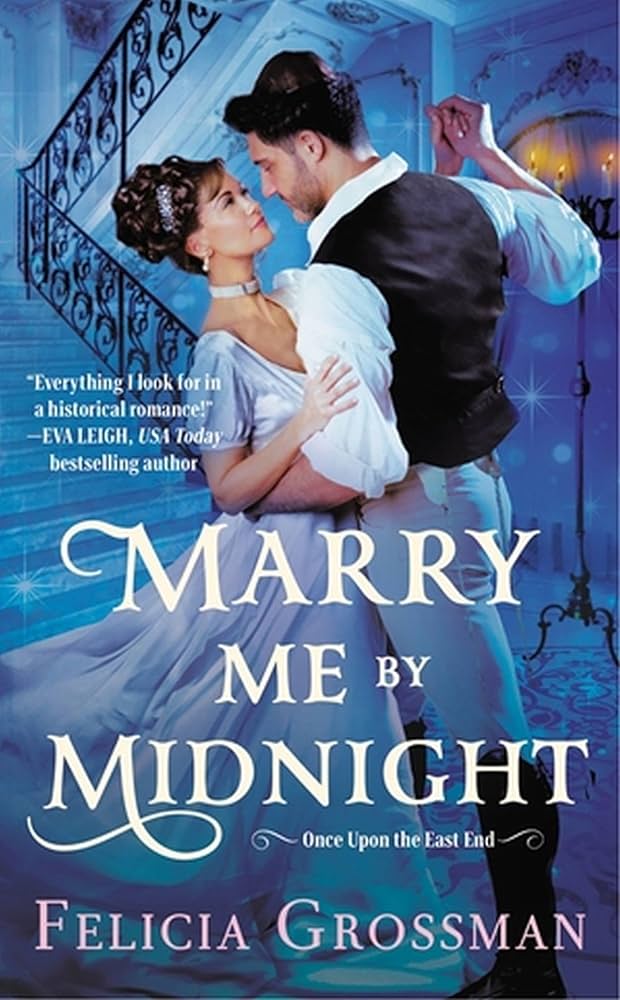
Marry Me by Midnight by Felicia Grossman

Two people dance at the bottom of a sweeping staircase, she's in a fancy dress with her hair up and he's in shirtsleeves, vest, and trousers.

by Angie E

Felicia Grossman’s Marry Me By Midnight intertwines romance with Jewish heritage in 1830s London. Isabelle Lira, the belle of the London Jewish community, faces a challenging situation after her father’s unexpected death. She must find a suitable husband to assure her family’s business and standing. 

The powerful Berab brothers, her father’s business partners, see her marriage as a danger to their livelihood. Isabelle’s desire to take over her father’s business clashes with social norms that limit women’s roles, especially Jewish women. To help her search for a husband, Isabelle hosts a series of festivals and events centered around Jewish holidays. Her goal is to meet eligible Jewish men and find someone with secrets and a background she can exploit for her independence. 

Enter Aaron Ellenberg, a synagogue caretaker with no family or wealth, perfect for Isabelle’s schemes. She employs Aaron as a spy, instructing him to learn about her potential suitors. However, unexpected attraction and risks await them both as they navigate love, secrets, and societal expectations. 

Marry Me By Midnight embraces its Judaic roots. The novel provides a fascinating glimpse into the 19th-century Jewish community in London. It portrays a passionate and daring romance while weaving in mystery and intrigue. The author captures Jewish London as a world-within-a-world, adjacent to but distinct from the English upper classes of that time. The dynamics of the Judaic community come alive, making this book a must-read for historical fiction and romance enthusiasts who long for more Jewish characters at the heart of the story. 

This title is available in print.

Angie is an Instructor & Research Specialist at Central Branch and is a co-facilitator for Reads of Acceptance, HCLS’ first LGBTQ-focused book club. Her ideal day is reading in her cozy armchair, with her cat Henry next to her.

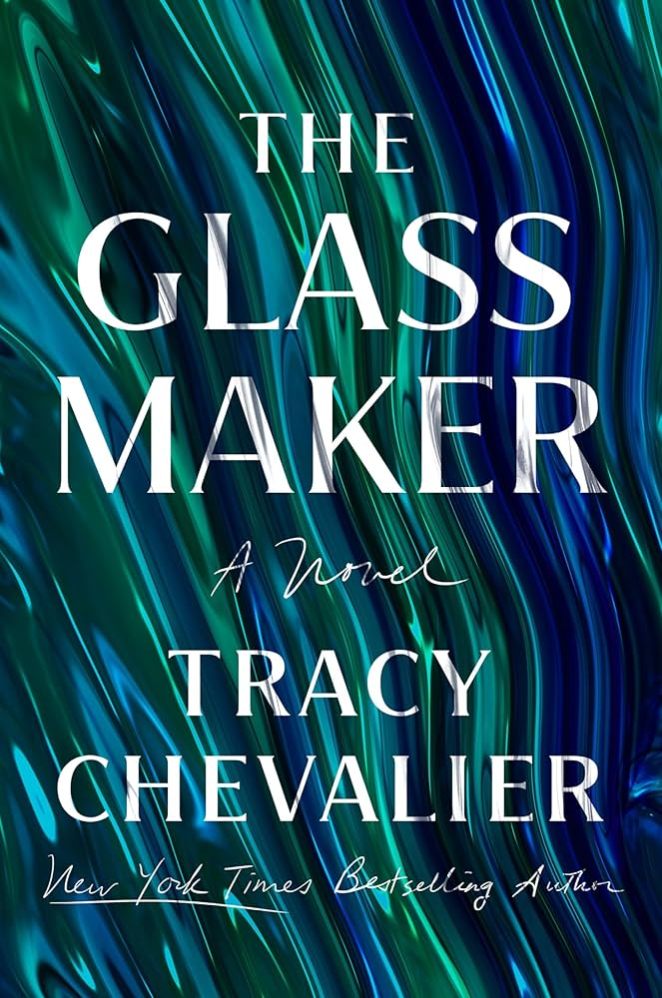
The Glassmaker by Tracy Chevalier 

White letter appears above and within wavy strands of green and deep blue glass.

by Piyali C.

The story begins in 1486 on the island of Murano, where glass blowers create their masterpieces in relative quiet, separated from bustling and chaotic Venice by a body of water. Orsola Rosso is the eldest daughter in a family of esteemed glass blowers. Although she is interested in creating art with glass, she is relegated to household chores because women are not allowed to be in the maestros’ studios. The exception to this rule is Maria Barovier, a historical glass maker in Murano in the 15th century. Maria makes a brief appearance in Tracy Chevalier’s story as an inspiration to our young protagonist and as a woman who lends a hand to Orsola to help her fulfill her dream. With Maria’s encouragement, young Orsola learns to make glass beads from a woman in the Barovier family.

Except for her mother, Laura, Orsola must keep her skill a secret – particularly from her moody older brother Marco as he cannot tolerate Orsola’s ambition. The Glassmaker is a story about Orsola’s ascent as an established artist of glass beads, if not a maestro, during a time when women were expected to keep house, have and raise children, and support the men at work by sweeping up their broken glass. But Orsola and the other women in the Rosso family defy patriarchy in their own ways, like women have done through the centuries despite the shackles that men have tried to foist upon them. 

This book displays Chevalier’s magical ability to conjure up Murano and Venice through her descriptions. She truly transports her readers to the chaos of Venice as it undergoes changes through the centuries and relatively tranquil Murano where glassmakers create their art far away from the traders and merchants of Venice. Orsola’s growth from a young girl to a strong woman with an acute sense of business is a pleasure to witness. The depth and fullness of the characters make them come alive in the readers’ minds. But all these we have come to expect from Chevalier, a maestra in her own craft. What fascinated me most was how Chevalier manipulates time to tell her story.

She urges the readers to skim a rock in the water that connects Murano to Venice. As the rock lightly touches the water and gets ready to skim to the next part, time advances fast, sometimes 70 to 100 years while Orsola’s age and those who matter to her advance only 4 or 5 or 7 years. As the rock touches the water again, Chevalier pauses to tell the story of Orsola and her family, and their lived in experience during that historical era. Then the rock skips again and we take off with it, fast forwarding several decades or even centuries.

This way, Chevalier makes her protagonist live through plague, wars, domination of Murano, heartbreak, creative triumphs and finally, in modern times, Covid. As we skim through centuries, we are mesmerized by Orsola’s growth, her strength and the strength of the women who surround her, pull her up, support her, and chart their own paths with sheer determination. As we fall in love with Orsola, we cannot help but fall in love with Murano as Chevalier gently glides us through the calles, lagoons, markets, and gondolas. We seek to return to its quiet lifestyle after a rambunctious rendezvous with Venice along with Orsola when she goes there to meet with merchants to sell her beads. 

I did not wish for the book to end. But like all good things, this story also ended filling my heart with love and my head with images of Venice and Murano through centuries. 

The Glassmaker by Tracy Chevalier is available in print, large print, e-book, and e-audiobook formats. 

Piyali is an instructor and research specialist at HCLS Miller Branch, where she facilitates two book discussion groups: Light But Not Fluffy and Global Reads. She keeps the hope alive that someday she will reach the bottom of her to-read list.

A Dream About Lightning Bugs: A Life of Music and Cheap Lessons by Ben Folds 

The silhouette of a man standing up, over a player's bench, to play an open grand piano sits in front of a sky blue background with cotton ball clouds.

by Eliana H.

A title recently caught my eye while I was tidying books around the branch: A Dream About Lightning Bugs. I’ve mentioned my ridiculous reading challenge before, and one of our categories this year is a book with 24 letters in the title. So, I’ve started to count letters in titles to see if I can find a fit. Lo and behold, this title that grabbed my attention also happens to have 24 letters in it! (We can disregard the subtitle for these purposes.) Plus, it is a memoir by a musical artist I enjoy. I was sold! 

My reading of print books has been going very slowly in recent months, so rather than check out that copy, I looked on Libby to see if the e-audiobook was available. Happily, it was, AND it was narrated by the author. Things were lining up very nicely. I don’t tend to read a lot of biographies, or nonfiction in general, but this seemed meant to be. 

I was pretty solidly in the target audience of Ben Folds during his peak fame with Ben Folds Five. His voice and snippets of songs shared in the audiobook put me in a pleasantly nostalgic mood, and I was excited to find that most of the Ben Folds Five songs I remember are available on Freegal as well. [If you haven’t checked out Freegal yet, take a look at this post to learn more.] I did not know a lot about his life or musical journey before listening to A Dream About Lightning Bugs, but Ben’s down-to-earth attitude and conversational tone comfortably brought me along for the ride. He acknowledges repeatedly and from the beginning that he had a lot of luck and privilege to help him along his way, and he explicitly thanks a number of people who provided support, assistance, and guidance, especially educators. 

I don’t tend to pay much attention to the lives of celebrities, so hearing about his journey was interesting and informative to me. Some might not consider Ben’s “cheap lessons” all that cheap, but there was certainly potential for more negative outcomes in many of the stories he shares. One section which especially stuck out to me is called “Creative Visualization or Useful Delusion?” In it, Ben describes an experience he’s had several times in which he has a vision of something happening and sees it as inevitable, which enables him to achieve things that would otherwise seem – and be – impossible. “It’s the universe that wants it to be so, and so it shall be. I only have to follow through on my part.” If only we could summon that kind of focus and confidence on command! Even Ben admits that it comes from outside himself, he cannot wish it into being. 

From performing on a keyboard with digital sampler at a German restaurant, while wearing lederhosen and wooden clogs, to Artistic Advisor to the National Symphony Orchestra, Ben Folds has had quite a journey in music and in life. Perhaps you can learn some “cheap lessons” for free just by reading – or listening – to his book. 

Content note: Ben Folds uses expletives freely throughout his book. 

This title is available in print, e-book, and e-audiobook.

Eliana is a Children’s Instructor and Research Specialist at the Elkridge Branch and co-chair of the HCLS Equity Committee. She loves reading, even if she’s slow at it, and especially enjoys helping people find books that make them light up. She also loves being outside and spending time with friends and family (when it’s safe).

The Big Sleep by Raymond Chandler

A bright yellow cover features a red cutout image of a revolver.

by Jean B.

I took an uncharacteristic turn this summer by watching a movie before reading the book. Heresy! When my book club decided to read the Raymond Chandler classic, The Big Sleep, I felt unenthusiastic and decided to first check out the famous film adaptation, starring Humphrey Bogart and Lauren Bacall. 

I discovered an atmospheric masterpiece that is like a train wreck: you can’t look away, even as the bodies are piling up and the unanswered questions are mounting faster. Seamy and steamy, the film’s careless violence and social dysfunction surprised me in a 1940s-era production. Of course, that’s why they call it film noir, right?  Bogart, as the hard boiled private detective Philip Marlowe, dives into the sordid world of the spoiled, rich Sternwood sisters (Bacall and Martha Vickers) to catch a blackmailer and through a meandering investigation, ignites all kinds of sparks – romantic and otherwise.   

I appreciated the film for its classic style and mesmerizing performances, but I also felt perplexed by the story. It turns out, I’m not alone: as one critic wrote, “The Big Sleep is the best scripted, best directed, best acted, and least comprehensible film noir ever made.” Interestingly, the screenplay was written by William Faulkner, known for his own complex literature. I wondered, did Faulkner make the plot incomprehensible or was that Chandler’s work? 

Clearly, it was time to read the book and find out for myself. Told in first person by Marlowe, the story unfolds through sharp dialogue and terse descriptions of people and urban landscapes. Having seen the movie first, I heard Humphrey Bogart’s voice as I read, a definite bonus! While I usually prefer to form my own image of a character from the author’s writing, Bogart and Bacall seemed perfectly suited to Chandler’s style and words, so I didn’t mind having them in my head. 

The book provided a wealth of detail and allowed me to add more depth to my understanding of the characters and their predicaments. Still, this is not the kind of mystery you try to solve on your own. As a detective, Marlowe makes no effort to be especially clever or careful; he doesn’t store up observations and deductions a la Sherlock Holmes. 

Instead, he confronts a suspicious character, spills whatever information he has, then stands back to see what happens. Although the plot feels more comprehensible in the book than the movie, it’s still like a many-layered onion: each time Marlowe deciphers one crime and its culprit, another one emerges and more motives, corruption, romantic relationships, and villainy appear. Still, Chandler’s language and pungent metaphors make the effort to untangle these webs worthwhile. When a writer can make even a dreary office evocative (“His office had the musty smell of years of routine”), you can’t help but turn the page to keep reading.  

So which was better:  the book or the movie? I’m glad to have experienced both. The Big Sleep is all about atmosphere – when you soak it up both through the author’s words and the performances of great actors on the screen, you get the full picture, even if you’re still a little fuzzy on whodunnit! 

Borrow either or both at HCLS: in print and on DVD.

Jean is a Children’s Instructor and Research Specialist at HCLS Central Branch. She loves talking about books with people of all ages, but especially enjoys leading the Heavy Medals book club for fourth and fifth graders, exploring award-winning books of all genres.  

Affinity by Sarah Waters

The lettering appears large and wavy against a deep teal background. There's a set of manacles in grey at the bottom.

by Angie E.

I doubt I can do Affinity justice with a traditional review, although I’ll certainly try. Sarah Waters broke my heart by writing this book, and I went through several tissues, basically just ugly crying all over the place. My heart also skipped several beats as I journeyed through the twists and turns the novel took. 

Affinity transports readers to 1870s Victorian England, weaving together elements of gothic mystery, psychological exploration, and heart-wrenching drama. Margaret Prior, an unmarried woman from an upper-class family, grapples with inner demons. She’s recovering from her father’s death and a subsequent suicide attempt. Despite being almost 30, she feels powerless living at home with her over-involved mother. 

Seeking consolation and purpose, Margaret becomes a “Lady Visitor” at  Millbank Prison, one of Victorian London’s grimmest jails. Her goal is to guide and support the female prisoners. During her visits, Margaret encounters Selina Dawes, a mysterious and infamous medium of spirits. Selina has been imprisoned for two years, accused of causing the death of the wealthy woman she lived with. 

The relationship between the two women evolves, blurring the boundaries between friendship, desire, and the inexplicable. Is Selina a fraud or a genius? And can Margaret find redemption through their connection? The novel’s spooky atmosphere and psychological tension keep readers mesmerized until the very end. 

If you crave a blend of historical richness, mystery, and heartache, Affinity is a must-read. Whether you’re drawn to magic, tragedy, or forbidden connections, this novel will leave an indelible mark on your heart. 

Affinity by Sarah Waters is available in print and e-book.

Angie is an Instructor & Research Specialist at Central Branch and is a co-facilitator for Reads of Acceptance, HCLS’ first LGBTQ-focused book club. Her ideal day is reading in her cozy armchair, with her cat Henry next to her.

Favorite Movies Starring Frances McDormand

Frances McDormand in the movie Fargo, in a bomber style winter hat, sitting at the wheel of a car, looking side-eye to the right.
from Fargo

by Kristen B.

I love going to the movies, sitting in the dark with a tub of popcorn, having a communal moment with a bunch of strangers I will never talk to. I also enjoy watching at home, via DVD or a streaming service, with a big bowl of popcorn (a theme!). My viewing tastes are almost as eclectic as my reading ones: artsy emotional films that wring your heart, thrillers full of car chases and gun fights, animation that leaves a hopeful smile on your face, book adaptations, and grand fantasy epics. Tell me a compelling story, and I am a happy human.

I will see ANYTHING in which Frances McDormand has a role, of any sort or size. She can probably lay claim to most of those film genres listed above. She is a marvelous character actor, disappearing into whatever persona she chooses to inhabit – from a French nun to a pregnant police officer to a mother grieving her missing daughter. I cannot say I’ve seen everything she’s been in because, holy moly, that woman has an immense body of work – including being the voice of God in the Good Omens series. But here’s a quick look at some favorites:

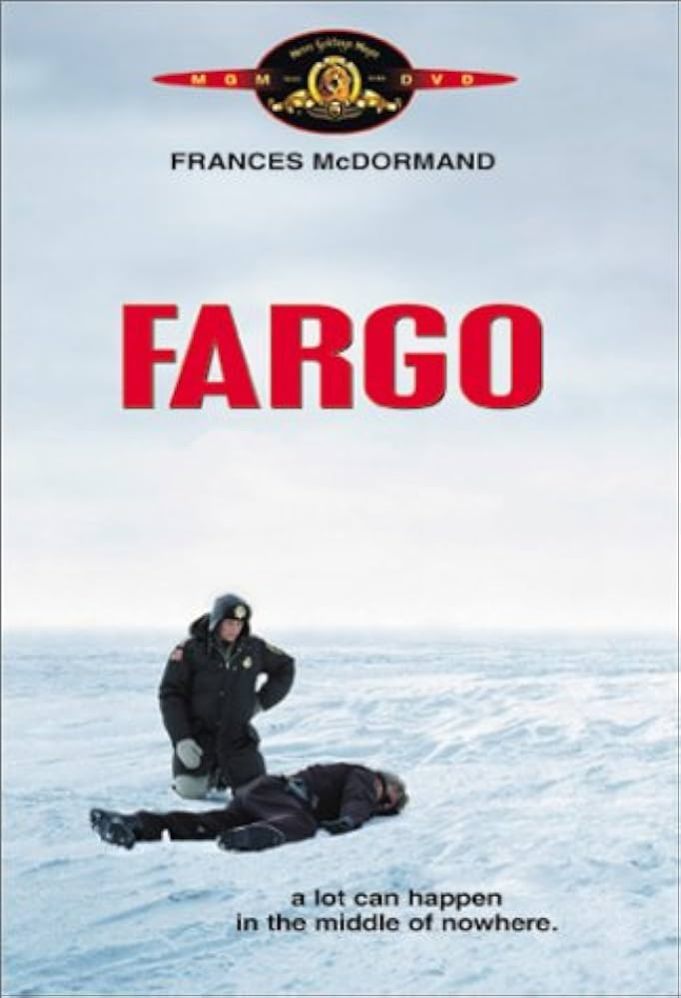
A police officer bundled in winter gear kneels in snow next to a face-down dead body. The scene is white sky over a field of snow. The title appears in red and teaser reads,"a lot can happen in the middle of nowhere."

The Coen Brothers movies defy categorization, and she’s a favorite of theirs, understandable given that she’s married to Joel Coen. Two movies immediately come to mind:

Fargo: Where she plays Margie, the whip-smart local police detective who is investigating what appears to be a random murder. The movie spools into a convoluted tangle of a tale that puts lie to the adage that truth is stranger than fiction. While there might be some real life behind this movie, it’s mostly fiction.

Burn After Reading: The Russians? This movie immediately entered my family’s lexicon of jokes and silly sayings. It might have the most DC vibe of all the Coen Brothers’ movies, and so be a little more relatable to those of us who live in the DMV. A mysterious cache of what appears to be important information pulls gym rats (McDormand and Brad Pitt), the CIA, and a plethora of cameo roles into a darkly funny send-up of the world of international espionage and politics.

Emotional Wringer

McDormand won the Oscar for Best Actress for her role in Three Billboards Outside Ebbing, Missouri. She plays a distraught and deeply angry mother who rents three roadside billboards to draw attention to her daughter’s unsolved rape and murder. She is, quite literally, willing to burn down her life and the town to get answers.

Artsy, Feel-good

A pristine blue sky above summer green tree provide a photo backdrop to a group of people in the bottom third, most of home are dressed in uniforms remiscent of Scouts.

Of all of Wes Anderson’s perfectly composed films, Moonrise Kingdom is probably my favorite. The setting of summer camp on a New England island pairs deliciously with the young lovers Sam and Suzy (as deeply romantic as only 12-year-olds can be), who run away looking for the perfect place to live in harmony. McDormand plays Suzy’s mom, among the many, many stars who inhabit this odd corner of the world. This movie has everything: local theater, police, scouts, dancing on the beach, a lighthouse in a hurricane, and Ed Norton wearing knee socks.

Fun and Funny

Miss Pettigrew Lives for a Day, which co-stars two other favorite actors, Amy Adams and Ciaran Hinds, is one of those movies that I will always be willing to watch. In London on the eve of World War II, McDormand plays the strict governess who has become a social secretary to a wealthy, beautiful socialite involved with three men. Romance and shenanigans ensue for the entire cast. (based on a book)

Children’s Story

In an old house in Paris that was covered in vines, lived twelve little girls in two straight lines, the youngest of whom was Madeline.

If you aren’t familiar with Ludwig Bemelmans lovely, rhyming series of stories for children, you might want to start there. Miss Clavel runs the French Catholic boarding school, where Madeline is the fiercest and funniest of orphans destined to steal hearts everywhere. McDormand plays the straight-faced and exasperated nun in a film that runs rampant through the major tourist attractions of Paris. It’s a lot of fun for children and their grownups, each of whom can identify perfectly with their generation’s main character.

Kristen B. is a devoted bookworm lucky enough to work as the graphic designer for HCLS. She likes to read, stitch, dance, and watch baseball (but not all at the same time).

Freida McFadden Keeps Readers Guessing

The book cover shows an eerie house in the dark woods, with light shining from a front window and a tree in the foreground.

By Brittany M.

I’m pretty good at figuring out where a plot is headed before it ends. Whether it’s something I expected to happen or an unexpected twist, I keep it to myself. I’m not one of those people who spoils the journey through the storyline for other readers. When a book ends exactly the way I knew it would, I feel a satisfied smile spread across my face, and on the inside exclaim, “Ah ha! I knew it!”, then I move on from that author. But when my brain is spinning, my mouth drops in shock, and all I can think is “I did NOT see that coming,” I’m hooked and eagerly awaiting the author’s next book.  

There is one author who keeps me guessing every time. After reading a few of her books, I still can’t figure out where she is going with the story, but I’m always glad to have read it to the end for the shocking twist. That author’s name is Freida McFadden and her books fly off the shelves at Howard County Library System.

The book cover shows a brown eye looking through a keyhole.

The first McFadden book I read was The Housemaid. A young woman in desperate need of a job starts working for an affluent family. The perfect facade starts to crumble and fade the longer she is employed, ending in a shocking conclusion.

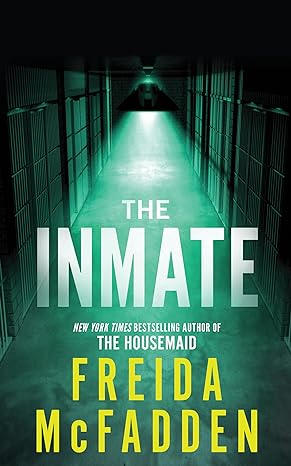
The book cover shows a corridor in a prison cell, with overhead lights casting a green glow on the concrete floor.

The second book I read was The Inmate. The heroine of the novel has a chilling past that haunts her on and off the job. While trying to piece together the puzzle of her past I found myself trying to guess the villain to no avail. The book had so many twists at the end that I had to go back and re-read the last few chapters to make sure I did not miss anything.  

By the time I got my hands on One by One, I considered myself a solid McFadden fan who would be sure to guess the plot this time. It turns out I got too confident in my plot prediction skills and found myself wrapped up in so many twists and turns in this book that it’s my favorite one by her yet. 

If you’re looking for something unpredictable, entertaining and hard to put down, a Freida McFadden book is the perfect choice. HCLS has several titles from the thrilling author, so no matter which one you choose, you’re in for a nail-biting time up until the very end. 

The Housemaid is available from HCLS in print in English, Korean, and Spanish.

The Inmate is available in print and as an e-audiobook.

One by One is available in print and as an e-audiobook.

Brittany is a Customer Service Specialist at the Miller Branch who loves writing, reading, and all things stationery. Her other hobbies include playing video games, listening to music, and spending quality time with her family.

Help Wanted by Adelle Waldman

The book cover has the title in brightly colored letters, with a cardboard carton in the foreground featuring the words "A Novel."

By Piyali C.

One of the reasons I love to read is because I am interested in learning about the lived experiences of people around me. Help Wanted by Adelle Waldman gives a vivid, insightful look into the lives of the rank-and-file employees of the Team Movement department of a large corporation – a department store chain called TownSquare. The team receives goods and stocks shelves from 4 to 8 am, when the store opens for customers.

The store manager, Big Will, has been promoted, and the much-desired position of store manager in a small, upstate town in New York will soon be vacant. Meredith, the logistics manager who oversees the Movement department, is almost certain that she will get the job. But the workers under her despise her leadership and are not fond of her as a person. The small group of employees, who are colleagues but not friends, form a plan to position Meredith in a way that will help them. The plan is hatched by Val, a socially conscious woman, married to her wife and mother to their young son. While Val floats the idea and sells it in a way that she professes will help the team, she has very selfish reasons to reposition Meredith.

As their plan progresses, the colleagues slowly learn about each other’s lives and the unique battle each is fighting. Poverty and the constant struggle to stay afloat leave little room to look around and care for others. But this conspiracy to influence the hiring of the store manager by low-level employees who hardly have any influence over anything, including their own lives, brings them closer. They start caring.

The repercussions of this plan and the corporation’s decision to cut costs by manipulating the staff’s hours touch the lives of all the characters. The characters come from all walks of life and belong to different races and ethnicities. One common thread that ties them together is poverty and lack of opportunity. Race gives a slight edge to some over others. Opportunities are rare; when one arises, a whole lot of these people start to dream of a slightly better existence for themselves and their loved ones. 

I did not expect to get so invested in this book. It takes a nosedive into the intricacies of big corporations, their manipulation and control of their employees, and the words they use to avoid turnover. Employees know that they are being exploited, but their options are limited, as many of them are one paycheck away from starvation and food stamps. The callousness of large corporations towards people who have worked for them for years is truly anger-provoking. While I didn’t love the characters, I came to care for them. I understood their apathy. What struck me most was how authentically Adelle Waldman etched each character. They are not perfect and (as I mentioned before) not even always very likeable, but there lies the authenticity of them. They are us – real, flawed, kind, bitter, sometimes petty, and sometimes loving.  

Waldman dedicates this book to all retail workers, and I believe those of us who have worked in retail and those who are curious to know how it is to work for big corporations will find it thought-provoking. 

Help Wanted by Adelle Waldman is available in print and e-book formats. This novel is also featured in our Adult Summer Reading 2024: Fiction (Relationships) booklist. 

Piyali is an instructor and research specialist at HCLS Miller Branch, where she facilitates two book discussion groups: Light But Not Fluffy and Global Reads. She keeps the hope alive that someday she will reach the bottom of her to-read list.

Evil

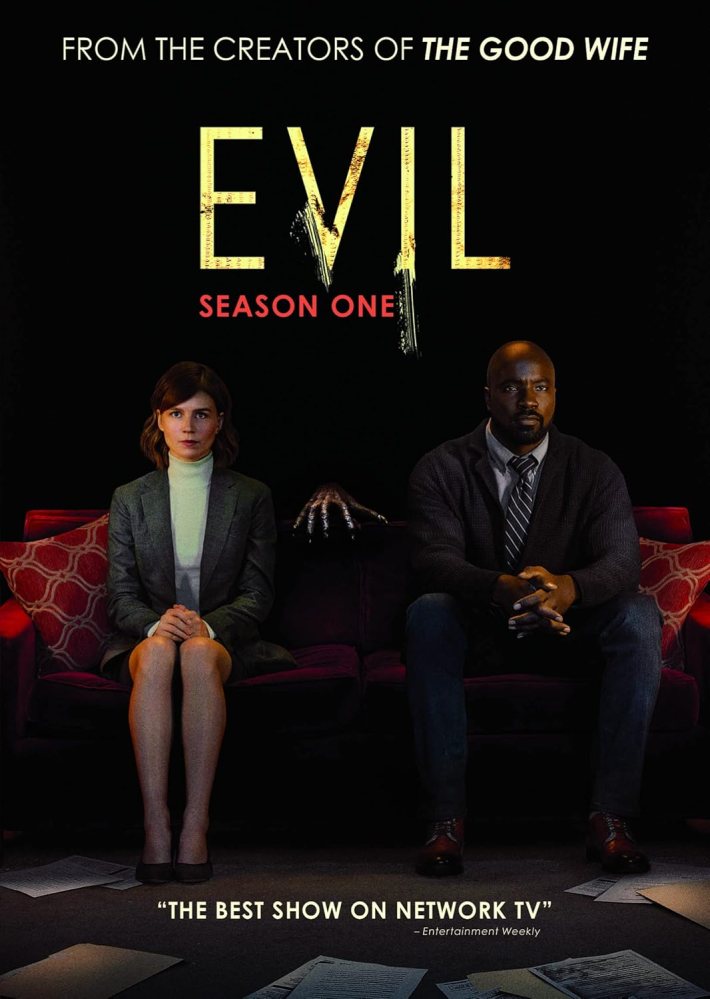
The DVD cover depicts a man and a woman seated side by side on an orange couch with cushions, wearing professional dress; a skeletal hand is reaching up between them from behind the sofa. The background is dark and there are papers scattered on the floor in front of them.

by Angie E.

Evil is like someone threw The X-Files, The Exorcist, and a dash of CSI into a blender and hit the ‘puree’ button. The result? A show that’s part supernatural, part procedural, and completely binge-worthy. Our trio of audacious investigators includes the skeptical psychologist Kristen Bouchard, the believer David Acosta, and the tech whiz Ben Shakir. Together, they’re like the Ghostbusters of the ecclesiastical world, but with fewer proton packs and more holy water. 

Evil doesn’t just flirt with the supernatural; it takes it out for a fancy dinner and then brings it home to meet the parents. Whether it features demonic possessions or prophetic visions, each episode leaves you wondering if you should sleep with the lights on. Even though it truly can be unnerving,  Evil is also unexpectedly hilarious. It’s got more tongue-in-cheek moments than a dental exam, and the dark humor is so spot-on, you’ll find yourself chuckling in between gasps of terror. 

So, if you’re looking for a series that combines courtroom drama with exorcism (because who isn’t?), then Evil could be your next must-watch. Just maybe don’t watch it alone… or in the dark… or anywhere near bedtime. You should still watch it, though, because Evil blends psychological thrills with supernatural elements to create a compelling story. 

Especially noteworthy is the stellar cast, which includes Mike Colter, Aasif Mandvi, Michael Emerson, Christine Lathi and Andrea Martin. Michael Emerson, known for his chilling performances in shows such as Lost, plays the kind of villain you just love to hate, making the show all that more deliciously fun to watch. 

Angie is an Instructor & Research Specialist at Central Branch and is a co-facilitator for Reads of Acceptance, HCLS’ first LGBTQ-focused book club. Her ideal day is reading in her cozy armchair, with her cat Henry next to her.