Hunted by Abir Mukherjee

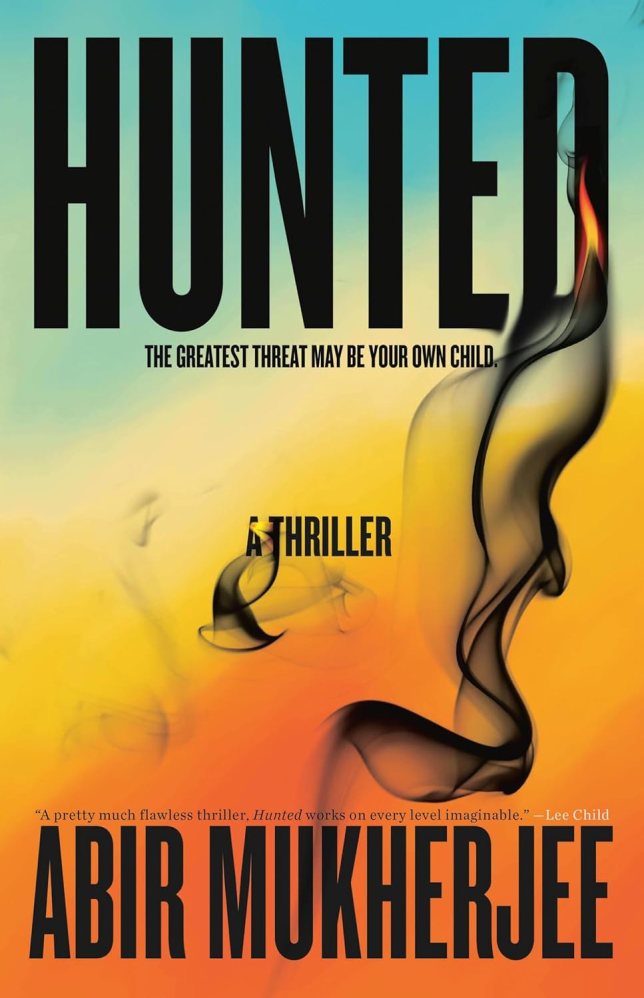
The book cover depicts wisps of smoke and flame against an orange-yellow background, bordered by clouds and a blue sky above.

By Piyali C.

Before I delve into the review of Hunted, I want to let everyone know that I am writing this review under protest. Why, you ask? I have nothing against the book. It was a great thriller, and I am even writing a review for it. My protest is against the author’s decision to leave us with a cliffhanger in his Wyndham and Banerjee series, the last book of which is The Shadows of Men. I was counting days…no, years, for the next one in the series to come out. I was stalking the author’s Instagram profile. Then I saw that he was publishing a stand-alone – Hunted. I will read anything that Abir Mukherjee writes, so of course I got on the holds queue right away and read the book in exactly two sittings. By the way, if you love historical mysteries, you can check out A Rising Man by Abir Mukherjee, the first book in the Wyndham and Banerjee Series. 

Based in the fractured landscape of American politics, Hunted is a fast-paced thriller that had me glued to the pages, so much so that I forgot to look up to enjoy the beauty of the crashing waves in front of me. Yes, I read this book at the beach. 

There has been an explosion in a mall in L.A, and the Sons of Caliphate has claimed responsibility for the carnage. While checking the grainy CCTV footage of mall security, FBI Special Agent Shreya Mistry spots the scared face of a young girl, Yasmin Malik, who had supposedly planted the bomb. Through intuition and clever deduction, she is just one step behind the culprits who have threatened to cause further mayhem as the country is gripped by election fervor. A right-wing candidate is in a tight race against the Democratic vice president, who is running for the presidency of the United States.

Is it really the work of some militant Islamic jihadist group who wants to tip the balance? From the first evidence, it certainly looks that way. Forces within the Bureau want Shreya to back off from this particular case, since Shreya endangers her life repeatedly in her pursuit of the perpetrators. But, is that the only reason that higher-ups want her off this case? Shreya Mistry, on the other hand, feels like she must work doubly hard to prove her worth in a male-dominated agency, being a woman as well as a person of South Asian origin.

A father in London finds out that his 18-year-old daughter has joined the Sons of Caliphate. A mother in the United States also fears that her son is part of this militant group. Neither of them can believe that their children are cunning or cruel enough to pull off this horrible crime. They feel their children are victims themselves, kidnapped by the group. These two parents come together, determined to find their children and take them home. Will they be too late? 

The thriller is certainly a roller coaster ride and definitely a page turner. Like Mukherjee’s other mysteries in my beloved Sam Wyndham Series, social issues are as important to the plot as the mystery. We read about gender inequality, racism, Islamophobia, and other pertinent social issues that are present in our world. The one critique that I have is that the characters lack depth, unlike the characters in his other books. But then again, Mukherjee has set the bar high for his fans. The action and the suspense make up for the less than realistic characters, though. If you are looking for a fast-paced, crisp, suspenseful thriller, look no further.

I grudgingly admit this was an interesting stand-alone, but bring back Sam Wyndham and Sergeant Banerjee, sir. We are waiting!

Hunted by Abir Mukherjee is available in print format. 

Piyali is an instructor and research specialist at HCLS Miller Branch, where she facilitates Light But Not Fluffy and co-facilitates Global Reads. She keeps the hope alive that someday she will reach the bottom of her to-read list.

The Wren in the Holly Library by K. A. Linde

Deep blue cover with a decorative metal filigree of holly leaves and a small bird.

by Kristen B.

Maybe you’ve heard? Romantasy is IT! Nevermind that it’s really a newly coined termed for something that has existed for a long time (romance in your fantasy or fantasy in your romance). If you like to read on trend, you should take a peek at The Wren in the Holly Library by K. A. Linde, published by the same group that brought you the Fourth Wing series.

The idea that the world is full of monsters is not new, whether in real life or urban fantasy. In New York, sometime in the near future, the Monster Wars have ended and the vampires, goblins, wraiths, and werewolves have signed peace accords with humanity. Basically, it’s a pact of non-interference even though everyone is in each other’s business anyway, but life has begun to return to some semblance of normality – complete with tourists in Times Square. As always, there’s more than meets the eye. I have to say that the idea of troll toll-takers in the subway made me smile.

Kierse, master-thief and child of the streets, is clearly a New Yorker, one who loves the neighborhoods and byways of her city. She’s involved in a heist to steal a huge diamond that would provide financial security for herself and two best friends. As she sneaks into a wealthy brownstone in the Upper West Side, she can’t believe there’s seemingly so little security at the mysterious Holly Library. The unthinkable happens when, despite all her preparation and all her skill, Kierse gets caught. Graves owns the Holly Library, and he is the beast in the shadows with an agenda all his own.

This Beauty and the Beast tale, complete with library and helpful staff, takes off from there. It not only follows the classic story’s desire to rehabilitate the monster, it also contains a wild mashup of another, bigger heist, training sessions, a house party, sexy times, meaningful friendships, and ancient Irish legends. For the most part, the author manages to combine it all seamlessly into the bigger picture. I could wish for fewer side stories that distract from the main action, but it’s a fun book.

Kierse and Graves are the heart of the story – beautiful and beastly each in their own way. Trust is an issue, as is loyalty. Can you have the second without the first? Tragic personal histories haunt both main characters, but in the end you can’t help but be in their corner. The ending leaves the story wide open for at least one more installment, and I’m already looking forward to it.

The Wren in the Holly Library is available in print, e-book, and e-audiobook.

Kristen B. is a devoted bookworm lucky enough to work as the graphic designer for HCLS. She likes to read, stitch, dance, and watch baseball (but not all at the same time).

Sigh, Gone by Phuc Tran

The book cover shows a school picture of the author as a child, against a gray background. He is wearing a white shirt with a collar beneath a peach sweater.

By Holly L.

When I first glimpsed the cover of Phuc Tran’s powerful 2020 memoir, Sigh, Gone, I chuckled at the title. Sigh Gone—hahaha, I get it! As in Saigon. As in Vietnam, the country Tran fled with his family as a little boy in the mid-70s. The unsubtle title perfectly suits the story of, “a misfit’s memoir of great books, punk rock, and the fight to fit in.” In his debut book, Tran tells a compelling coming-of-age story of a book-obsessed punk in small-town Pennsylvania. His case for the transformative power of books struck a chord with me, as a library worker. As an Asian American who also came up in 1980s America, I empathized with Tran’s struggle to fit into a society that was relentlessly calling his American-ness into question.   

Each of the book’s sections is titled with a famous work of literature, the prologue being Oscar Wilde’s The Picture of Dorian Grey. The opener is a scene from Carlisle Senior High School in Carlisle, Pennsylvania, a small town in the Susquehanna Valley. Tran is sizing up the new kid, Hoàng Nguyễn, whose arrival marks Phuc’s demotion as the (meaning only) Vietnamese kid at his school. “@#$% that kid,” he thinks. Rather than seeing Hoàng as a potential comrade, Tran regards him as “a fun-house mirror’s rippling reflection of me…I was filled with loathing.” By this time, as an eleventh-grade Asian kid who had finally achieved “insider status”—acceptance among his punk crew and being better read than any of his classmates—Tran saw Hoàng as only a distorted picture of who he might have been had he not assimilated so well.

The story begins in earnest in 1978 with Tran’s earliest memory. He’s in the eat-in kitchen of his family’s first apartment in the United States, having fled Vietnam three years earlier. While his mother prepares dinner and his father tries to make sense of some bills with his limited grasp of English, Tran asks his dad, “Ba, what’s my name?” The question arises from playground encounter when another kid asked Tran his name and he didn’t know how to reply. Among all the nicknames and endearments he was labeled with by his family, he didn’t know which name to give. Young Tran felt he needed a name, an English name, that would make sense to his playmates. After a minute of consideration, Tran’s dad decided that the actual Vietnamese pronunciation of his name (which sounds more like Fuhp, with a rising tone at the end) would be too confusing to Americans, and he settled on Phuc (sounds like Fook, rhymes with Luke), which Tran adopts, referring to it as an alter ego.

Tran’s story takes us from childhood through adolescence with identity being a central theme. As he forms friendships and battles racist bullies, Tran struggles to define who he is, along with where he and his family fit in a mostly white working-class town. He expresses an ambivalence about his community, “(as refugees) random strangers had saved us. And random strangers were cruel to us, too.” Violence is another thread running through the memoir, inflicted upon Tran by school bullies and members of his own family.

He finds refuge and a means of self-fortification through books (first comics then Western classics) and later, music, specifically punk rock and its rebellious, non-conformist subculture. Tran’s scuffed Doc Martens and rotation of band T-shirts represent an identity of his choosing, not one imposed upon him by society. As Tran’s reinvention into honor-roll skate punk becomes complete, we see a growing alienation from his family, whose notions of success and assimilation don’t align with his own. One exception being Tran’s second-hand store hauls, approved of by his thrift-conscious father.

Some reviewers criticized Tran’s memoir as lacking in nuance and maturity, but I loved how he channeled the voice of his teenage self in all its egocentric, pained, misunderstood glory. In the best scenes I felt like I was right there, hanging out with his crew, cheering them on when they successfully fled the cops on their skateboards during their annual “Running of the Pigs.” By the end of the book, I felt a kind of pride in this self-made young man, considering how far he had gone, what he had endured, and who he had become. I almost wished for another few chapters detailing the adventures that awaited Tran beyond graduation. But that was the end of the story, at least until he writes another memoir. Sigh, gone. 

Sigh, Gone is available from HCLS in print and also in e-audiobook and e-book formats.

Holly Learmouth is an Instructor & Research Specialist at HCLS Miller Branch. She enjoys reading widely, knitting sporadically, and baking as often as she gets the chance.

Comparatively Lit – Little Women, March, and the Great American Novel

by Ian L-F

Comparatively Lit
Tuesdays, Aug 6 & 20
7 – 8:30 pm
Meets online. Register to receive a link.

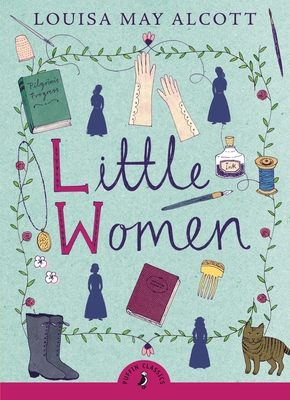
Comparatively Lit, a virtual book club hosted by HCLS East Columbia Branch, compares literary classics and newer works they have inspired. We focus first on Little Women by Louisa May Alcott and March by Geraldine Brooks, a modern companion novel focusing on the March patriarch as he serves as a Union chaplain in the Civil War.  

When I was first brainstorming this class, I knew I wanted to cover “great works of literature” – whatever that means. Literature is a fraught term, one that often coveys snobbery and presumed superior merit. This ivory-tower elitism has always bugged me. If there was a meritocracy to writing and literature, at the very least it would be a more open field than many have historically treated it.  

This is where Little Women enters our discussion. Truthfully, I had not read Little Women before setting up this class. It had always existed in the periphery of my literary journey. Perhaps because many of my professors had a bias for British literature, Little Women did not receive the same focus as the works of Jane Austen or the Brontë sisters. Yet, despite its century and a half of constant publication and adaptations to screen and stage, Little Women was likewise shunned by American academics for many decades. Its potential meaningfulness and impact were at best misunderstood, if not deliberately ignored.  

Today, there is no real argument against considering Little Women a classic of American literature. The novel carries the weight of a pivotal period of our national history, as the horror of the Civil War looms around it. The flourishing and evolving philosophies of Transcendentalism and First-Wave Feminism define this work. The struggles the March sisters endure mirror the struggles our nation faced (and continues to face). None of this overshadows that Little Women is also a wholesome and cozy story that people have returned to for inspiration and insight for more than a century. Its popularity and impact persist into the present day. 

Among the myriad adaptations of Little Women, we examine March by Geraldine Brooks. In the original tale, Mr. March is serving as a chaplain within the Union Army, remaining absent for most of the novel. March refocuses the story from his point of view as he struggles with the brutality of war. He wants to shield his family from this reality, but his shaken conscious threatens to unravel him. Brooks’ story has an exceptionally different tone, less cozy to be certain.  

Comparatively Lit looks explore how narratives interact and how these works reflect our worlds. When we examine stories with common foundations, what can we learn? Do the respective time periods of their authorship inform differences in their themes? Despite the time difference, are there messages that echo between them? What does each say about America or being American?  

This new book group meets online for two sessions. Tuesday, August 6 features our discussion of Little Women, which expands to include March on August 20. Please register to receive the link.  

Ian Lyness-Fernandez is not quite used to being Instructor at the East Columbia Branch. He hopes his passion for learning can somehow translate into a skill for teaching.

The World Wasn’t Ready for You by Justin Key

The book cover depicts a variety of geometrical images - a funnel, some parallel lines, and an X - and an arachnid, in various jewel tones against a black background.

by Angie E.

Imagine a collection of stories where Black Mirror (Netflix series) meets Get Out, reminiscent of Octavia E. Butler’s work, blending science fiction, horror, and fantasy to tackle issues of race, class, and prejudice. This thrilling and often heartbreaking debut introduces an extraordinary new voice.

Justin C. Key has been fascinated by monsters since childhood. Growing up reading R. L. Stine’s Goosebumps, he pictured himself heroically battling monsters. However, watching Scream 2, where the only Black couple is swiftly killed off, made him realize that Black and Brown characters in his favorite genre were often the victims or villains—if they appeared at all. In The World Wasn’t Ready for You, Key broadens and redefines the horror genre to delve into themes of race, class, prejudice, love, exclusion, loneliness, and the essence of humanity, exposing the inherent horror within us all.

The opening story, “The Perfection of Theresa Watkins,” begins as a sci-fi love story, but quickly turns nightmarish when a husband employs new technology to transfer his deceased Black wife’s consciousness into the body of a White woman. To secure an early release, a Black inmate joins an experimental medical study in “Spider King” and soon faces disturbing side effects. In the collection’s title story, a father strives to protect his son by teaching him how to maneuver a prejudiced world that perceives him as a threat. “The Quantum Mechanics of the Heart” is an examination of both quantum physics and emotional connections, poignant and intellectually stimulating. Another keeper, “The Last Library,” transports readers to a world where libraries are sentient beings, safeguarding knowledge and memories. The sad beauty of this tale lingers long after the last page.

Key’s writing is lyrical, infused with wonder and empathy. His ability to evoke emotions through speculative scenarios is commendable. Whether it’s a grieving astronaut seeking solace among the stars or a time-traveling violinist chasing echoes of lost melodies, Key’s characters grapple with universal truths. The World Wasn’t Ready for You is a testament to the power of speculative fiction. It challenges conventions, celebrates diversity, and invites readers to question their own existence. Key’s storytelling transcends genres, leaving an indelible mark on the literary landscape.

Angie is an Instructor & Research Specialist at Central Branch and is a co-facilitator for Reads of Acceptance, HCLS’ first LGBTQ-focused book club. Her ideal day is reading in her cozy armchair, with her cat Henry next to her.

Alias Emma by Ava Glass

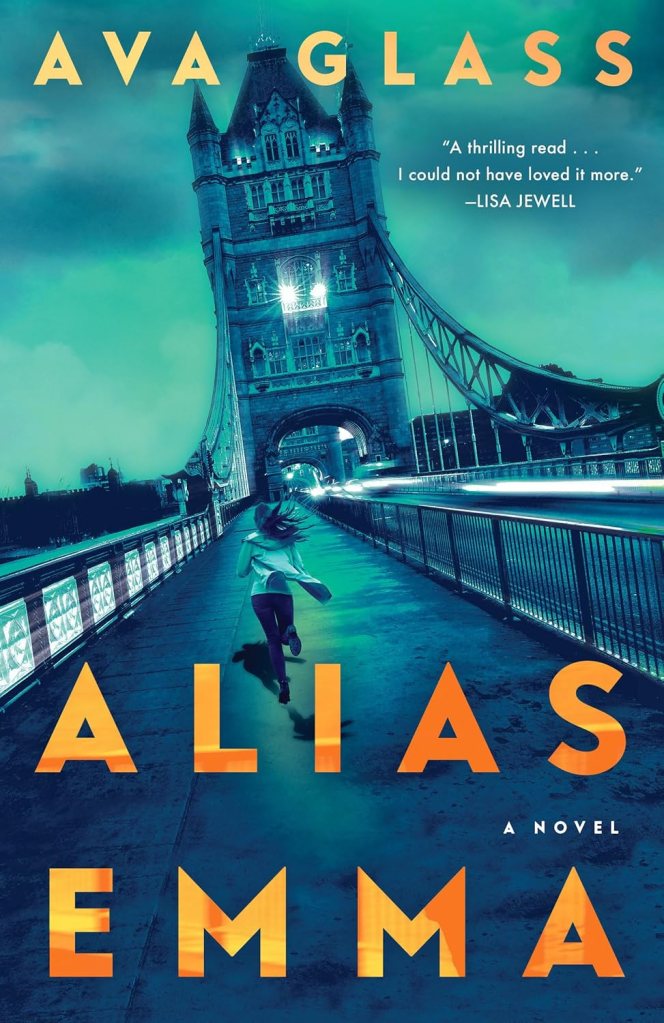
The book cover depicts a woman running across London Bridge at night, with her coat and long hair flying out behind her and several bright lights emanating from the bridge above her, shown against a cloudy, dark blue-green sky.

By Julie F.

Alias Emma by Ava Glass is a strong debut novel, a spy thriller with a lot of clever nods to the history of the genre. Even though Kim Sherwood has recently published two books in her series about a woman in the double-O universe (Double or Nothing and A Spy Like Me, both authorized by the Ian Fleming estate), you could reasonably consider Glass’s main character, Emma Makepeace, as part of a tradition of propulsive action and daredevil exploits reminiscent of Fleming’s James Bond. In terms of Emma’s quick thinking and survival skills, there are also shades of Emma Peel from The Avengers. Finally, Emma’s handler, Ripley, might make you think of two disparate characters who nonetheless pull all the strings and hold most of the cards in their respective fictional espionage worlds: the enigmatic George Smiley from John Le Carre’s novels and Mick Herron’s obnoxious but brilliant head of Slough House, Jackson Lamb. (Side note: It’s a testimony to the acting skill of Gary Oldman that he has portrayed both Lamb (Slow Horses) and Smiley (Tinker Tailor Soldier Spy) to great acclaim. Both are fantastic performances and well-crafted productions.)

Ava Glass sets a remarkable pace from the start in this non-stop story of a day in London, with Emma working to avoid compromised CCTV cameras (and the Russian spies who are monitoring them) as she tries to get across the city to the headquarters of the covert agency that secretly employs her. She’s towing a reluctant traveler along with her: Michael Primalov, a doctor whom the enemy has already attempted to kidnap or kill. Michael needs to be in witness protection because of his mother’s past history as a Russian scientist who traded secrets. Emma uses all of her smarts, tradecraft, gadgets, and skills to outwit the villains at every turn. The duo hope to connect with Emma’s supervisor, Ripley, but when they don’t know who to trust, even communication via regular secret channels is fraught with danger. At moments, this wild tale might make the reader feel like the pair couldn’t possibly cope with one more setback as Emma and Michael avoid explosions, are chased by Russian assassins, and even take a detour into the famous tunnels of subterranean London. If the reader is willing to suspend their disbelief a little bit, a fun thrill ride full of bravery and energy also reveals something meaningful about the two people at the heart of the tale and the changing dynamic between them. Emma takes the lead, but Michael makes improvised use of his physician’s skills as well, and they grudgingly learn to trust one another – at least enough to get them through this arduous journey across the city.

The book cover depicts the Shaftesbury Memorial Fountain in Piccadilly Circus, London, surmounted by a winged statue of Anteros and popularly known as Eros. There are silhouettes of people standing and moving around the fountain, dressed in 1940s-style clothing, and a hazy blue fog permeates the illustration.

If you like spy stories with women protagonists, I highly recommend the following novels:

Restless by William Boyd

Red Widow and Red London by Alma Katsu

Transcription by Kate Atkinson

Sweet Tooth by Ian McEwan

American Spy by Lauren Wilkinson

And if you read Alias Emma and enjoy it, there’s great news: Ava Glass has already published a sequel, The Traitor, and there’s a third book (The Trap) coming in fall 2024. Sounds like a series that’s ripe for a film adaptation – perhaps Gary Oldman will be available to play Ripley!

Julie is an instructor and research specialist at HCLS Miller Branch who finds her work as co-editor of Chapter Chats very rewarding. She loves gardening, birds, crime fiction, all kinds of music, and the great outdoors.

Pathogenesis by Jonathan Kennedy 

A primitive-style illustration shows people stewn about a barren lansdscape with

by Sahana C.

Four years after the start of the COVID-19 pandemic, it still felt a bit too soon for me to sink my teeth into this title, but I’m so glad I persevered. I’m on a mission to read more nonfiction this year, to make myself a more well-rounded reader (who knew that there were just as many genres of nonfiction as there are of fiction?! Mr. Dewey Decimal, I suppose). This was a satisfying, fascinating read to satiate my sci-fi loving heart. It’s a testament, I think, to the ways that fiction can only go so far – the real world always has something more unimaginable, more bizarre to throw at us. 

Jonathan Kennedy made it easy in this absolutely fascinating read. I am no science buff, so some of the more nuanced language about the ways that viruses exist was lost on me. But it was so worthwhile to struggle through some of the more technical descriptions of the bacterial and viral elements to understand the social implications of the plagues, as promised by Kennedy.

The premise this book asserts is that viruses have had a lasting impact on humanity, and beyond, shaping history through the ages. I won’t say that I feel like the world can attribute much of its development and evolution to plagues as Kennedy seems to assert, but I also can never again claim that plagues did not have a major role to play in the evolution of our understandings of race, class, and capital. Beyond the obvious examples of the ways in which architecture and city planning changed after events like the Black Plague and advancements in healthcare, Kennedy also lays out clear paths to explain the ways things like mercantilism and the slave trade emerged and the impact viruses had on them.  

Seeing the world through this public health lens has made me step back and consider all of the other intersections and influences that I might not have clocked as important – but for this fascinating study of the history of the ways we became what we are now through the perspective of viral history. It made the fall-out from our most recent (and ongoing) plague feel less “unprecedented” and more like something that can and will shape us moving forward. It’s not about “returning to normal” and all about looking to the future to see how we evolve, as we move, slowly, forward.  

Pathogenesis is available in print, e-book, and e-audiobook.  

Sahana is an Instructor and Research Specialist at HCLS Savage Branch. They enjoy adding books to their “want to read” list despite having a mountain of books waiting for them already.

How to Do Nothing: Resisting the Attention Economy by Jenny Odell

The title and author's name nestle into groups of color

by Eric L.

How to do nothing. I want to know. 

Jenny Odell is an interesting person and quite a writer. Let me give the caveat that we have a similar worldview, so perhaps I’m biased. In How to Do Nothing: Resisting the Attention Economy, she cites numerous writers with whom I also seem to share beliefs and an ethos, including Rebecca Solnit and Jia Tolentino. (Check out their books and articles; both are worth your time.) I am now reading Odell’s latest work Saving Time: Discovering a Life Beyond the Clock

The title of How to Do Nothing is a bit of a misnomer. (The book cover is beautiful, by the way.) It’s not about doing nothing, but about a sort of resisting in place and trying to distance yourself a bit, not completely, from technology and productivity as the subtitle suggests. Two things that have come to dominate American culture, as well as are inextricably linked in many cases. 

Odell likes labor, a lot, both as a movement and a concept. Her brief anecdotes about the history of the labor movement in the United States alone make the book worth reading. Odell also mentions interesting art and literature throughout the text. These are things that interest me a great deal, and Odell made me think that I don’t know nearly enough about them. It’s a feeling I like, and one of the many reasons I read books. 

Odell suggests that instead of dropping out, we should rather “resist in place.” She devotes a section of the book to the various movements to start a new “society” outside of mainstream society and the reasons for their failures. Starting a new society is something I’ve considered, intellectually at least, as it is a common trope in both books and films. Unfortunately, problems of equality and politics tend to persist in any sort of human organization, as is the case in Odell’s examples. This reality is also often borne out in the history of any political revolution. Animal Farm, although appearing to be about the Russian revolution, is really a satirical allegory of this concept. 

The actual world and humans are much easier to avoid than ever as we work remotely, stare at screens, and seemingly try to avoid one another. Odell offers us a simple solution; observe the world around us, the local, the quotidian moments of each day as a form of resistance. Take a longer look at your real surroundings and your fellow humans. For example, she recommends that you go to the park and just sit or be. Truth be told, I’m already pretty good at this sort of thing, however I could probably observe the world around me better. (I plan to work on this.)

It may sound cliched at this point, but Odell implores us to get back to nature and each other. I do believe these things could drastically change society for the better. She does concede, and I agree, this is a privilege and requires time. In other words, many of us are squeezed for time and the specter of economic precariousness looms large for far too many. That said, this is a sort of a circular reinforcement to her argument, and it’s certainly easier said than done. However, she successfully bolsters her argument with historical examples of how the US labor movement took back their time. In short, people working in solidarity improved not only conditions and pay, but their amount of free time. I have no doubt we’re all the better for that. But let me be clear, this doesn’t happen easily or quickly, and there are very powerful forces that will push back. 

Some folks in my book discussion group (Read. Think. Talk.) didn’t care for the book’s style. They found it disjointed and posited that the book seemed like a series of essays. This is a fair criticism; however, I recognized the overarching theme and liked the disjointed style. They suggested that Orwell’s Roses by Rebecca Solnit has a similar style, I agree, but I also love that book. (read a review)

In sum, I found the book packed full of interesting information and great commentary on our society. I like the simple way Odell recommended how we could improve our coexistence with others and the planet. Actions that may be necessary at this juncture. 

How to Do Nothing: Resisting the Attention Economy by Jenny Odell is available in print, e-book, and e-audiobook.

Eric is a DIY Instructor and Research Specialist at HCLS Elkridge Branch. He enjoys reading, films, music, doing nearly anything outside, and people.

Summer Reads for Kids

The book cover depicts two mice standing on green grass, flying an orange kite against a blue sky.

by Eliana H.

If you haven’t checked out our Summer Reading Adventures 2024 yet, it’s not too late to take a look! We have ideas for activities, book suggestions, and prizes for all ages. While the titles on our summer reading lists cover a wide range of topics, I wanted to share some specifically summer-themed books for our younger customers. 

Mouse Loves Summer by Lauren Thompson 

This Early Reader follows Mouse and his big sister, Minka, as they go on a simple summer adventure. On each page, readers are invited to identify something with simple clues and pictures to guide them, providing a great opportunity for interaction between an adult reader and a young child. Asking questions can also invite little ones to make a prediction about what the characters might find next, or you can make connections to experiences you’ve had together! 

The book cover depicts a blue cottage with a brown roof at the seaside or lakeside. There are three sailboats on the water and you can see the distant shore with the blue sky beyond. There is a sandy beach behind the blue cottage and a girl and dog are running in front of the house. There is a small skiff with an oar beached on the sand on one side, and a boxy car parked on the other side. There are sandcastles and beach toys on the shoreline.

The Little Blue Cottage by Kelly Jordan 

Perfect for fans of The Little House, by Virginia Lee Burton, this story highlights the special connection we can feel to a place. Every summer, a girl and her family visit the little blue cottage. The girl and the cottage both look forward to their time together, until the girl grows up and her family no longer visits. But finally, when the girl is grown and a mother herself, she brings her family to create new memories in the little blue cottage that has waited for her all this time. This sweet story may be especially meaningful if you have a particular place that you visit regularly. 

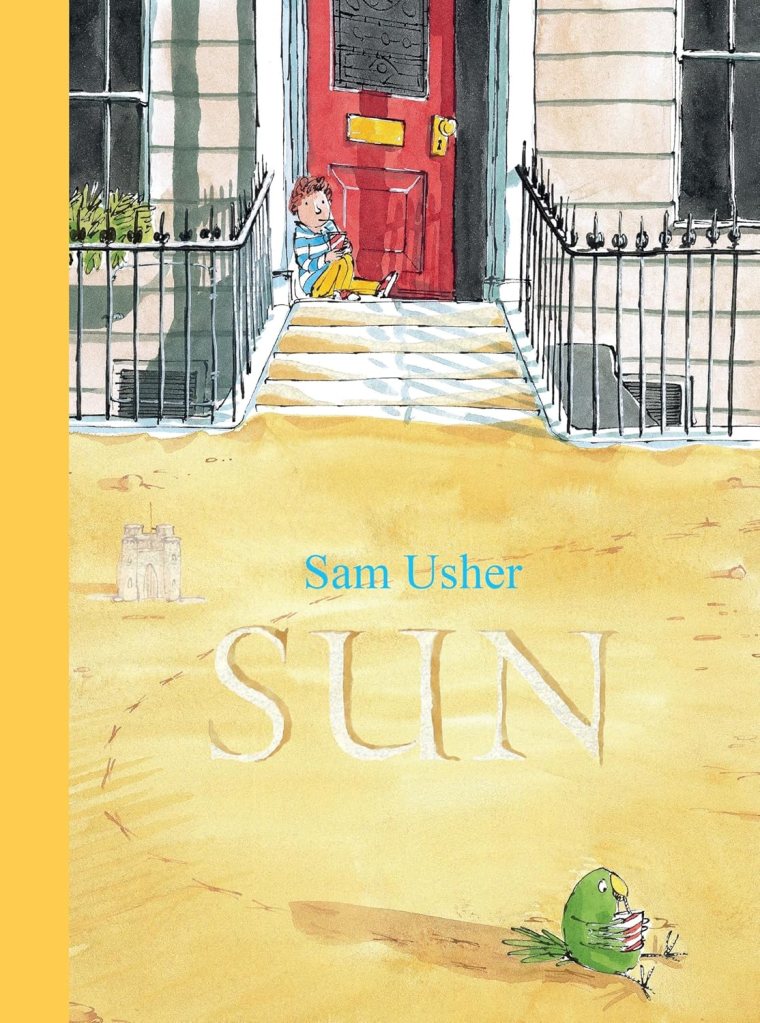
The book cover depicts a child sitting on the front steps of a house with an open red door, drinking something from a straw. A parrot-like bird is seated on the sidewalk in front with legs splayed, also drinking from a cup.

Sun by Sam Usher 

In the summer installation of this series sharing the adventures of a boy and his grandfather (see Rain, Snow, and Storm for other seasons and Free for an extra adventure), our two main characters gather provisions and set off for a picnic on the hottest day of the year. Grandad navigates, and the narrator is the lookout, as they seek the perfect spot. But when they find it, a band of pirates is already there! Watch for interesting details in some illustrations, and enjoy the panoramic view in others. 

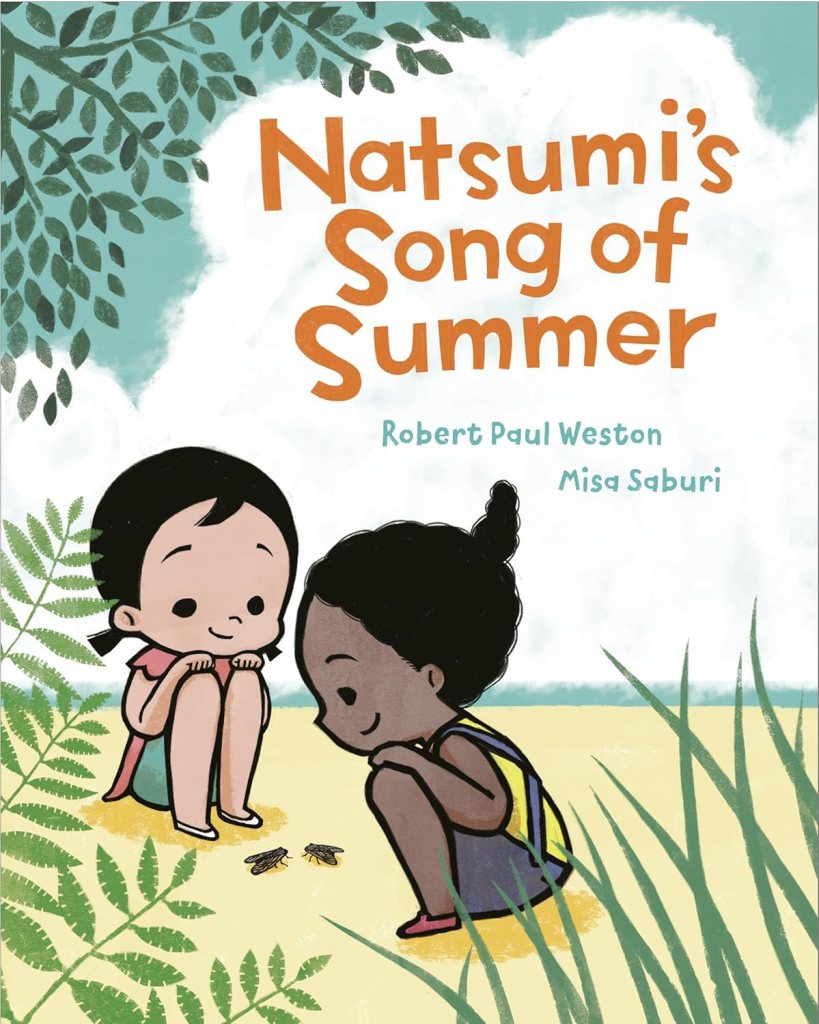
The book cover depicts two children crouched in the sand beneath a tree, looking at two winged insects that are sitting on the sand.

Natsumi’s Song of Summer by Robert Paul Weston 

Natsumi loves summer, especially the insects she can see during that time of year. This summer will be particularly special, as her cousin Jill comes from the United States to visit her in Japan for the first time. Will they have anything in common? Striking illustrations accompany text written in the form of Tanka poems, a traditional Japanese format that includes five lines with 31 syllables.

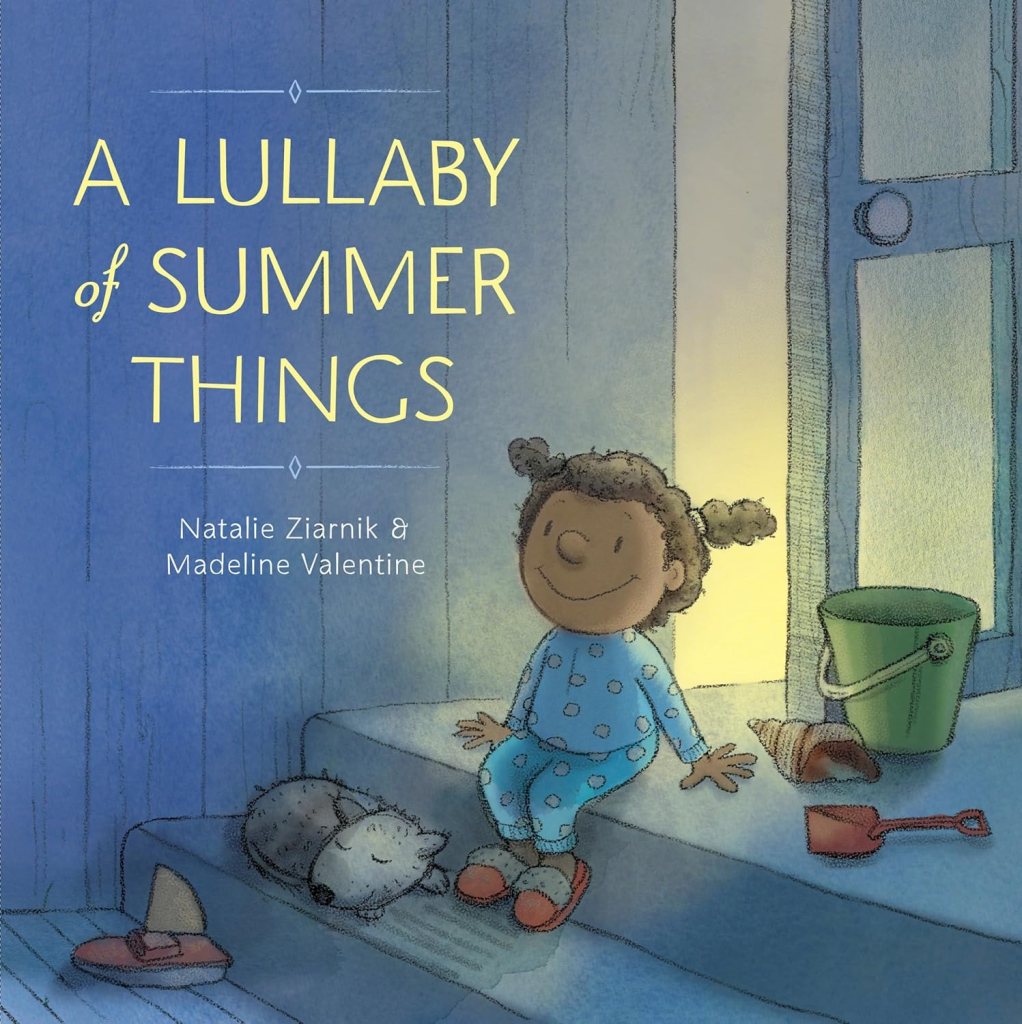
The book cover depicts a child and a sleeping dog sitting on steps with light coming through the door behind them; there is also a toy sailboat, a seashell, a green sand bucket, and a small reddish sand shovel.

A Lullaby of Summer Things by Natalie Ziarnik 

After a fun day at the beach, a family winds down and gets ready for bed, despite their dog’s interference. Simple, rhyming text complements illustrations full of action and joy. This would be an excellent choice to bring along to a beach trip and read at the end of your day, remembering the fun you had together. 

Eliana is a Children’s Instructor and Research Specialist at the Elkridge Branch and co-chair of the HCLS Equity Committee. She loves reading, even if she’s slow at it, and especially enjoys helping people find books that make them light up. She also loves being outside and spending time with friends and family (when it’s safe).

Happy Medium: A Behind-the-Curtain Look at Writing

by Rohini G.

The perfect alchemy of romance, humor and quirky originality.”
—Sophie Cousens, New York Times bestselling author

An brightly colored illustration show a man and woman facing each other across a picket fence, with a ghost rising from the barn in the background.

Sarah Adler was folding laundry. A decidedly boring task. To distract herself, Sarah Adler told herself a joke, which then transformed itself into a clever romance novel with a honest and funny con-woman, a chatty ghost, and a hazel-eyed farmer. Now that is some fascinating alchemy!

I am curious about this mundane-to-magical process of writing and plan to ask some serious questions when Sarah Adler visits the library on July 27. Sarah plans to offer a candid behind-the-curtain look at writing and publishing genre fiction, as well as a discuss the book itself. She will focus on different writing precepts for creating compelling stories and specifically analyze high concept romance and premise vs. plot.

A photo of Sarah Adler, who has long brown curly hair and wears glasses.

To meet with Sarah Adler, visit HCLS Miller Branch on Saturday July 27 at 3 pm and REGISTER to save your spot.

More about Happy Medium:

A clever con woman must convince a skeptical, sexy farmer of his property’s resident real-life ghost if she’s to save them all from a fate worse than death. Fake spirit medium Gretchen Acorn is happy to help when her best (read: wealthiest) client hires her to investigate the unexplained phenomena preventing the sale of her bridge partner’s struggling goat farm. Gretchen is happy to help a nice old man finally retire and put some much-needed cash in her pockets at the same time.

Of course, it turns out said bridge partner isn’t the kindly AARP member Gretchen imagined—Charlie Waybill is young, hot as hell, and extremely unconvinced that Gretchen can communicate with the dead. (Which, fair.) Except, to her surprise, Gretchen finds herself face-to-face with Everett: the very real, very chatty ghost that’s been wreaking havoc during every open house. And he wants her to help ensure Charlie avoids the same family curse that’s had Everett haunting Gilded Creek since the 1920s.

Sarah Adler is a USA Today bestselling author of romantic comedies about lovable weirdos finding their happily ever afters. Her debut novel, Mrs. Nash’s Ashes, was a New York Public Library Best Book of 2023. Her second, Happy Medium, is a USA Today bestseller. She received both her BA in History and American Studies and MA in History from American University in Washington, DC, where she focused on 19th and early 20th century U.S. culture.

She lives in Maryland with her husband, daughter, and very mischievous cat.

You can borrow Happy Medium as a print book, e-book, or e-audiobook.

Rohini is the Adult Curriculum Specialist with HCLS. She loves literature and rainy days.