In literary fiction, every month should celebrate Irish Heritage. For 2024, explore the beauty that is the work of Claire Keegan. “Long short stories,” as Keegan refers to them, are the ideal length for busy times and for reading again and again. Every word is perfect.
Keegan has joined the impressive lineage of Irish writers who construct characters of such depth, with language of such magic, that their work is beyond compare. So Late in the Day: Stories of Women and Men, Keegan’s most recent work to be published in the US, is a collection of three relationship stories. In the first, a self-absorbed man’s engagement fails. In the second, a woman writer faces her creative process. In the third, a woman stepping out of her comfort zone walks into a hell-bound affair.
In Small Things Like These (also as e-book), the setting is 1980s rural Ireland during the Christmas season. The protagonist Bill Furlong, a thoughtful, hardworking supplier of coal and lumber, is grateful for his wife, his financially stable life in economically treacherous times, and his five daughters for whom he provides a loving home and a solid Catholic school education. Born out of wedlock, Bill yearns to know who his father was, although few people from his early life remain to shed light on his parentage. Bill cares about those around him, and as he tries to sleep each night, his mind is “going round in circles,” as his thoughts are “going over small things like these.” The narrative follows Bill as he discovers the exploitation of girls and young women at a local convent. Will Bill risk what he knows and what he has and stand against this oppression?
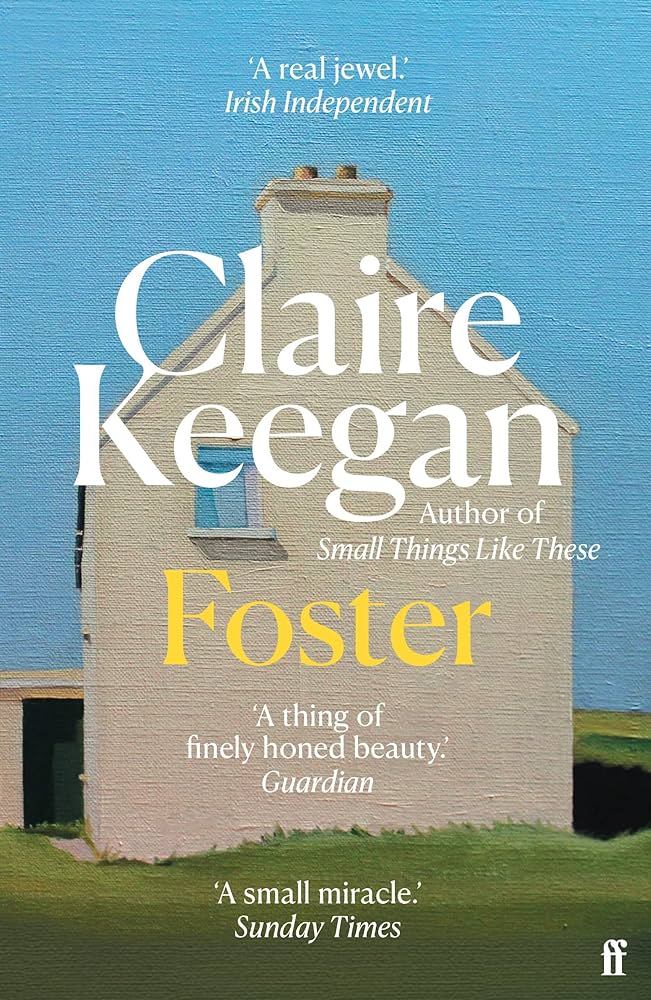
In Foster (also as e-book), the elementary school-aged Cait is sent to live with relatives who are virtual strangers to her. Because her parents do not have the means to raise their numerous children and her mother is pregnant again, Cait spends a summer filled with attention and love that she has not before experienced. “I am in a spot where I can neither be what I always am nor turn into what I could be.” Foster is the source material for The Quiet Girl, the first Irish language film to be shortlisted for an Oscar. Indulge in both and life will be richer for it.
Cherise Tasker is an Adult Instructor and Research Specialist at the Central Branch. When not immersed in literary fiction, Cherise can be found singing along to musical theater soundtracks.
He’s not just a demon, he’s THE demon. And honestly, Kaiisteron is one of my favorite characters from the past year. Maybe not quite in possession of “a heart of gold,” he nonetheless loves his friends and tries to do right in the world.
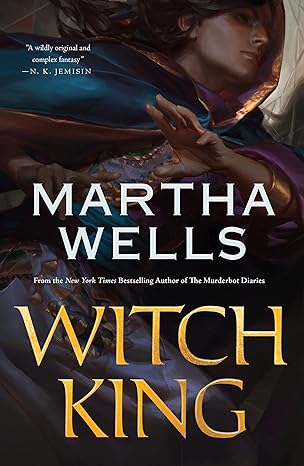
Witch King by Martha Wells opens with Kai returning to consciousness, confused and worried about being disembodied – basically a ghost. It’s a disorienting start to a mystery full of politics and betrayal, as we have to figure out what’s going on along with the demon. He immediately resolves the need for a body (and revenge) and goes looking for his best friend, Ziede. She is a Witch who can no longer sense her wife, Tahren – a nearly immortal being who switched sides in the last war. Kai and Ziede, along with an abandoned orphan and other people picked up along the way, immediately set out to find Tahren and figure out what has happened in the year they were imprisoned.
From that point on, the novel intersperses the current timeline with the story of how all these powerful people met each other and changed the world. They were part of a rebellion, upending the power-hungry Hierarchs who were conquering the world. As usual, Martha Wells provides world building that’s miles deep and centuries long. This world feels real and lived in, so the stakes matter. Except that the full, entire stakes are not crystal clear until past and present come together in a surprising, satisfying ending with plenty of twists and turns.
This book definitely rewards a second read. The first time through I was more concerned with figuring out who was who and what was happening. Wells throws you into the deep end and slowly parcels out clues and details. The stakes are so much higher than a missing spouse or a betrayed friendship. The second time, I could appreciate the sheer genius of how the two timelines fit together and inform each other. Once again, Kaiisteron’s actions and his loyalty to the man who saved him changes the fate of his world. I hope Wells writes more in this world, but this is a fantastic standalone as is.
Kristen B. is a devoted bookworm lucky enough to work as the graphic designer for HCLS. She likes to read, stitch, dance, and watch baseball in season (but not all at the same time).
Land lubbers beware – this one was made for sea-lovin’ folk.
I grew up obsessed with shipwreck stories. The might and fury of the ocean, the hubris of all those little people attempting to cross her, and their inevitable failures along the way always felt like the ultimate story of man versus nature.
Between Daniel Defoe’s Robinson Crusoe, Jonathan Swift’s Gulliver’s Travels, and Johann David Wyss’ The Swiss Family Robinson, I felt like I was preparing myself in case something wild happened and my account was needed to tell the story. I wrote field notes, carried a compass with me, and also carried a little kit full of tools in case I was caught off guard and thrown into the wilderness. It was like I was doomsday prepping, but I was eleven and only prepared for a night or two on my own.
The Wager: A Tale of Shipwreck, Mutiny and Murder by David Grann, nonfiction though it may be, is the same kind of rollicking, wave-crashing tale of survival that I devoured growing up, and the most titillating part is that it was all real. Lord Byron (yes, that one)’s grandfather was a prolific note-taker, and some of the other crew documented their own experiences through war with men and nature aboard the Wager, as well as their fight for survival after the shipwreck.
You want mutiny? Piracy? A Lord of the Flies-style attempt at societal structure and subsequent breakdown? You want nautical tales and stories of the open sea? The Wager has all of that and more. Grann weaves together a narrative from such disparate perspectives, he allows a reader feel as though they, too, are looking at this 18th-century phenomenon as it occurs. It’s a captivating, engrossing read, and I can’t recommend it highly enough.
The audiobook is narrated in an absolutely compelling way; the book contains actual pictures of Wager Island from Grann’s own travels. No matter how you choose to read this work, you’re guaranteed to be sucked into the story. And more than that: you might be tempted, like I was, to start your own logbook – just in case something wild happens.
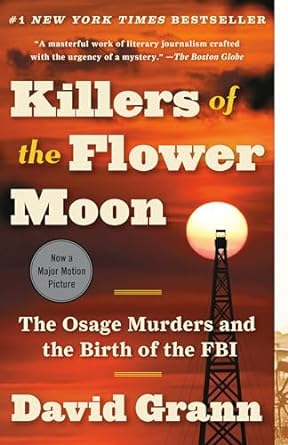
David Grann also wrote Killers of the Flower Moon, which was recently adapted into a film, if that gives you any hint to how cinematic his books are. In The Wager, he weaves into a cohesive story the images of waves and barren island, the brutal fight for survival, and humanity laid bare.
Sahana is an Instructor and Research Specialist at the Savage Branch. They enjoy adding books to their “want to read” list despite having a mountain of books waiting for them already.
My sister-in-law recommended this book, and I’m glad she did! I could have read this book in one sitting if had I the time and stamina. It was one to be devoured. My SIL shared with me how she loved the descriptions and how she wished she had a little more background knowledge for some of the scenery or architecture described. I think that’s a fair desire, especially since when most people think about historical fiction during WWII, they tend to think about the European theater, not the Pacific. Then, when people do consider the war in the Pacific, it’s still in reference to American involvement with Pearl Harbor and the atomic bomb. Truly, your background knowledge depends on which side of the world you grew up and the history you were taught.
I felt at home, in a way, because this book brought Guam back to me with its descriptions of the climate, flora and fauna, and customs. Malaysia is not all that different from the island, except that Malay is the main language and it is slightly hotter year-round. My father was eight years old when he had to flee his town in the Philippines and hide in the mountains. He told me how he hid in the back of a truck under packed bags and a blanket, eating peanut brittle. He shared with me some of the more frightening tales involving a shootout and watching a beloved caregiver dying while he was pulled away. Then, how he became unlikely friends with a couple of Japanese soldiers when he was 11 or 12 years old, trading fish for candy and playing games to pass the time. All his stories came to mind while reading this book, so it felt real and true to me.
This debut novel is set in Bintang, Kuala Lumpur during the British rule and Japanese occupation of Malaysia. We engage in a kind of transformative-grief-time-travel that colonization and war bring through the experiences of a mother and her children. The descriptions and feelings in this story, told through the perspectives of four of the characters, are great. The nosy and gossipy neighbors, the heat and humidity that make clothes cling to skin, the internal anger and disgust that comes from being oppressed, the temptation and seduction of something dangerous and thrilling, and the pain and anguish of not understanding what is happening to you but knowing it’s still wrong.
Chan crafts a remarkable account of the characters who make up the Alcantara family, who are Eurasian and in and out of place simultaneously. Each person is struggling with their place in the family, in their community, and in the world. Grappling with their identity and belonging, they navigate the racism of the British rule only to later struggle with the treachery of war and subsequent Japanese occupation. No one is safe, not even the most innocent and blissfully unaware, who in the end also succumb to the impact of war.
I appreciated the care with which the author, Vanessa Chan, treats the complexity of the various kinds of relationships within this story. I believe that is because she’s woven parts of her own family history into this fiction, making it feel so true to life. Perhaps you will come to understand how occupation and colonization are the same thing, if only for the difference of time and who you decide are the villains. No person is a perfect hero or a perfect villain. Everyone is human and suffers from the human condition.
TLDR: I cried. That’s the review. I cried and it was worth it!
The Storm We Made by Vanessa Chan is available in print and e-book.
JP has worked for HCLS since 2006. She enjoys gallivanting, Jollibee, and all the halo-halo she can eat.
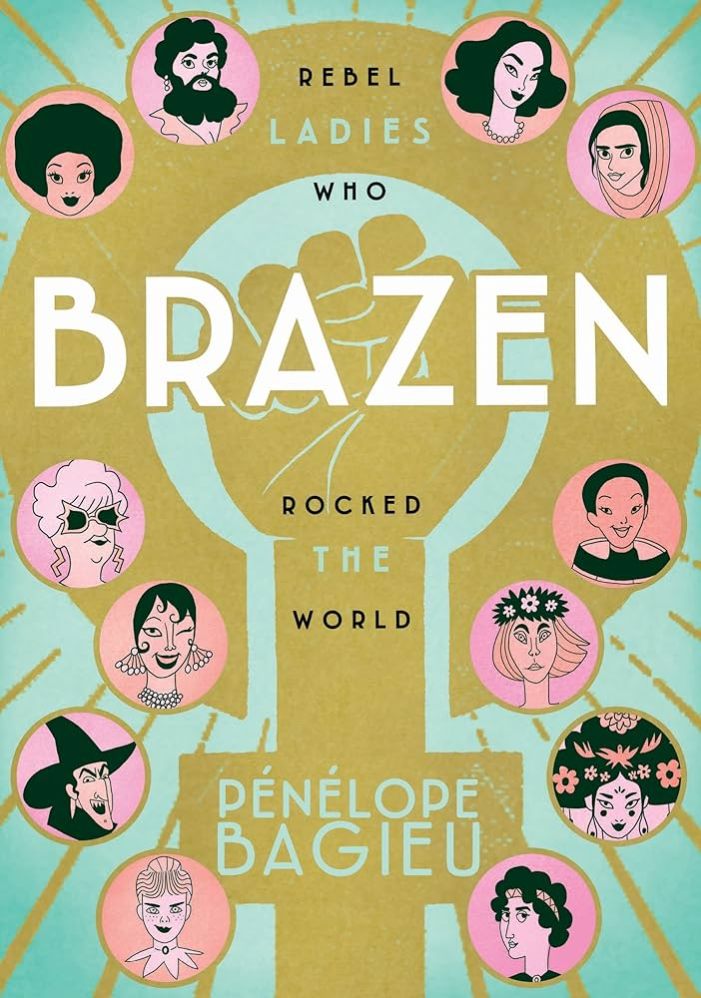
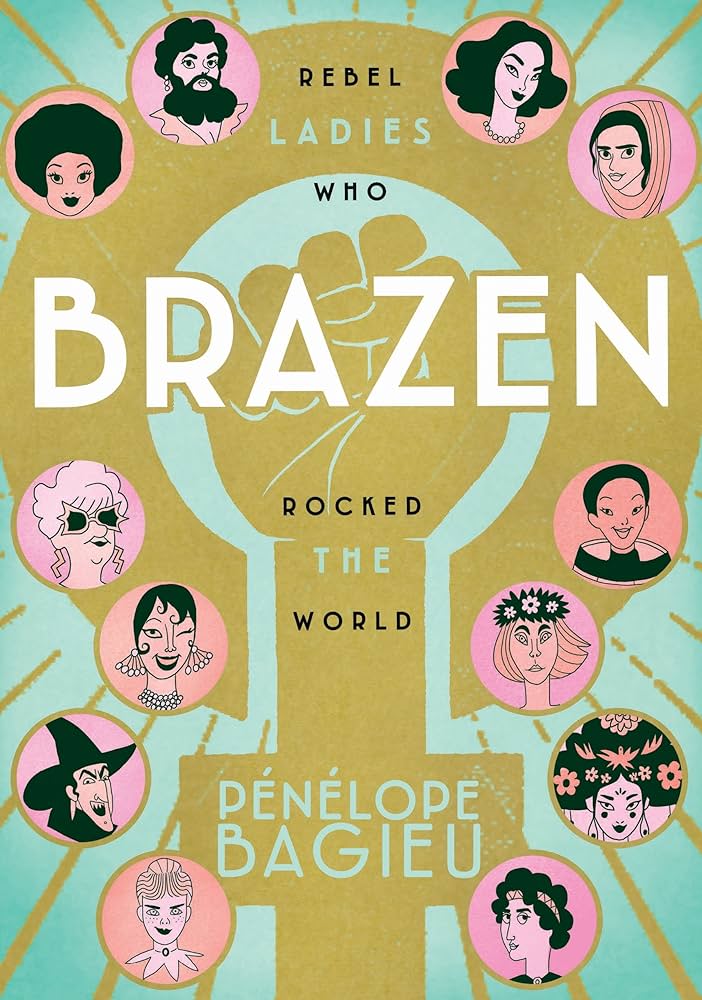
Women’s History was not always a month-long celebration. It started in 1980 as a week-long celebration. President Jimmy Carter offered these words as he issued his proclamation for the first Women’s History Week celebration: “Too often the women were unsung and sometimes their contributions went unnoticed. But the achievements, leadership, courage, strength and love of the women who built America was as vital as that of the men whose names we know so well.”
Each year a new theme is chosen by the National Women’s History Alliance, a non-profit organization who lobbied and advocated for Women’s History Month to be recognized across the United States. The 2024 theme for Women’s History Month is “Women Who Advocate for Equity, Diversity, and Inclusion.” Check out these books celebrating women who did just that!
Emily is an Instructor & Research Specialist at the Central Branch. She enjoys puzzling, reading, listening to music, and re-watching old seasons of Survivor.
Normally I would ask, “Have you ever wanted to stay home from school for a few days and just sleep or read or play video games? To be able to do absolutely nothing, minding your own business in your home?” However, the world just went through that exact thing. Some of us had to work, some of us did not. Some of us sat and read books that whole time and some of us played outside and celebrated.
Remember being stuck in the house, unable to go to the store, unable to get groceries. Now go one step further and imagine you could not open your windows to see the outdoors; you could not listen to music, the radio, or TV. Imagine you could not go anywhere, see anyone, or entertain yourself at all. You could only sit and hide, reading or quietly playing cards, until your family came home, and even then, you still had to hide away from them while you ate.
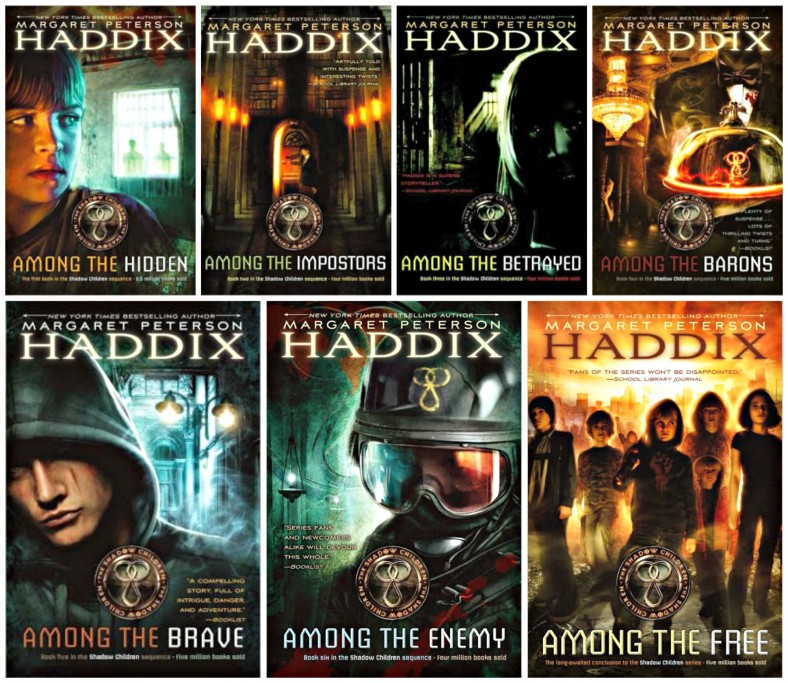
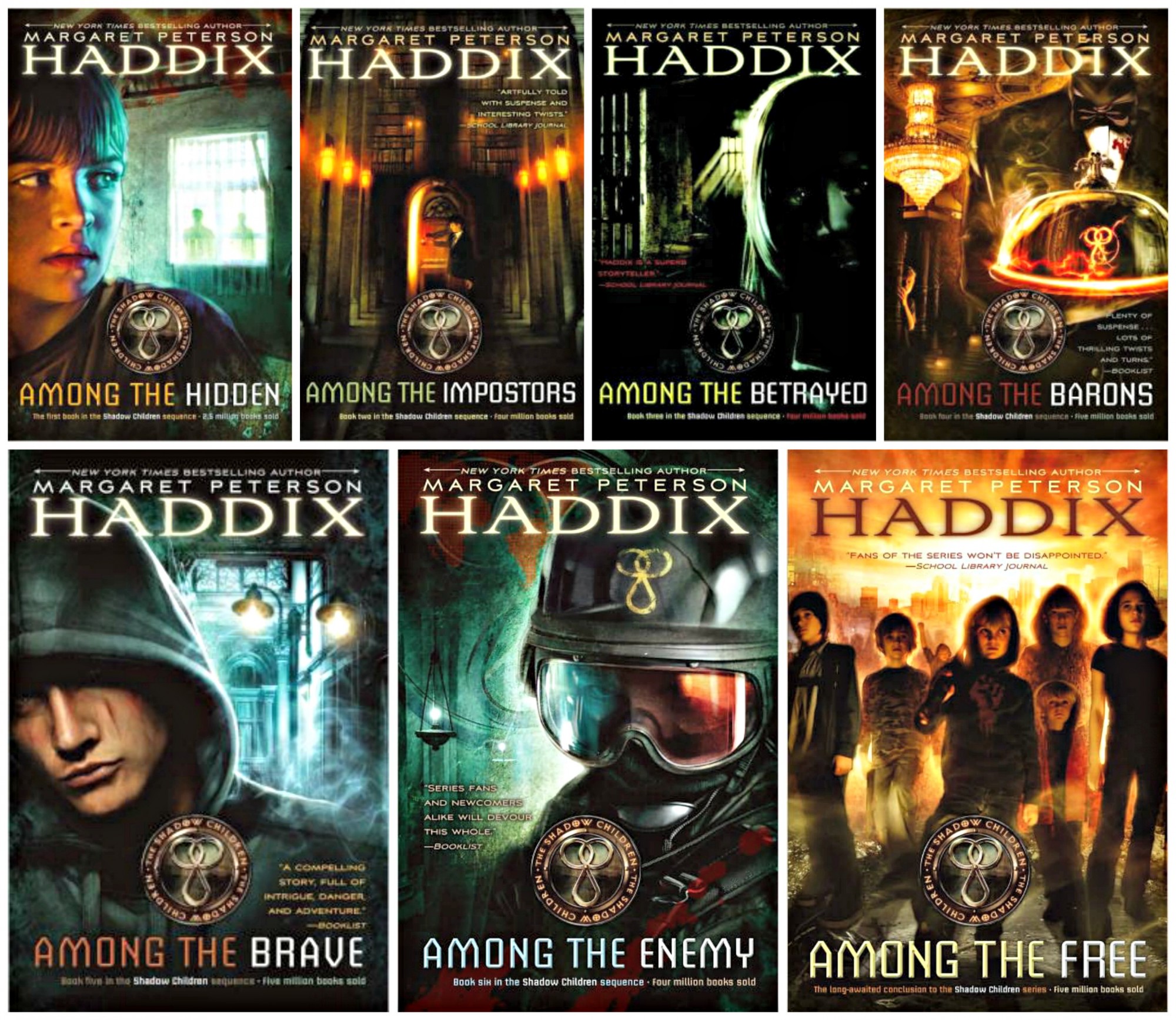
The Shadow Children series by Margaret Peterson Haddix has an entirely new feeling and meaning now that we have experienced something similar. There is not a global pandemic or plague, but instead, the government has made it illegal for folks to have more than two children. Our main character, Luke, is on a journey to change that. He has spent 13 years as an illegal third child.
Luke’s mother, his father, his two brothers, and their farm are all he has ever known. He could run and play at the farm without anyone seeing him, with the forest surrounding his house so he could feel the breeze on his face, watch the leave change colors in the fall, feel the rain falling as it watered the crops. His farm was soon taken away. With nowhere to hide and nothing to shelter him from view, he was forced back inside, into the attic, into the dark. This was the last straw for Luke and he couldn’t bear it anymore. He needed a friend.
We follow his feelings as a third child, the relationships he develops, and the danger he flees after close encounters with the population police. Read to find out if he succeeds in making all third children free. Can a third child survive in the world when all they had was a poor family’s farm and a book that explained nothing of the world outside the attic?
Don’t believe anyone who tells you that comics are just for kids. That’s never been true, and now more than ever, graphic novels are gaining popularity for the creative ways authors can use the format to tell moving, complex, diverse stories for adults.
These five stories are just a few of the titles that HCLS offers for readers interested in expanding their Black History Month reading list. If you’re not a regular reader of comics or graphic novels, you may find yourself surprised at the storytelling power of words and pictures when they work together.
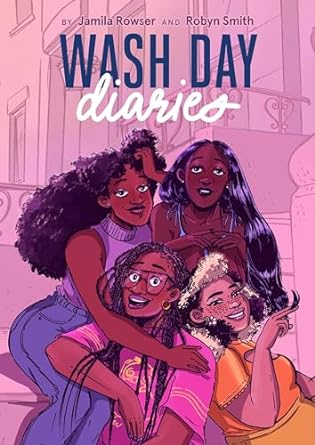
So says one of the protagonists of Jamila Rowser and Robyn Smith’s Wash Day Diaries. It’s a ritual that any black girl with natural hair knows well. When it comes time to wash, deep condition, and ‘whatever else’ your hair, it’s prudent to dedicate an entire day to the endeavor. Washing, deep conditioning, detangling, styling—it’s a complex, time-consuming process. In this graphic novel, the only things more complex are the lives of our four heroines: Kim, Davene, Nisha, and Cookie.
Wash Day Diaries makes a point of accurately and lovingly depicting natural hair and all the ways it can be styled, and that’s part of what makes it stand out. It’s a well-told story that centers the importance of self-care and community, and it makes for a pleasant, uplifting afternoon read.
(If you’re looking for another graphic novel that delves into the cultural weight of hair in the African American community, check out Hot Comb, a collection of pen-and-ink comics by Ebony Flowers.)
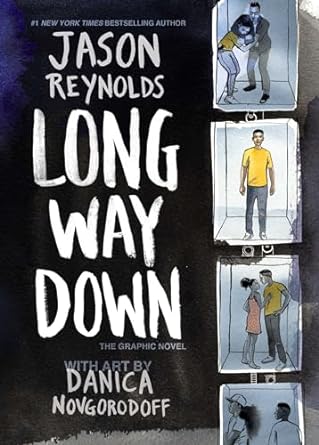
Jason Reynolds’ poetic and immensely moving young adult novel Long Way Down revolves around a teenage boy grappling with the effects of gun violence. The story starts with the shooting death of protagonist Will’s beloved older brother. Lost in his overwhelming grief, Will is hell-bent on retaliation, but a visit from seven ghosts, all of whom have some connection to Will or his brother, forces him to make a hard decision about who he wants to be.
In the original book, Reynolds uses few words to say a lot, and the graphic novel version (also available as an e-book) of his story—told through watercolor illustrations—will leave you reeling just the same.
(Fun fact: Reynolds paid a visit to our East Columbia branch in 2018!)
Author Jason Reynolds speaks to an enthusiastic crowd at HCLS East Columbia Branch.
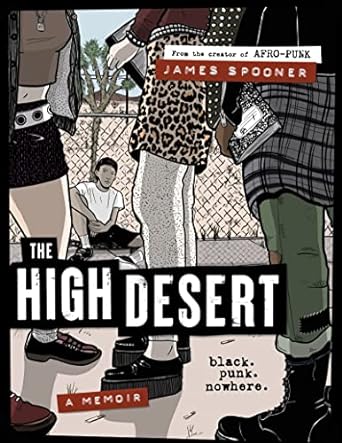
Being a biracial kid in the predominantly white town of Apple Valley, California—as well as a predominantly white punk music scene — isn’t easy. Written by James Spooner, founder of the Afro-Punk website, The High Desertchronicles Spooner’s coming-of-age experience and the birth of his love for punk/alternative music, a connection which blossomed even as Spooner struggled to find his place in a community that was oftentimes racist and even outright violent towards him. Spooner’s graphic memoir is perfect for anyone who’s ever felt like an outsider in the worlds that they love.
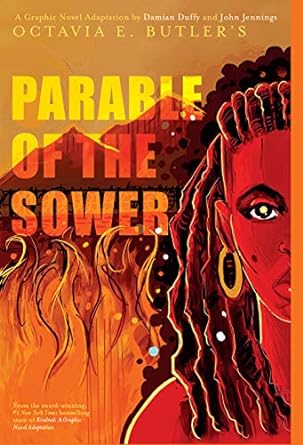
In another novel adaptation, artists Damien Duffy and John Jennings translate Octavia Butler’s (disturbingly timely) dystopian story into graphic novel form. Parable of the Sower isn’t an easy read, not by a long shot; in Butler’s 1993 novel, a series of simultaneously occurring catastrophes have transformed the country into a virtual hellscape.
Protagonist Lauren Olamina, a teenager at the start of the story, lives in an insular community where she and her neighbors continue to live life as normally as possible while struggling to avoid the widespread violence, exploitation, and corruption taking place outside. When Lauren, who is coming into her own mysterious powers, is forced to venture out into a collapsing society, what follows is a story of hope and new beginnings.
Be warned: part of what really makes this pick a disturbing one is that it’s set in the year 2024 and, at times, feels all too possible.
Fans of Octavia Butler should also check out the graphic novel adaptation of Kindred, one of her most beloved novels. It follows a black woman as she is thrown, repeatedly and terrifyingly, back into time — and into the antebellum era, when chattel slavery was the norm.
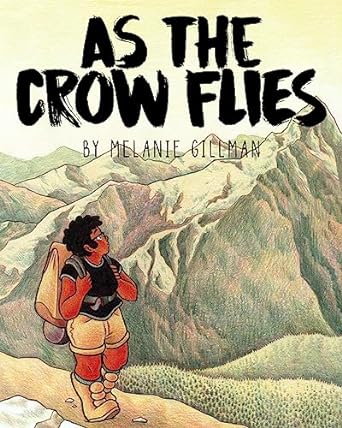
Melanie Gillman grapples with what it means to be black and queer in a Christian community—one in which non-white members are few and far between — in another coming-of-age graphic novel, As The Crow Flies.
During a week spent at Camp Three Peaks, a religious summer camp, our protagonist, 13-year-old Charlie Lamonte, finds herself questioning her faith and identity, all while embarking on a strenuous expedition up a (literal and figurative) mountain. As micro-aggressions abound, Charlie finds kinship and a reprieve from her loneliness in fellow outsider Sydney, a young trans girl who’s dealing with her own doubts. Soft, colored pencil illustrations depict luscious mountain scenery in this former webcomic turned graphic novel. This is one that fans of ‘found family’ stories will enjoy.
Sharon Pruitt-Young is an Instructor and Research Specialist at East Columbia Branch. Aside from books, she is passionate about writing, urban sketching, trees, and art of all kinds.
It’s an alternative history, magical, buddy cop, police procedural romp of a story, complete with a little romance. If you’re looking for fun, A Master of Djinn has it!
Set in 1912 in an alternative Cairo, Egypt, the story begins with the horrific mass murder of the Hermetic Brotherhood of Al-Jahiz, a group of British men dedicated to the return of al-Jahiz, an almost mythological mystic. Only almost, though, because al-Jahiz did exist, and he upended the world order when he brought djinn and all sorts of magical creatures back into the world. He’s regarded equally as hero, genius, and dangerous iconoclast. It would appear that al-Jahiz has returned, and he’s working to upset the balance of powers yet again. Or has he?
Fatma el-Sha’arawi is an agent of the Ministry of Alchemy, Enchantments, and Supernatural Entities, and she’s called immediately to the Brotherhood’s mansion, home of the Worthington family. Fatma wears beautiful, flashy Western-style suits and a bowler hat, and she carries a sword in her cane. She is met at the crime scene by her unexpected, new partner Hadia, a recent addition to the Ministry. The interplay between the seasoned professional and the newbie who can “handle herself” provides terrific exchanges and some genuinely funny moments. Hadia has a cousin for every circumstance and wears modern, colorful hijabs. The third amazingly competent woman who contributes to solving the crime is Fatma’s mysterious lover, Siti, who worships Sekhmet of the old Egyptian pantheon. These three women of color make a formidable team with their intelligence, various connections, and genuine affection for one another.
The Worthingtons, on the other hand, seem rather hapless and ineffectual. The patriarch, whose murder launched the investigation, had an attachment to all things Egyptian that bordered on obsession. None of his offspring share his interests, and his heir starts to disentangle the family fortunes in order to return to England’s greener shores. The friends and flunkies around them serve to reinforce the suggestion of incompetent colonialists trading on wealth and social standing, but the investigation keeps leading back to the estate.
The unraveling of the whodunnit involves lady thieves, a worldwide peace summit being hosted by the Egyptian king, old gods, and new technology. It’s a fantastic mix – in all senses of the word. Layered among all the action and adventure, author Clark sneaks in commentary on colonialism, sexism, classism, colorism, and all manner of other social constructs. However, he never throws these strong women a challenge they can’t overcome in this highly cinematic, fast-moving novel.
Kristen B. is a devoted bookworm lucky enough to work as the graphic designer for HCLS. She likes to read, stitch, dance, and watch baseball in season (but not all at the same time).
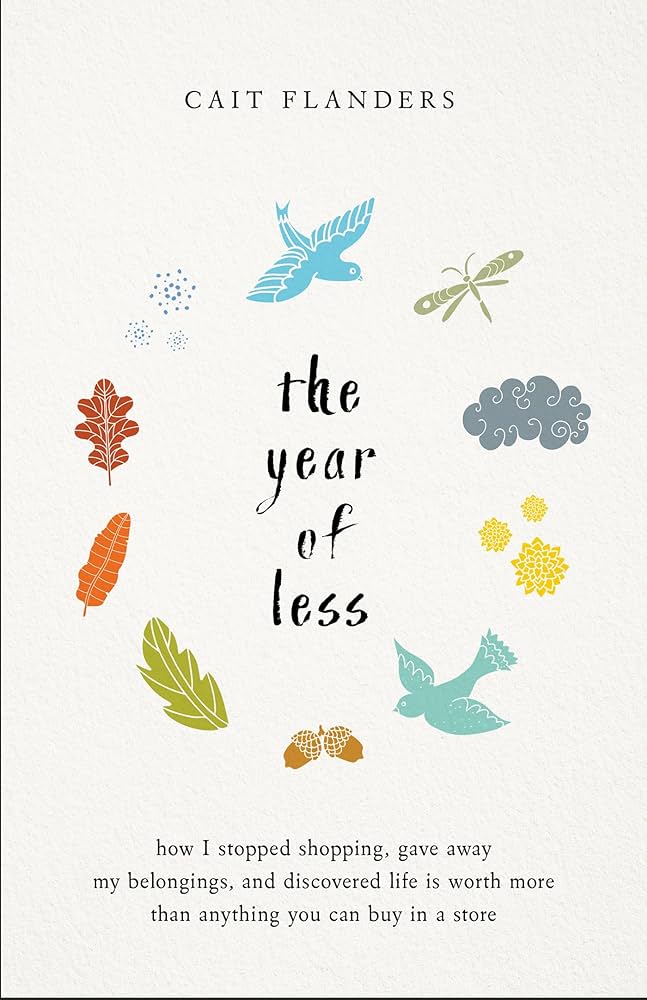
Do not mistake this title for another ode to Marie Kondo’s practice of sparking joy and tidying up, but more as a diary of an experiment created to help a young woman find herself. Themes of addiction, depression, and “doing hard things” fill these pages. Flanders is an established freelance writer, current co-host of the podcast Budget & Cents, and author. Forbes featured her 2015 experiment, described as a year-long shopping ban. That post resulted in book offers and the subsequent publishing ofThe Year of Less in 2018.
Cait gives us a brief synopsis of all the previous experiments she has completed: a year dedicated to weight loss, another year getting sober, then another getting debt-free as outlined on her former blog (blondeonabudget.ca). She outlines a set of rules designed to de-clutter her life, save money, and live with less.
Admittedly, I almost stopped listening to this book with the introduction. Was this going to be another variation of minimalism from a self-important, self-righteous, affluent-organizational-trend-setter-wannabe? No. She explicitly says she does not judge anyone’s choices. These choices were necessary for her, and she could only share her experience. Once I heard that and put aside my bias, I found Cait to be a sincere young woman who struggled with the same things that most of us do, including weight and self-esteem, debt and savings, and family issues. She sets intentions with these multifaceted experiments which eventually help her accomplish her goals.
She lost 30 pounds, paid down $30K in consumer debt, and finally got sober!
All these accomplishments are monumental achievements alone, and more so in succession! Each of these things are addictions that she combats daily. Flanders made huge, life-changing decisions while battling depression and coming to terms with her sobriety. Most experts would tell you not to do this. Somehow, it worked for her, and that is my only frustration with this book. I am reluctant to say it was her sheer will that pulled her through because that is false. She has admitted that she is naturally organized and does not suffer from any kind of executive dysfunction.
As an aside: If you struggle, and I mean STRUGGLE, with messiness or too much eating, too much buying – just TOO MUCH, I think Keeping House While Drowning may be a much better fit for practical systems and compassionate approaches while being neurodiverse. It’s a memoir with some tips, tricks, and advice in the epilogue.
Cait’s story is inspiring because she takes on the challenges, and she makes it through to the end with measurable data points. This book wraps up neatly; it is easy to find yourself rooting for her and simultaneously jealous of her integrity in satisfying her intentions. My greatest takeaway was this question that Cait started asking herself when facing a purchase (paraphrased): “Am I buying this (item) for who I am or am I buying this for the person I want to be?”
While this is no “how to,” it is certainly inspirational and logical. If you want a simpler life filled with more quality than quantity, you must let go of things. And the less you have, the less you eventually need. I mean, I could use an extra $17K this year.
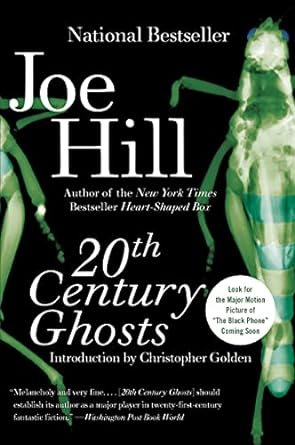
I like Joe Hill’s fiction, no matter which selection it is. I am particularly drawn to and sometimes revisit his amazing anthology 20th Century Ghosts. The collection comprises 15 short stories, each with its own unique theme and style. Joe Hill’s versatility shines through as he explores various aspects of horror, from traditional ghost stories to psychological thrillers. The stories are infused with elements of fantasy, science fiction, and dark humor, creating a diverse and engaging reading experience.
The opening story, “Best New Horror,” sets the tone for the entire collection. It tells the tale of a jaded horror fiction editor who stumbles upon a manuscript that takes him on a horrifying journey into a world he could never have imagined. Hill’s use of meta-fiction in this story adds layers of complexity to the narrative, leaving readers with much to ponder.
Joe Hill’s ability to create compelling characters makes his fiction unforgettable. Whether it’s a young boy who can transform into a living comic book character in “Pop Art” or the ghost of a movie projectionist in “The Projectionist,” his characters have a depth and humanity that gives the supernatural elements all the more a stirring and relatable feel. Hill’s skill in creating atmospheric settings also permeates the collection. Whether it’s a creepy movie theater, a haunted tunnel, or a sinister roadside attraction, the locations in these stories are as much a part of the narrative as the characters themselves. The sense of place adds to the overall immersion and tension in each tale.
While horror is its primary genre, 20th Century Ghostsdoesn’t rely solely on scares. Many of the stories delve into deeper emotional territory, exploring themes of love, loss, and the complexities of human relationships. “Better Than Home” and “Voluntary Committal” are poignant examples of Hill’s ability to tug at the heartstrings. Joe Hill’s imaginative storytelling is a defining feature of this collection. He doesn’t rely on clichés or tired horror tropes; instead, he constantly surprises the reader with fresh ideas and innovative twists. “My Father’s Mask” and “The Black Phone” are prime examples of his originality and the ability to keep readers on the edge of their seats.
The titular story, “20th Century Ghosts,” is a beautiful and melancholic piece that serves as a fitting conclusion to the collection. It explores the idea that we are all haunted by the past in one way or another, and Hill’s prose resonates long after the final page is turned.
Angie is an Instructor & Research Specialist at Central Branch and is a co-facilitator for Reads of Acceptance, HCLS’ first LGBTQ-focused book club. Her ideal day is reading in her cozy armchair, with her cat Henry next to her.








 CHAPTER CHATS