Gods of the Upper Air by Charles King

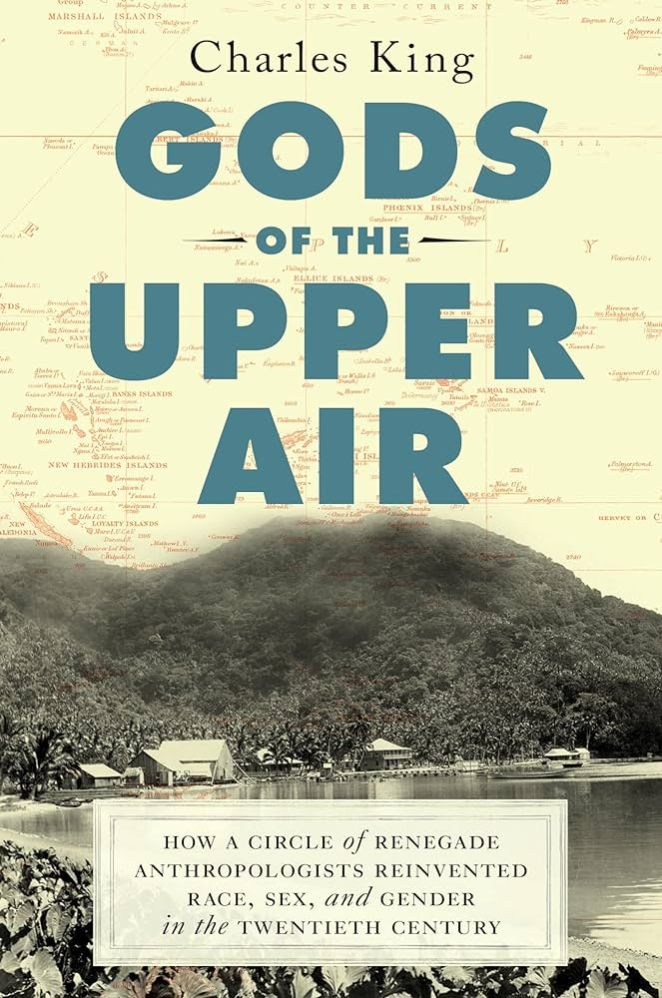
A monotone photo of an island cove sits below a map, with the title in slate bue.

by Sahana C.

I’ll admit to some bias here: I was an anthropology major as an undergraduate. That’s part of why this book called to me – I recognized so many of the names, and it felt familiar. This might not be everyone’s cup of tea, but stick with me.

It’s the 1920s, and so much culture is up in the air, so much of the world is more accessible than ever, and there is so much burgeoning diversity in America that it seems to require classification. Of course, those doing the classifying are the people in power. They’ll do whatever they can to keep that power in place, even if it means creating dangerous, harmful institutions with staying power. 

Enter Franz Boas, affectionately termed as Papa Franz, and the father of American anthropology. That man singlehandedly taught almost every single major American anthropologist and mentored the founding polycule behind cultural relativism. He basically invented the field as he went along, and his students are credited with many of the ground-breaking, society-forming theories and practices that are foundational to modern academia. The fact that a whole discipline grew up around one dude and his ducklings is remarkable.  

And King takes us through it. The heroes of the story are the aforementioned Boas, Ruth Benedict (one of the most published of the Boasian circle, Papa Franz’ right hand and one of Mead’s lovers), Margaret Mead (a popularizer of anthropology as a social science – though the term popularizer was used as an insult in her time, I think it’s quite complimentary), and Zora Neale Hurston (yes, *that* one).  

Each of them, purely by happenstance, lived between worlds, slightly outside of social norms. They were all square pegs in a world of round holes, and that, alongside a pervasive curiosity and belief in people, led them to anthropology as a discipline. Boas was a German Jew and an immigrant with limited English. Benedict was 1) a woman, 2) almost certainly a lesbian by modern definitions, and 3) partially deaf. Mead was 1) a woman, 2) bisexual, and 3) polyamorous before it was cool (and as such, was involved with so many of the leading figures in anthropology). And Hurston was a Black woman who realized that her private schooling put her in a different world than the people back home, that her language had changed entirely by virtue of her access to “elite” spaces, as she moved between her school life, her fieldwork, and the Harlem Renaissance.   

Armed with a passion for data and a desire to understand rather than merely classify people into archetypes, Boas and his disciples pushed back against so many of the long-held cultural assumptions about race as strict category, about eugenics, and about unjust and immoral legislation like Jim Crow and Japanese internment. They coined the term and practice of “cultural relativism,” understanding of culture through its own lens rather than the lens of a foreigner.

There is a bit of hero worship and a bit of fluffy, “these were the coolest, wokest, most progressive people to live!” vibe in the book that King does little to combat. But truthfully, much of the impressive and progressive thinking did actually belong to the people listed above. They had massive roles in shaping modern understandings of culture, race, and society. So, it is easy for me to forgive the embellishment on King’s part – these people were undeniably impressive for both their time and ours.  

Gods of the Upper Air is available in print and e-audiobook. If you are at all interested in learning about how society began the move away from eugenics and towards a more relative understanding of the inherent value our differences hold, how understanding our differences helps to puzzle out how we are the same, and what makes us human, this book will help you start.  

Sahana is an Instructor and Research Specialist at the Savage Branch. They enjoy adding books to their “want to read” list despite having a mountain of books waiting for them already.
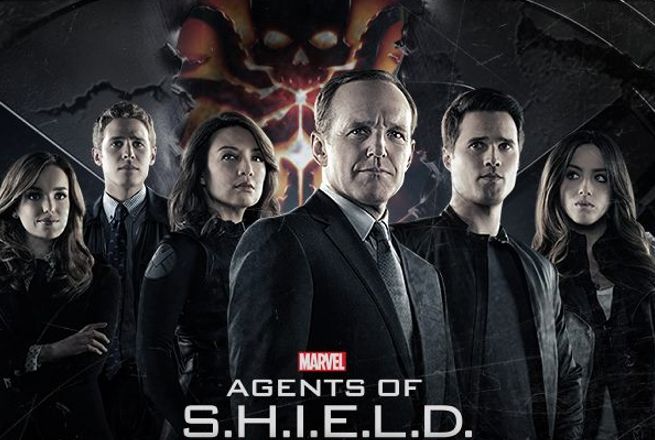
Agents of S.H.I.E.L.D.

The main characters of Agesnts of SHIELD posed with Phil Coulson at the cneter and the Hydra symbol behind them.

by Kristen B.

In a fit of boredom or maybe nostalgia this fall, I decided to rewatch the entirety of Agents of S.H.I.E.L.D. on Disney+. Baseball was done for the year; I needed something to do. Lucky for you, you don’t need a subscription service to do the same thing, because you can borrow them on DVD for free from the library.

The show is a wild ride of storytelling and subverting expectations. Of all the Marvel properties, this one seems closest to its comic book roots, maybe due to the inherent serialization of the format, and the fact that death never seems to keep a character down for long. (side note: I wish the MCU movies would consider rebooting some favorite – particularly female – characters.)

Over the course of seven seasons, the show progresses from being tied closely to the MCU timeline to becoming more of an independent property. The main characters are Agent Phil Coulson, introduced in the Iron Man and The Avengers movies, and his team of special agents whose mission is to track and contain enhanced humans – people with special powers who are not always good guys like Captain America or Thor. The mission is continually threatened and thwarted by SHIELD’s nemesis, Hydra. The core team of five characters makes it through all seven seasons, more or less: including Melinda May, all around warrior with some deep real world experiences; science boffins Fitz and Simmons, who make as good a team as their names suggest; and Skye, whose growth and transformation carries the first three seasons of the show. Other characters stick around for a season or two, and sometimes return at unexpected moments. It keeps the series both comfortable and fresh.

The series’ creators (Whedon, et. al.) took all kinds of risks with the show, to greater and lesser successes. I would argue that the first and last seasons are the best, with a few in the middle becoming unnecessarily complicated and dark. All in all, though, it’s a terrifically fun show. You honestly don’t know what’s coming next, from the inclusion of Ghost Rider to AI robots that control an immersive virtual reality. You can always count on decent fight choreography and the good guys achieving their goals – eventually, despite the odds. The last two seasons took on the big ideas of time travel and alternate timelines, which actually comes back into concordance with what’s happening in the MCU’s Multi-verse stories.

Baseball’s Opening Day is coming soon, but you may need something to do in the meantime.

Kristen B. is a devoted bookworm lucky enough to work as the graphic designer for HCLS. She likes to read, stitch, dance, and watch baseball in season (but not all at the same time).

The Very Secret Society of Irregular Witches by Sangu Mandanna

A blue cover shows a large white house on a hill. Accents in yellow include a sliver moon, a woman on broom, a car, and the shirt on a man holding a pile of books.

by JP Landolt

When I was four years old, I told my brother that I was a 5,000-year-old witch. For nearly every Halloween thereafter, I was a witch. My truest form. As a child, every book I chose was unusually supernatural. A little dark. A little different. A lot like me. Indeed, this little Guamanian girl’s house was strewn with interesting reading material. Little did I know my witchy fascination would stick with me well into adulthood. When I say I was delighted to find that “witchy” books were gaining popularity among my (now adult) peers, you understand I was beyond ecstatic!    

The Very Secret Society of Irregular Witches by Sangu Mandanna is cozy, sweet, and a lovely listen. Samara MacLaren’s voice perfectly conveys a romanticized, present-day UK filled with worldly, contemporary witches. We follow Mika Moon, an orphaned witch from India who was brought to the UK and raised by Primrose. Primrose is a strict (regional manager type) witch who believes witches must live by the rules or risk persecution, or worse still – death. The most important of these rules dictates, “Alone is how we survive.”  

Mika is the very embodiment of this forced loneliness. Cursed from birth (like all witches), she is motherless, untethered, and yearning for family. A loveless, rootless existence is complicated by the necessity to live with magic in the world without being discovered. Her story demonstrates how witches experience the same kind of childhood trauma, feelings of insecurity, and a need for belonging much like any mere mortal.

Mika seeks connection so desperately that she creates an alter-ego (and a humble online following) where she “pretends” to be a witch concocting magical teas in her cauldron for all to see and enjoy. A safe and clever way to hide in plain sight. She is soon sought out by a group of characters inhabiting Nowhere House seeking a real witch to care for three young witches. She finds herself at the doorstep of Nowhere House interviewing to be a live-in tutor and her life is turned upside-down yet again, but in the best way. Shenanigans ensue, as can only be expected with young girls and spellcraft. The staff at Nowhere House only add to the story’s magic.

This story is brimming with magic, love, and found family. There’s an honest vulnerability that weaves through Mika’s character. You can’t help but see the gilded glitter of magic swirling in the landscape and the witches. You can’t help but be mesmerized by the lure of magic and the desire to control what is sometimes uncontrollable. And you can’t help but to empathize with Mika’s unrealized grief or cheer on her personal growth. My goodness, also to wish the brooding librarian to give her a kiss! Heavens!  

If anything, this book proves that magic not only lives in everyday places, but the most powerful magic wants to be used just as much as each of us deserves and wants to be loved. Read this book and embrace all the good there is in life, love – and feel magic again.  

The Very Secret Society of Irregular Witches by Sangu Mandanna is available an e-book and e-audiobook. There’s a bit of a wait, but it’s worth it.

JP has worked for HCLS since 2006. She enjoys gallivanting, Jollibee, and all the halo-halo she can eat.

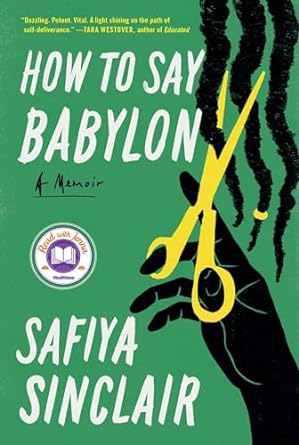
How to Say Babylon by Safiya Sinclair

The cover shows a hand holding a pair of yellow scissors and cutting three dreadlocks that are dangling from above; one has a yellow bead at the end.

by Piyali C.

Babylon, according to the strictest sect of Rastafari, is the corrupting influence of the Western world on Black people. Safiya Sinclair’s father, a follower of the religion’s most militant faction, was obsessed with the purity of his three daughters and determined to keep the immorality of Babylon from touching them. Howard Sinclair, who later took the name Djani to feel closer to his Rastafarian beliefs, was a staunch follower of Haile Selassie. He wanted to sing reggae songs, never touch his dreadlocks, and seek livity – the Rastafarian concept of righteous living. The precept meant he should raise his children in the Rastafarian tradition and live a life of harmony with his partner, Esther, the mother to his four children.

Djani was a musician with big dreams. After being rejected by his own mother for following the Rastafarian religion, after repeated failed attempts to make a name for himself in the music world, and finally, after having to relegate his music to being a source of entertainment for rich tourists (baldheads, as he called them, due to the lack of dreadlocks) visiting his homeland of Jamaica, Djani grew increasingly militant in his belief in the harmfulness of Western influences. Safiya, his oldest child, bore the brunt of his obsession with keeping the deceitful ways of Babylon out of his gate.  

Safiya’s childhood was spent near the sea and seemed almost idyllic. Her father left home every day to play his music at the hotels, and her mother nurtured her and her siblings with love and nourishment. Her parents met at the tender age of 18, found commonality in their Rastafarian beliefs, and never married but decided to make a life together. Esther became a demure Rastafarian woman who stayed home to nurture their children, cook Ital food, never disagree with her man, and do every household chore silently. Despite her quietude, she instilled a culture of hard work and a desire to achieve excellence in all of her children.

As a result, Safiya and her siblings excelled in school, scoring the highest grades in their exams. Djani continued to play music in hotels and even made a couple of trips to Japan to form a music band. He was the undisputed leader of his household just as his religion dictated. Safiya accepted this dynamic in her childhood, but Djani’s obsession about Safiya’s purity took a dangerous turn as she became an adolescent. Held captive by her father’s vicious efforts to keep her body and mind pure, Safiya turned to writing poetry to express her confusion, anger, and helplessness. The beautiful expression of her suffering through her art started resonating with the outside world, and Safiya won accolades and fame for her poetry. Gradually, Safiya grew into the woman that she wanted to become and not the woman her father envisioned her to be – another duty-bound and voiceless Rastafarian wife to a Rastafarian husband.

How to Say Babylon is a brutally honest portrayal of a life that initially felt nourishing and enriched with a lot of laughter, love, and filial admiration, but which soon turned into one of oppression and control. This is a story of a courageous woman’s endeavor to dictate the course of her life on her own terms, despite the shackles that threatened to hold her captive. While telling her own story in radiant, lyrical prose, Sinclair also paints a picture of the oppression of Black people by the Western world, the racial injustice, and the voices of women that are forcibly silenced by patriarchy. Yet those voices are still finding a way to ring free. Sinclair’s memoir recounts the history of Rastafarian religion– a religion that started as love and benevolence but which turned to fanaticism and radicalism on the part of some who wanted to use it to their own benefit and to control women. How to Say Babylon is also Safiya Sinclair’s love letter to her beloved Jamaica, her mother Esther, and her siblings Lij, Ife, and Shari.

As I read, I felt Sinclair wrote in order to set herself free and embark on a path to find forgiveness in her heart for the man who wronged her in a most cruel way. Writing a memoir is such a brave thing to do. Authors who write about their innermost pain, fear, and experiences allow themselves to be completely vulnerable. Such vulnerability is the first step towards healing, strengthening, and growing. In author Tara Westover’s words, How to Say Babylon is “Dazzling. Potent. Vital. A light shining on the path of self-deliverance.” I could not put this book down. 

How to Say Babylon by Safiya Sinclair is available in print, large print, e-book and e-audiobook formats. 

Piyali is an instructor and research specialist at HCLS Miller Branch, where she facilitates Light But Not Fluffy and co-facilitates Global Reads. She keeps the hope alive that someday she will reach the bottom of her to-read list.

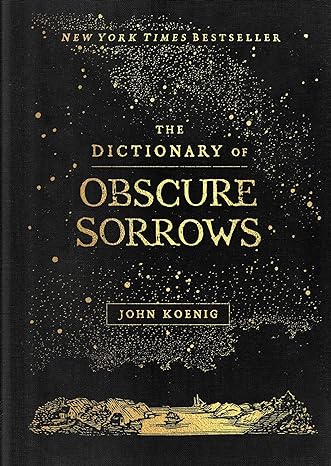
The Dictionary of Obscure Sorrows by John Koenig

The book cover depicts boats on a body of water running between two hilly stretches of land, with a brilliant dark sky full of stars above.

by Angie E.

In The Dictionary of Obscure Sorrows, John Koenig goes deep into feelings that often have no definition. The words aren’t just definitions; they’re like secret passageways to whole new worlds of feelings. It’s like they are saying: “Hey, check out these emotions you never knew you had names for!” 

Each entry is like a mirror showing emotions we didn’t know we had. “Sonder,” for instance, is the sweet yet sad realization that every random person out there has a life as wild and complicated as yours. There’s also “opia,” that vulnerable moment when eye contact makes you realize that there’s a whole universe of unspoken stuff between souls. 

But the one that hits me the hardest is “moledro: a feeling of resonant connection with an author or artist you’ll never meet, who may have lived centuries ago and thousands of miles away, but still can get inside your head and leave behind morsels of their experience.” 

Koenig’s ambiance is all about busting out of the silent jail that locks up our feelings, pushing us to chat about the gaps between us. In a world where tech connects and disconnects us, The Dictionary of Obscure Sorrows is like a rock, keeping us grounded in the crazy, beautiful ride of being human. 

With every page turn, Koenig holds our hand, guiding us on this epic trip—a journey of connection, finding ourselves, and realizing that we’re all on the same ride in the wide world of feelings. At the end of the day The Dictionary of Obscure Sorrows isn’t just a book; it’s like this crazy venture into what makes us human. It’s like having a quiet chat with your soul, an invite to get cozy with all the feelings that make us who we are. 

As the author writes in his introduction: “It’s a calming thing, to learn there’s a word for something you’ve felt all your life but didn’t know was shared by anyone else. It’s even oddly empowering—to be reminded that you’re not alone, you’re not crazy, you’re just an ordinary human being trying to make your way through a bizarre set of circumstances. That’s how the idea for this book was born, in that jolt of recognition you feel when learning certain words for emotions, especially in languages other than English: hygge, saudade, duende, ubuntu, schadenfreude.” 

The Dictionary of Obscure Sorrows is available in print, e-book, and e-audiobook.

Angie is an Instructor & Research Specialist at Central Branch and is a co-facilitator for Reads of Acceptance, HCLS’ first LGBTQ-focused book club. Her ideal day is reading in her cozy armchair, with her cat Henry next to her.

Life-Giving Giants

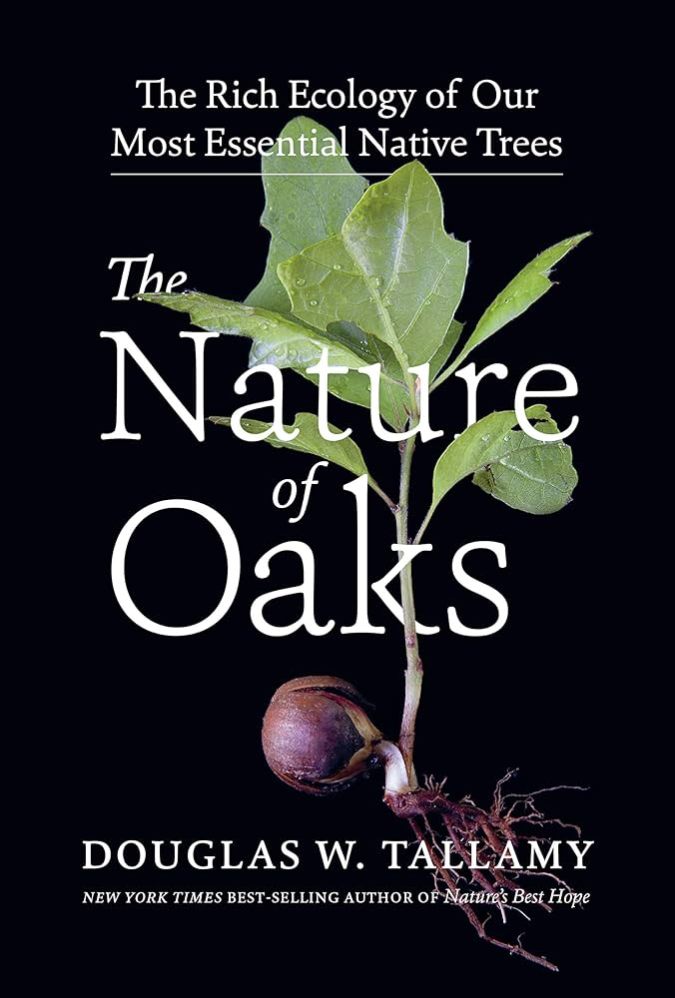
A black cover features a clear photograph of a sprouting acorn with a set of oak leaves.

By Erica C.

Doug Tallamy has established himself as one of the conservation movement’s most esteemed advocates, and he shows us how we can make a difference in the future of the planet. I recently attended one of his talks, “Nature’s Best Hope” named after his New York Times best-selling book. Through captivating storytelling, Tallamy transforms a topic that often sends me into a spiral of despair into one of optimism by offering effortless solutions to environmental restoration, like leaving your leaves or thinking twice about calling Mosquito Joe.

I was moved by his talk so I immediately reserved his books from the library. I started with The Nature of Oaks: The Rich Ecology of Our Most Essential Native Trees. An oak tree alone supports 511 species of moths and butterflies, 100 more than its closest competitors, the native cherries, and 487 more than the beloved redbud. Only three species have been found on crepe myrtles and one on Callery pear (both non-native to North America). (Tallamy, 2021). That is not to say we shouldn’t plant a variety of native trees species, it simply demonstrates an oak’s life-supporting potential. The mighty oak not only sustains a complex food web, its enormous root system provides ecosystem services like carbon sequestration, watershed management, and soil stabilization. The Nature of Oaks is filled with fascinating stories, highlighting some of nature’s wonders and giving readers a new appreciation for the natural world. If you are called to learn how you can play a role in environmental conservation, look no further than Tallamy’s delightful reads.

This movement will not be successful in silos, rather, it has to be a collective effort. Consider visiting the upcoming Howard County Seed Share to pick up native seeds and chat with local gardeners on the afternoon of January 20 at HCLS Miller Branch.

On February 20, you can hear Tallamy speak at the Sustainability Symposium hosted by Landscape Contractors Association. Register for the event here.

Finally, mark your calendar for April 13 when Howard County hosts Green Fest, the county’s largest celebration of Earth Day, connecting residents with resources that can help anyone be a good environmental steward. Join HCLS for gardening and environmental classes throughout the year. To see our upcoming event schedule, search for Gardening & Environment in the Library’s calendar. 

Tallamy, D. (2021). The Nature of Oaks. Portland, Oregon: Timber Press.

Erica C. is in her dream role as the Enchanted Garden Instructor at the Miller Library. When she’s not tending to the garden, you can find her cycling along the C & O Canal, experimenting with new recipes from around the world, or curled up with her coffee and a good read.

HiJinx Podcast: Best Books of 2023

The photograph shows four book covers selected from the podcast list against a blue background.

By Jessica L.

“Tsundoku” is a whimsical Japanese term for collecting books in piles… to be read… eventually. You may have been practicing this without knowing there was a term for it! So, how did you do with your “To Be Read” pile this past year? Are you ready for more recommendations? Here you go!

Listen to our recent Hijinx podcast, Best Books of 2023, featuring voices from HCLS staff and community members. Past episodes can be found here.  

Favorite Books Read in 2023 from HCLS Staff & Customers 

The book cover depicts a figure standing at the top of a set of stairs in an alcove, hands behind back, looking at a large painting on a wall.

All the Beauty in the World: The Metropolitan Museum of Art and Me by Patrick Bringley

Beartown Trilogy (Beartown, Us Against You, The Winners) by Fredrik Backman 

Belle of the Ball by Mari Costa 

The book cover depicts a bird with something round like a berry in its mouth, sitting on a branch, in shades of orange and gold against a hazy green background.

Dinosaurs by Lydia Millet 

Hell Followed with Us by Andrew Joseph White 

The book cover depicts trees, branches, and undergrowth in the foreground and a lake and hills in the background, all in blue and white like a woodcut style that has been colorized.

Landmarks by Robert MacFarlane 

Leg by Greg Marshall 

Lone Women by Victor Lavalle 

The cover is in grey lettering against a black background, with a black snake winding in and out of the letters in the title.

Ninth House by Leigh Bardugo 

Remarkably Bright Creatures by Shelby Van Pelt 

Romantic Comedy by Curtis Sittenfeld 

The book cover depicts a woman with long hair and a bouquet of flowers in an off-shoulder white dress, sitting on a broomstick in front of a full moon in a dark sky.

Slewfoot: A Tale of Bewitchery by Brom

The book cover depicts snow falling on the roofs and chimneys of houses in a village or town. The snow is white and the buildings and background are emerald green.

Small Things Like These by Clarie Keegan 

The Sweetness of Water by Nathan Harris 

The Ten Thousand Doors of January by Alix E. Harrow 

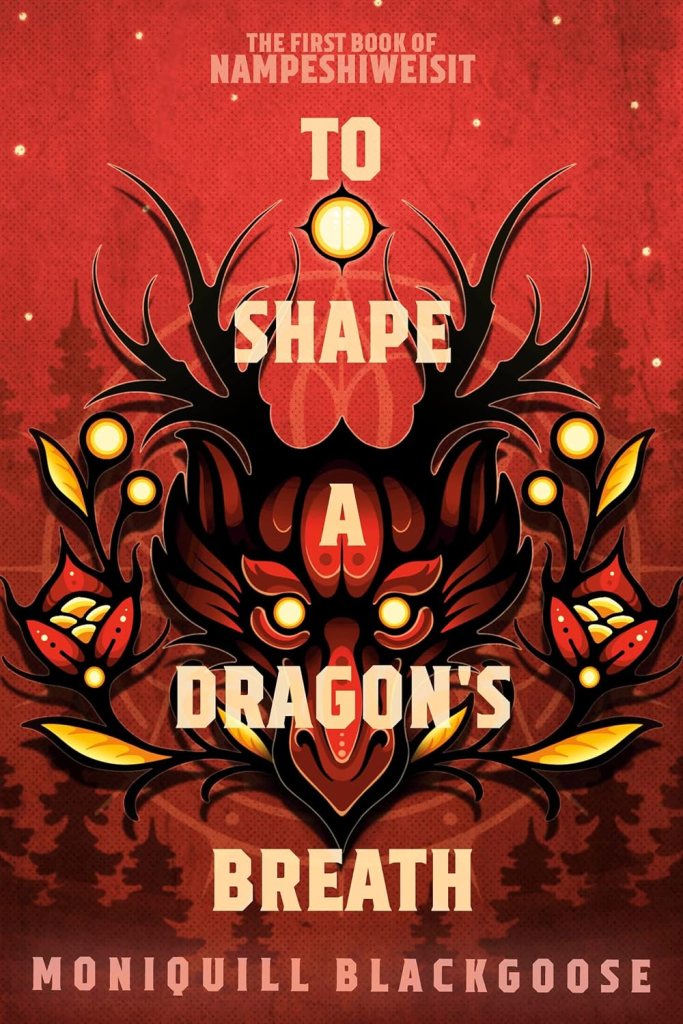
A illustration of a dragon like mask with horns. Pine trees are in the background.

To Shape a Dragon’s Breath by Moniquill Blackgoose 

Verity by Colleen Hoover (#1 Book requested and borrowed in 2023) 

The book cover depicts a cat, a pile of books, a coffee cup with a polar bear design, a white pillow with pink trim, and a leafy green plant in a terracotta pot, all framed by a black window frame against a blue sky and outdoor scene of other buildings and a tree with pink foliage.

What You Are Looking for Is in the Library by Michiko Aoyama 

JP has worked at HCLS since 2006. She is disappointed that the original Muppet Babies cartoon series is unavailable for streaming anywhere.  

Inspiring Laughter

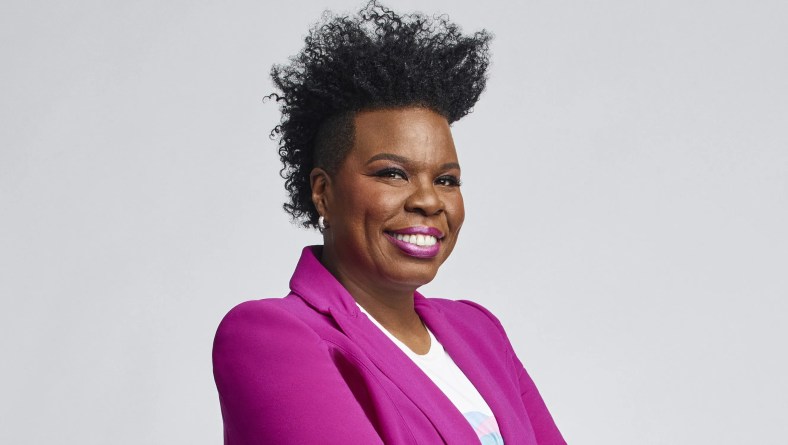
The author as a child, in a blue dress and hair in pigtails, is holding a microphone and smiling. Title and author type in large yellow block type.

by Carmen J.

Behind the laughter of most comics is a big bag of pain. Laughter, the ultimate defense mechanism, is a way for them to commiserate with their audience. Let me help you forget your pain for even just a few minutes. Let’s laugh at the world’s absurdity. I will take you there. Leslie Jones takes you along for a wildly candid, gritty, and funny ride in her memoir, Leslie F*cking Jones, available in print and OverDrive formats (e-book and e-audiobook).

I devoured this book over one weekend, not only because I’ve enjoyed her work on Saturday Night Live (SNL) and on Supermarket Sweep (!). In 268 well-crafted pages, we are taken on a journey through her childhood (and some truly sad tales of abuse, alcoholism, and chronic family illness) to her rise on the comedy scene (from the early auditions and late-night sets to the hard-fought stand-up crowds). Despite the poignant accounts of her difficult relationships with her father, brother, and the occasional ex-friend and former roommate, there is always a lesson with every anecdote. And you will root for Leslie Jones until the final page.

She’s Leslie F*cking Jones, just like the title says. Read her book. Have fun requesting it over the phone; you may want to reserve yours online.

If you want to see her in action, enjoy this clip of “Black Jeopardy” from SNL that included the beloved late Chadwick Boseman.

Carmen J. is a teen instructor at HCLS East Columbia Branch. Among her favorite things are great books, all things 80s, shamelessly watching The Bachelor, gardening, and drinking anything that tastes like coffee.

Setting New Year’s Goals

Red ekg heartbeat line includes a heart

by Brandon B.

Are you ready to make 2024 your best year? The new year can bring a level of optimism, excitement, and stress to some. Setting unrealistic New Year’s resolutions can be exhausting, so keep your expectations realistic. No matter if you are looking to improve your mental, spiritual, and physical health, you can visit us in person or online. To accomplish your goals for 2024, you have to adopt a clear mindset, so you can achieve the right philosophies and produce the right results.

Disruptive Thinking by Bishop T.D. Jakes offers guidance in having a strategy, spiritual guidance, and plan for the new year. If you are interested in improving your leadership and interpersonal skills, consider author John C. Maxwell to help you improve these talents.

Are you ready to burn off a few extra holiday pounds from all of those delicious meals and desserts? You can find great suggestions in our health collection, which focuses on fitness, nutrition, and many forms of exercise such as weight lifting, cycling, walking, and running. The late great Suzanne Somers’ books and videos may inspire you to get your body into great shape. Nutrition plays a major role in weight loss and management. Author Dr. Ian Smith focuses on nutrition and meal plans, and offers advice for an individual to burn fat and make lifestyle changes.

Brandon is a Customer Service Specialist at HCLS Central Branch who loves reading, football, and taking nice long walks around his neighborhood.

The Old Man by Sarah V. & Claude K. Dubois

A small children bundled up in a coat and hat looks at a homeless person wrapped seated and wrapped in a blanket.

by Brittany M.

I was halfway through The Old Man when the first tear fell. I cried a few more before the end. This sweet children’s picture book by Sarah V. & Claude K. Dubois teaches awareness, kindness, and compassion for the homeless – all things our world needs more of (me included). 

The cover art and title caught my eye while I was shelving books in the children’s section of the library. Even though I don’t have kids yet, I’m always on the lookout for books to share with them in the future, so I borrowed it. The story is simple but powerful, as the words, actions, and attitude of the characters who interact with the “The Old Man” act as a mirror for society, reflecting the stereotypes and prejudices a lot of us hold against the homeless. It resonates because I bet you have already come across someone who reminds you of “The Old Man” at least once. 

A lot of feelings stirred within me while reading this book. Shame regarding the indifference I sometimes display towards homelessness due to feeling awkward and guilty. I feel awkward making eye contact when I see someone holding a sign asking for money, and I feel guilty for having more and not remembering to keep spare change or bills. I want my kids to be better than me by always being ready to give to someone in need and to feel comfortable when doing it. While doing some self-reflection, I researched ways to help the homeless beyond money exchanging hands. 

One good idea I learned from a friend is to have a bag of essentials ready to give. You can make them for a low cost by shopping for items at the Dollar Tree or Five Below, including gloves, socks, non-perishable food items, toothpaste, toothbrush, wipes, deodorant, and even a blanket. If you want to add something extra, consider grocery store or coffee shop gift cards. You never know when was the last time someone had a hot meal to eat or a warm beverage to drink. 

Before the year is over, I invite you to do something good-hearted for those less fortunate. Maybe it’s someone you see regularly on your commute or maybe it’s a random act of kindness. No matter who you choose to give to or how you choose to give, make sure it’s without prejudice or judgment. 

Borrow a copy of The Old Man from any HCLS branch.

Brittany is a Customer Service Specialist at the Miller Branch who loves writing, reading, and all things stationery. Her other hobbies include playing video games, listening to music and spending quality time with her family.