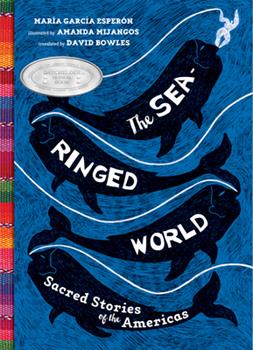
The Sea-Ringed World: Sacred Stories of the Americas

The book cover shows four whales in dark-blue silhouette, facing in opposite directions against a lighter blue ocean background. One whale is emitting a breath, which turns into a long white line that connects all four of them together. The title and subtitle of the book are inscribed in white across their bodies.

By Eliana H.

November is Native American Heritage Month, and I’d like to share a special book in honor of that observance. I am writing this post at the Elkridge Branch, and before I begin sharing the information about the book, I’d like to acknowledge the history of the land we are occupying. 

We want to respectfully honor the Susquehannock Confederation who governed, lived, farmed, and hunted on the land now called Howard County. Their nations conceded into land treaties in 1652 and 1661 after English colonizers ended their generational governance and stewardship of the land Howard County is built upon. This practice of land acknowledgement is to honor and respect the indigenous inhabitants both from the past and the present. 

Native Americans are part of our present as well as our past, still living in communities around the Americas despite the atrocities that have been committed against them. While none of us has the power to go back and change the course of history, we can make a step toward greater shared understanding through the power of stories. One source for stories from various Native American traditions is The Sea-Ringed World: Sacred Stories of the Americas by María García Esperón, illustrated by Amanda Mijangos, and translated by David Bowles. 

I noticed this book on our new children’s nonfiction shelf, and I had to pick it up. I was eager to increase my understanding of some of the mythology of the groups that lived here for thousands of years before Europeans arrived. I read the tales aloud to my 10-year-old child, and we were both captivated by the narratives, which were very new to us. As with any mythology, the stories in The Sea-Ringed World explore essential questions of humanity: What is our place in the universe? What are the origins of this world? What happens when we move out of this life? And many others.

Before you begin reading the stories in this volume, I encourage you to peruse the back matter a bit. A note about transcription of Indigenous terms is followed by a pronunciation guide, which is especially helpful if you are reading aloud. In addition to those, you will find “A Quick Guide to Cultures,” along with a map of those cultures, a glossary (including more pronunciation help!), and a bibliography. 

Even if you do not make it through all of the narratives contained in The Sea-Ringed World, it is worth exploring at least a few. Be sure to pause on the striking tricolor illustrations that adorn many of the pages. 

Extra note: I was especially glad for the background knowledge provided by this book when I read Gods of Jade and Shadow!

Eliana is a Children’s Instructor and Research Specialist at the Elkridge Branch and co-chair of the HCLS Equity Committee. She loves reading, even if she’s slow at it, and especially enjoys helping people find books that make them light up. She also loves being outside and spending time with friends and family (when it’s safe).
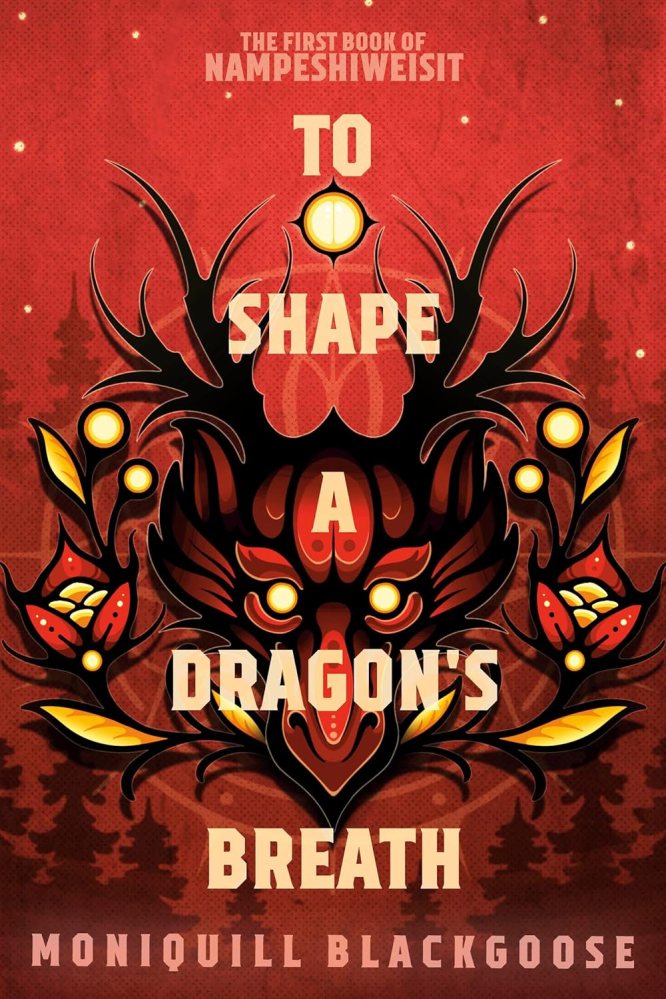
To Shape a Dragon’s Breath by Moniquill Blackgoose

A illustration of a dragon like mask with horns. Pine trees

By Julia M.

When I’m looking for a new book to read, any book with a dragon on the cover immediately calls my name. To Shape a Dragon’s Breath caught me at the title, and with a gorgeous red-and-black illustration of a fierce dragon on the cover, I was sold! 

To Shape a Dragon’s Breath is the debut novel from author Moniquill Blackgoose. It’s a queer, Native American dragon rider story, full of originality and anti-colonial power. The magical worldbuilding is strong, and the cultural commentary is not subtle but refreshingly straightforward. We get dragons, Indigenous and LGBTQ+ representation, magical academia adventures, political intrigue, and more in this first book of the Nampeshiweisit series.  

Blackgoose cites Peter Beagle’s The Last Unicorn and Terry Pratchett’s Discworld as her favorites of the fantasy genre, and hers is an important and timely addition to the fantasy literature canon. I was instantly struck by Blackgoose’s clear, cutting prose, the rich alternate-history Victorian universe, and the strength of the characters. It’s easy to claim “strong female protagonist” as a checklist item, but it’s harder to make good on that claim, and Blackgoose achieves it thoroughly. Anequs is a protagonist who refuses to let her will be shaped by others, and though our main character knows herself from the start of the book, we watch her discover who she will become in a world that seeks to make her into something else—a world that is inhabited by humans that are crueler than the dragons they try to control. 

Like any good dragon book, there are dragons on every page. They are controlled by the alternate-universe Vikings, known as the Anglish, who colonized the land they live in, and claim ownership of land, people, and dragons whom Anequs is aware cannot be owned by anyone. Due to the colonizers’ control over the dragons, the book’s main character is the first among the indigenous people to be chosen as the partner of a dragon hatchling in many generations, and the story follows Anequs as she travels to the Anglish-run Kuiper’s Academy of Natural Philosophy to train in all aspects of raising and keeping a dragon.  

Although it’s set in an alternate history, the social and political events that occur in Anequs’s life mirror those of the real world, and it’s a story that deals frankly with the harms of colonization and racial injustice. The book delves into societal issues of prejudice and deep-rooted worldview differences between Anequs and the colonizers who run the dragon academy. We see through Anequs’s eyes as she confronts the depths of racism, colonialism, sexism, and homophobia that are ingrained in the colonizer society. Her strength in the face of their bigotry is refreshing and powerful, and presents a complex examination of tokenism, while questioning the white colonial savior complex and reminding readers that Anequs and her Indigenous people never needed saving or advancement.  

Blackgoose’s version of the dragon-rider archetype is unlike anything I’ve read before, but readers who enjoyed books like Eragon or Fourth Wing will love this refreshingly original dragon story, told in Anequs’s direct, clear voice. I hope you’ll join me in eagerly awaiting the sequel! 

To Shape a Dragon’s Breath by Moniquill Blackgoose is available in print and e-book.

Julia is a Teen Instructor & Research Specialist at the Glenwood Branch + Makerspace. She loves reading YA books, playing the cello, practicing martial arts, trying new cookie recipes, and generally trying to squeeze as many hobbies into a day as possible.

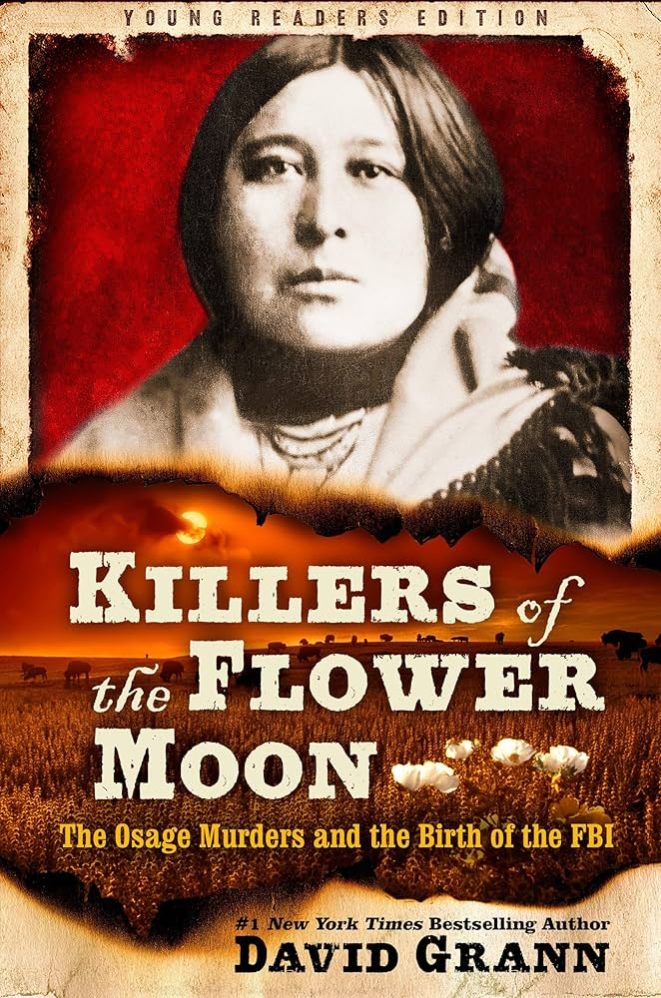
Killers of the Flower Moon by David Grann

Black and white photo of a Native woman in her traditional blanket sits above a landscape of prarie grasses with white flowers, all with red

by Eric L.

Although a graduate of a mostly white private high school, I was lucky to attend a good public college that furthered my historical education. Like many pieces of history, the “Osage Reign of Terror,” which took place roughly from the 1910s to the 1930s, was not addressed in my education. Someone suggested that the term is a misnomer because it sounds as though Osage caused the reign of terror; however, the opposite is true.

Killers of the Flower Moon is an entertaining and provocative read. Published in 2017, the book is on bestseller lists again because of the critically-acclaimed Martin Scorsese film, starring Lily Gladstone, Leonardo DiCaprio, and Robert DeNiro. Author David Grann is a thorough researcher, and he recounts the history of the Osage people and how they ended up in Oklahoma. They, like so many other Native tribes, were continually pushed West out of desirable land until they arrived on the least desirable part. A chief at the time suggested that they take the hilly land in Oklahoma because the white man would not want it, and perhaps would leave them be. He was wrong. Another chief decided that they would have to parcel it out like real estate – but the Osage owners retained all the mineral rights. A shrewd stratagem, as they realized oil had been discovered.

The reserved mineral rights could not be sold to a non-Osage person, but only inherited in a practice that became known as “head rights.” This seemed a genius move, but unfortunately, the chief was battling with a far more powerful entity. As more oil was found on Osage land, the income generated from the rights to drill became very valuable. All the major oil companies wanted to drill on this land, and were spending large amounts of money to do so. For a short time, the Osage had the most wealth per capita in the United States.

This situation was untenable to some white Americans. The Osage were prohibited from accessing their bank accounts and assigned guardians (through the Bureau of Indian Affairs) who controlled their money; in the movie, you hear Mollie Burkhart refer to herself as “incompetent” when talking to her banker. The need for a guardian was determined by how much native blood a particular Osage person had and thus the extent of their head rights. All this sets the backdrop to the Reign of Terror, when more than an average number of wealthy Osage folks died untimely deaths and others (mostly white men) inherited their wealth.

After a number of botched, failed, and bogus investigations, the nascent FBI, under the direction of a young J. Edgar Hoover, decided to get involved. After all, the murders occurred on federally managed land, which was technically the FBI’s jurisdiction. Grann’s book follows a particularly tragic example, where a WWI veteran, Ernest Burkhart, came to live with his uncle “King” Hale, a cattle rancher in the Osage country. Ernest marries Mollie, whose family died around her from natural and unnatural causes. It is Mollie who ventures to Washington, DC to ask the Bureau of Investigation to provide answers.

I won’t spoil the mystery and subsequent court case, but Grann successfully interweaves a story of the early FBI with the tragedy of Mollie’s family and the plot to inherit their rights. It’s terribly sad, but with an interesting cast of characters and a well-written murder mystery. The story is told largely from the FBI agent’s perspective, but Grann is very thorough in his research and interviews, and he uncovers more than the FBI found (or at least documented). The movie shifts the narrative from the FBI to Ernest Burkhart and King Hale, and to a lesser extent, Mollie.

I’m certain the film will attract some backlash for bringing up the ghosts of our past. It always seems strange to me that we don’t want to better appreciate our collective history. I loved that one wise Osage person wondered whether any of it was worth it, since they lost so much. I can’t pretend to have an answer for that, but it’s a sad and instructive story about American greed and racism. What I’ll take from it, which is well-developed in the book, is that there were some dedicated FBI agents and citizens who spent time investigating and solving some of these crimes despite nearly insurmountable odds. Read the book and see this film; it’s a story worth repeating and knowing.

Killers of the Flower Moon: The Osage Murders and the Birth of the FBI by David Grann is available in many formats:
print, large print, e-book via Libby/Overdrive, e-book via CloudLibrary,
audiobook on CD, e-audiobook via Libby/Overdrive, e-audiobook via CloudLibrary

You can also get on the waiting list for the DVD of the movie, which is set to be released at the end of February, 2024.

Kristen B. contributed to this review.

Eric is a DIY Instructor and Research Specialist at Elkridge Branch. He enjoys reading, films, music, doing nearly anything outside, and people.

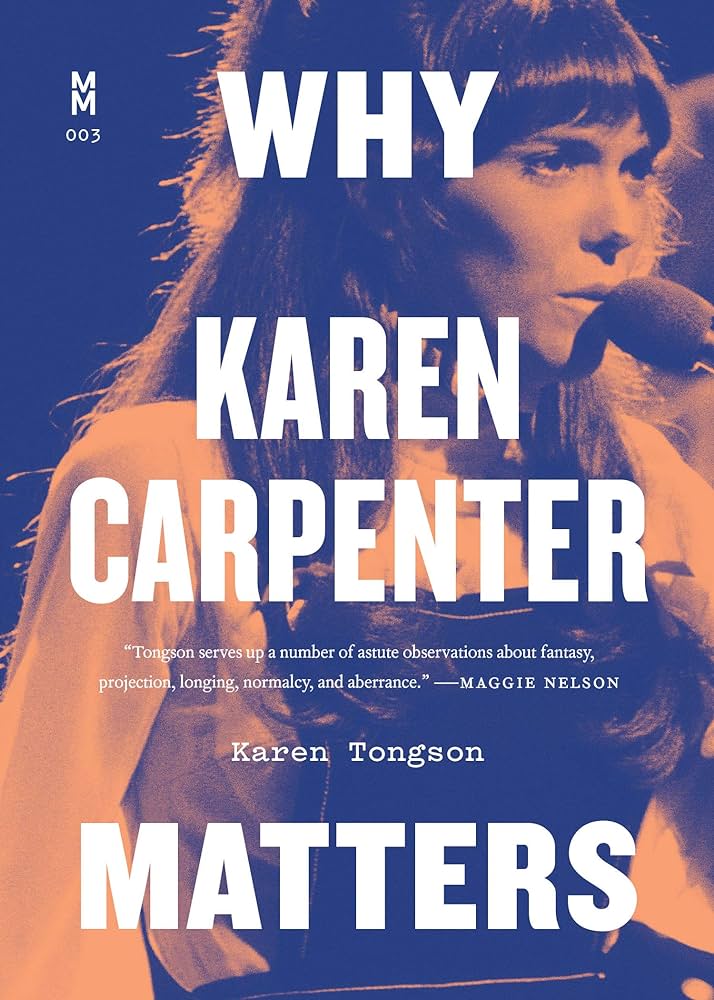
Why Karen Carpenter Matters by Karen Tongson

A blue and beige duotone image of Karen Carpenter singing into a microphone, with text in white block letters "Why Karen Carpenter Matters".

by Angie E.

In Why Karen Carpenter Matters, the author writes about something she calls “the Karen effect,” being “the capacity to make you feel something, to make you believe in a spiritual undoing and trembling beneath the polished arpeggios and vacuum-sealed harmonies.” She speaks for many fans, I am sure, in describing the distinct sound of one of the most gifted vocalists of all time.

Author Karen Tongson (named after the singer) is a Filipino-American cultural critic, writer, and queer studies scholar. In this moving and often riveting half memoir/half biography she intertwines cultural analysis and personal anecdotes, creating a rich mix of insight and emotion into the life of Karen Carpenter.

The Carpenters’ music was immensely popular in the Philippines and other parts of Asia during the 1970s and beyond. Their songs had a significant impact on Filipino culture, and Tongson grew up with a deep appreciation for their music.“To be corny is to be mawkishly old-fashioned; tiresomely simple and sentimental,” Tongson writes, explaining part of the reason of her love for Karen Carpenter, who ultimately became the tether to the Philippines.

Tongson also navigates the sensitive topic of Karen’s eating disorder with grace, shedding light on the societal pressures that contributed to Karen’s tragic struggle. She emphasizes that Karen’s story is not just one of personal struggle, but a reflection of the larger issues women faced during that era, and still to this day, a powerful reminder of the need for compassion and understanding.

One of the most striking aspects of Why Karen Carpenter Matters is its examination of the intersection of race, gender, and music. Tongson studies the ways in which Karen Carpenter’s voice transcended cultural boundaries and challenged stereotypes, making her an unexpected icon in the LGBTQ+ community. Karen’s voice, as the writer beautifully describes, became a “sonic balm” for those who found solace and identity in her music.

I have loved the Carpenters since I was a kid and find Why Karen Carpenter Matters to be one of the most authentic and soulful nonfiction reads ever, not just on Karen Carpenter, but on any person or subject. I can still feel sad when I hear a song of hers on the radio or my music streaming, but that doesn’t take away the power or comfort or loveliness of one of the most sincere voices I have ever heard in music. From all accounts written about her, from everything friends of hers have said, Karen was a fun and funny woman, sweet and a genuine person.

For more about the Carpenters:
Carpenters: The Musical Legacy is an enchanting journey through the timeless melodies of Karen and Richard Carpenter. There are lots of fascinating tidbits about recording sessions and songs chosen for albums and what Karen and Richard thought about their music and about music in general.

Lead Sister: the Story of Karen Carpenter is not owned by HCLS, but is well-worth tracking down through Marina. A 2023 release, it takes a more artistic look at her life and how much more there was to her in her musical life than that magical voice. Karen herself once said that she thought of herself as a drummer who sang, not a singer who played the drums. I think she would like this book a lot.

Angie is an Instructor & Research Specialist at Central Branch and is a co-facilitator for Reads of Acceptance, HCLS’ first LGBTQ-focused book club. Her ideal day is reading in her cozy armchair, with her cat Henry next to her.

World Series: Baseball Classics

A baseball sits inside the chalk lines of a batter's box, with red seam showing prominently.

It’s almost time for baseball to finish for the year, crowning a new World Series winner. (Next year, Orioles!) But if you feel the need to keep America’s Pastime in your life a little while longer, you can always borrow one of these classic movies (in no particular order):

The Natural
Starring Robert Redford, based on an equally excellent, although rather different, book by Bernard Malamud, The Natural tells the electrifying story of Roy Hobbs as he returns to baseball after a mysterious disappearance. This is a story of true loves, the consequences of choices, and living your dreams, whether it’s about baseball or finding your family. Rated PG

42: The Jackie Robinson Story
The number 42 belonged to Jackie Robinson and has remained the only number to be retired across all of Major League Baseball. This biopic, starring Chadwick Boseman and Harrison Ford, follows Jackie Robinson as he breaks the color barrier to become the first Black man to play in the major leagues. It pulls few punches about the difficulty of the situation. Rated PG-13

Field of Dreams
If you build it, they will come. If you’ve never seen this Kevin Costner classic, featuring James Earl Jones and Ray Liotta, among others, what have you been doing with your life? Mysterious voices tell Costner’s character to plow under some of his corn and build a baseball field, and then entire squads of dead (and disgraced) ball players appear each night. It’s Iowa, not heaven. Rated PG

Bull Durham
Kevin Costner stars in this one, too, along with Susan Sarandon and Tim Robbins. Set in the minor leagues, baseball and romantic entanglements combine for a fun, quotable movie that’s mostly about baseball rivalries. Rated R

A League of Their Own
There’s no crying in baseball! This beloved movie about the women who played baseball during WWII features Tom Hanks and Geena Davis, among a star-studded cast. If it was easy, everyone would do it. Rated PG

The Rookie
Dennis Quaid carries this family-friendly Disney movie about being the oldest rookie in baseball. After making a deal with his minor league team that if they win their season, he will pursue a major league career, Jim Morris has to make good on his end of the bargain. Rated G

Trouble with the Curve
This romantic comedy, starring Clint Eastwood, Amy Adams, and Justin Timberlake, uses scouting the minor leagues before the draft as the background story. Amy Adams’ character has to leave her high-powered law career to make sure her grumpy dad (Eastwood) is healthy enough to continue scouting. She falls for the game and the guy, having to make some tough decisions along the way. Rated PG-13

Million Dollar Arm
Based on a true story, an American baseball talent agent travels to India to see if he can discover the next big pitching arm in their cricket leagues. Jon Hamm plays the desperate sports agent who goes out on a limb to save his business and, maybe, himself. Rated PG

Mostly Monsterly

By Eliana H.

Does your family have monsters on the mind? If you’re looking for inspiration for wacky Halloween costumes or just want to enjoy some cute, silly monster stories, look no further. Here are a few of my favorite monstrously fun picture books. 

Monsters Go Night-Night by Aaron Zenz

The book cover depicts a blue monster with orange hair and a dragon-like tail and a smaller orange monster bouncing with gleeful smiles above two white pillows and some white feathers, as if having a pillow fight at a slumber party.

Be prepared for your little one to beg you to read this over and over again. Each page presents a question of how monsters get ready for bed with multiple answer options. Your little one may be surprised, even if you are not, by what monsters use in familiar bedtime routines. 

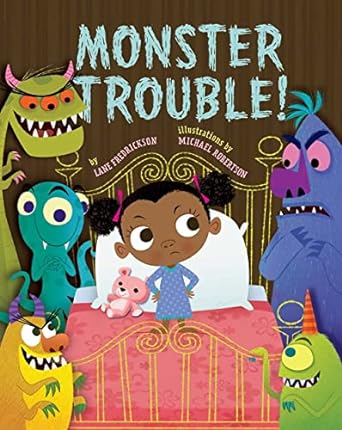
The book cover depicts a little girl in a blue print nightgown and ponytails with pink ribbons, in bed with her pink teddy bear. She has hands on her hips as if she is confronting the six monsters surrounding her, whose expressions range from menacing to goofy to friendly.

Monster Trouble! by Lane Fredrickson 

Poor Winifred Schnitzel has some trouble with monsters. They keep pestering her at bedtime, keeping her awake, and nothing she tries works to trap them or scare them away! Until one night, Winifred is so exhausted that she’s half-asleep and tries something completely different. Check out this fun, rhyming book to see what you might be able to do to get rid of any monsters bothering you! 

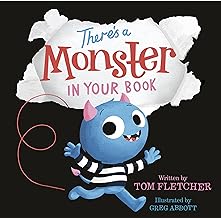
The book cover depicts a blue monster with pink horns and four sharp teeth, wearing a black and white striped shirt and running with arms outstretched.

There’s a Monster in Your Book by Tom Fletcher 

Part of a series of interactive titles, this book comes with its own monster. Oh no! What do we need to do to get rid of it? Follow the directions on each page together and see if you can get this (actually very cute and friendly-looking) monster out of your book. 

The book cover depicts a one-eyed green monster with a red mouth and three teeth, holding a blue bowl of mac and cheese that also has a red mouth and three teeth on the side.

The Monster Mac & Cheese Party by Todd Parr

Todd Parr is a favorite author and illustrator with a very distinctive style and many, many books under his belt. I was excited to see this new one hit the shelves, especially in time for spooky season. A range of different monster-y creatures bring their own twists on macaroni and cheese to The Monster Mac & Cheese Party – no humans allowed! But if the book makes you hungry for some people-friendly macaroni and cheese, check out the recipes at the back to try making your own. 

The book cover depicts a red monster with a little at its side in bed, clutching the bedcovers and looking up and to the side as if frightened.

Love Monster and the Scary Something by Rachel Bright 

Even though Love Monster followed all his usual bedtime routines, he can’t fall asleep. Then, he hears some spooky sounds coming into his house and finds himself even MORE awake! What could that scary something be? What will Love Monster do?

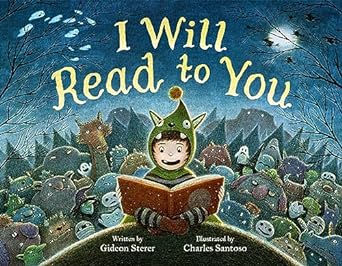
The book cover depicts a child in a monster costume, seated cross-legged and reading a book cloud to a large group of varied monsters, mummies, witches, ghosts and dragons who are arrayed behind. Branches with a few leaves and the moon are above in a night sky.

I Will Read to You by Gideon Sterer 

Another new title that’s a perfect fit for our monstrous menu, this book calls to mind Where the Wild Things Are but with a child who encourages calm rather than clamor. As a mother offers to read to her child, he asks her about who takes care of the monsters! Then, the two walk together to a spot where they summon creatures of all kinds to come and listen to a bedtime story. Mother is supportive and proud, then the two head home for the human child’s turn to be read to. A very sweet perspective on monsters, perfect for your big-hearted little one.

Eliana is a Children’s Instructor and Research Specialist at the Elkridge Branch and co-chair of the HCLS Equity Committee. She loves reading, even if she’s slow at it, and especially enjoys helping people find books that make them light up. She also loves being outside and spending time with friends and family (when it’s safe).
The Loney by Andrew Michael Hurley

The book cover portrays the title from the bottom to the top, with the "y" at the end of "Loney" splitting into a dead tree branch with a foreboding house in the background, all in white against a black backdrop.

By Julie F.

I took everything that was offered that morning – the warm sunlight, the soft shadows on the fields, the spangle of a brook as it wound under some willows towards the sea – and managed to convince myself that nothing would harm us.

Such naivety makes me laugh now” (173).

Confession: passages like the one above give me shivers. I’ve never been a horror fan. My experience with horror films consists of a mediocre made-for-TV movie called Midnight Offerings at a high school party, featuring Melissa Sue Anderson of Little House on the Prairie fame, and a viewing of The Shining with fellow grad students back in 1992. That’s it. Books, even less. Stephen King? I adore his nonfiction, follow him on Twitter, and used to read his columns in Entertainment Weekly religiously. But I can’t bring myself to tackle Carrie or Salem’s Lot.

Splitting hairs when it comes to genre, though – most librarians do this with aplomb. My brain has always differentiated between horror and ghost stories, and I love a good ghost story. Starting with the Victorian favorites in the genre, the short stories of J.S. LeFanu and M.R. James, all the way to The Woman in Black by Susan Hill and The Little Stranger by Sarah Waters, the touch of the paranormal that wends its way into the life of unsuspecting mortals on this plane thrills and fascinates me. A more recent but equally compelling genre, folk horror, bridges the gap between ghostly folklore and fiction. As noted by editor Dawn Keetley in Revenant, the journal of the supernatural and the weird, “folk horror is rooted in the dark ‘folk tale’, in communal stories of monsters, ghosts, violence, and sacrifice that occupy the threshold between history and fiction.” There are some incredible writers forging creative new work in this genre, and Andrew Michael Hurley is one of the best.

The Loney opens with a group of modern, penitent pilgrims making an annual trip to the title locale, “a wild and useless length of English coastline” (3), where they spend a week at Easter, culminating with a visit to St. Anne’s shrine. It’s 1975, and we are seeing all this through the viewpoint of the teenage narrator, nicknamed “Tonto” by the young, wise-beyond-his-years priest who accompanies the group. Tonto knows that his situation is unusual; his brother Hanny has been mute his entire life, and his excessively devout mother (Mummer) is determined to pray her way to healing for him. For her, religion, and particularly the rituals enacted that comfort her year after year, are the only possibility for a cure.

While staying on the Loney in what could barely be described as a village, a number of disturbing acts take place: an effigy made of animal parts is hung in the woods, Father Bernard is warned to stay away from the pub, and a wooden statue of Jesus that hung in the local church is smashed to bits on Easter morning. Tonto experiences a sense of creeping unease when a gull with a broken wing suddenly takes off in flight. The locals don’t seem disturbed when a dead tree struck by lightning decades ago suddenly sprouts a new branch, or when their apple trees, usually ripe in autumn, are laden with spring fruit virtually overnight. There’s a healing power at work in this weird place that has nothing to do with Mummer’s fervent Catholicism, a power emanating from beliefs and practices that are much, much older than her faith. In the framing story, we learn that Tonto was shaken by everything he learned to the point that, decades later, he’s lost his faith: “Like Father Bernard said, there are only versions of the truth. And it’s the strong, the better strategists who manage them” (294).

The dark, brooding atmosphere permeates the novel, catapulting Hurley into fame as one of the foremost practitioners of folk horror and earning him praise from Stephen King (“An amazing piece of fiction”) and the Costa First Novel Award. He conveys a sense of otherworldly, uneasy time and place that can only result in the darkness of savage nature reclaiming itself: “I often thought there was too much time there. That the place was sick with it. Haunted by it. There was nowhere for it to go and no modernity to hurry it along. It collected as the black water did on the marshes and remained and stagnated in the same way” (31). If you’re in search of an eerie Halloween read that doesn’t spell everything out but stretches the imagination relentlessly – a book that also addresses real questions of faith and family from the eyes of a boy coming of age – then read The Loney.

Julie is an instructor and research specialist at HCLS Miller Branch who finds her work as co-editor of Chapter Chats very rewarding. She loves gardening, birds, crime fiction, all kinds of music, and the great outdoors.

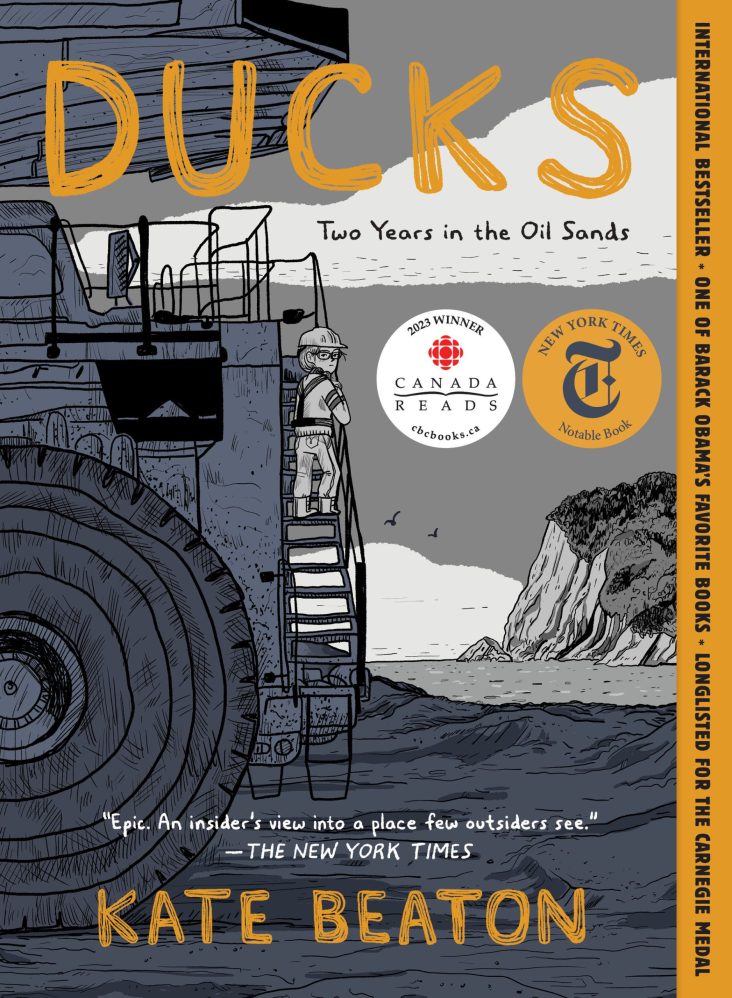
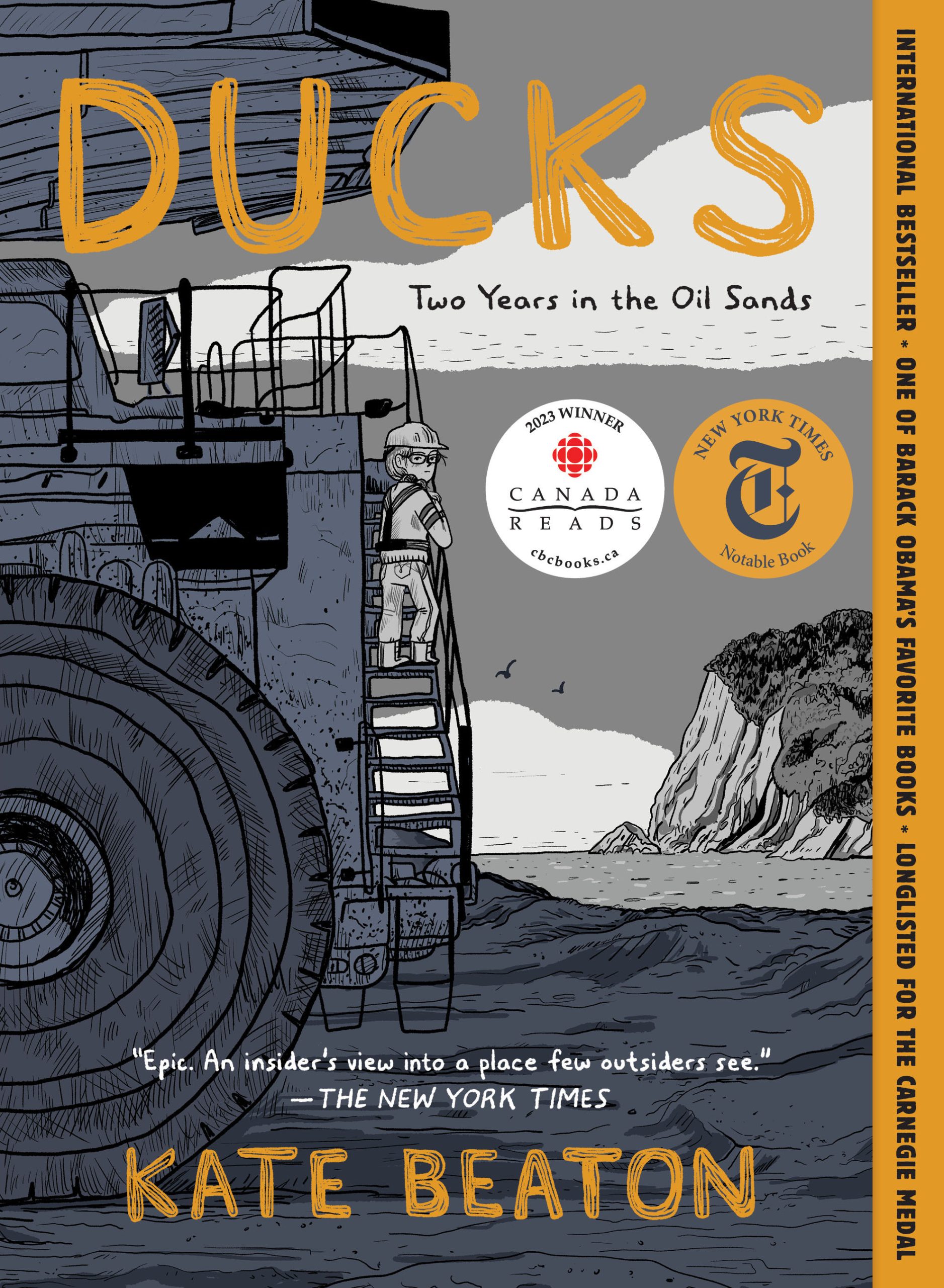
Ducks: Two Years in the Oil Sands by Kate Beaton

A grey scale drawing of a young woman in safety gear, standing on the ladder of a giant piece of machinery looking out over a seaside vista. Title, author, and edge in yellow.

by Kristen B.

I heard an NPR conversation about a graphic memoir, Ducks: Two Years in the Oil Sands by Kate Beaton, then a friend mentioned they had enjoyed the same book. So, I put it on the calendar for my book group, Books on Tap, to read this fall. We read a wide variety of authors and genres, but not much nonfiction or graphic format. It seemed like a good way to stretch our reading wings. Graphic memoirs make a lot of sense to me because the images do much of the work, allowing the action to move forward without bogging down in description. This was a great example of the genre and how narrative and illustration can work together, even though it got a very mixed reaction from the book group folks.

A native of Nova Scotia with interests in history and art, Kate decides to go work in the oil sands of Alberta to pay off her college loans. The book recounts her experiences in an isolated, industrial environment where the male to female ratio is around 50:1. The constant, unthinking sexism informs the majority of the story, enlivened by a dry wit and rare moments of joy – such as seeing the Northern Lights. She also deals honestly with what seems like the inevitable sexual assault and its aftermath.

At one point, a flock of migrating ducks becomes mired in one of the toxic tailing ponds. International outcry ensues over the fate of the doomed birds, leaving one to wonder about the environmental cost of the industry. Even more, it underscored the human toll that raises no sort of similar outcry. The giant corporations being much more interested in their bottom line than in the welfare of their employees. The black and white illustrations reinforce the bleakness of Kate’s situation, from the physical spaces to the emotional ones. She captures both the huge scale of the machinery and the small scale of being human in such a vast, uncaring space.

Beaton also manages to convey a desperation for human connection, from the workers absent from far away family. Tentative friendships and other relationships cannot fully flourish, but people naturally seek them anyway. When the toll becomes too great for a co-worker, the lip service given to Employee Assistance Programs and other help mechanisms gives way before a toxic corporate culture. The money keeps bringing new people in, and the two years sees Kate go from an overwhelmed novice to someone wise enough to get out when she can. The scenes with her mom are among my favorites. Maybe I had something in my eye when I got to the airport hug at the end – I needed a tissue one way or the other.

Ducks: Two Years in the Oil Sands is available in print, which allows you to really study the graphics.

Kristen B. is a devoted bookworm lucky enough to work as the graphic designer for HCLS. She likes to read, stitch, dance, and watch baseball in season (but not all at the same time).

Bauder Book Talk with Nic Stone

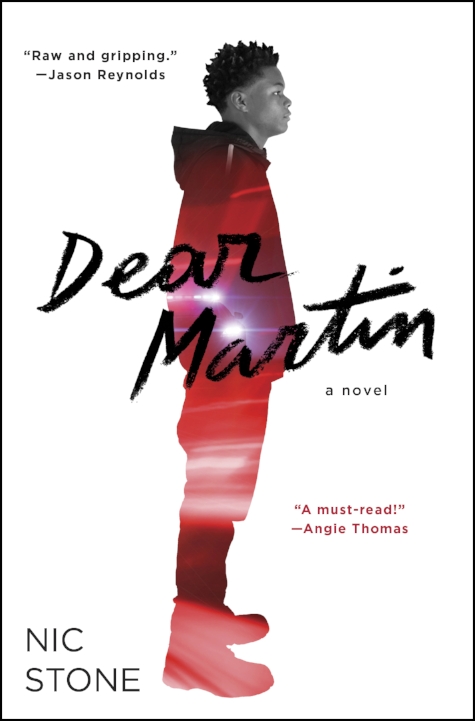
A young black man is centered on the cover, with speeding red lights in the space for his body. Dear Martin is written across him in a scr

Thursday, November 9
4 – 6 pm
Registration required.
HCLS East Columbia Branch
410.313.7700

Dear Nic,

During the pandemic when the world seemed especially grim, I attended a virtual conference where you served as a guest speaker. You stood out to me with your bold avocado earrings and the backstory of how you started writing for teens. Your appearance lifted me up during a time when all I wanted was to return to work in person with my teen library customers.

Fast forward to May 2023, my friend Amanda and I proposed that we host you at HCLS and learned you were indeed coming to my branch, East Columbia, on November 9.

Most people will have read Dear Martinone of your most powerful works. In this novel, we learn about the life of college-bound Justyce McCallister and his letters to the late Martin Luther King, Jr., written as reflections on being young, black, and escaping the ongoing violence toward unarmed black boys and men. In Dear Martin’s follow-up Dear Justyce, we read about Quan, his circumstances far different than his friend Justyce who helps him while he is incarcerated in a juvenile detention center. Quan sees up close the shortcomings and racial disparities in our flawed criminal justice system. 

Two more of my favorite titles are Clean Getaway and Odd One Out. In Clean Getaway, we see the connection between G’ma (a grandmother) and her grandson “Scoob,” as they go on a road trip exposing family secrets and a lesson in the beauty of intergenerational family ties. While in Odd One Out, we follow Jupe, a gay teen girl and her best guy friend Coop (who may be in love with her). In comes Rae, the new girl in town who may or may not be straight. The love triangle takes Jupe on a journey of self-discovery, exploring gender and sexual identity, and the strength of friendships.

Nic, you write about characters facing hard truths about our society and inspire young people to keep pressing forward, even when it seems impossible to do so. 

My hope is your visit will continue to inspire our young people, those turning your pages and seeing themselves and making the world better.

Sincerely,
Carmen

Bauder Book Talks by Howard County Library System is made possible by a generous gift from Dr. Lillian Bauder, a community leader and Columbia resident. Howard County Library System will present an annual endowed author event, known as Bauder Book Talks, for under-served students in grades 6-8 attending public middle schools in Columbia with high percentages of African American and BIPOC (Black, Indigenous, People of Color) students. Authors and titles selected are high-interest and high-quality on topics of social issues, equity, and related matters. Student participants have the opportunity to hear from and engage the author and receive a copy of the author’s book. The event honors the memory of Don Bauder, late husband of Dr. Lillian Bauder and a champion of civil rights and social justice causes. 

This year, meet famed young adult author Nic Stone as she shares the inspiration behind her critically-acclaimed novel Dear Martin and other featured works.

How to Cook Everything by Mark Bittman

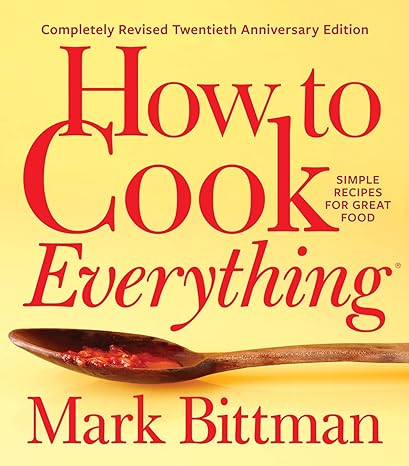
The book cover depicts a wooden spoon holding pureed tomato, set against a yellow backdrop with the title and author in red lettering.

by Angie E.

If you’ve ever felt like a lost soul in the kitchen, fear not, because Mark Bittman’s How to Cook Everything (also available as an e-book) is your culinary guardian angel. This book is a lifesaver for those of us who often find ourselves struggling to whip up a decent meal or decode complex recipes.

With its straightforward approach and comprehensive coverage, it’s like having an understanding, all-knowing mentor guiding you through the culinary maze. Recently, I got a new stove and it has inspired me to cook full-heartedly again. In some ways I feel like I’m starting over from scratch with cooking and baking, and this book is helping me get back on track.

One of the most remarkable aspects is its clarity. Mark Bittman breaks down each recipe into simple, easy-to-follow steps that even the most inexperienced cook can grasp. From basic knife skills to advanced techniques, he covers it all with patience and precision. As someone who often struggles with what seem like convoluted cooking directions, I can’t stress enough how much I appreciate his straightforward approach. How To Cook Everything lives up to its name. It truly covers everything you’d ever want to cook. Whether you’re a meat lover, vegetarian, or somewhere in between, this book caters to all tastes and dietary preferences. The recipes range from classic comfort foods to international delights, making it an priceless resource for any chef, amateur or otherwise.

Bittman provides valuable time-saving tips and shortcuts. He gets that not everyone has hours to spend in the kitchen, so he offers matter-of-fact suggestions to streamline the cooking process without sacrificing flavor. These tips are a windfall for those days when you’re short on time but still crave a homemade meal. One of the biggest challenges for a helpless cook is not having the exact ingredients a recipe calls for. Bittman encourages flexibility, offering alternative ingredients and substitutions. This approach inspires you to experiment and adapt recipes to suit your pantry’s contents, making cooking less stressful and more enjoyable.

Perhaps the most crucial aspect of How To Cook Everything is how it boosts your confidence in the kitchen. Bittman’s writing style is encouraging and motivating. He makes you feel like you can conquer any recipe, no matter how intimidating it may seem.

Angie is an Instructor & Research Specialist at Central Branch and is a co-facilitator for Reads of Acceptance, HCLS’ first LGBTQ-focused book club. Her ideal day is reading in her cozy armchair, with her cat Henry next to her.