If you ever find yourself having trouble finding your next book to read, take my advice – choose a science fiction novel. I’m sure most people associate the genre with high-tech futures, robot butlers, and mind-bending math equations, but the most important aspect of the genre comes from the wonder of discovery. Experimentation, analysis, deduction: all keys to jump start intellectual excitement. Even if many of Cixin Liu’s novels may touch on those first, stereotypical themes.
The Three-Body-Problembegins in the middle of China’s Cultural Revolution in the mid-1960s. From the perspective of a persecuted academic, the immediate result is a strong emotional hook. A woman, Ye Winjie, watches as her father is killed during a riot. She is sent to a labor camp and then to a hidden scientific facility, where she begins to use her background training in astrophysics. A test radio signal sent up into space results in an unexpected response eight years later. The alien civilization at the other end are the Trisolarians, from Trisolaris. As the book’s title says, they face a problem. Their world orbits three stars in an unpredictable pattern, continuously destroying civilization and leaving the inhabitants to restart. Earth and Trisosolarians become connected, with Earth being the Trisolarian’s new hope at finding a habitable planet. With 450 years to prepare, humans have to figure out what to do.
This highly inventive book jumps between time periods and across the universe. As the story slowly unfolds, the reader is constantly left to wonder, “where is this going to go next?” Keeping in mind that the book is the first in a trilogy, the scale of Liu’s world-building is astounding. The book is definitely not a quick read, but fans of scientific info-dumps will enjoy those sections. Regardless, the time taken to explore tangents and add description is ultimately fascinating and an experience you’ll remember for years. Or at least, until you read the sequels.
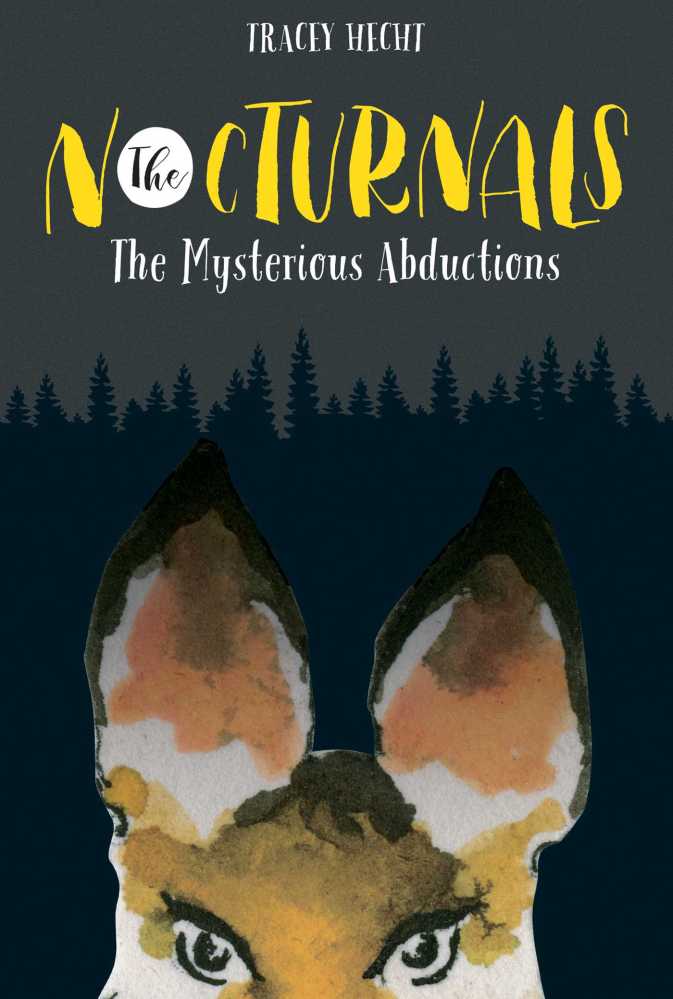
If you’ve ever taken an evening walk, you might have noticed signs of some animals that are active at night. Maybe you’ve heard an owl call or seen a bat winging its way through the sky. We call those animals nocturnal, and lots of fascinating nocturnal animals live in our neighborhoods and parks. You can learn more about some of them along with the process of writing a book from Tracey Hecht at our Author Works event on Wednesday, May 17, at 7:30 pm at the Elkridge Branch.
Author Tracey Hecht has written a critically-acclaimed children’s book series called The Nocturnals about a group of unlikely friends who are all animals active at night. Dawn, a serious fox; Tobin, a sweet pangolin; and Bismark, a pint-sized sugar glider, head off on fun-filled adventures in this middle-grade series, starting with The Mysterious Abductions. Early Reader books such as The Moonlight Meeting and The Slithery Shakedown introduce younger readers to these friends while presenting themes that encourage kindness, empathy, and bravery.
Participate on Wednesday evening in an interactive workshop to learn more about the animal science that inspired the books. You can also explore developing characters, creating author voice, and learning how books are made. Visit the children’s desk at HCLS Elkridge Branch before the workshop to collect a mask craft you can make that also reminds you what time the event begins. When you come to hear Tracey speak, you receive a bookmark, and if you’re lucky, you might win a plush fox or a Nocturnals activity book. The workshop is best for children ages 5 to 12 years. Books available for purchase and signing.
About the Author
Tracey Hecht has written, directed, and produced for film. The American Booksellers Association chose The Mysterious Abductions—the first book in her critically acclaimed middle-grade series The Nocturnals—as a Kids’ Indie Next List pick. With the New York Public Library, she created a Read Aloud Writing Program that has since been used in more than 200 schools, libraries, and bookstores. When she isn’t writing, she can be found hiking, reading, or spending time with her family. Tracey currently splits her time between New York City and Oquossoc, Maine, with her husband and four children.
Eliana is aChildren’s Research Specialist and Instructor at HCLS Elkridge Branch. She loves reading, even if she’s slow at it, and especially enjoys helping people find books that make them light up. She also loves being outside and spending time with friends and family (when it’s safe).
Truly walking a mile in another person’s shoes is rarely possible, but when you want to take a stroll, biography and memoir are right here inside the doors of everyone’s favorite library. Aspiring to understand the Jewish experience, readers can check out materials with unique perspectives on Jewish heritage. Consider exploring the lives of three Jews raised in Brooklyn, New York.
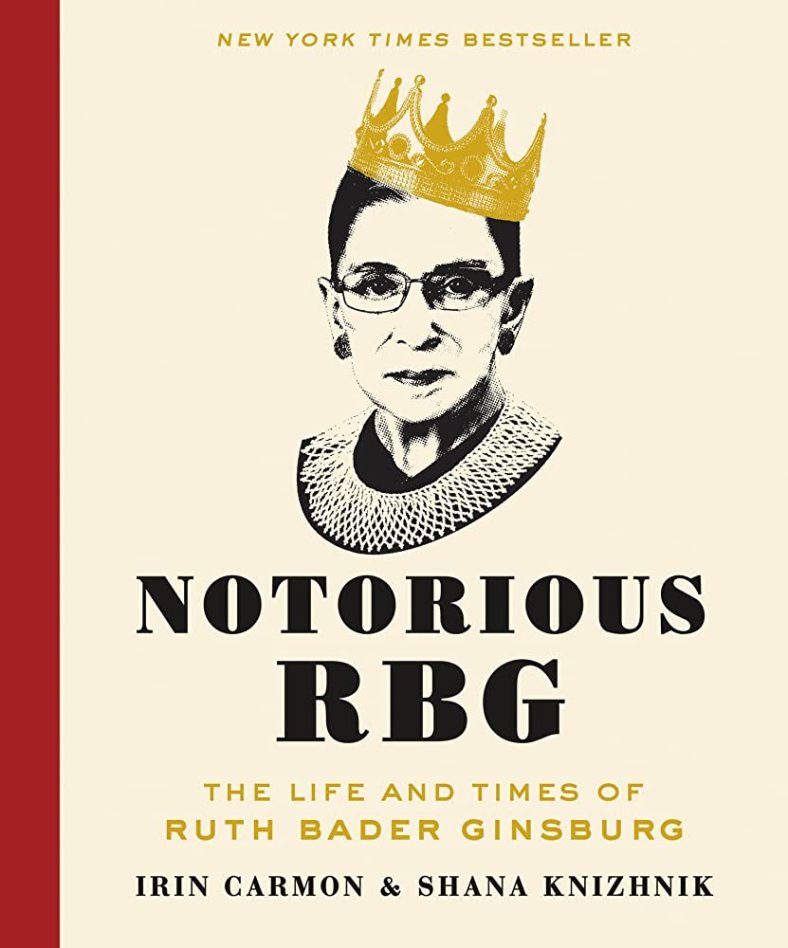
In June 2013, Ruth Bader Ginsburg seized the rare opportunity to read a dissent from the bench of the Supreme Court. Wearing her “dissent collar,” she stated that the court’s majority opinion was a “demolition” of the Voting Rights Act. A slight 80-year-old woman with a soft voice, Justice Ginsburg was already legendary for her groundbreaking work on gender equality as well as her rigorous workout regimen, but her words were her superpower. She may have been the physical opposite of the deceased rapper Notorious B.I.G., but they both used language to pack a punch, and so the Notorious R.B.G. Tumblr (a multimedia blog site) was born. Fact-checked by RBG herself, Notorious RBG: The Life and Times of Ruth Bader Ginsburg, by Irin Carmon and Shana Knizhnik, presents one of the most fun and inspiring biographies available. Packed with tribute art, photographs of folks in RBG costumes, judicial wisdom, and primary sources, tweens and adults alike can embrace this book. There is also a young readers’ edition.
Speaking of art, who does not love Where the Wild Things Areand New Yorker cartoons? Wild Visionary: Maurice Sendak in Queer Jewish Context, by Golan Y. Moskowitz, makes an in-depth journey into Sendak’s legacy. His upbringing and life as a Jewish gay man informed the futuristic outlook he brought to his books. Because they lost so much family in the Holocaust, Sendak’s parents were overly protective, and home felt as if it were filled with “dead Jews.” Considered a literary and artistic disrupter, Sendak believed that books were a way for children to safely explore their natural fears. Throughout his life, Sendak used his art to confront injustice, challenge prejudice, and engage readers in the gravity of children’s emotional lives.
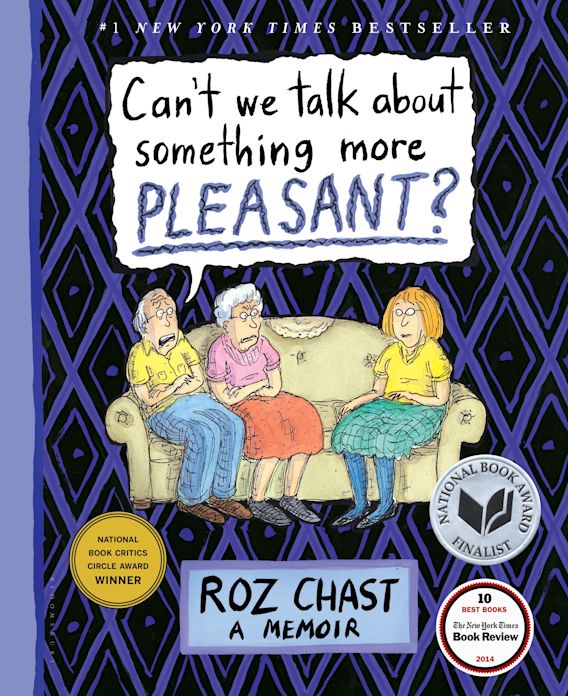
Can’t We Talk About Something More Pleasant is New Yorker magazine cartoonist Roz Chast’s graphic memoir. The art is poignant and funny, provocative and familiar. Doesn’t every family have at least one closet so deep that we never know what was really in it until the person dies and the time comes to clean out its contents? Chast mines the contents of her life, including drawings, possessions, photos, letters, and family anecdotes to create an unforgettable portrait of her upbringing and a piercing view of death. Her relationship with her parents was fraught, making this an uncomfortable read at times. Chast’s dark humor in addressing challenging end-of-life issues resonated deeply with me. Her parents lived into their 90s, and she draws and writes about falls, elder law, dementia, nursing aides, financial fears, incontinence, bed sores, hospice. Filled with universal family truths, the book is one I’ve read and reread, rare for me. It’s a head-on confrontation with the circle of life.
Cherise Tasker is an Adult Instructor and Research Specialist at the Central Branch. When not immersed in literary fiction, Cherise can be found singing along to musical theater soundtracks.
Not your typical novel, Feast Your Eyes by Myla Goldberg is a fictional memoir of a photographer named Lillian Preston and all the people who make up her support system. Her story unfolds through several narrators through letters, journal entries, firsthand accounts, and descriptions (by Lillian’s daughter) of photographs taken by Lillian.
Set primarily in New York City, the story outlines the hardships of being a professional artist. Lillian balances this struggle with single motherhood. Caring for her daughter Samantha and keeping up with her photography practice every day are constantly on Lillian’s mind. As Samantha gets older, this struggle intensifies with a legal battle over photographs that are deemed “obscene,” and charges are filed against Lillian and her gallery owner. You’ll have to read the book to learn the outcome of the case!
Samantha is in her mid-to-late teens when the case makes news headlines, and it affects Lillian and Samantha’s relationship. Later, they are able to find common ground, as they work together on photography projects; the creative spirit is what bonds them. There is a lot of drama and struggle in this story, but the way it is revealed keeps it from being heavy-handed. It also kept me engaged until the conclusion.
I also sensed that Samantha regretted the way she had treated her mom and only started to realize this towards the end of the book. Still, the reader can feel their deep bond throughout, which makes the story truly bittersweet.
Lillian herself—selfishly single-minded in her artistic drive but genuinely protective of her child and often desperately lonely—is both larger than life and thoroughly human. A riveting portrait of an artist who happens to be a woman.
In 2013, I was living overseas as a military spouse and was struggling with my mental health. Desperate for help, I did a quick internet search to find the number for the Mental Health Services on base. The first question asked was, “Are you active duty?” When I replied that I was not, the response I got was, “Then we can’t help you.” Hearing those words was devastating to my despairing mind and I felt defeated in that moment. The person on the other end then asked, “Are you experiencing suicidal thoughts or do you feel that you might harm yourself or others?” My reply was, “If I was, I’d be in trouble, since you just said you can’t help me!” I made it past the lies that depression was telling me and the very insensitive message that I received that day. I have been traveling a road of healing for the last 10 years. Some days are hard, but I now know that there is help.
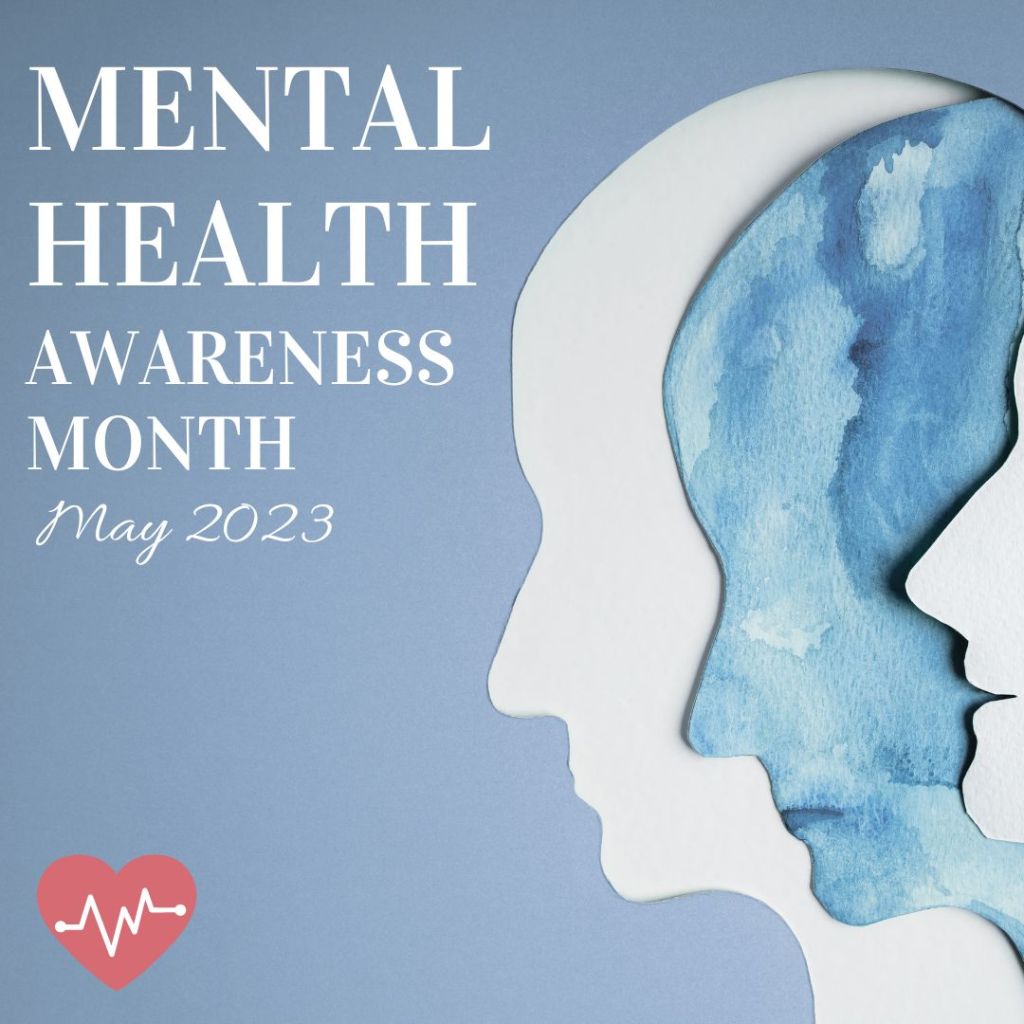
May is Mental Health Awareness Month and I want to begin by saying three things:
1. You are not alone.
2. Help is always available.
3. You (and your mental health) matter.
You Are Not Alone
Almost everyone knows someone with a mental illness. Understanding the prevalence of mental health conditions is important in destigmatizing it. Nearly 450 million people worldwide are currently living with a mental illness. In the United States, one in four adults suffer from a diagnosable mental disorder. Almost half of adults in the US will experience a mental illness during their lifetime. The three most common diagnoses are anxiety disorders, depression, and post-traumatic stress disorder (PTSD).
Life can be challenging, but every day shouldn’t feel out of control. Take time to ask yourself about your thoughts, feelings, and behaviors to see if this is part of a pattern that may be caused by a mental health condition. Here are some questions to get you started:
Have things that used to feel easy started feeling difficult?
Does the idea of doing daily tasks like making your bed now feel really, really hard?
Have you lost interest in activities and hobbies you used to enjoy?
Do you feel irritated, possibly to the point of lashing out at people you care about?
If your answers to the any of the above are yes, start a conversation with your primary care provider, a trusted friend, or a family member about your mental health. Please note: A mental health provider (such as a doctor or a therapist) can give you a full assessment and talk to you about options for how to feel better.
Help is Always Available – Free Community Resources
988 – Suicide and Crisis Lifeline – offers free 24/7 call, text, and chat (988lifeline.org/chat) access to trained crisis counselors who can help people experiencing suicidal thoughts, substance use, mental health crisis, or any other kind of emotional distress. Just text or call 988 nationwide. People can also dial 988 if they are worried about a loved one who may need crisis support. While text and chat are available in English only, calling services are in English and Spanish and use Language Line Solutions to provide translation services in over 250 additional languages.
211 Marylandis the state’s most comprehensive health and human services resource database. With more than 7,500 resources, individuals with essential needs can get connected to local help 24/7/365.
211, Press 1 is an immediate, always-on-call suicide prevention, substance use intervention, and mental health emergency assistance line available in the state of Maryland. Dial 211 and Press 1. 211 specialists are also available to chat or text. For text services, text your ZIP code to 898-211.
211 Health Check – provides proactive mental health check-ins to support those with anxiety, stress, and depression. The weekly connections provide one-on-one support with the goal of preventing suicide and other mental health emergencies. If requested, the 211 specialist can connect the caller with mental health resources. To sign up for weekly mental health checks, text MDMindHealth to 898-211.
MD Young Minds is a new resource for teens and adolescents who are struggling with their mental health. It sends supportive text messages, with a focus on teen and adolescent concerns and worries. To sign up, teens should text MDYoungMinds to 898-211. The ongoing messages also remind youth that immediate mental health support is always available through 211, Press 1.
Local Mental Health resources are available through the Howard County Health Department by visiting this website.
You (and your mental health) Matter
Mental health is an important part of overall health and well-being. Mental health includes our emotional, psychological, and social well-being. It affects how we think, feel, and act. It also helps determine how we handle stress, relate to others, and make healthy choices. Mental health is important at every stage of life, from childhood and adolescence through adulthood.
No matter your age or stage in life, you and your mental health are important. If you’re looking for resources to help make self-care part of your routine, the library can help get you started.
The Little Book of Rest: 100 Ways to Relax and Restore Your Mind, Body, and Soul by Stephanie Thomas is a book that can help you formulate your own actionable self-care plan. Everyone is unique, so make a self-care routine that works for YOU. This book is divided into four sections, with plenty of ideas for each category: physical, mental, emotional, and spiritual exercises to give yourself time and space to focus on wellness.
In The Self-Healing Mind, Dr. Gregory Brown advocates for a holistic approach to mental health treatment. Dr. Brown supports integrating conventional treatments (medication and talk therapy) with lifestyle changes that he calls the pillars of self-care: breathing mindfully, sleep, spirituality, nutrition, and movement.
Mindful Moments for Kids is an audio CD that is broken down into one-minute “mind breaks” – including guided meditations, relaxing music, nature sounds, and breathing exercises. Using these moments can help calm, focus, and inspire mental health as an everyday practice.
As a form of self-care, you can also try out meditation with some beginner’s meditation classes on HCLS’ YouTube Channel. There are three meditation sessions available:
Finally, HCLS Miller Branch is offering Suicide Prevention Training on Monday, May 15 at 6:30 pm, in partnership with Grassroots Crisis Prevention Center. Register here (starting Monday, May 8) for this training, which will show you how to recognize the warning signs of a suicide crisis and is designed for people who do not have experience in suicide intervention.
These are just a few of the resources and opportunities available at Howard County Library System.
If you are thinking about harming yourself or attempting suicide, tell someone who can help right away. Call 911 for emergency services. Go to the nearest hospital emergency room. Call or text 988 to connect with the 988 Suicide & Crisis Lifeline. The Lifeline provides 24-hour, confidential support to anyone in suicidal crisis or emotional distress. Support is also available via live chat. Para ayuda en español, llame al 988.
Sources: ADAA.org, hopkinsmedicine.org, mhanational.org, National Institute of Mental Health
Kimberly J is an Instructor and Research Specialist at the HCLS Glenwood Branch. She enjoys reading, photography, creating, crafting, and baking.
I recently read, or perhaps re-read, TheGrapes of Wrath. If I was assigned this masterwork in school, I skipped it or watched the film (which is also great). Either way, both were wasted on my young mind. The 15-year-old me could not have begun to empathize with these people. Not to mention we were probably still in the Reagan/Bush 1 era, and I feel this sort of thinking had gone out of vogue. No political statement intended; except for some small bumps, those were fairly prosperous economic times for many middle-class folks.
I was assigned and recall avoiding Of Mice and Men, and I can’t even remember that film. I’ve also seen East of Eden, but only because James Dean was in it. That said, I’m familiar with John Steinbeck: his reputation and the themes he’s known for (California and its workers). Maybe a decade ago, I read Travels with Charley: In Search of America, the autobiographical story of his travels with his dog (Charley). It was quite good, and I recommend it.
I digress. Coming in at just under 500 pages, with an overarching theme of extreme poverty to the point of starvation, The Grapes of Wrath is a masterwork of American literature. And it’s a story that is timeless, sadly. I read a lot of books, mostly good ones, but it’s easy to forget what it is to read a great book. Although you should be reading all sorts of books and anything that you like, not all books are great, I’m sorry to say.
In broad strokes, this novel concerns humanism and details the need for a social safety net in America. However, I would not describe the book as a polemic because it’s subtle and it humanizes nearly all the characters who are constantly being dehumanized. The Grapes of Wrath was published in 1939 during the Great Depression, and it painstakingly details the problems people faced when fleeing the dust bowl. It tells the story of the Joad family, who leave Oklahoma after being forced off their land, as they go in search of work and a better life in California.
In many ways this seems like a common trope. The progression of technology changing the way people can meet their needs has certainly been written about again and again (although I’m a sucker for these sorts of stories). Steinbeck deftly illustrates the greed, self-preservation, and dehumanization of others that undergird the whole system. For example, the Joads do not think about traveling to California independently; instead, they are lured there by people looking to exploit their labor.
One of the saddest aspects of the book is the Joads’ optimism. They obstinately believe that all they need is some work, which they’re more than willing to do. Their naiveté and failure to appreciate the omnipresent power imbalance in America is both admirable and maddening. However, Steinbeck illustrates this often as a criticism of the American ethos. Tom, the main character and oldest son, begins to realize, with the help of the Preacher turned humanist thinker, that the game is not as fair as they all believed. Tom’s rebellion throughout the book provides a counterpoint to the acceptance of less and less by starving people.
The truly tragic part is the control the owners, banks, and corporations wield over society. For example, their ability to use the law to enforce their rules is despicable. They are terrorizing people who just want to eat and labeling anyone “red” who speaks for labor.
My favorite part of the book, and the most impressive, is how Steinbeck intersperses the linear story of the Joads’ journey with vignettes about the time, the land, or the people in the abstract. The passages are amazing and can stand on their own. Steinbeck’s technique is strong and unique, and I can’t think of another book written quite like this (although I’m sure one probably exists). I wonder if Steinbeck’s intent is to break up the difficult and moving chapters with something beautifully written. The Grapes of Wrath has poetic moments, particularly when he portrays the kindness and generosity of poor people.
The Grapes of Wrath is a tough book; by no means a feel-good read, but a plea to recognize our shared humanity. Perhaps it’s also a piece of propaganda for a labor movement and a social safety net. I think any reader would be hard pressed to be unmoved by this classic.
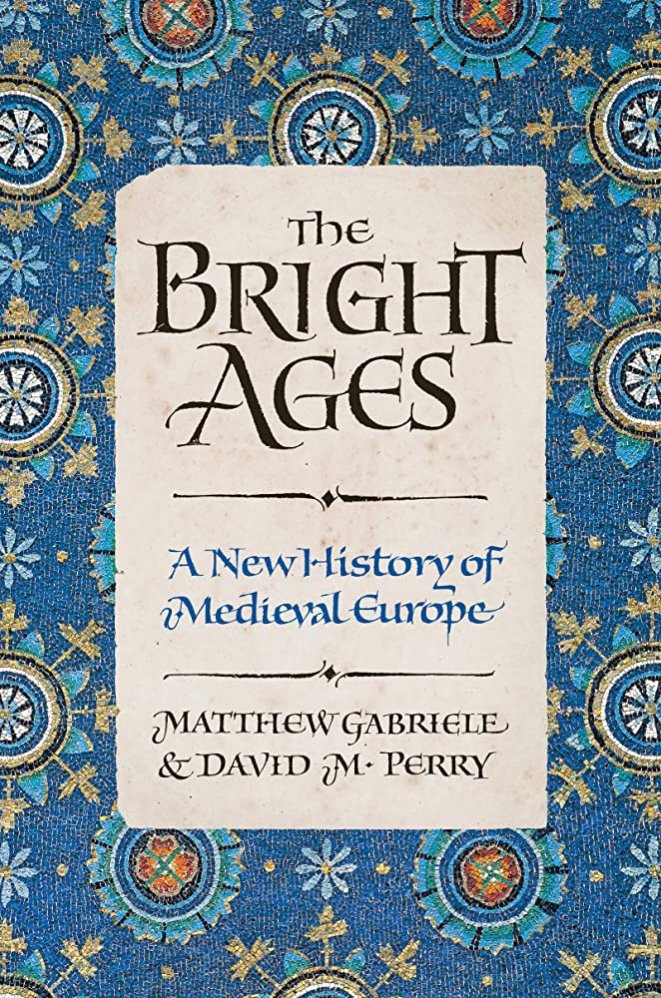
The Bright Ages by Matthew Gabriele and David M. Perry tries to shed some metaphorical light into the historical era many have been taught to call “The Dark Ages.” Characterizing early medieval Europe as “Dark” is mostly a reference to the fall of Rome and the end of Pax Romana. The authors challenge that notion, as the Eastern Roman empire in Constantinople was still, at least to its inhabitants, Roman. This particular argument of The Bright Ages is its most well delivered, but from there, things get iffy.
So why Bright over Dark? It is really easy to consign the messier parts of European history – between Enlightenment highs and the idealized Classical – to a lesser status. Instead, by delving more intimately into Medieval lives, you can find the light of stained glass cathedrals, golden relics, and deep acts of charity, but also the hotter fires of politics, rebellion, and warfare. The goal should aim to examine both for a more nuanced, holistic view of an era.
However, The Bright Ages tends to be a bit cherry-picked for the particularly bright or positive aspects of Medieval society. While it is wonderful that examples delineate traditionally marginalized people showing agency and influence, they tend to be the exceptions that prove the rule and not indicative of a broader norm. The author’s favorite example, the remarkable life of Galla Placidia, was just that, remarkable, and not indicative of all medieval women’s sense of agency. This tendency for forced historiography pervades The Bright Ages, though the overall idea of challenging “The Dark Ages” is valid.
One of the book’s main positive points is that it challenges readers to rethink some of the knowledge we take for granted about Europe’s Medieval period. For instance, the early Medieval world was a lot more connected than many assume. As the authors point out, an elephant from the Congo Basin made its way to the court of Charlemagne in Aachen, Germany, as a gift from the Abbasid Caliph in Baghdad to the newly crowned Emperor of the Holy Roman Empire. However, the authors tend to skip over the bad that comes with the good, like the taking of war slaves or the horrors of the Crusades.
While it toes the line between academic and popular historical writing, the book did itself no favors by omitting notes and sources. Overall, The Bright Agesposits an interesting idea and is one of many voices challenging “The Dark Ages,” but it can be a bit incongruous and sparse on evidence.
Tony is a Customer Service Specialist at Elkridge Branch. He has a degree in history and a perpetual interest in Medieval Europe.
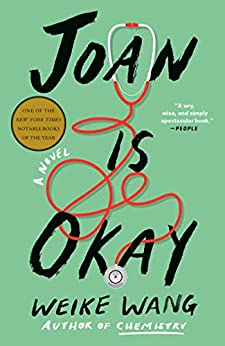
When we meet Joan, the titular heroine of Wang’s novel, the first assessment might be that her story starts where others potentially end. She has everything: she’s in her mid-thirties, living in Manhattan, and a brilliant attending I.C.U. physician. She is ticking off her American Dream checklist, seemingly without a hitch. Having grown up in California with poor immigrant parents, Joan views professional success as a great equalizer. “The joy of having been standardized,” she says, “was that you didn’t need to think beyond a certain area. Like a death handled well, a box had been put around you, and within it you could feel safe.”
But is Joan, or Jiu-an, OK? Of course she says she is. After all, doesn’t she tell her coworkers so everyday, during their brief and polite interactions? Yet they never feel connected with her and would be the first to doubt her response as genuine. While there is concern from some, as when Human Resources reaches out over her excessive shifts, there are also those who delight in her seemingly irreplaceable work ethic. The hospital director calls Joan, “a gunner and a new breed of doctor, brilliant and potent, but with no interests outside work and sleep.” In the first few pages we spend with her, upon receiving news of her father’s death, she flies to Shanghai for the funeral and back in only 48 hours.
Joan’s wealthy older brother, Fang, thinks she needs to give up the Upper West Side for the safety of the suburbs and start a private practice. His wife, Tami, thinks it’s high time Joan gets married and starts a family, because, “a woman isn’t a real woman until she’s had a child.” Her mother fails to connect with her through shopping, and even her neighbor is a habitual overstepper. To everyone in her orbit, Joan is someone who has to be taught how to live.
But as the story progresses, Joan ends up having to reflect on her obsession with productivity as she takes a hard look at her relationships to family and society. “Was it harder to be a woman? Or an immigrant? Or a Chinese person outside of China?,” she asks herself. “And why did being any good at any of the above require you to edit yourself down so you could become someone else?”
The developing Covid pandemic looms over the few months we spend with Joan, which impacts her personally as well as professionally. Wang details the news coming out of Wuhan and elsewhere matter-of-factly — increasing case counts and deaths, border and business closings — sparking a sense of dread in readers who know all too well what’s coming. Joan deadpans: “Some government officials also believed that it was important to keep the American people informed and reminded of where the virus really came from. So, the China virus, the Chinese virus, the kung flu.” Online she starts to see, “clips of Asian people being attacked in the street and on the subways. Being kicked, pushed and spat on for wearing masks and being accused of having brought nothing else into the country except disease.”
Joan is angry. If there is one thing that Wang knows is important for her character, it’s to keep her emotions unmuted to the reader. While cool on the surface, Joan bubbles underneath. Her deeper self only seeps through via dry comebacks that leave others chuckling uneasily.
So Joan probably isn’t OK. She’s a bit awkward, tense, and has complicated relationships with family as well as an affinity for work that others can’t seem to wrap their heads around. But Wang gives us a character so unapologetically true to herself that you can’t help wanting to get to know her, even when it’s pretty clear that she wants nothing more than to be left alone.
Wang’s narrative poses subtle questions about belonging and the definition of “home.” There are moments of unexpected tenderness and reminders of the devastating toll the pandemic had on communities and the individuals within them. And of course, the reader has to ask themselves at the end whether anyone is really OK, and if it’s such a bad thing to be.
Gabriela is a customer service specialist at the Miller Branch.She loves long walks, reading with her dog, and a good cup of coffee.
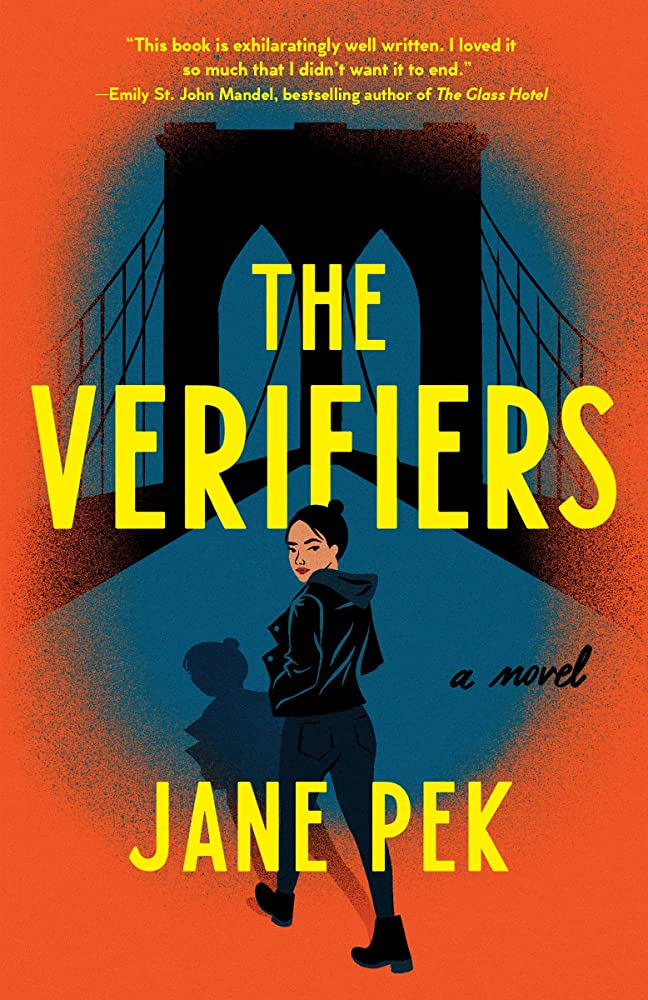
Jane Pek’s The Verifiers is a mix of speculative fiction and whodunit, and it takes place in a world where people rely on matchmaking services to find their soulmate. Sounds familiar, right? But in this book, these services are on steroids. They use algorithms more complicated than a Rubik’s cube and are worshipped by society.
Claudia Lin is no stranger to bucking her family’s traditional expectations; she has no desire to pursue a conventional career or to follow her mom’s dream of finding a “nice Chinese boy.” She’s also accustomed to keeping secrets from them, such as being gay and her recent recruitment by Veracity, an exclusive online-dating detective agency. A master of uncovering lies, having honed her skills through a lifetime of reading detective fiction, Claudia has never used a dating site or had much to do with the digital world.
That all changes when Iris Lettriste, a mysterious client, hires her to investigate two suitors, one of whom she’s never even met. The company who hired her is ready to put Claudia’s expertise to the test. But Claudia’s lack of experience with the digital world and her devotion to detective fiction make her an ill-suited candidate for the job. Her specialty is exposing liars, but this task requires more than just uncovering deceitful spouses, job applicants, and online daters.
Even so, Claudia’s got a hunch that something fishy is going down with Iris. Then Iris disappears from both the real world and the digital world, leaving Claudia high and dry. To make matters worse, Iris deletes all her profiles. What’s going on here? Claudia’s adventure is starting to sound like something straight out of her favorite fictional detective ‘s playbook:
Was Iris killed?
Did she harm herself?
Was she even Iris at all?
Maybe she was her own sister?
And what’s the deal with her being a broke, heartbroken dropout from journalism school?
Or was she a fearless investigative reporter about to expose the dating industry?
Pek takes an already intriguing, sometimes zany, mystery up a notch with a protagonist who’s smart and sarcastic but also rather a bit of an underachiever. The family drama is complex and juicy, and there’s social commentary on how much technology is taking over our lives. Claudia is all about classic noir elements: the mysterious client, the amateur sleuth, and all those pesky red herrings. But here’s the kicker – this book puts a modern spin on things that’ll have you hooked from page one.
If you’re not already one of those people always questioning whether the people you meet online are really who they claim to be, you will be. The Verifiers is also about whether we’re letting algorithms control our lives and if we’re sacrificing our freedom for the sake of convenience and fantasy. I mean, sure, we could just delete our apps and stop searching for truth and happiness online, but who’s really going to do that?
Reads of Acceptance book discussion group meets virtually. Register to join the discussion of The Verifiers on Thursday, April 27 at 7 pm. Books are available for pick-up from the Central Branch; ask for a copy at the Customer Service desk.
Angie is an Instructor & Research Specialist at Central Branch and is a co-facilitator for Reads of Acceptance, HCLS’ first LGBTQ-focused book club. Her ideal day is reading in her cozy armchair, with her cat Henry next to her.
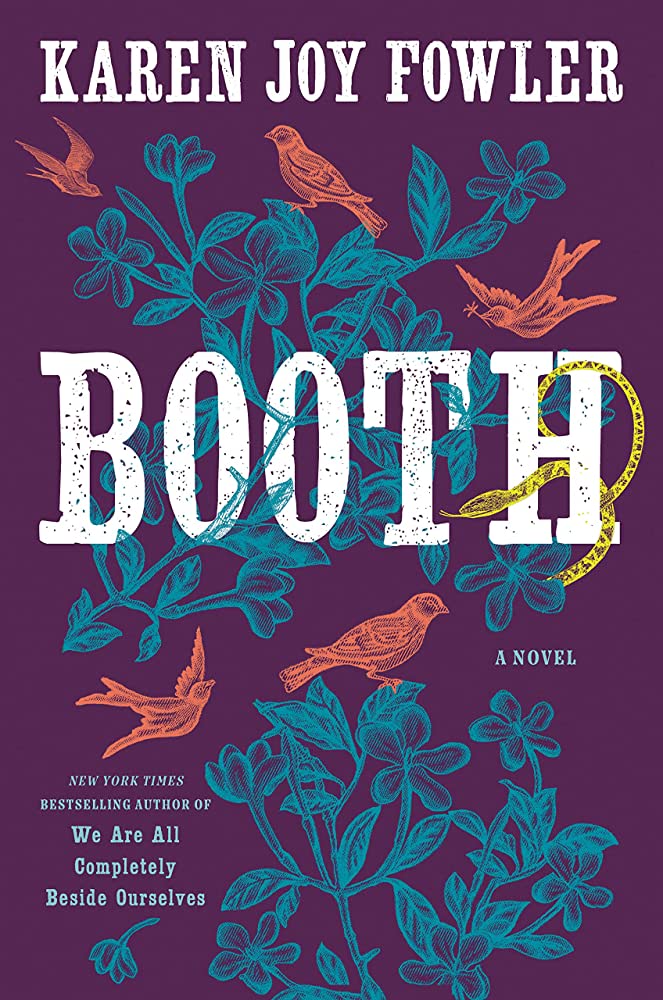
Notorious. Home to many historical figures, Baltimore lays claim to one of the most reviled, John Wilkes Booth. Legendary. The pinnacle of theatrical performance, Shakespearean acting claims Junius, John’s father, and Edwin, John’s brother, as two of its finest. Radical. One of the highest acts of rebellion, the Underground Railroad claims Richard Booth, John’s grandfather, as one of its aides.
Booth, by Karen Joy Fowler, explores these, and many other, aspects of an infamous family. The bestselling author of We Are All Completely Beside Ourselves, Fowler has written another dysfunctional family novel. Booth will engage readers interested in local Maryland history, the Lincoln assassination, and disturbing tales of family legacy.
Enraged by the gun violence epidemic, yet not wanting to glorify an assassin, Fowler began researching the Booth family. With the goal of placing John Wilkes Booth in a broader sociological context, Fowler presents a detailed portrait of Booth’s first-degree relatives as well as his ancestry. I marveled at how the Booth family was at once isolated from and central to the politics surrounding the Civil War. We discover the abolitionist leanings of the majority of the Booth family and gain a limited glimpse into John’s radicalization. I learned a lot but was also left wanting to know more about John’s motivations and the repercussions for his family after the assassination.
Fowler documents the timeline of Abraham Lincoln’s life alongside the lives of the Booths. We see the violent partisanship that has always been woven into the fabric of US history. At times I wondered why this book had not been written as narrative nonfiction instead. Similar to a solid history text, Booth documents significant quotes, historical events, and primary sources. We learn that Junius Booth frequented the Green Dragon Tavern, a Boston bar where you can still grab a drink. Fowler describes the construction of Tudor Hall, the Bel Air home of the Booths that remains open for tours.
At the heart of the novel are the stage actors in the family, Junius, Edwin, John, and Junius, Jr. Both Junius and Edwin were internationally renowned for their stagecraft and self-destructive alcoholism. One of the joys of the novel is found in figuring out the sources of Shakespeare quotes the family members use as part of their daily communications. They are a theater family at their core. John was the ninth of ten children, four of whom died before reaching adulthood. Fowler traces these deaths to the lasting impact on the fates of family members. She depicts John as the light of his mother’s life, the golden child born to help ease the family’s pain.
The novel is well researched, beautifully written, and provides a unique perspective on the Civil War in the context of one family’s experience. The reader connects with the men and the women in the family, as well as their associates, friends, and love interests. Booth would be an excellent choice for a book group discussion.
Cherise Tasker is an Adult Instructor and Research Specialist at the Central Branch. When not immersed in literary fiction, Cherise can be found singing along to musical theater soundtracks.












 CHAPTER CHATS