Author Works with Naima Coster: What’s Mine and Yours – 2022 One Maryland One Book 

By Piyali C.

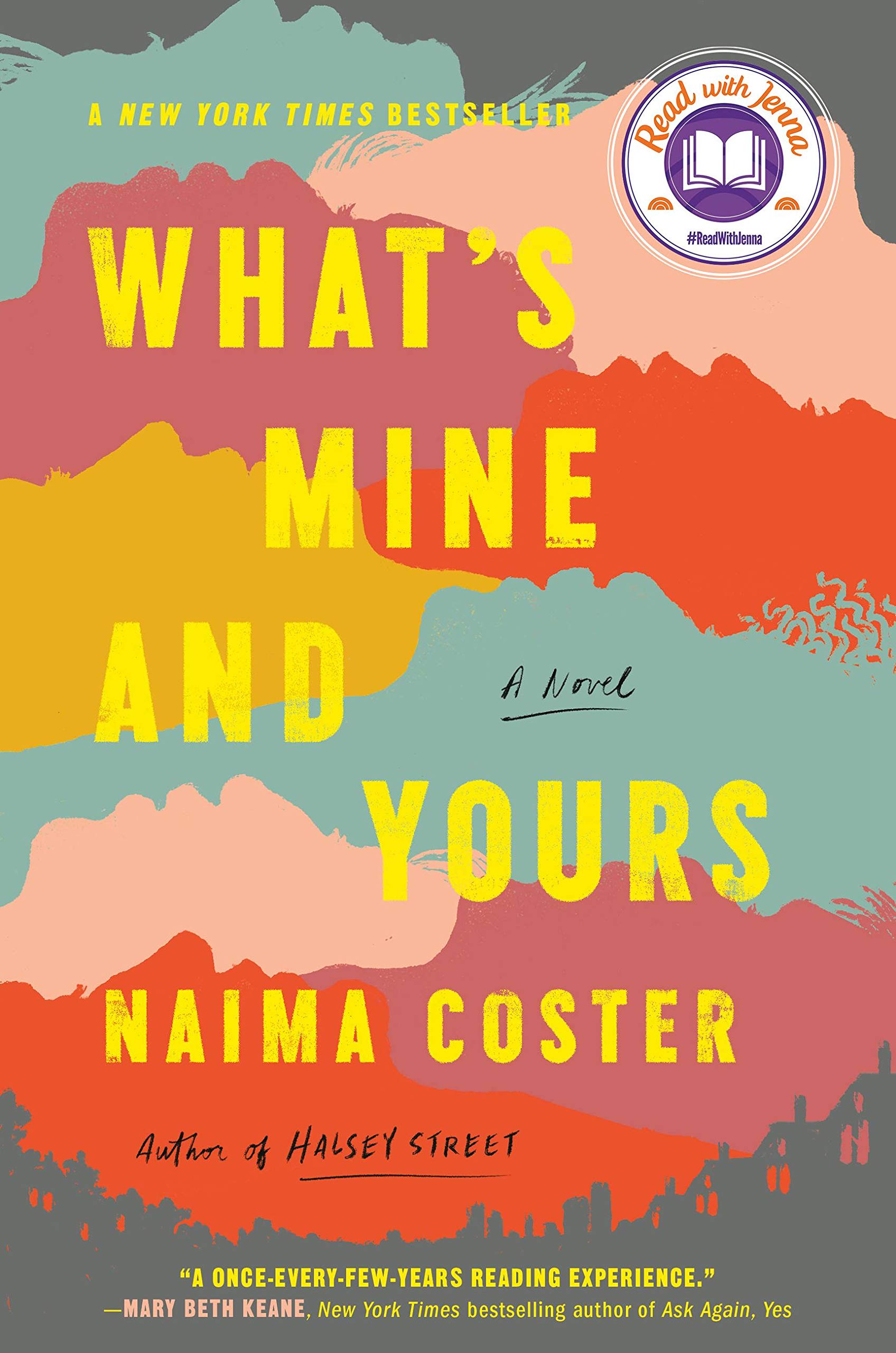
Swatches of color in pale green, beige-pink, cranberry, orange read, and yellow are layered above the silhouette of a town. The swatches resolve to be

Tue, October 4 | 7 – 8 pm
HCLS Miller Branch
Register at this link. 

The theme for One Maryland One Book this year was “new beginning.” As a member of the selection committee, I was assigned to read What’s Mine and Yours as a potential title. It took me a while to recognize the theme in this story, but I realized that instead of the theme being overarching, hope or a new beginning, operates somewhat cyclically in this novel.  

The story opens with the prospect of new beginnings – two men stand at the cusp of a beautiful, happy life. Two fathers share a cigarette and a brief conversation one day about their dreams surrounding the amazing lives that they envision for their children. However, disaster strikes soon after and the lives of both those families take vastly different turns than what the fathers dreamed.  

The story revolves around two families who confront each other over a busing initiative in 2002 in Piedmont, North Carolina. Jade has suffered an immeasurable loss in her life already. Now she wants her only son, Gee, to get all the opportunities that she did not have so he can become a successful, sensitive Black man in America. After her husband is incarcerated, Lacy May, a White woman, is equally determined to keep children like Gee away from her White-passing, biracial daughters. She does not want them influenced by the children from the east side of town at their predominantly white school.

However, Gee and Noelle, Lacy May’s eldest daughter, become friends, which soon turns into more when they meet during a school play. The lives of these two families intersect despite the mothers being on opposite sides of the debate over the county’s decision to enforce integration. The busing initiative provides the primary conflict, with the repercussions manifested in the adult lives of the central characters – Jade and Gee, Lacy May and her three daughters. Despite the different directions each character grows, they all manage to find their new beginnings by the end of the book, in big ways and small.  

Although the story begins in Piedmont, North Carolina, the issues addressed in What’s Mine and Yours are relevant to other parts of United States, including in Maryland and even Howard County. The theme of school desegregation to address socioeconomic disparity is especially pertinent as The Baltimore Sun reports, by 2014, Maryland was the third most racially segregated state in the nation, with one-quarter of its schools considered highly segregated.  

The integration efforts described in the book will touch a relatable chord and inspire interesting and, hopefully, productive discussions. While the story revolves around an effort to desegregate schools, the book explores other, hugely relevant issues, such as the struggles of Black teens trying to prove that they are good enough to be in a White-dominated world, the question of why they have to prove that they are good enough, White-passing biracial people and issues that they deal with, complicated relationships between lovers, sisters, LGBTQIA+ identity, infidelity, abortion, and miscarriage – all things relevant to our present moment. 

We are thrilled that Howard County Library system is the only public library in Maryland on author Naima Coster’s six-stop tour! 

A young Black woman with short curly hair, wearing a black V-neck shirt stands by a wall painted in flowers.

Naima Coster is a graduate of Yale University, Fordham University, and the Columbia University School of the Arts where she earned her MFA. She has taught writing for more than a decade in community settings, youth programs, and universities. She currently teaches in the low-residency MFA program at Antioch University in L.A. She is a 2022 mentor for the Periplus Collective.

One Maryland One Book is a program of Maryland Humanities. This project was made possible in part by the Institute of Museum and Library Services and the Maryland State Library. We would also like to thank our valuable partners Howard County Poetry and Literature Society (HoCoPoLitSo) and the Office of Human Rights & Equity (OHRE) and the Last Word bookstore.  

What’s Mine and Yours is available in print and e-audiobook

Piyali is an instructor and research specialist at the Miller Branch of HCLS, where she co-facilitates both Global Reads and Strictly Historical Fiction and keeps the hope alive that someday she will reach the bottom of her to-read list.
 

What I Read on My Summer Vacation 

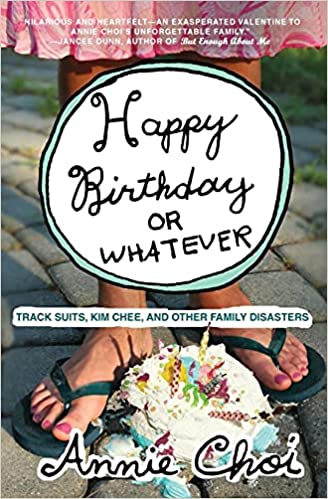
You see feet in flip flops (with pink toenails) under a dress hem. Between the feet is a smashed small birthday cake with

by Christie L.

I’m a speed reader. When I told my family that I read four books on a recent getaway, they teased me about whether I remembered any details. One was an advanced reader copy and not widely available for a couple of months. While I may not have encyclopedic recall, I can tell you enough about the other three to entice you to check them out for yourself. 

The first was by one of my favorite authors, David Sedaris. His latest book, Happy-Go-Lucky, (also as an e-book and an e-audiobook) chronicles his adventures in London, New York, North Carolina, and other locations. He begins with a story about going with his sister Lisa to a shooting range in North Carolina where he learns how to shoot a gun while pondering what types of people own them. From there, he jumps to a story about his father. Sedaris spends a considerable amount of the book talking about his father’s declining health and their complicated relationship. He shares deeply personal stories about his father and his sisters – the funny, awkward, and sometimes uncomfortable interactions, including painful questions about whether their dad sexually assaulted their sister Tina. Sprinkled throughout these recollections are other unrelated stories about a speech he thinks about giving to college graduates, the falling-apart house he and his partner Hugh purchase and fix up in France, travels to Eastern Europe, and life in NYC during the pandemic and protests following George Floyd’s murder. As with all of his previous works, one never knows what the next page holds – it may be laugh-out-loud funny, awkward, or thought-provoking. But it will never be boring. 

Next was Happy Birthday or Whatever: Track Suits, Kim Chee, and Other Family Disasters by Annie Choi. She often made me laugh while also giving me some insight into life as the child of Korean immigrants. Choi relates stories about her mother’s obsession with her daughter’s grades so she can go to an Ivy League school, her mother’s collection of knick-knacks, trips to Korea to see extended family, dating non-Koreans, going to Korean school, saving her stuffed animal collection, and defending her vegetarian diet. When she wrote about her mother’s cancer diagnosis and treatment, I could relate. It doesn’t matter who you are – it’s incredibly hard to live across the country from your parents when they struggle with health issues. Choi’s witty and touching memoir transcends cultures and gives us a glimpse into her world – and ours.

A wide horizon of a rural setting at sunset with a viviid red sky. Two figures are walking on the grass.

Finally, I finished the week with God Spare the Girls by Kelsey McKinney, a book I discovered from a Texas fiction list curated by Texas Monthly. As a native Texan who’s also a pastor’s daughter, I was interested in this story that follows two sisters whose father is a pastor and who are expected to be above reproach at all times. But that’s where the similarity ends. Before he retired, my dad served Lutheran congregations in rural Texas, living in parsonages (houses provided by the church) and ministering to folks in our small community. In this story, Luke Nolan is the pastor of an evangelical megachurch who has a secret that could end his career. (Side note: career vs. calling is a philosophical discussion for another time.)

When his daughters find out, they question not only their father but also their faith. Without giving anything away, the book explores double-standards, patriarchy, relationships between sisters and between children and parents, and how faith guides and impacts lives. It’s a fascinating coming-of-age story about two sisters who come to terms with what they really believe and how they will decide to live their lives.

Christie is the Director of Communication and Partnerships for Howard County Library System. She loves walking through the network of pathways in Columbia, sitting on the beach, and cheering for the Baltimore Orioles and Texas Aggies football team.

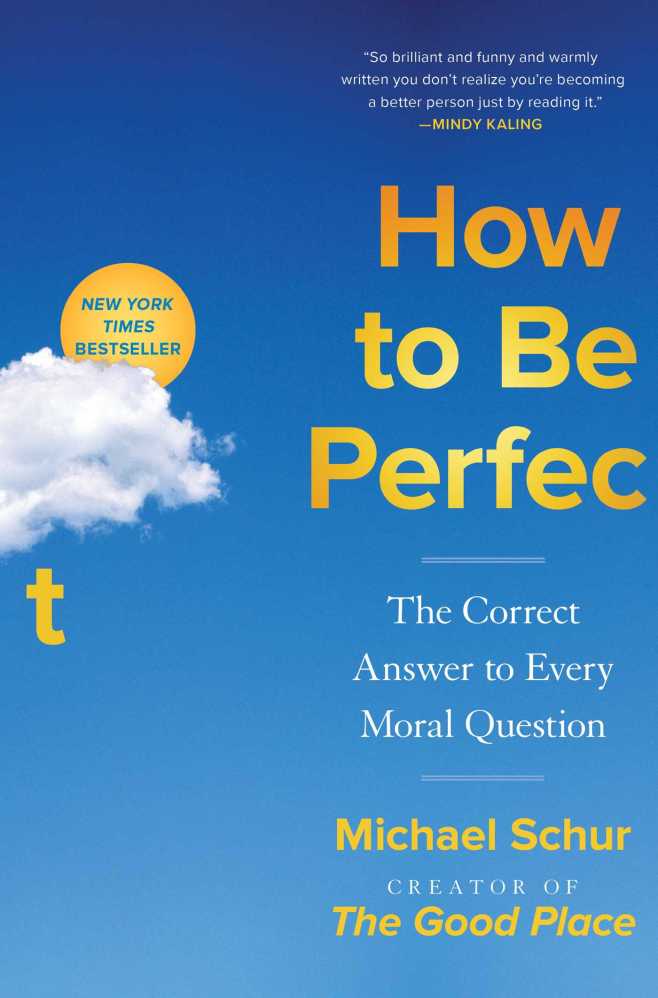
How to Be Perfect by Michael Schur

A clear blue sky of a cover has all the text on the right hand side, with the left containg a fluffy white cloud and a dangling, lonely letter t.

by Eliana H.

Have you ever wanted to be a better person? Well, I have great news for you. Here at the library, we have a title called How to Be Perfect: The Correct Answer to Every Moral Question (available in print, audiobook on CD, e-book, and e-audiobook). Spoiler alert: It does not exactly have the correct answer to EVERY moral question you might encounter. Sorry to burst your bubble.

What How to Be Perfect does have is a lot of information to help guide us through a wide range of moral dilemmas. In fact, author Michael Schur decided to write this book after the extensive research he did to create the television show The Good Place. If you haven’t watched it, do yourself a favor and check it out from the library or stream it on Netflix. You may then have a greater appreciation for the book, but you can still glean a lot even without the context of the show. 

I don’t want to give too much away, but suffice to say the show’s characters explore moral philosophy and ethics in their attempts to be better people and help others to be better, too. Certainly, for this to be even remotely feasible, the creator needed to have a decent grasp of these subjects. So, he worked with experts and did a lot of research, then he was kind enough to share that research in the form of How to Be Perfect. I am not a philosopher or ethicist, and I don’t even tend to enjoy reading nonfiction, but this title offers an accessible, enjoyable overview of the extensive history of moral philosophy and its main schools of thought.

Sounds kind of boring, though, right? Well, it’s not. Michael Schur writes for TV, remember? In addition to The Good Place, he co-created Parks & Recreation. He knows how to keep you engaged and make you laugh, and he uses that knowledge well. While explaining key points of major ethical traditions, Schur also helps us consider some of their shortcomings and the obstacles we may face in applying these concepts.

Overall, he encourages individuals to explore what feels like the right fit for us and to take pieces from each. He also reminds us that we will fail. Constantly. Our obligation, though, is to always keep trying. If you are striving to be a better person, definitely take the time to read this title (or better yet, listen to the audiobook, narrated by the author and numerous cast members from the show). Take comfort in knowing that no one is actually perfect and never will be. We just have to do our best. 

Eliana is a Children’s Research Specialist and Instructor at HCLS Elkridge Branch. She loves reading, even if she’s slow at it, and especially enjoys helping people find books that make them light up. She also loves being outside and spending time with friends and family (when it’s safe).

Am I Southern? Does It Matter? 

A Black woman with short hair looks pensively downward. Along the bottom, a black and white photo of slave quarters is superimposed, and the edges are faded like an old photograph.

by Eric L.

I recently read Kindred by Octavia Butler in my book discussion group. It was my first exposure to Butler, and I like both her style and the book overall quite a bit. We also read the graphic novel as a supplement. I recommend it, too, as the illustration and style were excellent.

Written in the 1970s, the plot concerns a Black woman from Los Angeles who is mysteriously transported back to the antebellum south, specifically to the eastern shore of Maryland. It continues to happen, and each time the protagonist remains a bit longer. The time she stays in the past is greater than the length of time she is missing from 1970s L.A. It goes without saying that the past is terrible for a Black woman. 

Hence my question about being southern. As someone from Baltimore, I tend to view myself as an “enlightened north-easter.” However, the racial history of this country is something that should be given some thought. It’s not just a southern plantation owner issue that ended in 1863.

Dana is a writer. Her husband is also a writer, and he is white. I’d rather not give too much away so you can read the book to determine why this is happening, but in a little bit of a spoiler, she has relatives on this plantation that she returns to again and again. One of them, who eventually becomes the plantation owner, is white; the other is a Black woman, technically a “free” woman. It’s not exactly the freest environment even if you’re not enslaved.

Her reminiscence about how she met her husband is sweetly romantic and interspersed throughout the book. The juxtaposition of the recent past, the present, and the distant past is an interesting story technique. At one point, her husband purposefully holds on to her during one of her time travels in an effort to accompany her. As a white man, he obviously has a much higher social standing than she does and hopes to provide some protection. He is successful, to some extent. She wonders if he will somehow be changed by spending time in this time period. Really, she’s wondering how anyone could not be changed, herself included.  

The discussions and disagreements between the two of them about common misunderstandings between men and women, Black people and white people, are telling. The whole book offers a compelling study in empathy. The protagonist’s own status as a free Black woman and a visitor to the plantation, along with her relations with both white people and enslaved persons, highlight ideas of jealousy and privilege. That said, Butler deftly deals with the concept of how we all think we’d comport ourselves in oppressive situations. When one’s actual survival is at stake, how outspoken could anyone be with a very real threat of state-sanctioned terror and beatings?  

To be clear: this is not a defense of race relations in the 1970s, or now for that matter. The protagonist experiences profound culture shock (e.g., I could beat you for speaking to me that way). For me, this story further acknowledges the history of those who resisted and fought back against nearly insurmountable odds. The protagonist is forced to reckon with her own privilege in the antebellum south and her relatively comfortable life in 1970s America. She leads you to this by thinking that, in just a few years, Harriet Tubman begins bringing enslaved people to freedom. As a reader you wonder, how? 

This book is the type of fiction that weaves a thought-provoking story with great social and moral commentary. It is my kind of read: messy, complicated, and realistic (except for the time travel). 

In sum, I think I am southern. Maybe many Americans are?

Kindred is available in print, e-book, and e-audiobook.

Eric is a DIY Instructor and Research Specialist at Elkridge Branch. He enjoys reading, films, music, doing nearly anything outside, and people.

Mexican Gothic by Silvia Moreno-Garcia

A woman with black hair, wearing an off the should red gown, holds bunch of flowers while standing in front of a green floral wallpaper.

by Kristen B.

Horrifyingly creepy. Creepily horrifying. Either way, it’s gothic. The author tells you right there in the title. I’m not a big fan of horror – gothic or otherwise. You can keep your atmospheric creepies to yourself.

This book absorbed me. I literally could not put it down.

Noemi Taboada is my kind of girl: smart and sassy. She’s contemplating an advanced degree in anthropology, if only she can convince her father that there’s more to a well-off woman’s life than marriage and family. In Mexico in the 1950s, this is a harder sell than it should be. She’s also something of a party girl, who enjoys dancing and smoking with her active social circle.

Her cousin Catalina, though, is cut from more traditional cloth. She is married and has moved to her new husband’s remote estate, away from the family in Mexico City. When the family receives troubling letters from and about Catalina, Noemi agrees to her father’s plan to visit her cousin and investigate the situation.

Catalina has married Virgil Doyle, oldest son of a family that immigrated to Mexico generations ago but have maintained an English sensibility, including not speaking Spanish. They came for the silver mines and stayed for reasons that become clear later. The house (in all honestly, a sinister mansion) is dark – literally with drapes pulled and limited electricity – decorated with overwrought furnishings in a variety of mythological motifs and loaded with tarnished silver. Gothic oozes out of the story’s rotting wainscoting.

Noemi is not a particularly welcome visitor. She smokes. She asks questions. She’s not particularly interested in being obedient to the Doyles’ odd rules. She wants to see her cousin. She visits town. She roams the family’s cemetery where she befriends younger cousin Francis, who helps her understand that not all is right or well at High Place – and not just because the family’s fortunes are dwindling with the mines being closed.

Francis has a fascination with fungus. Mushrooms are his main interest, and I don’t want to spoil too much – but it’s relevant. He also seems to spend plenty of time outdoors to get away from his overbearing family: Virgil who reeks of ambition and charisma but codes as emotionally abusive, and Florence, the strict maiden aunt who is the enforcer for Howard, the ailing patriarch with a keen interest in eugenics. Honestly, I’d spend as much time outside as I could, too.

Noemi’s questions reveal that the Doyle family has all sorts of secrets and scandals, including murder and incest. Things start to fall into place just as Noemi begins to demonstrate the same sort of worrisome symptoms as her cousin Catalina. Noemi’s vivid dream sequences contribute to the sense of impending doom and overall wrongness. When Howard and Florence forcibly insist that Noemi marry Francis, it all comes apart at the seams and a nightmare of truly gothic proportions ensues. The author fully embraces Latin magical realism as she dives into the deep end of the horror genre.

You should read it, preferably on a dank, rainy day in a spider-infested garret. Personally, I am glad I read it on a hot, summer day next to a window while traveling on a train. Mexican Gothic is available in print, ebook, and eaudiobook.

Kristen B. is a devoted bookworm lucky enough to work as the graphic designer for HCLS. She likes to read, stitch, dance, and watch baseball (but not all at the same time).

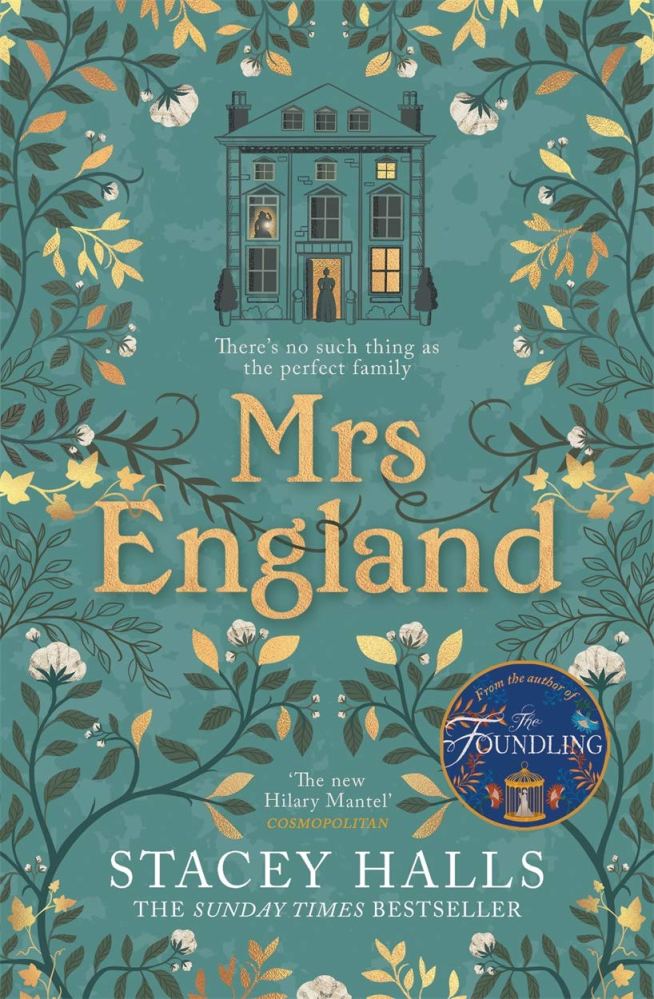
Mrs. England by Stacey Halls

A spruce green cover has botanical illustrations framing a manor house with a woman silhouetted in the doorway.

by Piyali C.

One of my favorite quotes about friendship is the famous one by C.S Lewis: “Friendship is born at that moment when one person says to another: ‘What? You too! I thought I was the only one.” My friendship began with my library colleague who introduced me to Stacey Halls in the same way. We bonded over Daphne Du Maurier, our mutual love for Jane Austen, historical fiction, and literary fiction. So, when she brought The Familiars by Stacey Halls to my desk and said, “Here read this. I know you will like it,” I knew I should drop everything and read it. I did not like it – I loved it.

The Familiars is a story of two women in early seventeenth century England, both fighting for survival. Mistress Fleetwood Shuttleworth is determined not to lose her fourth baby like the ones before and Alice Gray needs to prove she is not a witch during the infamous Pendle Hill witch trial of 1612. Alice is a skilled midwife with extensive knowledge of herbs, and Fleetwood needs her help to save her unborn baby as well as her own life. When Alice is accused of witchcraft and imprisoned, Fleetwood is ready to go to any lengths to prove her innocence. Not only is the story superbly written and well-paced, it shows tremendous character development of the protagonist. One may wonder if all the steps taken by Fleetwood in her quest to free Alice are plausible given the time period, but I embraced her actions wholeheartedly and willed her on to succeed. 

In Mrs. England, Norland Institute graduate Ruby May is looking for a fresh start after the family she worked for emigrates to United States. Although the Radlett family would dearly love their Nurse May to travel with them to America, she is unable to do so for a reason undisclosed at the beginning of the story. In 1904 women from the upper echelon in England are completely dependent on nurses for the care of their children, preferably from the prestigious Norland Institute. Nurse May gets her second assignment without much delay. However, she will have to travel to cold, foggy West Yorkshire to take charge of four children of a wealthy couple, the Englands of a mill dynasty. After reaching her destination, she is surprised to find that she is taking directions about the children’s routine from the friendly and easy-going Mr. England, while Mrs. Lilian England is aloof, cold, and withdrawn. While Ruby develops a nurturing and loving relationship with the children, she simply cannot figure out the mysterious couple for whom she works. When she feels the lives of the children are in danger, she must dig deep within her and ultimately face her fears. While caring for the England children and figuring out the power dynamic in the Edwardian marriage of the Englands, Ruby learns to make peace with her past and only then can she break free from the chains that hold her captive psychologically. 

Fans of Daphne Du Maurier will love this atmospheric, gothic tale and the shroud of mystery surrounding both Nurse May as well as Charles and Lilian England. Although Nurse May’s character is likeable, the readers know she is hiding a secret so a niggling doubt about her reliability as a narrator remains in the readers’ minds. When we get introduced to the England family, the readers have a challenging time believing the authenticity of Charles England’s affability. There is something inauthentic about his outward friendliness. Lilian England is easy to dislike due to her coldness towards her children. Yet there is a vulnerability in her which questions even our dislike for her. Readers vacillate between who to believe – the charming Mr. England or the aloof Mrs. England. And just when we think the mystery has been resolved, we read the last line – just one single line and get a jolt. All the twists and turns that captivated us and kept us turning pages, all that we believed was resolved gets thrown into question and as we finish the book, we start rethinking the whole mystery all over again. 

Mrs. England is available in print, in ebook and in eaudiobook. 

Piyali is an instructor and research specialist at the Miller Branch of HCLS, where she co-facilitates both Global Reads and Strictly Historical Fiction and keeps the hope alive that someday she will reach the bottom of her to-read list.

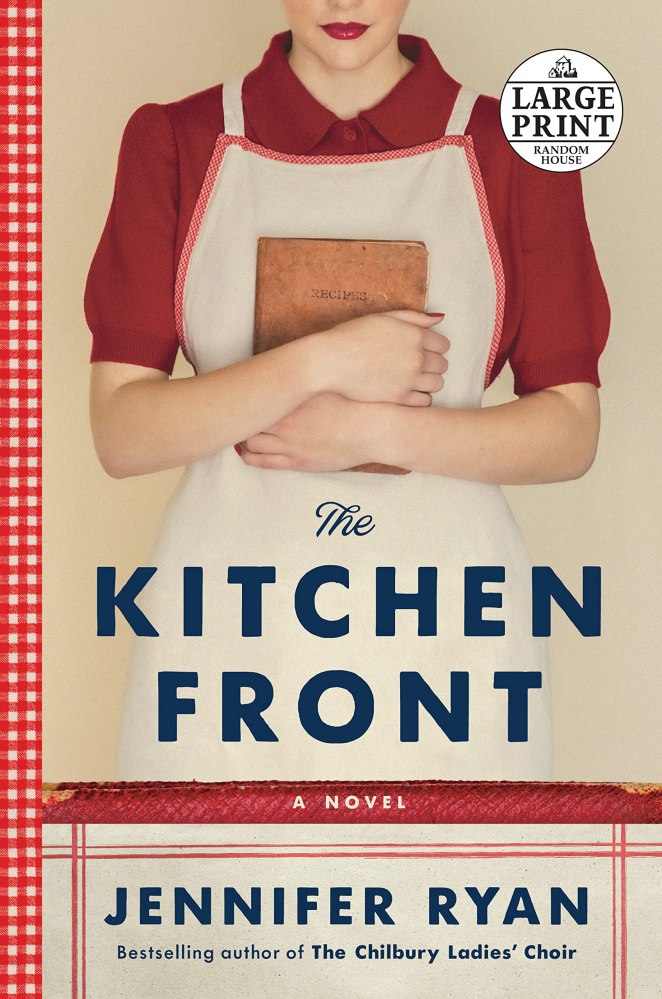
The Kitchen Front by Jennifer Ryan

Image of a woman in a red shirt, red lipstick, and a white apron holding a cookbook across her chest. Red gingham boarder

by Kristen B.

The Kitchen Front by Jennifer Ryan could be easily categorized (and perhaps dismissed) as “women’s fiction” since it offers a solid look at four women’s lives in 1942 Britain. I rather despair of idea that novels about women and their daily travails are some how less weighty or less literary than more masculine options. This book is a highly readable reminder that not all the wartime effort took place on the continent and upon the seas, amid spies and battles. The first page provides a list of what a week’s worth of rations were for an adult – and let me tell you, it wasn’t much! Rationing continued in the UK for more than a decade after the end of the war, and I have wondered if we could have sustained that kind of national effort. We tend to look back at the 1950s of a time of growth and prosperity in the US (although not for all demographics), but it was a very different prospect for our allies.

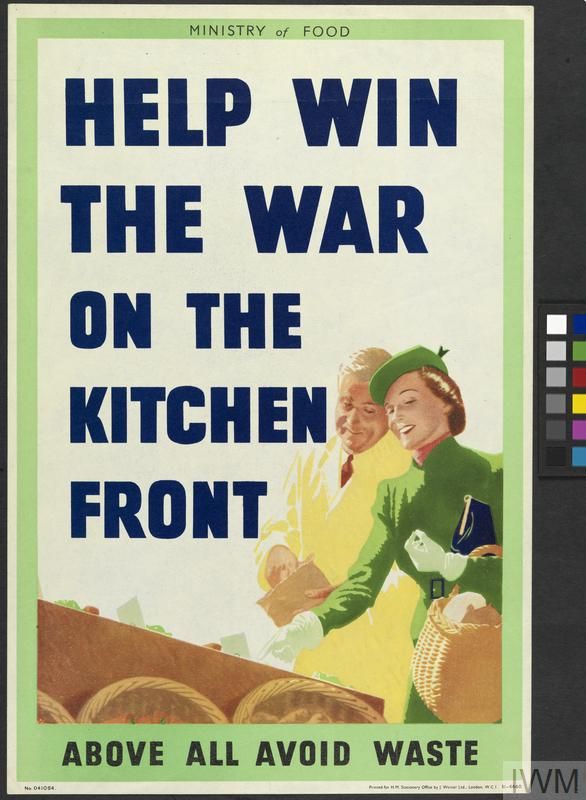
World War II poster featuring a woman in gloves and hat talking to a grocer that read: Help Win the War on the Kitchen Front.

It naturally fell to women to figure out how to make rations stretch to feed their families. In the days before packaged or frozen foods, everything was local and homemade, and the reality was that nobody got enough to eat by modern standards. Gardens (along with pigs, chickens, and bees) were a survival strategy, not just patriotic palaver. The BBC really did host a show called The Kitchen Front, which included ideas and recipes to make rations work and stretch – whether it was tinned sardines, Spam, or some other unfamiliar type of protein, like whale meat. This book starts with that show and adds a fictional local contest to find a relatable female host.

Of the four main characters and contestants in the book, Audrey spends her entire waking life working to feed her family and maintain their house. Her husband was an early RAF casualty, and she has three growing, hungry boys. Her husband was also an artist who mortgaged their home to the rafters, and she is left baking pies and cakes to try to make ends meet. Her home and garden become the center of the story in crucial ways.

The other three main characters each have their own private battles to fight. Gwendoline is Audrey’s sister, though she married up with the local fat-cat businessman and landowner. While a social success, the marriage and the man have proven to be unhappy decisions. The kitchen maid and apprentice cook at Gwendoline’s manor house, Nell, needs a little confidence in her own skills. She provides a young, hopeful perspective. The final woman, Zelda DuPont, worked as a French-trained chef in fancy London hotels before the war brought her to head the canteen at Gwendoline’s husband’s pie making factory. Zelda has fought tooth and nail to succeed in a man’s world before an unscrupulous, handsome cad leaves her heading to the country, an unmarried mother to be.

The convenient machinations of the contest and various plot lines bring all four women together, with Gwendoline having a connection to each of the women but Audrey operating as the beating heart of the story. The plot is mostly predictable, but I didn’t mind that at all. The characters are so wonderful, each in her own way, that I loved spending time with them. Not only did I need to know who wins the BBC contest, I enjoyed their unique points of view and individual struggles. Is it better to marry for love or money and position? Is it better to have a career or raise a family? It is better to be in service or more independent? There are no right answers, but women still struggle with these questions and the myth of “doing it all.” But when we support each other and do it together, everyone wins.

The Kitchen Front is available in print, large print, ebook, and eaudiobook.

Kristen B. is a devoted bookworm lucky enough to work as the graphic designer for HCLS. She likes to read, stitch, dance, and watch baseball (but not all at the same time).

The Reason That I Read: Mary Downing Hahn 

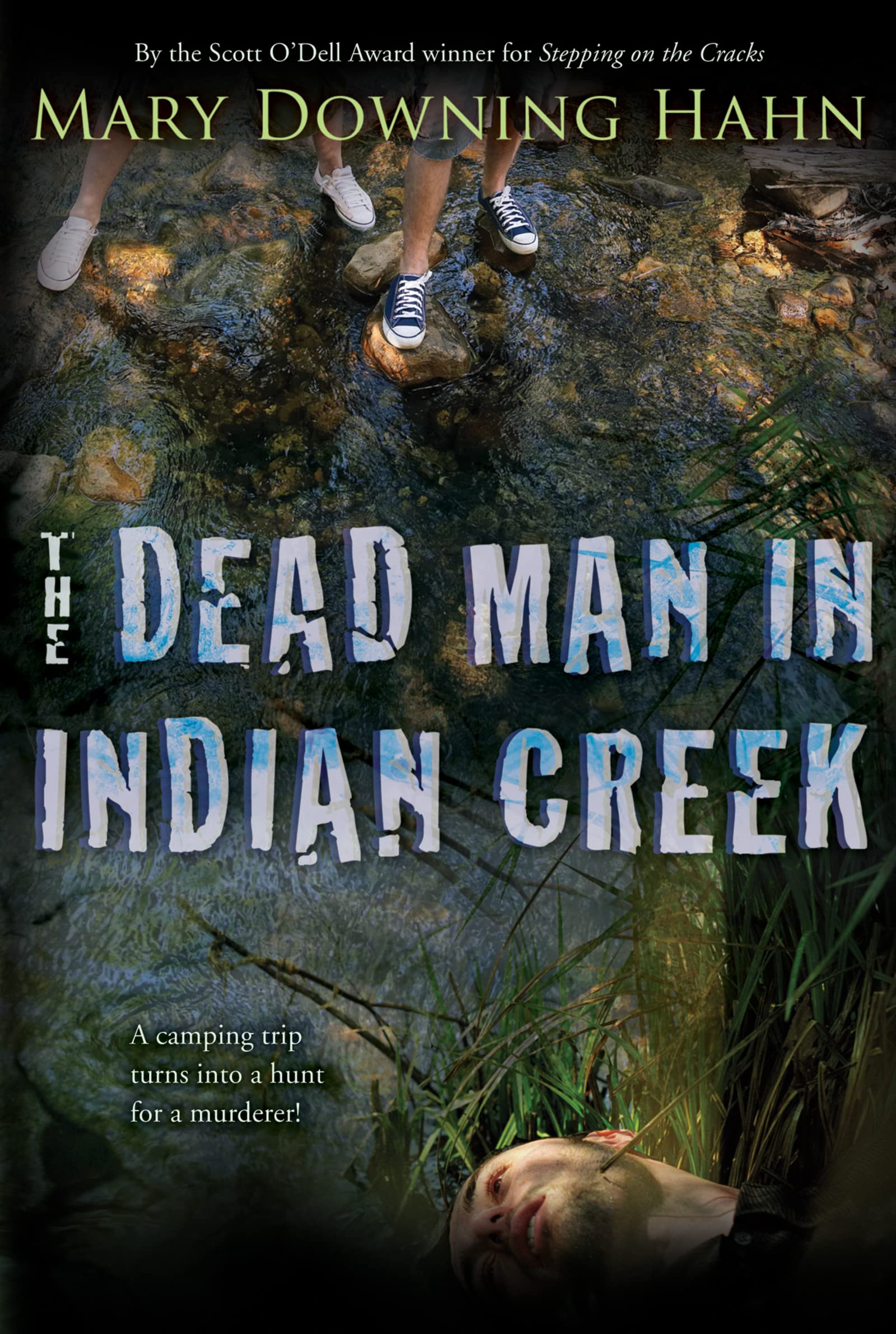
Top down view of feet in sneakers, a muddy creek, and a man's face in the lower right corner

by Julie N.

I am excited to be able to host my favorite author at Central Branch on Friday, August 19 at 3 pm and to have the opportunity to celebrate her extensive career. She is a fan favorite, a kid favorite, and my favorite! Over the years, many students have been captivated by the stories she creates, the worlds she builds, and the magic in her words. Mary Downing Hahn thoughtfully weaves ghosts, history, and local places into her books.

As an awkward, homeschooled seventh grader I would hardly have called myself a reader. Far from it, in fact! I enjoyed looking at books, but to be honest I can name only a few that ever stood out to me as a child. While visiting the old Miller Branch, I found a book called The Wind Blows Backward by Mary Downing Hahn. Many of you probably know Mary Downing Hahn for her incredibly popular ghost stories such as Wait Till Helen Comes, Deep and Dark and Dangerous, and Took (also in graphic format), but I first fell in love with her realistic fiction. I devoured her adventures like The Spanish Kidnapping Disaster and mysteries such as The Dead Man in Indian Creek.

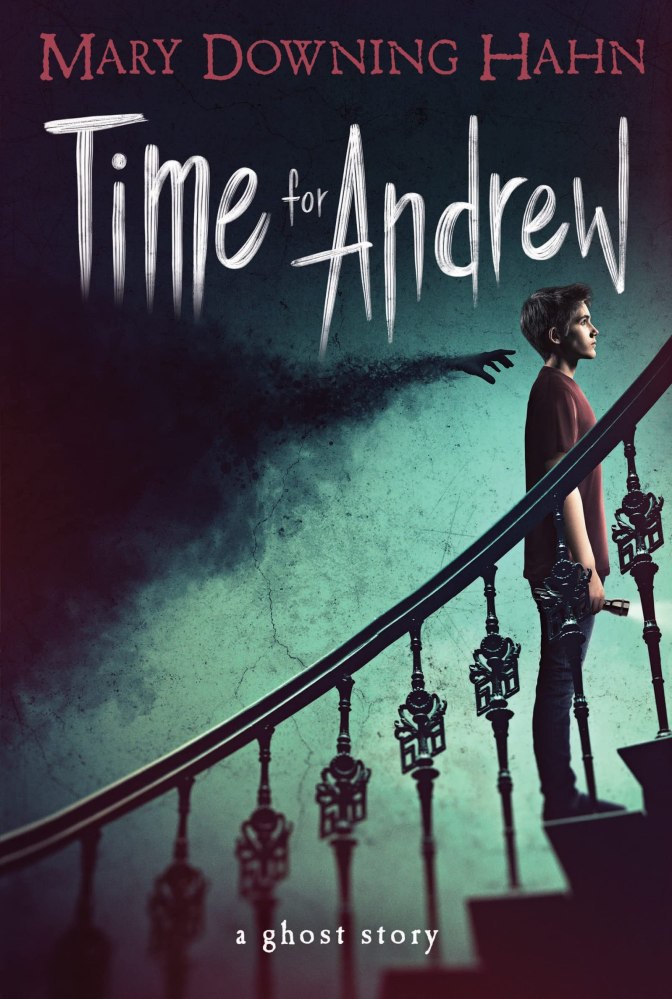
A boy with a flashlight stands on an open curving staircase, with a spooky hand reaching out of the shadows toward the back of his head. The

At some point, I tried one of Mary Downing Hahn ghost stories, Time for Andrew, and immediately bought my first bag of marbles. I quickly followed that with one of her most popular books, Wait Till Helen Comes, about a young girl at odds with her new step-siblings, a farmhouse complete with a backyard graveyard, and the ghost of a young girl named Helen. 

Mary began her career as an illustrator and a children’s librarian before, thankfully, directing her sights on writing children’s books. Her first book was published in 1979 and she has authored dozens of books since then. Most known for her ghost stories, she doesn’t shy away from writing genuinely scary books for children, and they love her for it! Notably, she has won more than 50 child-voted state awards for her work. 

I love reading her stories and recognizing the locations where they took place. Mary Downing Hahn is the author of the first book I loved and many more that followed. She is a valued author, a local favorite and she is, without a doubt, the reason that I read.

Julie is the teen instructor and research specialist at Central Branch.

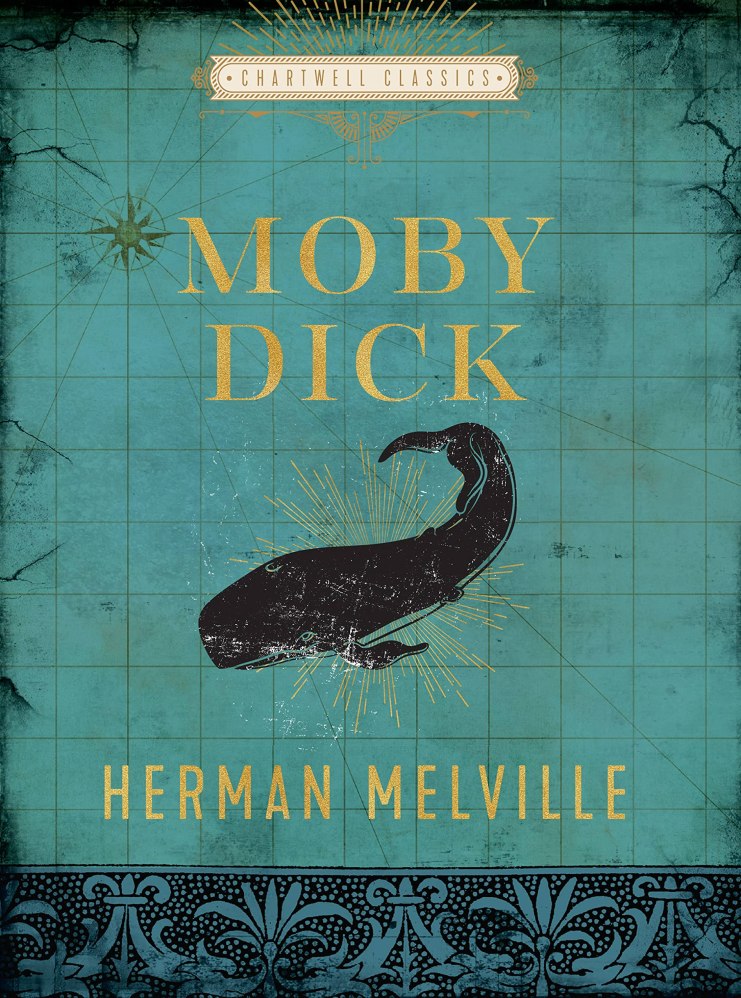
Moby Dick; or, The Whale

The stormy blue cover shows a small boat being capsized by a giant whale.

I thoroughly enjoyed it and would recommend it to absolutely no one.
– anonymous review of Moby Dick

by Ben H.

Moby Dick; or, The Whale, Herman Melville’s 1851 masterpiece, is a perfect summer read. It’s long – good for those endless summer days at the beach. It’s a great conversation starter – good for extra time spent with family. It’s the source of many pop culture references – great for the extra entertainment consumption that sometimes happens in the summer. Lastly, it’s a great book full of memorable lines.  

Ishamel, of “call me Ishmael” fame, is the insightful and piquant narrator of this tragic seafaring saga of revenge. He joins Ahab’s ship, the Pequod, because he’s hit the doldrums. He tells us, “Whenever I find myself growing grim about the mouth; whenever it is a damp, drizzly November in my soul; whenever I find myself involuntarily pausing before coffin warehouses, and bringing up the rear of every funeral I meet…I quietly take to the ship.” As one does when one feels down, Ishmael makes for Massachusetts and becomes a whaler.  

If he’s too interested in the semantics of whaling, I forgive him because he’s a fabulous companion, consistently thoughtful and funny. It’s through Ishmael that we meet the rest of the crew: Ahab, the peg-legged monomaniacal captain bent on revenge; Pip, the cabin-boy who loses himself in the vastness of the ocean; Starbuck, the weathered, faithful first mate; Stubb, the philosophizing, chain-smoking second mate; Flask; the steady, simple third mate; Fedallah, Ahab’s harpooner and “evil shadow;” Queequeg, Ishmael’s best friend, “wife,” and harpooner; Tashtego, Stubb’s harpooner and the one who falls into the squishy head of a dead whale; etc.  

Moby Dick has a great narrator, a wonderful crew of characters, and plenty of Shakespearean drama. Starbuck has a soliloquy worthy of Hamlet; Stubb and Flask have Dogberry-level banter about whales and Fedallah. Stubb also takes a turn as Mercutio when he has a Queen Mab moment. After Stubb describes his dream in detail, Flask responds with an appropriate, “I don’t know; it seems a sort of foolish to me, tho.'” Anyone who bores a friend, family member, or coworker with the details of a dream deserves the Flask treatment. 

Speaking of dreams, the giant squid sighting is a brief but memorable episode. Melville calls the squid the “Anak” of the cuttlefish tribe. His reference to a race of giants is one of many biblical references. With one word, Melville describes the squid and sets an ancient and mysterious tone.

Another perfectly haunting episode happens when Ahab works the crew into a fervor on the quarterdeck. He stabs a gold coin high into the mast, promises it to the one who first sights the white whale, and gives a demonic revenge speech. His speech, and the healthy amount of grog he sloshes around, sets off pandemonium and “infernal orgies.” Starbuck, too stoic to partake in such revelry, remarks, “heathen crew…the white whale is their demogorgon…” Try googling demogorgon without getting lost in an avalanche of Stranger Things fan sites. Starbuck, ever the ray of sunshine, adds, “Oh, life! ‘tis now that I do feel the latent horror in thee.” 

I’ve highlighted a few episodes to provide you, gentle reader, with trenchant examples of the mood of the novel; it is equal parts mystical, dark and humorous, and quotidian. 

The narrative falls into a pattern: look for a whale, find a whale, kill a whale (unsurprisingly, Moby Dick is not safe for animal lovers). The Pequod also encounters a surprising number of other whaling ships: Jereboam, Rachel, Jungfrau, Delight, Rose Bud, etc. The suspense builds as Ahab begins to hear of Moby Dick sightings from the other captains. Melville continues to up the tension by scattering prophecies and Julius Caesar-level augurs of doom throughout the text.  

As I mentioned in the introduction to this interminably long book review, Moby Dick casts a long shadow. For example, in the The X Files (the best show of all time), Scully’s dad’s nickname for her is Starbuck. Once you’ve read Moby Dick, you’ll make a fun connection between Mulder and Ahab. Is Scully the Starbuck to Mulder’s Ahab? Will Mulder’s quest doom them both? 

Another fun example: Jaws, Steven Spielberg’s landmark 1975 film about a giant bloodthirsty shark. At one point, the brave but foolish men hunting a giant shark in a tiny boat sing a little song – first sung by the crew of the Pequod:  

Farewell and adieu to you, Spanish ladies! / Farewell and adieu to you, ladies of Spain! 

One last reference is a little out there, but for those of you who play videogames, I feel that the entire catalog of Dark Souls games is rife with thematic references to Moby Dick. If the pop culture references aren’t enough to draw you in, there are tons of one-liners perfect for inspiring the armchair philosopher in all of us: 

  • “But clear truth is a thing for salamander giants only to encounter” 
  • “Never dream with thy hand on the helm!” 
  • “Away, and bring us napkins!” 
  • “Oh! My friends, but this is man-killing! Yet this is life…” 
  • “Where lies the final harbor, whence we unmoor no more?” 

My wife told me not to spoil the ending, so I won’t. If you want to know, set sail for your local branch and pick up a copy! If you’ve made it through this Chapter Chats review, you can make it through Moby Dick!

Ben Hamilton works at Project Literacy, Howard County Library’s adult basic education initiative, based at HCLS Central Branch. He loves reading, writing, walking, and talking (all the basics).

The Last True Poets of the Sea by Julia Drake

The cover shows line drawings of ocean vegetation floating against a background of blue water. The title is lettered in shades of pink, orange, and yellow.

by Ash B.

Not to be dramatic, but The Last True Poets of the Sea by Julia Drake is one of the most underrated novels I’ve read. It received positive reviews from Booklist, Kirkus, School Library Journal, and Publisher’s Weekly – and yet it still seems like not many people know about it. That’s why I eagerly recommend it whenever I can! 

Violet Larkin is a wild child – partying and doing all manner of things that a 16-year-old girl probably shouldn’t be in New York City. After her younger brother attempts suicide and her own reckless behavior worsens, her family sends her to stay with her uncle for the summer in the small coastal town of Lyric, Maine.  

Descended from a shipwreck survivor who supposedly founded Lyric, Violet is convinced that disaster runs in her blood. As she struggles with inner turmoil, she becomes determined to uncover the long-lost location of that shipwreck and the truth of her family history. With the help of new, unexpected friends, Violet discovers so much more – about herself, about love in all forms, and about surviving the emotional wrecks of life. 

After Violet starts working at the local aquarium in Lyric, the story seems like it might include a very “boy meets girl” romance with her coworker, but it delightfully diverges into something more refreshing. While there is a slow-burn teen romance with a bit of a “twist” love interest, that is far from the focal point of the book. I would say the core of the story is the complexity of mental health and the importance of allowing oneself to be (safely) emotionally vulnerable. The narrative balances the mending of relationships within Violet’s family, the importance of Violet building new friendships in Lyric, and the development of Violet’s relationship with herself. 

It is such a beautiful story of healing and connection. I really appreciated how Violet, an amazingly complex teen protagonist, opened my eyes to how mental illness and trauma can impact and manifest in such different ways depending on each person. For someone such as myself, anxiety typically causes retreating into oneself, isolating, and fearing the outside world. Social anxiety and generalized anxiety can really go hand-in-hand in this way, at least in my experience.  

However, for Violet, her anxiety – the storm she feels inside but doesn’t know how to healthily cope with – is sometimes the catalyst for her extroverted, often-risky behaviors such as partying, (underage) drinking in social settings, and flirting with much older men. Over the course of the novel, I grew to understand why someone like Violet might engage in those types of behavior (that would personally make my anxiety even worse) as a means of trying to avoid their inner struggles. 

This is a YA novel that I think can help so many people, teens and adults alike. It shows the importance of communication, self-love, healthy interpersonal relationships, and being kind to oneself while growing up. It challenges the idea that teens who “act out” are “bad” or “broken,” instead showing the nuanced reasons why unhealthy coping behaviors are used by young people who are struggling. Not to mention that it is beautifully written with crossover appeal for both YA and adult fiction readers. 

The characters of The Last True Poets of the Sea settled into my heart and have made a permanent home there. I read this book for the first time over a year ago and I still can’t stop thinking about it. When a book lingers with you long after you finish the final page, that tends to be a good sign. I loved it so much, I bought my own copy and I’m planning on re-reading it during my own trip to Maine this summer! If you’re interested in a contemporary coming-of-age story, I really hope you give this one a read.

Ash is an Instructor & Research Specialist at Central Branch and is a co-facilitator for Reads of Acceptance, HCLS’ first LGBTQ-focused book club. Their favorite place to read is spread out on a blanket under the shade of the tree.