Booker reads Owls by Gail Gibbons in celebration of National Book Lovers Day.
by Brandon B.
Summer reading pairs perfectly with National Book Lovers Day – like flip-flops and a beach towel! On August 9, you have an opportunity to celebrate literature, national best-selling books, and your favorite reads at any HCLS branch.
Cream, sugar, and fruit make for perfect ice cream — what ingredients make a terrific book for you? You may be looking for old-fashioned sass and wry truth in a children’s book by Judy Blume. Maybe you have a taste for a modern, poetic, and fun teen book by Jason Reynolds, one that even adults can enjoy. Some readers may prefer a spicy romantic thriller by Freida McFadden, or an impactful, savory nonfiction book by Tony Robbins. Whatever your taste in books, the library has something for you, free of charge and free of any sort of judgment.
Any of these books count toward completing HCLS’ summer reading challenge. If you haven’t already, pick up an Adult Reading Challenge booklet at any of our branches. The 14 challenges guide you through a year’s worth of reading, with summer being a great time to get started with your first three titles. Once you complete three challenges, come back to the library for a small gift (while supplies last) and entry into a bigger prize drawing.
For National Book Lovers Day, it seems appropriate to take a look at the the adult summer reading booklet. One challenge called “Reading is Magic.” After all, it’s what the day celebrates! Books may have their own special magic, but the challenge is more literal, asking you to choose a title with supernatural or magical elements (see the Chapter Chats review for one of the suggested titles, Ink Blood Sister Scribe by Emma Törzs).
No matter how you love to read – on the page, on the screen, or by listening to an audiobook – National Book Lovers Day is for you! Stop by the library in person or via the catalog to find a new or favorite title, and keep reading all year with your booklet of reading adventures.
Brandon is a Customer Service Specialist at HCLS Central Branch who loves reading, football, and taking nice long walks around his neighborhood.
My book club (Books on Tap) left for our August summer break on something of an odd note. At a previous meeting, we had a discussion about adapting books to TV shows and movies. I had recently read glowing reviews of the Netflix adaption of One Hundred Years of Solitude, and I proposed reading the Latin American classic. Everyone agreed that it had been awhile since we tackled something, perhaps, weightier, and – per usual for this great group of people – they were game to try.
I had read and loved this book in college, when I was in the practice of reading complicated, challenging material. While I still enjoyed the book this time around, I definitely found it more difficult to read decades later. The full immersion into the Buendia family and the village of Macondo remained the same, enchantingly so. Gabriel Garcia Marquez is credited with inventing modern magical realism, where the odd and inexplicable are part of every day life.
The family was trickier this time around, with the generations sharing names and attributes. I – and my book club folks – got too caught up in trying to keep everyone straight. In talking about it, though, we realized that’s one of the joys of this inter-generational story. It’s as though your grandma or some other older relative is telling you the family history, with asides and doubling back and other random diversions before actually getting to the point. It’s not really necessary that you keep the Aurelianos, Jose Arcadios, and Ursulas straight because the novel moves in circular patterns more than as a linear “and then” plot. We were less thrilled with a rather dated assumption that the patriarchy meant that men could marry whomever they pleased, even barely adolescent girls and despite mistresses.
The particular smaller stories, though, share in all of humanity’s troubles and joys, often humorously so – the insomnia plague, the visiting gypsies who bring the miracles of magnets and ice to Macondo, the coming of the railroad and banana company, the feuds, and the love affairs. All of it mixed into a sort of memory soup filled with revolution, politics, and the destructive nature of colonialism and classism. It’s been called the Great Novel of the Americas, and I would agree with that assessment. There’s something quintessentially Latin American about the story, and absolutely universal about the way it is told. I was reminded of the spider from my family’s camping trip with Scouts that gets a little bit bigger every time the story is recounted, or the number of pies my grandmother would bake during the summer, or any other number of embellishments to tried-and-true chestnuts of familial tales.
If, however, the book doesn’t suit your current reading tastes – as many people found at book club – Netflix recently released the first half of an almost perfect adaptation of the book, with the second season coming soon, hopefully in 2026. Being able to see Macondo and its inhabitants helps keep it all straight, without losing any of the wonder or weirdness of the book. The voiceover of descriptions and commentary are taken directly from the original text, and it’s a perfect way to meld the classic novel with the new medium. The cast does a perfect job of inhabiting the characters and their often exasperated relationships. While the show’s original language is Spanish, the dubbing was not distracting. It’s also a rather frankly spicy (would be R-rated) depiction of various lovers and marriages. I hope it becomes available on DVD or via Kanopy soon, as it’s the perfect complement to the book.
Re-examining classics is always worthwhile to me, because the books may not change but we do as readers. I had memories of enjoying One Hundred of Solitude but couldn’t remember why. The town of Macondo, isolated in the jungle, and the Buendia family once again live in my imagination, and I am glad for it – if for different reasons than when I was in college.
One Hundred Years of Solitude by Gabriel Garcia Marquez is available in translation to English in print and as an e-audiobook. It is also available in Spanish.
Kristen B. is a devoted bookworm lucky enough to work as the graphic designer for HCLS. She likes to read, stitch, dance, and watch baseball (but not all at the same time).
Drag Race fans: Bob the Drag Queen wrote a book. I wasn’t going to miss this one, especially since it asked the age-old question: what would the ones who came before us think about how we are today?
In Harriet Tubman: Live in Concert, Harriet Tubman, among other historical figures who everyone has heard of (though not Jesus, as Bob the Drag Queen makes sure to tell us), comes back from the dead. She picks a blacklisted, gay, music producer to help her achieve her next-greatest life work: making a hip hop album that will free people’s minds. It’s a cute premise, and the themes of freedom are present throughout. Harriet Tubman isn’t the only historical figure of note, just the lead singer of the band. She’s accompanied by her band, the Freedmen, who were all freed thanks to her leadership and who all have their own stories to share.
This is a debut and some points feel like it, but the overall story is charming, funny, and really imparts a love of history. It is quasi-historical fiction written by an author with immense love of the historical figure at the center, and that’s evident beyond anything else. I’d especially recommend the audiobook, since Bob the Drag Queen reads it with her signature charm and aplomb. Original songs are also included – fully produced numbers that add so much fun to the listening experience – performed by Bob the Drag Queen so it’s incredible.
Harriet Tubman: Live in Concert by Bob the Drag Queen is available in print, e-book, and e-audiobook.
Sahana is the Communications Strategist at HCLS. They enjoy adding books to their “want to read” list despite having a mountain of books waiting for them already.
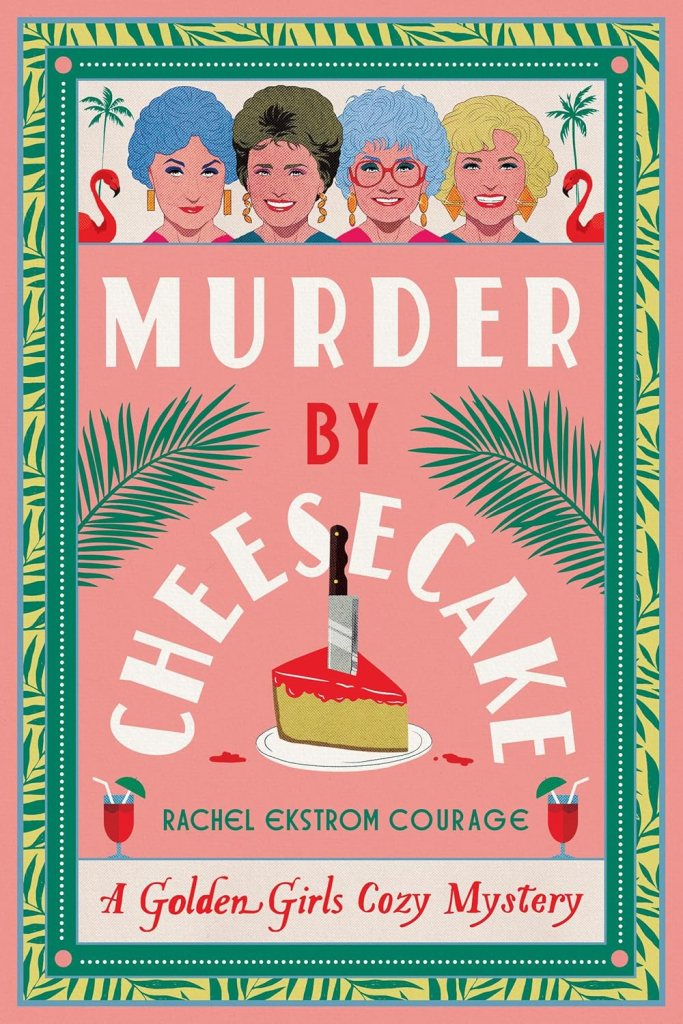
Murder by Cheesecake: a Golden Girls Cozy Mysteryby Rachel Ekstrom reads like a “recently unearthed” never-before-seen episode ofthe beloved sitcom and delivers everything you’d want from a sun-soaked Miami murder romp: sass, suspense, and cheesecake-fueled sleuthing. And It nails the tone, rhythm, and warmth of the original show.
The book opens with the ladies doing what they do best—confiding in each other over sweets. But when a suspicious death rocks their retirement rhythm, the girls ditch bingo night for crime-solving. Picture Dorothy’s deadpan deduction skills, Rose’s delightfully backward logic, Blanche’s irresistible charm, and Sophia’s spicy zingers, which you can practically hear in Estelle Getty’s voice.
Dorothy’s date-turned-dead-body is found face-first in dessert, threatening to derail Rose’s cousin’s nuptials and ruin a perfectly good buffet. With every guest a suspect (including Dorothy), the Golden Girls must juggle wedding chaos, Blanche’s romantic escapades, and Sophia’s sass to crack the case. It’s a cozy whodunit frosted with friendship, frolic, and just a hint of fish-themed hors d’oeuvres (St. Olaf, anyone?).
Every clue, every misstep, and every sugary morsel of cheesecake drips with vintage Golden Girls flair and familiar humor. It’s not just a mystery, it’s a nostalgia-packed escape and a reminder of sitcom television at its best.
Angie is an Instructor & Research Specialist at Central Branch and is a co-facilitator for Reads of Acceptance, HCLS’ first LGBTQ-focused book club. Her ideal day is reading in her cozy armchair, with her cat Henry next to her.
Some books have it all: A courageous librarian, an ambulatory talking spider plant, winged cats, cloud bears, and a romantic interest who rides sea horses. The Spellshop by Sarah Beth Durst gives you a warm hug in the form of a book. That’s not to say it’s only cozy vibes and no plot – there’s plenty of story to keep you reading.
Kiela and her assistant Caz (the sentient plant) flee political unrest that sets fire to the Great Library of Alyssium. Kiela, who has been preparing for this unfortunate reality, packs as many books as she can, herself, and Caz into a boat and sets sail for the island where her family originally came from. She makes it across open waters to Caltrey, where the cottage she remembers from childhood still stands.
It turns out that the political upheaval in the capital city has also had consequences on this faraway island. Imperial sorcerers no longer travel, and magic has become unbalanced, causing huge storms and other troubles. However, the books Kiela rescued are mostly magical spellbooks. The chapters where she and Caz test spells through pure trial and error are delightful. The drawback is that unlicensed magic is illegal, so Kiela ends up opening a jam shop and providing “remedies” on the side (fooling no one).
As she settles in, Kiela makes all sorts of wonderful friends. She also reconnects with Larran, a childhood friend who now happens to be a helpful, handy, and handsome neighbor. Although a natural introvert, Kiela soon discovers the importance of connections and trust within a small community. The found family at the center of the book comes together to see everyone through a series of mishaps and misfortunes, including a suspiciously behaved Imperial citizen who washes up during a big storm. Sorting out the unexpected visitor drives the second half of this gentle book.
The joy of this sort of cozy fantasy is that even though stakes are high, and certainly Kiela feels as though her world is ending, people help each other and make it through. Cozy fantasy is the counterweight to all the dread-full, grim-dark fantasy that has been dominating the genre in recent years. The Spellshop might be as far from A Song of Ice and Fire as a reader can get and still be reading in the same fantasy genre. And that’s okay. It’s good to have a wide variety of books to suit all different readers and moods. Honestly, while it might not make sense if you use strict logic, The Spellshop makes perfect sense to your heart with its hopeful outlook on a world in turmoil.
I am looking forward to reading the second book, The Enchanted Greenhouse, about the magician who created Caz and the second chances she is given.
Kristen B. is a devoted bookworm lucky enough to work as the graphic designer for HCLS. She likes to read, stitch, dance, and watch baseball (but not all at the same time).
Required Reading: Texts for Change is a new quarterly book club for readers who care about equity, community, and meaningful conversation. It’s for anyone who’s curious, committed to learning, and ready to grow—no matter where you’re starting from.
Each season, our group gathers around a thought-provoking book that invites us to see the world—and one another—a little differently. These are texts that challenge assumptions, offer fresh perspectives, and help us think more deeply about equity in our lives, our work, and the communities we live in. Howard County is a beautifully diverse place, home to people of many cultures, backgrounds, and experiences. And like many communities, we still face real challenges around access, opportunity, and belonging. Take advantage of the chance to slow down, reflect, and strengthen the ability to show up for one another with empathy and intention.
Read three nonfiction books throughout the year and one fiction title each summer—something lighter to make space for joy, imagination, and connection. Some of these books will stretch us. That’s the point. Growth happens when we’re willing to sit with complexity and listen deeply—to authors and to each other.
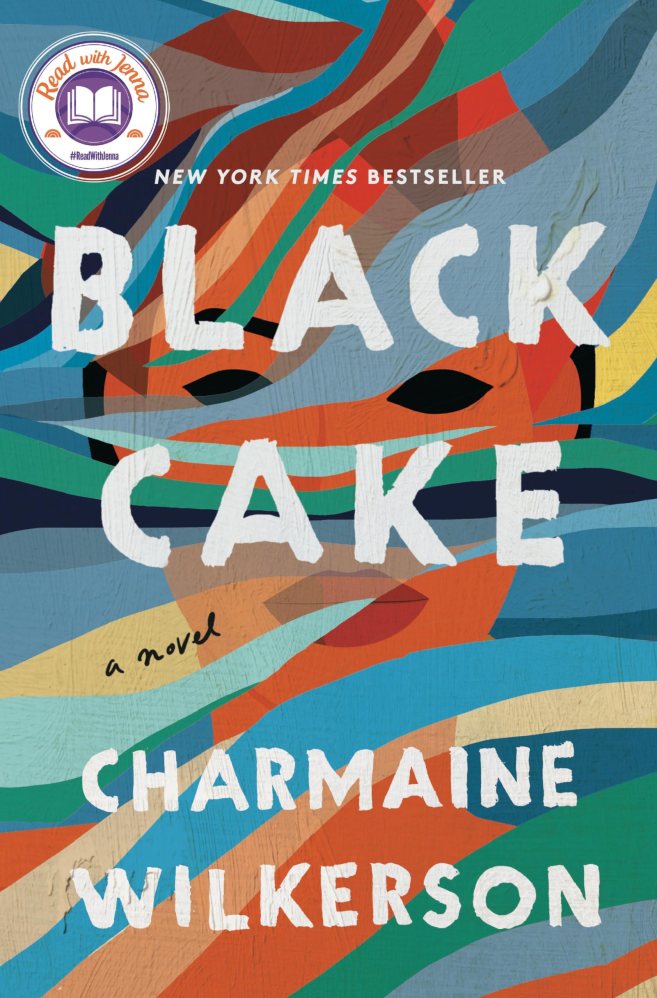
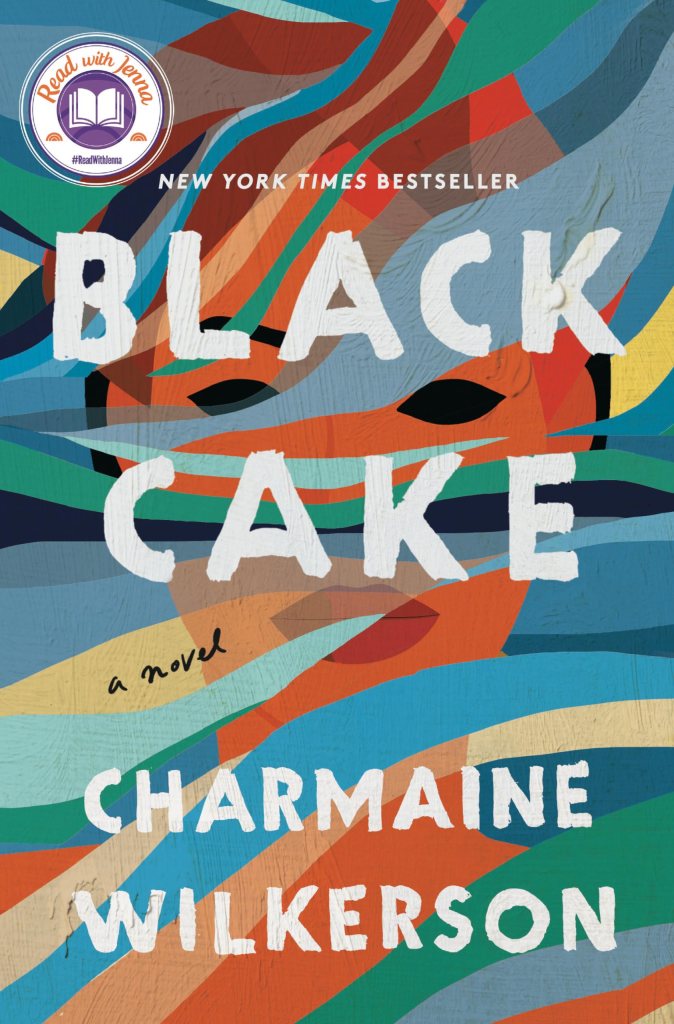
Our first title is Black Cakeby Charmaine Wilkerson, which is one of those books that subtly teaches you things about the world that you didn’t know – like the history of Chinese indentured servants in the Caribbean or that surfing isn’t the sole proprietary sport of blond dudes in California. Inspired by her own multi-ethnic Caribbean roots, author Charmaine Wilkerson manages to weave a history lesson seamlessly into a heart-tugging tale of family secrets.
Written in bite-sized chapters that move from past to present and back again, the story is woven together like grandma’s quilt. A little bit of love pinned here, a little bit of pain there. While the new ERCC book club will focus mostly on nonfiction titles, summers will be reserved for fictional getaways. Black Cake is the perfect inaugural book. Enough drama and intrigue to keep you hooked, while sharpening the mind and deepening the senses for of those committed to equity work in our own community.
Dr. Clark is the Chief Diversity, Equity, Inclusion & Belonging Officer at Howard County Library System.
Like any self-respecting book nerd, I can only go on vacation if I have at least five books ready and on hand at any time. This was trouble when I was younger, before e-books and e-audiobooks, with backpacks and suitcases full to the brim with tomes. My worst-case scenario was always that I would run out of things to read.
I went on vacation around Britain recently, and, as is my wont, brought eight different novels with me in various formats. Sure, I brought a few too many physical books, and yes, maybe I bought a book or two on the trip to weigh down my backpack. I felt adequately prepared, as I was taking train rides through the English countryside and knew that I would want to embody the aesthetic of reading whatever I had in hand, only to look up at rolling fields dotted with sheep, old worn walls of stacked rocks dividing the endless green into pastures.
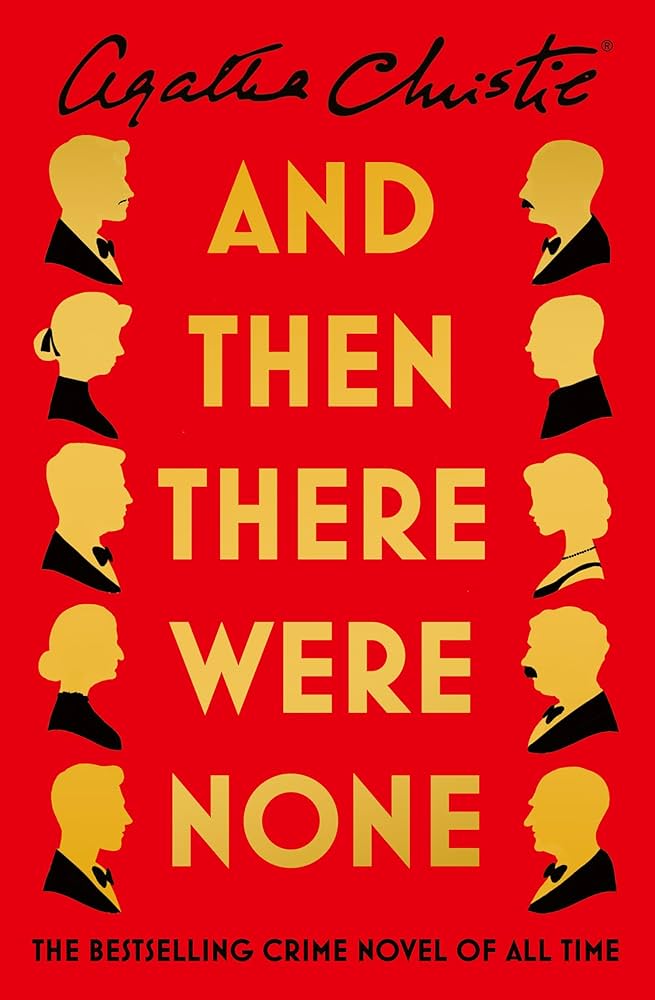
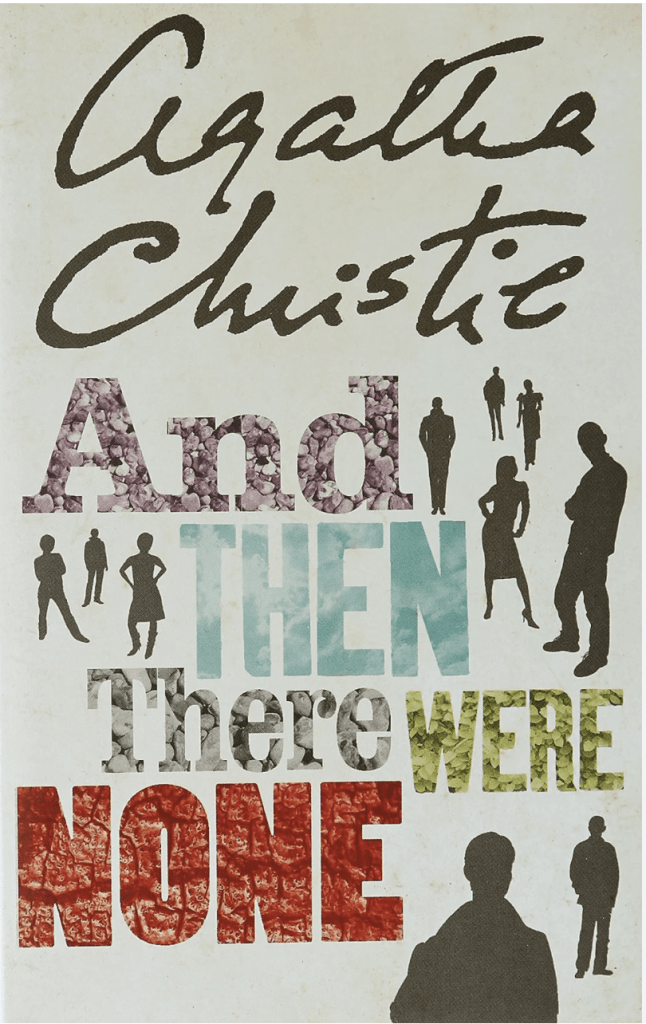
As always happens on vacation, though… I felt a craving. I was on a train. In England. Arguably there was only one author who could scratch the itch. I had read Murder on the Orient Express too recently and watched the movie even more recently, so I went onto Libby to see if anything was “Available Now” and found one of my all-time favorite Agatha Christie mysteries: And Then There Were None.
I had read the book before, but not for years, and I was immediately immersed in the atmospheric gloom hanging over the description of the story’s central island. I arrived in Oxford, and while the day was gloriously sunny, the evening became overcast. As I curled into bed, I fell into the world of the ten main characters, each with something devious and criminal to hide, from Vera Claythorne to Phillip Lombard to Justice Wargrave. It took me two and a half hours to tear through the thriller, which gets the ball rolling early and never allows the momentum to stop.
The original title of the book and the changes made to it have a history that has to be acknowledged as racist and problematic. There was no reason to include racism in the novel, especially such casual racism. The nursery rhyme that is the basis for the novel is a disappointing reflection of our history. But this book, plot-wise, is an impressive example of Christie’s talent, ability, and intellect. This is the locked room mystery to end all locked room mysteries, one that is nigh impossible for the reader to solve all the way through because of the masterclass in subjective narrators.
It was a delight to read Christie as an American in England for the first time, to sit on a train as it trundled by coastlines that Christie took care to describe herself. I’d suggest, for others interested in what books to read as they travel: let the trip inform you. Give your surroundings a chance to suggest a good book or two. There’s nothing better than recognizing the view in front of you in the book you’re holding.
Sahana is the Communications Strategist at HCLS. They enjoy adding books to their “want to read” list despite having a mountain of books waiting for them already.
Though we do not wholly believe it yet, the interior life is a real life, and the intangible dreams of people have a tangible effect on the world.
James Baldwin
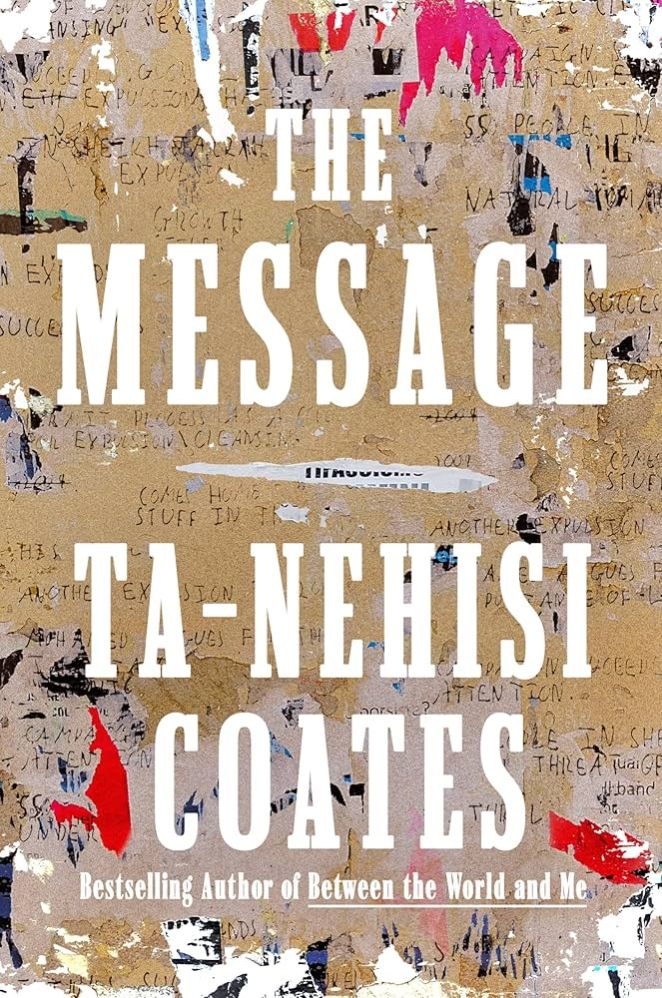
Ta-Nehisi Coates opens The Message with the above quote, and it’s a great frame for his book. Coates, the esteemed public intellectual from Baltimore and author of many excellent works such as Between the World and Me and We Were Eight Years in Power, explores three places in The Message: Senegal, South Carolina, and Palestine. Returning to the Baldwin quote for context enriched and expanded my understanding of the book.
Coates first takes us to Senegal, “I had indeed come home, and ghosts had come back with me.” He processes his own history, constantly referencing his parents, and the history of slavery and the slave trade. Coates intermingles the unbearably heavy and the humorous in the same way those things blur together in real life. He visits the “Door of No Return” and eats a delicious meal by the ocean. He stays at a luxurious hotel and thinks about, “blood in the bricks and ghosts in the attic.” He regrets the fancy hotel. The juxtaposition of heavy and humorous stretches back to his childhood and the “inheritance of the mass rape that shadows all those DNA jokes” he and his friends would make. Though we come from different backgrounds, I find Coates constantly relatable.
After Senegal, he moves us to South Carolina. He’s flying to South Carolina to support Mary Wood. Wood, a high school English teacher, assigned Between the World and Me to her class but was ordered to stop teaching the book. What is censorship and the uproar about Critical Race Theory other than an attempt to control the intangible inner life of people to keep it from having a tangible effect on the world? Coates writes, “the arts tell us what is possible and what is not, because, among other things, they tell us who is human and who is not.” As a librarian, this chapter dealing with representation in the arts, censorship, and education felt written for me.
After South Carolina, he visits East Jerusalem and the West Bank. Coates opens in Yad Vashem with the Book of Names. The Book of Names is a project to collect the names of all the Jews murdered in the Holocaust and display them. It’s overwhelming. Coates considers genocides and how the efforts to remember them, memorialize them, or recognize the horror of them can result in a second tragedy where the murdered men, women, and children are “reduced to a gruel of misery.” Coates is devastated by the holocaust memorial and crushed by the suffering of Palestinians.
Coates sees Palestinians living, at best, in a Jim Crow state. He can’t unsee this connection to his own country, life, and history. In the Jim Crow South, there was a privileged group with full rights and a disadvantaged group with partial rights. In East Jerusalem and the West Bank, he sees a privileged group with full rights and a disadvantaged group with partial rights. He drives on roads with his Israeli guides that he can’t drive on with his Palestinian guides. As he travels with Palestinians, he feels the “glare of racism,” and he sees soldiers with the “sun glinting off their shades like Georgia sheriffs.” His narrative is compelling; his argument is strong. I think his assessment of the situation is accurate.
What ties Coates’s journeys together? What connects Senegal and South Carolina and the West Bank? Let’s return to Baldwin’s quote and assume that Coates included it for a reason. All three situations reflect the tangible effect of the interior life of people. The interior lives of his mother and father had a tangible effect on him as a child and he expands on this in Senegal, constantly wondering what his father was thinking or how he thought about things. The high school in South Carolina wanted to ban his book for fear of the tangible effects that would result from the change in interior lives. The heartbreaking suffering and misery in Gaza is the horrendous tangible effect of generations of interior lives.
I appreciate Coates’ approach. He’s not a sophist. This isn’t an empty academic argument or intellectual exercise. He calls his books his children. He puts his whole self into his writing. His whole being is in his work. If you’ve seen his interviews or headlines about his book, but haven’t had time to read it, I think it’s worth the time.
Ben loves his job at HCLS Project Literacy. When he’s not at work, you might find him walking around Lake Kittamaqundi (on his break), playing pretend with his daughter Annika, reading, peeling garlic, weeding his tiny lawn (Canada Thistle, leave me be!), eating chocolate, or listening to baseball games on the radio.
There’s no time like the summertime to dig into a long, immersive fantasy book. The 2025 High School Summer Reading list features several titles that fit the bill—here are five recommendations to keep you engrossed for hundreds of pages!
Deep is the Fen by Lili Wilkinson is a suspenseful fairy tale centered on a cast of lifelike characters on their quest to find the heart of the nefarious secret society known as the Order of Toadmen. The main character, Merry, grapples with her magical ability as she fights against society to save her father. I loved this book’s sweet friendships, the rivals-to-teammates dynamic between Merry and her counterpart, and the way the mystery unfolds as we follow the main characters deeper and deeper into the murky magic.
Blood at the Root by LaDarrion Williams explores a world of magic incorporated through Black American history, folklore, and myth. When Malik Baron reunites with his estranged grandmother, he’s drawn into a world of magic and mystery that may just give him the tools he needs to control his magical powers and protect his foster brother on his journey to find his missing mother. This book transforms the magic school trope into something defiant and heartfelt.
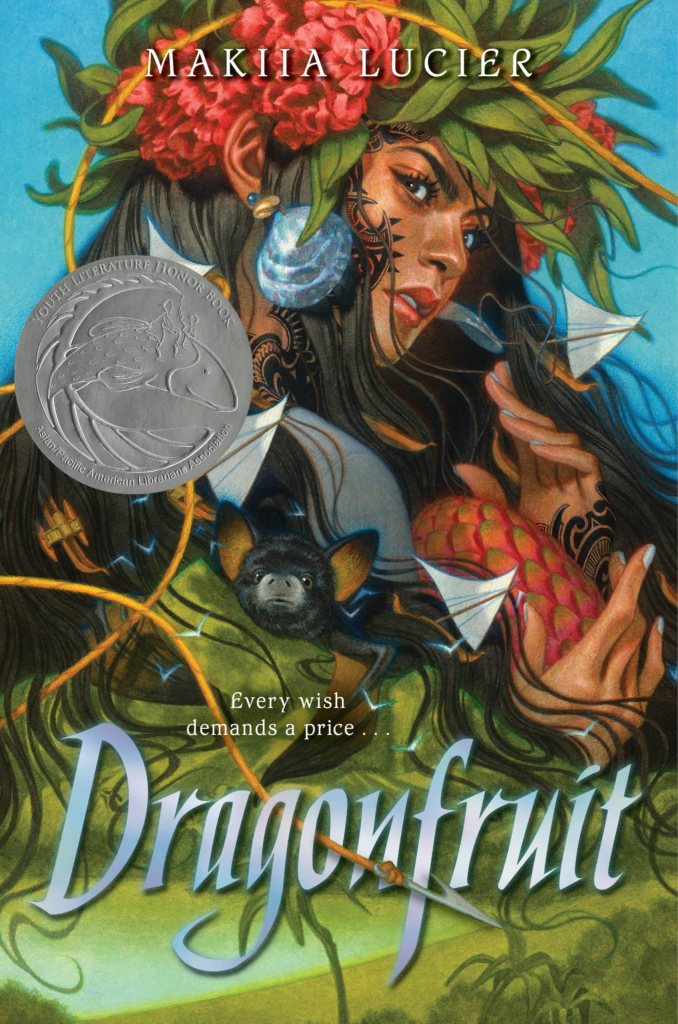
Dragonfruit by Makiia Lucier is a fantasy adventure based on mythology from Guam and other Pacific Islands. We meet our main character, Hanalei, in her days of exile after her father steals a sea dragon egg. She spends her days studying and sketching the majestic sea dragons in the surrounding waters, and when an encounter with a dragon offers her a chance to return home, Hanalei is launched into a quest that could save her family—and the entire kingdom of Tamarind. The book delivers a beautifully woven, mythology-rich expansion on the teen dragon rider trope and leaves readers asking, “When will there be another one?”
Wrath Becomes Her by Aden Polydoros is a historical fantasy set in 1940s Lithuania. The book follows Vera, a golem created from an ancient magic, called kishuf, by a father grieving for his murdered daughter. Driven with a violent purpose, Vera is sworn to avenge herself against the Nazis. Throughout her quest, she finds that she’s not the only one with access to kishuf—and it’s going to take everything Vera has within her to come out triumphant. This dark fantasy draws from Jewish folklore to spin a tale full of strength and vengeance.
Heir by Sabaa Tahir picks up almost two decades after A Sky Beyond the Storm, the final installment in Tahir’s previous series. Sabaa Tahir excels at balancing a full cast of characters and creating interesting and distinct points-of-view, and Heir is no exception. We get to watch the story unfold from behind the eyes of Aiz, Sirsha, and Quil—the orphan, the outcast, and the prince. Like the Ember in the Ashes quartet, Heir tells a war story in a fantasy setting that delves into issues of genocide, human rights, family bonds, and betrayal, and underscores it with characters that forge fierce bonds of friendship and love.
Happy reading!
Julia is a Teen Instructor & Research Specialist at the Central Branch. They love to read YA books, play the cello, practice martial arts, try new cookie recipes, and generally squeeze as many hobbies into a day as possible.
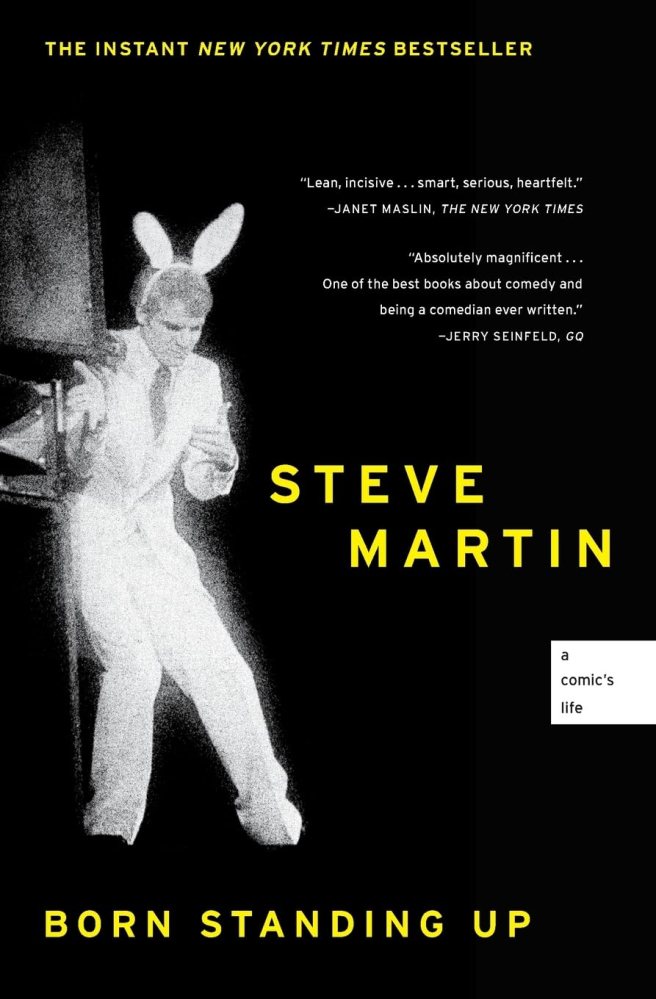
Steve Martin is best known as an accomplished Hollywood actor, recognized as the star of classic comedies like Father of the Bride, Three Amigos, and Cheaper By The Dozen, but some folks may remember his brief time as a standup entertainer. In fact, Martin achieved national stardom through his standup work, released four comedy albums (Let’s Get Small and A Wild and Crazy Guy sold millions of copies), and established national catchphrases, such as, “well excuuuuse me”. His acting career only began after he burned out from that stardom, and Martin seeks to revisit those beginnings in his new memoir.
Born Standing Up focuses on the early life and career of the Hollywood multi-hyphenate. He comes of age in California; his first jobs included selling guidebooks at Disneyland and performing in a comedy troupe at Knott’s Berry Farm. His surreal sense of humor got him a position as a writer for the Smothers Brothers Comedy Hour, which kept him afloat while his “experimental” standup comedy struggled in California clubs and on late-night TV appearances. Against the blunt advice of his agent (“stick to writing”), he quit writing to take his performances on the road.
Steve Martin’s standup comedy was weird, conceptual, nonsensical, and almost completely unique. There were props, he was a master juggler, and he played the banjo. He was a consummate entertainer, but his work was intellectual too; his friend Rick Moranis termed it “anti-comedy.” He had a theory behind his performances: “What if there were no punch lines? What if there were no indicators? What if I created tension and never released it?… What would the audience do with all that tension?… if I kept denying them the formality of a punch line, the audience would eventually pick their own place to laugh, essentially out of desperation.”
Some typical Martin one-liners:
“I’m so depressed today. I just found out this ‘death thing’ applies to me.”
“Here’s something you don’t often see:” [spreads mouth open with fingers, and leaps into the air while screaming]
“I think communication is so firsbern.”
The driving force of Martin’s life during this time seems to be either deep dissatisfaction or reckless ambition, as he constantly abandons his own comfort to try his hand at success. Martin seems more motivated by the idea of mastering his craft than by fame and fortune. He taped his shows on cheap cassette recorders so he could listen back and master his timing, obsessing over how to make audiences “get” his weird material better. He found the uncharted territory of playing those clubs exciting as he refined his craft, but the constant work was met with lukewarm results. It clearly took a toll on him,“ When I think of moments of elation I have experienced over some of my successes, I am astounded at the number of times they have been accompanied by elation’s hellish opposite.”
He finally broke through and his inventiveness was widely recognized, but he lost the thrill of winning over those tough, small audiences. He now performed in arenas to crowds who were eager to recite his catchphrases and punchlines at him. “The nuances of stand-up still thrilled me, but nuance was difficult when you were a white dot in a basketball arena. This was no longer an experiment; I felt a huge responsibility not to let people down… I dabbled with changes, introducing a small addition or mutation here or there, but they were swallowed up by the echoing, cavernous venues.” Stardom made him terribly lonely and deeply exhausted. He was determined to use his stardom to try to find success while he could, and he pitched a tentative screenplay for The Jerk to Paramount. Carl Reiner signed on to direct, the film became a smash hit, and the rest is history.
This obsession with self-improvement, artistic satisfaction, mastery, and success seems to stem from family issues: Martin is clearly haunted by his parents. His father, who physically disciplined Martin, sometimes indiscriminately, could barely acknowledge his son’s fame and success and would only do so disparagingly. His mother was clearly happy that her son became a star, but her compliments took an oddly backhanded form: “Oh, my friends went to the movies last weekend, and they couldn’t get in anywhere so they went to see yours, and they loved it!” The book ends with the deaths of each of his parents, with him at their sides, attempting to bring closure to the trauma and understand why they shaped each other the way they did.
When you’re reading a comedian’s memoir, you usually expect an entertaining, light read with some poignant biographical vignettes to add a little gravitas. Born Standing Up reverses the ratio of jokes to earnestness. Not only does Martin impart a tremendous amount of wisdom and pain from his life experiences, he offers some of the most profound and thoughtful writing I’ve read in a long time. Martin reserves the jokes for either explaining the details of his standup material or making light of awkward life situations he found himself in, and I never really minded.
Born Standing Up is available in print or as an audiobook read by the author.
Alex Pyryt is a DIY Instructor & Research Specialist at HCLS Elkridge Branch.











 CHAPTER CHATS