Gender Queer: A Memoir by Maia Kobabe

The image shows two characters as mirror images of one another , one in yellow shorts with no shirt and arms outstretched, the other in a blue shirt and blue rolled-up pants, clutching the gem of the pants. Both are up to mid-calf in blue-green water; the "reflected" person has a green-gold forest in the background.

By Ash B. 

When I started working here at the library, my favorite section to get acquainted with was the graphic novel section. One reason for this was the rate at which I could find LGBTQ representation; I’ve joked with friends and colleagues that sometimes I feel I have a ‘sixth sense’ for intuitively knowing whether an artist is queer based on their art style or the design of the book’s cover.  

Sometimes there are subtle clues about the book’s content, and sometimes there is something overtly LGBTQ-related about the cover, title, or summary. Gender Queer: A Memoir by Maia Kobabe (pronouns: e/em/eir) falls into the latter category on all counts. As soon as I heard the title alone, I knew I needed to read it. 

Gender Queer is a memoir, formatted as a graphic novel, that recounts Kobabe’s experiences regarding gender and sexuality throughout eir childhood, adolescence, and young adulthood. At its core, it is a book that addresses what it means, in Kobabe’s personal experience, to be nonbinary, queer, and asexual. As e explains in a Washington Post op-ed, Kobabe primarily wrote this as a way of explaining eir nonbinary identity to eir parents and extended family. However, Kobabe’s story has reached much farther than that, garnering praise from readers, reviewers, and the American Library Association (ALA). 

In my opinion, as a nonbinary reader, Gender Queer is so remarkable because there is nothing else quite like it. Through a talented combination of text and illustration, Kobabe addresses complex intersections of gender and sexuality with such specificity that I was honestly blown away. Never before I had felt so seen and understood by a piece of media. One of my favorite passages addresses the struggle to achieve a balance of ‘masculine’ and ‘feminine’ gender expression when society is set on placing you on one side of the gender binary. I truly don’t have the words to fully express how meaningful this is to me… so let me share a brief anecdote instead: 

Around the time I was re-reading the book to prepare for this review, one of my (fellow nonbinary) friends texted me regarding a conflict they felt over an article of clothing they wanted to buy because they were concerned it would be read as ‘too feminine.’ Within our text conversation, I sent my friend two panels from the book.  

My friend’s response? They related so much that they started crying in the bathroom on their lunch break at work.

Representation matters. 

Even for those of us within the LGBTQ community who have come to terms with our identities, have community support, and hold privilege (whether it be whiteness, financial stability, ability, etc.) that improves our overall life outcomes – it is still hard to exist in a heteronormative society structured around the gender binary. At best, it is exhausting and invalidating, which still takes a hit to one’s mental health.  

Now imagine being a young person who lacks community support, lacks independence, and is questioning or struggling with accepting their identity. 

Books such as Gender Queer not only educate – they provide invaluable support to queer, trans, and questioning readers who need to see affirming, accurate, and nuanced representation. When we say these books can be a lifeline for readers, that’s not an empty statement; suicidality is significantly higher amongst LGBTQ youth, especially those who are trans, in comparison to their non-LGBTQ counterparts. 

Unfortunately, in the past year there has been a national surge – including in Howard County – in attempted censorship of LGBTQ books in school classrooms and media centers. Gender Queer has been one of the most controversial titles due to its frank discussion of (queer) sexuality and, to a lesser extent, gender dysphoria.  

This trend – the challenging and banning of books that contain content regarding sex, LGBTQ identity, or both – is not new. What is new is the influential role of social media and the internet, which allows far-reaching communication between book challengers and can create even more oppositional fervor towards the books that they have deemed “obscene,” “pornographic,” and so on. 

One of the problems with this overall pattern, however, is it increases divisiveness in public discourse. Parents, students, educators, librarians, and policymakers need to discuss these topics with the nuance, open-mindedness, and compassion necessary to truly educate and uplift youth. Instead, we are faced with a proliferation of outrage that doesn’t “protect” anyone – least of all LGBTQ youth. 

Some opponents are unapologetic in their homophobic and transphobic motivations, quite literally demonizing anything they hear is LGBTQ-related. (Do I need to explain further why these messages are extremely harmful to LGBTQ folks?) Other opponents claim they have no problem with queer-affirming books, but take issue with the books that contain passages regarding sex. I can understand where these folks are coming from – however, I would push back against the idea that teens need to be shielded from the type of “sexual content” that is in Gender Queer. This book isn’t meant to titillate – it is meant to inform, based on Kobabe’s own experiences of adolescence and young adulthood. 

So, before jumping to the conclusion that this book is inappropriate for high schoolers, consider Kobabe’s perspective: 

“It’s very hard to hear people say ‘This book is not appropriate to young people’ when it’s like, I was a young person for whom this book would have been not only appropriate, but so, so necessary. There are a lot of people who are questioning their gender, questioning their sexuality and having a real hard time finding honest accounts of somebody else on the same journey. There are people for whom this is vital and for whom this could maybe even be lifesaving.” 

Kobabe’s work gives language to some of the complexities that lie at the intersections of gender and sexuality. And with representation of asexuality and nonbinary genders still in short supply, Gender Queer is a much-needed addition. Mainstream narratives about LGBT people in the past few decades have often represented people who have “always known” they were transgender or “knew since they were three years old” that they were gay. But many of us do not have that experience. Many of us are in the dark about our true selves, until someone shines a light on all the possibilities of what queer existence can look like. Gender Queer has and will continue to have that positive impact on teens and adults alike.  

I hope this review will encourage you to see the value in this book for a variety of readers, LGBTQ or not. I urge you to read the book for yourself – and truly reflect on it. Print copies of Gender Queer: A Memoir can be requested to borrow here.  

Want to skip the waitlist? Your HCLS account also grants you access to the eBook version of Gender Queer on hoopla, a platform that allows titles to be streamed immediately or downloaded to devices for offline enjoyment later. For assistance with hoopla, view the tutorial on our website, visit your local branch, or reach out to us with your questions. 

Ash is an Instructor & Research Specialist at Central Branch and is a co-facilitator for Reads of Acceptance, HCLS’ first LGBTQ-focused book club. This time of year, they are especially fond of reading while cuddling with their golden retriever and sipping hot cocoa or tea.

The Expanse: Book and TV series

The covers of the first and last books in the Expanse series by James S.A. Corey, Leviathan Wakes and Leviathan Falls. Both covers feature space ships: the first in blues and greys and the last in fiery yellows.

By Kristen B.

James S. A. Corey (pen name of writers Daniel Abraham and Ty Franck) has written a nine-book sprawling science fiction series about humanity among the stars and first contact (and beyond!). It all begins in Leviathan Wakes, with James Holden and the crew of (eventually) the spaceship Rocinante. You could say it’s an apt name, as Holden has a tendency to tilt at metaphorical windmills.

In this far-future novel, humanity populates Earth, Mars, and the asteroid belt beyond Mars where lucrative, dangerous mining takes place and people live mainly on ships and stations. Earth is ruled by the United Nations, which provides the bare basics to an overpopulated, under-resourced planet. Mars is still undergoing massive terraforming, so its population lives in a constrained and almost martial society. The Belters are the under-appreciated scruffy lower class of the solar system, and they are ready to change things – with revolution if necessary as the OPA (Outer Planets Alliance) flexes its muscles. The OPA’s politics walk the line between a new nationalism and terrorism, often depending on a character’s point of view.

In this strained atmosphere, the ice-hauling ship Canterbury, aboard which Holden is the executive officer, responds to an emergency beacon. To say nothing goes right about the situation is a massive understatement – as the Cant is destroyed, the Martian Navy is implicated, and its shuttle limps into Ceres Station with a crew of reluctant heroes. Meanwhile on station, Detective Joe Miller has been hired to locate Julie Mao, missing daughter of an interstellar magnate. Julie Mao is the thread that binds all the mysterious doings together, including the Cant‘s destruction, the OPA’s aggression, and a strange, deadly organism known as the “protomolecule.” This sounds complicated but is really just the set-up for the rest of the excellent, thrilling series.

Many smaller, personal stories held my attention within the larger framework, which helps make this massive undertaking worth the effort. Usually science fiction gives you a plot driven by big ideas or by identifiable characters to root for in strange situations – this has both! Naomi Nagata, Belter and engineer extraordinaire, stole my heart early and remained my favorite character with her deep backstory and good heart. I also love straightforward (blunt) mechanic Amos, who sees the world in simple terms of survival but who always has his crewmates’ backs. The list goes on as the world expands.

But wait … maybe you’re not ready to commit to nine books, all in excess of 500 pages? I mean, it’s a great way to lose track of time and what’s going on in the “real world.” Or maybe you’re a fan and want to experience the story via another medium? In that case, I highly recommend the TV series from SyFy channel and Amazon Prime, with the first four (of six) seasons available on DVD. The show follows the first few books to a remarkable degree, probably because the authorial team acts as producers. In some ways, the streamlined show moves even faster than the books, which is a feat. I love switching between Earth, Ceres Station, various ships, and other locales. Each separate set is completely realized and feels lived in. Also, the casting choices are, pardon the pun, stellar! There’s real chemistry among the Roci’s crew, as well as the folks who seem fully invested in the stakes of their individual story.

It’s a completely binge-able series, however you choose to interact with it – books, screen, or both.

Kristen B. is a devoted bookworm lucky enough to work as the graphic designer for HCLS. She likes to read, stitch, and make soup in the winter.

Ernie Barnes: From Athlete to Artist

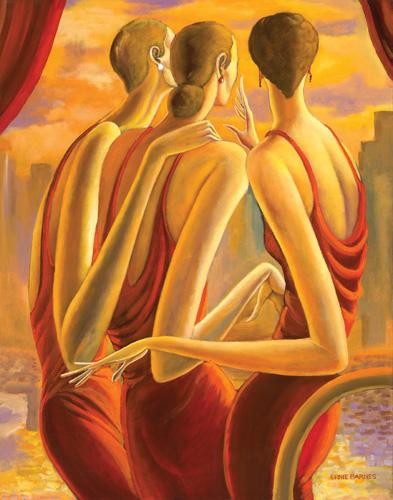
A painting by Ernie Barnes, The View, which showcases three African American women dressed in drapey formal dresses looking out at water and an urban skyline. The viewer only sees the women's elegant forms from behind as they are framed by red curtains. The palette is all golds and reds.
The View by Ernie Barnes

by Emily B.
Ernie Barnes was born in Durham, North Carolina in 1938, amidst harsh Jim Crow segregation laws. His love and appreciation for art was sparked at an early age. Young Barnes often accompanied his mother at work, where she oversaw the household of a prominent attorney. This early exposure to art proved to leave a lasting impact on Barnes.

Though art remained an important outlet throughout his early years, Barnes discovered a talent for football in high school. He attended college on an athletic scholarship (studying art, of course) and went on to play football professionally for five seasons. Much of his early work focused on his teammates. His athleticism had a marked influence on his art style, which was characterized by figures with closed eyes and elongated bodies. In an interview, Barnes recounted how a mentor told him “to pay attention to what my body felt like in movement. Within that elongation, there’s a feeling, an attitude and expression. I hate to think had I not played sports what my work would look like.”

After moving on from professional football, Barnes’ art became less sports-focused. He was often influenced and inspired by the communities and the people he interacted with most – ranging from depictions of Black Southern life (seen in pieces like Uptown Downtown and Each One, Teach One) to the Jewish community of Fairfax, California (seen in Sam & Sidney). Sugar Shack, far and away one of Barnes’ most popular paintings, has a storied history. The famous work, which depicts a jazz club packed with dancers, was painted in 1971 but reworked twice for famous clientele. First for use in the opening credits of Norman Lear’s Good Times and a second time to create a cover for Marvin Gaye’s album I Want You.

Though he passed in 2009, Barnes’ cultural impact lives on. His journey from a childhood in the Jim Crow-era south to becoming one of the first athletes with a celebrated career in art is impressive and inspiring. Several of Barnes’ paintings are available to borrow through the Art Education Collection at the Central and Glenwood Branches. Young readers may enjoy Between the Lines: How Ernie Barnes Went from the Football Field to the Art Gallery by Sandra Neil Wallace.

Emily is a Customer Service Specialist at the Central Branch. She enjoys reading, listening to music, and re-watching old seasons of Survivor.

I’m Waiting for You and Other Stories by Kim Bo-Young

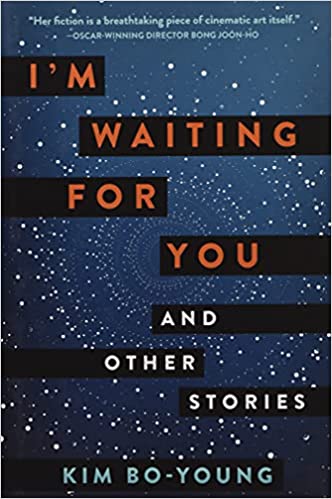
The book cover depicts a deep blue night sky with swirls of distant stars. The title is superimposed in orange and white lettering against strips of black, alternating the words in left and right alignment.

By Sahana C.

As a medium, science fiction has been a way to ask larger questions about what it means to live since Mary Shelley’s Frankenstein. Questions that are a bit too uncomfortable to ask in the context of real life without the buffer of aliens or mind-bending time travel, such as: who are we if we’re taken off of Earth? What does humanity look like broken down to our bare essentials and out of context?  

I’m Waiting for You and Other Stories by Kim Bo-Young follows the precedent set centuries ago, asking readers to consider what love looks like outside the bonds of time, where we can learn about free will, and how hope can manage to exist in the most devastating of circumstances.  

Originally published as three separate novellas, there is still so much overlap as the stories ask you to consider your own humanity. The first story, the eponymous “I’m Waiting for You,” is epistolary, told through letters from the point of view of a man writing to his fiancée as he tries to time his interstellar journey just right so that he will meet her at the church they decided upon in time for their wedding day. The unnamed main characters, through a comedy of errors and well-meaning but decidedly bad decisions, are left trying to catch up with one another as they fast-forward through time. He is increasingly isolated as he travels through time and space, but all the while it is his love of his fiancée that keeps him human.  

The second and third story are connected, “The Prophet of Corruption” with a soft multiverse-centric epilogue in “That One Life.”  The two stories follow god-like beings who experience a sort of reincarnation in order to learn more about their nature and the nature of the world, and who think of corruption as what happens when they are disconnected from the whole. The story reminded me at times of the short story “The Egg” by Andy Weir (who also wrote The Martian) with the ideas of reincarnation but made wholly new for the universe Kim Bo-Young manages to create. There were moments where I felt like I was floating outside of the narrative, but I was never far enough away to escape orbit – existential but not just for the sake of an “I’m-smarter-than-you, let’s see an audience try to puzzle this out” existentialism. It’s hard but worth it, thinking about our place in the world and what we mean to one another. 

The final story, “On My Way,” brings us full circle back to the couple from “I’m Waiting for You” and returns to the epistolary format established in the first story. We see the letters that the woman sent her fiancé this time around, and her interstellar travels have been completely different from his. The two are juxtaposed, not only by being from the perspective of a man versus a woman, but by the circumstances surrounding each protagonist. The former deals with the impact of isolation in times of despair while the latter considers group dynamics in times of disaster.  

The first and last story are about love beyond the bounds of time; what is it about us that makes us human? How far can we go before we lose our humanity? They consider the everlasting nature of hope, but manage to stay honest while avoiding any sort of cheesiness. They discuss what love looks like, with both protagonists making promises they aren’t sure the other person will ever get to hear, promising I will love you if we are the last people on Earth and out of all the people in the world, I chose you, over and over again.  

The first story, as Kim Bo-Young explains in the author’s notes at the end, was written as part of a proposal. It took me a while to understand how something that appeared so tragic would be the best way to propose marriage to a loved one; it feels so unanchored and dire at moments, but it is the fact that through it all, the protagonist is still there, persevering, forcing himself to survive, that shows the romance.  

It’s a translated work, which reinforces the idea that translation is an art form and a version of composition in and of itself – there are no stuttering moments that remind you that it is not originally written in English. In fact, I forgot until I read the end notes, emails between the author and the translator, context for the short stories, and the author’s motivations and original audiences. I might even recommend reading the notes before the stories themselves; I wish I had. 

I’m Waiting for You and Other Stories by Bo-Young Kim is available in print.

Sahana is an Instructor and Research Specialist at the Savage Branch. She enjoys adding books to her “want to read” list despite having a mountain of books waiting for her already.

Wintry & Wonderful Picture Books

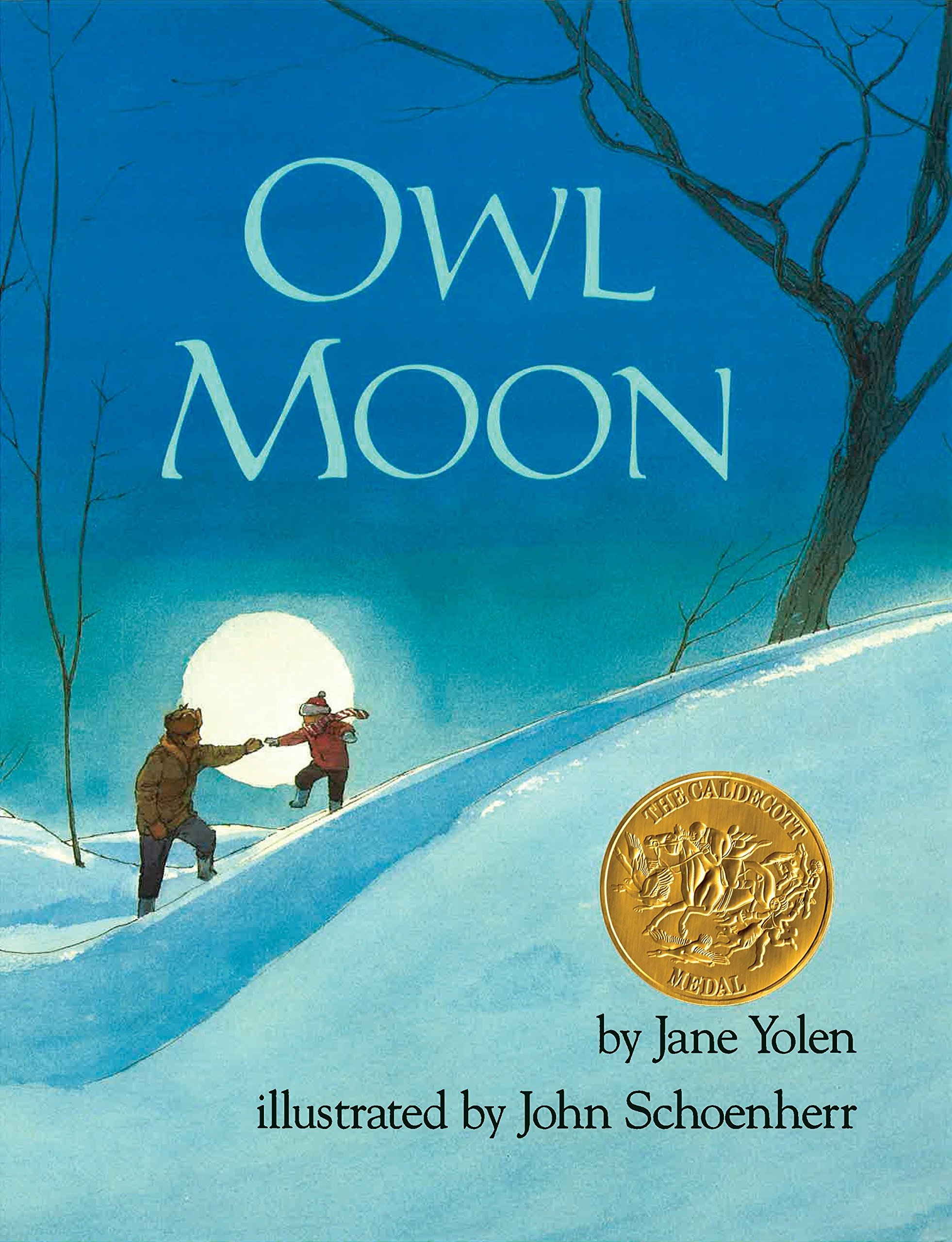
A simple illustration of a snowy hill with a bare tree, at the bottom a child and parent walk

by Eliana H.

I hope you have enjoyed our recent snow days and have stayed safe and warm. If there wasn’t enough snow for you, perhaps these titles will fill the gap. If you’d rather stay away from winter weather, curling up inside with a book is a great option for staying warm. Enjoy a sampling of some wintry and wonderful picture books to share with your family this season. If you’re looking for more options or hoping to find some cozy titles for more mature audiences, visit or call any of our branches and speak to a staff member. We will be happy to help you find the right title for you! 

Making a Friend by Tammi Sauer, illustrated by Alison Friend (ages 3-6) 

Despite his best efforts, Beaver has a hard time making friends. When the snow falls, it presents him with an opportunity to make a different kind of friend. Will Beaver be able to keep his friend when the snow melts? Use this story as a conversation starter with little ones about how to interact with peers and build friendships. 

Owl Moon by Jane Yolen, illustrated by John Schoenherr (ages 2-7) 

“When you go owling, you don’t need words.” In this strikingly illustrated, Caldecott-winning classic tale, a little girl goes out into a quiet, snowy night with her father to search for owls. The poetic story shows the bond between parent and child, and the special experiences that can strengthen it. It also demonstrates a connection to nature that deserves to be maintained.  

Rabbit’s Snow Dance by James & Joseph Bruchac, illustrated by Jeff Newman (ages 3-7) 

Expert storytelling father and son team James and Joseph Bruchac composed this retelling of a traditional Iroquois story, where readers meet a rabbit who looks different than what we are used to today. Young readers may be able to relate to Rabbit’s impatience, as he chants “I want it, I want it, I want it right now!” Although Rabbit gets what he wants, regardless of the needs of the other animals, the consequences help him learn to be more patient, and perhaps some readers will take the lesson to heart as well.  

Snow Much Fun!  by Nancy Siscoe, illustrated by Sabina Gibson (ages 4-7) 

Three friends are excited to enjoy a snow day! They each enjoy different activities, but they are willing to try something outside their comfort zone for their friends. The friends support each other in any struggles, and they find new joys as they explore. Photos of intricate textile and paper creations bring a whimsical, unique feel to this simple, rhyming tale. 

Thankful by Elaine Vickers, illustrated by Samantha Cotterill (ages 4-8) 

What are YOU thankful for? In this endearing book, a young child shares her family’s practice of making paper chains out of things they are thankful for. The narrator shares many things she is thankful for, throughout the year and in all different situations. As you enjoy the fun, detailed pictures of paper creations in the book, perhaps your family will be inspired to talk about where you find gratitude.  

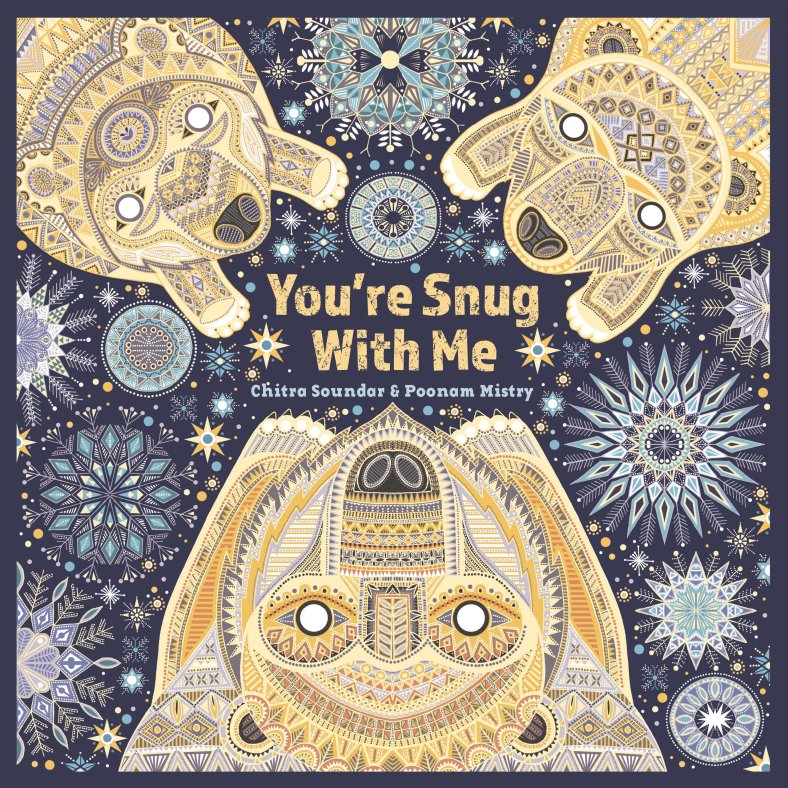
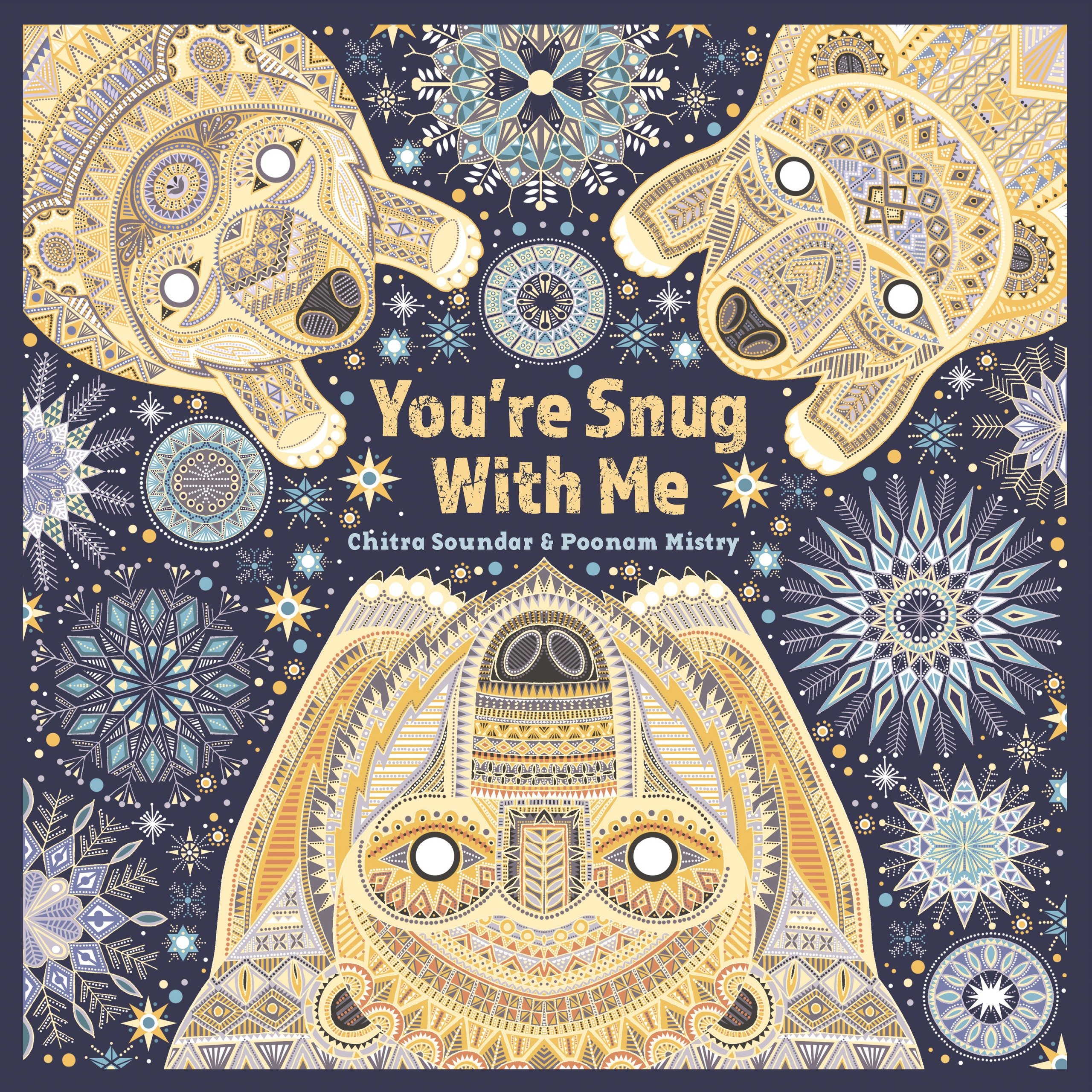
You’re Snug with Me by Chitra Soundar, illustrated by Poonam Mistry (ages 4-7) 

This book pairs ornately patterned illustrations with a mother polar bear’s reassurances to her two new cubs as they are born and begin to learn about the world around them. In the text, the author uses the mama bear to teach readers about the beauty and wonder of our polar lands. When her new cubs worry, she assures them each time, “You’re snug with me,” all the while gently encouraging readers to be good stewards of the earth. 

In shades of gold, blue and grey, snowflakes and bears composed of complicated patterns frame the title.

Eliana is a Children’s Research Specialist and Instructor at HCLS Elkridge Branch. She loves reading, even if she’s slow at it, and especially enjoys helping people find books that make them light up. She also loves being outside and spending time with friends and family (when it’s safe).

Foundation by Isaac Asimov

The black cover serves as a backdrop to delicate repeating patterns. A second white incomplete circular design on the bottom half draws your eye to a vanishing point.

By Ben H.

Foundation, the first book in Isaac Asimov’s Foundation series, is a sci-fi touchstone. I’m sure it’s been called a towering work of genius or a staggering work of brilliance. More importantly, it’s just been adapted for the small screen (I haven’t seen the show, but I’ve heard good things). The story’s three protagonists are a scientist, a politician, and a trader. Asimov explores big scientific, political, and economic ideas, and his protagonists give the reader a clue.

Asimov speculates that we will one day be able to predict the future using science. Psychohistory is born from the blending of (I bet you can guess) psychology and history. It’s used to predict the movements of large groups of people (the masses of humanity living their quietly desperate lives). We meet Hari Seldon, the most accomplished psychohistorian the galaxy has ever seen, on the planet of Trantor. Seldon tells Gaal Dornick, the scientist protagonist, that the current and seemingly stable galactic empire will fall and the galaxy will be plunged into thousands of years of chaos and barbarism. Seldon has a plan that, if executed properly, will save the galaxy thousands of years of chaos. Don’t get too attached to Gaal. Asimov moves through narrators pretty quickly. 

According to the plan, Seldon establishes the first Foundation on the remote planet Terminus. He tasks scientists and academics with compiling an encyclopedia of the galaxy’s vast knowledge. They attack their goal with fervor. Meanwhile, the rest of the galactic empire is resting on its laurels and starting to collapse. 

Fast forward a few decades and Salvador Hardin is the next narrator (the political narrator). Hardin is a very 60s sci-fi cool customer, space cowboy narrator. At this point Seldon reappears as a hologram (being dead) to provide hints or tips to keep the galaxy moving in the right direction, according to his plan. Hardin, the mayor of the planet Terminus, helps the planet through the first Seldon crisis, which is a time identified as a key turning point in the future of the galaxy. Each crisis must happen a certain way for the plan to be successful. 

The last narrator is Hober Mallow, a trader working for The Foundation. At this point, The Foundation produces technological marvels that they trade to the surrounding planets. Most traders spread the religion Hardin created and tied to The Foundation’s technology to new planets. The new planets buy the technology, sometimes accept the new religion, and become regular customers. The traders make money and the surrounding planets become dependent on The Foundation. 

Foundation is full of big ideas. Bloated bureaucracies, social elites, centralized governments, hyper-specialized professionals, cynical capitalists, zealous religious fanatics, and downtrodden regular folk populate the pages. It’s a thought-provoking story of the collapse of an empire.

Foundation is also available from HCLS in eBook and eAudiobook format from Libby.

Ben Hamilton works at Project Literacy, Howard County Library’s adult basic education initiative, based at HCLS Central Branch. He loves reading, writing, walking, and talking (all the basics).

Book Discussion: Night by Elie Wiesel

The cover of the book shows a hazy, abstract blue-grey background, with the author's name and "Winner of the Nobel Peace Prize" on a beige field in the middle, with a strand of barbed wire running between.

by Rabbi Fuller

Elie Wiesel was a Holocaust survivor in addition to a prolific author and Nobel laureate. Reading Night for the second time (I first read it many moons ago when I was in college) reminded me both of the horrific things he and his fellow prisoners suffered at the hands of the Nazis during World War II, and of that lesson from The Skeptics’ Guide to the Universe. How much of Wiesel’s memoir could I trust? I learned from reading The Skeptics’ Guide to the Universe that everyone’s memory of events is imperfect. How does that help or hinder us from learning about a Nobel Prize winner and human rights advocate’s experience when we read his first book, Night

As we just recently passed the 80th anniversary of America’s entrance into that war on December 7, 1941, we are closer and closer to the time when no eyewitnesses to the Holocaust will be alive anymore. Thankfully, there is now an entire genre of books detailing and remembering the experiences of many survivors of the Holocaust. Though the stories are all different, the one theme that comes through almost all of them is the incomprehensible brutality and inhumanity the Germans perpetrated on 6 million Jews simply because they were Jewish, and countless others for being gay, Roma, communists, or anything else the Nazis didn’t like. 

Night is a symbol of all the darkness that the victims of the Holocaust felt. The fear, the hunger, the horrid conditions, the not knowing what any minute or hour or day might bring. The lack of hope, and the lack of trust even in your fellow prisoners. In some ways, it’s amazing that any of them survived. 

But in Wiesel’s life, I think that Night represents something else as well – his doubt of his faith. Wiesel makes it clear that he grew up as a religious Jew in Sighet, Romania, and that family and religion were two of the most important things to him. Yet as he witnessed the Holocaust, his faith began to leave him. Those who are avid fans of his writings will find these struggles throughout many of his books, and how he resolves it as well. But in Night, he makes clear how his faith is failing in a particularly gruesome scene. The Nazis have just hanged three victims, one of them just a boy (for those of you who wonder why, does it matter? That’s the kind of “night” all the prisoners had to deal with). The two older men die quickly from asphyxiation, but the boy, who doesn’t weigh much, dangles from his noose for a while before finally succumbing. Wiesel reports, “Behind me, I heard the same man asking “For God’s sake, where is God?” And from within me, I heard a voice answer: “Where is He? This is where – hanging here from this gallows…” 

After working through his theological crisis, Wiesel went on to become a professor, a father, and a strong voice and advocate for human rights everywhere. That’s what earned him the Nobel Peace Prize in 1986, “for being a messenger to mankind: his message is one of peace, atonement and dignity.” The lesson we should all take from this is that no matter the hardships we may face, or how palpable the darkness we feel may seem, we can overcome and do great things with our lives. 

Holocaust Remembrance Day Book Group is discussing Night by Elie Wiesel, with the conversation led by Rabbi Fuller. Join us online January 27 at 6:30 pm. Register.

Rabbi Gordon Fuller is an independently ordained rabbi who grew up in Detroit but has lived in many other places. He moved to Columbia, MD in 2015 to be near children and grandchildren.

Rabbi Gordy worked in Jewish education for 20+ years before being ordained and has co-authored two books. He is as passionate about pluralism and the environment as he is about his family and the Jewish peoplehood.

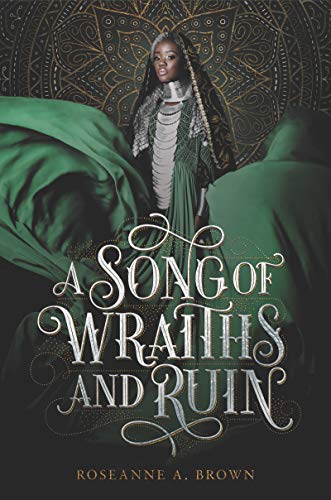
A Song of Wraiths and Ruin by Roseanne Brown

A regal young Black woman with long braids stands in front of a patterned wallwith swaths of green fabric swirling around her.

by Eliana, teen volunteer at HCLS Savage Branch

In true Eliana fashion, I started to blitz through this title as an audiobook. I had to ask my librarian friend, Sarah, “Is it just me or are these characters just the most emotionally stunted dolts I have ever not actually come across?” I love them so much, they make me want to tear my hair out.

Along with the engaging characters, Roseanne A. Brown does an excellent job incorporating African culture into this novel, described on the book jacket as, “The first in a gripping fantasy duology inspired by West African folklore in which a grieving crown princess and a desperate refugee find themselves on a collision course to murder each other despite their growing attraction.” The setting has quiet elements of West African culture, the furnishings, the clothes, the streets, even the characters’ hair.

My favorite part was the hair routine Karina’s maid does with her. Shea butter and the other oils along with twisting are, in fact, accurate to curly hair. It’s part of why I haven’t been braiding my hair so often. My curls look much lovelier when out of their braids. My family is Puerto Rican, and although Puerto Rico takes a fair amount of influence from African cultures, there are also Taino and Spanish influences there as well.

Back to the book: Karina has all the qualities of a good queen, she just needs time to heal and properly grieve her mother (the previous queen). Outside of the eyes of the courtiers, Karina is surrounded by the love of her family and friends, but she’s closed herself off from them. With the way Karina’s trajectory is headed, Karina may completely alienate everyone around her before something happens to shatter her worldview and push her into regaining allies. There is a notable difference between the Karina who does whatever she can to avoid hosting the Solstacia Festival and the Karina who fights tooth and nail to fulfill her duties as a new queen.

Karina is something of a tempest. For much of the novel, she is insecure, grieving, and constantly worried about whether she’s a good enough ruler. She *worries* about her fitness to lead and actively tries to remove the person she deems to be an unfit ruler (herself) from succession. Heck! The whole reason she even gets into reviving her deceased mother is that she believes her kingdom would be better with her mother’s leadership!

Her opposite in the story is Malik, a child who has seen the absolute worst humanity has to offer. His own family and village were horrible to him. The world sees him and his people as awful. And yet he cares. He cares *so much.* He worries about both of his sisters. He pays attention to the servants and even worries for Karina, a person who he is actively trying to kill, when he overhears how the court lambasts her for needing a day to recover from an attempt on her life.

I’m still listening to the book, so I wonder if there is a reason Malik’s people are oppressed like they are. I know that in the real world, oppression often has no tangible reason. In most fantasy media I have interacted with, the oppression is typically caused by some ancient bad-blood event. I appreciate the author’s sensitive and visceral depiction of anxiety and panic attacks, which didn’t trigger one of my own. I like that she included coping strategies. Somewhere out there, a reader will see Malik thinking of his lemon tree and adopt a similar strategy.

One last note to my friend Sarah: I feel like am a parent now. I want to wrap Malik and Karina up in my arms, tell them that everything is okay. I wanna whack them upside the head and ask them, “What were you thinking?!” (affectionately) Are you happy, Sarah? You have ruined me. Everyone should read this book.

Meet the author Roseanne Brown at HCLS Savage Branch (or attend online) on Tuesday, January 25 at 6 pm. Register here. Thirty attendees will be randomly selected to receive a free copy of A Song of Wraiths and Ruins. 

Fifteen Hundred Miles from the Sun by Jonny Garza Villa

The book cover shows a young man on the left, holding a soccer ball behind a net and looking at his cell phone, and a young man on the right in a maroon and white hoodie with his hands in his pockets. Between them is an isolated image of two hands clasping. There is a pink and peach-colored bright but cloudy sky in the background, and the title lettering is in teal green.

By Sahana C.

TW: Parental abuse & abandonment, homophobia & homophobic slurs, bullying 

In Fifteen Hundred Miles from the Sun, Julián Luna is determined to make the most of his senior year of high school. He has plans on how he’ll make that happen: spending as much time as possible with his best friends, playing soccer, graduating, getting into UCLA, and, oh – making sure no one finds out that he’s gay. Especially not his father. But despite this secret he’s keeping, he manages to make the most of things, spending time with his tight-knit friend group. Until, of course, one day, just scrolling through Twitter, he sees pictures of a boy. Immediately, there’s a connection, and when they start texting and speaking more, Julián finds himself falling for the boy, Mat. The issue, then? Well, other than the fact that Julián isn’t out, he’s also in Corpus Christi, Texas, and Mat lives in Los Angeles. Despite the distance, the two boys start learning about each other, falling for each other, and hoping for a future together. But time, distance, and unplanned coming-outs get in the way.  

Garza Villa is honest about hardship from the start of the book, even writing in the dedication ““To all the queer brown boys still waiting for their chance to bloom. Quisieron enterrarnos, pero no sabían que éramos semillas.” They want to bury us, but they don’t know that we are seeds. That thread flows through the novel, including candid conversations about machismo in Latinx culture, religion’s intersection with homophobia, and conversations about bullying. And yet, despite the list of trigger warnings at the top of this review, the novel is intentionally not centering trauma in Julián’s life. Every moment of pain is followed by immediate love, support, and care. Garza Villa takes pains to ensure that joy is the central theme around which the rest of the story is built; of course Julián faces hardship, but he is never truly alone in how he responds to those traumatic moments. The idea presented in the dedication, “we are seeds”, is exactly how Julián responds to all the hardships in his life. He was buried deep, and with careful nurture, love, and support from his family and friends, he manages to bloom into something beautiful and loving, breaking the cycle of abuse.  

This book was wonderfully illustrative. I lost myself in Julián’s friend group, found myself falling in love with Mat along with Julián, and waiting with bated breath for college acceptance letters. But most significantly, I was swept up in a celebration of culture, cuisine, friendship, and queer joy. There is real heart here; Garza Villa paints an honest picture of the ways falling in love and doing long distance just as easily as he manages to bring to life all of the different characters that make up Julián’s friend group, who each are so vivacious and full of life without becoming caricatures.  

This book is perfect for any teens looking to find themselves, or adults who know that the blooming never stops. That if we are seeds, we will continue to grow, season after season.

Sahana is an Instructor and Research Specialist at the Savage Branch. She enjoys adding books to her “want to read” list despite having a mountain of books waiting for her already.

A Conversation & Cooking Demo with Author Laila El-Haddad

The cover of The Gaza Kitchen is a full cover photograph of a wide variety of food, including a whole fish, rice, and hummus.

by Kristen B.

Author and Journalist Laila El-Haddad discusses the history of spices and cuisine from the Middle East and demonstrates some of her recipes in this special virtual event on January 20.

Her book is extraordinary, clearly a labor of love. She talks about living and political conditions in Gaza, while also providing recipes for standard and special dishes of the region. She explains the regional pantry of ingredients and various techniques. I learned that the flavors that separate Gazan cuisine from other Palestinian cooking are hot chilies and dill. I can’t wait to try a couple of recipes (although my family has a notoriously low tolerance for heat), especially for various kebabs.

My favorite parts, though, are the abundance of photography and the personal interviews. This book is simply stuffed full of pictures: food and preparation steps, sure, but also portraits and places. It’s like taking a tour! And El-Haddad included these wonderful side-bar individual interviews, mostly with women and some local farmers. They give such a revealing glimpse into the lives of ordinary Gazan people. My favorite was with one woman, Um Sultan, who was less than happy that her routine, easy kufta recipe was to be included. Who wants to be to be singled out for their good, plain cooking as opposed to something more complicated and impressive? I learned a lot, but mostly was reminded of the power of food to cross barriers and bring people together to enjoy a good meal.

The Fertile Crescent region—the swath of land comprising a vast portion of today’s Middle East—has long been regarded as pivotal to the rise of civilization. Alongside the story of human development, innovation, and progress, there is a culinary tradition of equal richness and importance. The book includes a quote from Anthony Bourdain on the cover:

“An important book on an egregiously underappreciated, under-reported area of gastronomy. This is old school in the best possible meaning of the word.”

Laila El-Haddad is an award-winning Palestinian-American author and journalist.  She frequently speaks on the situation in Gaza, the intersection of food and politics, and contemporary Islam.  She has written for numerous newspapers and magazines, including the Baltimore Sun, the Washington Post, the Guardian and the International Herald Tribune and has appeared on many international broadcasting networks, including NPR, CNN, Al Jazeera, and CCTV.

She is the author of Gaza Mom: Palestine, Politics, Parenting, and Everything In Between and, co-author of the critically acclaimed The Gaza Kitchen: A Palestinian Culinary Journey, which was the recipient of the ‘Best Arab Cuisine Book’ award from Gourmand magazine, and a finalist at the 2013 MEMO Palestine Book Awards.  She is also the co-editor of the anthology Gaza Unsilenced and contributor to The Immigrant Cookbook: Recipes that Make America Great.  Her forthcoming book, Halal Tayyib: A Muslim American Culinary Journey, explores the history of Islam in America as told through food.  An avid gardener and outdoor enthusiast, she makes her home in Howard County, MD with her husband and their four children.

Thursday, January 20 at 7 pm, online. Please register here.

Sponsored by Muslim Family Center – Howard County, MD and RIVUS Consulting, Howard County, MD