Listening List: Six Nonfiction Titles with Great Audiobooks

by Rebecca W.

A plain blue-green background shows golden cracks, which frame the text "Know My Name: A memoir. Chanel Miller. Read by Author"

Know My Name by Chanel Miller
Read by the author
Available through: Overdrive/Libby

In 2018, a victim impact statement, written by “Emily Doe”, was posted on Buzzfeed where it instantly went viral. Chanel Miller wrote the statement during the sexual assault case against Brock Turner. Turner, found guilty of sexually assaulting Miller on Stanford’s campus, was sentenced to only six-months in county prison. In her book, Know My Name, Miller claims authorship of the impact statement and expands on the experience of sexual assault and navigating our justice system.

Why choose the audiobook?

In a review of the book in The Atlantic, Megan Garber wrote a statement that resonates with my experience reading this book; “Know My Name is difficult to read in part because it is beautiful to read.” Miller uses her talent as a writer to show the reader her feelings, her reactions, and her experiences during the aftermath of the assault. From the title the reader is introduced to a major theme of this book, authorship and identity. For me, listening to Miller read this book added to the meaning of that theme.
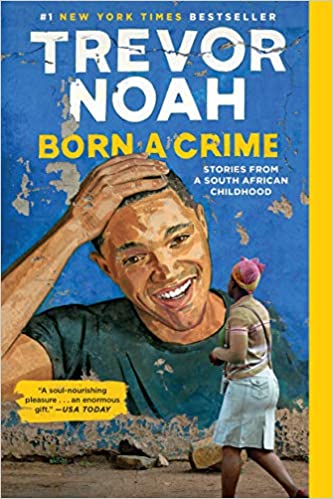
A woamn walks past a wall painted with an image of the author against a blue background.

Born a Crime by Trevor Noah
Read by the author
Available through: Audiobook on CD

Daily Show host Trevor Noah recounts his childhood growing up in South Africa during apartheid, then post-apartheid. Born in 1984 to a black Xhosa mother and a white Swiss-German father, Noah’s conception was in violation of a number of laws at the time, giving name to his memoir’s title Born a Crime. While this book is wholly focused on Noah’s experience growing up in South Africa, it is also largely about the close relationship between him and his mother, Patricia Nombuyiselo.

Why choose the audiobook?

If you’re like me and have fully embraced the internet age, you may have seen “CD only” and already moved onto the next item on the list. But I’m telling you, it’s worth it. Simply put, Noah made a name for himself as a comedian. He not only brought this background into the writing of this book, but the narration. If you could even call it narration. I would say it’s more of an all-out performance. So, see if you can find that CD player in your car and check this one out, it’s a must-listen.

You see a large sharp wooden paencil, where the colors also create an image of a figure silhouetted in mountains.

Educated by Tara Westover
Read by the author
Available through: Overdrive/Libby, Cloud Library, Audiobook on CD

In her memoir, Tara Westover recounts her journey from childhood, the youngest of seven children raised by survivalist parents, to a Ph.D. candidate at Cambridge University. Growing up in southeastern Idaho, Tara’s world was built around extreme political views, religious ideology, and physical violence. Lacking any formal education, Westover was seventeen the first time she stepped into a classroom. While attending college, Westover studied history where she learned, for the first time, of events such as the Holocaust and the Civil Rights movement. Throughout her book, Westover examines the relationships between her upbringing and family, and her growing perspective achieved through education.

Why choose the audiobook?

I am sure there are a good chunk of you who have already read Educated. But if you are one of the lucky few who haven’t, you should absolutely pick up the audiobook. Simply put, Westover is not only a remarkable writer, but a talented speaker. While the story she tells is full of extremist ideology and paranoia-fueled thought patterns, Westover reads her memoir with a calmness and clarity that highlights the themes of learning and perspective found throughout her book.

A small figure pushes a large peach up a steep black slope. The background is a pale peach and the river and hillsides are in grey

Eat a Peach by David Chang
Read by the author
Available through: OverDrive/Libby

David Chang, professional/celebrity chef and owner of the popular restaurant Momufuku (among many more), set out to write a book about the business of cooking, and maybe throw in a recipe or two. Well, this is not that book. Though he may have fought it, this is a memoir; covering Chang’s rise to fame, his Asian-American identity, and his experience with bi-polar disorder. Chang shares his triumphs as a chef in a way that entangles all three of these areas, telling the good, the not-so-good, and the regrettable. But don’t worry, you still get to hear all about some delicious food.

Why choose the audiobook?

Okay, you’ve probably caught on to my formula by now: memoir + read by the author = going on the list. What can I say. When you have an author that can read their own work (and that is not always the case) it just works so well! Chang’s reading of this book is so conversational, full of honesty, humor, and not-so-occasional swearing.
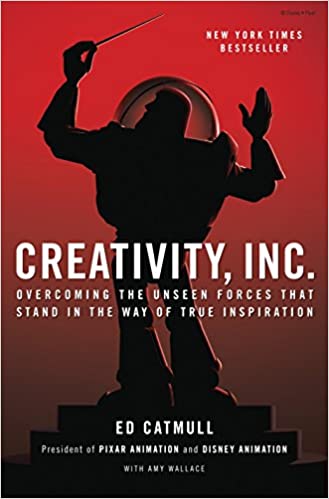
The silhouette of Buzz Lightyear is rim lighted against a red background. He has a conducting baton in his right hand.

Creativity, Inc.: Overcoming the Unseen Forces that Stand in the Way of True Inspiration by Ed Catmull with Amy Wallace
Read by: Peter Altschuler
Available through: Overdrive/Libby, Audiobook on CD

If you’re thinking the only reason this book made the list is because I am a huge fan of Pixar… well you’re not totally wrong. But the main reason I recommend this book is how well author Ed Catmull, co-founder of Pixar Animation Studios, communicates his core message of how to balance creativity and business. In the book, Catmull chronicles his journey from a computer science student to creating the first computer-animated feature film, and the success that followed. In each stage of Pixar’s journey Catmull explains how he was able to manage a team effectively, and sometimes not effectively, while fueling their creativity. Now I know what you’re thinking, how hard can it be to spark creativity in an animation studio? But when you really look at the process of animation, there is a lot of repetitive, monotonous work… seeing any similarities to other jobs out there? I really enjoyed hearing how Catmull identifies creative drain and the steps he takes to work through it.

Why choose the audiobook?

With this story being largely a Pixar story, I was expecting a tone fitting to the brand. Altschuler delivered. The narration of this book hit the same notes of inspiration and excitement that are characteristic of Pixar’s animations, making Altschuler’s narration one of the most enjoyable aspects of the book.
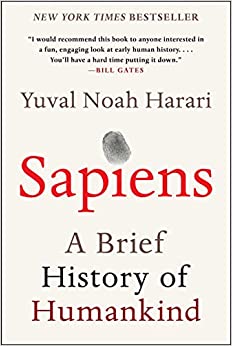
A beige cover features a smudged fingerprint dotting the "i" in Sapiens.

Sapiens: A Brief History of Humankind by Yuval Noah Harari
Read by: Derek Perkins
Available through: Overdrive/Libby, Audiobook on CD

Can you fit the entirety of human history into 15 hours? Well, no. But Yuval Noah Harari does a pretty good job at summarizing it in his book, Sapiens: A Brief History of Humankind. Breaking his book into three main revolutions (cognitive, agricultural, and scientific), Harari spans the entirety of homo sapiens’ existence, looking at it through a historical, biological, and, at times, philosophical lens. Harari begins his book about 70,000 years ago and ends in modern day – predicting what will become of the last human species. While I really enjoyed Harari’s take on this subject, I will preface this suggestion with the fact that the author does make some large generalizations in this book. If a particular subject in this book sparks your interest, I highly suggest looking deeper into it. Again, the entirety of human history in one book is a tall order, but Sapiens is a fantastic jumping-off point.

Why choose the audiobook?

If you haven’t already noticed, the majority of this list is made up of biographical works. I tend to lean this way when choosing nonfiction books to listen to because their storytelling structure usually translates to great audio. However, I really wanted to get my hands on this book and the hold list for the audiobook was shorter (who else has been there?). Though it wasn’t my first choice, I really enjoyed the audio version. When I first started it, I found myself missing the ability to re-read that traditional book format allows. However, once I accepted the fact that I wouldn’t be turning back any pages, I found the book really enjoyable. The writing does an excellent job at allowing the reader to absorb a lot of information, while still maintaining an easy-to-follow structure. So, if you are looking for an audiobook, but are more interested in the give-the-facts-and-figures type of book, Sapiens would be a great one to try.

Becky is an Adult Instructor and Research Specialist at the HCLS East Columbia Branch who enjoys art and everything science.
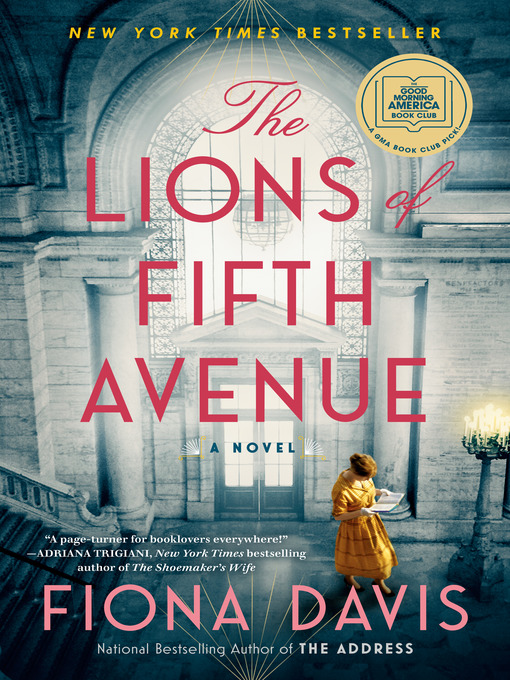
Home is Where the Library Is: The Lions of Fifth Avenue by Fiona Davis

A woman dressed in a bright yellow dress walks while reading through a grand lobby with well-lit doors and windows behind her.

by Cherise T.

I have a favorite photo of my kids where my son is wearing his baseball cap backwards and my daughter is wearing a poncho as a skirt. Today, my son’s visors often still point in reverse and my daughter never misses the opportunity to transform an article of clothing into something original and extraordinary. 

Where, you ask, was this photo taken? In front of the New York Public Library, the revered Fifth Avenue building guarded by two marble lions. A library with an eight-room apartment on the mezzanine.

Having never read a novel by the popular historical fiction author Fiona Davis, I was attracted to the plotline of The Lions of Fifth Avenue, not only because of my love for libraries but because I have entertained the fantasy of enjoying unlimited access to stacks and stacks of books. Deep, dark stacks with first editions and handwritten notes by famous authors. One of my favorite books in the HCLS collection is The Gorgeous Nothings: Emily Dickinson’s Envelope Poems because I can sink into Dickinson’s creative process and believe, for phrases at a time, that I am sharing a word journey into an otherwise fathomless mind. 

Told through the dual lenses of 1993 and 1913-18, The Lions of Fifth Avenue reads both as historical fiction and mystery. The plot weaves the interconnected stories of a family with a deep multigenerational connection to the New York Public Library. In 1993, Sadie Donovan strives for an ever more significant leadership role as an NYPL librarian and curator. In 1913, Sadie’s grandmother, Laura Lyons, aspires to be a journalist in a society where women’s professional opportunities were limited. Whereas Sadie works at the NYPL, Laura actually lives there in the apartment reserved for the family of the superintendent of the NYPL, who happens to be Laura’s husband, Jack. Laura and Jack live in the apartment with their children, Henry and Pearl. Both Sadie and Laura walk up the same steps and pass the same stone lions, and they face parallel hurdles in their careers and their romantic relationships. They share devotion to family and an insatiable attraction to investigation and knowledge. And Sadie and Laura contend with the theft of treasured library materials, setting them up as witnesses and suspects. 

Although the protagonists of the novel are fictional, the framework has historical roots. At one time, NYPL superintendents resided in the library, and the first superintendent who lived in the Fifth Avenue building raised children there. True as well is the unfortunate fact that rare books have been stolen from the library over the years. Fascinated by NY’s architectural landmarks, Davis writes novels revolving around different city buildings including the Barbizon Hotel, Dakota apartments, Chelsea Holtel, and Grand Central Terminal. Her writing has a real feel for New York City, and the plot twists in The Lions of Fifth Avenue make it a page turner. Climb the stairs between the lions, settle in to live in a library for a bit, and see if you can solve a few mysteries. 

Cherise Tasker is an Adult Instructor and Research Specialist at the Central Branch. When not immersed in literary fiction, Cherise can be found singing along to musical theater soundtracks. 

Scythe by Neal Shusterman

The cover depicts a figure in profile against a red and white background, wearing a windswept red hooded robe and carrying a black scythe.

By Gabriela P.

Scythe is the first installment in Neal Shusterman’s YA trilogy. The novel is set in a fictional near-future dystopian society where immortality is the default. An all-seeing and almost all-powerful AI system has everything figured out; there is no starvation, poverty, pain, or sickness. Of course, along with age-resetting tech, this means no death. However, in order to control the risk of overpopulation, the position of “Scythe” was created. With no AI interference permitted, “Scythes” are chosen individuals responsible for death-dealing, or “gleaning”. But is it truly in the interest of the greater good? After all, we’re all only human. 

The novel follows Citra Terranova and Rowan Damisch, two teenage apprentices who find themselves grappling with being in the Scythedom, their position being one with the highest honor, and the highest burden. Within the system, politics, morality, and reasoning stand at odds. It’s not so simple as right or wrong, good or evil. Citra and Rowan may be protagonists, but are they heroes?

Admittedly, the novel’s macabre plot may be off-putting at first, but Shusterman boldly handles its darker themes with delicacy, and fills the story with endearing moments of humor and vulnerability. Readers are given the opportunity to bond with characters as they learn their strengths and faults, all while following the novel’s underlying question; what life is without death, and what gives us meaning.

Scythe is a fantastic novel with plenty to discuss. Never a dull moment, its real world parallels make it a great read for older YA readers and adults alike.

Scythe is available as a print book. an audiobook on CD, and an eBook on Libby/OverDrive. 

Gabriela is a customer service specialist at the Miller Branch. She loves long walks, reading with her dog, and a good cup of coffee.

Native American Heritage Month: Beauty and Sadness

The book cover depicts two feathers facing in opposite directions, sketched in brown ink against a bright orange background, with the title in yellow lettering.

By Eric L.

Native American Heritage Month is almost finished for this year, but you are free to let it go a little longer into December and check out some great related works of art from the library, including the distinguished debut novel by Cheyenne and Arapaho writer Tommy Orange and a modern classic from director Terrence Malick.

There There by Tommy Orange (available in a variety of formats) is not a traditional novel, in that many of the characters don’t interact with one another, nor is it a traditional collection of short stories. Each chapter is a deep character profile explicated from the character’s perspective and written in a small amount of space. There There is beautifully crafted, in my humble opinion, with these very short, somewhat disconnected chapters from a variety of characters’ points of view not being an easy way to tell a story. However, it works really well and I recommend reading it. 

The characters are Native American, or part, in ancestry. Although the larger narrative is about the experience of individual characters, the connecting plot device is an upcoming powwow at the Oakland Coliseum. Some plan to attend, some plan to dance in the ceremony, some are organizing it, others are working on grant-funded projects related to Native Americans, and some plan to rob it. 

I could broadly say that the book talks about identity, or the loss of identity and the confusion experienced by some urban Native Americans. I recall a friend telling me that There There is sad, and to be sure, it is; however, the stories are powerful, engaging, and beautifully written. In other words, it’s not a feel-good read, and it’s tough sometimes. 

Most of the younger characters feel confused and/or apathetic about being Native American in modern America. They’ve not lived, or their parents did not live, on the “rez,” as they call it. I think what makes this a great book is that it doesn’t so much concern the facts of the past, but rather their impact on the present. This is a very interesting and apropos topic in America right now, as some say we need to forget the past and move forward. I’d contend this may be easier for some than others. And perhaps a better understanding of how the past effects the present could benefit all of us. Prior to one part of the book Orange uses the profound James Baldwin quote, “People are trapped in history and history is trapped in them.” 

I did learn some things about modern Native American history – for example, the red power movement and the occupation of Alcatraz Island. The occupation is an interesting moment in the recent past, and illustrative of Orange’s larger commentary about people’s place within America. 

One character has an interaction with a woman on public transportation in Oakland while he is in full dancing regalia on his way to the powwow. She asks him some innocuous polite questions, and he responds in part that he is going to a powwow at the Oakland Coliseum and that she should come check it out. He thinks to himself that she can now tell the story later over dinner about how she saw and spoke with a real Indian on the train today, and that that is as close as most Americans would like to get. 

Margaret Atwood called it “an astonishing debut.” And until I read this praise, I was not aware it was a debut, because it’s that good. I concur with Atwood’s opinion, and it makes me excited for his future books. 

This work brought to mind the film The New World on Kanopy, which if There There concerns the now, then the movie depicts colonial America and indigenous people. I’m a fan of the director Terrence Malick’s films. He makes impressionistic films, and although this may sound pretentious, simply put, it contains beautiful cinematography (mostly nature shots) and sparse dialogue. The Thin Red Line and The Tree of Life, Malick’s popular and award-winning films starring Sean Penn and a bevy of other great actors, are also great (you can borrow these in DVD format). 

The New World concerns the arrival of the English and the settlement of the colony in Jamestown, Virginia. The cast features terrific actors (Colin Farrell, Christian Bale, Q’orianka Kilcher, and Christopher Plummer). It was filmed in Virginia, and Malick employed academics to recreate the villages and the extinct Powhatan language and used native actors. The film is partially based on John Smith’s account of Pocahantas, the verity of which is a bit suspect. Nevertheless, it succeeds in depicting very different groups with clashing motivations, and it’s visually stunning. 

In sum, both these works are beautiful AND sad.

Eric is a DIY Instructor and Research Specialist at the Elkridge branch. He enjoys reading, films, music, doing nearly anything outside, and people.


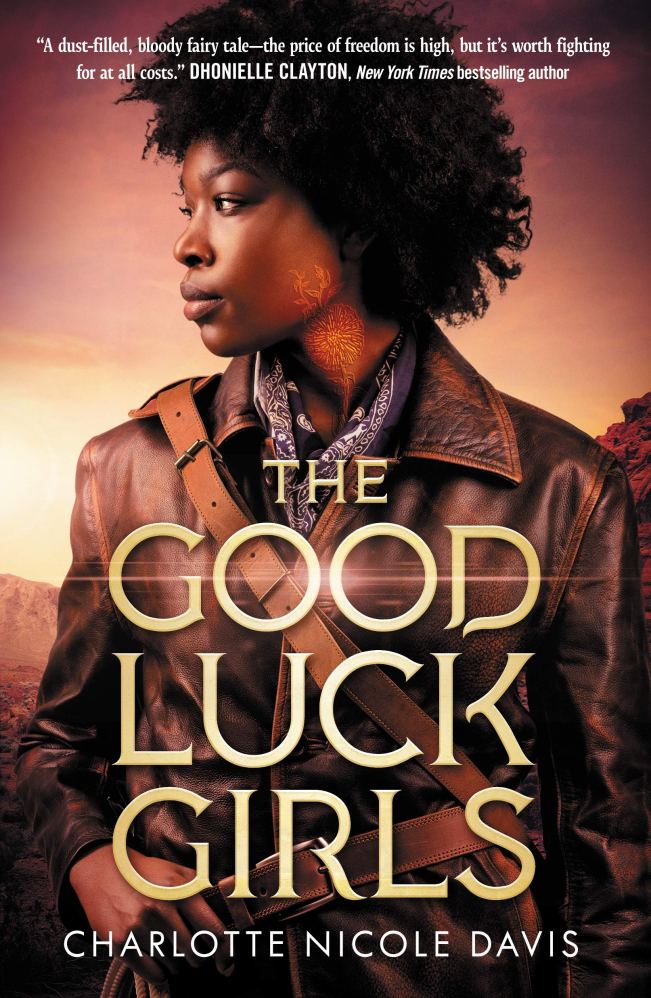
The Good Luck Girls by Charlotte Nicole Davis

The cover shows a young Black woman looking to the left, dressed for the trail in a leather coat and a strap for a bag across her chest. She has a floral tattoo on the side of her neck.

by Kristen B.

The Good Luck Girls is a flat-out running adventure of escape and escapade, complete with undead monsters, bank robberies, and a secret rebel base. In the country of Arketta, good luck girls are sold to “welcome houses” as children, basically into indentured servitude where they start as housemaids until they graduate to serving customers more personally. The male patrons of welcome houses are called “brags” by the women who work there. This book is filled with so many smart details that make it real.

Favors are the magical tattoos that mark the girls’ throats and match their names, which cannot be removed or covered without dire consequences. The girls in this story will do almost anything to remove those favors and be free of the welcome house. Meet the girls:

Aster, the protector, is the big sister and the one who has gumption to say, “time to go, girls.”

Violet, the favorite and the survivor who may have regrets, also has the secret information to get everyone to safety.

Tansy, the herbalist and medic, is the heart of the bunch who keeps everyone pointed in the same direction.

Mallow, the fighter, meets life with fists up but learns the hard way how to pick which fights are worth having.

Clementine, the catalyst and Aster’s younger sister, has a catastrophic Lucky Night and becomes the reason this group of girls flees into the wilderness. She wants so much more from life than a Welcome House can offer.

After Clementine’s debut ends with a very important brag dead in her bed, the girls figure out how make an escape, heading North to freedom. The girls follow clues from the story of Lady Ghost passed from good luck girl to good luck girl, but no one knows the truth – although Violet claims to have special knowledge. They discover a male guide to take them through rough country, who brings all the usual complications. He is also looking for redemption and a new life, and makes the difference for surviving in the deep wilderness. The group learns to rely on and (maybe even a little bit) love each other like family.

There are some solid themes underlying all the fun, including gender and race issues. These young women demonstrate their abilities to do what’s necessary to achieve their goals, despite physical and emotional trauma. As they reclaim their identities and their independence, questions arise about who the law protects and serves and when a little rebellion is a good thing. Honestly, I rooted for the girls during their first bank heist … even if it’s a crime.

I gulped this book down over one weekend. I can’t wait to see what these girls do next as I am pretty sure that each one of them is entirely capable of making her own good luck.

The Good Luck Girls is available in traditional print, book on CD, and as an eBook.

Kristen B. is a devoted bookworm lucky enough to work as the graphic designer for HCLS. She likes to read, stitch, and take walks in the park.

Witch Hat Atelier

Cat lies next to a copy of Witch Hat Atelier and other manga books. Cover shoes a young girl with blonde hair with blue witch robes flying around her, wearing a large conical hat with a tassel.

by Eliana, a teen volunteer at Savage Branch

Witch Hat Atelier by Kamome Shirahama boasts magnificent artwork, a lively world, and a complex cast of characters. It is classified as shounen (for teen boys) but is friendly for all demographics. The adult cast also actively works to protect and care for the child cast, something seldom seen in shounen and young adult media due to the limitations adults can sometimes pose in a story. Shirahama typically frames her arcs across two volumes, so I suggest reading two at a time.

In Volume 1, our main character, Coco, is the daughter of a seamstress out in the countryside. The people of this world use inventions made by witches – such as a spring of water that cleans itself after every use or cobblestone pathways that glow when you step on them – in their day to day lives. Having seen all of these inventions, Coco wishes dearly for magic.

After a series of unfortunate events, Coco is orphaned and initiated as a student of Qifrey’s atelier. Volume 1 follows Coco’s initiation and journey into the magical world.

A BRIEF INTRODUCTION TO THE GIRLS
Coco is the main character. She is also unfamiliar with much of the magical community, its history, and its customs. From a technical standpoint, Coco is a vehicle what allows the mangaka to explain her world. We learn about the setting as Coco does. From a narrative standpoint, Coco’s newness to the world around her means that she brings fresh ideas and solutions to the table. Since she knows only a handful of basic spells, she must use them creatively. One early example is her solution to the first test, retrieving a rare herb from the top of a series of floating mountains.

Aggot is a ambitious student. She practices day in and day out. Aggot shares a workspace with Coco and feels that Coco has not earned her place at the atelier. As a matter of fact, it is Aggot who hurries an unprepared Coco into the first test. Aggot often overexerts herself due to pride. However, Aggot’s technical expertise tempers Coco’s more experimental ideas. Since Aggot has the most understanding of magic she is able to assist Coco in implementing a solution without collateral damage.

Richeh is a taciturn and sleepy young girl. She is aloof and only draws spells she enjoys. Richeh has a favorite hiding place filled with glowing ribbons. I personally relate to Richeh the most, but since she does not take much of an active role in volume one, I will refrain from discussing her in depth.

Tetia is a cheerful young lady with curly twintails. She is the most welcoming to Coco when she first arrives. Tetia believes happiness comes in twos. When she grows up, Tetia hopes to be someone who can bring happiness to many people. This does not mean that Tetia is one-note either. Tetia does get angry, but she is also a genuinely kind and empathetic person. It is Tetia’s wish to provide happiness and comfort that leads to the solution to the conflict in the second arc of volume one.

ON THE SETTING
The story largely takes place in a rural/pastoral community. It is earlier than the typical fantasy story, so it is a refreshing change of scenery. Additionally, the casting method of magic is unique. Spells are not cast by way of incantation or ritual but with drawing sigils in a very specific ink.

Two main factions operate within the setting. The Knights Moralis are the enforcers of the magical community. In the past, when magic was common knowledge, people used it to their own ends and caused grevious harm. Nowadays, magic is kept secret from the public. Any and all magic that changes the human body or the natural world is forbidden. Any member of the community suspected of casting forbidden spells will have their memory erased. It is illegal for witches to cover their faces. The Brimmed Caps are opposed to the Knights Moralis. They believe that the Knights have gone too far in restricting knowledge. Healing spells, after all, are among the forbidden spells.

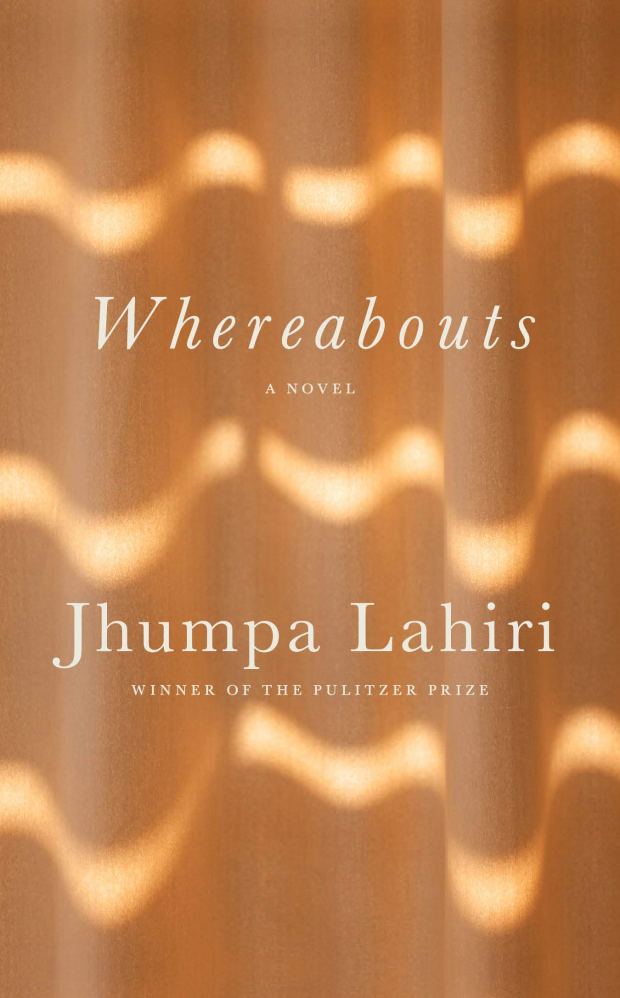
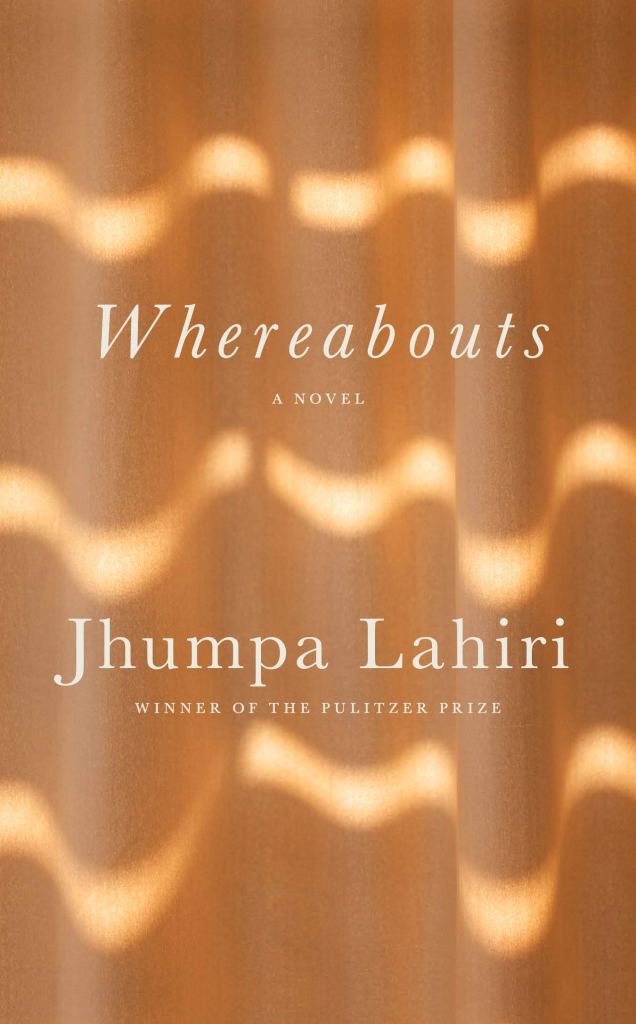
Whereabouts by Jhumpa Lahiri

The book cover depicts a pale orange curtain falling waves, with dappled stripes of bright yellow sunlight across it. The title and author's name, with "winner of the Pulitzer Prize," are superimposed in white script.

By Piyali C.

In the simple, succinct, and gorgeous prose that is her trademark, Jhumpa Lahiri, the Pulitzer Prize-winning author of The Namesake, Interpreter of Maladies: Stories, and other works, writes about the observations of a single, unnamed woman living alone in an unnamed city in Italy in Whereabouts. Each chapter in this book reads like a page from a beautifully crafted journal. They are chronicles of our protagonist’s day to day life – be it walking over a bridge where she occasionally comes across her ex-boyfriend, or her sojourn to her favorite sandwich store where she buys the same lunch every day, or her trip to the swimming pool where she meets women who share their stories with each other verbally, or even the stories they share through each hard-earned wrinkle on their faces or their swollen feet or the extra flesh in their midsection. The woman of our story quietly listens. Through her ruminations about her past we come to know about her parents, their eccentricities, her relationship with them, her mother’s financial dependence on her father, and her subsequent financial education to her daughter which influences the woman’s monetary decisions all her life (and not necessarily in a helpful way).

The narrator is lonely sometimes, and sometimes she cherishes her solitude. She is frustrated with the sameness of her life sometimes, and sometimes she is content simply sitting at the piazza in front of her apartment observing frenetic activities in her neighborhood. She falls asleep at night reassured by the noise of traffic and wakes up deep in the night, disconcerted at the silence around her when the sounds of automobiles have ceased. She could be any of us – a juxtaposition of contrasts – and perhaps this ‘everywoman’ trait of the protagonist makes the book and her so relatable.  Her keen sense of observation is what many of us lack these days. It was such a joy to see the world – her world and for a short time our world, too – through her eyes. Even after the book ended, I seemed to linger by the side of the piazza eyeing the sandwich store and looking at the men and women living their lives in that unnamed city in Italy. This is a deeply contemplative novel made up of vignettes from a middle aged woman’s everyday life. There is no catastrophic event in this story, no climax or anti climax. It simply tells the tale of life and in doing so it becomes strangely captivating. At the end of the day, I agree with the description that the publisher provides for this short novel – “Whereabouts is an exquisitely nuanced portrait of urban solitude…”

I would like to share a snippet just to whet your appetite for this truly beautiful literary novel so you can borrow it from Howard County Library System for your next read. There is a passage where the woman comes face to face with the man she once loved in the middle of a bridge. Lahiri writes

“We stop in the middle and look at the wall that flanks the river, and the shadows of pedestrians cast on its surface. They look like skittish ghosts advancing in a row, obedient souls passing from one realm to another. The bridge is flat and yet it’s as if the figures – vaporous shapes against the solid wall – are walking uphill, always climbing. They’re like inmates who proceed, silently, toward a dreadful end” (6-7).

This is simply one example of many where I felt Lahiri painted pictures for me with her words.

Whereabouts is also available in large print and in eBook and eAudiobook format via Overdrive/Libby. Whereabouts is Jhumpa Lahiri’s first novel written in Italian, as well as the first time she has self-translated a full-length work.

Piyali is an instructor and research specialist at the Miller Branch of HCLS, where she co-facilitates both Global Reads and Strictly Historical Fiction.

Twilight of Democracy (I hope not)

The book cover shows the title, "Twilight of Democracy: The Seductive Lure of Authoritarianism," and the author's name, "Anne Applebaum," accompanied by "Winner of the Pulitzer Prize." The words are in white except for "Authoritarianism," which is in red. The background of the cover is in gradating shades of blue.

By Eric L.

Twilight of Democracy: The Seductive Lure of Authoritarianism is a great read for the current moment. The title of the book should give you a fairly good idea of what the book is about. Anne Applebaum’s area of analysis and expertise seems particularly relevant right now. Sadly, she and I agree that hate and the belief in authoritarians has increased in recent times in America. Applebaum discusses how this is also the case in Britain, Hungary, and Poland (countries with which she has experience). Applebaum’s husband is involved in politics in Poland, which provides her an interesting vantage point into the “power elite” (my term). 

If you’re not familiar with Anne Applebaum, I would encourage you to read some of her articles in The Atlantic. I am mainly familiar with her work through this magazine. She is a journalist, but I would also describe her as a historian who has authored several highly regarded books on Russian history. She is also currently a senior fellow at Johns Hopkins University’s School of Advanced International Studies. I would describe Anne Applebaum’s politics as different than mine, where she is “center right” and I’m not. We may differ on specific policy prescriptions and perhaps views on liberalism and markets, but we agree that hate and authoritarians are both inimical to democracy. 

The book grabs you from the onset by describing a New Year’s Eve party they hosted as the 20th century ended. She details the somewhat raucous party, the guests, and the optimism many attendees shared for liberal democracies in the 21st century. I am younger than Applebaum, but I recall a similar optimism (and perhaps a little worry about Y2K). She then goes on to describe how in the 20 years since this party many of the guests would no longer speak to each other, and how’d she’d cross the street to avoid some of these folks. In our highly polarized and political society we can all share this sentiment to some extent. Perhaps we don’t know Boris Johnson personally, as she does, but we can relate, and her brief biographical sketch of Johnson is indeed indicative of western politics at this moment. 

The book is written by a good journalist, and thus it is engaging and thoughtful. It is very Western-focused, but it does concern more than the United States. The similarities of the things happening in these countries are a bit frightening. Personally, I’m remembering the era during the last century when fascism began to spread in the West. 

She goes into detail through character sketches of some of the people and the trajectory of their political beliefs. Many were former anti-communists and are now hard-right and authoritarian in nature. She points out that these are not poor, rural people, but actually quite elite, wealthy, and well-educated. She subsequently proffers her theories as to why this is the case, including that of a behavioral economist who suggests about one third of the population, irrespective of political beliefs, has an authoritarian “disposition.” This actually does not surprise me. Applebaum also puts words to the belief of many of these folks that things were better in previous times. The section where she delves into the different types of nostalgia is very interesting. 

I don’t agree with everything Applebaum posits, however I’d like to think she’d appreciate that fact. Specifically, I think she discounts corporate power and race issues in America. They’re addressed, but not to my satisfaction. Where I agree with Applebaum is that democracy is messy, it’s problematic, and not everyone is happy. In sum, it’s tough! It’s certainly much easier to be in complete control and get your way all the time. However, I don’t think I have an authoritarian “disposition” and I think getting my way all the time is not good for me psychologically. That said, I hope we’re not in the twilight of democracy.

Twilight of Democracy: The Seductive Lure of Authoritarianism is also available in large print and as an eBook and an eAudiobook from Libby/OverDrive.

Eric is a DIY Instructor and Research Specialist at the Elkridge branch. He enjoys reading, films, music, doing nearly anything outside, and people.

Walking in Someone Else’s Shoes

The cover has the author and title in black and white lettering against a sea green background.

by Cherise T.

When a novel is set in the reader’s hometown, appreciation for the story and characters extends beyond the book’s contents. When a novel is set somewhere new to the reader, that place is no longer foreign and unknowable. Literature expands memories, builds connections, creates new journeys, and fosters empathy.

Books by veterans, about veterans, and regarding veterans’ friends and families offer diverse perspectives of consequential events and everyday perseverance. Veterans can, perhaps, find shared experiences. For non-veterans, there are bridges to understanding. Ben Fountain’s depiction of experiencing post-traumatic stress disorder in Billy Lynn’s Long Halftime Walk is unforgettable. To some, an NFL halftime show featuring Destiny’s Child would be entertaining but to this story’s young Iraq War Army soldiers, it’s terrifying.

The cover depicts two soldiers, weapons drawn, seemingly patrolling a desert area with mottled orange sands and sky and a yellow sun at the horizon.

In his debut novel, The Yellow Birds, Iraq War veteran Kevin Powers takes on the burdens veterans face when they return home. Private John Bartle struggles to understand his own behavior in Iraq, as well as his debts and responsibilities to superiors and fellow soldiers. Veterans may relate to Bartle’s emotional efforts to move forward with his life beyond the battlefield. Readers who have never been in the military become immersed in Bartle’s psychological conflicts. He feels surrounded by death as he fights to survive both in Iraq and back home in Virginia.

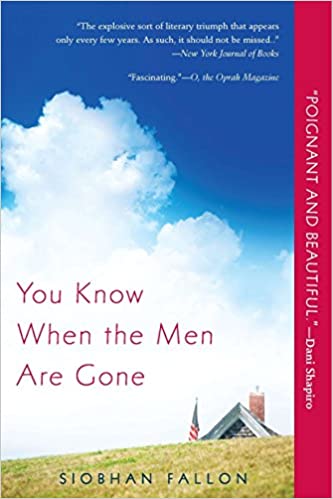
The cover depicts a white cloud against a deep turquoise sky, with a field rising to a hill in the foreground and just the upper floor and chimney of a house depicted behind the hill, with the United States flag flying in front.

Short story collections offer multiple viewpoints of war in one volume. Siobhan Fallon’s You Know When the Men are Gone focuses primarily on the family left behind, particularly military spouses in Fort Hood, Texas. The stress on these characters exceeds loneliness. Their attempts to cope with deployments are seen in actions as seemingly mundane as a shopping trip to the PX or as drastic as abandoning one’s spouse.

The cover depicts a soldier in fatigues, cap and boots with his duffel bag on the ground beside him, in what appears to be an airport or other waystation with a concrete floor and white tiled walls.

National Book Award winner Redeployment by Marine veteran Phil Klay deftly presents the outlooks of men who entered the military from varied backgrounds. The stories are heavy but often humorous as Klay addresses the absurdities inherent in active duty as well as in the abrupt return to civilian life as a veteran. Often disturbing, the situations encompass violence and PTSD but also forgiveness and compassion.

Cherise Tasker is an Adult Instructor and Research Specialist at the Central Branch. When not immersed in literary fiction, Cherise can be found singing along to musical theater soundtracks.

Spooktacular Chapter Books for Kids

By Jessica L.

This illustrated book cover shows two Black children on bicycles, framed by white ghostly pillars and colorful strange plants. The title type is wiggly hand-drawn in a purple to orange fade.
Ghost Squad cover

Ghost Squad by Claribel A. Ortega

Claribel Ortega’s debut novel is perfect for middle grade readers who love the paranormal, magic, adventure, and a little mystery. This book celebrates Dominican culture and lore, while also providing beautiful examples of caring adults and loving relationships among families and friends.This book also explores themes of grief, loss, and found family. 

Twelve year old Lucely Luna lives a pretty supernatural life in a haunted house with her father, who gives ghost tours in St. Augustine, Florida. She is surrounded by the spirits of her loved ones who have passed. These spirits, familial fireflies, assume their ghostly human forms to comfort and care for Lucely. Something strange happens to her beloved grandmother’s spirit and Lucely and her best friend, Syd, inadvertently awaken malicious spirits in their efforts to help bring back her grandmother’s spirit. These malevolent spirits not only threaten the existence of Lucely’s fireflies, but desire to drag St. Augustine into the underworld. Lucely, Syd, Syd’s abuela Babette (a real witch), and Babette’s chonky kitty, Chunk, must work together to make everything right once more.

The book cover shows Willa in a green dress with a bear cub at her side in a spooky forest, with dark tree trunks and a purple-twilight background.
Willa of Dark Hollow cover

Willa of Dark Hollow by Robert Beatty

This is the second installment in the Willa of the Wood series by Robert Beatty. However, it’s also a standalone story, so you won’t miss anything if you haven’t read the first book. This story stresses the importance of conserving our natural world and the invaluable relationships we build with family and friends. Themes of found family and the complexity of doing what’s right abound.

Willa is among the last of an ancient Indigenous people of the Great Smoky Mountains, the Faeran. Willa is deeply connected with the forest and the animals with which she can communicate via her Faeran language. Her magical abilities also include camouflage and making trees grow instantly. She is, after all, a young teenage wood witch trained and brought up by her grandmother against the harmful norms of Faeran society. Willa feels helpless against the industrial loggers who continue to destroy the forest in the name of progress. She discovers a dark hollow with strange and beautiful creatures, but the mystery and danger grows as she learns how these dark forces are hunting humans. But are these hunters the right answer to dealing with the loggers as their handiwork endangers her own adoptive family? Can Willa find a way to save her family, the forest, and the animals she loves all by herself?

Other titles and series for kids who enjoy the paranormal and supernatural, fantasy and magic, mystery and adventure: 

Desmond Cole Ghost Patrol by Andres Miedoso
Serafina and the Black Cloak by Robert Beatty
The Witch’s Boy by Kelly Regan Barnhill
The Forgotten Girl by India Hill Brown
The Strangers by Margaret Peterson Haddix is the first in the Greystone Secrets series
My Big Fat Zombie Goldfish by Mo O’Hara
The School is Alive! by Jack Chabert is the first in the Eerie Elementary series
The Witches of Benevento by John Bemelmans Marciano
Short & Shivery: 30 Chilling Tales by Robert D. San Souci
Scary Stories to Tell in the Dark: Three Books to Chill Your Bones By Alvin Schwartz
That One Spooky Night (Graphic Novel) by Dan Bar-el
Rowley Jefferson’s Awesome Friendly Spooky Stories by Jeff Kinney
Scary Stories for Young Foxes by Christian McKay Heidicker

JP has worked for HCLS since 2006. She loves playing with her new orange tabby kittens, Mando & Momo.