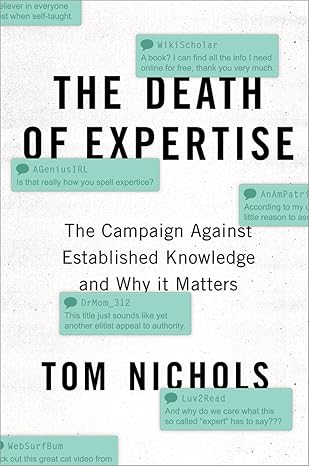
The Death of Expertise by Tom Nichols

The book cover includes seven speech bubbles or fragments of speech bubbles from writers with different user names, such as "DrMom_312" stating, "This title just sounds like yet another elitist appeal to authority" and "WikiScholar" saying "A book? I can find all the info I need online for free, thank you very much." All of them slyly support the premise of the book.

By Julie F.

Tom Nichols is a staff writer at The Atlantic, a professor, and a policy professional; I have followed him on social media and read his opinions for years. In this thoughtful analysis, he considers the death of expertise: the sense that previously acknowledged experts aren’t to be trusted and that the layperson can navigate their own way through a sea of information (and mis/disinformation). Looking at the disciplines of education and journalism, the rise of the internet, and the experts themselves (who consult with and influence policymakers), he traces the ways that citizens in our democracy have decided that they have the expertise to make decisions about a host of issues that were previously deferred to specialists (doctors, professors, and other expert advisors).

Nichols convincingly demonstrates how confirmation bias, the commodification of higher education, anti-intellectualism, and millions of web pages with uncurated, dubious information have enabled this often-misguided attitude. Librarians and library workers, take heart! You will appreciate his deep understanding of the nature of our work. My favorite quotes are from (not surprisingly) his chapter on the internet, called “Let Me Google That For You: How Unlimited Information Is Making Us Dumber”:

“The Internet, however, is nothing like a library. Rather, it’s a giant repository where anyone can dump anything, from a first folio to a faked photograph, from a scientific treatise to pornography, from short bulletins of information to meaningless electronic graffiti” (110).

“Research requires the ability to find authentic information, summarize it, analyze it, write it up, and present it to other people. It is not just the province of scientists and scholars, but a basic set of skills a high school education should teach every graduate because of its importance in any number of jobs and careers” (111).

Although his exploration of these concerns left me a little anxious at times for the future of our republic, Nichols wasn’t as cynical as I’d expected, and at the end of The Death of Expertise: The Campaign Against Established Knowledge and Why It Matters, he sums up similar situations we’ve recovered from in the past, when Americans were “capable of shrugging off their self-absorption and isolation and taking up their responsibilities as citizens” (237). Hopefully, a resurrection in interest in participatory democracy and the education of our citizenry will speed that process along.

The Death of Expertise: The Campaign Against Established Knowledge and Why It Matters is available from HCLS in print and as an e-audiobook from Libby.

Julie is an instructor and research specialist at HCLS Miller Branch who finds her work as co-editor of Chapter Chats very rewarding. She loves gardening, birds, crime and espionage fiction, all kinds of music, and the great outdoors.
Pick a Bunch of Black-Eyed Susans This Summer

A lot of black-eyed susans in full bloom, showing bright yellow petals and a dark brown center.

by Jean B.

It’s summertime in Maryland and Black-Eyed Susans, the state flower, dot the landscape with their bright yellow blooms in gardens, along highway medians, and across open fields. Black-Eyed Susans also are blooming inside the library. These award-winning books for kids and young adults make a perfect choice for summertime reading.

The Black-Eyed Susan Book Award is Maryland’s student choice award, voted on by students in grades K-12 every year since 1992. With seven categories of competition, there are contenders for every age and reading preference: Picture Books (for grades K-2); Fiction/Nonfiction for grades 3-5, grades 6-8, and high school; and Graphic Novels for grades 3-5, grades 6-8, and high school.

Why pick a Black-Eyed Susan? The nominees for this award are selected by school librarians for high quality AND kid appeal. The winners have been voted the best by 20,000 students across Maryland – that’s a major stamp of approval!

But here’s the best reason to pick a Black-Eyed Susan: to make YOUR voice count for next year’s award winner! The 2025-26 nominees are out: students in participating schools or homeschool co-ops who read at least eight of the nominated picture books or three of the nominated fiction/nonfiction or graphic novel nominees will be eligible to vote in April 2026. HCLS also provides a pathway to voting through our Black-Eyed Susan book clubs at Central Branch.

Twenty thousand Maryland kids can’t be wrong! Here’s a sampling of what they liked best in 2024-25:

Picture Book winner:
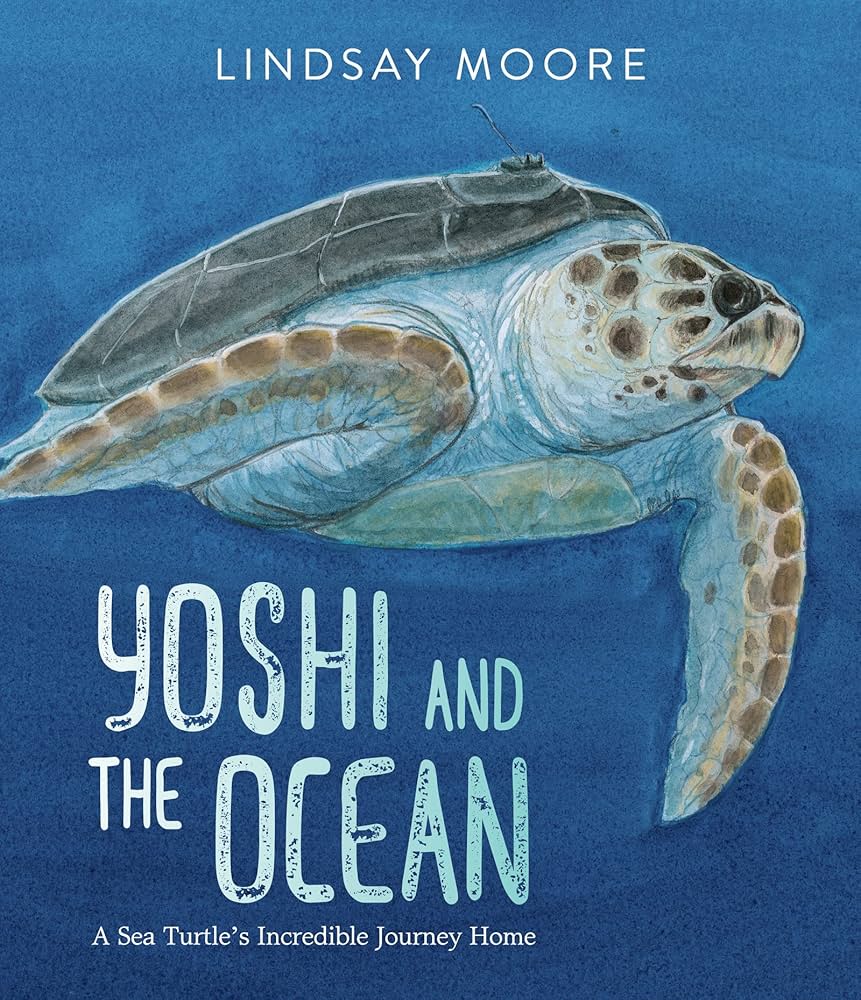
Yoshi and the Ocean by Lindsay Moore tells the amazing true story of a sea turtle’s return to the wild after 20 years of care in a South African aquarium. With lyrical text and gorgeous artwork, this book follows Yoshi as she navigates a 25,000 mile journey across two oceans, mapped by a tracking device, to reach her original home. Beautiful to read with younger children, it also contains a wealth of information about ocean life, loggerhead turtles and oceanography.

Grades 3-5 Fiction/Nonfiction winner:
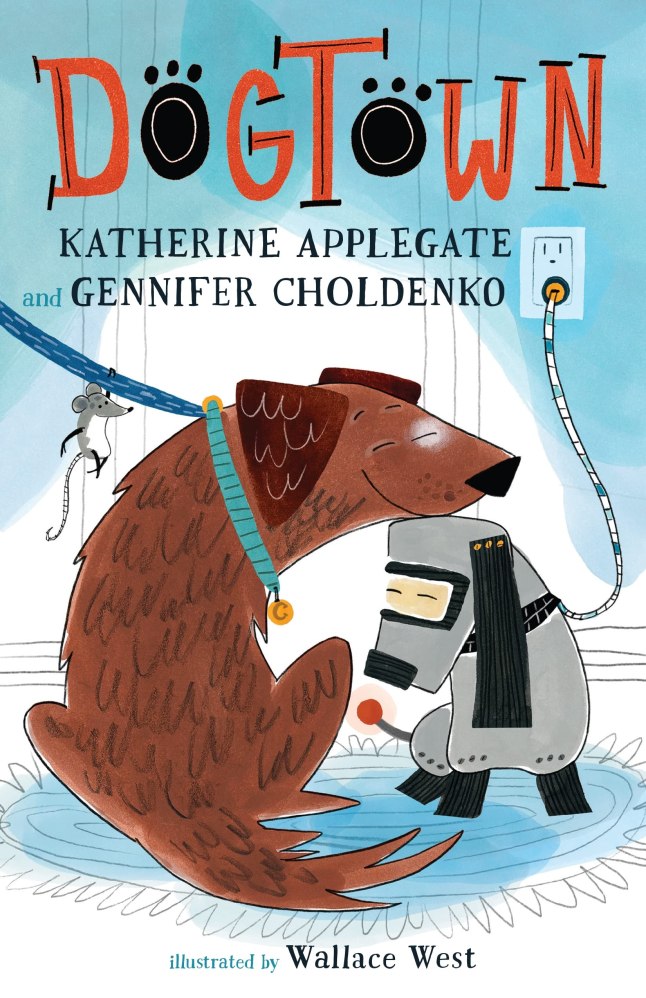
In Dogtown by Katherine Applegate and Gennifer Choldenko, a real dog, a robot dog, and a mouse band together to engineer an escape from the Dogtown Shelter and find their forever homes. In this charming animal adventure, short chapters and fun illustrations make it a perfect choice for a family read aloud or for kids just beginning to tackle full-length chapter books.

Grades 6-8 Fiction/Nonfiction winner:
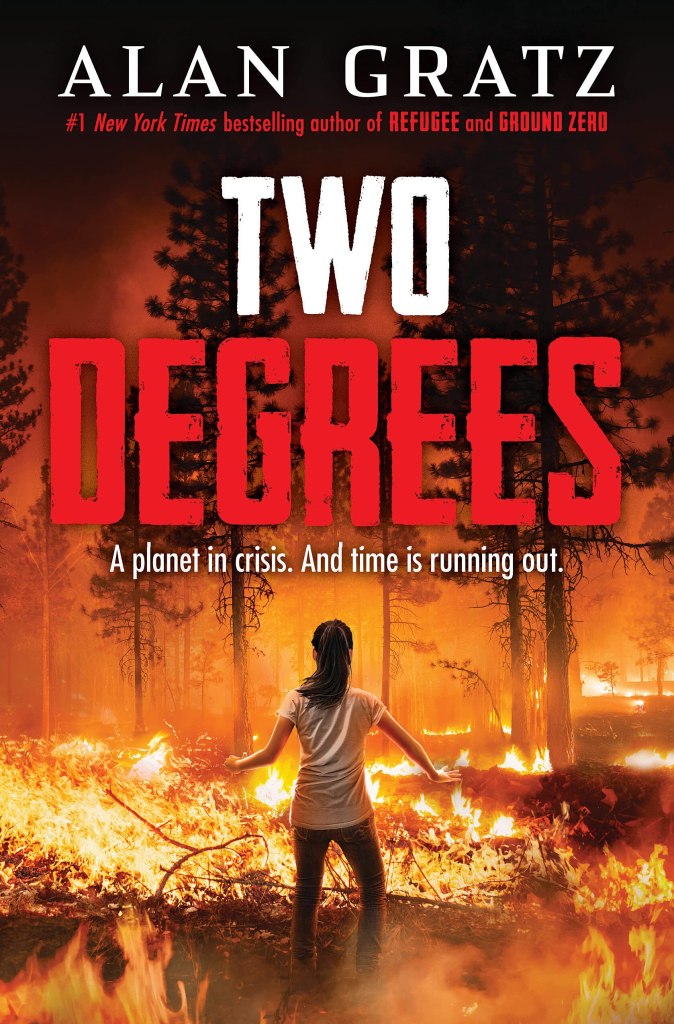
Two Degrees by Alan Gratz is an action-packed thriller for those who love survival stories. The book follows four middle school kids in different regions of North America, each battling climate-change natural disasters. Though their challenges are different and parallel, the kids’ fierce struggles are linked as part of a bigger picture requiring joint action.

Jean is a Children’s Instructor and Research Specialist at HCLS Central Branch. She loves talking about books with people of all ages, but especially enjoys leading the Heavy Medals book club for fourth and fifth graders, exploring award-winning books of all genres. 

We Used To Live Here

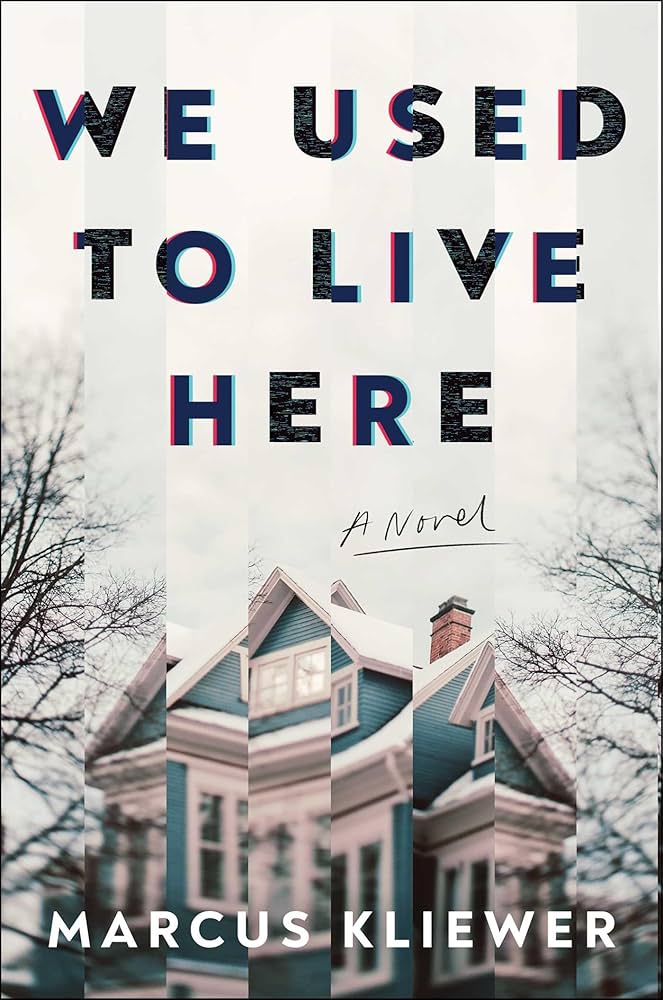
A Victorian style house appears in panels, so the view is distorted. It is framed by a white winter sky and bare trees.

by Angie E.

At first glance, the premise of We Used to Live Here by Marcus Kliewer feels familiar: a woman named Eve, living in a quiet, isolated home, receives a knock at the door. A family of five stands outside, the father claiming they used to live there and asking if they can take a look inside. It’s an unnerving request, made even more disturbing by the sheer passivity of Eve, as she ends up letting them in. Her submissiveness makes Eve the perfect vessel for the horror that unfolds.

Of course, a well-adjusted individual would’ve simply told him no, she thinks to herself. But self-destructive people-pleasing was another of her plentiful idiosyncrasies. She had a crippling fear of disappointing anyone, even complete strangers—even people she disliked.

Unlike a protagonist who fights back, she simply lets the story consume her, and in doing so, the reader is dragged down alongside her. It’s this very helplessness that enhances the eeriness of We Used to Live Here. From that moment on, the story moves into a confusing, almost dreamlike descent where nothing feels solid, and the very idea of escape seems out of reach. The family who has arrived at her door isn’t just intruding, they are manifesting something deeper, something perhaps inevitable. Whether they are ghosts, memories, or simply an extension of Eve’s own unraveling mind, their presence marks a shift where logic disintegrates, and the rules of the world no longer apply. 

Eve never feels fully present, never takes decisive action, and ultimately, that’s what makes her experience so scary. She doesn’t fight to escape because escape might not even be real. We Used to Live Here isn’t just about horror, it’s about uncertainty, about the way reality itself can be manipulated, distorted, or perhaps even erased. It refuses to give us clarity, instead leaving us in a disorienting space where what is real and what isn’t can never be firmly decided. And maybe that’s the true horror, not ghosts, not violence, but the realization that sometimes, reality isn’t as solid as we think it is. 

We Used to Live Here by Marcus Kliewer is on the 2025 summer reading booklist for adults (mystery & thriller). It is available (after a short wait) in print, e-book, and e-audiobook.

Angie is an Instructor & Research Specialist at Central Branch and is a co-facilitator for Reads of Acceptance, HCLS’ first LGBTQ-focused book club. Her ideal day is reading in her cozy armchair, with her cat Henry next to her.

Summer Reading for Adults

Classic Americana tattoo style of a red heart with a banner acroos it and a black-eyed susan in the bottom left. The white banner reads: People are the heart of the library.

This summer kicks off the third annual reading challenge for adults, while also celebrating 85 years of the library. People are the heart of our library – and we want to see you achieve your goals, explore the world, and find joy in the pages of a good book. Pick up a booklet at any branch to inspire you through a year of reading, filled with suggested titles and prompts for reflection.

While there are 14 reading challenges listed, you need to complete only three of them to participate in summer reading. Once you have read three books (print, e-book, and audio all count), come back to the Library to receive a prize and be entered into a grand prize drawing.

Here’s a sneak peek – and a Chapter Chats review or two:

Read a book published in or before 1940
Celebrate our birthday with us by reading a book that would have been on the shelves when we first opened our doors. Suggestions include:
The Sun Also Rises by Ernest Hemingway
The Heart is a Lonely Hunter by Carson McCullers
Native Son by Richard Wright

Revisit Your Library Memories
What is the first book you remember checking out of the library? Or, what book have you borrowed from the library that impacted you the most? We invite you to read it again! Suggestions include:
A Tree Grows in Brooklyn by Betty Smith
We Have Always Lived in the Castle by Shirley Jackson
The Catcher in the Rye by J.D. Salinger

The Language of Art
In addition to books, libraries are places for artists and the arts. At HCLS, you can borrow artworks by and books about famous artists from around the world and from local artists. Suggestions include:
All the Beauty in the Word: The Metropolitan Museum of Art and Me by Patrick Bringley: read review
The Henna Artist by Alka Joshi: read review
The Work of Art: How Something Comes From Nothing by Adam Moss

85 Years of Connection: Bridging Generations Through the Library
Explore stories of multi-generational relationships, families, and communities. Suggestions include:
Real Americans by Rachel Khong: read review
A Grandmother Begins the Story by Michelle Porter
The Covenant of Water by Abraham Verghese

These are a taste of what a year of reading could have in store for you. Visit our branches often to check displays for more titles or to ask a staff member for a recommendation.

How the Word is Passed by Clint Smith

How the Word is Passed book cover is strictly typography of the cover and the author's name. The subtitle reads "A reckoning with the history of slavery across America."

by Emily B.

Two years, five months, and seventeen days. That’s how long it took for President Lincoln’s Executive Order 95 to reach the last group of enslaved people in Galveston, Texas. Lincoln’s executive order, better known as the Emancipation Proclamation, declared freedom for all enslaved people in confederate states. Most slave owners chose not to inform their slaves of their freedom. But on June 19, 1865, Major General Gordon Granger finally brought the message of freedom to Galveston. Juneteenth celebrations spread quickly throughout the South and persisted through hardships like the Great Depression and Jim Crow laws, finally being recognized as federal holiday in 2021.

Clint Smith visited Galveston to examine the history and celebration of Juneteenth in his book How the Word is Passed. Each chapter sees Smith explore different historic sites with significant slavery ties like Angola Prison, Whitney Plantation, and Gorée Island in Senegal. Do these sites distort the past in an effort to diminish the pain of enslaved people? Or do they educate and atone?

Throughout his journey, Smith ponders how differently the US might look if all Americans could reckon with the atrocities of slavery and the legacy left in its wake. It might be difficult and uncomfortable for some to read about the violence and suffering that enslaved people were forced to endure, but it’s a component of American history that cannot be ignored.

Part of what makes How the Word is Passed so wonderful is Smith’s approach to the project. During his travels, he interacts with tour guides, locals, and tourists to learn their perspectives and reflections. During his Monticello visit he meets two older women who were shocked to learn that Thomas Jefferson was a slaveowner. “It just took his shine off,” one woman remarked. “He might’ve done great things, but boy did he have a big flaw.”

Smith, a poet and a former high school English teacher in Prince George’s County, wrote this book with his students in mind and it shows. Smith’s prose is incredibly informative and impactful as he interrogates American history. I hope that one day soon this will be required reading.

The Word is Passed by Clint Smith is available in print, e-book, e-audiobook, and audiobook on CD.

TONIGHT: Songs of Freedom: Journey Along the Underground Railroad
For everyone.
Wed, Jun 18 | 7 – 8:30 pm
Carroll Baldwin Hall | 9035 Baltimore St, Savage
Harriet Tubman’s story comes alive through traditional code songs, modern melodies, and authentic narration. Journey along the Underground Railroad with historian Linda Harris as she chronicles her annual charity walks through the lens of local African American history.
Linda Harris is the Director of Events and Programming at the Harriet Tubman Museum and Educational Center in Cambridge, MD. Learn more about Linda Harris and the Harriet Tubman Museum and Educational Center at harriettubmanmuseumcenter.org
Registration is optional. Register to receive email reminders and updates about this class. Seating is first-come, first-served.
In partnership with Carroll Baldwin Hall

The Cartoonists Club by Raina Telgemeier & Scott McCloud

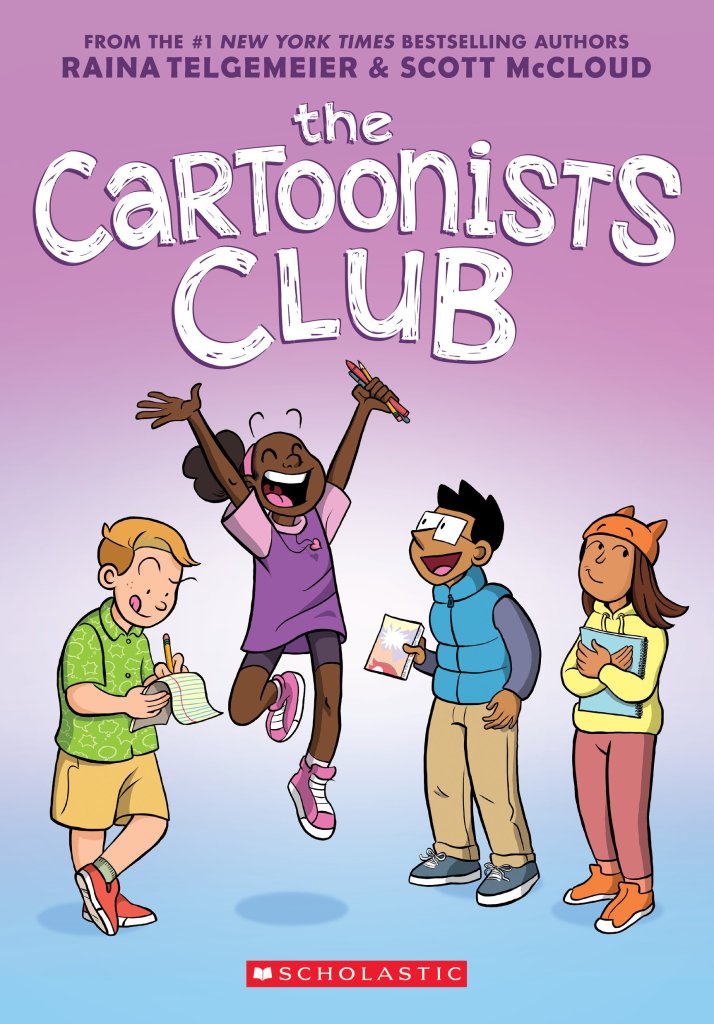
The book cover depicts four middle-grade students holding sketchbooks, pencils, notepads, and other drawing implements; one is jumping into the air excitedly, one is watching with a big smile on his face, one is looking to the side wistfully, and one is concentrating on writing or sketching on a lined piece of notepaper.

By Holly L.

Back in 2020, during the lockdown days of the pandemic, I logged on to a Zoom featuring cartoonist Raina Telgemeier with my then-second grader. As huge fans of Raina’s work, and having read, re-read, and read again, Smile, Sisters, Drama, Ghosts, Guts, and the first four Baby-Sitter’s Club books, the two of us were super excited to hop online with our favorite graphic novelist. Raina was just as friendly and charming as we imagined, with a level of nervousness that seemed exactly appropriate for an introverted artist.

There was some book talk, a Q&A, and, to our delight, a live sketching session. Black marker in hand, she drew several images, but the one that stands out in my mind is of a cover mock-up, rendered in the style of Smile, Sisters, and Guts. It was a big, round sourdough loaf captioned with the title Bread. Raina said that she, like many others during the pandemic, had gotten elbow-deep into making sourdough, so it seemed an appropriate theme for a new book. Because this explanation came across as a bit tongue-in-cheek, we didn’t necessarily expect to see news of an upcoming book in the months that followed. But still, my daughter and I both hoped that we had actually been let in on a secret that afternoon and that Bread would someday make it into print. Months turned into years with no publication news, about Bread or any other Raina book. That is, until June 2024, when Scholastic’s Graphix announced the 2025 publication of The Cartoonists Club by Raina and Scott McCloud. 

Comic fans will recognize Scott as the author of Understanding Comics, widely considered an essential guide to comics as an art form and one of Raina’s all-time favorite books. From Raina’s website

When I was 16, I read Understanding Comics by Scott McCloud, a ‘comic book about comic books.’ It immediately cemented my desire to be a cartoonist–as well as gave me a shape and vocabulary for the scope, philosophy, iconography, and downright magic of comics storytelling. That was a pivotal moment for me, and I speak with a LOT of young readers who have been looking for a similarly pivotal book for them. The Cartoonists Club is the result of almost 5 years of working together with Scott himself, to create what we hope is that book!

The Cartoonists Club follows four young, diverse characters who form friendships through their love of comics. Makayla, Howard, Lynda, and Art are middle school students encouraged by Ms. Fatima, their school media specialist, to form a club centered on their passion for reading and making comics. Makayla has so many ideas but has a hard time turning them into a story. Howard’s passion is drawing, but he is often short on ideas. Lynda fills page after page in her sketchbook but is her own harshest critic.  Art is a maker who just loves to be creative and has enough enthusiasm for the whole group. By featuring characters with different approaches to creativity, the authors establish an inclusive space in the pages of the book where there is no one “right way” to be an artist. In the “Behind the Scenes” section that follows the story, Raina remarks that each of the characters represents different traits possessed by the two authors. 

As the characters learn various techniques of the comic craft, the reader becomes acquainted with what Ms. Fatima calls “The Magic of Comics.” The club members hone their own trademark styles, making individual comics while working as a team in preparation for what will–hopefully–be their big debut at the local mini-con, where they’ve applied to set up a table. The Cartoonists Club is an inspiring and illuminating story of friendship and self-expression that graphic novel and comics fans will enjoy. In addition to the story, the book also features a fun “Behind the Scenes” section, including “A Chat with Raina and Scott,” a Q&A addressing questions (such as “how do you get better?” and “what advice do you have for aspiring comics?”), a comics glossary, a list of Comics Jobs, How We Made This Book, and Resources and Suggested Reading. Although I’m still holding out hope that Bread will someday make it into print, I thoroughly enjoyed this collaborative and entertaining read about the art of comics.

The Cartoonists Club by Raina Telgemeier is available in print and e-book.

Holly is an Instructor & Research Specialist at HCLS Miller Branch. She enjoys reading widely, knitting sporadically, and baking as often as she gets the chance.

Dickensian

A crowd shot of the cast of characters dressed in period clothing.

by Angie E.

I watched Dickensian for the first time a few years ago and loved it far more than I could have dreamed, especially since I am not a big Dickens fan and had already kind of half-formed in my mind what the series would be like. I could not have been more wrong and, despite hoping to watch it piecemeal so it would last as long as possible, I still ended up binge-watching it. I recommended it to some customers and they came back later and told me they loved it, too, and we got to talk about it, which I always find one of the best parts about reading a book or watching a show. 

To describe it would hardly do it justice, the more I like something the harder it is for me to write about it. But if I had to say, Dickensian is where beloved characters of Charles Dickens’ novels cross paths in a gripping mix of mystery, romance, and intrigue. The show twists together the fates of figures like the ruthless Jacob Marley, the ambitious young Miss Havisham, and the ever-resilient orphaned street boy, intertwining their lives in unexpected and dramatic ways. 

Secrets hide in every shadow, fortunes rise and fall, and revenge boils beneath the surface, all leading to shocking revelations that keep you on the edge of your seat. With a world so richly imagined and characters so vividly brought to life, this series is a captivating re-imagining of Dickens’ literary universe, offering surprises even for the most devoted fans. Despite not being a Dickens fan, I have always been drawn to Miss Havisham’s tragic back story and, sure enough, in Dickensian her life is as mesmerizing as it is heartbreaking. Tuppence Middleton is outstanding as Miss Havisham and, dare I say, may be the best one ever! 

Whether you’re a lifelong devotee or stepping into Dickens’ world for the first time, it invites you to linger in its darkened corners, where every twist and turn reveals a story waiting to unfold. If you’d rather stream Dickensian than watch it on DVD, it is available for FREE on Kanopy, Tubi and on The Roku Channel.

Angie is an Instructor & Research Specialist at Central Branch and is a co-facilitator for Reads of Acceptance, HCLS’ first LGBTQ-focused book club. Her ideal day is reading in her cozy armchair, with her cat Henry next to her.

None of This is True by Lisa Jewell

The book cover depicts either a turquoise sky or a body of water with little houses in a village or neighborhood reflected in a mirror image at the top and bottom.

If you gravitate toward dark mysteries and enjoy problematic twists, this book was written for you! The characters and their respective lives are brimming with turmoil and ugly secrets. We get an intimate account of two (very) different women and the people and problems that orbit their lives. Be warned: There’s realistic trauma and difficult, uncomfortable themes. Yet, there is also a drive for justice threading through the harrowing tension. This book depicts a true crime podcast tinged with the vulnerable, gory details of all these characters’ lives blowing up after an arduous, intense burn. If you listen to the audiobook, be prepared for the enhanced uneasiness that comes through in the dialogue.

I mean, morbid curiosity is relatively normal. Most people scratch that itch by watching some FBI procedural show or reading a dark romance paperback, or even just leaning a little bit closer into a friend’s salacious gossip. That’s not enough for Alix Summer in None of This Is True by Lisa Jewell. Alix knows that morbid curiosity is also very profitable, and this is the unexpected carrot which I believe leads to her ruin.

Everything begins with what appears to be a chance encounter between birthday twins. Josie Fair is celebrating her birthday by having dinner with her husband at a pub she’s only ever walked past. She finds herself out of place, contemplating the lackluster life she’s living and how desperate she is for change. As if the universe hears Josie’s silent prayer, Alix Summer appears. Alix is a breeze. She glides gracefully into the pub to celebrate her own birthday at a prominent decorated table seated with beautiful people. Popular and important, Alix is effortless. Effervescent. The picture of perfection. Everything Josie feels she is not. It’s at this very moment when Josie’s snap judgement and ill-informed comparison sets our story in motion. Little does Alix know that her life (and Josie’s) will be irrevocably changed. 

None of This Is True is curious. It is frustrating, tense, upsetting, and strangely satisfying. Puzzle out the truth…if you can. And for the love of all things good, don’t ignore the small voice that clues you into what’s happening just so you can get what you want. I promise you it’s not worth it. But reading this book definitely is!

None of This Is True is available from HCLS in print and large print editions and as an e-book and an e-audiobook from Libby.

JP Landolt has been working at HCLS since 2006. She enjoys watching her two orange tabbies, Mando & Momo, take turns with the day’s one brain cell.

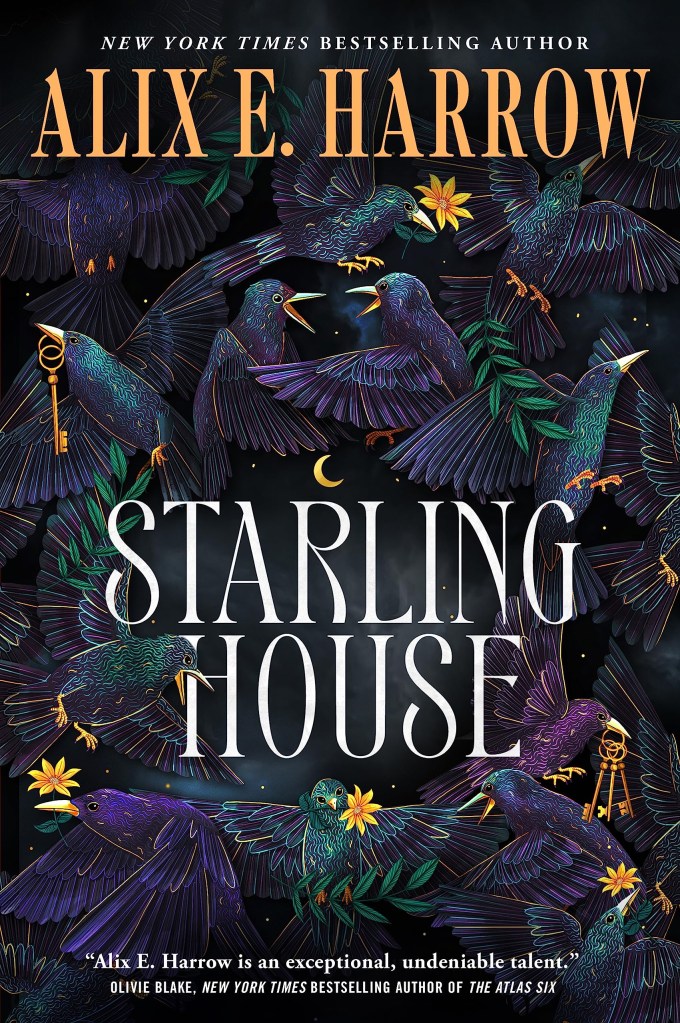
Starling House by Alix E. Harrow

The dark cover shows a pattern of birds in purples holding a variety of golden keys.

by Kristen B.

A good Gothic novel practically requires a spectacularly weird house with supernatural tendencies. Starling House might be the main character of its own novel – not quite but close. Our actual main character, Opal, routinely walks the long way home from her going-nowhere-fast job just to wander past the house. She dreams of it and its mysterious amber light. Opal is an unlucky high school dropout trying to make ends meet for herself and her academically talented younger brother, Jasper. They live in a room at the local motel, subsisting on Pop-Tarts and bad pizza. Their mom died in a car accident on a cold night when the mists rose off the Mud River, which is when bad things happen in Eden, Kentucky.

The Starling family is one of strays and orphans, who take the name and the ownership of the house. Arthur is the last in a long line of Starlings, although his parents raised him in the house before he ran away looking for a more normal life. The only major employer in Eden is the Gravely Power company and their coal mines, and the Gravelys and Starlings have a long, complicated history. When Opal finagles a high-paying housekeeping job from the anti-social Arthur, she finds a decades long domestic disaster. As Opal cleans, she realizes that the house has its own sort of sentience – and that it seems to like her. But rooms rearrange and corridors form mazes, and sometimes the space seems to move her to where she needs to be (like Casita in Encanto, but not as friendly).

The story trades points of view between Opal and Arthur, both of whom are disillusioned and suspicious of each other and the entire situation. The book intersperses their hostile encounters with different versions of the town’s past – about Eleanor Starling, her children’s book The Understory, and the house she built. There’s also a set of unscrupulous business consultants with an unwholesome interest in the Starling property and mineral rights, and they target Opal. Untangling the nest of rumor, legend, and sordid tales holds the key (literally) to resolving the tragedy that haunts the town, Opal’s family, and Starling House.

The book has a powerful engine of a plot, along with its engaging characters. I couldn’t help but root for Opal, despite her ingrained need to keep the world at arm’s length. Her carefully guarded heart sometimes misses the loving connections in her world in its desperation to remain stoically independent. Arthur isn’t much different, and these two lost souls truly need each other. The supernatural elements are just creepy enough to give the entire proceedings a sideways edge, which kept me wondering if the author was going to be able to pull it all off. I thought this was her best book yet (although I also loved Once and Future Witches) – it’s a lean, mean, twisty tale, where all the components are necessary to make the story work.

Starling House by Alix E. Harrow is available in print, e-book, and e-audiobook.

Kristen B. is a devoted bookworm lucky enough to work as the graphic designer for HCLS. She likes to read, stitch, dance, and watch baseball (but not all at the same time).

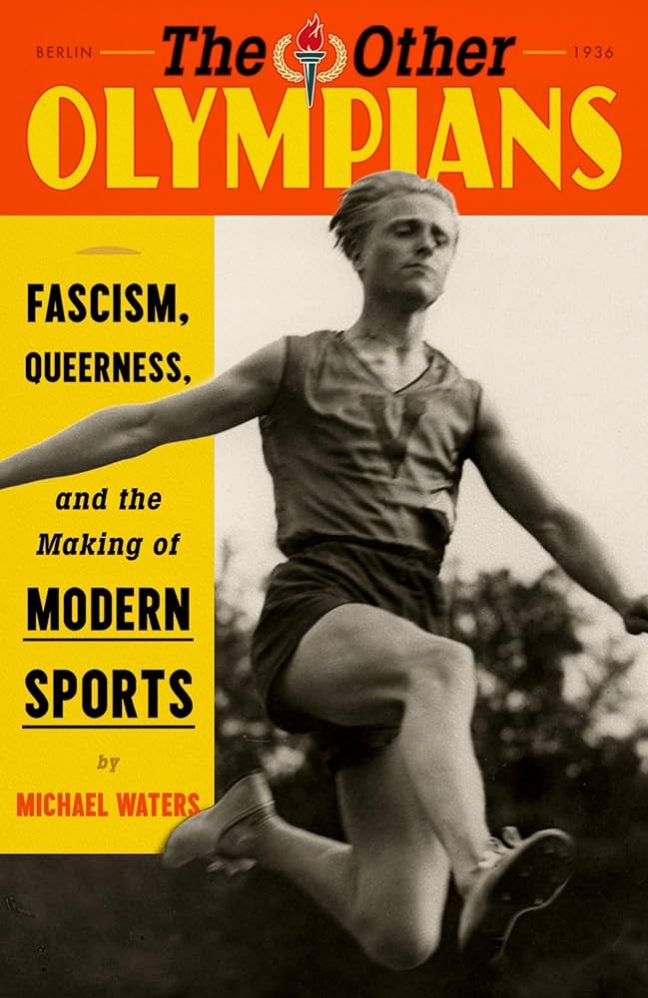
The Other Olympians: Fascism, Queerness, and the Making of Modern Sports by Michael Waters

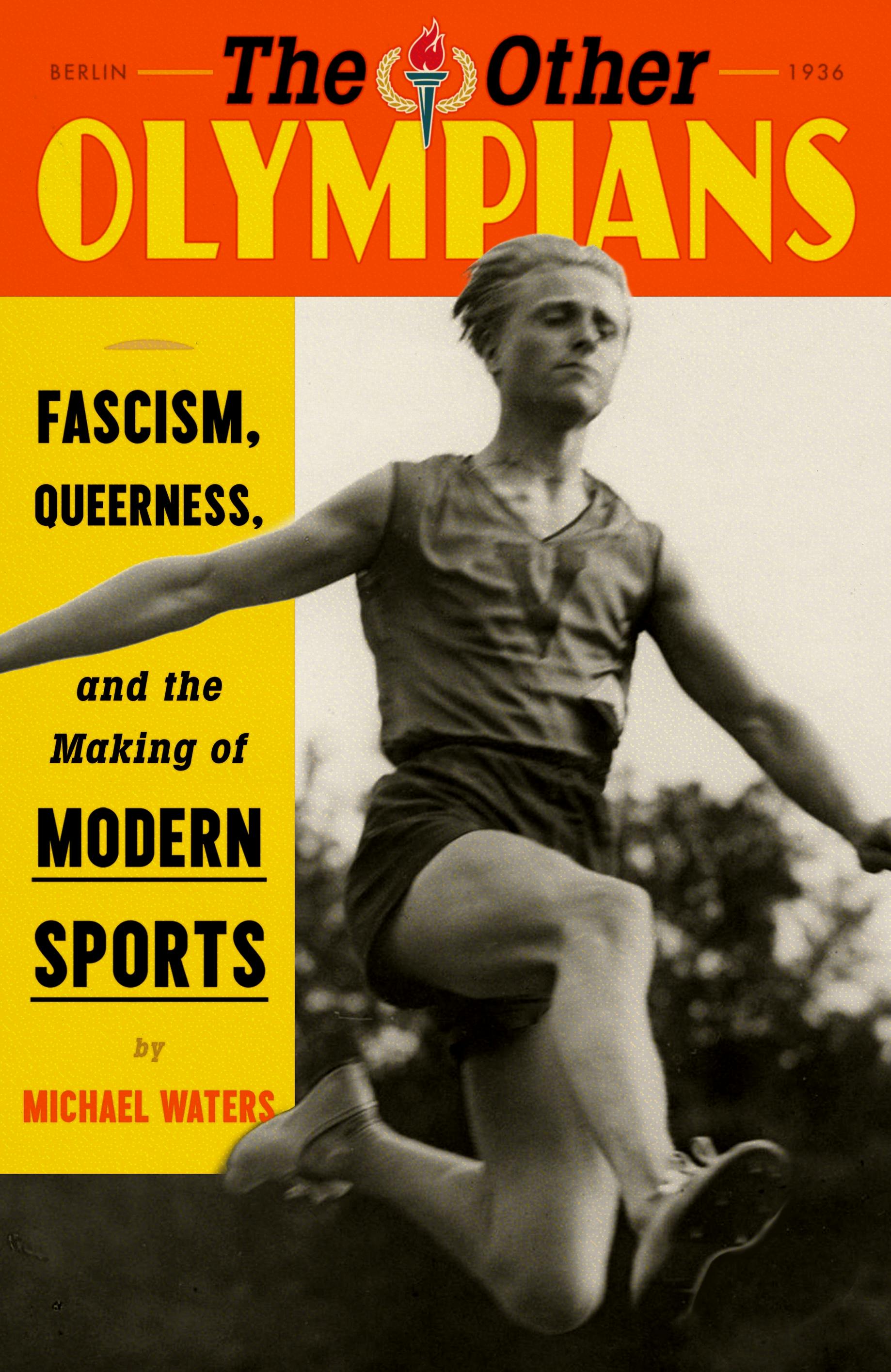
The book cover depicts Olympian Zdeněk Koubek participating in a jumping event, leaping into the air with arms spread wide and hair blown back.

By Ash B.

To say that “men” in women’s sports is a hot-button issue would be an understatement. 

Many individuals have a knee-jerk emotional reaction to this topic; far fewer know the facts about transgender or intersex athletes. I’d bet even fewer know that gender anxieties in relation to sports are nothing new – in fact, they date back over a century. For example: mandatory medical exams, to ‘prove the womanhood’ of female athletes, were first popularized by a Nazi sports physician for the 1936 Olympics. Sex testing would become more prominent in the following decades, particularly in the context of the Cold War. Such is one bit of history unveiled in The Other Olympians: Fascism, Queerness, and the Making of Modern Sports by Michael Waters.

As indicated by its title, this nonfiction book addresses political, social, cultural, and scientific developments in the early twentieth century. Waters digs deep into the history of professional, international athletics, exploring the forces that impacted where, and by whom, sports could be played – particularly at the 1936 Berlin Olympic Games in Nazi Germany. The idea of women playing sports, whether leisurely or professionally, was enough to cause public (primarily male) concern and outrage in this time period. The founder of the modern Olympics, Pierre de Coubertin, declared that female athletes did not, “constitute a sight to be recommended before the crowds I gather for an Olympiad.” 

On a surface level, it’s not difficult to imagine why there’s a patriarchal bias regarding athletics – consider how current broadcasts of women’s sports get less viewership and the teams get fewer resources than their male counterparts. Dig a bit deeper, and you quickly run into norms about what a female body is ‘supposed’ to look like. Notice how women are ridiculed and called “manly” when they are seen as too muscular? Think about how many people now accuse female athletes with ‘masculine’ characteristics – a square jawline, a broad nose, wide shoulders, a small chest – of being male. 

This is the cruel irony of the anti-trans “defending women’s sports” issue; it doesn’t just target trans people. It significantly harms cisgender women by policing their bodies and appearances, too, especially women of color and intersex women. This fixation on gender conformity in sports – specifically women being ‘feminine’ enough – can be traced back decades, to when women were discouraged from playing sports at all. Fear-mongering abounded regarding the ‘masculinizing’ effects that playing sports, especially sports that were accessible to working-class women. As Waters paraphrases the British paper The Daily Herald, “women who participated in ‘masculine’ sports like soccer or track and field risked creating a third category of sex.”

These cultural fears were elevated by news of Zdeněk Koubek and Mark Weston – each assigned female at birth and raised as girls – publicly transitioning to living as men, in 1935 and 1936 respectively. Because both Koubek and Weston had formerly won titles in the Women’s World Games, an international competition similar to the Olympics, their gender revelations had significant influence on discourse regarding women’s sports, including paranoia that male athletes could ‘pose’ as women to win professional competitions.

With an engrossing narrative approach, Waters traces the histories of Koubek and Weston along with the stories of key bureaucrats in the sports world, such as Alice Milliat, founder of the Women’s World Games, and Avery Brundage, an American sports administrator who climbed his way to Olympic leadership. Whether you’re interested in athletics, politics, or gender, you’re sure to glean knowledge from Waters’ depth of research. This is a great read for all history lovers who relish in learning little-known facts, woven together in personal and national narratives, as well as anyone who is concerned (or simply confused) about the culture wars around gender and women’s sports.

The Other Olympians is available in print and as an e-audiobook from Libby.

Interested in a brighter side of queer history? Learn about drag history and makeup on June 17, 7 – 8:30 pm at HCLS Central Branch for You Betta Werk! The Art & History of Drag. Free makeup will be given to attendees, while supplies last, on a first-come, first-served basis.

Ash is an Instructor and Research Specialist at HCLS Central Branch with a passion for information literacy and community engagement. They love music, gardening, hiking, and cuddling with their golden retriever.