Meet the Author: Alka Joshi

The Henna Artist by Alka Joshi
Reviewed by Piyali C.
For generations in India and elsewhere, women have tried to loosen the shackles imposed by society for themselves, their daughters, and the women who followed them. Alka Joshi’s inspiration for The Henna Artist is her mother, Sudha. Although Sudha was denied the opportunity to live a life of her choosing, she remained tenacious and fierce so her daughter had the chance to flourish.

Joshi’s protagonist, Lakshmi Shastry, is trying to gain her independence by painting henna designs for the society ladies in Jaipur, the Pink City of newly liberated India in the 1950s. Lakshmi was married young to an abusive husband. Instead of accepting her fate, she escapes to Agra, then Jaipur in search of a new life. Her trade of drawing henna designs on the bodies of the women of powerful families in Jaipur gives her an insider’s view on the power struggles and social hierarchies. She uses this knowledge to further her career as a henna artist and a match maker.

Lakshmi’s goal is to build a home for herself with her own money. Her dream of owning a shelter also involves not being beholden to any men by accepting their help to fulfill her goal. Being an independent woman of means was not easy or common in India in 1950. With careful positioning, intuition, and a good understanding of power play, Lakshmi Shastry is well on her way to do just that. However, when her 13-year-old sister, Radha comes to Jaipur seeking her help after their parents’ death, Lakshmi’s plans for her future are tossed to the wind.

No matter what culture, women’s right to self-determination is important to Alka Joshi, and she centers her novel on this pivotal theme. The Henna Artist is fast paced, character driven, and beautifully written. The common consensus at my Global Reads book club was that this book evoked a sense of empowerment, resilience, and the will to never give up. Perhaps those are the qualities that Joshi’s mother instilled in her daughter, and that the daughter was able to bring forth those in her readers through her words, the characters she imagined, and the story she wrote.

The Henna Artist by Alka Joshi is available in print, e-book, audiobook on CD, and e-audiobook.

Meet the Author: Alka Joshi

Sat, Apr 19 | 2 – 3 pm
HCLS East Columbia Branch
For adults. Register at bit.ly/Alka-Joshi
Books available for purchase and signing.

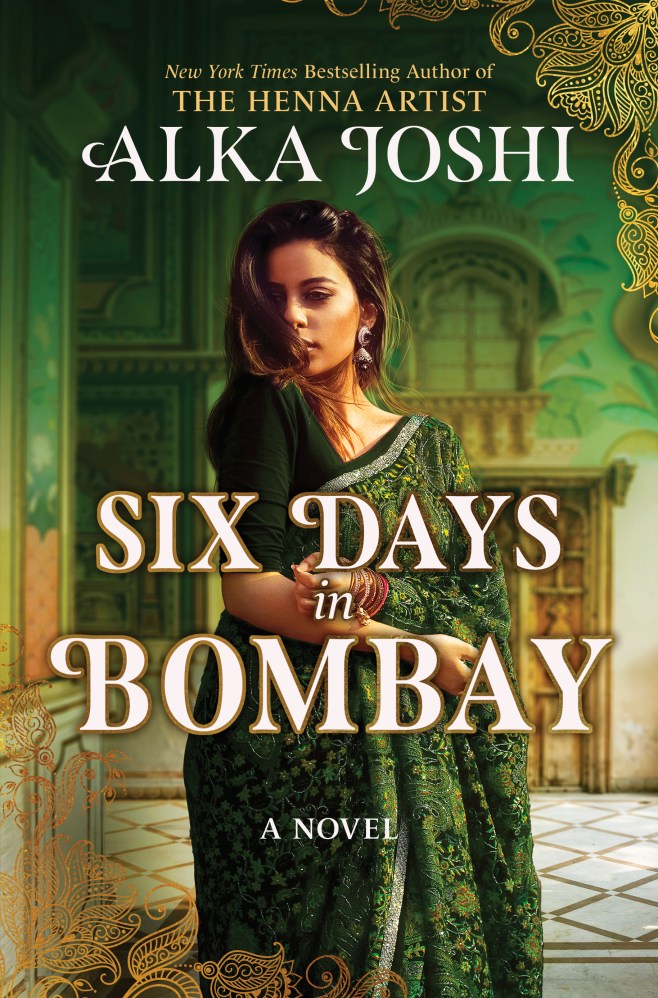
In a green toned cover, a woman with long dark hair stands posed in a green sari with a tiled room behind her.

Alka Joshi is the internationally bestselling author of the Jaipur Trilogy, which includes The Henna Artist, The Secret Keeper of Jaipur, and The Perfumist of Paris. Her fourth novel, Six Days in Bombay, comes out on April 15. In her first stand-alone novel since her bestselling debut, Alka Joshi uses the life of painter Amrita Sher-Gil, the “Frida Kahlo of India,” as inspiration for the story’s exploration of how far we’ll travel to find out where we truly belong.

The Henna Artist became an instant New York Times bestseller, a Reese Witherspoon Book Club Pick, an LA Times bestseller, a Toronto Star bestseller, an Indie Bookstores bestseller, a Cosmopolitan best audiobook, and an Amazon and Goodreads favorite. It was long-listed for the Center for Fiction First Novel Prize and has been translated into 29 languages. It is currently in development as an episodic series. In 2023, Alka Joshi was honored by Forbes as one of their 50 Over 50 women, recognized for shattering age and gender norms.

Alka was born in India and came to the United States with her family at the age of nine. She holds a BA from Stanford University and an MFA from California College of the Arts.

National Library Week: Graphic Novels for Kids

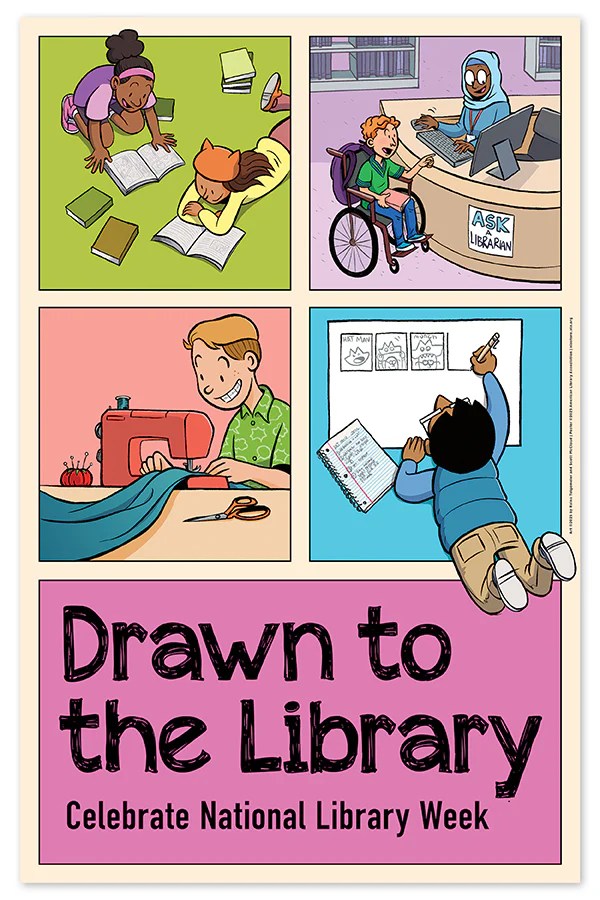
National Library Week Poster shows four different, common scenarios at the library: reading, talking at the desk, using a sewing machine from the library of things, and someone drawing.

by Jean B.

What draws you into the library? Comfortable chairs and aisles of tall shelves, packed with interesting titles? Classes where you can learn or socialize? Play areas for children?

Libraries serve many needs these days and offer access to all kinds of media – not just the weighty tomes of classic literature. For many of our school-age customers, it’s the graphic novels that draw them in. Dogman to Batman, Smile and Guts – these titles possess a magnetic power to pull kids into the library, sometimes to the chagrin of their grown-ups. They ask: “Are graphic novels real reading, if they’re filled with pictures?”

This year’s theme and its honorary chairs, cartoonists Raina Telgemeier and Scott McCloud, affirm the value and power of these stories told through comic-strip panels. In recent years, graphic novels and their creators have received the highest honors in children’s literature, recognizing their artistry as well as the many benefits these books bring to young readers in building literacy.

Reading specialists stress the importance of motivation for a child’s success in learning to read. Kids need to be interested in the stories presented to them to do the work of reading. So if Dogman gets them to keep reading, it’s just as valuable as a classic! For those who may have fallen behind early in the reading process and lost confidence, graphic novels can restore their motivation. The images are appealing, the word bubbles less intimidating than full pages of text, and children can be successful without feeling the books are “beneath them.”

Graphic novels also teach children how to integrate text and visual literacy — an essential skill in today’s multi-modal landscape. When kids tackle a website, advertisement, or YouTube instructional video, they need to absorb both images and text to decipher meaning. That is the world we all now live in, and careful reading of a great graphic novel sharpens this important skill.

At Central Branch, the graphic novel collection literally creates the gateway for entering the children’s department. But in a much broader sense, graphic novels offer a gateway to the vast variety of books and materials readers will find in the library. Once DRAWN IN to reading, the discoveries and stories are limitless!

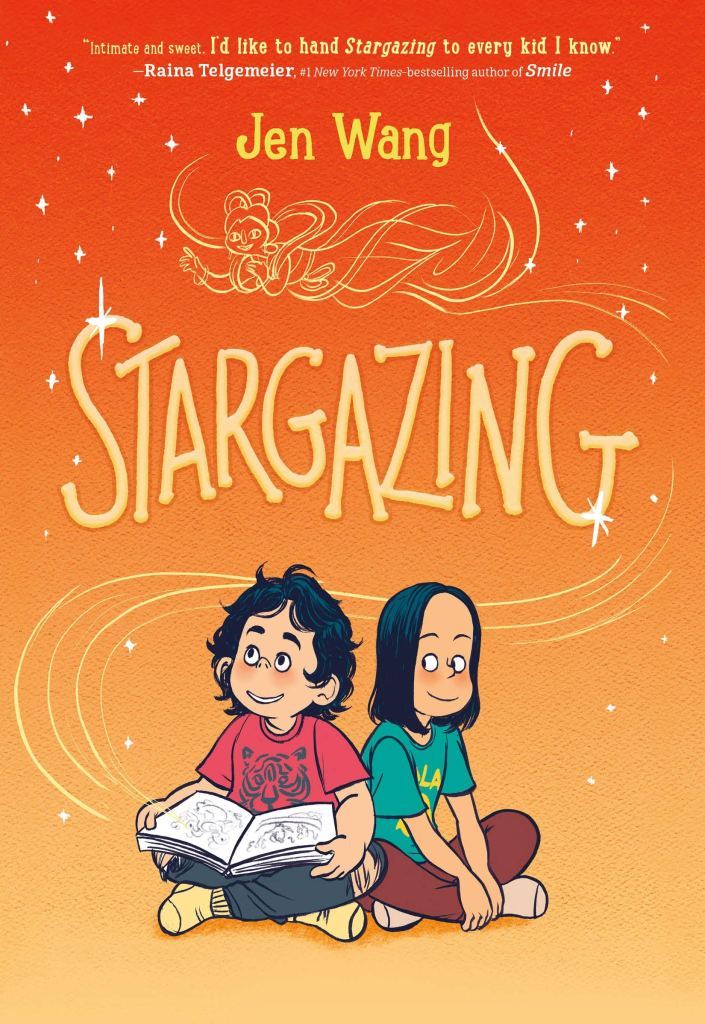
The cover shades from dark orange at the top to a light orange at the bottom, with two kids sitting tailor fashion. The one on the left has a book open, with swirls of a sprite sketch coming from the pages.

Celebrate National Library Week by exploring some of these award-winning graphic novels, all based on real experiences:
El Deafo by Cece Bell
New Kid by Jerry Craft
Mexikid by Pedro Martin
Stargazing by Jen Wang.

Jean is a Children’s Instructor and Research Specialist at HCLS Central Branch. She loves talking about books with people of all ages, but especially enjoys leading the Heavy Medals book club for fourth and fifth graders, exploring award-winning books of all genres. 

National Library Week: Graphic Novels for Adults

National Library Week Poster shows four different, common scenarios at the library: reading, talking at the desk, using a sewing machine from the library of things, and someone drawing.

by Emily B.

There seems to be a common misconception that graphic novels don’t count as “real reading.” This could not be much further from the truth! Reading takes on many forms beyond the printed word, each format with its own appeal. Everyone connects with stories and information in unique ways. No matter the format, reading counts, as long as you’re engaged with the material.

I find that nay-sayers tend to focus on how graphic novels differ from traditional books, rather than considering the unique elements that make graphic novels so engaging. The combination of text and illustrations might make reading more approachable to hesitant readers. Not only can the illustrations help bring the story to life, but they also can aid readers in interpreting and understanding the narrative. Literary devices like symbolism, flashbacks, and foreshadowing are enhanced with the added visual component.

Legendary comic artist Will Eisner introduced the term “sequential art” to describe comics in his 1985 book Comics and Sequential Art, giving a name to an art form that has existed for many thousands of years. Though graphic novels have experienced a recent surge in popularity, they are rooted in ancient tradition. Some early examples of sequential art include Egyptian hieroglyphs, the Trajan Column in Rome, and Maya script.

Graphic novels really offer something for everyone, from fictional stories to memoirs and depictions of real-life experiences. Interested in giving graphic novels a try? Here are just a few classics to start you on your journey:

The cover of Maus shows a black swastika with a cat behind two mice wearing trench coats.

Art Spiegelman’s The Complete Maus – This book is the first and, so far, only graphic novel to win the Pulitzer Prize. Spiegelman tells the story of his father, a Holocaust survivor, in his years leading up to World War II, his survival and liberation from a Nazi concentration camp, and his life in the years that follow. Maus is heralded as a unique blend of memoir, history, and biography in a sleek graphic novel package.

Marjane Satrapi’s Persepolis and Persepolis II – In two volumes, Satrapi recounts her childhood in Iran amidst the Islamic Revolution and her adult years in Austria. Her graphic novel memoirs were adapted into an Oscar-nominated animated film of the same title.

John Lewis’ March I-III – Late civil rights activist and politician John Lewis, at the suggestion of his aide Andrew Aydin, tells the story of the Civil Rights Movement from his perspective. The two compiled Lewis’ anecdotes, experiences, and stories, and artist Nate Powell helped bring the important story to life on page.

Emily is an Instructor & Research Specialist at HCLS Central Branch. When she’s not reading, she enjoys puzzling, listening to music, and re-watching old seasons of Survivor.

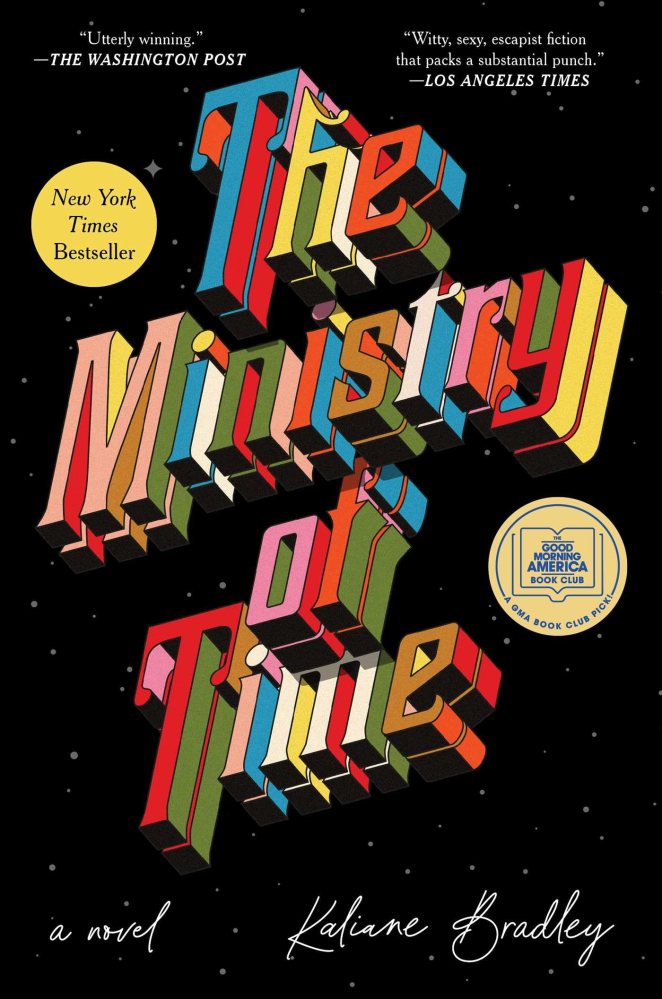
The Ministry of Time by Kaliane Bradley

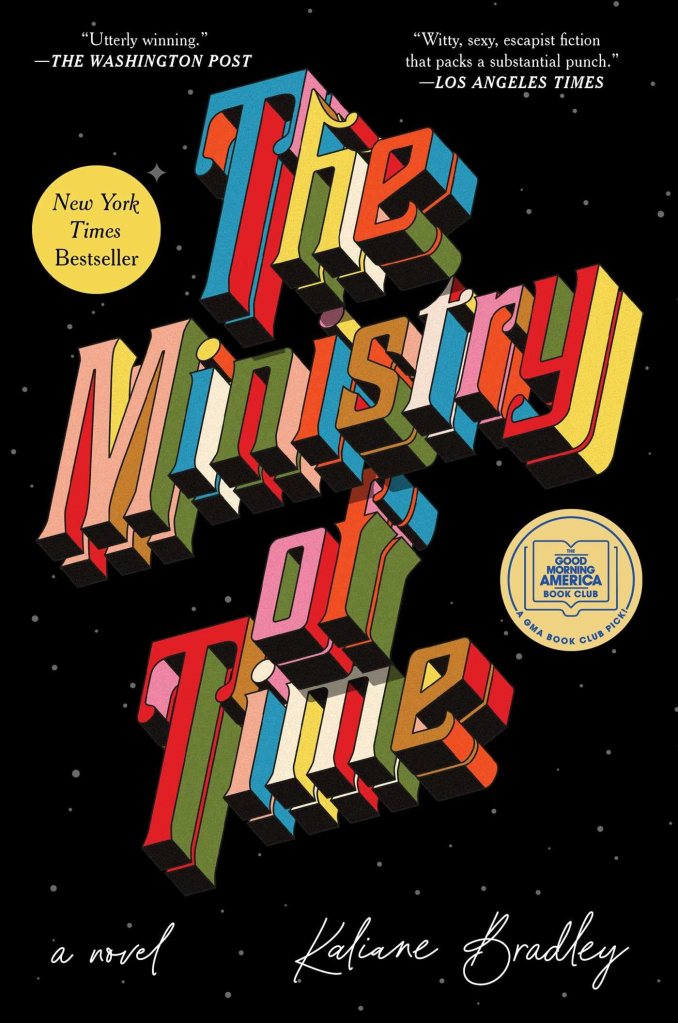
Brightly colored, large italicized lettering appears doubled on a black cover. Stickers added for New York Times best seller and the Good Morning America Book Club.

by Kristen B.

As the story begins, the main character is finishing a series of rather hush-hush job interviews. When she learns she got the new position, she hears the words, “We have time travel.” Welcome to The Ministry of Time by Kaliane Bradley, which plays with the notion that sometime in the future, we figure out how to travel in time.

It’s one of the biggest question about time travel: Can we improve the present – avert some disaster – by changing the past? This story seems a little different, more scientific at the start – wondering if it’s even possible for humans to exist outside of their own time. The Ministry devises an experiment where they “rescue” certain individuals known to have died in tragic or terrible ways: a doomed trip to discover the Northwest Passage, a plague house in the 1600s, the trenches of WWI, and other such horrible histories. Those individuals feel more like they’ve been kidnapped than rescued.

The book’s narrator, who gets that job with the Ministry (but never a name), is assigned to be a bridge between Graham Gore, officer of the Royal Navy in the early nineteenth century, and her time period in near future London. She insists on referring to him as being Victorian, but his time was actually just before Victoria’s reign began. The first third of the book delights in Gore’s observations of modern life and conveniences. But clearly, something is amiss in the Ministry. The main character just can’t quite figure it out but strange happenings keep occuring, like her handler being assassinated at a public event and certain time travelers being invisible to scanners. Other things don’t add up either, although it becomes clear there are warring factions within the Ministry. No one is quite sure who to trust.

Graham and our narrator spend almost all their time together: learning modern skills like riding a bike (which eventually improves to a motorcycle), touring museums, and going to pubs with other time traveler/bridge pairs. One session admiring a Turner exhibit at the Tate is particularly insightful. Graham becomes good friends with two other people out of time, one of whom is my favorite character. Maggie was left to die in a plague house, but she comes to embrace London’s club scene and dating apps where she can be openly gay. These friendships prove to be crucial not only to the characters’ well-being, but to the ultimate resolution of the story.

On top of the fascinating premise, the author has a gorgeous way with words. One character is described as, “Despite being out of uniform, he looked oddly formal, as if he was as the sole person in serif font.” I don’t want to spoil the surprise of this excellent debut. What ensues in the second half of the book is a complete mash-up of time travel, spy thriller, and romance into a beautifully written novel about the dangers of colonialism. Bradley really does tell you everything you need to know in the first chapter, only I didn’t realize it until I re-read it after the devastatingly bonkers ending. This is a book I’ll think about often and already have plans to re-read.

You can borrow the book in print or large print now, but there’s a bit of wait for the e-book and e-audiobook versions.

Kristen B. is a devoted bookworm lucky enough to work as the graphic designer for HCLS. She likes to read, stitch, dance, and watch baseball (but not all at the same time).

Reading List for Trans Visibility

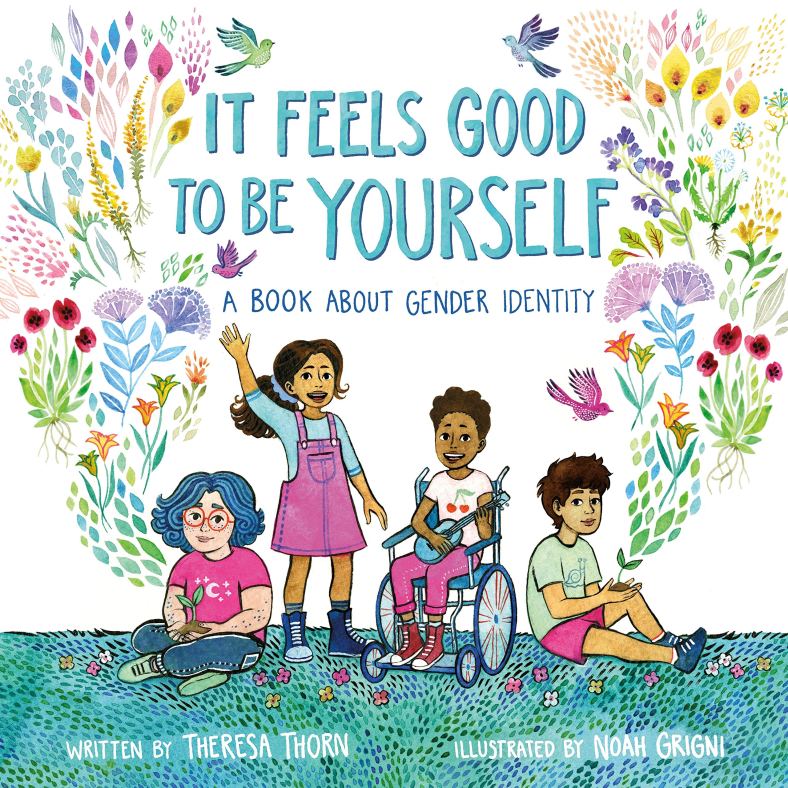
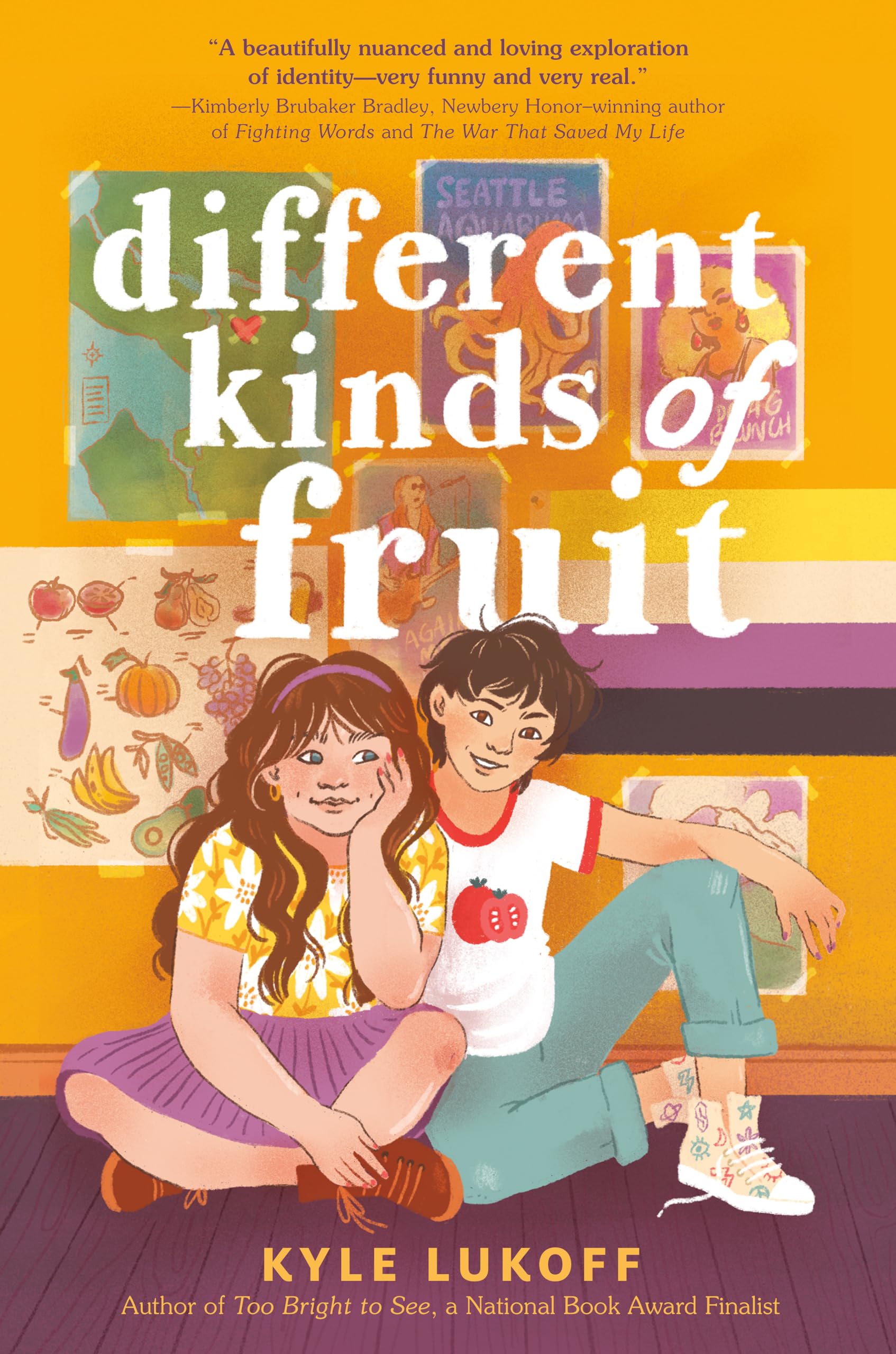
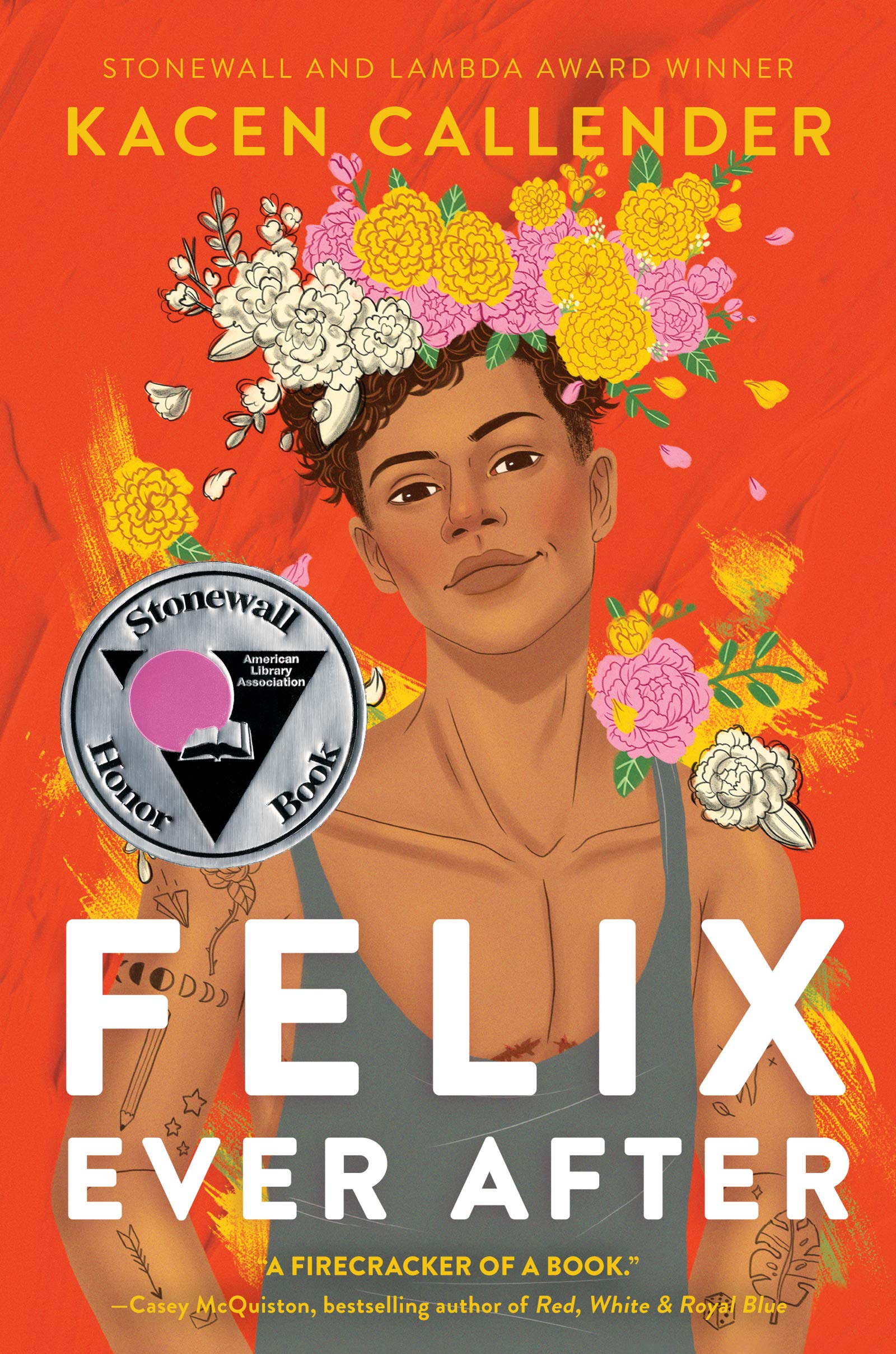
A colorful illustrated cover shows many children framed by sprays of flowers, with the title above them.

By Ash B.

Since 2009, March 31 has been recognized internationally as Transgender Day of Visibility. Created by trans community member Rachel Crandall-Crocker, the day is meant to spark hope and spread awareness of trans lives, especially through trans joy. 

General awareness of trans-ness has increased in the past 15 years; however, visibility does not always mean progress. Over the past three years, Americans (across all political parties) have grown less supportive of policies that support trans people (ex. protection against job and housing discrimination) and more supportive of policies that cause harm and restrict trans rights, particularly relating to athletics, restrooms, and healthcare (Pew Research).

The majority of Americans, particularly those aged 50+, report they do not personally know a transgender person. Perhaps that’s why the trans community has become such an easy target for disinformation and scapegoating. If a sizeable majority of the population personally knew trans and nonbinary people – truly knew us, as peers and coworkers and friends, as humans trying to live our lives as best we can – then perhaps we would be guaranteed more safety and bodily autonomy.

In the spirit of trans joy, all are invited to celebrate the trans community at the following events: 

This Friday (Mar 28), join HCLS for a free Trans Day of Visibility celebration hosted by the Howard County LGBTQIA+ Commission, in partnership with the Office of Human Rights and Equity. The event takes place at the Elkridge 50+ Center from 4 – 7:30 pm with read-alouds, arts and crafts, games, and a dance party. More info here. 

On Monday, March 31, 10 am – 12 pm & 3 – 5 pm, join us at Central Branch to make buttons, zines, collages, and vision boards. From 4 – 5 pm, a representative from Community Allies of Rainbow Youth (CARY) shares resources and answers questions.

Below is a robust roundup of titles from our collection, most of them authored by trans people. Regardless of your gender identity and personal background, there’s something here for everyone; I hope you check one out and learn something new! 

Trans 101 Information

Anthologies to Better Understand Transgender Experiences

Trans History

If You’re a Parent (whether or not you currently have a trans child) 

Inclusive Picture Books

Middle Grade Fiction

Young adult novels & graphic novels

Adult Fiction

Need more book recommendations? Feel free to contact us, and if we don’t own a title you’re looking for, you can Suggest an Addition to the Collection.

For more resources and organizations to connect with, here are the resource lists from Community Allies of Rainbow Youth and PFLAG Howard County.

Ash is an Instructor and Research Specialist at HCLS Central Branch with a passion for information literacy and community engagement. They love music, gardening, hiking, and cuddling with their golden retriever.

Women Poets

The top half of the cover is white with Mary Oliver in blue, and the bottom half is ochre with A Poetry Handbook in white.

by Sahana C.

March’s Women’s History Month and April’s National Poetry Month offer the perfect chance to celebrate some remarkable women poets in our collection. Across generations, their voices have turned shared experiences into art at all levels, teaching us about love, identity, resilience, and nature. Here are a few notable names whose works you should check out:

Emily Dickinson must be included in any list about women poets. She wrote with an intensity and originality that set her apart in 19th-century American literature. Her compact, untitled poems challenge conventions, exploring themes of death, nature, and the self with wit and depth.

Maya Angelou, a powerhouse of literature and activism, weaves autobiography and poetry to speak of struggle and triumph. Her groundbreaking poem “Still I Rise” affirms the resilience of the human spirit and is a testament to hope despite all odds.

Joy Harjo was the first Native American U.S. Poet Laureate, and her work reflects that identity. Her poems often blend moments from her heritage and upbringing with vivid musicality. Her anthology, Living Nations, Living Words brings many Native poets to the forefront and connects past injustices to present resilience.

Mary Oliver is a consummate naturalist. Her poetry, though deceptively simple in form, encourages readers to reflect on nature’s quiet wisdom and the profound lessons it offers. These are the perfect poems to meditate on, mull over, and chew on. Oliver is also the author of one of the seminal handbooks about reading and writing poetry, A Poetry Handbook.

A bright yellow cover shows fancy scrolls in red framing the title, The Hill We Climb, which is in blue.

Rupi Kaur is the most contemporary by far on this list but she deserves a mention for her contemporary style, which has redefined poetry for a digital age. With poignant reflections on love, trauma, and healing, Kaur connects with a new generation of readers through her evocative, minimalist verse.

Amanda Gorman, the first National Youth Poet Laureate, brings her background, her activism, and her fire to her poetry. She was first put on the map with her poem “The Hill We Climb,” which is a testament to community, togetherness, and solidarity.

Ada Limón, the current U.S. Poet Laureate, captures the beauty and complexity of everyday life. Her work is both profound and accessible, imbued with a rich emotional resonance.

Celebrate these poets by exploring their works, available in our collection. Let their words inspire you this spring!

Family Story and Craft: Poet-Tree
Families, ages 6+. Ticket required.
Celebrate National Poetry Month by listening to some poetry and creating a Poet-Tree craft.
Tue, Apr 29 at 6:30 – 7 pm
HCLS Miller Branch

Hundreds of Beavers

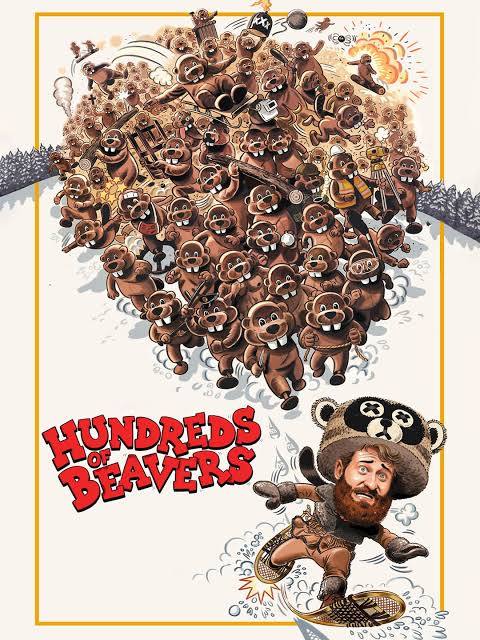
In a style reminiscent of National Lampoon or other madcap movies, the illustration shows a man dressed in a beaver costume fleeing a crowd of beavers. Text appears in red hand-drawn blocky letters.

by Alex P.

When Hundreds of Beavers got released to streaming services last year, it became one of the biggest success stories and most beloved films of the year, and for good reason. As a black-and-white slapstick comedy, awash in practical effects and Adobe After Effects 2D animation, completely devoid of dialogue and produced with only $150,000, it feels remarkably out of place in a cinema landscape dominated by CGI and character-driven dramas. But that very out-of-placeness is what makes its inventive qualities all the more precious. I feel that the poster, which IndieWire called one of the best of 2024, captures this perfectly. Its hand-drawn caricatures and bold red lettering are a direct throwback to the absurd comedies like It’s a Mad, Mad, Mad, Mad World and those by National Lampoon from the 60s and 70s, which make up just some of the film’s many influences. 

The influences are even wider than Hollywood comedies. The first act is a perfect translation of Looney Tunes cartoons to live-action film, before heavily incorporating video game logic in the second act. I particularly like how directly it translates the video game mechanics of survival games like Minecraft or Terraria into film action. We’ve seen a lot of video games adapted into films in the past decade, but they seem to flatten how the games work into standard Hollywood action. Seeing a movie that literally functions and presents itself like a video game as a framework for its action and plot is a bold innovation. Similarly fusing old and new influences, the slapstick feels equal parts Charlie Chaplin and early YouTube sketch comedy. 

Co-writer Ryland Tews stars as Jean Kayak, a 19th century applejack salesman turned fur trapper. The film’s action completely centers around his efforts to trap and kill cute critters (played by people in mascot suits) for sustenance and to trade their pelts for goods. The rigid logic about the tactics to trap each animal (beavers always fall for turds lacquered in castor oil, rabbits will go for anything that resembles a carrot) sets up most of the action as Jean discovers the logic of his world and his trade the hard way. The film’s best quality is the virtuosity with which it immerses you in recurring gags and wild internal logic that feel as well-scripted as a classical symphony. Again, thanks to the heavy use of video game logic, gags that would be throwaways in other movies recur again and again only to culminate in centerpieces where Jean uses everything he’s learned to set up giant, hilarious Rube Goldberg machines. 

In our age of digital proliferation, you’d think independent film would have flourished to a much greater extent than it has. Nearly everyone has a camera and powerful editing software sitting in their pockets. Instead, though, modern film has felt more suffocated than ever, as big studios insulate themselves from big risks by trying fewer crazy ideas and releasing fewer movies. In this era, then, it’s comforting and much needed to see a film made with no money whatsoever that looks amazing and oozes more creativity than most blockbusters and made more than six times its money back solely by word of mouth.  

You can watch Hundreds of Beavers on Kanopy with your library card and PIN. 

Alex Pyryt is a DIY Instructor & Research Specialist at HCLS Elkridge Branch.  

The New Menopause: Navigating Your Path Through Hormonal Change with Purpose, Power, and Facts by Mary Claire Haver, MD

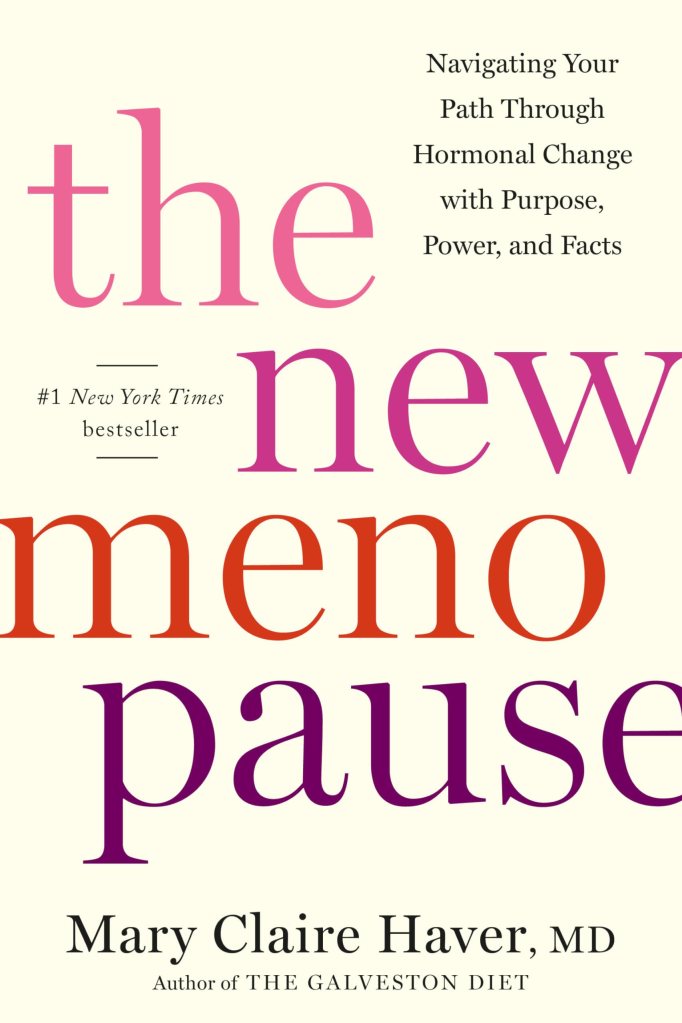
A pale yellow cover has large type in light pink "the", dark pink "new", orange "meno" and purple "pause." So, it reads clearly The New Menopause.

By Carmen J.

I remember when I was 10 years old, my beautiful mother complained about growing whiskers. So, she crankily sought electrolysis treatments, and the term menopause was ingrained in my pre-puberty mind as being a time of much discomfort. I knew I didn’t want to be cranky and have whiskers, either.

As I started my first period in my early teens, the thought of menopause seemed completely out of reach and more for the grandmotherly folks I came into contact with. Menstruation in my teens and early 20s served much more as a general annoyance at times or a sign that contraception was doing its due diligence.

While planning for a family, a missed period would signal joyful anticipation leading to motherhood’s promise of a sabbatical for nursing. As my daughter toddled and entered pre-K, I noticed changes about myself that were surprising. I started sweating without much exertion, my moods were unexplainable, and my reliable cycles became shorter in length and less frequent.

“You’re in perimenopause,” my doctor noted.  “And it may be like this for several years.” Hmm… what?

Fast forward to my book recommendation: Mary Claire Haver, MD’s The New Menopause: Navigating Your Path Through Hormonal Change with Purpose, Power, and Facts. I would qualify this as required reading for all women. 

Dr. Haver, who has garnered a powerful reputation for debunking menopause myths and normalizing conversations about women’s health, delivers a tour de force book that explains perimenopause, menopause, and post-menopausal care. You’ll learn about the variety of symptoms (66!) women can experience and how they are not limited to crankiness and whiskers (Sorry, Mom!). Examples include some that are unexpected or less frequently discussed, including body odor, depression, itchy skin, and tingling extremities. Dr. Haver shares insights surrounding hormone replacement therapy’s role in minimizing symptoms while sharing benefits versus risks. Particularly eye-opening for me was learning about estrogen’s critical duty outside of reproduction (i.e., cognitive and cardiac functions). The book includes a tool kit that serves as a symptom-based resource section and shares strategies for each individual symptom. 

Recently, Dr. Haver appeared on Mayim Bialik’s Breakdown, a terrific podcast. If you remember Mayim Bialik from the sitcom Blossom, you’re most likely already perimenopausal. Bialik is a neuroscientist, and her podcast is simply outstanding. I have the YouTube episode link below.

So to all those women of a certain age feeling hot flashes, irritable, or in need of some hormone regulation, you are not alone. Knowledge is power. And there is power in every page of The New Menopause. Period.

The New Menopause is available from HCLS in print and as an e-book and e-audiobook from Libby.

Carmen J. is a teen instructor at HCLS East Columbia Branch. Among her favorite things are great books, all things 80s, shamelessly watching The Bachelor, gardening, and drinking anything that tastes like coffee.

Real Americans by Rachel Khong

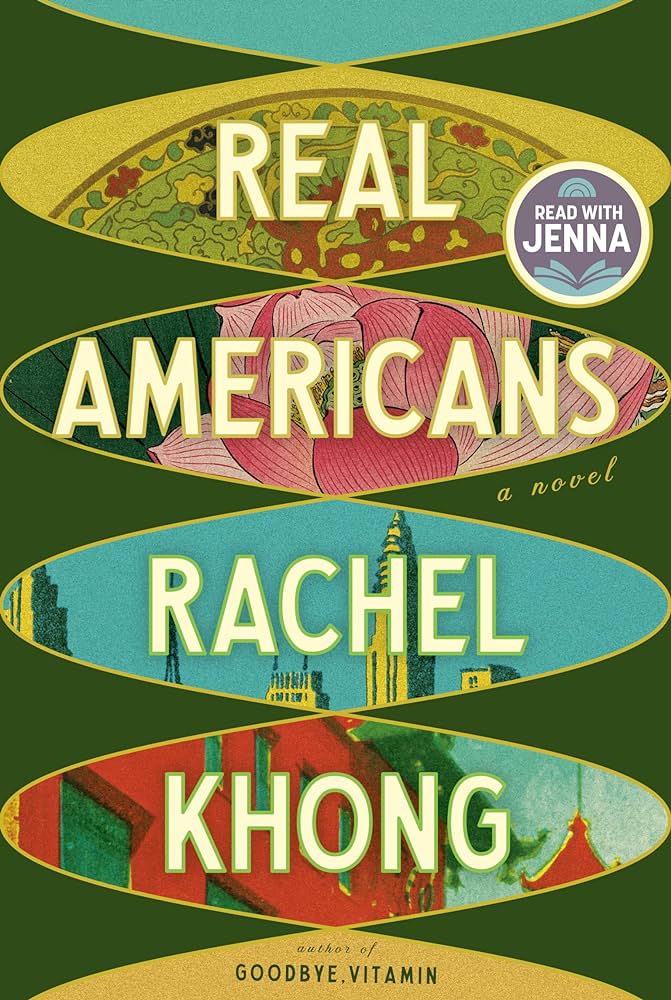
A series of four long ovals stretch horizontally show Asian motifs in first, second, and fourth shapes. The third shows skyscrapers against a bright blue sky.

by Eliana H.

Nature versus nurture is a discussion that has been happening throughout most, if not all, of our scientific history. What are the components that form us as people – who we are and who we become? In Real Americans, author Rachel Khong explores this age-old argument in a new way, spanning across three generations of a single family. 

After a scene-setting prologue that is explained in more depth toward the end of the book, readers meet Lily Chen, who is barely eking out a life in New York City as the world braces for a new millennium and the potential hazards of Y2K. She grew up in Florida, raised by scientists who fled China during the Cultural Revolution. At a holiday party hosted by the media company where she is an unpaid intern, Lily unexpectedly meets Matthew, her boss’ nephew. Despite their many differences and Lily’s hesitations over these differences, Lily and Matthew fall in love. Only as they are poised to get married does Lily learn just how wide the gulf is between her own upbringing and Matthew’s. He is not only wealthy; Matthew is the heir to a pharmaceutical family fortune and has been using a different last name to distance himself from them. After a number of miscarriages, Lily and Matthew are able to use IVF to conceive, but shortly after their son is born, Lily discovers a secret connection between her mother and Matthew’s father. She refuses to remain connected with either of their parents and forces Matthew to choose between them. 

The book then jumps to 2021, shifting to the perspective of Nick, the child Lily has moved across the country and raised on her own, now 15 years old. After growing up believing that his father wants nothing to do with him, a turn of events leads to Nick suddenly being able to connect with the father he’s never known. As he deals with growing up, coming of age, and choosing a college, Nick finds himself lying to his mother with barely a thought while struggling to find his place and identity. Events come to a head with Nick confronting both of his parents, and eventually choosing to disconnect from each of them in turn. 

The final section of Real Americans moves further forward to 2030, where readers find Mei, Lily’s mother, following her grandson around San Francisco. Nick is working for a biotechnology startup, and Mei is reflecting on her own life and the choices that have brought her to this point. After an encounter in a drug store, Nick begins spending time with his grandmother. Mei shares her story with Nick, asking him to pass along her words to Lily in hopes of reconnecting. Mei’s tale brings the family’s story full circle, and lingering questions are answered. 

Throughout each generation, members of the Chen family find themselves grappling with what level of choice and control we should have over genetic characteristics in ourselves and future generations. What would it look like to be able to screen out “undesirable” traits? What would the repercussions be? What are our responsibilities? An element of seeming magic, particularly relating to time, also threads through the book. Although portions of the story are somewhat predictable, Real Americans offers a sweeping family epic that invites readers to consider ethical questions which may become pressing sooner rather than later. If you are able to suspend some disbelief, you will find yourself carried along through the ebbs and flows of a multifaceted family as you ponder the origins of fortune for each of us. 

Real Americans by Rachel Khong is available in print, large print, e-book, and e-audiobook.

Eliana is a Children’s Instructor and Research Specialist at the Elkridge Branch and co-chair of the HCLS Equity Committee. She loves reading, even if she’s slow at it, and especially enjoys helping people find books that make them light up. She also loves being outside and spending time with friends and family (when it’s safe).

The Harder I Fight The More I Love You by Neko Case

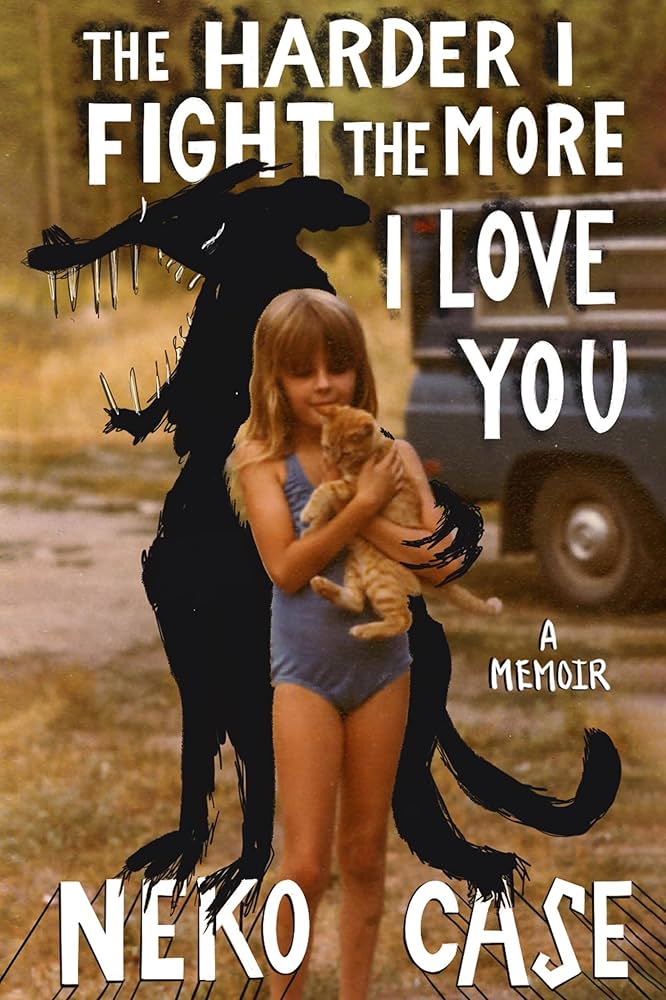
A young girl stands in a run-down yard, wearing a bathing suite and holding an orange kitten. Appearing immediately behind her is a rough sketch of a big black dog with sharp teeth.

By Holly L.

“I had actually DONE IT. I had made horses appear!!!” Neko Case recalls a defining moment described as “a bit of magic” from her childhood. Neglected by young parents who left her home alone from a too-early age, she was constantly hungry for food and companionship. One day, while desperately yearning for a horse, she makes not one but two horses appear before her eyes, a visualization she describes as “a real arrival to a real place.” In drawing these beasts from her imagination, Case establishes a sense of self and a creative identity that proves comforting.

She says that today, at age 52, she, “can still see the horses clear as day.” An early scene from Case’s new memoir, The Harder I Fight The More I Love You, it is one of many pictures drawn from memory that illustrates a fierce bond with nature and longing for connection in a world in which she felt unwanted. Today, she is a critically praised Grammy-nominated artist and has recently been welcomed back to the Grand Ole Opry after being banned in 2001 after taking her shirt off (playing an outdoor festival on a sweltering day, she found herself delirious and stripped down to her bra to avoid heatstroke).

I discovered Neko Case in 2005 when my friend Amanda tipped me off to her. Encouraging me to give her a listen, she said the name of Case’s third album like a command: Blacklisted. So I listened. The opening song Things That Scare Me hooked me from the start with its dark country twang and noir vibes (Case mentions the recently departed David Lynch as a strong influence). By the second song, “Deep Red Bells,” the saturated images of her haunted world gave me chills and had me fully converted: 

The red bells beckon you to ride
A handprint on the driver’s side
It looks a lot like engine oil and tastes like being poor and small
And Popsicles in the summer

Case details her traumatic childhood, starting out poor and small outside Bellingham in Northwestern Washington State. She recalls communing with the velvety-tracked ferns outside the trailer she shared with her mom and dad as she lay on the ground to “pet the soft dots” for hours. Throughout the book, she speaks reverently of animals and nature as wondrous beings, benign and free of ill-intent, unlike the adults in her life. Looking back on a short stint in her early childhood when the family lived near Cocoa Beach, FL when her dad was in the Air Force, Case recalls encounters with crabs, “little magicians of harmless danger, their black eyes atop long stalks like cartoon exclamation points.” This kind of vivid imagery, familiar to fans of her music, injects her prose with sound and color, conjuring up a sort of real-life fairy tale. 

Things get dark in Case’s story when, as a second grader, her Dad abruptly informs her that her mother is dead. His story is that her mother has been “very sick” recently, which is news to Case, who recalls only a few doctor’s visits, nothing that seemed serious. Stunned with disbelief, she gets on with life as kids do, only to be told by her father a little more than a year later that her mother is actually alive and has been living in Hawaii to receive treatment for her illness. The explanation is that her mother left so that the family wouldn’t have to see her suffer. Case is so elated to have her mother back that she doesn’t really question the story until years later, and the family never speaks about it.

From these turbulent beginnings outside Bellingham, Case crisscrosses the state as she splits time between her parents, who have divorced. Whether with her mom or dad, she is left alone for hours at a time, an only child who finds connection to the music that she hears on the radio: Buffy Sainte-Marie, the Go-Go’s, and Blondie are among those whose records she listens to in her school’s library when the other kids are playing at recess. Music becomes Case’s comfort and escape. Putting on headphones and pressing play on her “lavender off-brand, gas-station Walkman” helps her drown out the noise of a menacing world occupied by depressed, neglectful parents and the ever-present threat of the Green River Killer, whose murders dominate the local news. When she leaves Washington to attend a fine arts college in Vancouver, BC, she starts playing drums in a punk band called Maow. Feeling comfortable behind the drum kit, she’s reluctant to sing and one day asks her bandmates which one of them should sing a song when one shoots back “YOU sing it!” And so she does. The rest is history.

Although she had loved to sing all her life, it took her a long time to consider herself a capital S singer. Throughout a 30+ year career spanning solo and collaborative albums with such bands as power pop dynamos The New Pornographers, Case has taken ownership of her voice—which ranges from a soaring clarion call to a soft, breathy lilt and is always uniquely her own. I tore through this page-turner of a memoir, enthralled by Case’s heartbreaking story told in her trademark voice. Case’s sense of humor and nuanced perspective help the reader process some of the darker elements of her past, which includes severe neglect and sexual abuse. Ultimately, this is an affirming tale about survival and the transformative power of art. I came away from the book with an enhanced appreciation for the strength underpinning Case’s voice, eagerly anticipating her future projects, which include a forthcoming album later this year as well as a musical adaptation of the 1991 film Thelma and Louise.

The Harder I Fight The More I Love You is available in print, e-book, and e-audiobook. Neko Case also publishes a Substack newsletter called Entering the Lung.

Holly is an Instructor & Research Specialist at HCLS Miller Branch. She enjoys reading widely, knitting sporadically, and baking as often as she gets the chance.