Shakespeare: The Man Who Pays the Rent by Judi Dench

A light blue cover with a small watercolor illustration of a tree above text that reads: Judi Dench. Then, Shakespeare in a big script above copperplate type: The Man Who Pays the Rent.

by Kristen B.

If you have ever wanted an in-depth, behind the scenes look at Dame Judi Dench’s formative years with the Royal Shakespeare Company, have I got a book for you! If you haven’t but have a fondness for the Bard, you still want to get your hands on this book. And if you simply love to listen in on two friends trading stories from their past and arguing over details, this one is for you, too – it’s that much fun!

Dame Judi Dench and her good friend Brendan O’Hea engage in a series of conversations in Shakespeare: The Man Who Pays the Rent, during which they discuss Shakespeare and acting, and – in all honesty – just dish about various productions. You can almost hear the teacups in the background. It’s fascinating to eavesdrop on them quarreling about interpretation or reminiscing about pranks and misdeeds. They cover some of the best-known plays, such as Twelfth Night, Macbeth, and Romeo and Juliet, but they also spend time with Coriolanus, The Merry Wives of Windsor, and The Winter’s Tale. I was simply amazed by how much of each play Judi Dench can apparently recite from memory – entire sequences, from multiple parts.

I assume the physical book is lovely, but the audiobook is pure gold. Barbara Flynn provides Dame Judi’s voice, and you would think that you’re listening to a younger version of the great actress (which you essentially are). She talks about her favorite parts, her views for the motivation of various characters, how Shakespeare manipulates the audience, and more details about stagecraft. She also tells stories about being mostly naked and painted green, sharing rooms, and having a ton of fun with other (now revered) fellow actors.

As she says, ““Everything you have felt or are yet to feel is all in there in his plays: oppression, ambition, loneliness, remorse, everything….Shakespeare has examined every single emotion….His writing has the capacity to make us feel less alone.” This book helped me remember exactly that! I laughed, I learned, and I was gloriously entertained.

Shakespeare: The Man Who Pays the Rent by Judi Dench and Brendan O’Hea is available in print, e-book, and e-audiobook.

Kristen B. is a devoted bookworm lucky enough to work as the graphic designer for HCLS. She likes to read, stitch, dance, and watch baseball (but not all at the same time).

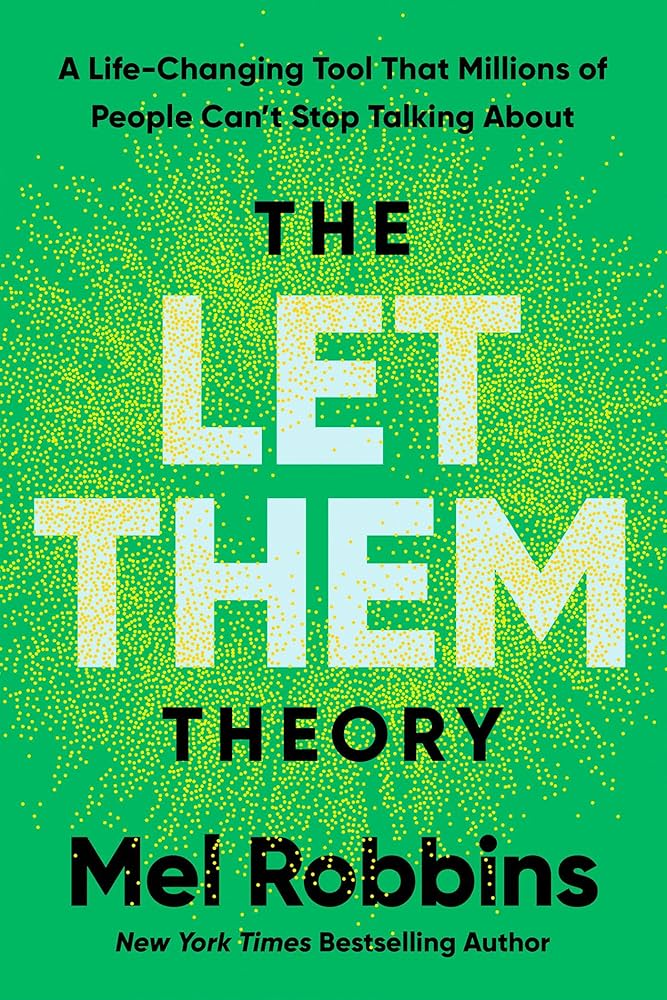
The Let Them Theory by Mel Robbins

A bright green clor has an explosion of yellow dots, like someone threw confetti at the center of the book.

by Carmen J.

Days before the new year had me ruminating about resolutions and the things I want to accomplish in 2025. Work out more? Eat better? Stop procrastinating about my dreams? Sound familiar? Have you made similar intentions and broke them, and kept them, only to break them again?

This year, I turned to “my friend Mel” – as she regularly coins herself to her millions of followers of The Mel Robbins Podcast and her readers of best-selling titles such as The 5 Second Rule and The High 5 Habit.  I am savoring her latest work, The Let Them Theory: A Life-Saving Tool That Millions of People Can’t Stop Talking About. It’s the book I never knew I needed.

Simply put, the theory puts into sharp perspective how we can’t control others, including their thoughts, emotions, and opinions about us. Similarly, we can’t control when things don’t necessarily go our way. For example: If someone decides they don’t like you or an opinion you have or the way you live your life: Let Them. Often times, there will be nothing you could say or do to change those thoughts, emotions, and opinions. Consequently, what we can control is the next step: Let Me. The Let Me is our reaction, the thing we can control. Sometimes the reaction is no response, or it’s setting boundaries, or having difficult conversations that need to be had. Robbins shares more in-depth strategies and experiences from her own life and from her followers.

If you are one who has people pleased and sucked it up, all in the gallant hope of keeping the peace, Robbins’s book will be a walk through mud: uncomfortable and messy, yet survivable and relatable nonetheless. It’s part of the human condition to wonder and think about the opinions of others and try to check all of the boxes in accordance. What if we vow this year in the face of uncertain times or certainly hard times and with the utmost certainty to let the chips, opinions, and emotions happen. Let Them wash over you without fury but with fearlessness. And Let Me (and Us) make the focused choice not to change course and be OK with any mild discomfort. Let Them, Let Me, Let Us be better for it.

The Let Them Theory: A Life-Saving Tool That Millions of People Can’t Stop Talking About by Mel Robbins is available in print and e-book.

Carmen J. is a teen instructor at HCLS East Columbia Branch. Among her favorite things are great books, all things 80s, shamelessly watching The Bachelor, gardening, and drinking anything that tastes like coffee.

My Roommate is a Vampire by Jenna Levine

A half and half cover of two apartment windows shows a man all in black upside down and a young woman in a shirt and green pants in sunshine

by Angie E.

My Roommate is a Vampire by Jenna Levine is a fang-tastic blend of humor, romance, and supernatural charm that leaves you thirsting for more. From the very first page, this novel sinks its teeth into you with witty banter and irresistible characters. Our protagonist, Cassie Greenberg, is an artist struggling to make ends meet in Chicago. Just when her situation seems dire, she stumbles upon an unbelievable Craigslist ad for a rent-free apartment. The catch? Her new roommate is Frederick J. Fitzwilliam, a suave and sophisticated vampire who’s been asleep for a century. 

Levine does a magnificent job weaving modern-day struggles with age-old vampire lore. The chemistry between Cassie and Frederick is electric, with their playful interactions and evolving relationship keeping readers hooked. Cassie’s vibrant personality and Frederick’s old-world charm make for a delightful contrast, and their journey from strangers to something much more is heartwarming and full of surprises. The novel’s humor shines through in every chapter. Whether it’s Cassie teaching Frederick the wonders of modern technology or Frederick’s awkward attempts to fit into the 21st century, the laughs come naturally and frequently. The supporting characters add depth and color to the story, each bringing their own quirks and perspectives. 

My Roommate is a Vampire isn’t just a lighthearted romp; it also explores deeper themes of acceptance, adaptation, and finding one’s place in an ever-changing world. Levine’s writing is sharp, clever, and full of heart, making it easy to get lost in Cassie and Frederick’s world. Perfect for fans of paranormal romance and anyone looking for a feel-good story with plenty of humor, this tale makes you believe in love that transcends time. 

My Roommate is a Vampire by Jenna Levine in print and as an e-audiobook. And you can continue the fun with My Vampire Plus-One.

Angie is an Instructor & Research Specialist at Central Branch and is a co-facilitator for Reads of Acceptance, HCLS’ first LGBTQ-focused book club. Her ideal day is reading in her cozy armchair, with her cat Henry next to her.

Elizabeth of East Hampton by Audrey Bellezza and Emily Harding 

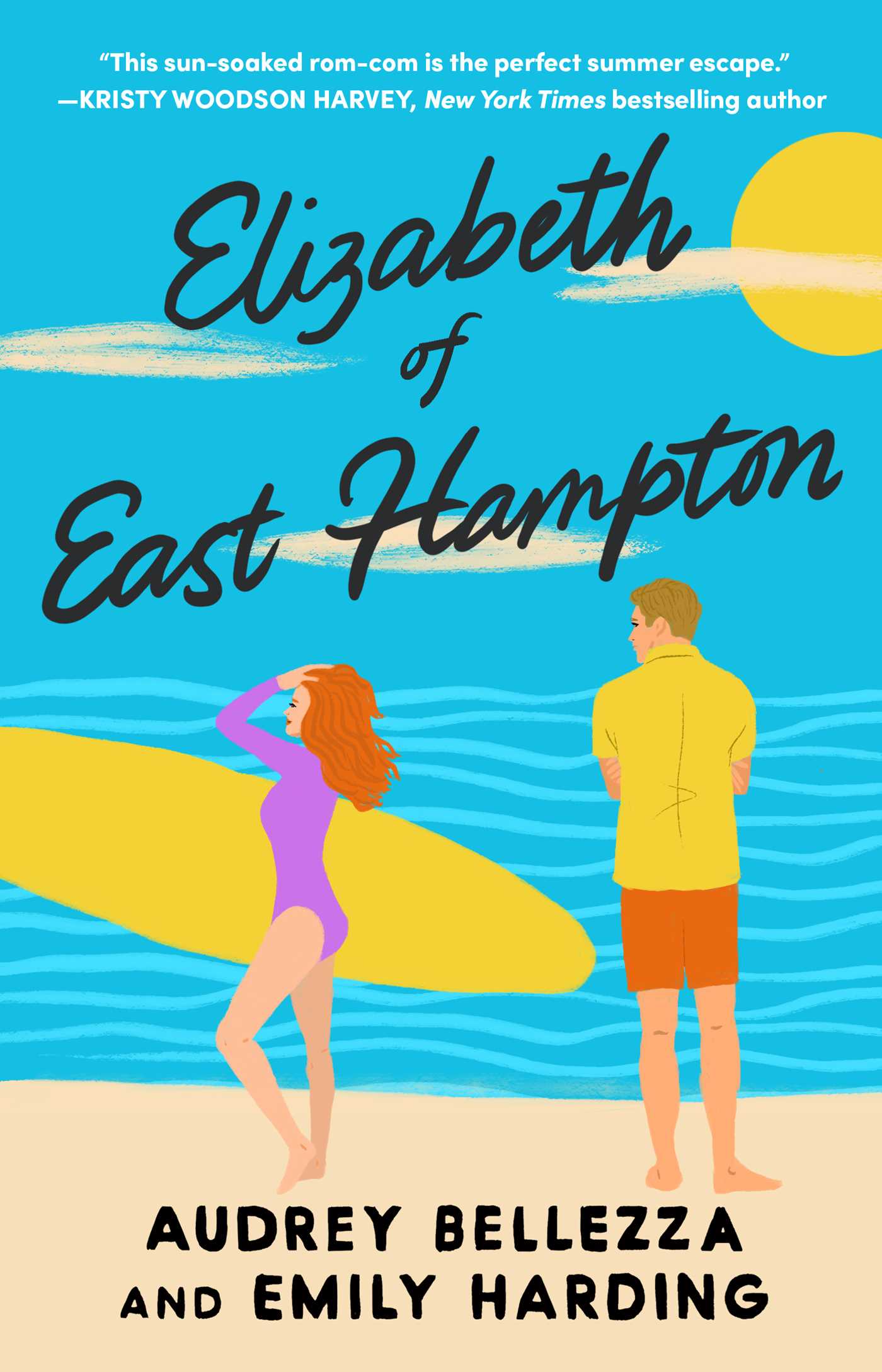
A bright modern illustrated cover shows a woman in a purple long sleeved swim suit walking with a long surfboard, and a guy in shirt and shorts looking her way. The background is sky blue with the suggestions of waves in lighter blue wavy lines.

Are you an ardent admirer of the fiery Elizabeth Bennet and broody Fitzwilliam Darcy from Jane Austen’s Pride and Prejudice? Are you exhausted with all the holiday chores and need some delicious brain candy? I have just the book for you! Pick up (or put a hold on) Elizabeth of East Hampton by Audrey Bellezza and Emily Harding.  

Twenty-five-year-old Lizzy Bennet, smart, spunky, and courageous, aspires to become a foreign correspondent for a renowned newspaper. Her dream seems almost within reach when she gets accepted into the School of Journalism at Columbia University. However, Mr. Bennet suffers from a heart attack before Lizzy can tell her family about her college acceptance. Lizzy must put her dreams on hold and defer her semester at Columbia so she can manage their family business, Bennet Bakery, in East Hampton.

Her older sister, Jane, is a teacher at an elementary school. Lydia is a social media influencer, Kitty is an aspiring business professional, and Mary is a climate activist. Mrs. Bennet is a self-proclaimed entrepreneur with hundreds of impractical business initiatives, leaving Lizzy as the glue who holds her chaotic family together. Her work starts at dawn as she fires up the oven, but only after Lizzy surfs every morning to cope with the chaos and frustration of her present circumstances. Lizzy loves her quirky family too much to leave them in a lurch, but she has outgrown the parochial East Hampton where rich Manhattanites descend every summer, party till dawn, and then leave in August.

Will Darcy is a business magnate who accompanies his dearest friend Charlie Pierce to his sister’s summer rental at East Hampton. Will’s goal is to prevent gold diggers taking advantage of the affable Charlie and to keep him focused on his work. Darcy and Lizzie’s paths cross when Charlie, accompanied by Will, walks into Bennet Bakery. He tastes their mouthwatering sour cherry muffins, lays his eyes on Jane, and falls in love. Will Darcy is ready to protect Charlie from the likes of Jane Bennet, who (according to him) is after Charlie’s money. It is infuriating to Will that Charlie, instead of wising up, tries to set him up with Jane’s fiery sister, Lizzy. He considers Lizzy to be a complete mess but inevitably falls for her charms.

And the rest is history. The chemistry between Lizzie and Will is absolutely electrifying as they surf together, glare at each other, fight their feelings for each other, misunderstand each other’s intentions, and finally overcome their pride and prejudice to find their way towards each other. 

As a lover of Austen, and especially Pride and Prejudice, I am always wary of reading retellings because I judge them hard. This modern retelling, with its interesting take on the well-known and much-loved plot and characters of my beloved original, won my heart. I have been suggesting this book to all my fellow Austen lovers whether they ask for my suggestion or not! 

Elizabeth of East Hampton by Audrey Bellezza and Emily Harding is available in print format. 

Piyali is an instructor and research specialist at HCLS Miller Branch, where she facilitates two book discussion groups: Light But Not Fluffy and Global Reads. She keeps the hope alive that someday she will reach the bottom of her to-read list.

Silk Road Reads

by Tony B. 

I admit this is a fairly niche set of titles, especially given my past with archaeology, but it is interesting to see how Central and Western Asia can fascinate far Eastern writers as much as it does the Western reader. These manga series all share a common thread of being set in real or fantasy versions of places like Turkmenistan or the various Persian dynasties. The stories may be different, but they all have a cultural or at least aesthetic backdrop of a mythical Silk Road-esque past. 

Manga cover shows a high desert landscape in the background, with a young woman striding off the cover. She's dressed in traditional steppe garp in red and black, with a creamy while underskirt and embroidered boots.

The Bride’s Story by Kaoru Mori
No, not the cult classic movie, but rather a brilliant manga series set in mid 19th century central Asia (think modern day –Stans). The detail that Mori puts into her work is staggering, and she placed specific emphasis on the rich textile traditions of the area. Bold patterns and intricate needlework serve not only as part of the plot revolving around a nontraditional marriage, but as a luxurious backdrop for rather complex characters. Colonialism and foreign power threaten to upend traditional life constantly, and Mori places her characters firmly between the Russian and British factions, during the time period of The Great Game of shadow diplomacy and proxy wars during the 1850s. This series does not stick to one genre, with elements of slice-of-life, coming of age tales, romance, history, and ethnography. No matter the topic or conflict, The Bride’s Story is gorgeously illustrated and historically sound. 

A light bright manga cover in creams, greys, and pale purples shows a figure in a cloak looking to the left, with a hawk on their shoulder.

Heroic Legend of Arslan by Hiromu Arakawa
From the mangaka of Fullmetal Alchemist, this series takes place in a mythical and magical version of ancient Persia. This series utilizes a lot of place names and proper names that are real aspects of several eras of the Persian Empire. Places like Ecbatana and Fars, and people named Daryun and Andragoras, transport the reader into a different, ancient world. Following a young prince who is navigating the trials and tribulations of sudden leadership, the reader watches his coming of age as a compassionate leader in a land accustomed to war. FMA readers will find this series visually familiar, but with enough change to keep it interesting. 

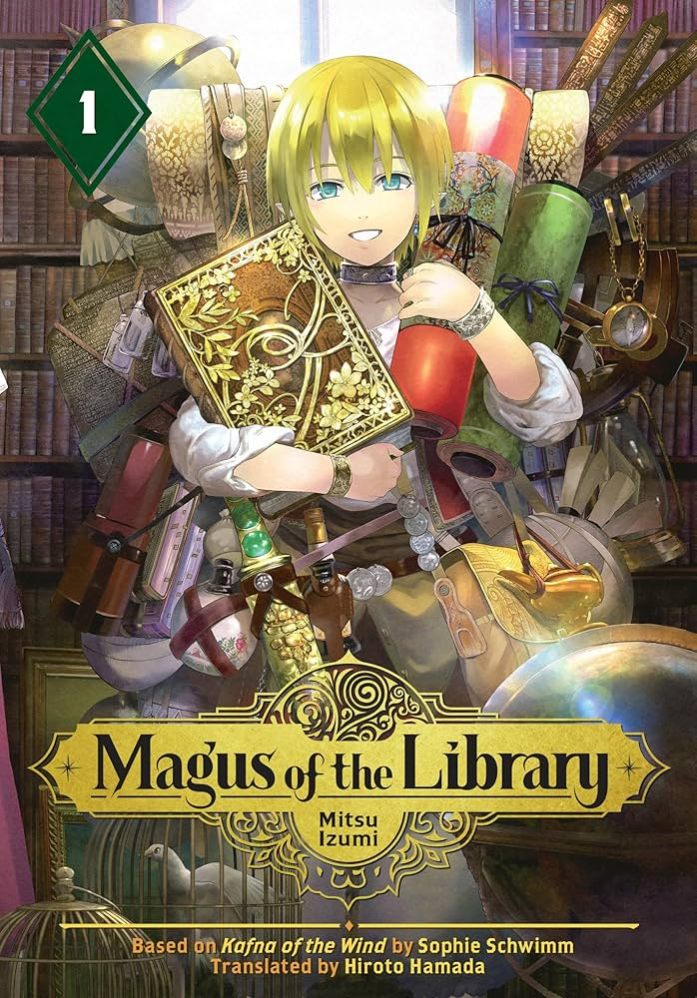
A bright and busy manga cover shows a young person in a wing chair with a library behind, clutching a wide assort of items including a bottle and a book.

Magus of the Library by Mitsu Izumi
Another story rich in detail and set in an alternative Western Asia, this manga leans less on history and more on magic. This was a bit of an indulgent read as a librarian, as most of the characters simply gush about their love of books and passions for various aspects of librarianship and reading. It also does not hurt that the fantasy society in question treats their magical librarians like super-humans. The series revels in diversity of characters, both real and fantasy, drawing from multiple historic inspirations for the factions complete with rivalry and culture shock. 

Tony is an Instructor and Research Specialist at HCLS Miller Branch. He has a degree in history and a renewed interest in science fiction and fantasy.

The Secret Hours by Mick Herron

The image depicts a cityscape lit up at night, from above, as if viewing from an airplane or helicopter.

By Julie F.

The Secret Hours opens with a thrilling pursuit: Max, a retired academic living in remote Devon, experiences a home invasion. The reader is privy to Max’s thinking in this first scene; he’s calm and collected enough to evade capture, at least immediately, and it’s clear that he has some background with the intelligence services. Max is now on the run, and the reader’s task is to figure out how his story matches up with the other tale author Mick Herron is telling – a look into what, at first, seems like ancient history.

In 1994, a newly-minted MI5 agent, Alison, is sent to cold war Berlin by David Cartwright to oversee and report back on the work of a somewhat abrasive, difficult agent named Miles. Cartwright is second-in-command in the Service and Alison isn’t sure why he distrusts Miles. In the present day, decades later, Alison is telling the civil servants on the nearly-defunct, investigative Monochrome commission the story of her sojourn in Berlin – how agents died and how the situation was rife with betrayals. The reader gradually comes to realize that her story might have something to do with Max and his pursuers. Of course, all the threads come together at the end and we get a glimpse of the manipulators behind the curtain who pull them for their own benefit. Herron’s unpredictability is one of his strong suits; the good guys don’t always come out on top, so it’s interesting to learn whether those maneuvering behind the scenes will get their comeuppance.

Mick Herron is a master – of character development, of mood and theme, and of plotting above all. I’ve loved the Slough House books in varying degrees, but this book – which is really Slough House-adjacent, involving none of Jackson Lamb’s present-day agents but clarifying many important questions from prior books – is utterly fantastic. If the acclaimed Apple TV series tackles this novel, it will be fascinating to see how they handle the flashbacks and resolve them in the modern storyline that features Lamb and his motley crew.

The tagline from Lee Child on the book cover says it better than I could: “Great Britain has a long, rich history of how-it-really-works espionage fiction, and Mick Herron – stealthy as a secret agent – has written himself to the very top of the list.” I’ve reread Slow Horses already, but as I’ve worked my way through the series, I’ve become convinced that there are so many little details and asides that are easily missed yet turn out to be consequential later on. I rarely re-read series (just because there is so much new fiction out there to discover), but this is one that is worth a second go – not just The Secret Hours, but all nine of the Slough House novels to date, as well as the excellent collection, Standing by the Wall: The Collected Slough House Novellas.

My favorite quote, from Miles to Alison: “You want to serve your country, right? What did you think that involved, dressing up and playing parts? This job is about betrayal. About persuading people to betray other people. Their countries, their friends, those they work for. And in return, we betray them too in the end” (295). It’s worth noting that, despite what he says about playing parts, the narrator tells us at the end that “for a moment they were back in their old lives, the ones that had turned out to belong to other people, or at any rate, to no longer belong to them” (349). Everyone has a hidden identity or motive; everyone is playing a part.

If you’re already a Slough House aficionado, good news: the wait will be up next year. Soho Crime currently plans to publish Clown Town, the tenth book, on September 2, 2025. And if you need something between now and then and have run through the entire series, Herron wrote two standalone novels that, like The Secret Hours, are set in the world of MI5 and MI6 concurrent to the adventures of Jackson Lamb’s Slough House crew: Reconstruction and Nobody Walks.

Julie is an instructor and research specialist at HCLS Miller Branch who finds her work as co-editor of Chapter Chats very rewarding. She loves gardening, birds, crime and espionage fiction, all kinds of music, and the great outdoors.

Clear by Carys Davies

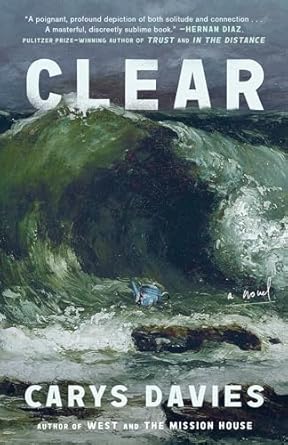
The book cover depicts a large green, black, and white wave turning over some large brown rocks at the shoreline, under a grey sky. What appears to be a metal teapot is floating beneath the waves.

By Piyali C.

The more I read the more I realize how little I know. I was confused about the title of this exquisitely written novel, Clear, that talks about human connections. Why “clear?” I learned the significance in the Author’s Note, where I read about how 474 ministers broke away from the Scottish Church in the year 1843 to rebel against the system of patronage and form the new Free Church. I also learned about the controversial Clearances.

In the novel, John Ferguson is an impoverished priest of the New Church forced to participate in a significant social upheaval in Scotland at the time: the Clearances that began in the Lowlands, spanning from the mid-eighteenth century to the mid-nineteenth century. Farmers were forcibly removed from their lands by the landowners to use those fields for crops, cattle, and sheep. The farmers and their families were dispossessed of their livelihood and forced to move to concentrated lands where they could not produce enough food for sustenance, which resulted in mass exodus to industrialized cities. Many sold all their belongings to find passage on ships to the United States, Canada, or Australia to start anew. 

John Ferguson takes up the job of evicting the lone tenant, named Ivar, of a remote island. Ivar has been living by himself for over a decade with his old horse, a blind cow, and a few hens and sheep. John’s wife, Mary, is opposed to this dangerous journey, but John is adamant about earning enough money to build his own church facility to practice the teachings of the New Church. Upon arrival, John falls off an island cliff, sustaining life threatening injuries. Ivar, the man whom John has come to evict, finds the unconscious John and nurses him back to health. Despite their language barrier, the two men find a connection, while John faces a dilemma about having to disclose to Ivar, his savior and friend, his real reason for the journey. Mary, in the meantime, has had no communication from John; she sells everything to buy passage to travel to the island herself to find out what has happened to him. The story takes an interesting turn when the three main characters come together. 

Clear is not only a story of immense beauty; it is also a big-hearted story of hope, ambition, and most of all, the interconnectedness of human hearts. The paucity of words in the book somehow intensifies the beauty and the depth of the characters, the plot, and the setting. Through the magic of Carys Davies’ beautiful writing, the readers can hear the waves crashing against the rugged rocks of the island, feel the heat of the fire that Ivar builds to stay warm, and taste the slightly burnt milk mixed with cornmeal that Ivar feeds John to sustain his broken body. The book touches all our senses as we read the story. The words transport us onto the island, and we live John and Ivar’s life and feel their connection along with them. We understand Mary’s concern as she frets at the lack of communication from her husband and marvel at the ending, when all three characters converge on the island. What will happen to them next?

Clear by Carys Davies is available in print and e-book formats.

Piyali is an instructor and research specialist at HCLS Miller Branch, where she facilitates two book discussion groups: Light But Not Fluffy and Global Reads. She keeps the hope alive that someday she will reach the bottom of her to-read list.

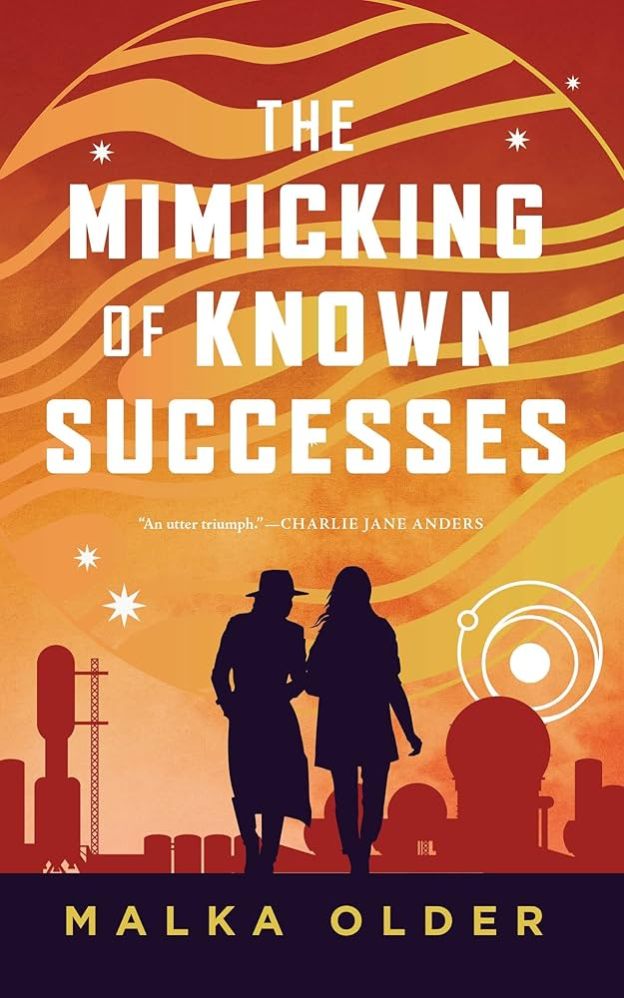
Mossa and Pleiti series by Malka Older

by Kristen B.

The first two books in a series by Malka Older take place about 500 years in the future. Humanity no longer lives on Earth, a planet we have rendered uninhabitable. Instead, we colonized Jupiter – known as Giant – and some of its moons. A series of platforms and railways encircle the big gas planet, on which farms, businesses, and Valdegeld University exist (or in some cases, subsist). There are three major schools at the university: Classics, Modern, and Speculative. Classics studies literature, history, biology, and more from our planet of origin, trying to figure out how the pieces of well-balanced biospheres (ones not continually in crisis) operate. Modern looks at the issues facing the populace where they are now. Speculative also looks to return to Earth, among other goals, but not (necessarily) to restore it to its former glory. University-level research appears to be the biggest enterprise and employer, upon which the survival of the species relies. It’s rather a pointed observation, given the modern American penchant to argue with experts and deny scientific advancement.

I pieced together most of this synopsis from the information around the edges of Older’s first two short novels in a mystery series that is planned to run for at least five books. Pleiti is tenured faculty at Valdegeld, with a specialty in classic literature. Mostly, she researches how the various elements of biospheres worked together by reading books published when those animals lived on Earth. Mossa is an Investigator, the equivalent of a police detective, who spends most of her time searching for lost people. The two were lovers in their past, who, as the series begins, perhaps look to rekindle their romance.

The two installments to date are a lovely combination of science fiction, college politics, and detective mystery. Pleiti and Mossa are enigmatic people, but you find yourself wanting to know more about them as individuals and a couple.

The Mimicking of Known Successes: A man from the university takes a railcar to a remote platform, then promptly disappears. Mossa is pretty sure that he didn’t jump to his death into the planet, and she ends up at Pleiti’s campus asking questions and looking for help. University politics and personalities mix badly with personal ambitions to see Earth restored. Favorite pieces include atmoscarves, the sheer quantity of scones and tea consumed, and the existence of the mauzooleum where “ancient” breeds of animals are carefully bred and studied. I had to make an effort to keep reading through a fairly slow set-up and was rewarded with an exciting, and rather unexpected, conclusion.

The Imposition of Unnecessary Obstacles: I enjoyed this one more, when I could enjoy the mystery without working to understand the world-building. Mossa and Pleiti once again join forces to solve a case involving missing persons – and a subsequent murder – that requires them to do a fair amount of traveling, including to the moon Io and the far side of Giant. Gourmet snacks once again play a not-inconsiderable role as our valiant pair completes some quality sleuthing. There’s also the mention of an opera named Murderbot, which was a high-quality tidbit. I gobbled up this book over a weekend and appreciated the slightly faster pacing and tighter timeline.

A third installment is scheduled to be published in June, The Potency of Ungovernable Impulses, and I’m already looking forward to it.

Kristen B. is a devoted bookworm lucky enough to work as the graphic designer for HCLS. She likes to read, stitch, dance, and watch baseball (but not all at the same time).
Wham! It’s Big Issue

The magazine cover photo depicts members of the 1980's pop music group Wham!. George Michael is wearing a Santa hat and clutching an armload of wrapped Christmas packages, and Andrew Ridgeley, standing slightly behind him, has reins in his mouth and a reindeer hat on his head

by Angie E.

Big Issue is one of many magazines you can get through the Libby app, with your library card. Founded in 1991 in the United Kingdom, Big Issue originated with one central goal: to help people who are experiencing homelessness. It provides individuals who are struggling or have struggled with homelessness the opportunity to sell the magazine to the public.

These vendors buy the magazine at a discounted rate and sell it for a profit, which helps them earn an income. What makes Big Issue different from other charity-driven organizations is that it empowers people by providing them with the tools and opportunity to help themselves. This model allows people to build their confidence, learn business skills, and become part of a supportive community. 

Big Issue isn’t just a way to make a difference, it’s also a source of quality content. The magazine covers a wide range of topics, from current events and social issues to arts, culture, and interviews with people from all walks of life. You might find features on everything from mental health to pop culture, book reviews, or inspiring stories about people who have overcome tough times. It’s a great publication for anyone who is curious about what’s happening in the world and wants to stay informed. Some of the best books I’ve read in recent years came by suggestion of Big Issue. 

In “Last Christmas Will Last Forever,” the November 27/December 1 Big Issue takes a look back at the enduring legacy of Wham!’s iconic Christmas hit, “Last Christmas.” The article features an interview with Andrew Ridgeley, who reminisces about the song. He shares heartfelt stories about working with George Michael and the magic of that time. “George set himself a task as a songwriter to write a Christmas song that would endure and be perennial,” says Ridgeley, and, indeed, “Last Christmas” continues to warm hearts and remind us of the power of music and memories. 

With its beautiful melody and catchy hook, you can’t help but sing along. But what sets it apart from many other holiday songs is its vulnerability. While other Christmas classics may celebrate the joy and magic of the season, “Last Christmas” is about heartbreak and regret, the flip side of love that many of us experience during the holidays. 

The book cover photograph depicts the members of the 1980's pop group Wham!, George Michael and Andrew Ridgeley. Both are looking at the photographer. George is wearing a black tank top and Andrew is wearing a white open-collared shirt and black jacket.

For further Wham!/George Michael readings check out these: 

Wham!: George Michael and Me by Andrew Ridgeley

George Michael: Freedom, The Ultimate Tribute 1963-2016 by David Nolan

To hear his music, check out the following: 

Ladies and Gentlemen: The Best of George Michael 

Last Christmas: The Original Motion Picture Soundtrack 

Symphonica

You can access the current and many back issues of Big Issue through Libby, including a recent one that includes an article on the new movie release “Wicked.” You can also access it here.

Angie is an Instructor & Research Specialist at Central Branch and is a co-facilitator for Reads of Acceptance, HCLS’ first LGBTQ-focused book club. Her ideal day is reading in her cozy armchair, with her cat Henry next to her.

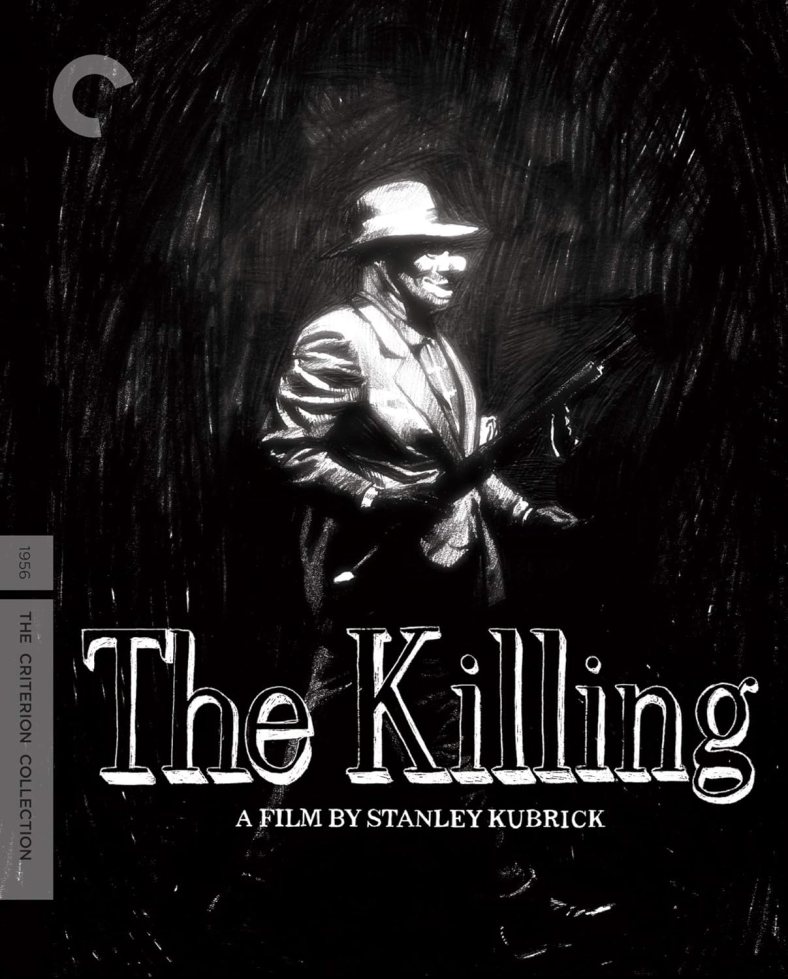
The Killing by Stanley Kubrick

The image depicts a man with a bulbous clown-like nose, wearing a hat and carrying a club. He is portrayed against a dark background.

by Alex P.

I’ve always been drawn to crime films, from Fritz Lang’s “M” to classic film noir to Martin Scorsese’s extensive gangster film output, with their allure of hidden underworlds of organized crime and the handsome rewards it brings at the risk of it all falling apart at any moment. Whether you identify with the criminal masterminds or with the police detectives hot on their trails, it’s a strain of cinema that’s had appeal since the inception of film itself and 1903’s The Great Train Robbery.  

One sub-genre of crime that’s stuck with me is the heist film. There’s something exquisitely thrilling about watching a heist carried out from the planning stage to the execution where it all goes so right or so wrong; think Baby Driver and The Bad Guys for popular recent examples. 

Director Stanley Kubrick’s shadow still looms large over the art of film, but some people may not know one of his earlier films, The Killing, a 1956 heist noir that gave Kubrick his first critical success. Many know the 1968 ensemble comedy Dr. Strangelove, his last black and white film before the monolithic 2001: A Space Odyssey. Fewer know of Lolita (yes, that Lolita), Spartacus, or Paths of Glory, but I suspect the most obscure are his first three films. Fear and Desire and Killer’s Kiss are independent, exploratory films where Kubrick was finding his footing; these were followed by The Killing, starring the elusive Sterling Hayden, which was a real home run.  

The Asphalt Jungle was a foundational heist films, and it seems clear that Kubrick wanted to emulate it a few years later with The Killing. Kubrick plucks Sterling Hayden from The Asphalt Jungle’s all-star cast to play Johnny Clay, the mastermind behind a heist at a horse-racing track. Clay remains a mysterious and dominating figure, and much of the story is dedicated to the setup of the heist and the ensemble of his hired co-conspirators. More of the tension comes from a psycho-sexual rift between George, the racetrack cashier, and his wife Sherry, who overhears the plot and schemes to take George’s money and run. This sub-plot strikes me as The Killing’s weakest aspect, as it is far too maudlin and the sets are cheap, complete with a fake parrot. The rest of the cast, though, comprise a thrilling ensemble of characters, each of whom plays a perfectly compartmentalized part.  

Johnny Clay, as played by Hayden, is a complete enigma. Just out of prison, he immediately starts moving on the heist. He conducts himself with an affect so cool and calculating that it strikes the viewer as sociopathic. My favorite participant in his heist is Maurice, played by Georgian wrestler Kola Kwariani. He’s a highly intelligent, thoughtful, soft-spoken man who works in a chess club, and it is tragic to watch Clay pay him to get drunk and start a fight, reducing a smart and sensitive man to hired muscle. Every participant is meticulously positioned to play a separate part in his scheme while remaining unable to implicate him if they fail. It’s so well-planned, and the execution is mesmerizing and unforgettable, but so are the inevitable snags along the way.  

When comparing The Killing to The Asphalt Jungle, I’ve found that the inherent moral ambiguity makes Kubrick’s heist film memorable, as the start of a theme that continued throughout his career. In The Asphalt Jungle, the charming and likeable criminals are served their just desserts, complete with a speech by the police to an eager press pool that feels straight out of a public service announcement. While in The Killing, the brief but poetic comeuppance that comes to the Clay at the film’s end comes instead from a cruel and simple twist of fate. Instead of seeking answers from the morals and standards and the laws of his era, Kubrick looked to bad luck and the randomness of the universe. 

Like many overlooked greats, The Killing can be found on Kanopy using your library card. Though I mostly use it for hidden gems that can’t seem to find their home in more commercial environments (take, for example, The Hudsucker Proxy), it still has recent blockbuster hits, as well as classic documentaries and more. 

Alex Pyryt is a DIY Instructor & Research Specialist at Howard County Library System Elkridge Branch.