Wishing you and yours a very happy Thanksgiving! If you wish to do some reading about gratitude, please stop by a branch and ask for recommendations – our staff loves sharing their favorites.
If you’re still in need of recipe ideas for the coming weekend or the holiday season, the library has a considerable collection of cookbooks at every branch – and some great magazines available on Libby.
On behalf of all the HCLS staff who write and edit for Chapter Chats, enjoy your celebrations this holiday season with family, friends, and loved ones. Happy Thanksgiving!
It’s 1982 and rock and roll musician Bruce Springsteen is reeling from triumph after triumph. He experienced phenomenal acclaim and commercial success with three successive albums (Born to Run, Darkness on the Edge of Town, and The River), two show-stopping worldwide tours with the E Street Band, and a massive hit single on the radio that’s still on the lips of his multitude of fans today – everybody’s got a hungry heart, right? But there were disappointments and challenges, too. A failed romantic relationship, as well as exhaustion from a bitter legal fight with his onetime manager, Mike Appel, left Bruce questioning the direction of the band and, more importantly, how he envisioned his future as an artist and songwriter.
1982 was a year of tremendous change in the music industry; MTV had launched in August of 1981, and Michael Jackson’s Thriller, still the best-selling album of all time, changed the way record producers thought about hit singles and short-form videos. Everything was splashy, colorful, and calculated to grab your attention. But Bruce had a different ethos altogether.
Enter Nebraska, with its black-and-white cover and photographs: Bruce’s album of rootlessness and isolation, a lonely place with a “dark highway where our sins lie unatoned,” as he says in the lyrics of “My Father’s House.” With its stripped-down sound and Woody Guthrie-esque lyrics, Bruce wanted to plumb the soul of rural American culture. He wrote about the forgotten and spiritually lost: from the Starkweather killings, to the decline of Atlantic City in his home state, to the inner musings of a worried police officer whose brother couldn’t stay out of trouble with the law. Originally recorded in his bedroom as a series of demos on a four-track TEAC recording machine, the album baffled a lot of people in the record industry and caused a few headaches for the engineers trying to mix those primitive tracks down into some semblance of a releasable recording. But when the band tried, and failed, to make the demos into E Street-style rock-and-roll anthems, Bruce knew that the tracks had to be released as they were. Warren Zanes was the guitarist for The Del Fuegos and a contemporary of Springsteen’s; as a writer who is also a musician, he does a wonderful job of telling the story of that process, with descriptions of the technical detail that are fascinating for music aficionados but which won’t overwhelm the casual reader.
Near the end, Zanes is discussing Elvis Presley and his impact on Springsteen as a child, and states that, “His [Presley’s] end would suggest that what might start as an American dream can become a deal gone very wrong” (273). Reading about how Springsteen wrestled with issues of identity and belonging, as well as personal depression, it’s clear that the songs on Nebraska were his attempt to reconcile his American dream – success and the freedom and escape that rock and roll represented – with the decline of the cultural touchstones like Presley who inspired him. As Zanes asks earlier in the book, “who should fight to expose all that was hidden from view?” (78). The answer is artists like Springsteen, driven by their artistry to answer our questions, expose our flaws and contradictions, and illuminate our common truths. He continues to do so today, decades into his journey as a musician and songwriter.
Author Warren Zanes looks not just at the making of Nebraska, but also at the cultural landscape it emerged from and the lasting impact it had on the musicians and fans with whom it resonated. Filled with interviews with musicians I admire – Rosanne Cash, Richard Thompson, and Dave Alvin, among others – as well as excerpts from Peter Ames Carlin’s Bruce and extensive interviews with Bruce himself, this is a well-researched and deeply thought-out tribute to a great album, one very specific to its moment and place in music history.
Deliver Me From Nowhere: The Making of Bruce Springsteen’s Nebraska by Warren Zanes is available from HCLS in print.
Julie is an instructor and research specialist at HCLS Miller Branch who finds her work as co-editor of Chapter Chats very rewarding. She loves gardening, birds, crime fiction, all kinds of music, and the great outdoors.
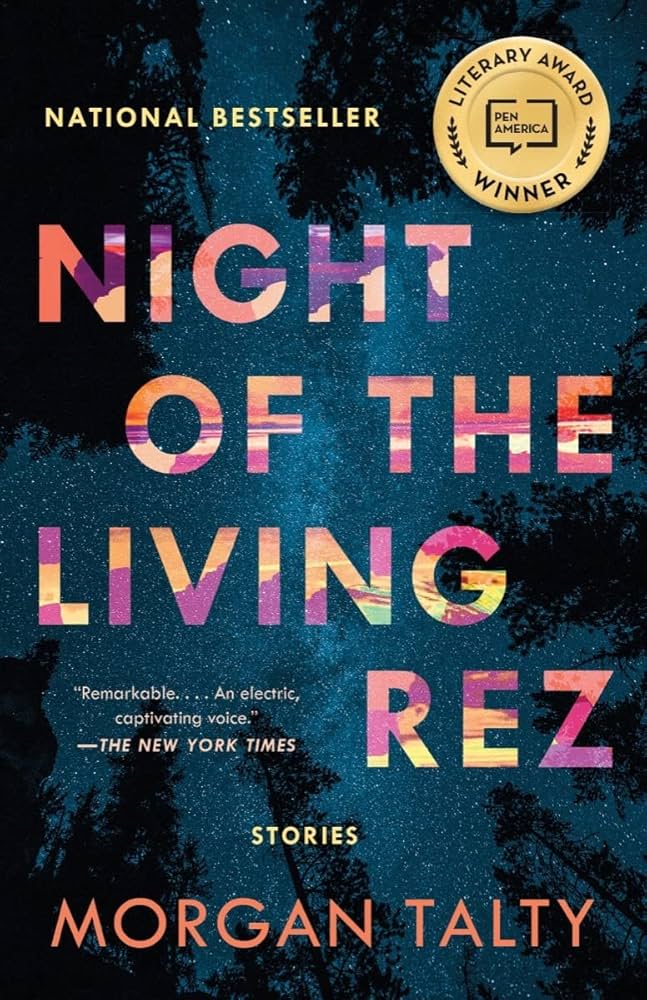
My book discussion group (Books on Tap) recently discussed Night of the Living Rez by Morgan Talty. I try to choose books that reflect the time of year, as well as to prioritize authentic voices. This book worked for November because Morgan Talty is a Native American author, and his book collects a series of inter-connected short stories about David and his family and friends on the Penobscot reservation in Maine.
In all honesty, the book is as bleak as any other work that deals with generational trauma and chronic poverty. However, it is laced with gorgeous prose, mostly in scenes describing the local woods and river. Talty has a sense of the poetic that shines through even the most difficult situations – including the description of a car crash that perfectly captures the halting, photo-flash moments of impact and aftermath. Surprisingly, along with the spare dismay of the stories, Talty also offers a pitch-black sense of humor. The sheer absurdity of teenage boys and their antics relieves the otherwise unrelenting sense of nowhere to go and nothing to do that permeates this book. Sometimes it’s true: you have to laugh instead of cry.
Eleven of the twelve chapters are tightly told from young David’s point of view – and his almost complete lack of understanding of what’s happening with the grownups in his life. His relationship to his grandmother is the foundational relationship of the book, as it was for his life. That special love grounds the stories and makes them real, in ways that the cigarettes, drugs, and drinking couldn’t. The love and the bad decisions weave so intimately that the inevitable heartbreak registers as simply, devastatingly true. The tight narrative focus is a fascinating authorial choice, but not until the last section do all the pieces truly come together in any sort of coherent way. It’s worth getting there with adult David, with compassion and forgiveness for the bone-headed youth that he was.
I’m not sure this review is going to convince you to pick up this book, but you should! I was heartened by reactions of the folks in my book club. They found value in the language, the author’s choices of what to share, in the universality of the stories, and in the need to laugh in the face of despair. Night of the Living Rez is a stellar beginning for a new author. I will eventually read Talty’s new novel, Fire Exit, but I need to continue to sit with this volume first.
Kristen B. is a devoted bookworm lucky enough to work as the graphic designer for HCLS. She likes to read, stitch, dance, and watch baseball (but not all at the same time).
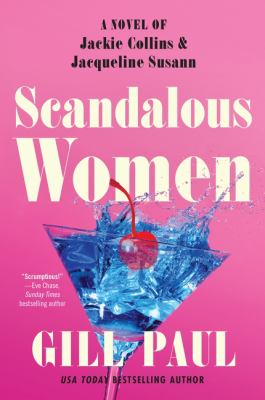
In the late 80s, when I first discovered the novels of Jacqueline Susann and Jackie Collins, I used to place paper bag covers over them to hide the title information and, I suppose, my shame in reading them. Nowadays, in the age of e-books, where no one has to know or can see what you’re reading, I am not at all shy about sharing my love of these two authors.
Scandalous Womenbrings to life the dynamic and groundbreaking careers of both iconic ladies. Set in the 1960s, the story follows these trailblazing and vibrant women as they navigate the male-dominated world of publishing, facing rampant sexism and societal backlash for their bold, provocative works.
Nancy White, a young editorial assistant becomes the unlikely link between these two literary powerhouses. As Jackie and Jacqueline strive to top the bestseller charts, they form an unexpected friendship, sharing their struggles and triumphs in a world that often seeks to silence them. Though there is no real world evidence to suggest they were friends in real life, Gill Paul has said that she loves to imagine that they could have been.
Paul weaves together the personal and professional lives of these women, highlighting their resilience, ambition, and the price they pay for their success. Scandalous Women is written in the style and spirit of both authors and is a fun, yet ultimately serious look at writing as a woman in the 1960s. The way she captures their spirit, especially Susann’s, is pitch-perfect and is one of the reasons the book stays with you long after you finish. The good news is, if you like Gill Paul, she has written several other novels, just as compelling and enjoyable to read.
To see Jaqueline Susann discuss literature (and that meshes well with what Scandalous is trying to say) click here:
Angie is an Instructor & Research Specialist at Central Branch and is a co-facilitator for Reads of Acceptance, HCLS’ first LGBTQ-focused book club. Her ideal day is reading in her cozy armchair, with her cat Henry next to her.
Those of us who work in libraries know that books contain a special kind of magic. Even the most ordinary books can hold the key to something extraordinary for the right reader. This past summer, I read a story about a book with a different kind of magic.
The Book of Doors introduces us to Cassie Andrews. She lives in New York City with her roommate and best friend, Izzy, and works at a bookstore that she loves. Although she lost the grandfather who raised her as a teenager and traveled abroad before settling in the city, no one would call Cassie’s life particularly exceptional.
All that changes, though, when one of her favorite customers dies in front of her at the bookstore and Cassie finds a worn-looking old book that he seems to have left behind for her. When she opens it, Cassie discovers The Book of Doors, which contains confusing drawings and strange writing. It also promises that any door is every door. Soon, Cassie learns exactly what this means. She and Izzy explore the limits of the book, and before long, they draw the notice of a mysterious man. His name is Drummond Fox, and as he explains once he approaches them, the Book of Doors is one of a set of unique books. He is the caretaker of the Fox Library, and he watches over those volumes that he’s managed to gather and protects them from nefarious collectors who seek to use the books to do harm. Cassie has to decide if she can trust Fox and where her responsibility lies in all of this.
Soon, Cassie finds herself caught up in an adventure she never imagined, learning about the books and their history as well as her own, while trying to prevent unimaginable disaster.
To warn sensitive readers: there are some quite difficult and gruesome scenes, but the story is creative and compelling. I thoroughly enjoyed it, and I hope to read more from this debut author soon!
The Book of Doors is available from HCLS in print and as an e-book and e-audiobook from Libby.
Eliana is a Children’s Instructor and Research Specialist at the Elkridge Branch and co-chair of the HCLS Equity Committee.She loves reading, even if she’s slow at it, and especially enjoys helping people find books that make them light up. She also loves being outside and spending time with friends and family (when it’s safe).
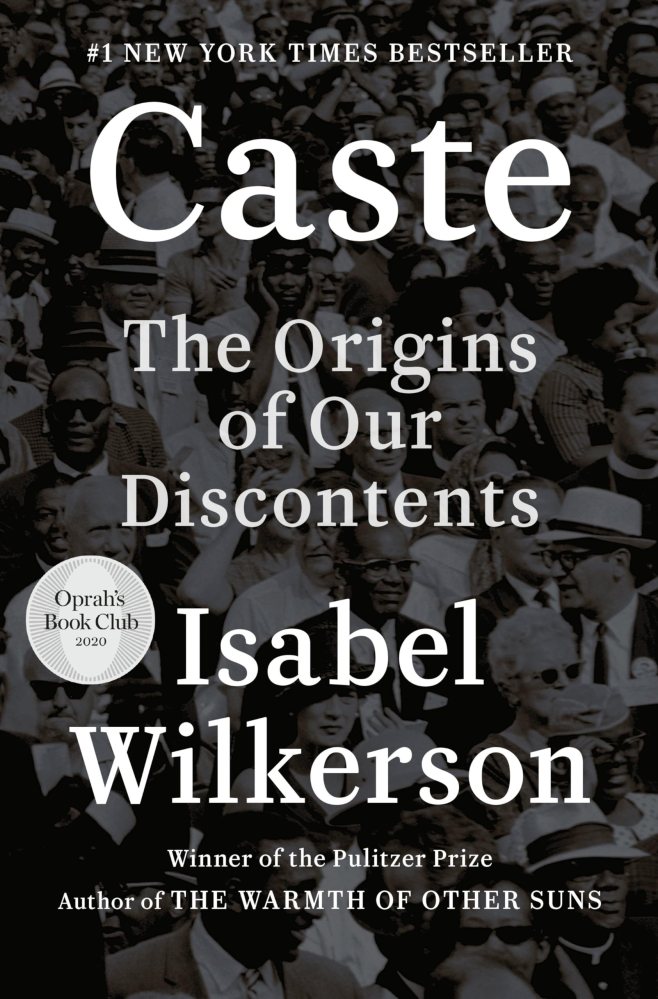
Isabel Wilkerson’s indelible books The Warmth of Other Suns and Caste: The Origins of Our Discontent have, both of them, won awards and have been properly lauded; they don’t need to be touted by me but tout them I shall. They are meticulously researched, precisely written, and pack a devastating emotional punch.
I have a long commute to work (shout out to my 795 and 695 buds), and I need to fill that time with something. I’m obdurately old school and prefer CDs and radio to podcasts. When NPR is too much (Esther Ciammachilli is never too much) and the Orioles aren’t playing, I check out nonfiction audiobooks from the library. I listened to The Warmth of Other Suns a few years ago and Caste this year; I learned so much from both. The sheer number of primary documents cited is overwhelming. The personal narratives are enlightening and heartbreaking.
Side note: I’d listen to Robin Miles read a Comcast contract. She narrates both books and she’s a national treasure. I feel like she should win an Oscar or a Grammy – or something.
The Warmth of Other Suns tells the story of the Great Migration, the movement of millions of African Americans from the South to more Northerly states, through the lives of three people who made the journey. It is intense. I’ve been known to cry in the car, and there were tears.
Caste is an incredibly persuasive comparison of the caste systems in Nazi Germany, India, and the United States. Wilkerson’s central conceit is that the caste system in America is, in many ways, the most oppressive or violent system. She writes, “Jews in Nazi-controlled Europe, African-Americans in the antebellum and Jim Crow South, and Dalits in India were all at the mercy of people who had been fed a diet of contempt and hate for them” (151). The results of a diet of hate and contempt are unfortunately predictable. Wilkerson explores the grotesque, hateful, and banal violence of the caste system in depth. She writes, “African-Americans were mutilated and hanged from poplars and sycamores and burned at the courthouse square, a lynching ever three or four days in the first four decades of the twentieth century” (155). I won’t focus on the physical violence in this review, but it is all here, and it is terrible.
Wilkerson includes illuminating episodes from her own life along with historical comparisons. While traveling for the book and for work (at the New York Times), Wilkerson is mistreated by academics, flight attendants, businessmen, and small-business owners, as well as being unjustly accosted by the DEA, all because of her position in America’s caste system. Based on her personal experience, she writes, “this was the thievery of caste, stealing the time and psychic resources of the marginalized, draining energy in an already uphill competition” (223). Outside of the obvious physical violence wrought by the caste system, Wilkerson highlights the daily mental and emotional violence, and that seems really important.
I’ll end this review with a few more words from Wilkerson on the more subtle ways the caste system continues to do harm. She bluntly writes, “The friction of caste is killing people” and “Societal inequity is killing people” (304). This is not someone who writes for dramatic effect without evidence to support her claims. To back up her claims, she cites a study by a Harvard scientist, “’High levels of everyday discrimination contribute to narrowing the arteries over time,’ said the Harvard social scientist David R. Williams. ‘High levels of discrimination lead to higher levels of inflammation, a marker of heart disease” (306). This struck me. This internal manifestation of external discrimination is horrendous.
The American caste system is real and it is, overtly and insidiously, violent. The study goes on to find that, “People who face discrimination…often build up a layer of unhealthy fat, known as visceral fat, surrounding vital organs, as opposed to subcutaneous fat, just under the skin. It is this visceral fat that raises the risk of diabetes and cardiovascular disease and leads to premature death” (307). There are dozens of powerful and insightful passages I could have highlighted, but I wanted to highlight the above passages because they so powerfully illustrate how the American caste system continues to destroy black and brown bodies from without and within.
The Warmth of Other Suns: The Epic Story of America’s Great Migration by Isabel Wilkerson is available in print, e-book, audiobook on CD, and as a Playaway.
Ben works at Project Literacy, Howard County Library’s adult basic education initiative, based at HCLS Central Branch. He loves reading, writing, walking, and talking (all the basics).
Every year, instructors from HCLS Central Branch put together the Books for Discussion list and promote titles from it at our annual Book Club Revue. (If you missed it, you can watch this year’s Book Club Revue on YouTube.) Titles are selected from both established and debut authors across all genres, with consideration of whether the book is ‘discussable.’ Books that yield great discussions often have compelling characters and thought-provoking themes, leading to conversations not only about the story itself but also current events and readers’ own experiences. (For more book club tips, check out our Community Book Clubs page.)
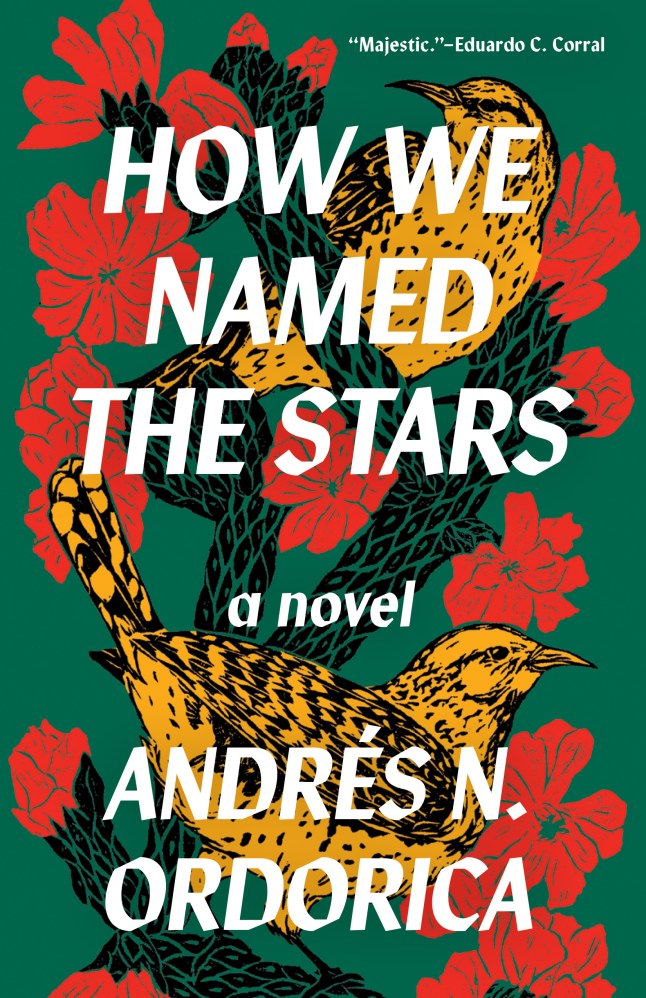
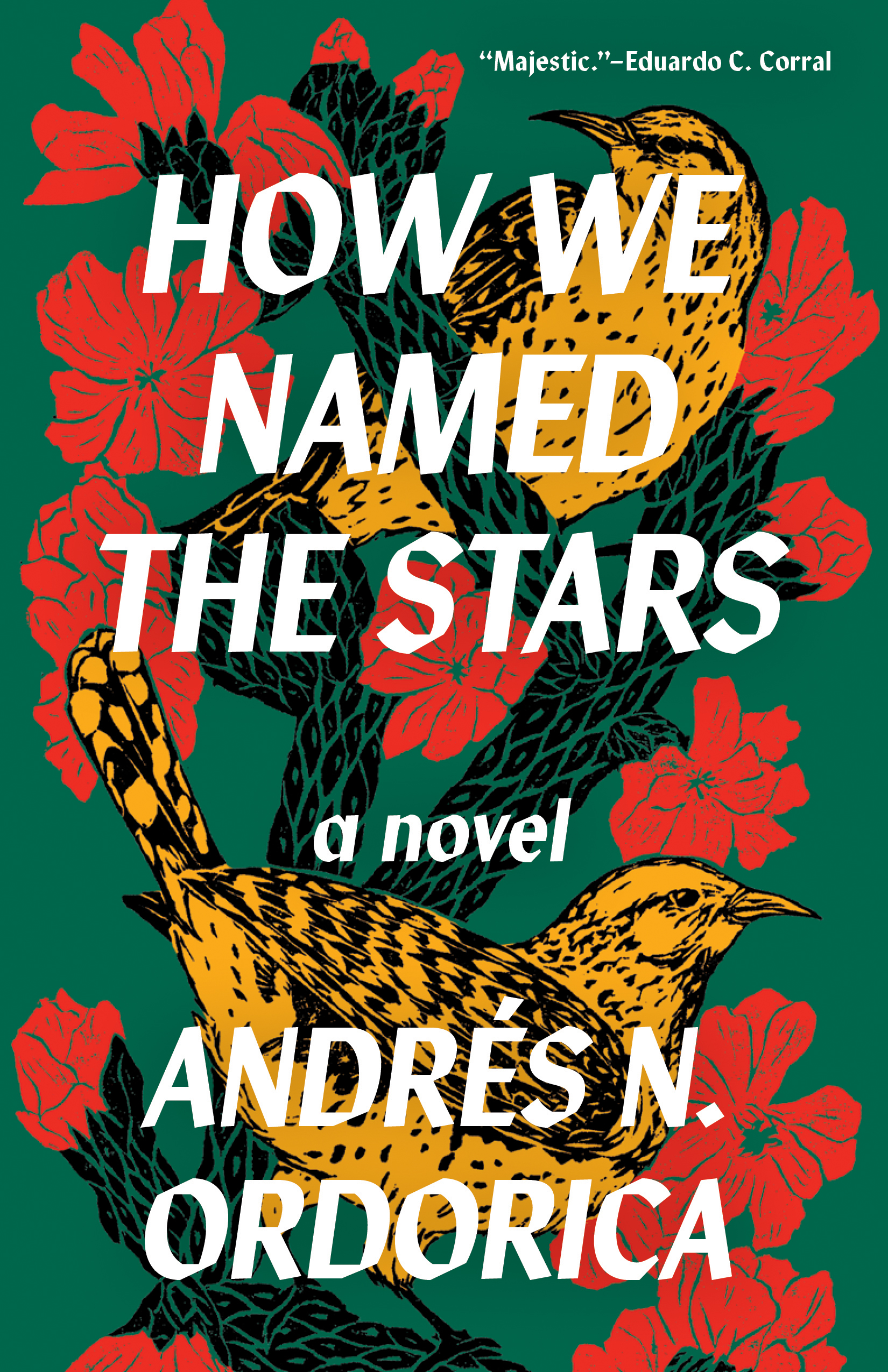
Out of a hundred titles on the list, the one I’m championing most often is How We Named the Stars by Andrés N. Ondorica. If there is one novel I want you to read before year’s end, it is this one! Ordorica has waltzed into my heart as one of my new favorite authors with this debut, and the characters he created will have a special place in my heart for years to come. Set in his first year of college, the protagonist Daniel is a first-generation Mexican-American creative writing student who develops an unexpected closeness with his roommate Sam. Over the course of the novel, Daniel navigates insecurities, queer desire, grief, and self-discovery.
Ordorica writes the type of atmospheric prose that I want to crawl into, curl up, and live inside forever. While this book is deeply tragic, it is thoughtfully so, and it defies the tropes you might expect of queer or Latino characters (which was very welcome and refreshing). Despite immense heartbreak, Daniel’s story is ultimately so hopeful and healing. It reminds me of my long-time favorite YA novel, Aristotle and Dante Discover the Secrets of the Universe by Benjamin Alire Sáenz. While their plots are quite different, they are both tender, lyrical coming-of-age stories that include friends-to-lovers romance and nuanced family dynamics. They also explore the particular challenges and joys of being both gay and Mexican-American, influenced by the lived experiences of their respective authors.
Aristotle and Dante is set in 1980s Texas – a notably difficult time and place to come out as gay – with the boys approaching the end of high school. How We Named the Stars is more contemporary – while never specified, it is likely set in the 2010s – and it begins at an East Coast university, where there is a queer community for Daniel to explore. Whereas Aristotle must come to terms with being gay over the course of an entire novel, and in isolation, Ordorica’s Daniel more-or-less understands he is gay from the outset. His story shows a journey towards outwardly claiming and living that label, first in community with other queer people, secondly in relation to an intimate partner, and finally, as an out gay man to his Mexican family. Both novels are valuable contributions to the growing canon of queer Mexican American literature, and I recommend both wholeheartedly.
Aristotle and Dante was one of the first LGBTQ books I read as a teenager, and it helped me inch towards realizing that I was part of that community. Fast forward to 2024: reading How We Named the Stars in my late twenties helped validate the struggles I faced in early adulthood. If I could go back in time and give my college-aged-self one book to read to help me get through life’s challenges, it would be this one. If you want a book that fills up your heart, shatters it into pieces, and then puts it back together again, How We Named the Starsis a perfect book for you.
Ash is an Instructor and Research Specialist at the Central Branch with a passion for information literacy and community engagement. They love music, gardening, hiking, and cuddling with their golden retriever.
I went to the theaters the other day to see Francis Ford Coppola’s Megalopolis, a kaleidoscopic, stylish mess of a film, which is polarizing and exciting moviegoers and critics and making very, very little money. This latter fact is a constant reminder as I look back at my favorite films; most of them were bold statements, so bold that the cold logic of the marketplace left their makers in the red. Megalopolis also prominently features the Chrysler Building and 40s art deco, as well as 40s Hollywood (old cars, suspenders, city hall meetings, scaffolding) as one of the central visual themes. This left me remembering one of the most stylish box office bombs in cinema history: The Hudsucker Proxy by Joel and Ethan Coen (who, immediately after this film, went on to make Fargo, The Big Lebowski, and O Brother, Where Art Thou?, in that order!)
The Hudsucker Proxy is a bold love letter to the art deco, brutalism, and bauhaus styles that dominated the New York skyline and business suites of the 30s and 40s, the Cary Grant screwball comedies of the era (think Bringing Up Baby), as well as the sentimental Jimmy Stewart blockbusters like It’s A Wonderful Life. It stars Tim Robbins as a clueless, well-meaning businessman from Muncie, Indiana, Jennifer Jason Leigh as a fast-talking newspaper reporter (giving a very Katharine Hepburn performance), and a cranky Paul Newman as a high-ranking executive of Hudsucker Industries.
After the untimely demise of Hudsucker’s founder and CEO, Newman concocts a scheme to elevate the clueless Robbins from the company’s mailroom (featuring one of the coolest sets I’ve ever seen, replete with steam, pneumatic tubes and a constant confetti of mail) to CEO; he aims to recruit the dumbest person he can find to the position in order to lower the company’s stock to the point where he can buy a majority stake and take it over himself. As is the case with the best of the Coen brothers’ films, there are endless twists and turns and a brilliant supporting cast. Bill Cobbs plays the omnipotent caretaker of the Hudsucker Industries clocktower, Jim True (“Prez” from The Wire) plays an overactive elevator operator, and Steve Buscemi plays a beatnik bartender.
It’s also a rare feel-good film from the Coens. Right after making the endlessly nihilistic Miller’s Crossing and Barton Fink, this film has a sentimental tone truly reminiscent of Frank Capra’s best films. A lot of the action takes place on Christmas, and some of the most memorable shots of the film feature a stylized miniature set of the New York City skyline awash in snow, truly bringing back memories of It’s a Wonderful Life.
The amount of style on display gives the appearance, action and direction of the film the feel of a live-action cartoon; while always keeping a grounded feel, there’s a speed to it and a constant stream of gags and emphatic camera movements that deliver class and hilarity. The Hudsucker Proxy is such a gem in the Coens’ catalog; they were given their largest amount of money to work with to date and comes at just the right time in their career for them to utilize the budget in order to execute a wild, unique vision replete with symbolism, gags, and profundity.
One of the most puzzling but profound aspects of the film is the constant motif of the circle (yes, the shape): A large aspect of the plot comes from the dramatic irony of Tim Robbins’s character hedging his career on Hudsucker Industries by introducing the hula hoop to the market, an invention that his handlers deem as doomed to failure, but is instantly recognizable to us as an icon of 50s consumerism. He also veers into contemplating the concept of karma, specifically samsara and the wheel of existence. The circle imagery is constantly present but never seems to resolve, but it impresses nonetheless. The film was a marketing failure, not an artistic one.
After hearing the story of the film and its position as a rare dud in a huge stream of heavy hitters in the Coen brothers’ filmography, I was determined to find a copy, only to come up empty handed until I found it on Kanopy using my HCLS library card. Kanopy is a great resource for finding everything from box office hits to independent films, but I’ve found that it’s a great resource for films that don’t seem to fit in among the rest. If you’ve never tried Kanopy, you might be surprised to find the weird little films you’ve been searching far and wide for staring you right in the face.
On July 19, 2022, educator and school librarian Amanda Jones spoke up against censorship at a Livingston Parish Library Board of Control meetingin Louisiana. Her speech focused on inclusivity, the freedom to read, and the importance of representation of diverse thoughts, beliefs, experiences, and community in a public library’s collection. Little did she know that her speech about her public library’s collection would result in a storm of bigotry, hatred, and vitriol against her, on a personal level. What followed can only be termed a nightmare. Members of nationalist, White Christian groups started bullying Amanda Jones mercilessly on social media, accusing her of grooming children and putting sexually graphic content in the hands of children.
Jones writes about how she was affected: how the defamation took a toll on her health and her personal life, and how she found inner strength with the support and loveof her family, friends, and wider community members locally and nationally. She rose above the fray of pettiness of the individuals who bullied her for her speech and her fight to preserve intellectual freedom. She fought her way through, stood up straight, and discovered her strengths and weaknesses in the process. She did not ask to be a hero, but she fought back, instead of backing down, when she was so wrongfully attacked by ultra-conservatives for defending everyone’s freedom to read. She made mistakes, but she eventually learned to respond with meticulous fact-gathering, background-checking and analyzing, and most importantly, with grace. All that she learned at library school about curating information came in handy in her campaign against ignorance and bigotry.
It was an excellent read, especially because I believe in everyone’s right to read whatever they want to with all my heart. Like Amanda Jones, I believe that representation matters. Kids, and everyone, deserve to see themselves in the materials they read. It is the responsibility of parents to monitor what their child is reading, not the library’s. There is a due process in place to ask a library to reconsider any material in the collection, and customers should avail themselves of that if they want to request libraries to remove materials – but one individual (or a group of them) who does not agree with the content should not take priority over the need for representation.
My only criticism of this book is not its message but that some ideas were repetitive. It seemed like some of the chapters were written as essays and the same idea was repeated, and the repetition took the edge off the author’s important message. I would rather have the message of intellectual freedom being reiterated than not.
Piyali is an instructor and research specialist at HCLS Miller Branch, where she facilitates two book discussion groups: Light But Not Fluffy and Global Reads. She keeps the hope alive that someday she will reach the bottom of her to-read list.
October is the season of frights and jump-scares. If you are anything like my friends and I, it means setting aside time to indulge in the shivers, chills, and heart palpitations that come with quality horror.
Over the years, my relationship with horror has evolved in surprising ways. As a child, the game Animal Crossing scared me so badly with a cheeky Easter egg that I ripped the disc from my GameCube and banished it to the farthest corner of my basement closet. Yes, the quaint, whimsical game about quirky animal neighbors and paying off a mortgage once sent me into a panic. As an adult, however, I’ve grown to love horror.
To celebrate the season, I wanted to share a brief list of media that use horror in fascinating and effective ways (as opposed to cliché or tired tropes). This selection of my favorites showcases how horror can transcend traditional scares, confronting us not just with fear but with deeper questions about meaning, control, and survival. Whether it’s through surreal absurdity, cosmic dread, or psychological unraveling, each of these works leaves a mark that lingers long after the story ends. Happy Halloween!
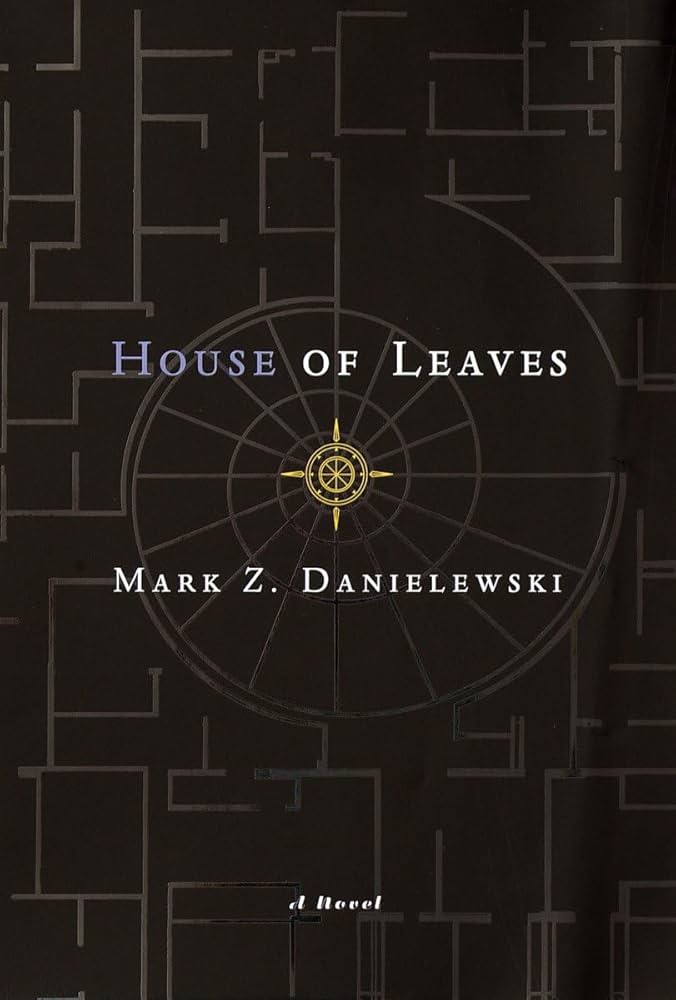
House of Leaves is one of the best pieces of fiction I have ever read – a wild, shifting text as concerned with the construction of meaning through language and signs as it is with the emotional turbulence of love, security, and existential dread. At its most succinct, House of Leaves is a book about an essay about a movie about a house that does not exist – and that house is also the book itself.
The story begins with Johnny Truant, a troubled, erratic young man living recklessly, burning the candle at both ends. One day, Johnny is invited into the apartment of his recently deceased neighbor, Zampanò. In the disheveled, eerie apartment, he discovers Zampanò’s final work: an academic treatise on a film called The Navidson Record. The catch? Zampanò had been blind for years, and The Navidson Record – a documentary by renowned photographer Will Navidson chronicling his family’s search for peace in a new home – does not seem to exist.
The house on Ash Tree Lane, as depicted in documentary, reveals itself to be bigger on the inside than the outside. As Will and a growing team investigate, the house grows endless, until the gravity of this impossibility threatens to undo everything. As you read, Johnny Turant does too – editing Zampanò’s fragmented manuscript while unraveling under his own troubles, which may all stem from the manuscript itself. Is the house real? Is it a curse? These questions spiral outward, pulling the reader into a labyrinth where certainty slips away leaving behind nothing at all —and perhaps the absence of anything is the most terrifying thing of all.
Greek filmmaker Yorgos Lanthimos has enjoyed international acclaim with films such as The Lobster, The Killing of a Sacred Deer, and Poor Things. Lanthimos excels at the strange and unsettling, crafting horror from the surreal and the absurd.
Case in point: Dogtooth centers on a family—a husband, wife, and their adult children—who live in complete isolation within a barricaded compound. The children have never left the confines of their home. They are raised on a manipulative regime of misinformation and control, where their parents deliberately distort language, knowledge, and their reality. Words are redefined to remove meaning. A ‘zombie’ is a small yellow flower. Cats are the most dangerous predator known to man. An adult is someone who has lost their dogtooth and is ready to leave the house. Fear of the outside is instilled with brutal efficiency to maintain compliance.
The result is a deeply unsettling exploration of control, isolation, and the fragility of identity. As the children struggle to conform to this artificial reality, cracks begin to form—revealing the horror that lies in the breakdown of personal autonomy. Dogtooth offers a stark, absurdist look at the consequences of power unchecked, leaving viewers disturbed not by monsters or supernatural forces, but by the cruelty of manipulation and the terrifying plasticity of human perception.
Junji Ito masterfully exposes the stark horror lurking within the mundane. Uzumaki follows the residents of a small Japanese town cursed by spirals—patterns that begin to consume not just the environment, but the minds and bodies of the people.
The father of the protagonist’s boyfriend becomes obsessed with spirals, collecting spiral-shaped objects, bathing in whirlpools, and only eating spiral-shaped noodles. He stares into spiral patterns for hours until even his eyes twist in opposite directions. Eventually, he dies attempting to twist his own body into a spiral. At his funeral, the crematory smoke spirals upward—only to shift and coalesce into a grotesque, grinning image of the man’s face, spiraling downward as if to envelop the town.
And from that moment, everything begins to unravel.
Junji Ito, a master mangaka, explores his work episodically in a sort of slice-of-fear narrative. Each chapter plays with the themes of the work, as it also delivers high quality and terrifying artwork. Uzumaki’s exploration delves into the erupting terror of grappling with forces beyond one’s control or comprehension. The horror of Uzumaki is mindless and indifferent, transforming even ordinary things—snails, ears, and babies—into sources of visceral dread. In Ito’s hands, the spiral becomes the embodiment of an absurd, indifferent universe where nothing is safe from corruption.
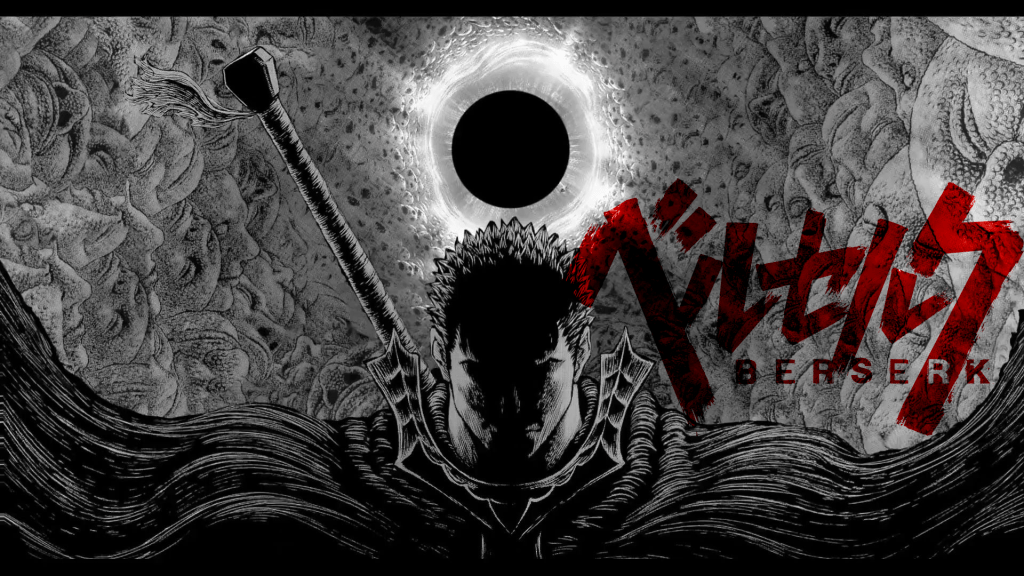
Berserk is a masterpiece: an amazing, serious, and beautiful piece of art.
Miura blends dark fantasy, psychological horror, and cosmic dread into one stunning and harrowing tale. Berserk follows Guts, the Black Swordsman and lone mercenary, as he battles through a relentless horde of monsters and demons. What begins as a journey of survival transforms into a profound meditation on trauma, betrayal, and the price of ambition.
The horror of Berserk lies partly in its grotesque monsters and their monstrous actions, but these monsters are rarely fully inhuman. This tension between humanity and power is central to the narrative, exemplified in “The Eclipse”—the most grueling, nightmarish scene in the story. This sequence rivals the most terrifying moments in any medium, where betrayal, loss, and monstrous transformation collide, leaving an unforgettable mark on both the characters and the audience. I do not say this lightly.
Berserk’s resonance and impact go beyond its grotesque (and frankly beautiful) artwork or the epic battles between Guts and the demon apostles. Its characters are written with profound psychological depth. Guts may present as a stoic, muscle-bound warrior, dismissing his problems with grim resolve, but that could not be further from the truth. His struggle is both external—hunted by the evil Godhand and their legion of apostles—and internal, as he wrestles daily with despair and rage. These emotions stem from what he and his comrades endured at the hands of someone they once trusted as their leader.
Berserk is not just horror for the sake of horror—it is tragic, beautiful, and unforgettable. It reminds us that even in the face of overwhelming darkness, the struggle to endure can be its own kind of victory.
Berserk contains highly intense themes and disturbing scenes that may be difficult for many readers. If you’re considering reading it, I strongly recommend looking into its content beforehand to ensure you’re comfortable with the material. Berserk offers incredible depth and artistry, but it is not a story to approach lightly—you should know what you’re getting into.
Ian Lyness Fernandez is an instructor and research specialist at East Columbia Branch. Although he first engaged with most of these works in high school, he wants to emphasize that these recommendations are intended for adults—adults who want to be horrified, to boot. Dead dove: do not eat, and so on.
















 CHAPTER CHATS