For African American History Month

African American Read-in

“It is important for all of us to see ourselves in books.” – Dr. Jerrie Cobb Scott, founder of the African American Read-In

Howard County Library System joins our community in honoring Black History Month, a month-long celebration of African American life, History, and culture, established by Dr. Carter G. Woodson in 1926 and founded and promoted by the Association for the Study of African American Life and History (ASALH). The ASALH states that Black History Month is a, “way to promote, research, preserve, interpret, and disseminate information about Black life, History, and culture to the global community.” February events at HCLS are for a variety of ages and include read-ins, stories, and crafts. Events planned with a teen audience as the focus include an AfroFuturism ArtLab and teen art exhibit, an author event with We Need Diverse Books founding member Lamar Giles, and an online discussion featuring curator Kevin Strait from the Smithsonian Institution’s National Museum of African American History and Culture.

The African American Read-In “was established in 1990 by the Black Caucus of the National Council of Teachers of English (NCTE) to make literacy a significant part of Black History Month.” The commitment for nationwide promotion extends from 1990 to the present. To date, the initiative has reached more than six million participants around the world.

According to the NCTE website, “During the month of February, schools, churches, libraries, bookstores, community and professional organizations, and interested citizens are urged to make literacy a significant part of Black History Month by hosting an African American Read-In. Hosting an event can be as simple as bringing together friends to share a book or as elaborate as arranging public readings and media presentations that feature professional African American writers.”

Tracey Williams, president of the Southern Howard County/Laurel Chapter of Continentals Society, Inc., says, “It is crucial for all children to hear the voices of African American authors, gain insight into their experiences, and explore our rich heritage.”

Howard County Library System celebrates African American authors and culture as a participant in the National African American Read-In.

Read-In Opportunities
All ages; drop-in.
Honor Black History Month by participating in the National African American Read-In. Community partners and library staff read aloud from books by African American authors. Light refreshments.
Sat, Feb 8 at 12 – 2 pm
HCLS East Columbia Branch
Sat, Feb 8 at 1 – 3 pm
HCLS Glenwood Branch

Meet at the children’s bubble wall to hear library staff read stories by African American authors. Listen for just one or stay for more!
Thu, Feb 20 at 1 – 2 pm
HCLS Elkridge Branch

Anansi Tales & Crafts
Ages 3 – 11.
Anansi is a classic African folktale character who is known for his trickster ways. Enjoy his woven web of cunning triumphs!
Fri, Feb 28 at 10:30 – 11: 15 am
HCLS Central Branch

In partnership with: Continental Societies, Inc., Southeastern Regional Howard County/Laurel Chapter; Columbia Chapter of Jack and Jill of America, Inc.; Grassroots Crisis Intervention Center; The Society Incorporated, Howard County, MD Chapter; Howard County Public School System; Alpha Kappa Alpha Sorority, Inc., Iota Lambda Omega Chapter Emerging Leaders; African American Community Roundtable of Howard County; and the Youth Leadership Program.

Afrofuturism for Teens

In a circle, a stylized African woman's face is layered with orange color swatches and lines. An orange horizontal banner reads: Afrofuturism: Teen Art Exhibit: Feb 20-28, HCLS Miller Branch

Afrofuturism ArtLab: Learn & Create!
Ages 11 – 18. Register here.
What is Afrofuturism? Explore this multimedia concept, then create your own related artwork. Your work may be chosen for HCLS Miller Branch’s Afrofuturism Student Art Exhibit for Black History Month. All materials supplied, but feel free to bring anything you would like.
Sat, Feb 8 at 3 – 5 pm
HCLS Miller Branch

Afrofuturism with NMAAHC Curator Kevin Strait
All ages. Register here.
Curator Kevin Strait from the Smithsonian Institution’s National Museum of African American History and Culture discusses his recent exhibit, Afrofuturism: A History of Black Futures. Strait shares the history of Afrofuturism, and how the exhibition explores and reveals Afrofuturism’s historic and poignant engagement with African American history and popular culture.
Thu, Feb 20 at 6 – 7 pm
online & HCLS Miller Branch

A deep red cover with a Black young man's head in deep shadow. The person's eyes and mouth are drawn to appear sewn shut crudely.

Author Event: Lamar Giles
Ages 10 and up.
Register here.
A founding member of We Need Diverse Books, Lamar Giles discusses his novel, The Getaway, (currently in development for TV), and his journey as a writer, while engaging in a Q&A moderated by local teens.
School Library Journal writes, “Nonstop action, increasingly dangerous risks, and themes of racism and classism will keep readers engaged and flying through this one—and rethinking that planned resort vacation.”
Mon, Feb 24 at 6 – 8 pm
HCLS Miller Branch

A Little Love for Urban Lit

The book cover photographs show a woman in partial profile, leaning over her bare shoulder, above a cityscape at night, with twinkling lights and a hazy red sunset in the background.

by Angie E.

Also known as street lit or hood lit, urban fiction focuses on the gritty realities of life in the inner cities and the raw, unfiltered experiences that expose the highs and lows, the triumphs and tragedies of urban life. It emerged in the late twentieth century as a genre centered in urban communities, primarily among African American authors. While being vibrant and compelling, it often finds itself grappling with preconceived notions and stereotypes. Despite its popularity and cultural significance, it is often dismissed or misunderstood.

From street hustlers and drug dealers to determined mothers and aspiring entrepreneurs, these individuals often navigate morally ambiguous situations, creating a nuanced narrative. By examining the motivations and inner conflicts of its characters, urban fiction humanizes those who may be pigeon-holed, encouraging readers to challenge their preconceptions and recognize the complexity within individuals.

The genre has played an important role in amplifying underrepresented voices and providing a space for authors to share their lived experiences. Featuring protagonists from diverse backgrounds and communities, urban fiction offers a refreshing departure from other contemporary literature, which has historically been dominated by a narrow set of perspectives.

If you’re looking to get started with reading urban fiction, you can’t go wrong with Tracy Brown (whom, I was saddened to hear, recently passed away).

Her books, which are set in Staten Island and focus on women who triumph despite adversity, have been Essence magazine and USA Today bestsellers. Tracy Brown also started and ran a nonprofit organization known as We Are Ladies First, which serves to inform, inspire, and empower young women.

Set in the 80s and 90s, White Lines portrays authentic and multifaceted characters. Jada, the protagonist, is a beautifully flawed individual whose journey is heart-wrenching. Brown writes her with depth and vulnerability. As the narrative unfolds, we meet a diverse cast of characters, each with their unique stories and motivations. From Jada’s childhood friend Born, who walks a fine line between right and wrong, to the mysterious and captivating Cuban, whose connection to Jada sparks a whirlwind romance, these characters leave a lasting impression.

Beyond its compelling characters, White Lines delves into thought-provoking themes that confront societal issues head-on. The exploration of the drug epidemic, the impact on families, and the consequences of choices made under desperate circumstances are handled with a delicate balance of compassion and realism. Brown’s narrative serves as a powerful reminder of the human toll that addiction can exact on individuals and their communities.

While the story deals with heavy subject matter, Brown’s storytelling keeps the pacing engaging throughout. The plot twists and turns, keeping readers on their toes, and the emotional depth of the narrative never falters.

Angie is an Instructor & Research Specialist at Central Branch and is a co-facilitator for Reads of Acceptance, HCLS’ first LGBTQ-focused book club. Her ideal day is reading in her cozy armchair, with her cat Henry next to her.

Be part of HCLS’ Summer Reading Adventures.

Films for Change & Racial Equity Report

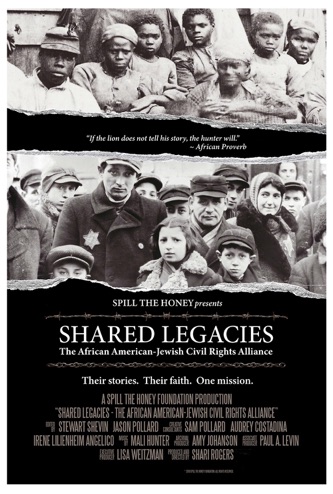
The Shared Legacy movie poster is all in grey scale, with a photo of a Black family shown on top and a Jewish family in the middle, with an African proverb separating them: If the lion does not tell his story, the hunter will.

Thursday, January 12
5 pm: film
7 pm: discussion
HCLS Miller Branch

Registration required.

Shared Legacies depicts inspirational African American and Jewish collaboration in the 60s Civil Rights era, shows that connection changing, and calls for it to be renewed in light of “divisive seeds of hate taking root anew in the American landscape.”

After viewing, participants and panelists from the African American and Jewish communities ask:

  • Can the legacy continue? How can our communities move forward with a shared agenda to promote racial equity in Howard County, as well as fight for an inclusive economy, education, and healthcare for all, and the equitable dispensation of justice?
  • Is there a joint role in the era of mass-incarceration and the post-January 6th America?
  • Can we move from friction (like that surrounding Ye and Kyrie Irving) to relationship and shared action?

The discussion will be informed by the local report recently released by HCLS: Inequity Within: Issues of Inequity Across Communities.

Films for Change is a series of documentaries about racial equity, each followed by panels featuring local leaders and organizations. Sponsored by the Horizon Foundation.  

In partnership with the African American Community Roundtable, the Jewish Community Relations Council of Howard County, The Martin Luther King Jr. Holiday Commission, and the Howard County NAACP.

Inequity Within Report

Over the last two years, Howard County Library System engaged more than 600 people in racial equity training. Using national data about disparities across education, health, housing, and legal systems, the trainers found that racial inequity looks the same across systems, socioeconomic difference does not explain racial inequity, and systems contribute significantly to disparities.
Howard County Library System’s new Inequities Within: Issue of Inequity Across Communities report examines the racial equity landscape in Howard County and across the state of Maryland. The data show disparities across education, healthcare, housing, economic, and legal systems for every racial group.

Page 10 of the Inequity Within report, showing bar graphs, titled "Jurisdictional Comparison of Socioeconomic Indicators".

In Howard County, for example:

  • Black residents are three times more likely to be denied a home loan than non-Hispanic white residents.
  • Hispanic students are 5.4 times more likely than white students to skip school because they felt unsafe.
  • Asian residents in the county are 1.8 times more likely to face poverty than non-Hispanic white residents.

As one of the wealthiest, healthiest, and most diverse communities in the state and the US, the belief that racial inequity does not exist here can be a hindrance to addressing those disparities.

We invite you to read the report, educate yourself, and join with us and others in this work.

For opportunities to learn more and discuss with community members, check here for classes and events.

Funded by a grant from the Institute of Museum and Library Services and administered by the Maryland State Library Agency

Author Works with Michael Twitty

Portrait of Michael W. Twitty, wearing a zip-up hoodie and touching his beard.

Thursday, Aug 11 from 7 – 8 pm at Miller Branch.

Please register to attend. Limited seats.
Register at bit.ly/twittyhcls

In partnership with the Howard County Jewish Federation and Baltimore Jewish Council

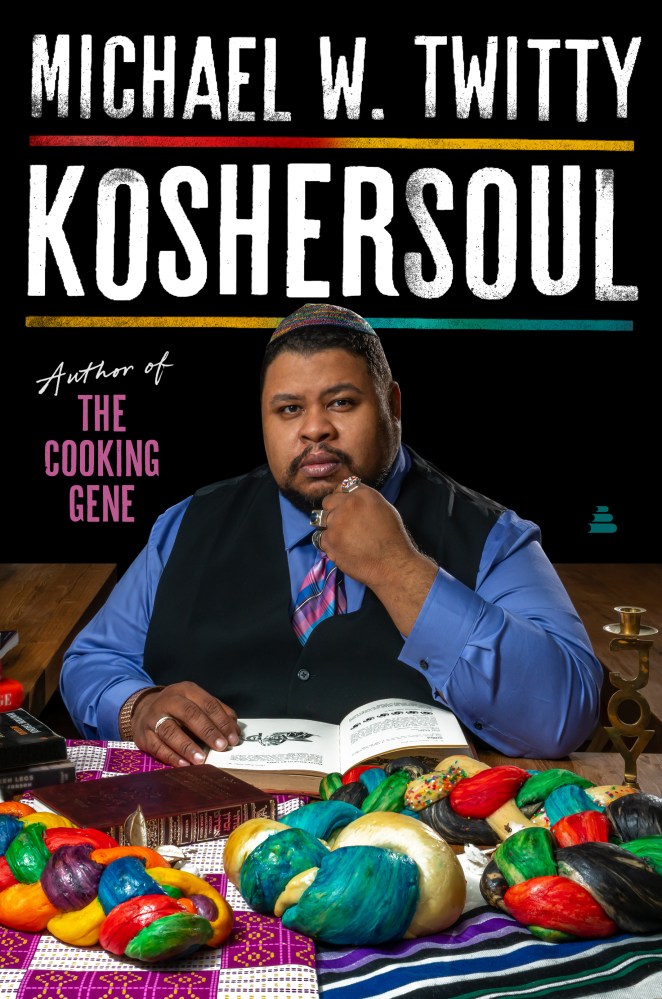
In his new book KosherSoul, Michael Twitty, author of the acclaimed The Cooking Gene (read a review), explores the cultural crossroads of Jewish and African diaspora cuisine and issues of memory, identity, and food.

Twitty examines the creation of African/Jewish global food as a conversation of migrations, a dialogue of diasporas, and the rich background for people who participate in it. At the same time, he shares recipes for Southern culinary touchstones like apple barbecue sauce, watermelon and feta salad, and collard green lasagna, while blending the traditions of his mixed identity into new creations such as Louisiana style latkes and kush. KosherSoul is more than a cookbook, it’s an exploration of selfhood when born at a crossroads of race.

The question is not just who makes the food and who it belongs to, but how food makes the people, reflects the journey, and validates the existence of these marginalized identities. Twitty aims to move beyond the idea of Jews of Color as outliers, but as significant and meaningful cultural creators in both Black and Jewish civilizations.

ABOUT THE AUTHOR

A highly sought-after speaker and consultant, Twitty has appeared on programs with Andrew Zimmern, Henry Louis Gates, Padma Lakshmi, and most recently on Michelle Obama’s Waffles and Mochi.

He is a TED Fellow and was just named as a National Geographic Emerging Explorer. His first MasterClass course, “Tracing Your Roots Through Food,” is now available. Over the past year he has partnered with Atlas Obscura to teach multiple online seminars and was the first guest on a new web series for their food division. Michael will also be a Consulting Producer on a new food competition program coming soon from OWN. He lives in Fredericksburg, Virginia.