Agatha Christie in the English Countryside

by Sahana C.

Like any self-respecting book nerd, I can only go on vacation if I have at least five books ready and on hand at any time. This was trouble when I was younger, before e-books and e-audiobooks, with backpacks and suitcases full to the brim with tomes. My worst-case scenario was always that I would run out of things to read.  

I went on vacation around Britain recently, and, as is my wont, brought eight different novels with me in various formats. Sure, I brought a few too many physical books, and yes, maybe I bought a book or two on the trip to weigh down my backpack. I felt adequately prepared, as I was taking train rides through the English countryside and knew that I would want to embody the aesthetic of reading whatever I had in hand, only to look up at rolling fields dotted with sheep, old worn walls of stacked rocks dividing the endless green into pastures.  

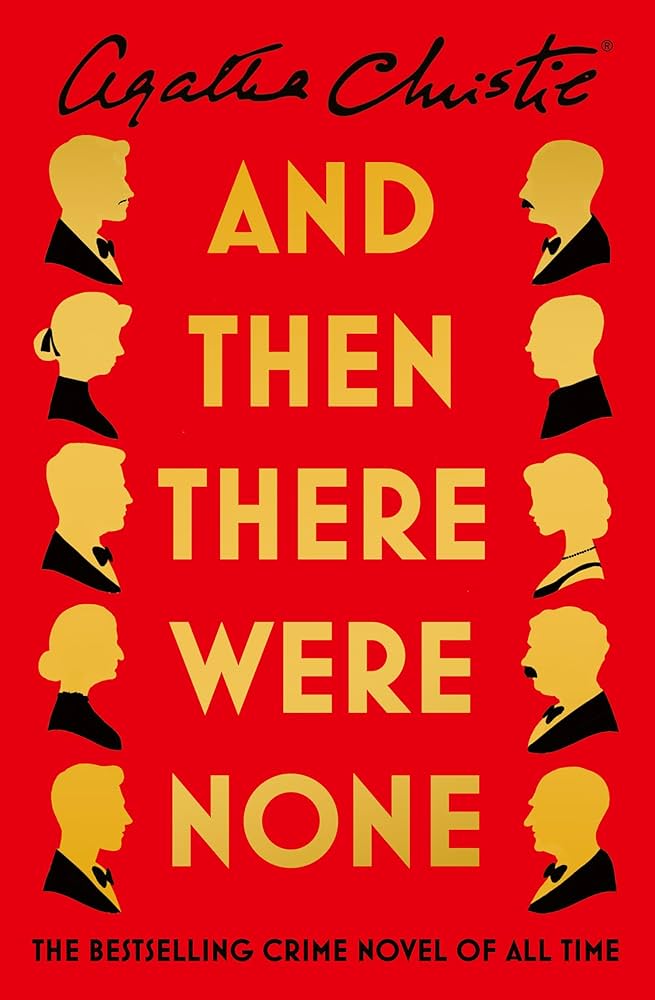
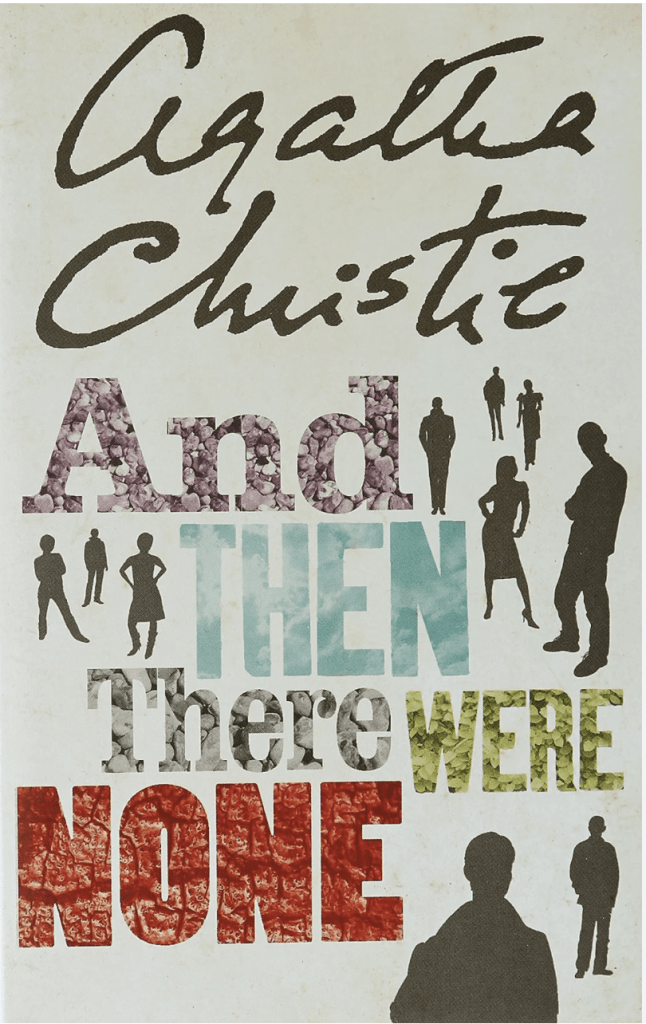
As always happens on vacation, though… I felt a craving. I was on a train. In England. Arguably there was only one author who could scratch the itch. I had read Murder on the Orient Express too recently and watched the movie even more recently, so I went onto Libby to see if anything was “Available Now” and found one of my all-time favorite Agatha Christie mysteries: And Then There Were None.  

I had read the book before, but not for years, and I was immediately immersed in the atmospheric gloom hanging over the description of the story’s central island. I arrived in Oxford, and while the day was gloriously sunny, the evening became overcast. As I curled into bed, I fell into the world of the ten main characters, each with something devious and criminal to hide, from Vera Claythorne to Phillip Lombard to Justice Wargrave. It took me two and a half hours to tear through the thriller, which gets the ball rolling early and never allows the momentum to stop.  

The original title of the book and the changes made to it have a history that has to be acknowledged as racist and problematic. There was no reason to include racism in the novel, especially such casual racism. The nursery rhyme that is the basis for the novel is a disappointing reflection of our history. But this book, plot-wise, is an impressive example of Christie’s talent, ability, and intellect. This is the locked room mystery to end all locked room mysteries, one that is nigh impossible for the reader to solve all the way through because of the masterclass in subjective narrators.  

It was a delight to read Christie as an American in England for the first time, to sit on a train as it trundled by coastlines that Christie took care to describe herself. I’d suggest, for others interested in what books to read as they travel: let the trip inform you. Give your surroundings a chance to suggest a good book or two. There’s nothing better than recognizing the view in front of you in the book you’re holding.  

And Then There Were None by Agatha Christie is available to borrow in print, e-book, e-audiobook and audio on CD. There are also two ways to watch adaptations, a recent TV series and a classic movie.

Sahana is the Communications Strategist at HCLS. They enjoy adding books to their “want to read” list despite having a mountain of books waiting for them already.
The Golden Age of Crime and Josephine Tey

The book cover shows an unbuttoned coat with arms extended, floating in dark waves, with a rocky island in the background with a lit candle shining from the summit.

By Julie F.

Think for a moment about Agatha Christie: how many versions and adaptations of Poirot and Marple have you read or seen? How popular do her novels remain to this day? And a question asked of librarians worldwide: If you’ve read and loved all of Christie, and viewed everything produced by Acorn and Britbox, where do you turn for a puzzling new mystery?

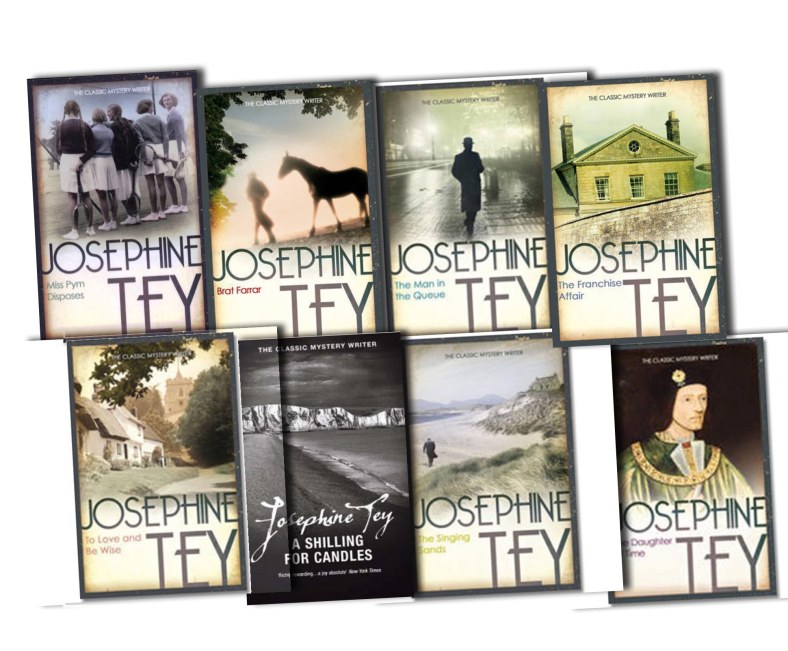
Faithful readers of Golden Age crime novels often read, and re-read, their favorite writers out of devotion to this inimitable era and style of crime fiction. Golden Age works were primarily written by British authors but also a few famous practitioners in the United States; these include Mary Roberts Rinehart, whose popularity in her heyday rivaled Agatha Christie’s. Rinehart’s novel The Door popularized the phrase “The butler did it!” even though those words appear nowhere in the book. In Great Britain, one of the best but most underappreciated writers in this style was Scottish author Josephine Tey. A versatile writer of plays, poetry, and short stories as well as mystery novels, Tey is most famous for the work declared “Greatest Crime Novel of All Time” by the British Crime Writers’ Association: The Daughter of Time (also available as an eaudiobook from Libby/OverDrive).

The book cover depicts a painted, framed portrait of a king, presumed to be Richard III of England, against a white background.

Tey’s series character, Inspector Alan Grant, is sidelined in a hospital bed with a broken leg and bored to tears with inactivity. A friend of Grant’s, actress Marta Hallard, suggests that he try his hand at solving a famous historical mystery, since he can’t actively investigate clues or hunt down a killer while confined to the sickroom and limited in his movements. While researching various figures, Grant discovers that Richard III looks kindlier than the way he is portrayed in the historical rogues’ gallery of villains. In fact, Grant wonders if the famous Tudor king was really responsible for all the tragedy and evil attributed to him, including the deaths of his young nephews Edward and Richard? Richard III was serving as regent for Edward V when the two boys were declared illegitimate, then disappeared from history. Now, Inspector Grant is on the case!

The novel becomes a thorough exploration of that important task of historians: to sift the facts from myth and legend, to figure out what version of an event is authoritative, to consider how one viewpoint’s retelling becomes prevalent while another fades into the mists of time. The reader learns about history as a construct while Grant learns more about his infamous subject. It becomes the mission – if not the obsession – of Grant and his eager young assistant, British Museum researcher Brent Carradine, to crack the case.

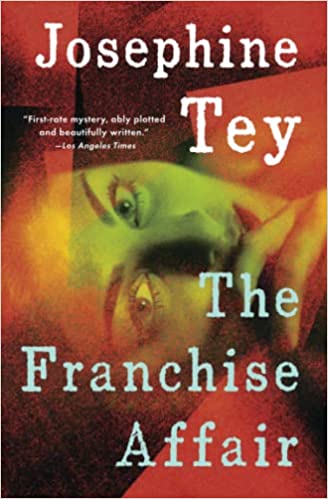
The book cover depicts the headshot of a woman, lying on her side and staring at the viewer, with her fingers to her mouth. Her eyes are wide with long lashes and carefully manicured brows.

Tey wrote one other mystery with a tinge of history, The Franchise Affair, based on a famous kidnapping case in the eighteenth century even though it is set in the 1940s. This book and six others are part of Tey’s series featuring Inspector Grant, although he appears in it only briefly. I recently read the second book, A Shilling for Candles, and I loved what her fellow Scot, crime writer Val McDermid, had to say about her in a CrimeReads article. McDermid postulates that Tey is actually a bridge between the Golden Age writers and modern crime novelists like Ruth Rendell (my all-time favorite) and Patricia Highsmith, with a more subtle, psychological, sexually ambiguous character study than authors like Christie and Ngaio Marsh. Her work is an uneasy, darker take on individual identity that is decidedly a forerunner to Rendell and Highsmith. A Shilling for Candles (also available in ebook format from Libby/OverDrive) is also a good story for film and theatre buffs (like many of Marsh’s Roderick and Troy Alleyn novels). Tey’s experience as a playwright gives her remarkable insight into the competitive, dramatic lives of actors and actresses on and off the stage and screen.

Read Josephine Tey’s Inspector Grant novels if you have a hankering for a “new “author who is just as deserving as Dame Agatha of acclaim and fame. For those interested in whether Richard III really murdered his nephews, Marylander Barbara Mertz, who also wrote fantastic romantic thrillers under the pseudonym Barbara Michaels, explored this historical puzzle further in her novel The Murders of Richard III (available from Libby/Overdrive as an ebook), written under her more famous pseudonym, Elizabeth Peters. And finally, Nicola Upson has a great historical mystery series of her own, featuring none other than Josephine Tey as her amateur sleuth.

Julie is an instructor and research specialist at HCLS Miller Branch who finds her work as co-editor of Chapter Chats very rewarding. She loves gardening, birds, crime fiction, all kinds of music, and the great outdoors.