Sun, Nov 9 | 2 – 3:30 pm HCLS Miller Branch For adults. Register here.
“Lucid and expansive, Richard Bell’s book presents vivid characters who reveal the global stage and stakes of a revolution that was American and much more.”—Alan Taylor, two-time Pulitzer Prize–winning author of American Revolutions: A Continental History
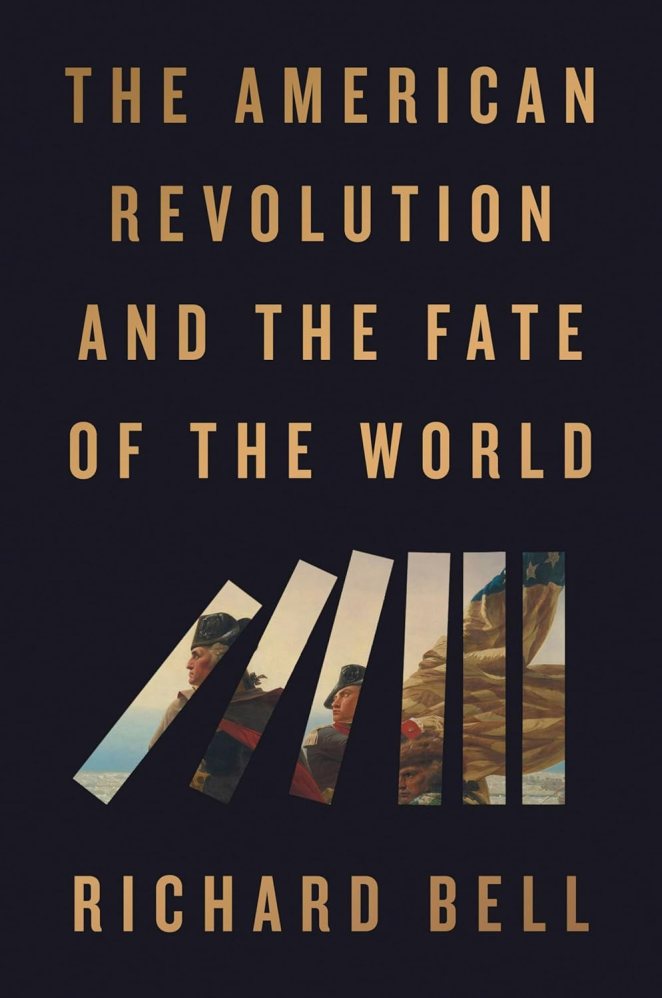
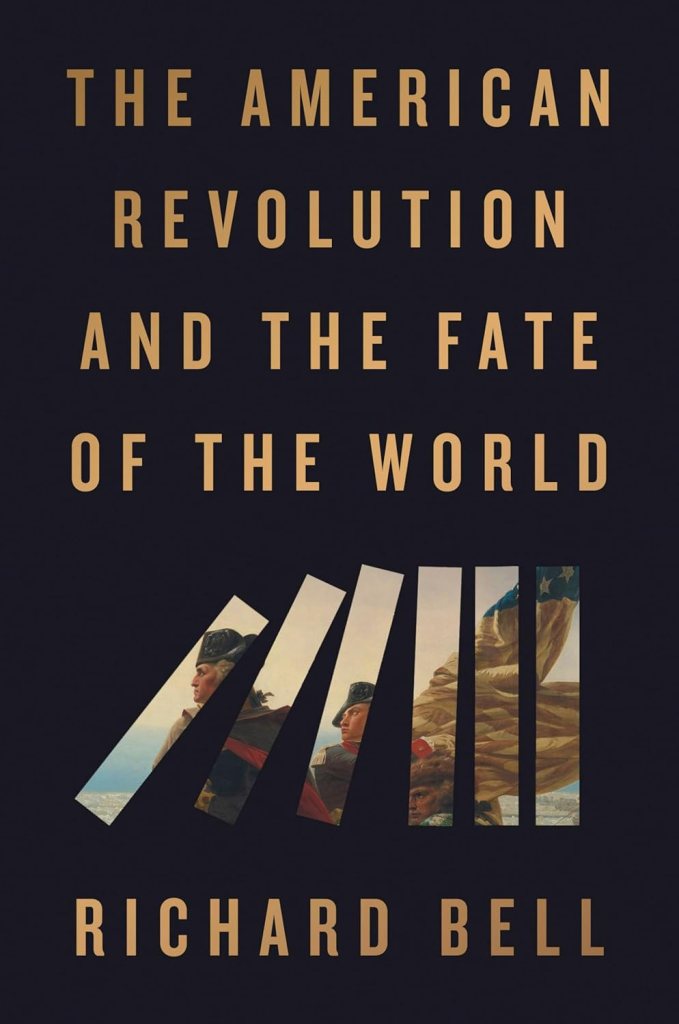
Dr. Richard Bell discusses his new book, The American Revolution and the Fate of the World, a fascinating and unfamiliar recasting of America’s war of independence as a transformative international event. The American Revolution was not only the colonies’ triumphant liberation from the rule of an overbearing England; it was also a cataclysm that pulled in participants from around the globe and threw the entire world order into chaos.
Repositioning the Revolution at the center of an international web, this narrative history ranges far afield. As our lens widens, the “War of Independence” manifests itself as a sprawling struggle that upended the lives of millions of people on every continent and fundamentally transformed the way the world works.
The American Revolution and the Fate of the World conveys the impact of these developments at home and abroad by grounding its narrative in the gripping stories of individuals. The result is an unforgettable new perspective on America’s founding fight that shifts everything we thought we knew about our creation story.
Dr. Richard Bell received a BA from the University of Cambridge and a Ph.D from Harvard University. He holds tenure as a full professor in the Department of History at the University of Maryland. He has published four books and more than a dozen articles and book chapters. His major research fellowships include Yale, Cambridge, and the Library of Congress. Dr. Bell is the recipient of the National Endowment of the Humanities Public Scholar award and the Andrew Carnegie Fellowship.
Why does the United States celebrates Labor Day on the first Monday of September? As a child, I never gave it much consideration. Any importance was overshadowed by having the day off from school. The answer lies in the checkered history of the American labor movement, which is as much about setbacks as it is about resilience. Workers fighting for their rights, from the railroads to the streets of Chicago, were often met with violent resistance. Nonetheless, those hard-won victories have shaped the experience of modern workers to this very day.
American labor is by its nature intersectional, with roots in the economic and social divides that culminated in the Civil War and shaped the centuries to follow. It is a history where the shop floor, Sunday service, and the union hall shared the same spaces. The advancement of technologies, from railroads to steel drills, brought both opportunity and exploitation. These emerging conditions forced workers to organize, not just for wages but for dignity. As these struggles unfolded, they drew upon the power and potential of immigrant communities, civil rights groups, preachers, and artists alike.
Music has been a constant companion of the laborer, carrying meaning and messages farther than words alone. From the plantations and fields came spirituals like Go Down, Moses, which turned suffering into a promise of deliverance. John Henry commemorates the toil of railroad laborers and transforms it into a ballad of defiance. Folksingers gave voice to the dignity of ordinary folk, whose effort and struggle sustain the very functioning of our society. Later artists like Pete Seeger and Woody Guthrie would carry this tradition forward, inspiring generations of protest music.
If you’re interested in learning more about the labor movement in the United States, check out this list of resources available at HCLS.
From Factories to Folksongs For adults. Register here. Celebrate Labor Day through the exploration of the music, industrial advancements, and struggles that define this long history. Fri, Sep 5 | 11:30 am – 1 pm HCLS East Columbia Branch
Ian Lyness-Fernandez is not quite used to being an Instructor at HCLS East Columbia Branch. He hopes his passion for learning can somehow translate into a skill for teaching.
Revered Revolutionary War figure Gilbert du Motier, the Marquis de Lafayette, left France at age nineteen to aid America’s battle for independence from the British Monarchy. He was determined to fight for the American cause against the wishes of his father-in-law and the prohibition of France’s King Louis XVI. On December 7, 1776, while in Paris, Lafayette received a commission of Major General in the Continental Army, which was approved by the Continental Congress on July 31, 1777. As Lafayette began making travel plans, he purchased a ship with an experienced crew, along with twelve handpicked fellow French officers, and absconded to Spain. The ship was called the “Victoire,” and it set sail for America on April 20, 1777.
Lafayette risked his life in notable battles such as Brandywine and Yorktown, earning admiration from Americans and fellow soldiers alike. His enlightened views on equality and zealous support for American independence endeared him to General George Washington, who reportedly came to treat Lafayette as a son. Lafayette’s steadfast commitment to the American cause and his ideals of liberty cemented his legacy as one of the Revolution’s most beloved figures.
Celebrating Lafayette’s Bicentennial as Guest of the Nation
In 1824, President James Monroe invited the 67-year-old Lafayette, the last surviving major general of the Continental Army, to return to America as the “Guest of the Nation.” His year-long Farewell Tour rekindled the nation’s gratitude and admiration. To commemorate the 200th anniversary of this historic visit, the Bicentennial of Lafayette’s Farewell Tour began in New York City on August 15, 2024. The tour retraces Lafayette’s original route and celebrates his profound impact on the young America.
Lafayette and his entourage visited Howard County with a stop in Lisbon on December 29, 1824, en route to Frederick. There is a commemorative Lafayette Tour marker, with an inscription that notes that an arch was erected by the community to welcome him.
Explore Lafayette’s Legacy at the Miller Branch Library
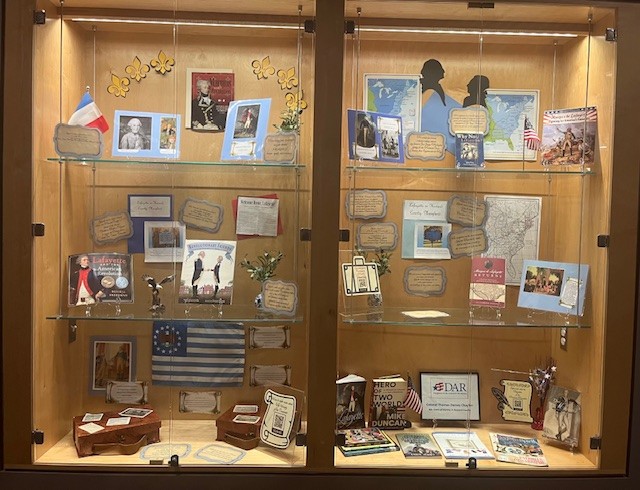
The Bicentennial celebration recreates Lafayette’s tour as it unfolded in 1824 and 1825. The community can learn more about Lafayette and his return to America from the Colonel Thomas Dorsey Chapter of the Daughters of the American Revolution General Lafayette’s Farewell Tour Exhibit at HCLS Miller Branch this December.
Visit the exhibit to learn more about Lafayette’s extraordinary life, his role in America’s fight for independence, and the enduring significance of his Farewell Tour.
Author Works Thu Jul 11 7 – 8 pm Miller Register now.
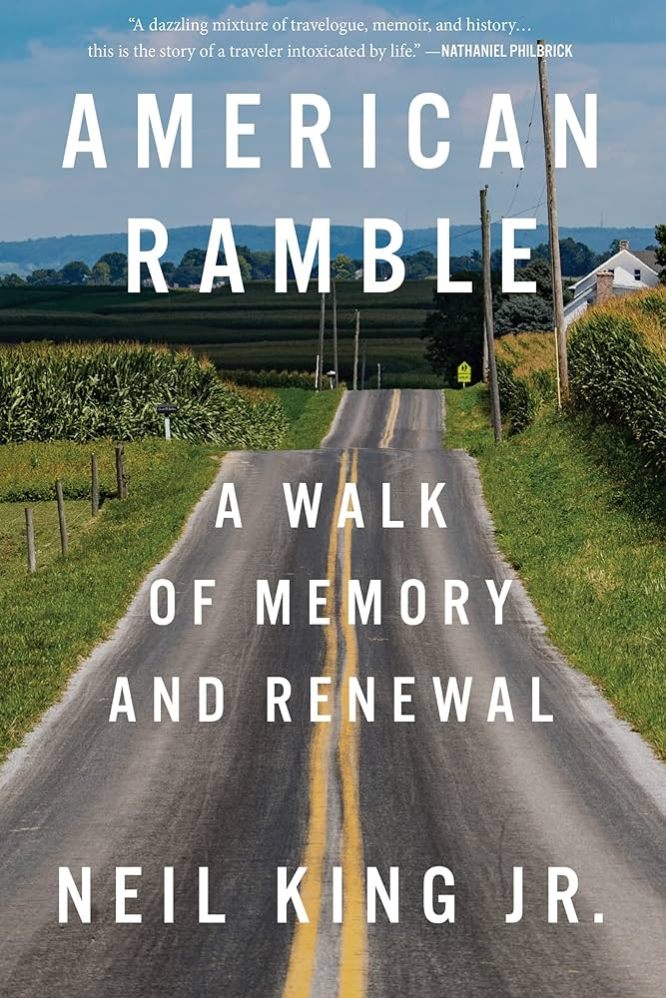
According to Chaucer, April is the proper month for pilgrimage. Neil King agreed, and in 2021 he walked from Capitol Hill in Washington, DC to Central Park in New York, NY. His route traced up Rock Creek Park and Wisconsin Avenue through the suburbs, across Woodstock (MD), over the Mason-Dixon Line into York, PA and Amish country, then to Valley Forge, across the Delaware River, through New Jersey while finally crossing under Interstate 95, and into New York.
In his travelogue and memoir, American Ramble, he refers to these areas as “mini-nations,” and often relates them to the early history of the American colonies. He meets a wide variety of people along the way, who account for many of the anecdotes that drive the story. Some people instantly understand and bless him along his way. Others can’t even be bothered to offer the sojourner the basic necessity of water. Each night, he stays safely at planned spots – usually an AirBnB.
He acknowledges the privilege of making the trip as a White man, with the resources to finance the trip and the connections that further him along the way. He fully recognizes that not everyone would be safe on a similar trek. He also has a lifetime of travel experience and wanderlust behind him, so a month-long journey isn’t particularly daunting. Rather, it’s a fundamental reclamation of his preferred mode of living, after the pandemic and an ordeal with cancer.
King often refers back to Chaucer and other travels, and this month away from ordinary life is truly a pilgrimage for him. Not after only his own medical difficulties; he is also dealing with his brother’s diagnosis. He had been a Wall Street Journal reporter on 9/11, and the trip connects his present and his past – DC and NY. So, after the Covid pandemic and the racial unrest in the wake of George Floyd’s death, the author walked to reconnect with America itself. His goal was to meet all sorts of people where they are and to remember that we’re all part of the fabric that makes America.
At a quick 360-ish pages, the book is a delightful read. King leans into his journalism background to paint sketches of people and places. Some of my favorite anecdotes took place in Pennsylvania: one where he comes across a gaggle of Mennonite school kids playing softball, and another when he’s at the Eastern State Penitentiary in Philadelphia. His reflections upon the connections between pilgrims and penitents are particularly well done. The other moment that has stayed with me was how he solved crossing the I-95 corridor, to continue traveling eastwards, but I don’t want to spoil the episode with more detail.
The author has a personal distinction about how some people (like himself) are from – and at home in – Anywhere, while others (like myself) are home-bodies who occupy Somewhere. Whichever you are, American Ramble has some lovely moments for you to enjoy and ponder.
Neil King, Jr. discusses his trip and his book at an upcoming event at Miller Branch. American Ramble is available in print and e-book.
Kristen B. is a devoted bookworm lucky enough to work as the graphic designer for HCLS. She likes to read, stitch, dance, and watch baseball (but not all at the same time).
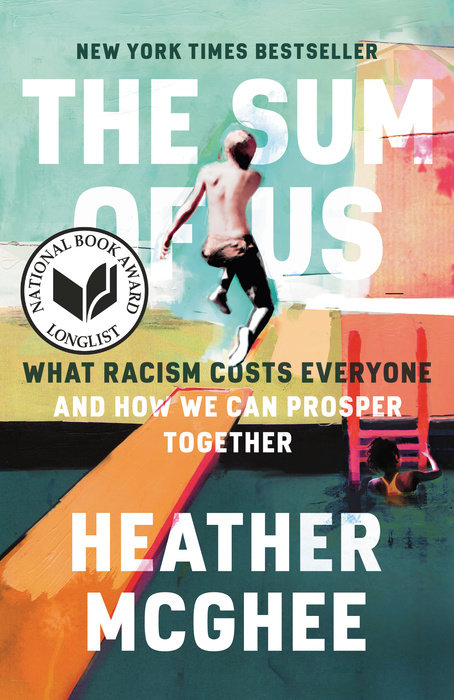
“I’m a white male, and I am prejudiced.” In August 2016 on C-SPAN’s Washington Journal, public policy expert Heather McGhee, answered the challenge presented by Garry, a caller from North Carolina. He asked, ”What can I do to change, you know, to be a better American?” The video went viral due to McGhee’s reasoned, compassionate response. Thanking the caller for being honest while acknowledging we all have prejudices, McGhee proceeded to offer advice including, “In order to be a demos that is united across lines of race and class and gender and age, we have to foster relationships. We have to get to know who one another actually is.” When McGhee’s book, The Sum of Us, was published, I was curious to learn more from her. After reading it, I especially appreciate McGhee’s insight into how the mentality of “us and them” was built and how we can break it down.
The Sum of Us: What Racism Costs Everyone and How We Can Prosper Together describes how all ethnic and class groups suffer when racism influences government policy. McGhee researched the roots of economic disparity in the United States and explored causes and solutions from a perspective of unity rather than division. She argues that many problems with wage distribution, education, health care, housing, and environmental policy arise from the concept of a zero-sum game. When citizens perceive one racial group’s gain as another group’s loss, we cannot work for a common good. She documents how everyone loses out when racial hierarchy guides legislation. When public pools are filled with cement to circumvent enforcement of desegregation legislation, all the kids whose parents can’t afford private pools can’t go swimming. Using the concept of the public pool as a central metaphor, McGhee deconstructs how the US reached today’s level of political division and how American society can move forward, allowing all races, ethnicities, and classes to thrive.
Of course, the idea of “what helps you, hurts me,“ goes beyond kids not being able to cool down in a pool in the summertime. The Sum of Us carefully traces trade union busting, healthcare access gaps, rising costs of public colleges, and the sub-prime mortgage crisis back to racial profiling. The resulting wage stagnation, benefit cuts, student debt, and foreclosures affected all racial groups.
McGhee’s empathy raises The Sum of Us to a higher level than some other books I’ve read on similar topics. For example, as a self-proclaimed data nerd, she clearly explains the economics of the 2007-2010 financial crisis but then goes beyond the numbers to show, “what was risky wasn’t the borrower; it was the loan.” I gained understanding not only of the economics of the crisis, but the societal toll. Although predatory loan practices were initially targeted at low-income Blacks, later, the loans were pitched to everyone, regardless of their credit status. Many borrowers were eligible for prime mortgages but were manipulated to accept sub-prime mortgages because of the financial bonanza for the lender. McGhee presents this as yet another situation where racism eventually hurt everyone.
McGhee has coined the phrase “Solidarity Dividend” for the benefits arising from communities collaborating across the racial divide. From minimum wage increases to investment in affordable housing development to improvement in air and water quality, the Solidarity Dividend boosts the economy while enhancing quality of life. “Getting white support to address those different levels of need, and to acknowledge the racism that caused these differences, is never easy – particularly when the zero-sum mental model turns every concession into a threat of loss,” McGhee writes. The Sum of Us demands to be read both for the well-researched documentation of the past and the message for our future.
By the way, Heather and Garry, a disabled Navy veteran, built a friendship. Garry continues to work on understanding racism and realigning his own thinking.
Cherise Tasker is an Adult Instructor and Research Specialist at the Central Branch. When not immersed in literary fiction, Cherise can be found singing along to musical theater soundtracks.
The title itself should take you back to a time and parlance that we, as a country of “free” citizens, should have moved past long ago. Sadly, we have not.
I am Not Your Negro is a great introduction to James Baldwin. Filmmaker Raoul Peck worked on the project for nearly a decade (a recent article by Peck in The Atlantic entitled James Baldwin Was Right All Along is a great primer). The film offers a potent collage of civil rights era footage, recent Black Lives Matter protests, interviews, and debates that feature Baldwin speaking (captivating), as well as the narration of excerpts from an incomplete manuscript read by actor Samuel L. Jackson, tentatively entitled Remember This House.
The 1979 manuscript concerns Baldwin’s reluctant return to America after a long sojourn in France. The nonfiction piece, a pensive essay on racism in America, details his relationship with, and observations of, Medgar Evers, Martin Luther King Jr., and Malcolm X. Baldwin refers to himself as a “witness” of these three titans of the civil rights movement, all murdered before the age of 40. Baldwin explicitly states that he’s not missing his native land; the impetus for his return seems out of a sense of guilt that America’s serious racial divide is an abstraction to him while living abroad.
Baldwin succinctly states that “segregation equals apathy and ignorance,” as they are forces very difficult to overcome. His assessment of Americans’ sense of reality and the reasons for it should give us all something to contemplate. I love good writing, and Baldwin’s prose is beautiful. I believe this is why some have compared his essays to those of George Orwell (I encourage you to read his essays, too. I’m a huge fan). I would describe both as moral or political artists, and perhaps I appreciate their contemplative tone.
As a side note,Baldwin’s fictional Another Country, included in PBS’s the Great American Read, made for a great discussion in my book group. The narrative deftly examines race, gender, sexual orientation, social class, power, and anger. The nonfiction title The Fire Next Timeis comprised of two essays, one a letter Baldwin wrote to his nephew. I find them both beautifully written and compelling.
Perhaps it’s a positive sign that the aforementioned materials are currently in high demand and hard to borrow, both in print and digitally, so just start by streaming the film on Kanopy. It is well worth your time!
It some ways it seems odd that someone like me is writing this piece. If you met me you’d quickly realize that I’m close to the apex of privilege in America for a variety of reasons. I’m well aware of this fact, though I wasn’t always. I’d proffer that sometimes single words such as “privilege” become overused, politicized, and more importantly, lose their intent. This is precisely why we should all contemplate our world, and art is an engaging way to do so.
Eric is a DIY Instructor and Research Specialist at the Elkridge branch. He enjoys reading, films, music, doing nearly anything outside, and people.
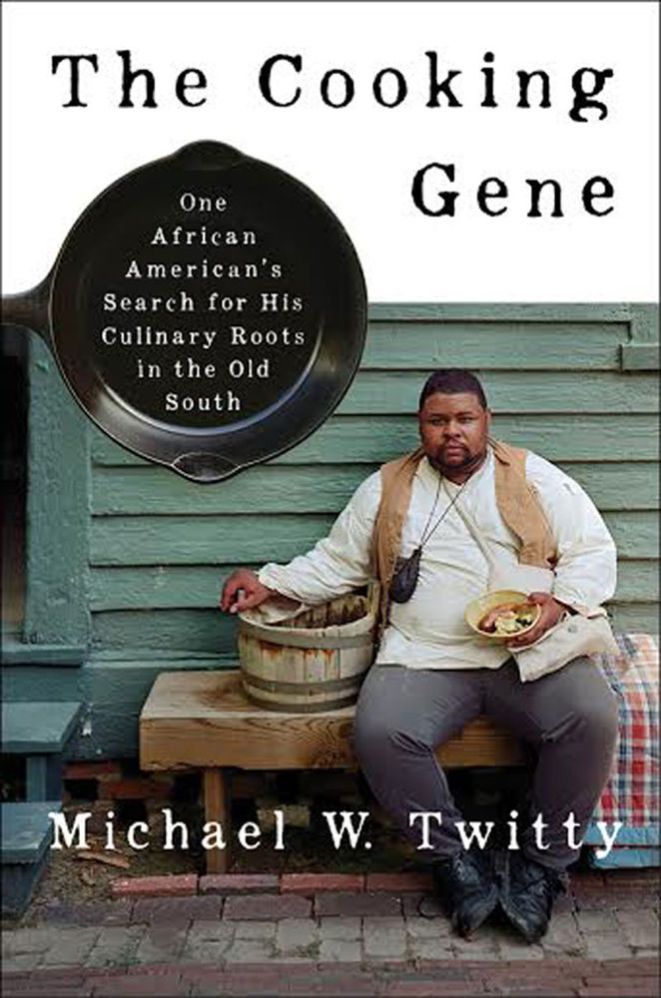
The James Beard Award-winning book, The Cooking Gene, defies categorization: part memoir, part highly researched historical account of Southern foodways, and part genealogical research into the author’s ancestry. It also includes recipes. By no means an easy book to read in its themes or storytelling, Twitty takes us on journeys throughout the American colonies with the contributions of enslaved Africans front and center. The book generally follows the history of the American South, but other bits work their way in, too. Personal experiences and family stories intersperse with long lists of ingredients found at plantation feasts. It’s like having an extremely learned docent talking about all his favorite subjects, which is a fair assessment of the situation.
Michael Twitty is a gay, black, Jewish man who interprets historical Southern cooking, particularly from the pre-Civil War era. His book recounts some of those experiences, intermingled with a wealth of knowledge about how “soul food,” that indelible American cultural touchstone, came to be. As human beings made the Middle Passage from Africa to America, food and culture naturally travelled with them. The Cooking Gene presents a fascinating dissection of slave-holding states and their regional variations, from the Chesapeake area along the Low Country of the Carolinas and Gullah-Geechee to the deep South of Louisiana and Alabama. Each area offered something new and different into the country’s cooking lexicon, and most of those old kitchens were run by slaves … some of whom were even trained in Paris to further increase the standings of the families they served.
Twitty focuses on food as a way to explain the people: yams, corn, rice, greens, tobacco, and more. As part of the food history, he also details the different eras of human commerce and wrote a sentence that stopped me cold in my tracks and that I’ve thought about ever since:
The black body was the single most valuable commodity in the American marketplace between the years 1790 and 1860 (p. 321).
The other major thread winding through this astounding book is what Twitty calls his Southern Discomfort Tour. He, with the help of genetic testing and professional genealogists, has traced more than eight generations of his family’s history in America. He located records of his ancestors’ lives along the North Carolina/Virginia border, as well as deeper into the South. He found receipts of their sales and how they were listed among assets of landowners. From his genetic testing results, he could identify which regions and tribes his family belonged to in West and Central Africa. His racial heritage also includes more than a quarter European descent, which led him to travel to London and Dublin to claim those parts of his heritage, too. I realized that Twitty’s family has been in America longer than just about anyone’s I know. Twitty pulls very few punches recounting the terrors and sordid realities of life for slaves. The genius of this book is that the author puts so much of himself into the telling that the reader must do him the respect of listening.
I learned so much, including the sheer diversity of the African population that made the Middle Passage and how – truly, in every way – African-Americans built our country. They were the field hands, builders and master craftsmen, knowledgable farmers and hunters, and yes … the cooks who fed everyone. I learned about the history of our country’s foods and about a diversity that we lack in our modern era of packaged foods and monocultures. In my family, as in so many others, food is love. The Cooking Gene is nothing short of Michael Twitty’s love letter to his culture, his family, and the foodways of the American South.
This title is available in the collection as a book, eBook, and eAudiobook, both via Overdrive and RB Digital, which has the “always available” audio as part of its Anti-Racism reading list.
If you are interested in learning more about the African-American experience and anti-racism, join us for an online conversation on Monday, July 20 with Ibram X. Kendi on “How to Be an Anti-Racist.” Registration required.
Kristen B. has worked for HCLS for more than 15 years, and currently hosts the Books on Tap discussion group at Hysteria Brewing Company. She loves reading, Orioles baseball, and baking.
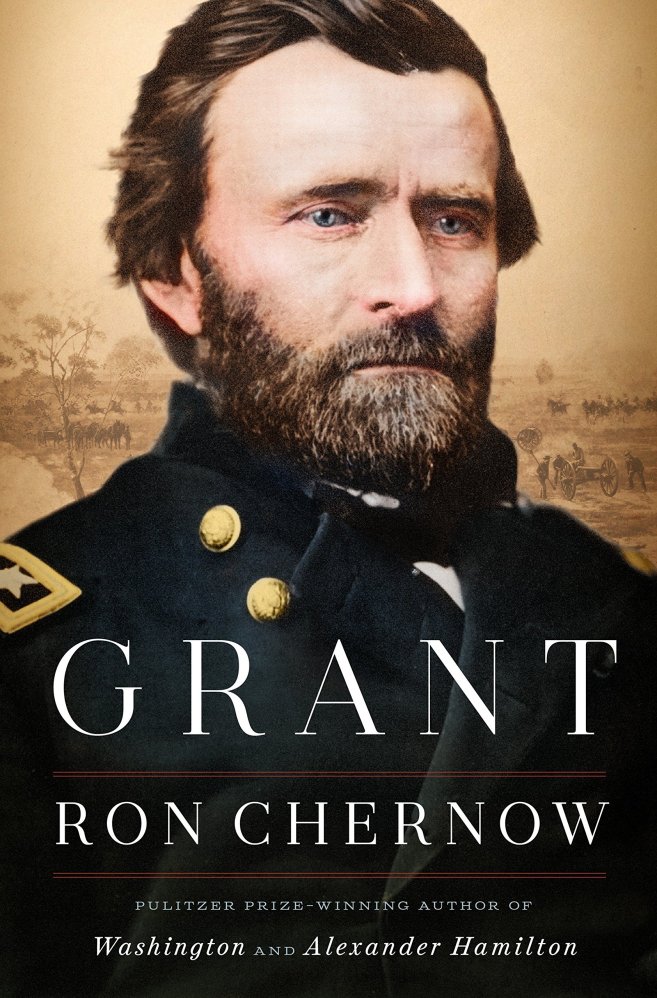
Ulysses S. Grant, circa 1864, photographed by Matthew Brady
Review by Jean B.
Biographies, especially those by Ron Chernow, can be a heavy lift – literally. At more than 900 pages, Chernow’s acclaimed 2017 book examining the life of Ulysses S. Grant can be exhausting to hold for more than 30 minutes of reading. So now is a perfect time to tackle this large but highly satisfying tome, when you can read or listen to it electronically on a lightweight device and maybe have extra reading time in your day! Available through OverDrive in both ebook and eaudiobook formats, Grant offers a fascinating, detailed look at both the man and his era.
I love to read history, biography, and historical fiction, but I’m always discovering how many episodes in history I really know nothing about. The Civil War era has been recorded in myriad ways, and yet, with Grant I gained new perspective on the war — learning details of the Western front that, as a Pennsylvanian whose education focused on Gettysburg, I hadn’t appreciated. More startling, I discovered how little I understood about the Reconstruction Era and the immense challenges that faced President Grant in securing the rights of newly freed slaves to work, vote, and be full citizens in the re-established Union.
Ron Chernow sets out to correct the one-dimensional and largely negative portraits of Grant by earlier historians which portrayed him as an ineffective political leader tainted by scandals, corruption, and a chronic drinking problem. Though Chernow clearly admires his subject and goes above and beyond to compile contemporary opinions and statements to bolster his case in Grant’s favor, Chernow’s portrait has such depth, complexity, and humanity that I was persuaded, too, by the end, of Grant’s impressive leadership, moral courage, and devoted service to the ideals of a united nation and racial equality.
And along the way, I enjoyed getting to know so many of the supporting (and often traitorous!) characters in Grant’s life, from his overbearing father, to his society-loving wife, to the infamous General William Tecumseh Sherman, to conniving Gilded Age businessman Jay Gould. It’s all here — family intrigue, dramatic changes of fortune, battles and blood, comradeship and bitter betrayal. Download and dig in!
Jean is a Children’s Instructor and Research Specialist at the HCLS Central Branch who enjoys participating in book clubs with both kids and adults.











 CHAPTER CHATS