The End of the World as We Know It

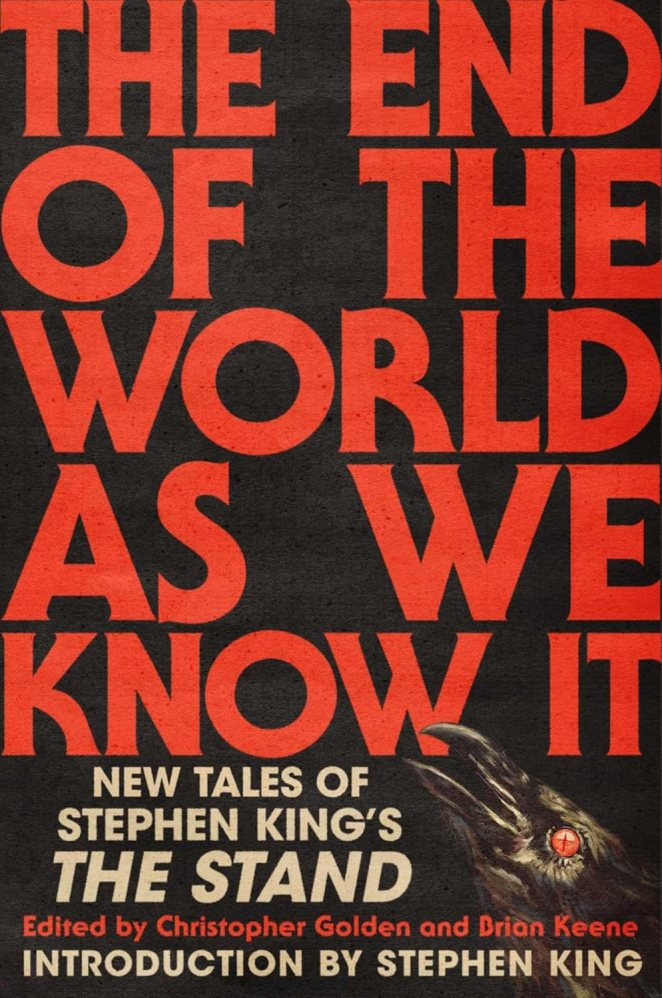
The book cover has a raven with a reddish-orange eye in the lower right corner, with its open beak extended up and looking directly at the viewer.

by Angie E.

In a year that feels like it’s testing every emotional fault line, some readers crave escape through lighthearted rom-coms or cozy mysteries. But for others, especially those feeling raw, anxious, or on edge, those stories can feel like a slap in the face. When the world feels broken, sometimes the only thing that makes sense is reading about the end of it. Two recent releases offer radically different but equally powerful takes on apocalypse: one fictional, one factual, both deeply human. 

For the first time ever, Stephen King has authorized other writers to expand the world of The Stand, his iconic 1978 novel about a pandemic that wipes out most of humanity and pits survivors in a battle between good and evil. Edited by Christopher Golden and Brian Keene, The End of the World as We Know It features 36 all-new stories from a dazzling lineup of authors: Wayne Brady, Caroline Kepnes, Tananarive Due, Paul Tremblay, Alma Katsu, and many more. 

The stories span the initial outbreak, the migrations to Boulder and Las Vegas, and even decades beyond the original novel’s timeline. They’re terrifying, philosophical, and sometimes heartbreakingly tender. For readers who feel like they’re living through their own version of The Stand, this anthology offers catharsis, community, and a reminder that even in collapse, there’s room for hope. 

The book cover shows a shooting star seemingly exploding above a cityscape in shades of blue and yellow, against the backdrop of a night sky and many stars.

If The End of the World As We Know It is a fictional dive into the apocalypse, Everything Must Go by Dorian Lynskey is its nonfiction counterpart, a sweeping, witty, and surprisingly comforting cultural history of how we’ve imagined the end across centuries. Lynskey explores everything from religious prophecies to pandemic fiction, climate collapse, rogue AI, and nuclear dread. He name-checks everything from The Road to Children of Men, The Twilight Zone to The Purple Cloud, weaving together pop culture, science, and philosophy into a rich tapestry of our collective anxieties. 

What makes this book so compelling is its insight: apocalyptic stories aren’t just about destruction, they’re about transformation. They reflect our fears, but also our longing for clarity, justice, and rebirth. For readers struggling in 2025, these books offer more than just entertainment. They offer validation and say: You’re not alone in feeling like the world is ending. And they do it without sugarcoating or false cheer. Instead of asking you to pretend everything’s fine, they invite you to sit with the chaos—and maybe even find meaning in it. 

Angie is an Instructor & Research Specialist at Central Branch and is a co-facilitator for Reads of Acceptance, HCLS’ first LGBTQ-focused book club. Her ideal day is reading in her cozy armchair, with her cat Henry next to her.

Our next chapter starts soon when the blog moves to the newly redesigned hclibrary.org. All the same great reviews and news, plus more library information!

On the Edge of Your Seat with Richard Matheson

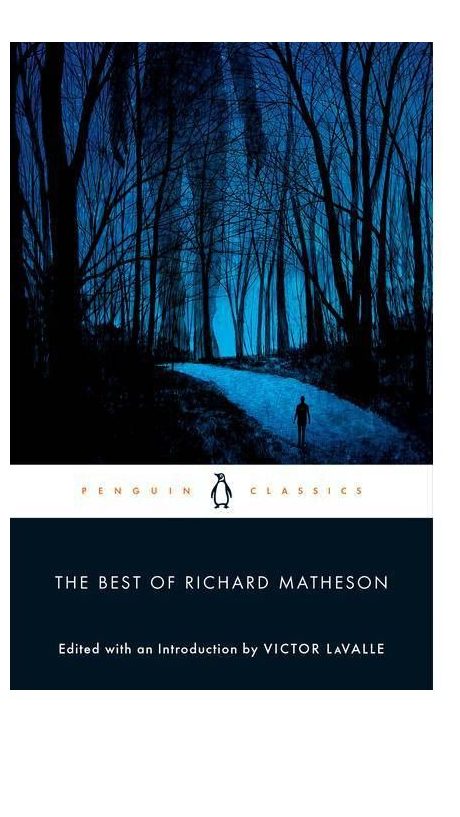
A moody blue and black cover shows a solitary figure walking a road through a night time forest.

by Angie E.

The Best of Richard Matheson is like taking a roller coaster ride through the wild and imaginative mind of a literary genius. Now, if you haven’t heard of Richard Matheson, let me tell you more. He’s behind some of the most spine-tingling tales that have ever graced a page. From the eerie darkness of I Am Legend (also a movie) to his episodes of the mind-bending brilliance of The Twilight Zone to the softer, more gentle (and beloved) Somewhere In Time , Matheson knows how to keep you on the edge of your seat. 

The Best of Richard Matheson reads like a greatest hits album for horror, sci-fi, and thriller enthusiasts. The tantalizing collection of his finest short stories, handpicked by author Victor LaValle, showcases his incredible range. It’s a treasure trove for anyone who craves a good dose of suspense, a dash of the supernatural, and a healthy serving of psychological twists. 

One of my favorites is “Button, Button,” a chilling tale that plays with morality and the consequences of our actions. It’s like a game of ethical roulette where you can’t help but question what you would do in the same situation. Matheson has a way of making you think long after you’ve turned the last page. 

“Duel” is another pulse-pounding story that’ll make you think twice before honking your horn at an aggressive driver on the highway. An intense battle of wits, it keeps you gripping the edge of your seat while giving you a newfound appreciation for the safety of your car. It’s also the basis for the 1971 movie of the same name, directed by Steven Spielberg. 

And let’s not forget the goosebumps-inducing classic “Nightmare at 20,000 Feet,” both a classic episode of The Twilight Zone and part of the 1983 film of the same name. If you’ve ever stepped onto a plane and felt a twinge of unease, this story takes that discomfort to a whole new level. Matheson takes a seemingly mundane situation and infuses it with a supernatural twist that leaves a lingering fear of air travel and, perhaps, a reassessment of William Shatner’s acting, if you watch the episode

I adore Matheson’s ability to create vivid characters that jump off the page. Whether it’s a desperate survivor battling hordes of vampires, an ordinary Joe facing off against his darkest fears, or a gentle, sad man searching for love in the past, you find yourself deeply invested in their journeys. Matheson has a knack for blending the extraordinary with the everyday, making it all the more relatable and thrilling. 

The Best of Richard Matheson is a delightful literary cocktail that’s equal parts creepy, mind-bending, and thought-provoking. It’s the kind of book you’ll find yourself devouring in one sitting, staying up late into the night with wide eyes and racing pulse. 

Angie is an Instructor & Research Specialist at Central Branch and is a co-facilitator for Reads of Acceptance, HCLS’ first LGBTQ-focused book club. Her ideal day is reading in her cozy armchair, with her cat Henry next to her.