January 29 marks the beginning of the lunar new year and two weeks of celebration. 2025 is the Year of the Snake according to the Chinese calendar, and folks will celebrate with cultural traditions, family reunions, and hopes for good fortune in the coming year. According to chinesenewyear.net, “The Snake, symbolizing wisdom and transformation, offers opportunities for personal growth and change.” We invite you to mark the lunar new year at the library, with classes for everyone:
Lunar New Year: What Animal Are You? All ages. Drop in all month to celebrate Lunar New Year! Are you a lion? An ox? A rabbit? Find out what animal matches your birth year, then decorate a paper animal to join others in this self-directed community art project. Which of the twelve zodiac animals will have the most on display? On January 31, our community art project ends and reveals which animal has the most matches. Jan 2 – 31 at HCLS Savage Branch ongoing during regular hours
Lunar New Year Celebration Families, all ages. Celebrate Lunar New Year with stories, songs, and a craft. Wed, Jan 29 2 – 2:45 pm HCLS East Columbia Branch
Lunar New Year Fest For families. Registration recommended at bit.ly/Lunar2025 Experience the rich traditions of the Lunar New Year with live performances, engaging activities for all ages, and educational presentations about the holiday’s cultural significance. Savor traditional snacks and drinks while connecting with friends and neighbors at this community collaboration. Bring your family and friends to welcome the Year of the Snake in a joyful, festive atmosphere! Sat, Feb 1 1 – 4 pm HCLS East Columbia Branch
And you can always practice your language skills at:
World Languages Cafe For teens and adults. Register at bit.ly/languagescafehcls In collaboration with the Columbia Association, the World Language Cafe takes place at the East Columbia 50+ Center and HCLS Miller Branch. The World Languages Café (WLC) provides a venue where people meet to practice a world language with fellow community members, facilitated by a native or fluent speaker of that language. Over the years, the WLC has featured languages including American Sign Language, Chinese Mandarin, Dutch, French, Hebrew, Irish Gaelic, Italian, Japanese, Portuguese, and Spanish. If you are interested in volunteering as a language table host, please contact diane.li@hclibrary.org 4th Tuesdays; 7 – 8:45 pm East Columbia 50+ Center
Come talk food with us! Wednesday, May 24 at 7 pm | Savage Branch Register here.
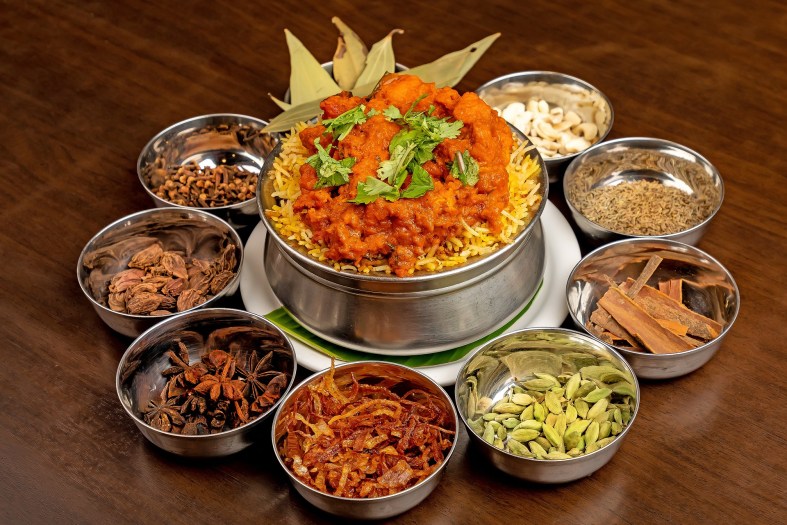
In Asian American households, food is a love language. Sliced fruit, set gently next to a workspace, is an invitation to take a break, or an apology. Homecomings are ushered in by welcome feasts, and almost every restaurant occasion ends with a polite battle over the bill. Food is affection, and especially in immigrant households, it is a connection to family, to a far-away home, and it is a consistent way of showing (but not telling) love.
Growing up with my Bengali mother, rainy days off meant khichdi (a mix of rice, lentils, and vegetables) and aloo bhaja (thinly sliced fried potatoes) for lunch. My brother and I would scrap over the last few aloo bhaja in the bowl, before our mother would smile indulgently and take a few from her plate to split between us. I’d sit in the kitchen as my mother cooked big, elaborate, multi-course meals, watch her season and spice, and wait for the oil to sputter specifically, never once consulting a recipe. She would have one of her aunts on speakerphone, talking about family back home and interjecting with quick questions on what to substitute to make our American ingredients taste as close as possible to the Indian ones.
I grew to appreciate food, to understand cooking, and to have a standard repertoire of recipes after learning from my mother. It was a common language we shared, this mutual culinary interest. And it’s only grown. I cook with and for friends, I follow cooking blogs and sites and social media accounts, I favorite every restaurant I pass by with an interesting-looking menu, and most of all, I like to talk about food with people. On desk at the library, I’ll see someone flipping through a cookbook I’ve read, and I’ll want to stop and talk. I’ll notice someone looking at a book written by one of my favorite food personalities, and I can’t help but smile at it. And most of all, I love when people share their recipes with me, when I can hear about the food, the stories, and the cuisines that influence them.
It’s important, also, to know about innovators. To know about the people who are pushing the cuisine, who are changing it, who are going back to the roots of a tradition or practice to better understand it. There are so many Asian American chefs who are pushing the envelope on what elevated Asian American cuisine looks like, and there are just as many Asian American chefs who are looking to create the most traditional experience they can with their food. All of that is what makes the cuisine not just Asian, but Asian American. It’s the blend of respect for culture and tradition, and the simultaneous push to the modern that makes Asian American food so unique.
To celebrate all of the above, we’re having a Recipe Exchange on Wednesday, May 24, from 7-8 pm at the Savage Branch. It’s themed around Asian American chefs and Asian American cuisine, where we’ll look at a few highlighted chefs and some of their most popular recipes. I’d love for you to join us and bring a recipe of your own to share. We’ll discuss our favorite tips, tricks, and techniques in community, and do it all the way food was meant to be enjoyed – together.
Sahana is an Instructor and Research Specialist at the Savage Branch. They enjoy adding books to their “want to read” list despite having a mountain of books waiting for them already.
I’d be remiss to write about Michelle Zauner’s Crying in H Martwithout mentioning Psychpomp, the 2016 Japanese Breakfast album that served as a preview for the memoir that debuted at No. 2 on The New York Times‘ best sellers List. Passages describing the creation of the album are brief, but lyrics are scattered throughout the memoir like Easter eggs.
Zauner recorded the album in Eugene in the months after her mother died. Zauner’s mother is on the album cover, reaching toward the camera. It’s a rad shoegaze album full of great lyrics, and it’s my 2-year-old daughter’s favorite album. Kiki’s been listening to it since she was born. She points to this album cover when she wants to bop:
Zauner, who was born in Seoul; raised in Eugene, Oregon; went to school in Philadelphia; and now lives in Brooklyn has a real Maryland vibe (whatever that means). Maybe it’s just me, but I felt close to Zauner after reading her book. It’s honest and intimate (I know that’s a book cover cliché and I still can’t help myself).
The memoir is incredible. Her mom was only 56 when she died, and Zauner had a complicated relationship with her. She illustrates their relationship by detailing a series of events from childhood conversations to her mom’s final word. The book is only around 250 pages, but Zauner uses anecdotes and conversations like a pointillist uses points to create a full portrait. Her mother is down-to-earth, glamorous, pragmatic, whimsical, frustrating, mysterious, and lovely.
Zauner writes about eating food, making food, storing food, watching videos of other people make food (Maangchi gets her own chapter), and it’s all great. The passage where she makes her first real batch of kimchi is one of my favorites. Food is the constant in her relationship with her parents: “What they lacked in high culture, they made up for by spending their hard-earned money on the finest of delicacies. My childhood was rich with flavor – blood sausage, fish intestines, caviar. They loved good food, to make it, to seek it, to share it, and I was an honorary guest at their table.”
After her mother’s cancer diagnosis, her mental fantasies to cure her mom are heartbreaking. We’ve all tried to barter with the universe or with God to get something, and in that vein, Zauner writes, “I spent an hour on the treadmill. In my head I played a game with the numbers. I thought to myself, if I run at eight for another minute, the chemo will work. If I hit five miles in half an hour she’ll be cured.”
The details of Zauner’s childhood in Eugene and her visits with family in Seoul are highlights, but I found myself returning to the intimate moments between Zauner and her mother. Crying in H Mart is officially going to be a movie; I can’t wait for the screen adaptation, but I think it’s going to be a tearjerker.
You can place the book on hold, as many other folks want to read it right now, but it’s worth the wait. Also available as an eBook and eAudiobook.
Ben Hamilton works at Project Literacy, Howard County Library’s adult basic education initiative, based at HCLS Central Branch. He loves reading, writing, walking, and talking (all the basics).
“Monumental. . . . Lee handles her scholarly materials with grace, never overwhelming the reader with too many facts or incidents. She tells an American story familiar to anyone who has read Walt Whitman, seeking to capture America in all its diversity and difference, while at the same time pleading for America to realize its democratic potential. . . . Powerful Asian American stories . . . are inspiring, and Lee herself does them justice in a book that is long overdue.” ― LA Times
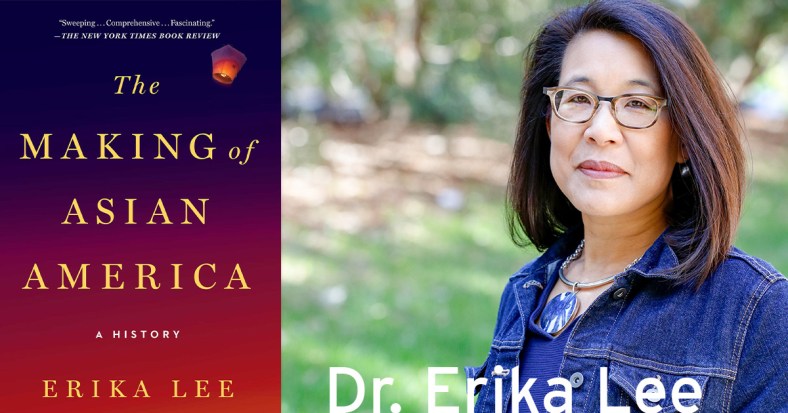
On Wednesday, May 26 at 7 pm, Dr. Erika Lee discusses her acclaimed book The Making of Asian-America. In the past fifty years, Asian Americans have helped change the face of America and are now the fastest-growing group in the United States. As award-winning historian Erika Lee also reminds us, Asian Americans also have deep roots in the country. The Making of Asian America tells the little-known history of Asian Americans and their role in American life, from their first arrival to the present-day.
An epic history of global journeys and new beginnings, this book shows how generations of Asian immigrants and their American-born descendants have made and remade Asian American life in the United States: sailors who came on the first trans-Pacific ships in the 1500s; indentured “coolies” who worked alongside African slaves in the Caribbean; and Chinese, Japanese, Filipino, Korean, and South Asian immigrants who were recruited to work in the United States only to face massive racial discrimination, Asian exclusion laws, and, for Japanese Americans, incarceration during World War II. During the past fifty years, a new Asian America has emerged out of community activism and the arrival of new immigrants and refugees. No longer a “despised minority,” Asian Americans are now held up as America’s “model minorities” in ways that reveal the complicated role that race still plays in the United States.
“A stunning achievement, The Making of Asian America establishes the centrality of Asians to American history, and poses alternatives to US national and immigration histories. Asians, this remarkable text reveals, transformed the face of America, and they locate the US firmly within a hemispheric and global order.” ― Gary Y. Okihiro, Professor of International and Public Affairs, Columbia University
ABOUT DR. ERIKA LEE One of the nation’s leading immigration and Asian American historians, Erika Lee teaches American history at the University of Minnesota, where she is a Regents Professor, a Distinguished McKnight University Professor, the Rudolph J. Vecoli Chair in Immigration History, and the Director of the Immigration History Research Center. The granddaughter of Chinese immigrants, Lee grew up in the San Francisco Bay Area, attended Tufts University, and received her Ph.D. from the University of California, Berkeley. She was recently elected into the American Academy of Arts & Sciences, testified before Congress during its historic hearings on discrimination and violence against Asian Americans, was awarded an Andrew Carnegie Fellowship, and named Vice President of the Organization of American Historians.
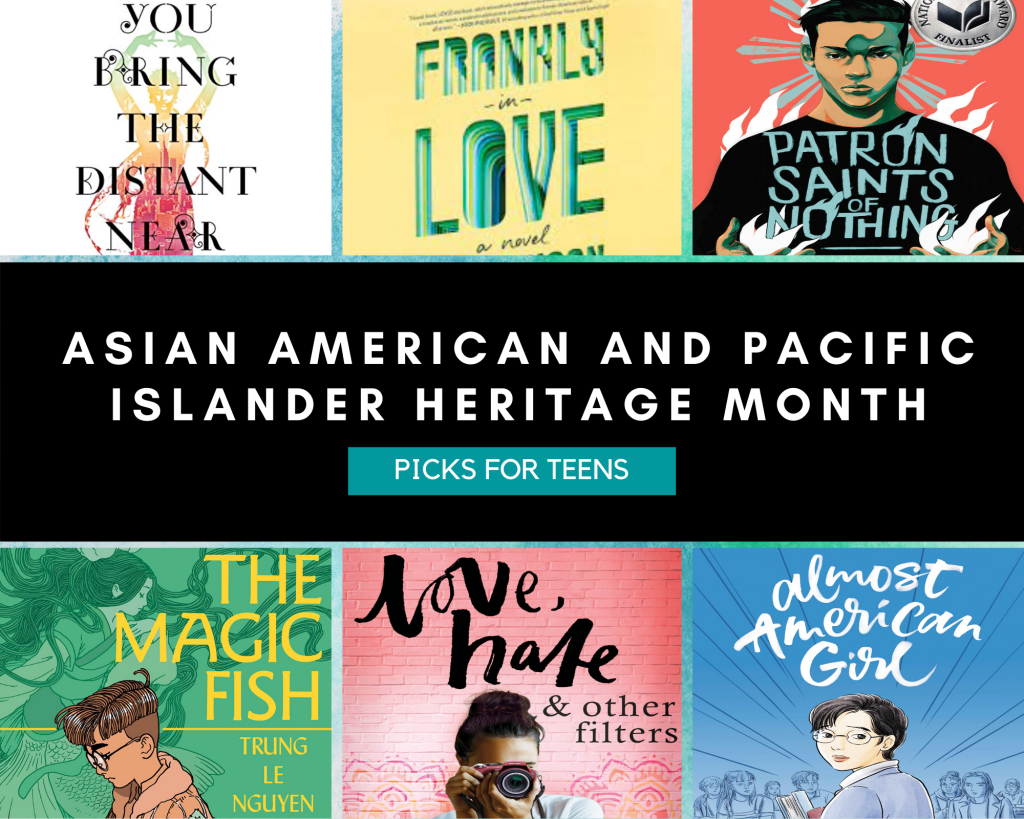
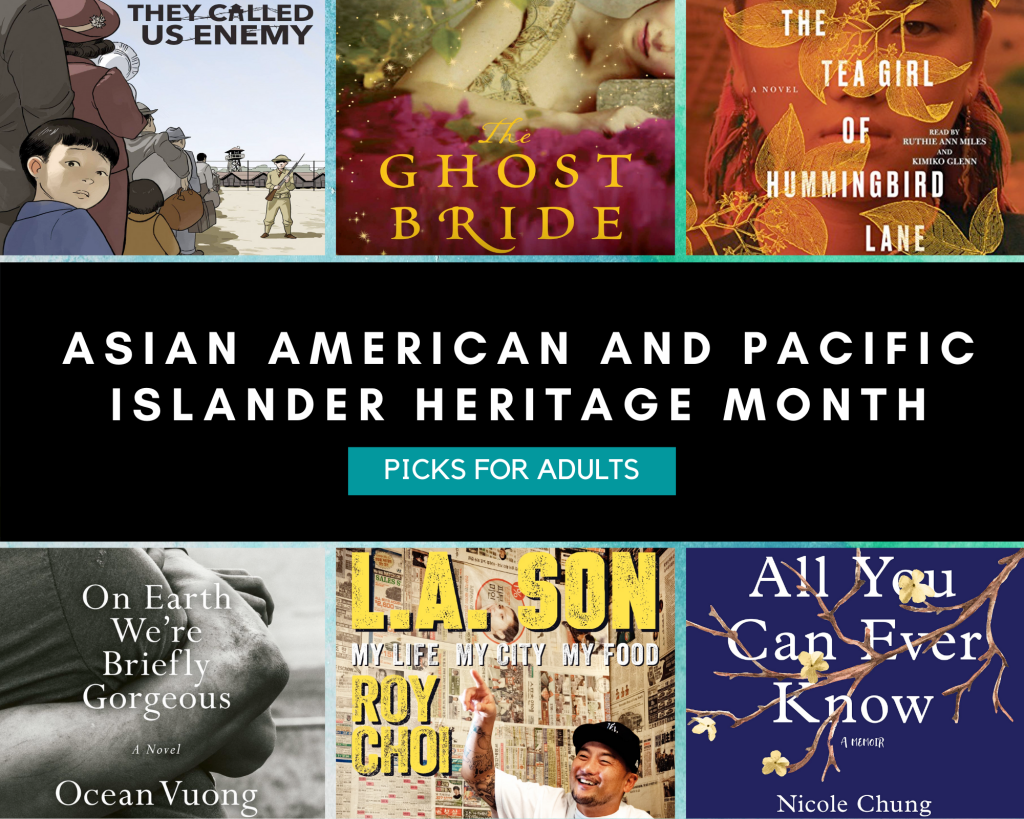
It seems especially vital to raise up and celebrate Asian Americans and Pacific Islanders (AAPI) this year, during the increased violence and harassment faced by Asian Americans and Pacific Islanders across the United States. Racist attacks fueled by fear and hatred, especially surrounding the pandemic, have been on the rise in 2020 and 2021, including here in Howard County. We must all stand together against hatred and work to protect and honor the rich cultural heritage of the AAPI community. Reading “own voices” stories about the life experiences of Asian Americans and Pacific Islanders is a good starting point for increasing our understanding and appreciation of the AAPI community. See our suggestions aimed at readers of all ages, and keep an eye on our Facebook page for more titles as well.
Will Chibi Samurai find a special pet just for him? Join the adventure in this second beautiful picture book in the three-part Little Kunoichi series. Meet all kinds of creatures familiar in Japanese culture throughout this playful tale, and find out more about Japanese animals and culture with special notes at the end of the story.
Where can an elevator take you? Join your little one on their adventure with Iris, a little girl who loves to press the elevator buttons to go up or down the building where she lives. After the button accidently breaks, Iris is able to save it from the trash, and the elevator button takes her on new adventures in her room.
In this charming story about celebrating differences, a Chinese-American girl wishes for a garden of bright flowers instead of one full of bumpy, ugly vegetables, but her mother assures her that “these are better than flowers.” Once it’s time to harvest, the whole neighborhood agrees that those ugly vegetables turn into the most delicious soup! A recipe at the end invites readers to try their hand at making their own tasty vegetable soup.
With a new baby sibling on the way, spunky eight-year-old Cilla will make sure her family can’t forget about her. She vows to become a famous bestselling memoirist before the baby arrives. Being both Chinese and Caucasian is an essential part of Cilla’s family and her life story. Sincerely touching and irresistibly funny, this is the first book in an excellent three-part series.
Abbie has big plans for the school year, such as running for class president. She’s also thrilled to have her own shiny new locker – that is, until she finds out she has to share it with someone else. Follow the frazzled life of Abbie Wu as she navigates the hazards of middle school in this fast-paced title filled with adventures and doodles.
Chloe Cho has always wondered why her parents will NEVER talk about their lives in Korea before moving to the United States. Other people’s parents are thrilled when their kids ask questions about their lives, but Chloe’s parents just dodge and change the subject. As Chloe enters seventh grade, she is excited to learn that she will have a Korean American teacher who can finally help her learn more about her heritage, but what she learns is VERY different from what she imagined, leading to a whole different set of questions.
Frank Li is a high school senior trying to balance his parents’ expectations of him as a first-generation Korean American, and their racism, with his own dreams and desires. He sets up an elaborate plan to start dating a white girl without his parents knowing but ends up finding his heart pulling him in a different direction. As he faces unexpected obstacles, Frank must figure out what is most important to him and how he can best help all those he loves.
Jay is preparing to graduate high school and attend the University of Michigan in the fall, but his plans take a turn when he learns that his Filipino cousin Jun was killed as part of the president’s war on drugs. With his family refusing to discuss what happened, Jay travels to the Philippines himself to find out the truth. In this captivating story, Jay has to work through more than he expected to find the full truth and his own peace.
In this sweeping novel, author Mitali Perkins draws on her own experiences as an immigrant to the United States to give readers a look into the life of one family across generations. Hear from alternating narrators in the Das family as they experience defining moments during their adolescences, spanning decades and continents. Each woman brings her own views and strengths to the story as she works to find her way through the challenges that face her.
Poet Ocean Vuong’s debut novel is a moving title about class, race, love, and the power of storytelling. Written in the form of a letter to his illiterate mom, Little Dog – our speaker – recounts his family’s history from before he was born, using it as a gateway to expose parts of his own life that his mother has never known. With a stunning rawness and grace to its prose, this is an intimate, striking portrait of the Vietnamese immigrant experience.
In the Chinese community of 1890s Malaya, Li Lan, the 17-year-old daughter of a struggling merchant, accepts an offer from the wealthy Lim family to become a ghost bride to their recently deceased son, ensuring her a future of comfort and respect as the widow of a man she never knew. What she expects to be her uneventful new life takes an unexpected turn as she finds herself haunted by her ghost husband and drawn into the land of the dead. Hunted by vengeful spirits and assisted by creatures of legend, Li Lan must solve the mystery of her husband’s death and find her way back to the land of the living. By weaving together both history and mythology, Choo creates an enchanting and atmospheric fantasy adventure.
They Called Us Enemy is a graphic novel memoir written by famed Star Trek actor George Takei. Detailing his family’s internment during WW2, it explores the tough choices made by his parents during this dark time of sanctioned racism. Though he was just a child at the time, Mr. Takei’s insights explore his feelings of betrayal and injustice during this harsh chapter of American history.
The Elkridge Branch + DIY Education Center opened the doors of its new building in March 2018. Our staff are always happy to help you with your questions about books, tools, technology, and more!







 CHAPTER CHATS