A Dream About Lightning Bugs: A Life of Music and Cheap Lessons by Ben Folds 

The silhouette of a man standing up, over a player's bench, to play an open grand piano sits in front of a sky blue background with cotton ball clouds.

by Eliana H.

A title recently caught my eye while I was tidying books around the branch: A Dream About Lightning Bugs. I’ve mentioned my ridiculous reading challenge before, and one of our categories this year is a book with 24 letters in the title. So, I’ve started to count letters in titles to see if I can find a fit. Lo and behold, this title that grabbed my attention also happens to have 24 letters in it! (We can disregard the subtitle for these purposes.) Plus, it is a memoir by a musical artist I enjoy. I was sold! 

My reading of print books has been going very slowly in recent months, so rather than check out that copy, I looked on Libby to see if the e-audiobook was available. Happily, it was, AND it was narrated by the author. Things were lining up very nicely. I don’t tend to read a lot of biographies, or nonfiction in general, but this seemed meant to be. 

I was pretty solidly in the target audience of Ben Folds during his peak fame with Ben Folds Five. His voice and snippets of songs shared in the audiobook put me in a pleasantly nostalgic mood, and I was excited to find that most of the Ben Folds Five songs I remember are available on Freegal as well. [If you haven’t checked out Freegal yet, take a look at this post to learn more.] I did not know a lot about his life or musical journey before listening to A Dream About Lightning Bugs, but Ben’s down-to-earth attitude and conversational tone comfortably brought me along for the ride. He acknowledges repeatedly and from the beginning that he had a lot of luck and privilege to help him along his way, and he explicitly thanks a number of people who provided support, assistance, and guidance, especially educators. 

I don’t tend to pay much attention to the lives of celebrities, so hearing about his journey was interesting and informative to me. Some might not consider Ben’s “cheap lessons” all that cheap, but there was certainly potential for more negative outcomes in many of the stories he shares. One section which especially stuck out to me is called “Creative Visualization or Useful Delusion?” In it, Ben describes an experience he’s had several times in which he has a vision of something happening and sees it as inevitable, which enables him to achieve things that would otherwise seem – and be – impossible. “It’s the universe that wants it to be so, and so it shall be. I only have to follow through on my part.” If only we could summon that kind of focus and confidence on command! Even Ben admits that it comes from outside himself, he cannot wish it into being. 

From performing on a keyboard with digital sampler at a German restaurant, while wearing lederhosen and wooden clogs, to Artistic Advisor to the National Symphony Orchestra, Ben Folds has had quite a journey in music and in life. Perhaps you can learn some “cheap lessons” for free just by reading – or listening – to his book. 

Content note: Ben Folds uses expletives freely throughout his book. 

This title is available in print, e-book, and e-audiobook.

Eliana is a Children’s Instructor and Research Specialist at the Elkridge Branch and co-chair of the HCLS Equity Committee. She loves reading, even if she’s slow at it, and especially enjoys helping people find books that make them light up. She also loves being outside and spending time with friends and family (when it’s safe).

How to Keep House While Drowning by KC Davis

by Eliana H.

I read – actually, listened toHow to Keep House While Drowning after a good friend shared repeatedly and enthusiastically how valuable it was to her. It’s pretty short, and I figured it was worth a look at least. Let me now tell YOU that it is certainly worth picking up. There is a line on page 6 that says, “If you are crying (or wincing internally) right now, this book is for you.” I will freely admit here that I was crying at that point, and this book was for me. 

If you have ever found yourself having a hard time keeping up with everything you feel like you should be doing, this book is for you, too. Everyone struggles sometimes. Our society puts ever-increasing demands on all of us, but it doesn’t necessarily provide the support needed to meet those expectations. For many of us, there are times where even basic tasks can feel overwhelming, especially if we struggle with ADHD, depression, or other challenges to executive functioning. 

Author KC Davis is a licensed professional therapist, and she is so gentle with readers of this book. Chapters are short, main points are highlighted, and a shortcut journey through the book is offered for those who do not have the capacity to go through the whole thing. But most of all, judgment is completely removed. Every situation Davis describes is explained as a legitimate challenge or obstacle, and she explicitly tells us early on that she does not think laziness exists. What a novel, generous concept! It should not be such an amazing thing to offer everyone grace and compassion when they are struggling, but Davis does so ably and authentically. 

The primary tenet guiding this book is this: “You don’t exist to serve your space; your space exists to serve you.” It’s that simple and that groundbreaking. When we can reframe our perspective on the relative value of our time and having a picture-perfect home, we can find space to prioritize what truly needs to get done, in what timeframe, and to what level. Concrete steps are offered to guide you through the process of managing care tasks – the term Davis uses to encompass the everyday business of caring for oneself and one’s belongings. Nothing is set in stone, and throughout the book, readers are encouraged to figure out what works for them. Everyone’s capacities and priorities are different, so no strategy works for all. But helpful suggestions and guidelines can give us a place to start, even when we are struggling. 

Even if you’re telling yourself “I’m not drowning,” it’s worth taking a look at How to Keep House While Drowning. Just a glance at the short appendices may give you some ideas for improving the functionality of your space, and you may find yourself wanting to see more of what the author has to say. You can borrow it in print, audiobook on CD, e-book, or e-audiobook

Eliana is a Children’s Research Specialist and Instructor at HCLS Elkridge Branch. She loves reading, even if she’s slow at it, and especially enjoys helping people find books that make them light up. She also loves being outside and spending time with friends and family (when it’s safe).

Finding Me by Viola Davis

Three copies of Viola Davis' memoir, Finding Me, which feature

By Carmen J.

As a general rule, I don’t enjoy audiobooks. Call me Lady Old School, but I prefer the tactile ritual of turning the pages of a book. Not to mention, my thoughts tend to drift and instead of being engrossed by the audiobook of, say, The Hate U Give, I’m idly thinking about the film version or the name of the actress playing the lead and so on. However, I made an important, no regrets decision to listen to Finding Me by Viola Davis.

I’m often drawn to the real-life stories of powerful women, especially those who have battled obstacles in life and not only weathered those storms but prevailed. I knew very little about Davis’ life, with the exception of her award-worthy and, often times, award-winning turns in films such as Doubt, The Help, and Fences. She’s been through some major stuff. Born in South Carolina and raised in Central Falls, Rhode Island, Davis grew up in poverty, wet the bed until age 14, and experienced taunts from classmates for being Black and smelling like urine. Raised by an alcoholic father who abused her mother for years, Davis took on maternal duties in caring for her younger siblings, in particular her youngest sister Danielle.

Readers will be entranced by Davis’ audiobook, which is narrated by the author herself. Davis’ rich and soothing voice transforms from her own to the various family members or characters in her life; the narration is what I would imagine captivated audiences during the Golden Age of Radio. Her voice draws laughs; her voice haunts and inspires, in equal measure.

Davis shares her journey to Hollywood after college (including Juilliard), marriage, and motherhood. In Finding Me, you will find tales both heart-breaking and motivating of an actor grateful for her place in life.

You can borrow Finding Me by Viola Davis as a print book, e-book, audiobook on CD, and an e-audiobook.

Carmen J. is a teen instructor at HCLS East Columbia Branch. Among her favorite things are great books, all things 80s, shamelessly watching The Bachelor, gardening, and drinking anything that tastes like coffee.

Be part of HCLS’ Summer Reading Adventures.

Empire of Pain by Patrick Radden Keefe

A spoon overflowing with pills, one of them red, sits above the title where "Empire of Pain" appears in bold red lettering.

By Rebecca W.

According to the U.S. Department of Health and Human Services, in 2019 roughly 48,000 deaths were attributed to synthetic opioid overdose, and more than 10 million people reported abusing prescription opioids. While many of us have heard, for years, reports of the devastating consequences of opioid abuse, one side of this story only recently hitting the media revolves around the Sackler family. In his book Empire of Pain: The Secret History of the Sackler Dynasty, Patrick Radden Keefe takes a pointed look at the Sackler family and their role in the current opioid epidemic. While this book is not the first of its kind, Keefe reports on the family at a time when numerous lawsuits against the family’s company, Purdue Pharma, have brought to light compelling and abundant evidence of the direct impact the family had on the current epidemic and the lack of responsibility the family has taken.

What I found most interesting about this book was Keefe’s decision to devote nearly a third of the book to Arthur Sackler. While the family patriarch could be considered the father of pharmaceutical marketing, he is very much removed, if related at all, to the modern Sackler family and Purdue Pharma. Arthur Sackler, the eldest of three brothers born to immigrant parents in early 20th-century Brooklyn, made a name for himself through his pharmaceutical ad agency’s marketing of the tranquilizing drug Valium (also know as Diazepam). Valium’s creator, Roche, and Sackler made Valium one of the most-prescribed drugs to date, earning a fortune well into the hundreds of thousands in the process. Today, there is a well-established history of abuse and over-prescription of the drug.

While this portion of the book is certainly an interesting read, it does not directly pertain to the current Sackler family machinations, with Arthur’s heir selling shares of the original company to other family members well before the development of the company’s flagship drug, Oxycontin. While an argument can be made that Arthur more or less created the playbook that future Sacklers would use to enhance their empire, I feel there was another reason Keefe devoted such length to Arthur’s story. When reading the story of Arthur’s life, I saw blatant ethical missteps fueled by greed. However, when I began reading about the modern-day Sacklers, I found myself looking back on Arthur’s story, suddenly seeming like a tip-toe over the line of ethical practice. When looking at corruption that deals with billions of dollars, millions of people, and high-level corporate practices, keeping your perspective can be challenging. For me, the knowledge of Arthur’s story, and how my thoughts changed around it throughout the book, helped me maintain my perspective when trying to follow a story with details at a higher level then my understanding.

If you are someone who has followed the story of the Sackler family, recently finished watching ‘Dopesick’, or just learned of the Sacklers, I would highly recommended reading (or, like me, listening) to this book.

Learn more about the Opioid Epidemic in the US and MD here.

Becky is an Adult Instructor and Research Specialist at the HCLS East Columbia Branch who enjoys art and everything science.

A Song of Wraiths and Ruin by Roseanne Brown

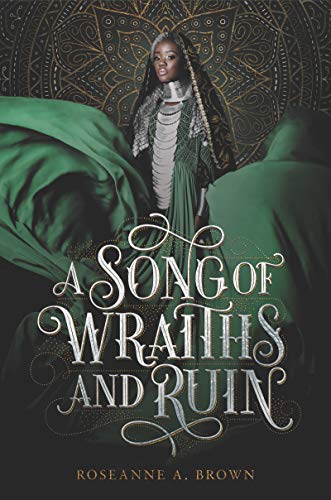
A regal young Black woman with long braids stands in front of a patterned wallwith swaths of green fabric swirling around her.

by Eliana, teen volunteer at HCLS Savage Branch

In true Eliana fashion, I started to blitz through this title as an audiobook. I had to ask my librarian friend, Sarah, “Is it just me or are these characters just the most emotionally stunted dolts I have ever not actually come across?” I love them so much, they make me want to tear my hair out.

Along with the engaging characters, Roseanne A. Brown does an excellent job incorporating African culture into this novel, described on the book jacket as, “The first in a gripping fantasy duology inspired by West African folklore in which a grieving crown princess and a desperate refugee find themselves on a collision course to murder each other despite their growing attraction.” The setting has quiet elements of West African culture, the furnishings, the clothes, the streets, even the characters’ hair.

My favorite part was the hair routine Karina’s maid does with her. Shea butter and the other oils along with twisting are, in fact, accurate to curly hair. It’s part of why I haven’t been braiding my hair so often. My curls look much lovelier when out of their braids. My family is Puerto Rican, and although Puerto Rico takes a fair amount of influence from African cultures, there are also Taino and Spanish influences there as well.

Back to the book: Karina has all the qualities of a good queen, she just needs time to heal and properly grieve her mother (the previous queen). Outside of the eyes of the courtiers, Karina is surrounded by the love of her family and friends, but she’s closed herself off from them. With the way Karina’s trajectory is headed, Karina may completely alienate everyone around her before something happens to shatter her worldview and push her into regaining allies. There is a notable difference between the Karina who does whatever she can to avoid hosting the Solstacia Festival and the Karina who fights tooth and nail to fulfill her duties as a new queen.

Karina is something of a tempest. For much of the novel, she is insecure, grieving, and constantly worried about whether she’s a good enough ruler. She *worries* about her fitness to lead and actively tries to remove the person she deems to be an unfit ruler (herself) from succession. Heck! The whole reason she even gets into reviving her deceased mother is that she believes her kingdom would be better with her mother’s leadership!

Her opposite in the story is Malik, a child who has seen the absolute worst humanity has to offer. His own family and village were horrible to him. The world sees him and his people as awful. And yet he cares. He cares *so much.* He worries about both of his sisters. He pays attention to the servants and even worries for Karina, a person who he is actively trying to kill, when he overhears how the court lambasts her for needing a day to recover from an attempt on her life.

I’m still listening to the book, so I wonder if there is a reason Malik’s people are oppressed like they are. I know that in the real world, oppression often has no tangible reason. In most fantasy media I have interacted with, the oppression is typically caused by some ancient bad-blood event. I appreciate the author’s sensitive and visceral depiction of anxiety and panic attacks, which didn’t trigger one of my own. I like that she included coping strategies. Somewhere out there, a reader will see Malik thinking of his lemon tree and adopt a similar strategy.

One last note to my friend Sarah: I feel like am a parent now. I want to wrap Malik and Karina up in my arms, tell them that everything is okay. I wanna whack them upside the head and ask them, “What were you thinking?!” (affectionately) Are you happy, Sarah? You have ruined me. Everyone should read this book.

Meet the author Roseanne Brown at HCLS Savage Branch (or attend online) on Tuesday, January 25 at 6 pm. Register here. Thirty attendees will be randomly selected to receive a free copy of A Song of Wraiths and Ruins. 

The Night Circus

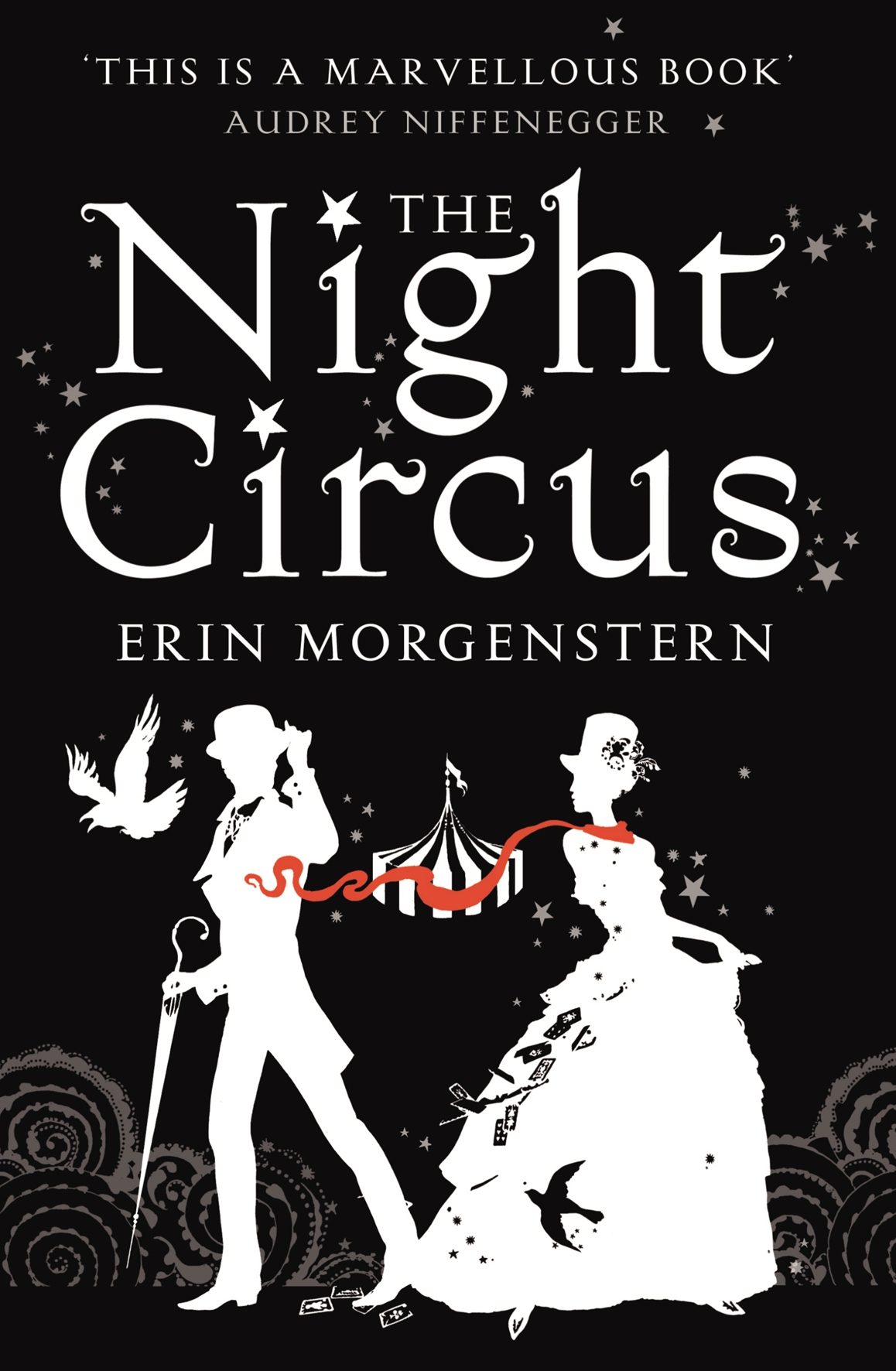
The Night Circus: Morgenstern, Erin: On a black background, two illustrated steampunk-era silhouettes in gray are depicted on either side of a black and white circus tent with stars dotting the background
The Night Circus by Erin Morgenstern

By Kimberly J

The Night Circus, Erin Morgenstern’s debut bestselling novel, follows the story of “Le Cirque des Rêves,” a mysterious circus that opens at nightfall and closes at dawn and within its gates anything seems possible. French for “Circus of Dreams” – the circus mixes the dream world with reality as it hosts a unique and potentially deadly magical competition within its black and white striped canvas walls. The magicians challenge each other by making each new tent more fantastical than the last. 

This 19th century historical fantasy is a well-crafted story of rivals with fully developed characters that draw you into a surreal world of vision and artistry. The author employs first person, second person, and third person perspectives while writing, inviting the reader directly into the narrative.  The book is written with lush descriptions that leave you hungry for more…literally and figuratively, as some of the most tantalizing banquets are described in mouth-watering detail.  The smells, sights, tastes, and sounds are lavish beyond imagination.

I experienced this novel via the audiobook, which is read by Jim Dale. His other audiobook credits include J.K. Rowling’s Harry Potter series.  He is a skillful narrator who excels at making distinctive voices for each character.  His portrayal envelops the listener in this circus of dreams. The Night Circus is available in print, audiobook, ebook, or eaudio.  Explore this world of magic, illusion, manipulation, love, and loss by visiting hclibrary.org 

“You think, as you walk away from Le Cirque des Rêves and into the creeping dawn, that you felt more awake within the confines of the circus. You are no longer quite certain which side of the fence is the dream.”

The Night Circus, Erin Morgenstern

Kimberly is a DIY Instructor and Research Specialist at the HCLS Elkridge Branch.  She enjoys reading, photography, crafting, and baking.