

by Ben H.
“People who treat other people as less than human must not be surprised when the bread they have cast on the waters come floating back to them, poisoned.”
James Baldwin writes gorgeous prose. I copy lines that I find memorable, but I find myself copying down entire pages. If you’re still waiting to read Baldwin, don’t wait! Read now!
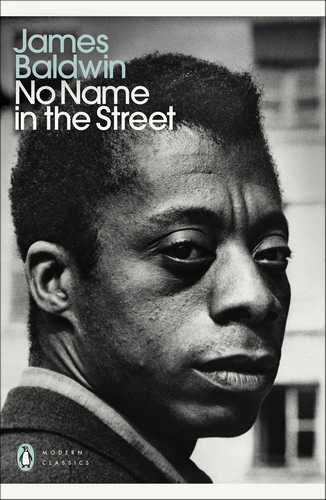
In No Name in the Street, Baldwin writes about his experience traveling in the southern states for the first time. Baldwin, never at a loss for words (check out this incendiary debate on YouTube), writes about his first impression of southerners, “what struck me was the unbelievable dimension of their sorrow. I felt as though I had wandered into hell.” What a first impression!
This theme of sorrow surfaces in another memorable passage where Baldwin describes his visit with civil rights leader Reverend Fred Shuttlesworth. Shuttlesworth’s Alabama home had recently been bombed and destroyed by the KKK. Baldwin writes about Shuttlesworth, “It was as though he were wrestling with the mighty fact that the danger in which he stood was as nothing compared to the spiritual horror which drove those who were trying to destroy him. They endangered him, but they doomed themselves.” The idea of racism being a cancer, a parasite that dooms the host and turns it into something less than human, is a theme that Baldwin returns to many times in No Name in the Street. The sorrow that he refers to is the byproduct of this loss of humanity.
That said, not every passage is heavy. Baldwin has the rare ability to combine the tragic and the humorous in the same sentence. He insightfully, humorously, and poetically describes things such as grits (“a pale, lumpy, tasteless kind of porridge which the Southerner insists is a delicacy but which I believe they ingest as punishment for their sins”) and buying whiskey in dry states (“where whiskey was against the law, you simply bought your whiskey from the law enforcers”).
Baldwin’s color commentary of historical events is a crucial part of the story of America. Statistics and reportorial accounts of racism in America don’t paint the full picture. Baldwin writes the narrative and helps the reader taste it, hear it, and feel it. I find that tragic historical events can sometimes, through familiarity, fade into the timeline of history; but reading about the phone call that Baldwin and Billy Dee Williams received when Martin Luther King Jr was assassinated highlights it in technicolor.
On a personal note (as if the rest of this hasn’t been personal), I consider myself well-read and aware, but I still only have my lived experiences. The following passage about well-meaning folks without first-hand experience of discrimination struck me, “These liberals were not, as I was, forever being found by the police in the ‘wrong’ neighborhood, and so could not have had first-hand knowledge of how gleefully a policeman translates his orders from above. But they had no right not to know that; if they did not know that, they knew nothing and had no right to speak…” By reading books like No Name in the Street, I grow my understanding, if not experientially, at least academically and empathetically, and that is no small thing.
Ben works at Project Literacy, Howard County Library’s adult basic education initiative, based at HCLS Central Branch. He loves reading, writing, walking, and talking (all the basics).


 CHAPTER CHATS