
Poet Hayes Davis on Beautiful Objects and Unbridled Joy

by Sahana C.

National Poetry Month blossoms with the Spring. This year, we’re lucky enough to be celebrating all month long, and especially with the 2022 Maryland State Arts Council Independent Artist Award Winner and 2023-24 HoCoPoLitSo Writer in Residence, Hayes Davis.

Be sure to register for Hayes Davis’ workshop, Beautiful Objects and Unbridled Joy on Saturday, April 13 from 1 – 2 pm, and come back to the Savage Branch in two weeks to turn your creations into self-published booklets at our Poetry Zine Workshop! For even more, check out the library calendar for poetry events happening throughout the month at HCLS. Happy writing!
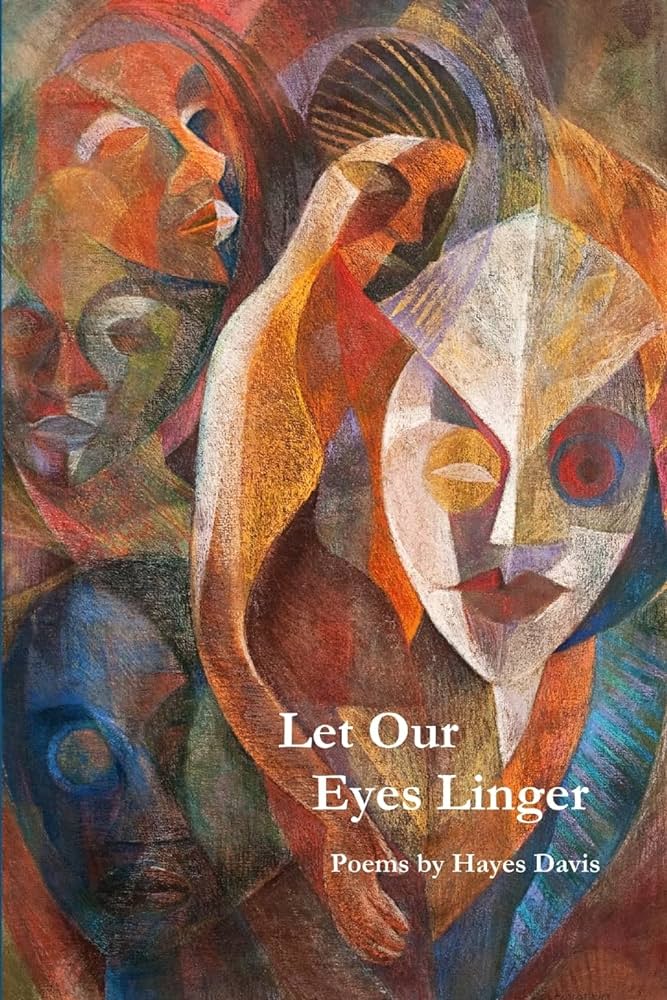
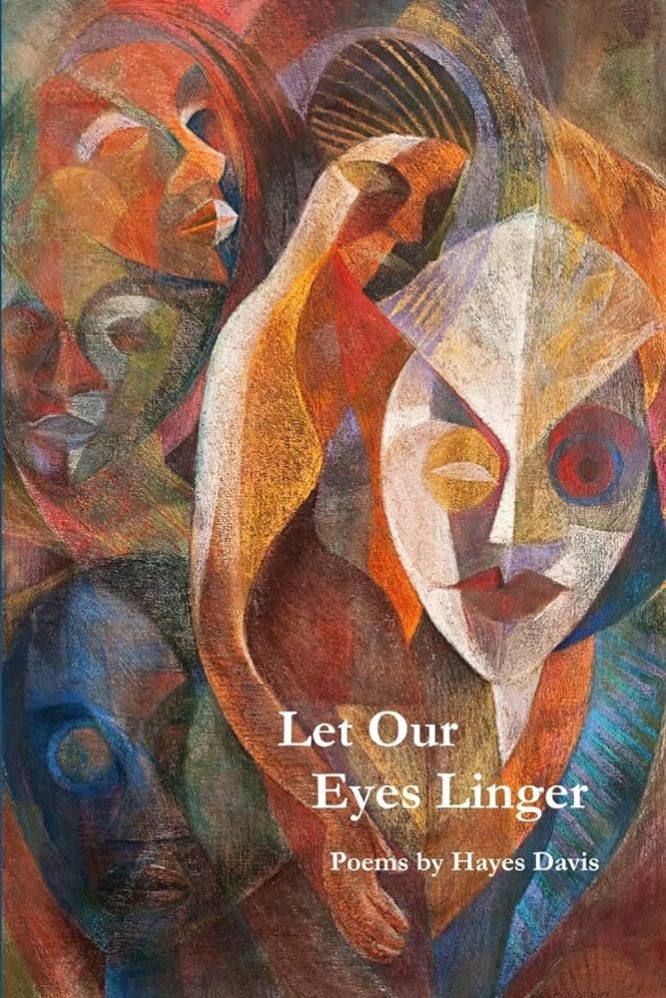
The modern painting cover of the poetry collection seems to be a collage of faces or masks, in many warm hues.

Hayes Davis is the author of Let Our Eyes Linger (Poetry Mutual Press). He is currently serving as the Howard County (MD) Poetry and Literature Society Writer in Residence. His work has appeared in New England Review, Mom Egg Review, and several anthologies. He was a member of Cave Canem’s first cohort of fellows. An education administrator and English teacher, he lives in Silver Spring with his wife, poet Teri Ellen Cross Davis.

Here’s Hayes, in his own words, talking a little bit about his process, poetry, and what brings him joy!
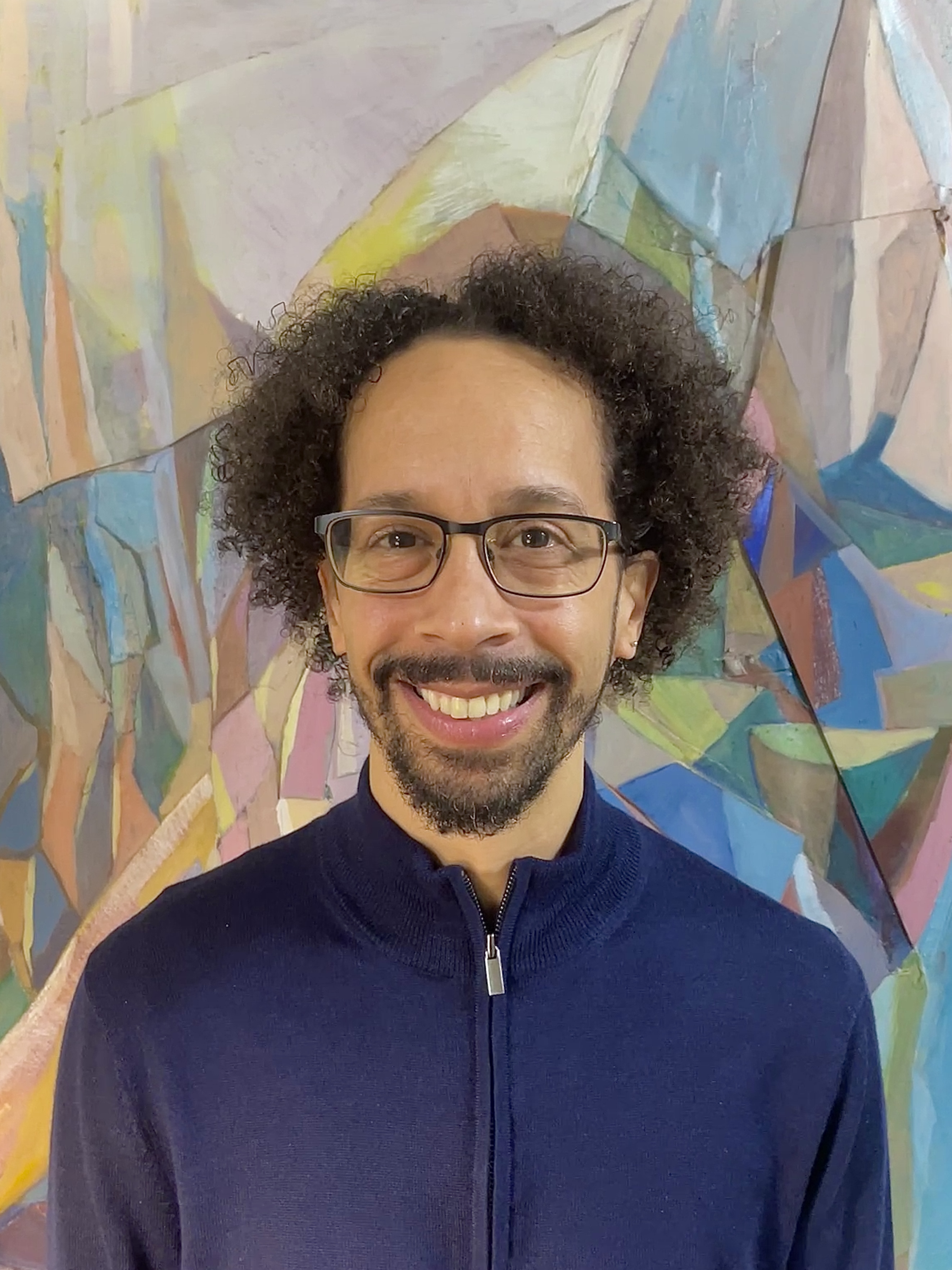
The poet appears against a coloful painted backdrop.

What inspires you to write? 
Lots of things inspire me, most of them related to being human and living in the world as I do. I am a biracial man, a biracial Black man, a parent, a school administrator, a teacher, a parent of school age children, a stutterer, a lover of nature. All of those different roles have influenced my work during my career, and some of them are particularly present both in my first book and my second manuscript.

As a poet and a teacher, what resources do you think are the most important for aspiring poets? Is there any advice you would like to share? 
The number one thing I say to young writers is “You have to read.” If you’re going to call yourself a poet, you have to have some knowledge of what poetry was in the world before you started writing. I am often asked, “What/who is in your poetic lineage?” or “Who do you list as influences?” A poet who can’t answer those questions hasn’t been doing the work of a poet.

Is there a particular poet, poem, or collection that helped shape your writing and thinking? 
Three of the poets I read earliest were Quincy Troupe and Lucille Clifton. I would say the main influence they had on my work was the straight-forwardness of their language. I believe in plain-spoken poetry, that is, work that doesn’t obscure its meaning but still rewards multiple readings and works on multiple levels. Later, I became a fan of Linda Pastan, Cornelius Eady. 

What themes or subjects motivate you to write? 
My first book is a lot about being a parent, being a teacher, and to a lesser extent stuttering. My second manuscript focuses more on the stuttering, and on parenting in a different way–trying to live into a different mode of parenting than I inhabited early on. I’ve also written, at this point, far more poems about nature than I thought I ever would. In some ways that’s a reflection on the pandemic, which slowed me down enough and made me stressed out enough to take even more joy in the natural beauty that surrounds me at home and now where I work (Sandy Spring Friends School), which sits on 140 acres of land, much of it wooded. 

And finally, the theme of the workshop you’ll be running at Savage is “Beautiful Objects and Unbridled Joy”. What’s one thing that’s bringing you joy today? 
Building on my last answer, the sky brings me joy many days, whether because of the brilliant cobalt that accompanies a cloudless day, or the endless variety of clouds that complement that blue. The expressions of beauty of which humanity is capable bring me joy–music, visual art, movies–I love looking at how other people see our world and process it artistically. 

Sahana is an Instructor and Research Specialist at the Savage Branch. They enjoy adding books to their “want to read” list despite having a mountain of books waiting for them already.
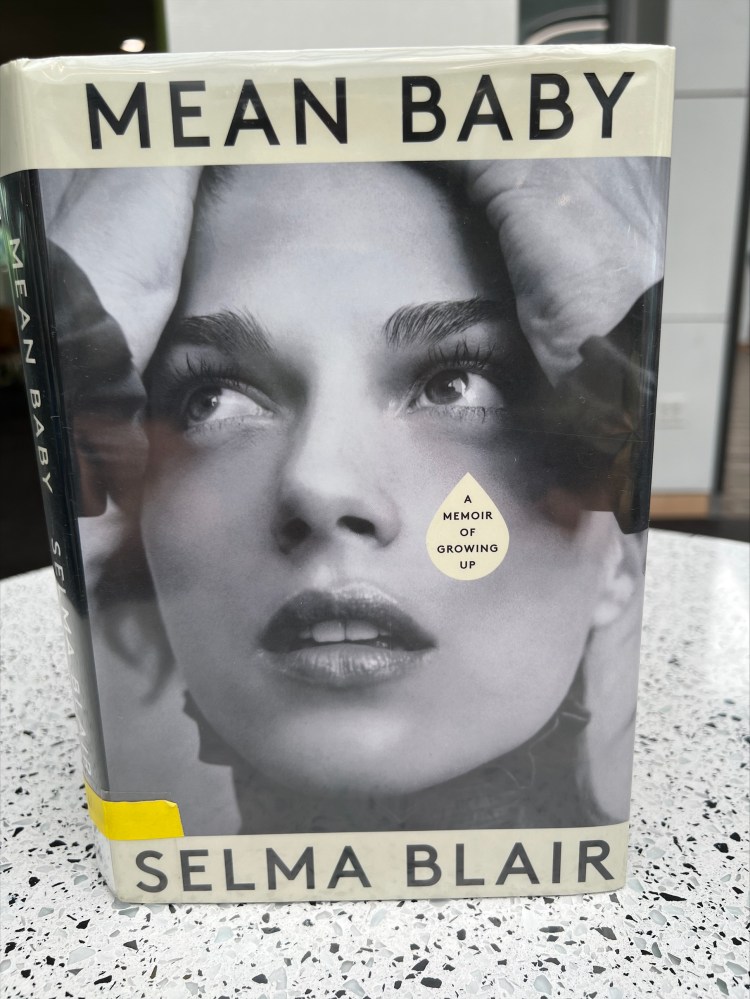
Mean Baby by Selma Blair

The picture shows the book on a marble-topped table. The cover is a picture of author Selma Blair, her hands on the top of her head, looking skyward.

by Carmen J.

You may know the actress Selma Blair from her notorious same-sex kiss in Cruel Intentions or her frenemy role in Legally Blonde. Most recently, she has been a Multiple Sclerosis (MS) advocate, following her diagnosis in 2018. She is also the creator of an ability-inclusive beauty brand, Guide Beauty. And even if you knew none of this or all of this, her 2022 memoir Mean Baby shows us another side of Selma Blair: gifted writer.

Mean Baby takes us on a sometimes-meandering journey of Blair’s childhood marked by trauma, her adventures in the career pursuit of acting, motherhood challenges, addiction battles, family and romantic relationships, and her MS diagnosis and advocacy. Between the pages, you’ll uncover an impressive writer with an eye for exposing the good, the bad, and the ugly of a life well-lived. Although not a light-hearted read nor a page-turner, you will find Blair’s detailed accounts are those to savor and reflect upon. Mean Baby showcases the life of a survivor, thriver, and fighter with the vivid writing of a robust storyteller.  

Mean Baby is available from HCLS in print and large print, and as an e-book and an e-audiobook from Libby/Overdrive.

Carmen J. is a teen instructor at HCLS East Columbia. Among her favorite things are great books, all things 80s, shamelessly watching The Bachelor, gardening, and drinking anything that tastes like coffee.

If I Had Your Face by Frances Cha

The book cover, in faded pinks and yellows, shows a young Korean woman with hair parted in the middle, sculpted eyebrows, and full makeup and lipstick, wearing a yellow top and looking slightly off to the side. She is surrounded by yellow flowers as if in a garden bower.

By Piyali C.

If I Had Your Face drew me in at the beginning, lost me a little bit in the middle, and captivated me again towards the end. Through the eyes of four narrators, Ara, Kyuri, Miho, and Wonna, Frances Cha brings us not only the personal stories of these women but also the social tapestry of modern South Korea in terms of beauty standards, feminism, women in the work force, a challenging economy, sexuality, matrimony, and societal expectations.

Kyuri works as a room salon girl – an opportunity afforded to only the “prettiest 10 percent.” She accompanies and caters to the sexual needs of rich men, who in turn ply her with designer bags and expensive makeup. Kyuri has surgically altered her entire face to attain the flawless beauty that is vital to her job and, ultimately, her prosperity. (Interestingly, according to businessinsider.com, “with the highest rate of cosmetic surgeries in the world and nearly 1 million procedures a year, South Korea is often called the world’s plastic surgery capital.”) Although her life seems enviable, Kyuri is in heavy debt and emotionally wrecked. On top of everything, she makes one bad decision that threatens her entire livelihood.

Ara has lost her voice due to some violence in the past. The author piques our interest, hinting about the violence throughout Ara’s narrative and disclosing the incident towards the end. She is a hair stylist and a huge K-Pop enthusiast. Ara’s K-Pop fantasy is her escape to a dreamworld that is very different from the harsh reality of her life.

Miho is an orphan who won a scholarship to study art in New York City, who obsessively creates art influenced by her friendship with a girl named Ruby. Ruby dazzled Miho with her personality, wealth, influence, and charisma. She also introduced Miho to the upper echelon of South Korean society. Miho, however, can simply look into the lives of the rich from the periphery. She is not allowed in.

Wonna, who lives in the same building as the young women, is trapped in an uninspiring marriage. She is pregnant and terrified of losing her baby. She has to hide her pregnancy for as long as she can so she does not lose her job. Moreover, she does not know how she and her husband will raise the baby in South Korea’s brutal economy with their combined meager salaries.

Then there is Sujin who works at a nail salon and yearns for Kyuri’s surgically altered, perfect jawline because her goal is to emulate Kyuri and become a room salon girl herself. She is willing to go through painful jaw surgery and subsequent complications from it if she can attain the beauty that society dictates women ought to strive for. She is Ara’s roommate, and we know about her mostly from the narratives of her friends, Ara and Kyuri.

All our protagonists come from impoverished backgrounds. They are desperate to leave their past behind and move up in life despite the barriers that society constructs for them. But when their friendship is put to test in their quest for upward mobility, what do they do? Does societal pressure shatter their tentative friendship, or will their friendship ultimately save them?

The book tells the unique story of these women and their relationship with one another. While each individual story is interesting, the picture of South Korean society that emerges from the collective stories and through the perspectives of these unique individuals is what makes If I Had Your Face a captivating read. Frances Cha, a former travel and culture editor for CNN in Seoul, writes her vivid and realistic debut novel which Publishers Weekly hails as, “an insightful, powerful story from a promising new voice… Cha navigates the obstacles of her characters’ lives with ease and heartbreaking realism.”

If I Had Your Face by Frances Cha is available at Howard County Library System both in print and as an eBook via Overdrive/Libby.

Piyali is an instructor and research specialist at the Miller Branch of HCLS, where she co-facilitates both Global Reads and Strictly Historical Fiction.