For African American History Month

African American Read-in

“It is important for all of us to see ourselves in books.” – Dr. Jerrie Cobb Scott, founder of the African American Read-In

Howard County Library System joins our community in honoring Black History Month, a month-long celebration of African American life, History, and culture, established by Dr. Carter G. Woodson in 1926 and founded and promoted by the Association for the Study of African American Life and History (ASALH). The ASALH states that Black History Month is a, “way to promote, research, preserve, interpret, and disseminate information about Black life, History, and culture to the global community.” February events at HCLS are for a variety of ages and include read-ins, stories, and crafts. Events planned with a teen audience as the focus include an AfroFuturism ArtLab and teen art exhibit, an author event with We Need Diverse Books founding member Lamar Giles, and an online discussion featuring curator Kevin Strait from the Smithsonian Institution’s National Museum of African American History and Culture.

The African American Read-In “was established in 1990 by the Black Caucus of the National Council of Teachers of English (NCTE) to make literacy a significant part of Black History Month.” The commitment for nationwide promotion extends from 1990 to the present. To date, the initiative has reached more than six million participants around the world.

According to the NCTE website, “During the month of February, schools, churches, libraries, bookstores, community and professional organizations, and interested citizens are urged to make literacy a significant part of Black History Month by hosting an African American Read-In. Hosting an event can be as simple as bringing together friends to share a book or as elaborate as arranging public readings and media presentations that feature professional African American writers.”

Tracey Williams, president of the Southern Howard County/Laurel Chapter of Continentals Society, Inc., says, “It is crucial for all children to hear the voices of African American authors, gain insight into their experiences, and explore our rich heritage.”

Howard County Library System celebrates African American authors and culture as a participant in the National African American Read-In.

Read-In Opportunities
All ages; drop-in.
Honor Black History Month by participating in the National African American Read-In. Community partners and library staff read aloud from books by African American authors. Light refreshments.
Sat, Feb 8 at 12 – 2 pm
HCLS East Columbia Branch
Sat, Feb 8 at 1 – 3 pm
HCLS Glenwood Branch

Meet at the children’s bubble wall to hear library staff read stories by African American authors. Listen for just one or stay for more!
Thu, Feb 20 at 1 – 2 pm
HCLS Elkridge Branch

Anansi Tales & Crafts
Ages 3 – 11.
Anansi is a classic African folktale character who is known for his trickster ways. Enjoy his woven web of cunning triumphs!
Fri, Feb 28 at 10:30 – 11: 15 am
HCLS Central Branch

In partnership with: Continental Societies, Inc., Southeastern Regional Howard County/Laurel Chapter; Columbia Chapter of Jack and Jill of America, Inc.; Grassroots Crisis Intervention Center; The Society Incorporated, Howard County, MD Chapter; Howard County Public School System; Alpha Kappa Alpha Sorority, Inc., Iota Lambda Omega Chapter Emerging Leaders; African American Community Roundtable of Howard County; and the Youth Leadership Program.

Afrofuturism for Teens

In a circle, a stylized African woman's face is layered with orange color swatches and lines. An orange horizontal banner reads: Afrofuturism: Teen Art Exhibit: Feb 20-28, HCLS Miller Branch

Afrofuturism ArtLab: Learn & Create!
Ages 11 – 18. Register here.
What is Afrofuturism? Explore this multimedia concept, then create your own related artwork. Your work may be chosen for HCLS Miller Branch’s Afrofuturism Student Art Exhibit for Black History Month. All materials supplied, but feel free to bring anything you would like.
Sat, Feb 8 at 3 – 5 pm
HCLS Miller Branch

Afrofuturism with NMAAHC Curator Kevin Strait
All ages. Register here.
Curator Kevin Strait from the Smithsonian Institution’s National Museum of African American History and Culture discusses his recent exhibit, Afrofuturism: A History of Black Futures. Strait shares the history of Afrofuturism, and how the exhibition explores and reveals Afrofuturism’s historic and poignant engagement with African American history and popular culture.
Thu, Feb 20 at 6 – 7 pm
online & HCLS Miller Branch

A deep red cover with a Black young man's head in deep shadow. The person's eyes and mouth are drawn to appear sewn shut crudely.

Author Event: Lamar Giles
Ages 10 and up.
Register here.
A founding member of We Need Diverse Books, Lamar Giles discusses his novel, The Getaway, (currently in development for TV), and his journey as a writer, while engaging in a Q&A moderated by local teens.
School Library Journal writes, “Nonstop action, increasingly dangerous risks, and themes of racism and classism will keep readers engaged and flying through this one—and rethinking that planned resort vacation.”
Mon, Feb 24 at 6 – 8 pm
HCLS Miller Branch
5 Graphic Novels to Celebrate Black History Month

by Sharon P-Y

Don’t believe anyone who tells you that comics are just for kids. That’s never been true, and now more than ever, graphic novels are gaining popularity for the creative ways authors can use the format to tell moving, complex, diverse stories for adults.  

These five stories are just a few of the titles that HCLS offers for readers interested in expanding their Black History Month reading list. If you’re not a regular reader of comics or graphic novels, you may find yourself surprised at the storytelling power of words and pictures when they work together.

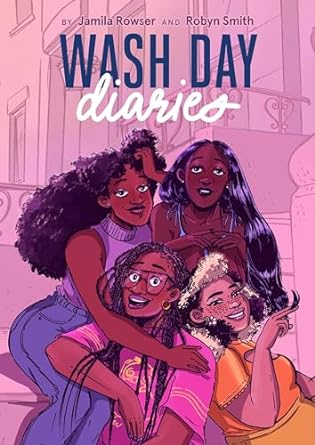
The book cover shows four teenage girls smiling and embracing against a backdrop of stairs on a city street.

Wash Day Diaries 

“It’s wash day. I ain’t going nowhere.” 

So says one of the protagonists of Jamila Rowser and Robyn Smith’s Wash Day Diaries. It’s a ritual that any black girl with natural hair knows well. When it comes time to wash, deep condition, and ‘whatever else’ your hair, it’s prudent to dedicate an entire day to the endeavor. Washing, deep conditioning, detangling, styling—it’s a complex, time-consuming process. In this graphic novel, the only things more complex are the lives of our four heroines: Kim, Davene, Nisha, and Cookie. 

Wash Day Diaries makes a point of accurately and lovingly depicting natural hair and all the ways it can be styled, and that’s part of what makes it stand out. It’s a well-told story that centers the importance of self-care and community, and it makes for a pleasant, uplifting afternoon read. 

(If you’re looking for another graphic novel that delves into the cultural weight of hair in the African American community, check out Hot Comb, a collection of pen-and-ink comics by Ebony Flowers.) 

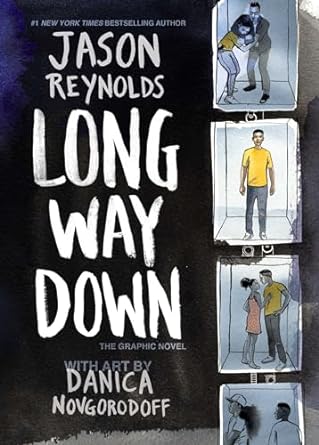
The book cover depicts four photographs showing several people in conversation, alone, struggling with one another, and one ignoring another.

Long Way Down 

Jason Reynolds’ poetic and immensely moving young adult novel Long Way Down revolves around a teenage boy grappling with the effects of gun violence. The story starts with the shooting death of protagonist Will’s beloved older brother. Lost in his overwhelming grief, Will is hell-bent on retaliation, but a visit from seven ghosts, all of whom have some connection to Will or his brother, forces him to make a hard decision about who he wants to be.  

In the original book, Reynolds uses few words to say a lot, and the graphic novel version (also available as an e-book) of his story—told through watercolor illustrations—will leave you reeling just the same.

(Fun fact: Reynolds paid a visit to our East Columbia branch in 2018!)

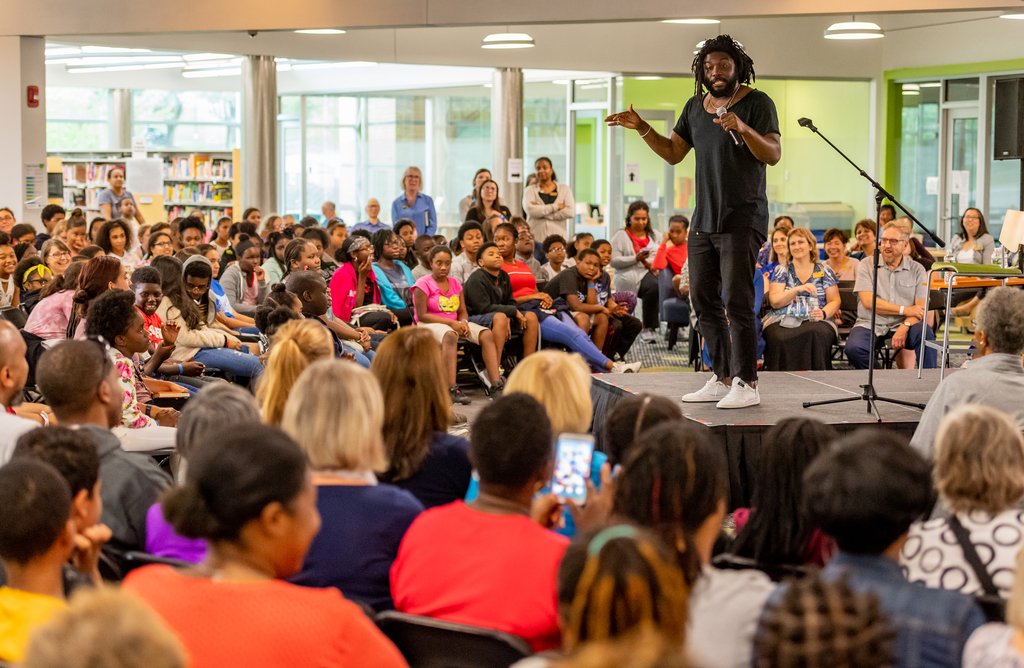
The photograph depicts author Jason Reynolds speaking from a stage at HCLS East Columbia Branch to a standing-room-only crowd of students and community members.
Author Jason Reynolds speaks to an enthusiastic crowd at HCLS East Columbia Branch.
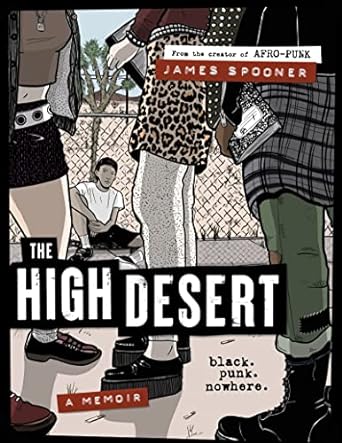
The book cover depicts a teenager seated on the cement of a playground, up against a wire fence, looking up from that vantage point at several other teens, some of whom are carrying schoolbooks or composition books, depicted from the waist down.

The High Desert 

Being a biracial kid in the predominantly white town of Apple Valley, California—as well as a predominantly white punk music scene — isn’t easy. Written by James Spooner, founder of the Afro-Punk website, The High Desert chronicles Spooner’s coming-of-age experience and the birth of his love for punk/alternative music, a connection which blossomed even as Spooner struggled to find his place in a community that was oftentimes racist and even outright violent towards him. Spooner’s graphic memoir is perfect for anyone who’s ever felt like an outsider in the worlds that they love. 

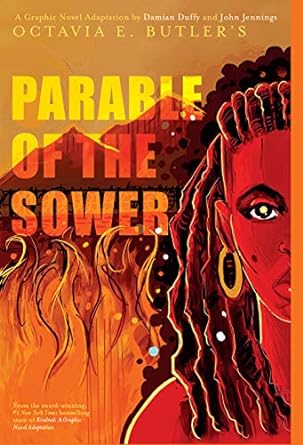
The book cover depicts a partial profile of a woman with braided hair and a golden hoop earring against the backdrop of mountains in shades of orange and gold.

Parable of the Sower 

In another novel adaptation, artists Damien Duffy and John Jennings translate Octavia Butler’s (disturbingly timely) dystopian story into graphic novel form. Parable of the Sower isn’t an easy read, not by a long shot; in Butler’s 1993 novel, a series of simultaneously occurring catastrophes have transformed the country into a virtual hellscape.

Protagonist Lauren Olamina, a teenager at the start of the story, lives in an insular community where she and her neighbors continue to live life as normally as possible while struggling to avoid the widespread violence, exploitation, and corruption taking place outside. When Lauren, who is coming into her own mysterious powers, is forced to venture out into a collapsing society, what follows is a story of hope and new beginnings.  

Be warned: part of what really makes this pick a disturbing one is that it’s set in the year 2024 and, at times, feels all too possible. 

Fans of Octavia Butler should also check out the graphic novel adaptation of Kindred, one of her most beloved novels. It follows a black woman as she is thrown, repeatedly and terrifyingly, back into time — and into the antebellum era, when chattel slavery was the norm.

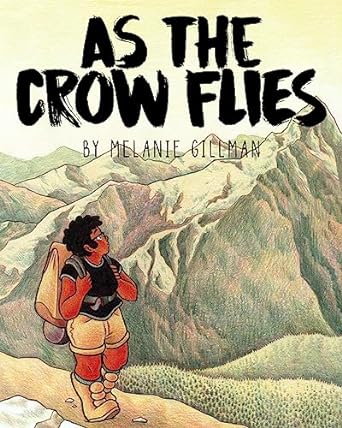
The book cover depicts a teen carrying a backpack and wearing boots, shorts, and a t-shirt, hiking through a landscape that includes mountain ridges in the background.

As The Crow Flies 

Melanie Gillman grapples with what it means to be black and queer in a Christian community—one in which non-white members are few and far between — in another coming-of-age graphic novel, As The Crow Flies

During a week spent at Camp Three Peaks, a religious summer camp, our protagonist, 13-year-old Charlie Lamonte, finds herself questioning her faith and identity, all while embarking on a strenuous expedition up a (literal and figurative) mountain.  As micro-aggressions abound, Charlie finds kinship and a reprieve from her loneliness in fellow outsider Sydney, a young trans girl who’s dealing with her own doubts.  Soft, colored pencil illustrations depict luscious mountain scenery in this former webcomic turned graphic novel. This is one that fans of ‘found family’ stories will enjoy.

Sharon Pruitt-Young is an Instructor and Research Specialist at East Columbia Branch. Aside from books, she is passionate about writing, urban sketching, trees, and art of all kinds. 

Black History Month: Equity Resource Center

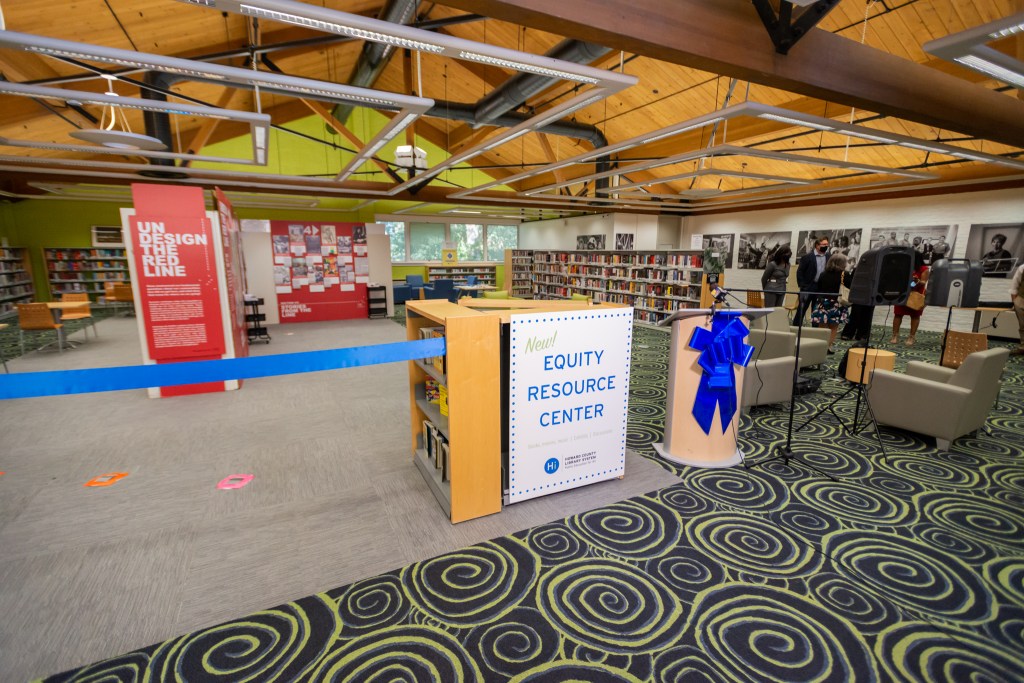
The Equity Resource Center at the Miller Branch, with a sign and podium for the ribbon cutting ceremony and bookshelves and the "Undesign the Red Line" exhibit in the background.
Equity Resource Center at HCLS Central Branch.

by Emily B.

Did you know that Central Branch is home to Howard County Library System’s newest special collection? The Equity Resource Center (ERC) debuted in September 2021 with more than 9,000 items, offering a diverse and inclusive collection of adult, children, and teen materials spanning many formats and topics.

The idea for the Equity Resource Center first came about during the COVID-19 pandemic and the murder of George Floyd. Community members wanted a place to come together to learn and heal, a place where they could see themselves and their stories represented and have the opportunity to learn about those different from them. Director of Collection Development Vera Davies explains that the Equity Resource Center and its collection were established “to support self-directed education and exhibits, facilitated and unfacilitated classes and conversations, and as a space for the community to identify, document, and share local issues and concerns.”

Some of the titles offered at the collection’s launch were recommended by members of HCLS’ Racial Equity Alliance. As the collection continues to grow, HCLS selectors choose materials that fall within a broad and inclusive scope that includes key themes like ableism, LGBTQIA+, the history of race and racism in the United States and Maryland, and more.

Dr. Kelly Clark, HCLS’ Chief Diversity, Equity, Inclusion, and Belonging Officer, has big ideas for the future of the Equity Resource Center. In addition to continuing to host exhibits and equity programs, Dr. Clark hopes to develop and introduce bundles with self-guided curricula. These bundles would feature various ERC materials – a book, movie, and music CD – alongside a study guide with reflection questions, activities, and suggestions on how to engage your friends and family in what you learn.

Dr. Clark hopes that the ERC “will grow to be a coveted community resource as Howard County residents continue to grapple with tough contemporary issues of equity, inclusion, and belonging.” Whether you want to research, learn, or celebrate, the Equity Resource Center has something for you.
Visit HCLS Central Branch to check out the collection in person or browse the collection online.

Emily is an Instructor & Research Specialist at the Central Branch. She enjoys puzzling, reading, listening to music, and re-watching old seasons of Survivor.

Children’s Classes Celebrating Black History

The banner says "Black History Month in white against a brown background, with repeating patterns of lines, ovals, circles, and triangles bordering it above and below in a traditional African color palette of red, green, and gold.
Image by Freepik.

By Sylvia H.

For Black History Month, HCLS Miller Branch is collaborating with two local organizations, the African Art Museum of Maryland and Howard County Center of African American Culture, to bring the history and accomplishments of Black Americans to some of our youngest customers.

The museum logo says "African Art Museum of Maryland, Founded 1980," in an oval which surrounds a line drawing of a figurine.

The African Art Museum of Maryland (AAMM) presents their African Experience Tour, an interactive program incorporating hands-on art exploration, videos, and rich discussion. Mrs. Doris Ligon, director and co-founder of the museum, facilitates the event for children ages 8 – 11 on Wednesday, February 15.

AAMM was founded in 1980 as the first museum in Columbia, MD. It is one of only three museums of its kind in the United States devoted exclusively to the art of Africa, as well as the only one founded by an African American. With more than 40 years in operation, the museum has shared stunning pieces created by distinguished artists with the local community and beyond; many of the artists are internationally known. Visit africanartmuseum.org to learn more about the museum.

The image shows three profiles in shades of black, grey, and white, against an open book as a background. The title "Howard County Center of African American Culture, Inc." and a date, "Established 1987," surround the logo in a circle.

Marcus ‘Sankofa’ Nicks, curator of the Howard County Center of African American Culture (HCCAAC), continues his work with us through a new educational program, Sankofa Children’s Academy. Two sessions about Dr. Carter G. Woodson and the creation of Black History Month through interactive discussion and hands-on activities are happening on Saturday, February 18: for ages 3 – 5 with adult and for ages 6 – 8.

Sankofa Children’s Academy, a new educational program, supports the holistic development of children socially, emotionally, intellectually, and culturally. Youth participants can learn in a multitude of ways to enhance confidence, self-esteem, and social skills.

Founded in 1987, HCCAAC works to preserve and share African American history and culture within Howard County. The museum exhibits a unique collection of artifacts, vintage clothing and materials, along with events that tell the story of African Americans within our community. Visit hccaac.org to learn more about the organization and its work.

African Experience Tour

Wednesday, Feb 15 4:30 pm & 7 pm, HCLS Miller Branch, Ages 8 – 11.
Tickets will be available at the children’s desk 15 minutes before class begins.

Sankofa Children’s Academy

Saturday, Feb 18 11 am HCLS Miller Branch, Ages 3 – 5 with adult; 12:30 pm, Ages 6 – 8.
Tickets will be available at the children’s desk 15 minutes before class begins.

Sessions continue at Miller Branch throughout the spring.

Saturday, March 18 11 am & 12:30 pm

Saturday, April 15 11 am & 12:30 pm

Saturday, May 13 11 am & 12:30 pm

We hope you are able to explore both the African Art Museum of Maryland and Howard County Center of African American Culture, as well as learn about other local points of knowledge!

Sylvia is a Children’s Instructor and Research Specialist at the Miller Branch. She enjoys crafting, listening to audiobooks, naps, and walks with her dogs in 75 degree-ish weather.

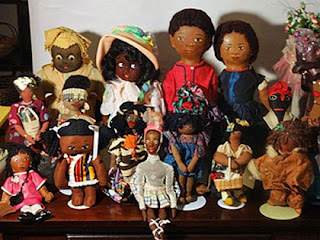
As We See Ourselves: Black Doll Art Exhibit and Event

Members of Charm City Dolls stand behind a display of their Black dolls.

Saturday, Feb 11
10 am – 6 pm
HCLS Miller Branch
For all ages. Register here to receive an email reminder.

In honor of Black History Month, the Charm City Dolling Club of Maryland celebrates its 25th anniversary with As We See Ourselves, an exhibit in appreciation of Black dolls. The exhibit, on display during February at Miller Branch, includes dolls made from a wide array of media such as wood, polymer clay, cloth, porcelain, vinyl, and gourds. Marty Bass from WJZ-TV talked to the club members about the exhibit.

A selection of Black dolls in various styles and costumes.

The exhibit kicks off with an all-day educational and informative event that celebrates the history of dolls, Black dolls, and the people who love them. Members of Charm City Dolling Club of Maryland, a member of the United Federation of Doll Clubs (UFDC), will be available to guide and answer questions.

Charm City Dolling Club’s story begins in the early 1990s, when doll collecting was the second-most popular hobby in the United States behind stamp collecting. It was an exciting time to be a doll lover! There were doll auctions, doll-making classes, shows, and more. Charm City Dolling Club (CCDC) educates the public on doll history, with a special focus on Black dolls.

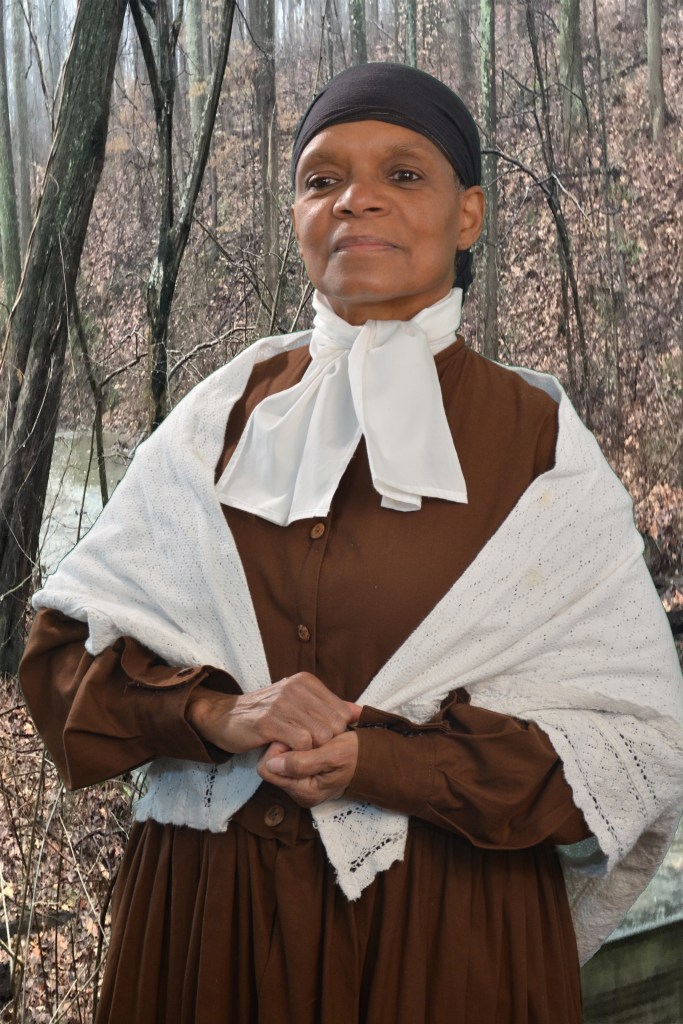
Storyteller and keynote speaker Janice Curtis Greene in costume as Harriet Tubman, wearing a brown dress, and white lace shawl, a white jabot, and a black headwrap.
Storyteller and keynote speaker Janice Curtis Greene in costume as Harriet Tubman.

The club meets on the second Saturday of each month, September through May. They are always looking for new members interested in being educated about dolls and are willing to educate others about dolls. To request a membership application or get more information, email Don Wilson, Membership Committee Chair, at donrwilson@aol.com.

Visit www.ufdc.org to learn more about the United Federation of Doll Clubs.

Speakers include:
Keynote Speaker: Janice Curtis Greene, storyteller, American Griot, and Artist in Residence at the Reginald Lewis Museum of Maryland African American History and Culture.
Deborah Butler Johnson, collector and recognized authority on Black dolls.
Barbara Stone, past president of the UFDC.
Goldie Wilson, doll artist, historian, and author.

Books and Classes for Black History Month

The illustration reads Black History Month, with two silhouetted figures to either side and a diamond patter in green, red, and black above and below. The lower pattern

by Brandon B.

February calls us, as a society, to reflect and honor the contributions of Black Americans who made our country. The late, great Carter G. Woodson is considered the father of Black History Month. Woodson is the second African American to earn a Ph.D., after Edward Alexander Bouchet earned one in physics from Yale in 1876. The fight for equality, justice, and humanity for African Americans has always been a topic of discussion.

In the past century, Blacks have had to overcome Jim Crow laws. The Voting Rights Act of 1965 and Supreme Court cases to desegregate schools helped to change American culture. Thurgood Marshall and a team of NAACP attorneys fought against the “separate but equal” doctrine in Brown vs Board of Education. Signed by Lyndon B. Johnson, the Voting Rights Act strengthened the right to vote that had been granted to Black men with the 15th Amendment. All women had to wait for the 19th Amendment to grant suffrage.

To celebrate Black History, consider a visit to the Equity Resource Center at HCLS Central Branch, which has a great selection of books, movies, and audio materials that showcase many groups. Some classic titles that celebrate Black culture and contributions include James Baldwin’s If Beale Street Could Talk and The Autobiography of Malcolm X. Consider watching films, such as Selma, that tell the story of Civil Rights leaders and a collective group of individuals, who fought for the right to vote.

Black History Month is a time of reflection, healing, and celebration. In February, take the opportunity to learn about Black culture and history through classes, books, and films.

Art Wars! Black History Month Edition 
Tue   Feb 7         6:30 – 8 pm  
HCLS Miller Branch
Ages 11-18. Registration required, drop-in if space permits.
Create artwork in 40 mins! Learn a little about prominent African American artists, then use that inspiration. Enter the Art War contest for a chance to win a prize, or just create and enjoy! Materials provided.  

Wiki Edit-a-Thon: A Celebration of Black Authors and Artists 
Thu   Feb 9    5:30 – 8:30 pm
Online
For adults. Register.
Edit Wikipedia pages of Black authors and artists whose works are found in our library collection. The evening is dedicated to collaborating on research, writing, and editing relevant Wikipedia pages. Participants check pages and cite sources as they work.

Black History of Howard County 
Sat Feb 11 1 – 2:30 pm
HCLS Savage Branch
Ages 14-18 and adults. Register.
Learn about the history of African Americans in Howard County and the town of Savage, as collected in History of Blacks in Howard County, Maryland: Oral History, Schooling, and Contemporary Issues. Hear about particular players in local history and learn why Howard County is the way it is today, with historical and personal perspective from Deborah Costley, local historian and genealogist. Share any experiences brought up as part of our Brave Voices, Brave Choices project.

African Experience Tour 
Wed Feb 15 4:30 – 5:30 pm & 7 – 8 pm 
HCLS Miller Branch
Ages 8-11. 60 min. Ticket required. Tickets available at the children’s desk 15 minutes before class. 
Learn about the diversity of African culture through hands-on exploration of artwork, videos, and discussion, facilitated by Doris Ligon, director and co-founder of the African Art Museum of Maryland.

Brandon is a Customer Service Specialist at HCLS Central Branch who loves reading, football, and taking nice long walks around his neighborhood.

Cover image by Freepik.

Celebrate Black History Month with #ELKReads

by HCLS Elkridge staff

Black History Month has been observed during February in the United States since 1976, when it was first officially recognized by President Gerald Ford. Ford invited Americans to, “seize the opportunity to honor the too-often neglected accomplishments of Black Americans in every area of endeavor throughout our history.” We invite you to join us in celebrating the talent of Black authors and honoring the history of Black Americans by taking a look at some of the titles selected below. You can find more on our website.

A collage of five titles. My Hair is a Garden features a young Black with hair flowing up from the top of her heard. I Am Perfectly Design has an illustration of a man and young boy seated on a park bench with people walking behind them. Child of the Civil Rights Movement shows a young girl in a blue dress holding a rainbow flag. Dream Big, Little One show rounded illustration of three Black women dressed for different professions. The King of Kindergarten has a pale green background and an oval shaped medallion with the portrait of a small child wearing a crown.

My Hair Is a Garden written and illustrated by Cozbi A. Cabrera

When young MacKenzie is teased about her hair, she turns to her neighbor. Miss Tillie lavishes her with an abundance of wisdom, encouragement, and practical care that empowers the girl to take care of herself with love and skill. Like the beautiful garden Miss Tillie cultivates in her yard, MacKenzie’s beautiful Black hair is tended with love. The appreciation of self-care grows to an inspiring and powerful message of self-love. An afterword provides many specific techniques and recipes for caring for Black hair. 

Jabari Jumps by Gaia Cornwall. Also available as a Voxbook.

Jabari is definitely ready to jump off the diving board: he’s finished his swimming lessons, passed his swim test, and is a great jumper, so he’s not scared at all. But when his dad squeezes his hand, Jabari squeezes back. In a sweetly appealing tale of overcoming your fears, newcomer Gaia Cornwall captures a moment between a patient and encouraging father and a determined little boy you can’t help but root for. 

Child of the Civil Rights Movement by Paula Young Shelton, illustrated by Raul Colón 

Author Paula Young Shelton, daughter of civil rights leader Andrew Young, brings you along to her childhood experiences in Georgia during Jim Crow, in the heart of the civil rights movement. Shelton shares vivid memories of swimming with Martin Luther King Jr. and marching from Selma to Montgomery. Connect with your little one as you read this moving and poignant picture book. 

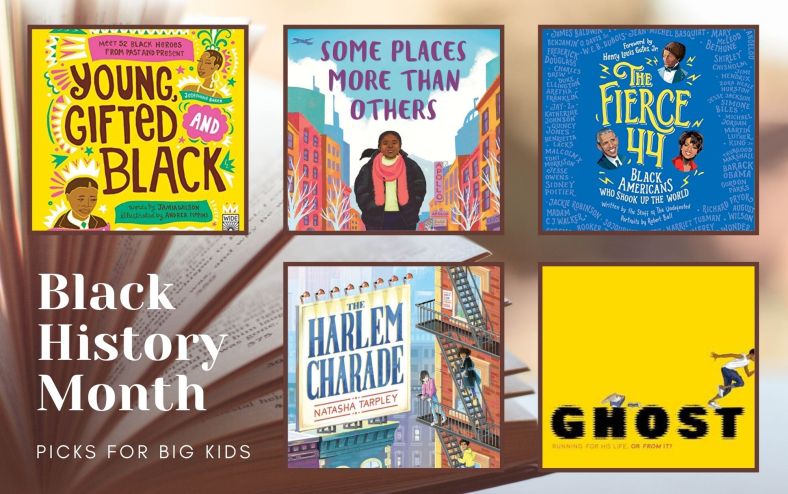
Collage of five titles. Young, Gift, and Black has a bright yellow background with green, red, and white decorations and two busts of Black men. Some Places More than Others shows a woman with a ponytail and a scarf walking trough a city. The Fierce 44 has a blue background and a handwritten list of the 44 people featured in the book. The Harlen Charade has the title on a sheet on a laundry line outside of fire escape. Ghost has a bright yellow cover, almost empty except for the the fi

Young, Gifted and Black: Meet 52 Black Heroes from Past and Present by Jamia Wilson

With a title that references the late Lorraine Hansberry’s phrase “young, gifted and black,” this exuberant collected biography is one readers won’t want to miss. Children are invited to explore one- and two-page vignettes of compelling figures in Black culture worldwide. Discover how their childhood dreams and experiences influenced their adult achievements. This book inspires the next generation to chase their dreams! 

The Fierce 44: Black Americans Who Shook Up the World by the staff of The Undefeated

Get to know 44 of America’s most impressive heroes with this engrossing and beautifully illustrated collection of mini-biographies. With notable figures such as musician Jimi Hendrix and gymnast Simone Biles, and somewhat lesser-known figures like newspaper publisher Robert Abbott and dancer Alvin Ailey, this book exposes you to the brief histories of both household names and little-known heroes who influenced the world. 

Some Places More Than Others by Renée Watson. Also available as an eBook.

For her twelfth birthday, small-town girl Amara gets her wish to visit her father’s side of the family for the first time in Harlem, New York City. Looking for roots to her personal heritage as well as Black culture, Amara is surprised by how overwhelming it all is at first. Through earnest and heartfelt exploration, the help of her loving family, and a school assignment to gather family history, she comes to understand more about herself than she had imagined. Love, forgiveness, and connection shine through in this tender and moving coming-of-age story. 

Collage of five titles. The Black Kids features a Black face wearing sunglasses reflecting a tropical scene. A Phoenix First Must Burn shows the title overlaid a girl with a swirling pink dress. Black Enough features a Black woman and White Man in dialogue. Crossing Ebenezer Creek lays the title in the green and white water of a creek under a full moon, with two figures standing on the far shore holding hands. The Forgotten Girl shows a Black girl with her hair down and curly wearing a white shift dress.

Crossing Ebenezer Creek by Tanya Bolden. Also available as an eBook.

An astounding work of historical fiction, this book is heartbreaking and graphically authentic in its depiction of violence. Following the burning of Atlanta in 1864, teenage Caleb, a pontooner in Sherman’s army, finds Mariah, an enslaved young woman, searching for rations in an abandoned slave labor camp. She and others join Sherman’s march. As Caleb and Mariah begin to dream of a better future, the horrific true events of the Massacre at Ebenezer Creek unfold. For ages 12+. 

Black Enough: Stories of Being Young and Black in America edited by Ibi Zoboi. Also available as an eAudiobook.

This contemporary fiction anthology examines the different experiences of Black youth in America. Some of the best Black young adult authors explore a spectrum of the intersectionality of wealth, status, LGBT+, class, rural/urban/suburban, and immigration that impact and represent Black youth today.

The Black Kids by Christina Hammonds Reed

A coming-of-age story, this book filters issues of systemic racism, class, generational mental health, privilege, and racial justice through the perspective of Ashley Bennett, a wealthy, Black teenager attending a predominantly white school. When graphic video evidence of Rodney King’s horrific beating by the LAPD goes viral and the riots following the officers’ lack of accountability, Ashley goes on a personal journey of growth and identity and awareness.

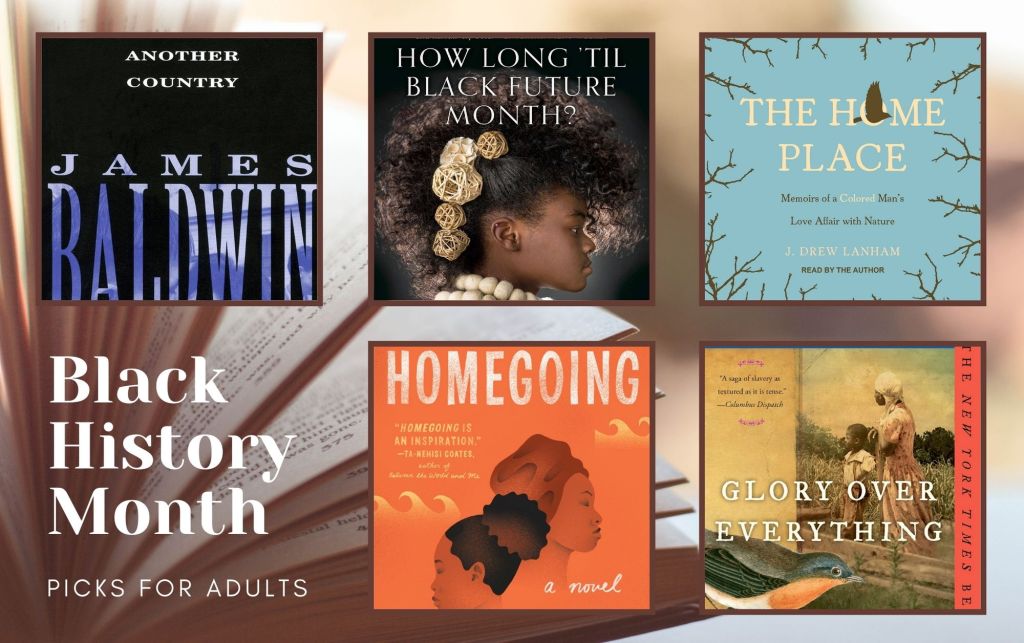
A collage of five books. Another Country emphasizes the author's name against a black background. How Long "Til Black Future Month features a Black woman in profile with her hair up and adorned with roses. The Home Place provides the perspective of looking up at a blue sky and bare branches. Homegoing has a an orange background with illustrations of waves and two overlapping profiles of Black women. Glory Over Everything shows a painting of a wman and a shcild standing in a field, with the illustration of robin in the foreground.

How Long ’til Black Future Month? by N. K. Jemisin. Also available as an eBook and an eAudiobook.

This collection of short stories is a wonderful introduction to one of the most innovative and celebrated authors of science fiction and fantasy writing today. Jemisin is unafraid to use her work to explore themes of trauma, prejudice, and oppression, while also creating richly-imagined worlds and unforgettable characters, whose voices have been missing from speculative fiction for far too long. 

Homegoing by Yaa Gyasi. Also available as an eBook on OverDrive and on CloudLibrary, plus as an audiobook on CD and an eAudiobook on OverDrive.

Reading historical fiction is a great way to immerse yourself in a life different from yours. Yaa Gyasi’s Homegoing offers a deep look into the effects of imperialism and enslavement, and considers how the long shadows of their repercussions affect individuals and their families. Generation after generation of two half-sisters’ descendants guide us through the long-lasting consequences of systemic and systematic racism on separate continents an ocean apart.

Another Country by James Baldwin

I’d implore everyone to read anything – and everything – by James Baldwin, whom some have called America’s George Orwell. Perhaps it’s because of his contemplative and introspective essay style, but I think it refers to him as a political and social artist. My understanding is that the title refers to Baldwin’s wish for another country where one’s race or sexual preference aren’t defining characteristics, but sadly, this book is very much about this country. Another Country presents an engaging, well-crafted story about the intersection of race, class, gender, and sexual orientation in the 1950s, well before most authors thought so broadly. Art, such as excellent fiction with characters everyone can relate to in some way, is a great way to explore these concepts.

The Elkridge Branch + DIY Education Center opened the doors of its new building in March 2018. All our staff wish that we could see you in person, but we are happy to help you discover new reads while we are apart.