


by Ian L-F
Comparatively Lit
Tuesdays, Aug 6 & 20
7 – 8:30 pm
Meets online. Register to receive a link.
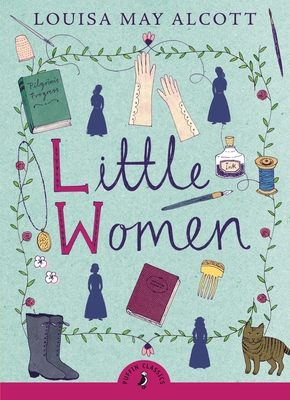
Comparatively Lit, a virtual book club hosted by HCLS East Columbia Branch, compares literary classics and newer works they have inspired. We focus first on Little Women by Louisa May Alcott and March by Geraldine Brooks, a modern companion novel focusing on the March patriarch as he serves as a Union chaplain in the Civil War.
When I was first brainstorming this class, I knew I wanted to cover “great works of literature” – whatever that means. Literature is a fraught term, one that often coveys snobbery and presumed superior merit. This ivory-tower elitism has always bugged me. If there was a meritocracy to writing and literature, at the very least it would be a more open field than many have historically treated it.
This is where Little Women enters our discussion. Truthfully, I had not read Little Women before setting up this class. It had always existed in the periphery of my literary journey. Perhaps because many of my professors had a bias for British literature, Little Women did not receive the same focus as the works of Jane Austen or the Brontë sisters. Yet, despite its century and a half of constant publication and adaptations to screen and stage, Little Women was likewise shunned by American academics for many decades. Its potential meaningfulness and impact were at best misunderstood, if not deliberately ignored.
Today, there is no real argument against considering Little Women a classic of American literature. The novel carries the weight of a pivotal period of our national history, as the horror of the Civil War looms around it. The flourishing and evolving philosophies of Transcendentalism and First-Wave Feminism define this work. The struggles the March sisters endure mirror the struggles our nation faced (and continues to face). None of this overshadows that Little Women is also a wholesome and cozy story that people have returned to for inspiration and insight for more than a century. Its popularity and impact persist into the present day.
Among the myriad adaptations of Little Women, we examine March by Geraldine Brooks. In the original tale, Mr. March is serving as a chaplain within the Union Army, remaining absent for most of the novel. March refocuses the story from his point of view as he struggles with the brutality of war. He wants to shield his family from this reality, but his shaken conscious threatens to unravel him. Brooks’ story has an exceptionally different tone, less cozy to be certain.
Comparatively Lit looks explore how narratives interact and how these works reflect our worlds. When we examine stories with common foundations, what can we learn? Do the respective time periods of their authorship inform differences in their themes? Despite the time difference, are there messages that echo between them? What does each say about America or being American?
This new book group meets online for two sessions. Tuesday, August 6 features our discussion of Little Women, which expands to include March on August 20. Please register to receive the link.
Ian Lyness-Fernandez is not quite used to being Instructor at the East Columbia Branch. He hopes his passion for learning can somehow translate into a skill for teaching.







 CHAPTER CHATS