The Possession of Alba Díaz by Isabel Cañas 

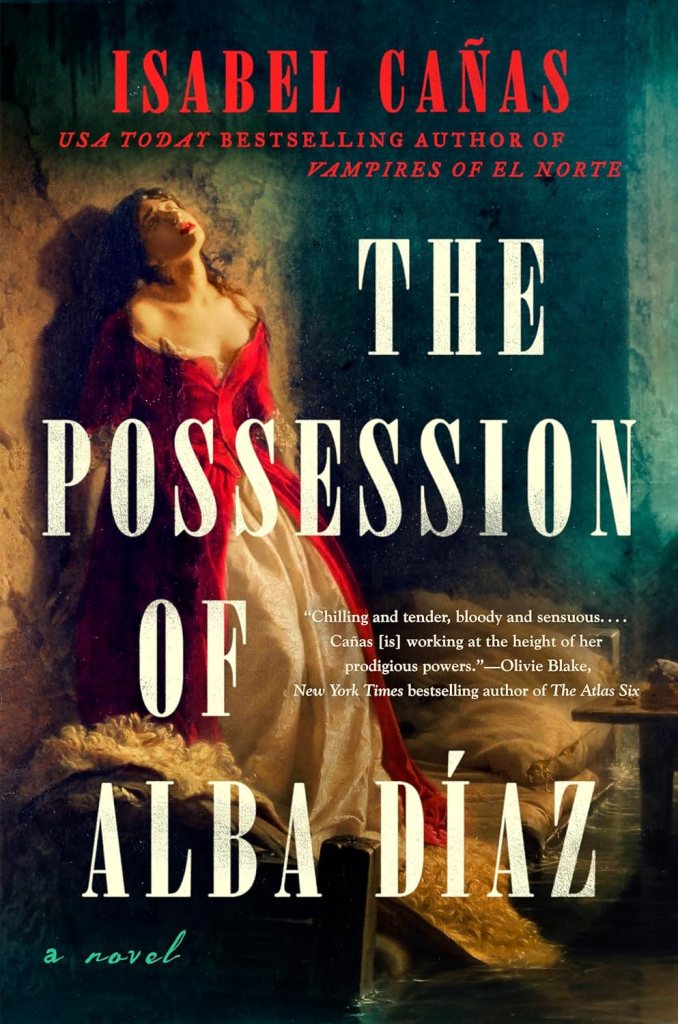
The book cover depicts a woman standing on a bed and leaning against a wall, with her eyes closed and face upturned towards the ceiling. Her lips are red and match her red dress, fastened over a white underskirt. Her long brown hair tumbles around her bare shoulders. The dress is in the style of the 1700's and the scene has a dark, Gothic feel, although she appears to be lit by natural light from a nearby window.

by Alex H.

If you’re anything like me, September 1 marks the start of Halloween season (yes, season). There’s no better way to celebrate the start of all things scary and ghoulish than by reading a horror novel, and that’s what I did when I picked up Isabel Cañas’ newest book, The Possession of Alba Díaz. If you like ghosts, Mexican history, and gothic romance, this is the story for you!

The Possession of Alba Díaz is set in Zacatecas, Mexico in 1765. When a plague descends on her city, a young woman named Alba and her family retreat into the mountains. They take refuge at a mine owned by Alba’s fiancé and his family, but it is not the safe haven they were promised. Alba starts sleepwalking and hearing strange voices from deep in the mine, but most worrying of all is how she no longer feels alone in her own head. 

Meanwhile, Elías, the black sheep of her fiancé’s family, has arrived in the New World hoping to quickly make his fortune and escape his greedy family. His plan falls apart when he meets Alba and the two are drawn to one another, despite her rather inconvenient engagement to his cousin and the demon lurking under her skin. Lucky for Alba, Elías knows a thing or two about demons… 

I raced through this book. Cañas does a wonderful job of blending history and the paranormal to create a rich, fully lived-in world. Her two narrators, Alba and Elías, have voices that are distinct and wholly compelling, which makes for an electric romance. As for the horror aspect, Alba’s possession takes up a large chunk of the novel and there are more than a few creepy scenes. I’d say they lean more towards unsettling than scary, but your mileage may vary. 

Come for the haunted mine and angry demon, stay for the gothic romance and a delightfully wicked ending that’ll have you desperate for more historical horror this Halloween season. 

The Possession of Alba Díaz is available in print from HCLS in English and Spanish, and as an e-book and an e-audiobook from Libby/OverDrive.

Alex is a Teen Instructor & Research Specialist at the Glenwood Branch. When she’s not at the library, she likes to crochet cute animals, read all the horror and romance books she can get her hands on, and write stories about things that go bump in the night. 
Celebrating 85 Years of HCLS: A Tribute to Noontime Books and the Fictionista Legacy 

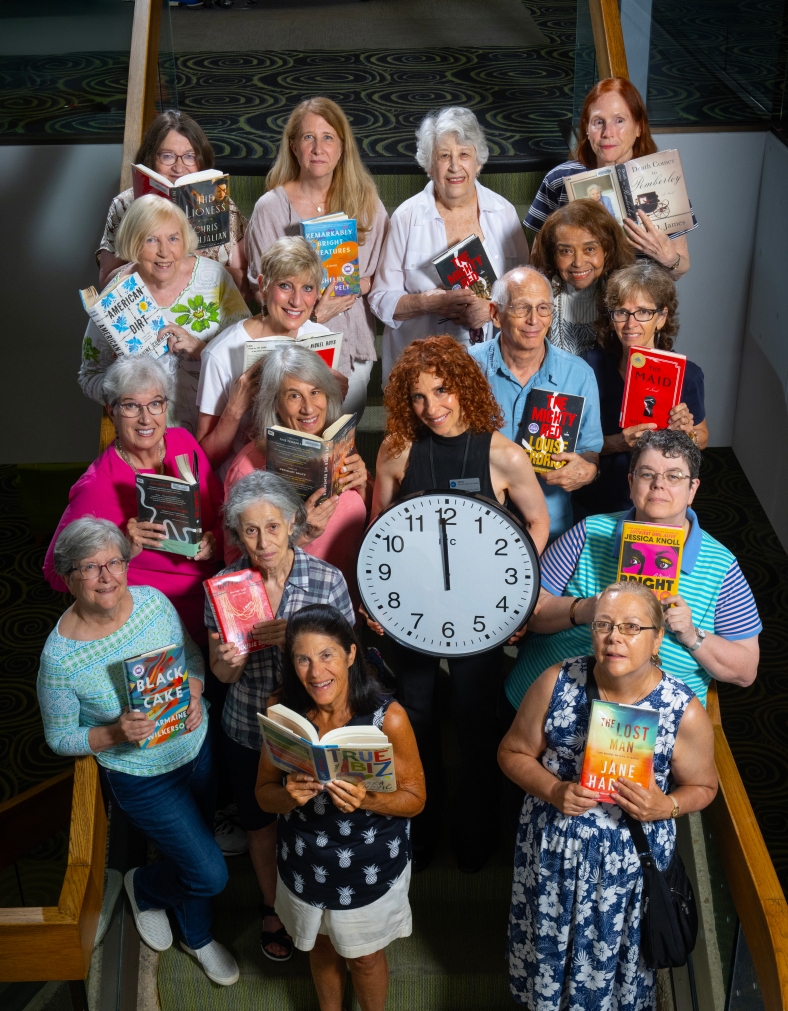
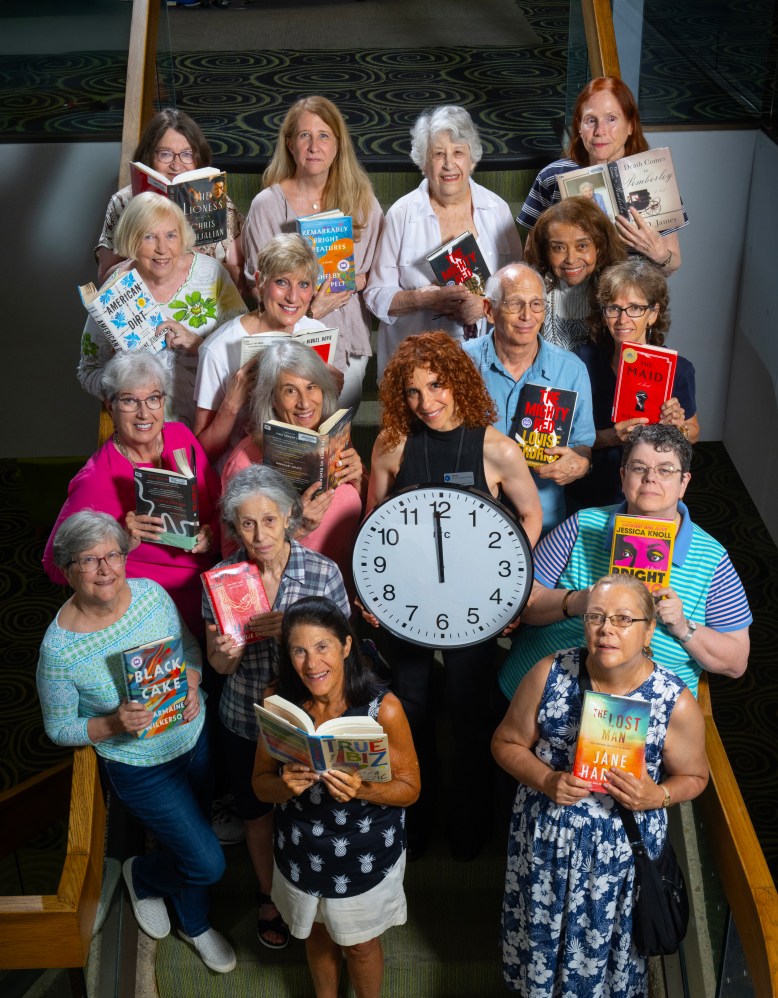
Members of the Noontime Bookclub stand on the steps at HCLS Central Branch, each holding a book and the group leader holding a clock set for noon.
The Noontime Book Club is the longest running book club in the HCLS system. They gather at HCLS Central Branch.

by Wendy C.

As Howard County Library System (HCLS) celebrates its 85th birthday this year, I’ve found myself flipping through a mental scrapbook—page after page of memories and moments since I first started in 2010. It’s been a rich and satisfying journey, filled with more book recommendations than I could count and some of the most passionate readers and coworkers one could hope to know. When I became an Instructor and Research Specialist at the Central Branch, I landed in a dream team of literary champions affectionately known as the Fictionistas. These were (and still are!) some of the most brilliant book minds around. They mentored me, encouraged me, and perhaps most importantly, welcomed me into their bookish fold. 

One of the most meaningful invitations came early on when I was asked to help facilitate Noontime Book Club, lovingly known as Noontime Books. This wasn’t just any club. It was founded in 1993 as Noontime With Books by Marge Trautman, a true trailblazer and the OG Fictionista. Community members were encouraged to come on their lunch breaks, eat, and talk about books. Marge had retired by the time I came on the scene, but her influence lingered in every discussion circle and on every dog-eared reading list. 

Marge recently passed away at the age of 81. While we are saddened by her loss, we are comforted knowing that her spirit is alive and well in the very club she started. Month after month, rain or shine, in-person or virtual, some members have been showing up for over a decade, testament to the powerful sense of community and curiosity Marge helped spark. There’s something incredibly special about gathering midday to unpack a story together, be it mystery, memoir, or modern classic. Noontime Books isn’t just about reading. It’s about connecting, questioning, and sharing a slice of life over lunch and literature. 

So as we celebrate HCLS’s incredible 85-year journey, I tip my hat to the Fictionistas, to Marge, and to every reader who ever leaned in a little closer during book club to say, “Wait, did anyone else notice that part? 

Click for a listing of all the HCLS book clubs that have meetings soon, and many more return in September.

Wendy Camassar is an Instructor and Research Specialist at the HCLS Central Branch and facilitates Noontime Books discussion group. In her spare time, she enjoys reading fiction, thrifting, and volunteering for Success In Style at Savage Mill. 

National Library Week: Graphic Novels for Kids

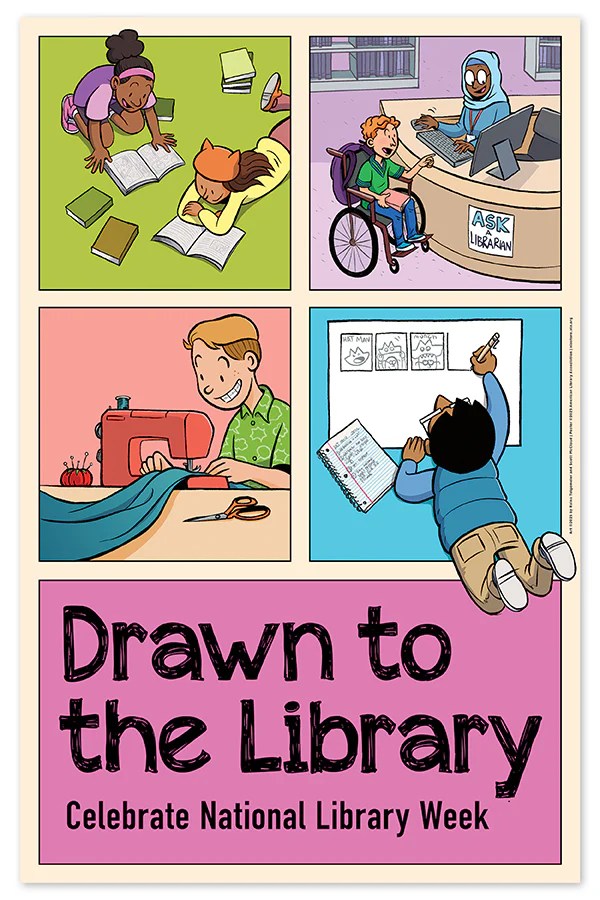
National Library Week Poster shows four different, common scenarios at the library: reading, talking at the desk, using a sewing machine from the library of things, and someone drawing.

by Jean B.

What draws you into the library? Comfortable chairs and aisles of tall shelves, packed with interesting titles? Classes where you can learn or socialize? Play areas for children?

Libraries serve many needs these days and offer access to all kinds of media – not just the weighty tomes of classic literature. For many of our school-age customers, it’s the graphic novels that draw them in. Dogman to Batman, Smile and Guts – these titles possess a magnetic power to pull kids into the library, sometimes to the chagrin of their grown-ups. They ask: “Are graphic novels real reading, if they’re filled with pictures?”

This year’s theme and its honorary chairs, cartoonists Raina Telgemeier and Scott McCloud, affirm the value and power of these stories told through comic-strip panels. In recent years, graphic novels and their creators have received the highest honors in children’s literature, recognizing their artistry as well as the many benefits these books bring to young readers in building literacy.

Reading specialists stress the importance of motivation for a child’s success in learning to read. Kids need to be interested in the stories presented to them to do the work of reading. So if Dogman gets them to keep reading, it’s just as valuable as a classic! For those who may have fallen behind early in the reading process and lost confidence, graphic novels can restore their motivation. The images are appealing, the word bubbles less intimidating than full pages of text, and children can be successful without feeling the books are “beneath them.”

Graphic novels also teach children how to integrate text and visual literacy — an essential skill in today’s multi-modal landscape. When kids tackle a website, advertisement, or YouTube instructional video, they need to absorb both images and text to decipher meaning. That is the world we all now live in, and careful reading of a great graphic novel sharpens this important skill.

At Central Branch, the graphic novel collection literally creates the gateway for entering the children’s department. But in a much broader sense, graphic novels offer a gateway to the vast variety of books and materials readers will find in the library. Once DRAWN IN to reading, the discoveries and stories are limitless!

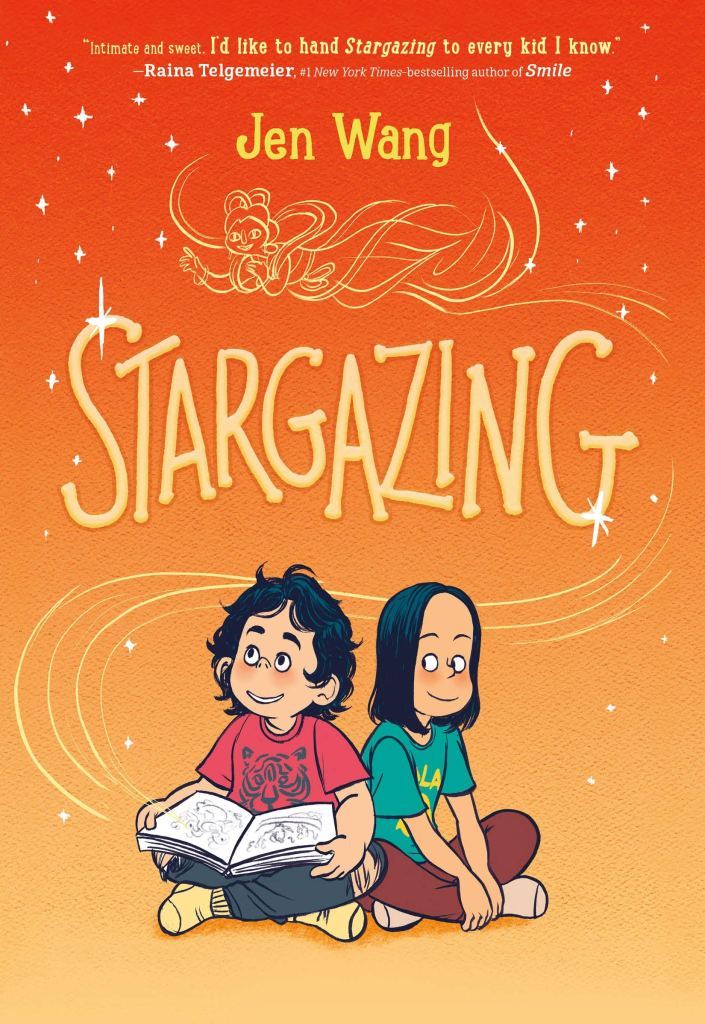
The cover shades from dark orange at the top to a light orange at the bottom, with two kids sitting tailor fashion. The one on the left has a book open, with swirls of a sprite sketch coming from the pages.

Celebrate National Library Week by exploring some of these award-winning graphic novels, all based on real experiences:
El Deafo by Cece Bell
New Kid by Jerry Craft
Mexikid by Pedro Martin
Stargazing by Jen Wang.

Jean is a Children’s Instructor and Research Specialist at HCLS Central Branch. She loves talking about books with people of all ages, but especially enjoys leading the Heavy Medals book club for fourth and fifth graders, exploring award-winning books of all genres. 

Clear by Carys Davies

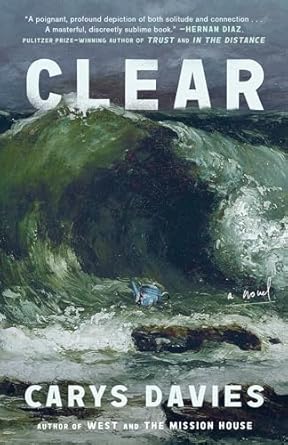
The book cover depicts a large green, black, and white wave turning over some large brown rocks at the shoreline, under a grey sky. What appears to be a metal teapot is floating beneath the waves.

By Piyali C.

The more I read the more I realize how little I know. I was confused about the title of this exquisitely written novel, Clear, that talks about human connections. Why “clear?” I learned the significance in the Author’s Note, where I read about how 474 ministers broke away from the Scottish Church in the year 1843 to rebel against the system of patronage and form the new Free Church. I also learned about the controversial Clearances.

In the novel, John Ferguson is an impoverished priest of the New Church forced to participate in a significant social upheaval in Scotland at the time: the Clearances that began in the Lowlands, spanning from the mid-eighteenth century to the mid-nineteenth century. Farmers were forcibly removed from their lands by the landowners to use those fields for crops, cattle, and sheep. The farmers and their families were dispossessed of their livelihood and forced to move to concentrated lands where they could not produce enough food for sustenance, which resulted in mass exodus to industrialized cities. Many sold all their belongings to find passage on ships to the United States, Canada, or Australia to start anew. 

John Ferguson takes up the job of evicting the lone tenant, named Ivar, of a remote island. Ivar has been living by himself for over a decade with his old horse, a blind cow, and a few hens and sheep. John’s wife, Mary, is opposed to this dangerous journey, but John is adamant about earning enough money to build his own church facility to practice the teachings of the New Church. Upon arrival, John falls off an island cliff, sustaining life threatening injuries. Ivar, the man whom John has come to evict, finds the unconscious John and nurses him back to health. Despite their language barrier, the two men find a connection, while John faces a dilemma about having to disclose to Ivar, his savior and friend, his real reason for the journey. Mary, in the meantime, has had no communication from John; she sells everything to buy passage to travel to the island herself to find out what has happened to him. The story takes an interesting turn when the three main characters come together. 

Clear is not only a story of immense beauty; it is also a big-hearted story of hope, ambition, and most of all, the interconnectedness of human hearts. The paucity of words in the book somehow intensifies the beauty and the depth of the characters, the plot, and the setting. Through the magic of Carys Davies’ beautiful writing, the readers can hear the waves crashing against the rugged rocks of the island, feel the heat of the fire that Ivar builds to stay warm, and taste the slightly burnt milk mixed with cornmeal that Ivar feeds John to sustain his broken body. The book touches all our senses as we read the story. The words transport us onto the island, and we live John and Ivar’s life and feel their connection along with them. We understand Mary’s concern as she frets at the lack of communication from her husband and marvel at the ending, when all three characters converge on the island. What will happen to them next?

Clear by Carys Davies is available in print and e-book formats.

Piyali is an instructor and research specialist at HCLS Miller Branch, where she facilitates two book discussion groups: Light But Not Fluffy and Global Reads. She keeps the hope alive that someday she will reach the bottom of her to-read list.

Scandalous Women by Gill Paul

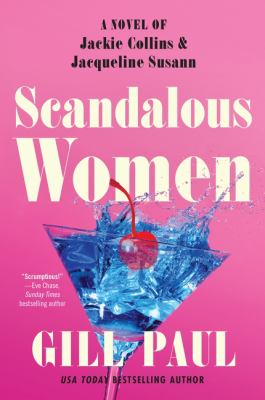
A blue cocktail with a cherry in it splashes against a bright pink background.

by Angie E.

In the late 80s, when I first discovered the novels of Jacqueline Susann and Jackie Collins, I used to place paper bag covers over them to hide the title information and, I suppose, my shame in reading them. Nowadays, in the age of e-books, where no one has to know or can see what you’re reading, I am not at all shy about sharing my love of these two authors. 

Scandalous Women brings to life the dynamic and groundbreaking careers of both iconic ladies. Set in the 1960s, the story follows these trailblazing and vibrant women as they navigate the male-dominated world of publishing, facing rampant sexism and societal backlash for their bold, provocative works. 

Nancy White, a young editorial assistant becomes the unlikely link between these two literary powerhouses. As Jackie and Jacqueline strive to top the bestseller charts, they form an unexpected friendship, sharing their struggles and triumphs in a world that often seeks to silence them. Though there is no real world evidence to suggest they were friends in real life, Gill Paul has said that she loves to imagine that they could have been. 

Paul weaves together the personal and professional lives of these women, highlighting their resilience, ambition, and the price they pay for their success. Scandalous Women is written in the style and spirit of both authors and is a fun, yet ultimately serious look at writing as a woman in the 1960s. The way she captures their spirit, especially Susann’s, is pitch-perfect and is one of the reasons the book stays with you long after you finish. The good news is, if you like Gill Paul, she has written several other novels, just as compelling and enjoyable to read. 

To see Jaqueline Susann discuss literature (and that meshes well with what Scandalous is trying to say) click here:   

Angie is an Instructor & Research Specialist at Central Branch and is a co-facilitator for Reads of Acceptance, HCLS’ first LGBTQ-focused book club. Her ideal day is reading in her cozy armchair, with her cat Henry next to her.