Meet the Author: Paterson Joseph

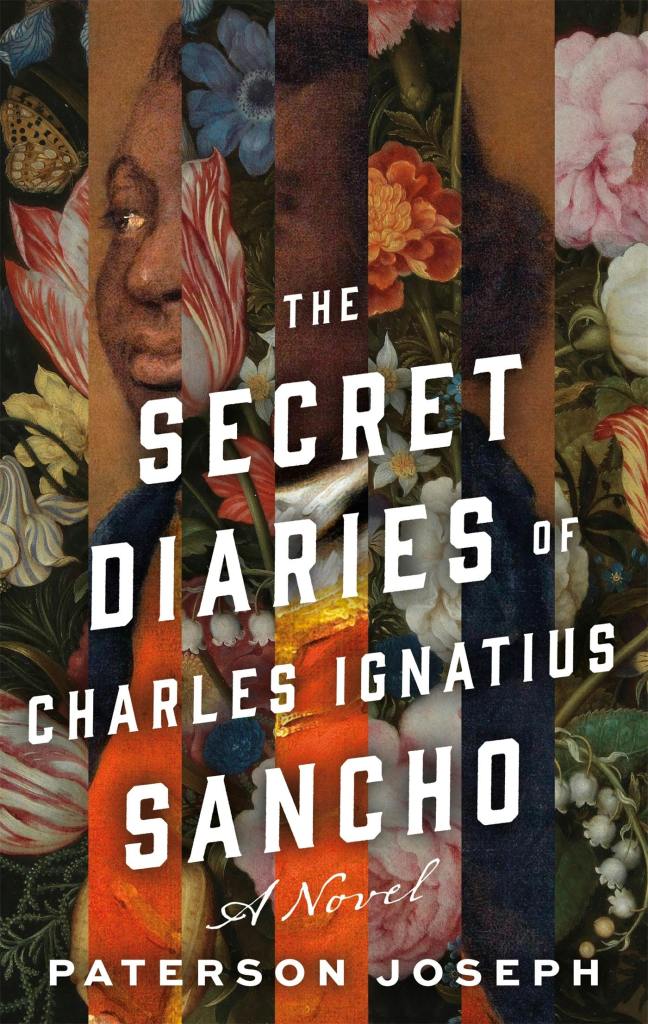
A colorful, busy cover inter-splices two oil paintings together, with a young Black man looking out from among flowers.

Paterson Joseph & The Secret Diaries of Charles Ignatius Sancho
Tue, Apr 15 | 7 – 8:30 pm
HCLS Miller Branch
For adults. Register at bit.ly/Paterson-Joseph

“[T]he rollicking fictionalized memoirs of a real-life Black British trailblazer … An entertaining portrait that also illuminates rare opportunities for Black people in 18th-century London.” ~ Kirkus Review

The Secret Diaries of Ignatius Sancho is Paterson Joseph’s debut novel and is a story that begins on a slave ship in the Atlantic and ends at the very center of London life. It is a lush and immersive tale of adventure, artistry, romance, and freedom set in 18th-century England and based on the true story of the first Black person to vote in Britain, who fought to end slavery. Joseph channels the writing style of the day and draws on the real-life Sancho’s diaries to give voice to his hero’s interior life.

Joseph is a beloved British actor and writer. Recently seen on Vigil, Noughts + Crosses, and Boat Story, he has also starred in The Leftovers and Law & Order UK. He also plays Arthur Slugworth in the Wonka movie. He has won the Royal Society of Literature’s Christopher Bland prize and the Historical Writers’ Association Debut Historical Crown 2023 award. Books available for purchase and signing.

More About the Era of Charles Ignatius Sancho
by Ian L-F
Often celebrated as the Age of Enlightenment, the 18th century is regarded as an era of immense scientific progress, with philosophy and reason expanding the boundaries of thought that, at times, challenged authority. However, the radiant optimism of this period must be understood alongside its darker tendencies, where ideals of liberty coexisted with systemic exploitation. England’s economic rise, framed as a triumph of innovation and industry, was fueled by the profits of slavery and European imperialism.

Following the War of Spanish Succession, Britain was granted by treaty the asiento de negros, a monopoly on the sale of enslaved people to Spain’s colonies, solidifying its position as the largest slave-trading nation by 1730. Despite slavery being nominally outlawed in England since the 12th century, Britain, like other European powers, externalized its reliance on slavery to their colonies. This policy enabled them to condemn the trade morally while still reaping its profits, in every cup of sugared coffee and nutmeg-spiced delicacy.

Amidst this sea of madness, Charles Ignatius Sancho emerged as a beacon of erudition and resilience. Born on a slave ship and sold into bondage in New Granada, Sancho overcame incredible odds to achieve freedom and defy the prejudices of his time. A self-educated man of letters, a composer, and a businessman, he became a celebrated voice in Britain’s abolition movement. Yet, opposition to slavery in Britain remained scarce until the late 18th century, and as W.E.B. DuBois later observed, abolitionist efforts often aligned with economic interests: “The moral force they represented would have met greater resistance had it not been working along lines favorable to English investment and colonial profit.”

The 18th-century era contended with forces not too dissimilar from our own. In echoes of history’s tribulations and the lives of remarkable individuals, we find lessons that challenge us to confront injustice, question power, and strive for a more equitable world. If your interest in history has been piqued, our online research tools, like Gale OneFile’s World History database, are a fantastic starting point for an educational journey.

Ian is an Instructor and Research Specialist at HCLS East Columbia Branch. He is a huge nerd with too many interests to list here. Currently, he is fixated on the interconnection between history and fiction. His favorite kind of stories are stories about stories.

Honey & Spice by Bolu Babalola

A close up illustration of a woman's face, with long black hair. The words appear atop, in pink and yellow ombre.

by Sahana C.

My favorite reality show of all time is Love Island UK, where young, single British people are paired off into couples and vie for the affection of the public, living together full-time in an elaborate villa and doing relationship challenges over the course of a summer. I keep up with the newest season rabidly, and while it’s airing, my friends will hear me “pulling them for a chat” or asking if they’re “mugging me off, innit” to an annoying degree.  

So, when Honey & Spice by Bolu Babalola was recommended to me, a romance set at a British university with characters who had the same South London charm as some of my favorite personalities on this season of Love Island, I was hooked instantly. I’ve read Babalola’s debut, Love in Color (and actually, Love in Color was one of my first ever Chapter Chats posts!) so I was excited to read more from this author.  

Kiki Banjo, our fearless, bold, brash, beautiful protagonist brings us with her to her university campus, which is predominantly white (and is, aptly named, Whitewell). But she and her friends, and the rest of the Black community at the school, have carved out their own niche on campus (also aptly named: Blackwell. Let it not be said that Babalola is going for subtlety here). Between Blackwell politics, class projects, potential internships in New York, and her ever steady radio show, Brown Sugar, Kiki’s a busy girl with no room or desire for a relationship. The guy she’s hooking up with is more hassle than he’s worth so she dumps him. Unfortunately (mainly for him), he turns out to be a bit of a creep, so Kiki turns to the next guy in the room for help, and suddenly she starts seeing Malakai everywhere, and he’s giving her hives. She can’t quite place whether his good guy energy is an act or if he’s the player she thinks he is, but she has no choice but to work with him as fate or homework or other forces bring them closer together.  

This book is a romance. I’m not a romance reader, but this one caught me with friendships and femininity at the center of the story, as Kiki finds her place.  Every “Kiki, you’re moving mad” made me grin with it’s unabashed Love-Island-esque British-ism, but not in the way of stuffy classic literature. This is a young, vibrant book that doesn’t shy away from issues about sexual harassment on campus, being Black and facing discrimination at university, and the very real personal tragedies everyone carries with them to school. Babalola warns us, at the heart of this book, to look away from the surface and towards loving one another with grace. But she does it with an attitude, with well-seasoned flair, and with a no-holds-barred main character that made me love her with every bold comment and revealed insecurity.  

Honey and Spice is available in print, eBook, and eAudiobook.  

Sahana is an Instructor and Research Specialist at the Savage Branch. They enjoy adding books to their “want to read” list despite having a mountain of books waiting for them already.

The Kitchen Front by Jennifer Ryan

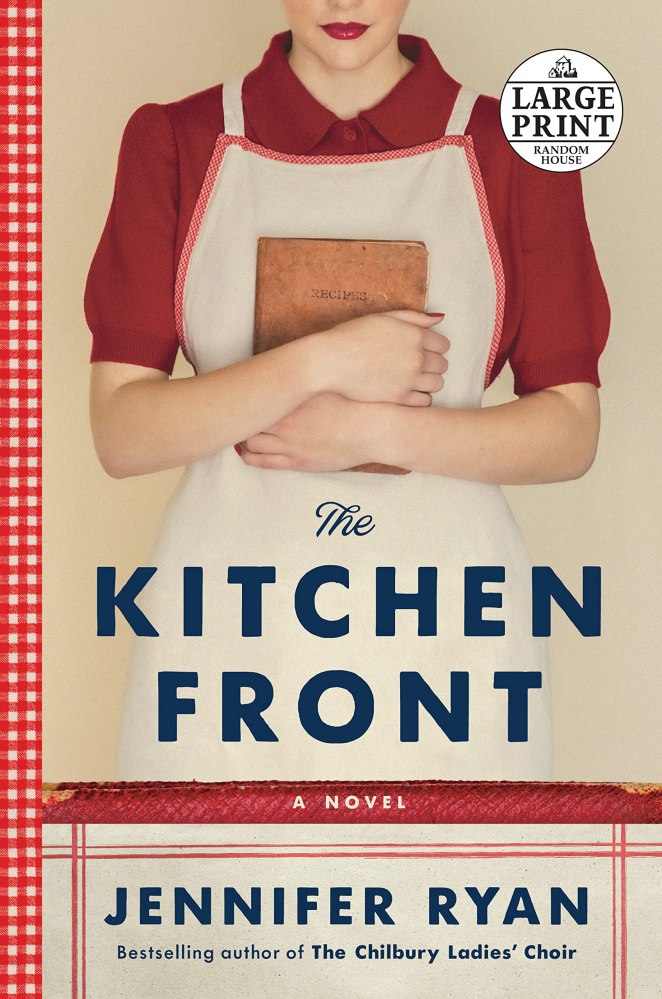
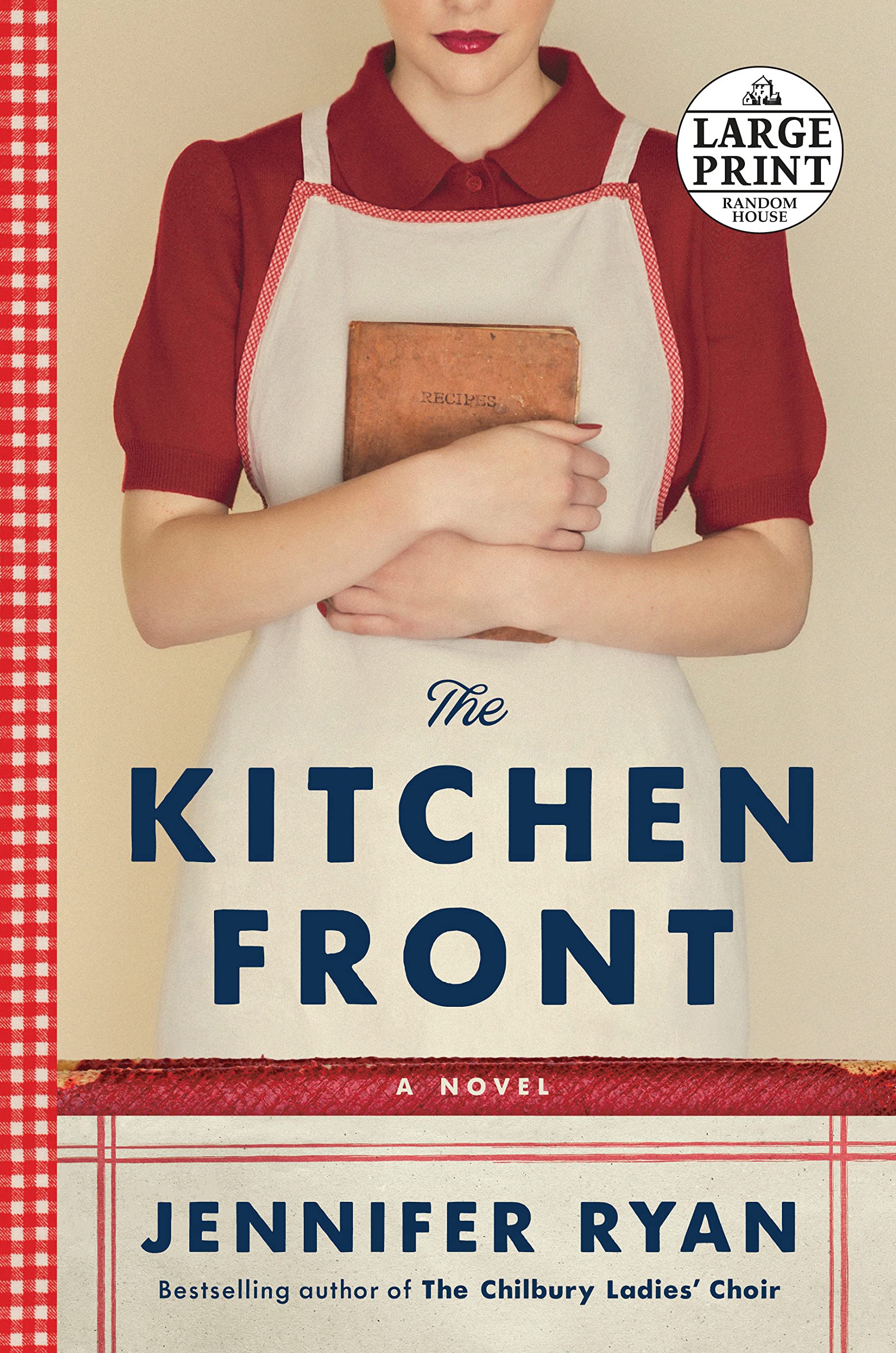
Image of a woman in a red shirt, red lipstick, and a white apron holding a cookbook across her chest. Red gingham boarder

by Kristen B.

The Kitchen Front by Jennifer Ryan could be easily categorized (and perhaps dismissed) as “women’s fiction” since it offers a solid look at four women’s lives in 1942 Britain. I rather despair of idea that novels about women and their daily travails are some how less weighty or less literary than more masculine options. This book is a highly readable reminder that not all the wartime effort took place on the continent and upon the seas, amid spies and battles. The first page provides a list of what a week’s worth of rations were for an adult – and let me tell you, it wasn’t much! Rationing continued in the UK for more than a decade after the end of the war, and I have wondered if we could have sustained that kind of national effort. We tend to look back at the 1950s of a time of growth and prosperity in the US (although not for all demographics), but it was a very different prospect for our allies.

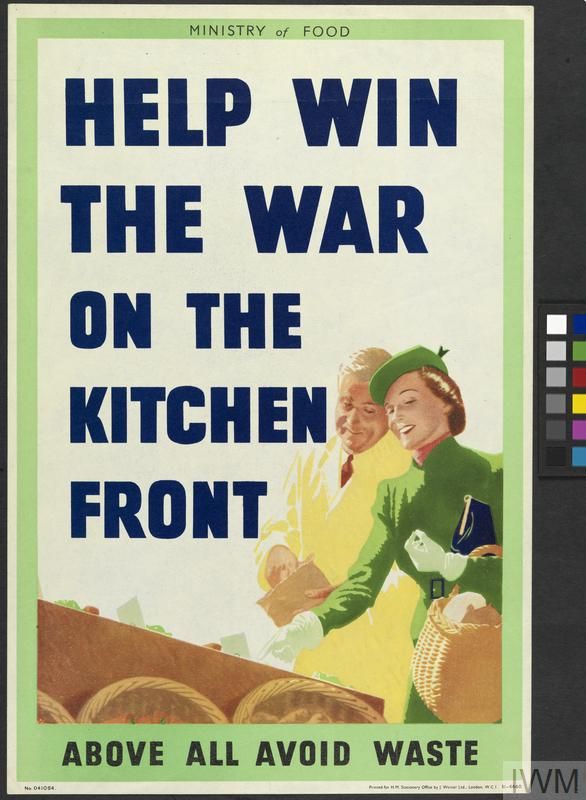
World War II poster featuring a woman in gloves and hat talking to a grocer that read: Help Win the War on the Kitchen Front.

It naturally fell to women to figure out how to make rations stretch to feed their families. In the days before packaged or frozen foods, everything was local and homemade, and the reality was that nobody got enough to eat by modern standards. Gardens (along with pigs, chickens, and bees) were a survival strategy, not just patriotic palaver. The BBC really did host a show called The Kitchen Front, which included ideas and recipes to make rations work and stretch – whether it was tinned sardines, Spam, or some other unfamiliar type of protein, like whale meat. This book starts with that show and adds a fictional local contest to find a relatable female host.

Of the four main characters and contestants in the book, Audrey spends her entire waking life working to feed her family and maintain their house. Her husband was an early RAF casualty, and she has three growing, hungry boys. Her husband was also an artist who mortgaged their home to the rafters, and she is left baking pies and cakes to try to make ends meet. Her home and garden become the center of the story in crucial ways.

The other three main characters each have their own private battles to fight. Gwendoline is Audrey’s sister, though she married up with the local fat-cat businessman and landowner. While a social success, the marriage and the man have proven to be unhappy decisions. The kitchen maid and apprentice cook at Gwendoline’s manor house, Nell, needs a little confidence in her own skills. She provides a young, hopeful perspective. The final woman, Zelda DuPont, worked as a French-trained chef in fancy London hotels before the war brought her to head the canteen at Gwendoline’s husband’s pie making factory. Zelda has fought tooth and nail to succeed in a man’s world before an unscrupulous, handsome cad leaves her heading to the country, an unmarried mother to be.

The convenient machinations of the contest and various plot lines bring all four women together, with Gwendoline having a connection to each of the women but Audrey operating as the beating heart of the story. The plot is mostly predictable, but I didn’t mind that at all. The characters are so wonderful, each in her own way, that I loved spending time with them. Not only did I need to know who wins the BBC contest, I enjoyed their unique points of view and individual struggles. Is it better to marry for love or money and position? Is it better to have a career or raise a family? It is better to be in service or more independent? There are no right answers, but women still struggle with these questions and the myth of “doing it all.” But when we support each other and do it together, everyone wins.

The Kitchen Front is available in print, large print, ebook, and eaudiobook.

Kristen B. is a devoted bookworm lucky enough to work as the graphic designer for HCLS. She likes to read, stitch, dance, and watch baseball (but not all at the same time).