Read Babel in 2025 (while waiting for Katabasis)

An illustration that looks like a highly detailed, black and white print shows a tall, classic tower set against a stormy sky. The title and author's name appear in gold copperplate lettering.

By Julia M.

If you’re a fiction reader, you have probably heard buzz about R.F. Kuang’s latest book, Katabasis. While you’re waiting for your hold on Katabasis to be delivered, I’ll make my case for you to pick up Kuang’s 2022 hit, Babel: or the necessity of violence: an arcane history of the Oxford Translators’ revolutionIf you’ve been yearning for the kind of book hangover that makes it impossible to pick up anything else because your mind is plagued with thoughts of the book you just finished — this is the book for you. (True story: I finished Babel over a month ago and haven’t stopped thinking about it since.) 

Babel is set in a historically re-imagined 1800s Oxford, England. We first meet the main character, Robin, as he’s dying of cholera in Canton, China. A professor from Oxford, Richard Lovell, comes to save his life with magic — but only after Robin’s mother passes away from the illness. From then on, Robin is raised as Professor Lovell’s ward, and spends the rest of his childhood being prepared for a higher education at Oxford University’s Royal Institute of Translation, also known as Babel. At Babel, Robin meets fellow year-mates Ramy, Victoire, and Letty, who become an inseparable band of friends throughout their education. He discovers a secret society that sparks the rumbles of revolution on campus — and whose connections run deeper than first meets the eye. 

If you’ve read The Poppy War or Yellowface, you’ve already become familiar with the pattern of R.F. Kuang’s books — she constructs a setup that is exciting, endearing, alluring, and which might be a book of its own in the hands of another writer. After she makes you fall in love with her characters, she does something that sets her apart: she swings the pendulum of reality in your face. You’re made to face brutalities that exist in our real-world society and shatter any delusions of a happily-ever-after for the characters you’ve grown to love.

R.F. Kuang writes with candor about colonialism, racism, language, academia, and power. To weave in elements of fantasy is an added bonus that makes the world rich and makes you wish you could stay in its happy places longer. For better or for worse, you’ll fall in love with the group of four hopeful students we meet at the onset of the story; I can’t say more about them without spoiling the story, so go ahead and read for yourself.

Babel by R. F. Kuang is available in print, e-book, and e-audiobook formats.

Julia is a Teen Instructor & Research Specialist at the Central Branch. They love reading YA books, playing the cello, practicing martial arts, trying new cookie recipes, and generally squeezing as many hobbies into a day as possible. 

One Hundred Years of Solitude by Gabriel Garcia Marquez

The Illustrated cover in many shades of green with a yellow snake and a purple bird evokes the tropical setting of the book.

by Kristen B.

My book club (Books on Tap) left for our August summer break on something of an odd note. At a previous meeting, we had a discussion about adapting books to TV shows and movies. I had recently read glowing reviews of the Netflix adaption of One Hundred Years of Solitude, and I proposed reading the Latin American classic. Everyone agreed that it had been awhile since we tackled something, perhaps, weightier, and – per usual for this great group of people – they were game to try.

I had read and loved this book in college, when I was in the practice of reading complicated, challenging material. While I still enjoyed the book this time around, I definitely found it more difficult to read decades later. The full immersion into the Buendia family and the village of Macondo remained the same, enchantingly so. Gabriel Garcia Marquez is credited with inventing modern magical realism, where the odd and inexplicable are part of every day life.

The family was trickier this time around, with the generations sharing names and attributes. I – and my book club folks – got too caught up in trying to keep everyone straight. In talking about it, though, we realized that’s one of the joys of this inter-generational story. It’s as though your grandma or some other older relative is telling you the family history, with asides and doubling back and other random diversions before actually getting to the point. It’s not really necessary that you keep the Aurelianos, Jose Arcadios, and Ursulas straight because the novel moves in circular patterns more than as a linear “and then” plot. We were less thrilled with a rather dated assumption that the patriarchy meant that men could marry whomever they pleased, even barely adolescent girls and despite mistresses.

The particular smaller stories, though, share in all of humanity’s troubles and joys, often humorously so – the insomnia plague, the visiting gypsies who bring the miracles of magnets and ice to Macondo, the coming of the railroad and banana company, the feuds, and the love affairs. All of it mixed into a sort of memory soup filled with revolution, politics, and the destructive nature of colonialism and classism. It’s been called the Great Novel of the Americas, and I would agree with that assessment. There’s something quintessentially Latin American about the story, and absolutely universal about the way it is told. I was reminded of the spider from my family’s camping trip with Scouts that gets a little bit bigger every time the story is recounted, or the number of pies my grandmother would bake during the summer, or any other number of embellishments to tried-and-true chestnuts of familial tales.

If, however, the book doesn’t suit your current reading tastes – as many people found at book club – Netflix recently released the first half of an almost perfect adaptation of the book, with the second season coming soon, hopefully in 2026. Being able to see Macondo and its inhabitants helps keep it all straight, without losing any of the wonder or weirdness of the book. The voiceover of descriptions and commentary are taken directly from the original text, and it’s a perfect way to meld the classic novel with the new medium. The cast does a perfect job of inhabiting the characters and their often exasperated relationships. While the show’s original language is Spanish, the dubbing was not distracting. It’s also a rather frankly spicy (would be R-rated) depiction of various lovers and marriages. I hope it becomes available on DVD or via Kanopy soon, as it’s the perfect complement to the book.

Re-examining classics is always worthwhile to me, because the books may not change but we do as readers. I had memories of enjoying One Hundred of Solitude but couldn’t remember why. The town of Macondo, isolated in the jungle, and the Buendia family once again live in my imagination, and I am glad for it – if for different reasons than when I was in college.

One Hundred Years of Solitude by Gabriel Garcia Marquez is available in translation to English in print and as an e-audiobook. It is also available in Spanish.

Kristen B. is a devoted bookworm lucky enough to work as the graphic designer for HCLS. She likes to read, stitch, dance, and watch baseball (but not all at the same time).

Meet the Author: Paterson Joseph

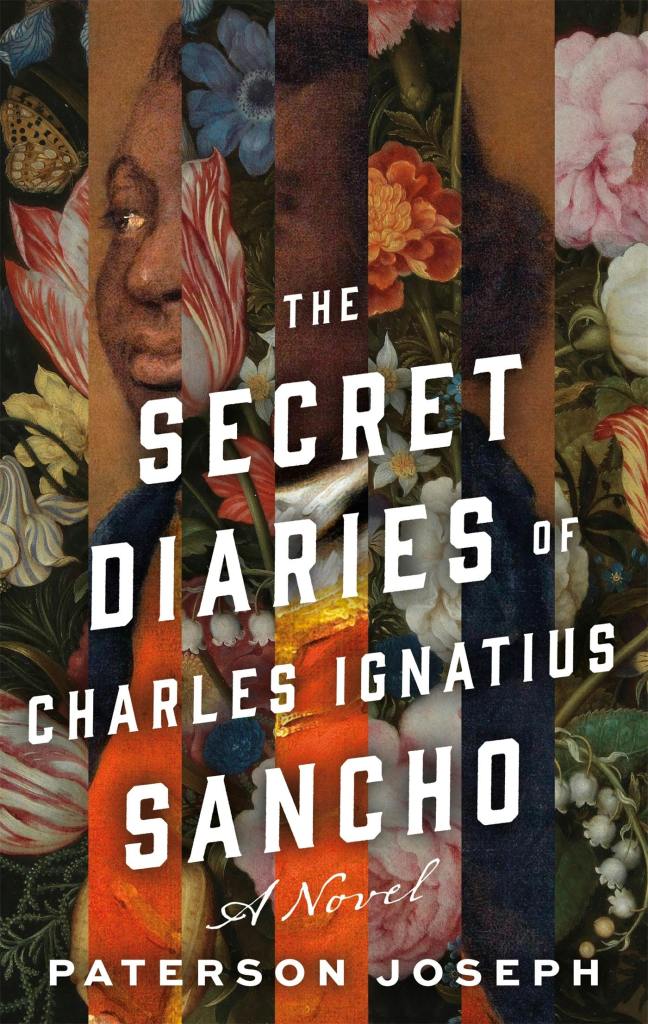
A colorful, busy cover inter-splices two oil paintings together, with a young Black man looking out from among flowers.

Paterson Joseph & The Secret Diaries of Charles Ignatius Sancho
Tue, Apr 15 | 7 – 8:30 pm
HCLS Miller Branch
For adults. Register at bit.ly/Paterson-Joseph

“[T]he rollicking fictionalized memoirs of a real-life Black British trailblazer … An entertaining portrait that also illuminates rare opportunities for Black people in 18th-century London.” ~ Kirkus Review

The Secret Diaries of Ignatius Sancho is Paterson Joseph’s debut novel and is a story that begins on a slave ship in the Atlantic and ends at the very center of London life. It is a lush and immersive tale of adventure, artistry, romance, and freedom set in 18th-century England and based on the true story of the first Black person to vote in Britain, who fought to end slavery. Joseph channels the writing style of the day and draws on the real-life Sancho’s diaries to give voice to his hero’s interior life.

Joseph is a beloved British actor and writer. Recently seen on Vigil, Noughts + Crosses, and Boat Story, he has also starred in The Leftovers and Law & Order UK. He also plays Arthur Slugworth in the Wonka movie. He has won the Royal Society of Literature’s Christopher Bland prize and the Historical Writers’ Association Debut Historical Crown 2023 award. Books available for purchase and signing.

More About the Era of Charles Ignatius Sancho
by Ian L-F
Often celebrated as the Age of Enlightenment, the 18th century is regarded as an era of immense scientific progress, with philosophy and reason expanding the boundaries of thought that, at times, challenged authority. However, the radiant optimism of this period must be understood alongside its darker tendencies, where ideals of liberty coexisted with systemic exploitation. England’s economic rise, framed as a triumph of innovation and industry, was fueled by the profits of slavery and European imperialism.

Following the War of Spanish Succession, Britain was granted by treaty the asiento de negros, a monopoly on the sale of enslaved people to Spain’s colonies, solidifying its position as the largest slave-trading nation by 1730. Despite slavery being nominally outlawed in England since the 12th century, Britain, like other European powers, externalized its reliance on slavery to their colonies. This policy enabled them to condemn the trade morally while still reaping its profits, in every cup of sugared coffee and nutmeg-spiced delicacy.

Amidst this sea of madness, Charles Ignatius Sancho emerged as a beacon of erudition and resilience. Born on a slave ship and sold into bondage in New Granada, Sancho overcame incredible odds to achieve freedom and defy the prejudices of his time. A self-educated man of letters, a composer, and a businessman, he became a celebrated voice in Britain’s abolition movement. Yet, opposition to slavery in Britain remained scarce until the late 18th century, and as W.E.B. DuBois later observed, abolitionist efforts often aligned with economic interests: “The moral force they represented would have met greater resistance had it not been working along lines favorable to English investment and colonial profit.”

The 18th-century era contended with forces not too dissimilar from our own. In echoes of history’s tribulations and the lives of remarkable individuals, we find lessons that challenge us to confront injustice, question power, and strive for a more equitable world. If your interest in history has been piqued, our online research tools, like Gale OneFile’s World History database, are a fantastic starting point for an educational journey.

Ian is an Instructor and Research Specialist at HCLS East Columbia Branch. He is a huge nerd with too many interests to list here. Currently, he is fixated on the interconnection between history and fiction. His favorite kind of stories are stories about stories.

The Ministry of Time by Kaliane Bradley

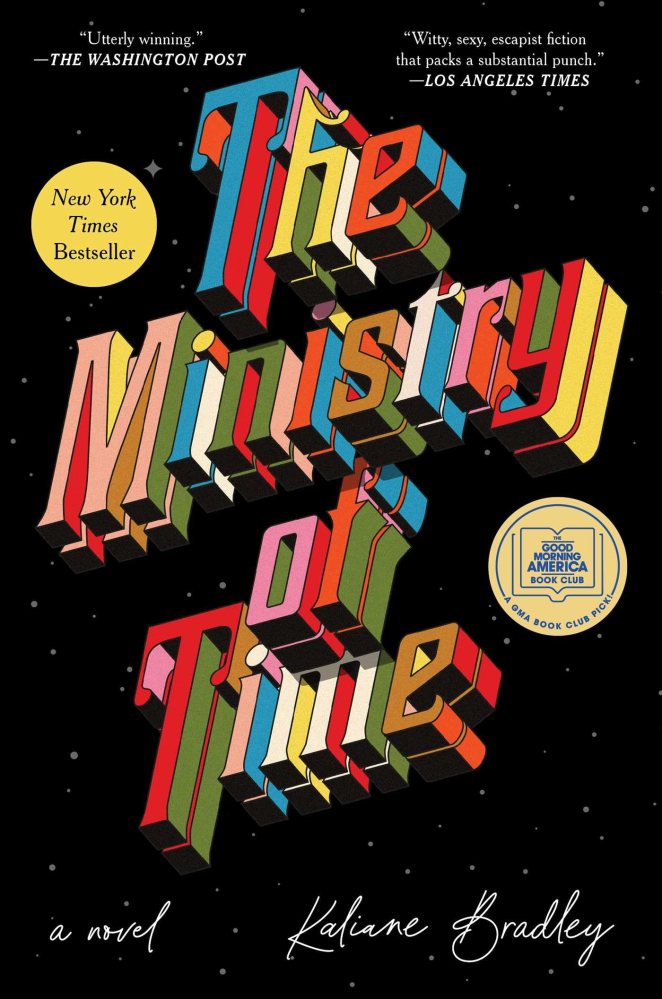
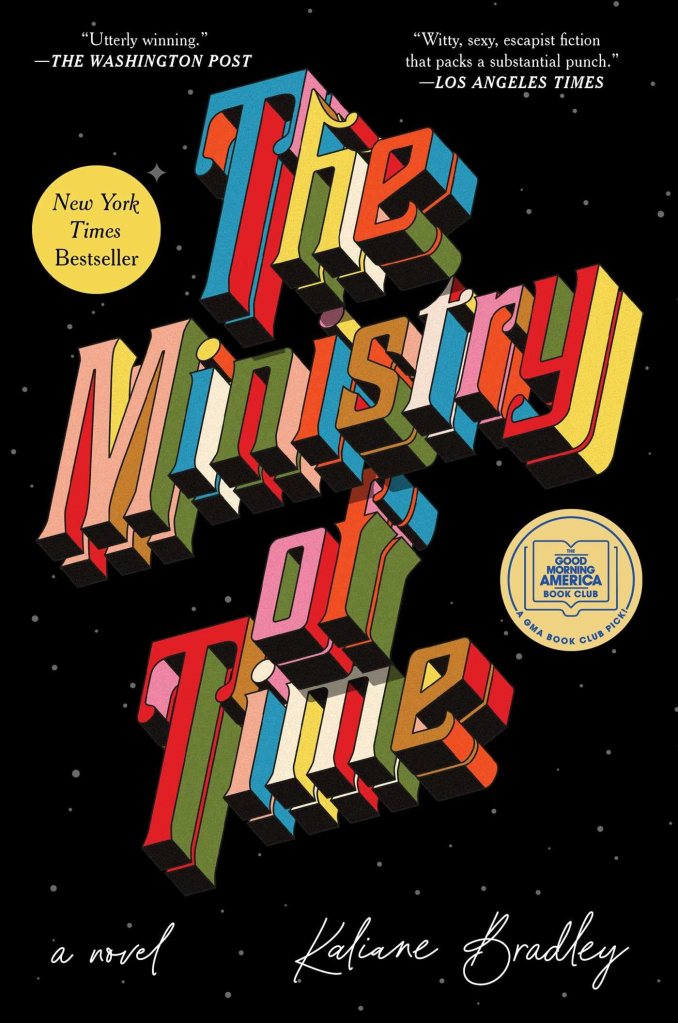
Brightly colored, large italicized lettering appears doubled on a black cover. Stickers added for New York Times best seller and the Good Morning America Book Club.

by Kristen B.

As the story begins, the main character is finishing a series of rather hush-hush job interviews. When she learns she got the new position, she hears the words, “We have time travel.” Welcome to The Ministry of Time by Kaliane Bradley, which plays with the notion that sometime in the future, we figure out how to travel in time.

It’s one of the biggest question about time travel: Can we improve the present – avert some disaster – by changing the past? This story seems a little different, more scientific at the start – wondering if it’s even possible for humans to exist outside of their own time. The Ministry devises an experiment where they “rescue” certain individuals known to have died in tragic or terrible ways: a doomed trip to discover the Northwest Passage, a plague house in the 1600s, the trenches of WWI, and other such horrible histories. Those individuals feel more like they’ve been kidnapped than rescued.

The book’s narrator, who gets that job with the Ministry (but never a name), is assigned to be a bridge between Graham Gore, officer of the Royal Navy in the early nineteenth century, and her time period in near future London. She insists on referring to him as being Victorian, but his time was actually just before Victoria’s reign began. The first third of the book delights in Gore’s observations of modern life and conveniences. But clearly, something is amiss in the Ministry. The main character just can’t quite figure it out but strange happenings keep occuring, like her handler being assassinated at a public event and certain time travelers being invisible to scanners. Other things don’t add up either, although it becomes clear there are warring factions within the Ministry. No one is quite sure who to trust.

Graham and our narrator spend almost all their time together: learning modern skills like riding a bike (which eventually improves to a motorcycle), touring museums, and going to pubs with other time traveler/bridge pairs. One session admiring a Turner exhibit at the Tate is particularly insightful. Graham becomes good friends with two other people out of time, one of whom is my favorite character. Maggie was left to die in a plague house, but she comes to embrace London’s club scene and dating apps where she can be openly gay. These friendships prove to be crucial not only to the characters’ well-being, but to the ultimate resolution of the story.

On top of the fascinating premise, the author has a gorgeous way with words. One character is described as, “Despite being out of uniform, he looked oddly formal, as if he was as the sole person in serif font.” I don’t want to spoil the surprise of this excellent debut. What ensues in the second half of the book is a complete mash-up of time travel, spy thriller, and romance into a beautifully written novel about the dangers of colonialism. Bradley really does tell you everything you need to know in the first chapter, only I didn’t realize it until I re-read it after the devastatingly bonkers ending. This is a book I’ll think about often and already have plans to re-read.

You can borrow the book in print or large print now, but there’s a bit of wait for the e-book and e-audiobook versions.

Kristen B. is a devoted bookworm lucky enough to work as the graphic designer for HCLS. She likes to read, stitch, dance, and watch baseball (but not all at the same time).

Babel: An Arcane History

The book cover shows a tall round tower amid various domes and spires in a cityscape, against the dark background of a night sky; birds follow one another in a crooked line wrapped around the tower from bottom to top.

By Sahana C.

R.F. Kuang wrote her first novel at the age of 19, during a gap year from Georgetown. After graduating, she became a Marshall Scholar, studying at both Cambridge and Oxford University, graduating with a Master’s in Philosophy and a Master’s in Science, respectively. She’s currently in the midst of pursuing her PhD at Yale. R.F. Kuang knows a thing or two about what it means to be entrenched in higher education.  

Babel: An Arcane History is about a love affair with academia, and what that means as a person of color. For POC within institutions like Oxford, ones that have histories and wealth based in colonialism, pursuing higher education can feel like an act of betrayal, where the choice is between building a future and acknowledging the crimes and pain of the past. The novel juxtaposes this internal conflict with a parallel betrayal that ties together the rest of the book: the theory that every act of translation is an act of betrayal.  

It is the 1800s and Robin Swift, our protagonist, is taken from China by a professor, one who works in Oxford University’s prestigious Royal Institute of Translation, known colloquially as Babel. He’s thrilled to be invited to the Royal Institute, even more excited to be a Babbler, and intensely enamored of his cohort, his classes, and the campus. Despite all of the racism, discrimination, and academic pressure, Robin loves his work. He loves being a translator, and he loves the access to silver-working – where an act of translation inscribed on a silver bar produces magical effect. Robin and his cohort (Ramy, from Calcutta, Victoire, from Haiti but raised in France, and Letty, from England, but a woman in a time where her family could not accept that she wanted to study) work tirelessly to learn and advance in their skills of translation. They learn about the ways that translating fails: ciao means hello, yes, but hello doesn’t fully encapsulate the meaning ciao conveys, as it can also be a farewell. There is inherently an incongruence here – either a translator can be faithful to the text or to the intention of the text, but it can scarcely ever do both. Regardless, a choice must be made; regardless, a betrayal occurs. Robin is thrilled to be a part of the Royal Academy, but the idea of this betrayal lingers.  

But throughout his time, Robin has concerns that Babel might not be as utopian as it seems. The Royal Institute’s mission to study foreign languages empowers the British Empire and aids them in their quest to colonize the world. The more Robin and his friends learn, the more they wonder if all this betrayal is worth it, and if they can manage to ignore all the ways their work could be used against people like them, despite the Royal Institute’s claims that Babblers are all that they are.

I was not expecting to fall as madly in love with this book as I did, partially because the novel takes on the physical dimensions of a literal brick, and partially because it was recommended to me on Booktok, and I’ve learned to be wary. But I devoured this book, as complex as it is. The concepts of language, linguistics, and translation are woven so deftly, and the debate on how to push back against colonialism is nuanced and careful. R.F. Kuang never tells her reader what to think; she just introduces critical concepts through the lens of dark academia, and asks the reader to decide: can we disrupt systems of colonialism and colonial thought through work, collective action, and communication, or is violence necessary to dismantle the systems put in place? R.F. Kuang doesn’t claim to know, and she’s firmly entrenched in academia herself. But through Babel, she is asking the questions. Is there ever a “right” thing to betray?

Babel: An Arcane History is available in print, ebook, and eaudiobook.

Sahana is an Instructor and Research Specialist at the Savage Branch. They enjoy adding books to their “want to read” list despite having a mountain of books waiting for them already.

Revolution or Counter-Revolution?

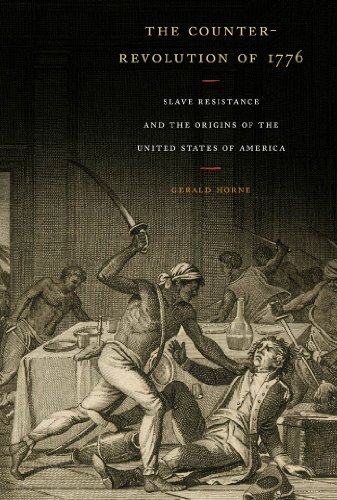
Black and white print of slave revolt with a man wielding a sword and disarray around a table.

“Above all, he was flabbergasted by their constant prating about liberty while continuing the enslavement of tens of thousands” 
Gerald Horne (writing about Samuel Johnson’s feelings about the colonists) 

If you’ve ever wanted more information on the events leading up to the American Revolutionary War, Gerald Horne’s got you covered. His 2014 book, The Counter-Revolution of 1776: Slave Resistance and the Origins of the United States of America, will help you fill some of those gaps.  

Horne argues that the strongest driver of the revolutionary war was the African slave trade. He further claims that the American Revolution was not, in fact, a progressive victory for the good guys, but rather a regressive counter-revolution to the constant revolutions of the rapidly growing number of enslaved Africans on the continent and in the Caribbean. Through a mountain of primary source material, Horne documents the macro- and micro-events in the mainland colonies, Jamaica, and Barbados in the years leading up to 1776. 

In my opinion, Horne’s only flaw is his love of outrageously long and convoluted sentences. Horne is clearly of the Miltonian school of prose and sometimes seems to be attempting unmatched feats of sentence length: 

Perhaps, rather than seeing these men as having novel conceptions of allegiance to London or even as ungrateful hypocrites, it might be better to see them as ‘premature’ U.S. patriots; that is, economic logic was impelling them like a swift river current toward secession; while London was seeking to restrain their business dealings driven by the luscious bounty of African enslavement, Paris and Madrid had burst the dam and were more than willing to encourage settlers’ shady bargains, and, thus, these mainland men chose not to fight this trend but embrace it, along with the pretty profits it delivered (160).

Nestled within that labyrinthine sentence is the heart of the book: colonists were driven to war with England by the economic logic of slavery. The book is well-researched, well-argued, and compelling. In many cases, Horne uses the colonists’ own words to illustrate how the immense wealth they could accumulate from the enslavement of Africans drove them to madness. Horne writes, “Africans, in short, were a major antagonist, but mainlanders were reluctant to curb the seemingly ceaseless flow of Africans who were arriving, which was raising searching questions in London about their judgment, if not their sanity” (154). In my opinion, this book provides crucial historical context and should be required reading. 

Ben’s suggested pairings: 

Stony the Road: Reconstruction, White Supremacy, and the Rise of Jim Crow by Henry Louis Gates, Jr. Gates deals with the same theme of powerful men doing whatever they can to keep unjust systems in place.  (also available as an ebook and eaudiobook)

We Were Eight Years in Power: An American Tragedy by Ta-Nehisi Coates. Coates touches on many of the same themes as Horne. The sections on the “invention of racecraft” will be particularly interesting to readers of Horne’s work.  (also available as ebook and eaudiobook)

How to Be an Antiracist by Ibram X Kendi. Kendi’s book provides the reader with suggestions for how to move forward. (also available as ebook and eaudiobook)

Ben Hamilton works at Project Literacy, Howard County Library’s adult basic education initiative, based at HCLS Central Branch. He loves reading, writing, walking, and talking (all the basics).