
The Hardest Job in the World: Providing for Loved Ones and Their Caregivers

By Maryam S.

Caretaking for elderly adults with limited mobility demands physical strength, mental flexibility, and proper education, as I have learned from personal experience. A caretaker is not there only as a nurse but also as financial and emotional support. When my octogenarian loved one was diagnosed with an incurable illness, her amazing medical team showed up for her in the hospital but left me on my own to figure out how to tend to her needs once she was discharged.

I received numerous messages from the close circle of my kindhearted friends who kept reminding me to make sure I was taking care of myself, too. As one put it: caregiving for an elderly adult is the hardest job in the world. It’s a marathon, not a sprint. Those were the words of wisdom I wish I had taken to heart before caregiving started taking its toll on me. I experienced setbacks numerous times. One day I would be more hopeful for her, but the next day would push me back to the verge of despair.

While still at the hospital, her case manager found a rehab facility to keep my patient as long as she needed – but after visiting and seeing the sad reality of how the rehab center functioned, I realized that I would not be able to forgive myself if I made that choice. I told myself: lets see how much I can expend from myself in terms of taking some time off from work to manage my patient’s house as well as her medical needs to ultimately try to make her life as comfortable as possible.

A large bowl of healthy soup surrounded by individual ingredients sits on a grey wooden table. The title information appears in bold red and orange stripes above the bowl, "The Cancer Fighting Kitchen: Nourishing Big-Flavor Recipes for Cancer Treatment and Recovery"

For nutrition, I took from my experience of cooking from different recipes around the world. At Howard County Library System, a large selection of cookbooks for special diets with medical conditions not only made my personal daily goals more enjoyable, they helped me share the idea behind each meal with my patient, who could see these efforts help her feel better despite having a very small appetite. One I can recommend is The Cancer-Fighting Kitchen: Nourishing, Big-Flavor Recipes for Cancer Treatment and Recovery by Rebecca Katz with Mat Edelson. A considerable number of self-help books about caretaking and related topics gave me a broader view of how to react in different situations (see list below).

During many sleepless nights while watching my patient, I found an opportunity to work on my delayed handmade projects. While working quietly on my crafts, e-audiobooks from Libby, cloud library, and Hoopla became my late-night companions. The handmade world was like a sweet scent of cinnamon and cardamom sprinkling over the world, as opposed to the unpleasant smell of medications, pain, sadness, and uncertainty. I learned that I had to fill my own cup first; you can’t pour from an empty cup. For me, I needed to work on my art and being creative, doing exercise, writing, singing – essentially any hobby that can keep the hands and mind occupied.

Hoopla with its various fitness channels also helped me to do my daily workout without being interrupted by unrelated advertisements on social media. I had limited time for myself every day and I had to keep my spirit and physical health in a better condition in order to help my patient. Technology became a useful tool to bring some discipline to my loved one’s daily recovery routine. I found workout videos online from the different universities for the public view to help a loved one practice healthy movement at home.

During this journey, I also learned about the Howard County Office on Aging and Independence, who offer classes and group conversations for caregivers dealing with elderly adults with dementia, cancer, and other conditions. These events are free of charge and encourage caregivers to participate and take benefit from the services of this department. During my conversations with them, I learned how to reach a representative once I face questions that my patient’s medical team may not be available to answer.

I share my experiences for those who may be going through similar experiences. You are not alone. You have so many good resources through HCLS, along with other resources that life provides for you. We all gain a lot of experiences in life by trying different things for ourselves and for our families. We lose and we gain over and over – because it’s all about the patient that we spending our time with. It’s something that doesn’t happen to everyone but happens to many. I call it becoming more.

October is Mental Health Awareness Month, and here are some of many resources available at the library that helped me in my mental health journey while caregiving:

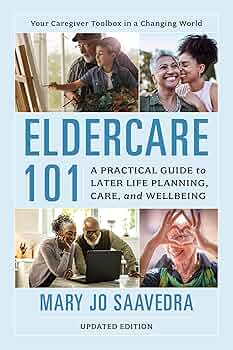
Eldercare 101: a Practical Guide to Later Life Planning, Care and Wellbeing by Mary Jo Saavedra

It’s OK That You’re Not OK by Megan Devine

The Art of Dying Well: A Practical Guide to a Good End of Life by Kathy Butler

The American Cancer Society New Healthy Eating Cookbook by Jeanne Besser

Life After the Diagnosis: Expert Advice on Living Well with Serious Illness for Patients and Caregivers by Steven Z. Pantilat, MD

Maryam S. is a customer service specialist at HCLS Miller Branch. She loves traveling near and far and loves to cook and bake from new recipes.
May is Mental Health Awareness Month

The picture shows three heads in silhouette in blue and white, with a beating pink heart in the lower left corner against a blue background. The words "Mental Health Awareness Month May 2023" are written in the upper left corner in white.

By Kimberly J.

In 2013, I was living overseas as a military spouse and was struggling with my mental health. Desperate for help, I did a quick internet search to find the number for the Mental Health Services on base. The first question asked was, “Are you active duty?” When I replied that I was not, the response I got was, “Then we can’t help you.” Hearing those words was devastating to my despairing mind and I felt defeated in that moment. The person on the other end then asked, “Are you experiencing suicidal thoughts or do you feel that you might harm yourself or others?” My reply was, “If I was, I’d be in trouble, since you just said you can’t help me!” I made it past the lies that depression was telling me and the very insensitive message that I received that day. I have been traveling a road of healing for the last 10 years. Some days are hard, but I now know that there is help.

May is Mental Health Awareness Month and I want to begin by saying three things:

1. You are not alone.

2. Help is always available.

3. You (and your mental health) matter.

You Are Not Alone

Almost everyone knows someone with a mental illness. Understanding the prevalence of mental health conditions is important in destigmatizing it. Nearly 450 million people worldwide are currently living with a mental illness. In the United States, one in four adults suffer from a diagnosable mental disorder. Almost half of adults in the US will experience a mental illness during their lifetime. The three most common diagnoses are anxiety disorders, depression, and post-traumatic stress disorder (PTSD).

Life can be challenging, but every day shouldn’t feel out of control. Take time to ask yourself about your thoughts, feelings, and behaviors to see if this is part of a pattern that may be caused by a mental health condition. Here are some questions to get you started:

  • Have things that used to feel easy started feeling difficult?
  • Does the idea of doing daily tasks like making your bed now feel really, really hard?
  • Have you lost interest in activities and hobbies you used to enjoy?
  • Do you feel irritated, possibly to the point of lashing out at people you care about?

If your answers to the any of the above are yes, start a conversation with your primary care provider, a trusted friend, or a family member about your mental health. Please note: A mental health provider (such as a doctor or a therapist) can give you a full assessment and talk to you about options for how to feel better.

Help is Always Available – Free Community Resources

  • 988 – Suicide and Crisis Lifeline – offers free 24/7 call, text, and chat (988lifeline.org/chat) access to trained crisis counselors who can help people experiencing suicidal thoughts, substance use, mental health crisis, or any other kind of emotional distress. Just text or call 988 nationwide. People can also dial 988 if they are worried about a loved one who may need crisis support. While text and chat are available in English only, calling services are in English and Spanish and use Language Line Solutions to provide translation services in over 250 additional languages.
  • 211 Maryland is the state’s most comprehensive health and human services resource database. With more than 7,500 resources, individuals with essential needs can get connected to local help 24/7/365.
    • 211, Press 1 is an immediate, always-on-call suicide prevention, substance use intervention, and mental health emergency assistance line available in the state of Maryland. Dial 211 and Press 1. 211 specialists are also available to chat or text. For text services, text your ZIP code to 898-211.
    • 211 Health Check – provides proactive mental health check-ins to support those with anxiety, stress, and depression. The weekly connections provide one-on-one support with the goal of preventing suicide and other mental health emergencies. If requested, the 211 specialist can connect the caller with mental health resources. To sign up for weekly mental health checks, text MDMindHealth to 898-211.
    • MD Young Minds is a new resource for teens and adolescents who are struggling with their mental health. It sends supportive text messages, with a focus on teen and adolescent concerns and worries. To sign up, teens should text MDYoungMinds to 898-211. The ongoing messages also remind youth that immediate mental health support is always available through 211, Press 1.
  • Local Mental Health resources are available through the Howard County Health Department by visiting this website.

You (and your mental health) Matter

Mental health is an important part of overall health and well-being. Mental health includes our emotional, psychological, and social well-being. It affects how we think, feel, and act. It also helps determine how we handle stress, relate to others, and make healthy choices. Mental health is important at every stage of life, from childhood and adolescence through adulthood.

No matter your age or stage in life, you and your mental health are important. If you’re looking for resources to help make self-care part of your routine, the library can help get you started.

The Little Book of Rest: 100 Ways to Relax and Restore Your Mind, Body, and Soul by Stephanie Thomas is a book that can help you formulate your own actionable self-care plan. Everyone is unique, so make a self-care routine that works for YOU. This book is divided into four sections, with plenty of ideas for each category: physical, mental, emotional, and spiritual exercises to give yourself time and space to focus on wellness.

In The Self-Healing Mind, Dr. Gregory Brown advocates for a holistic approach to mental health treatment. Dr. Brown supports integrating conventional treatments (medication and talk therapy) with lifestyle changes that he calls the pillars of self-care: breathing mindfully, sleep, spirituality, nutrition, and movement.

Mindful Moments for Kids is an audio CD that is broken down into one-minute “mind breaks” – including guided meditations, relaxing music, nature sounds, and breathing exercises. Using these moments can help calm, focus, and inspire mental health as an everyday practice.

As a form of self-care, you can also try out meditation with some beginner’s meditation classes on HCLS’ YouTube Channel. There are three meditation sessions available:

Finally, HCLS Miller Branch is offering Suicide Prevention Training on Monday, May 15 at 6:30 pm, in partnership with Grassroots Crisis Prevention Center. Register here (starting Monday, May 8) for this training, which will show you how to recognize the warning signs of a suicide crisis and is designed for people who do not have experience in suicide intervention.

These are just a few of the resources and opportunities available at Howard County Library System.

If you are thinking about harming yourself or attempting suicide,
tell someone who can help right away.
Call 911 for emergency services.
Go to the nearest hospital emergency room.
Call or text 988 to connect with the 988 Suicide & Crisis Lifeline. The Lifeline provides 24-hour, confidential support to anyone in suicidal crisis or emotional distress. Support is also available via live chat.

Para ayuda en español, llame al 988.

Sources: ADAA.org, hopkinsmedicine.org, mhanational.org, National Institute of Mental Health

Kimberly J is an Instructor and Research Specialist at the HCLS Glenwood Branch. She enjoys reading, photography, creating, crafting, and baking.