The Message by Ta-Nehisi Coates

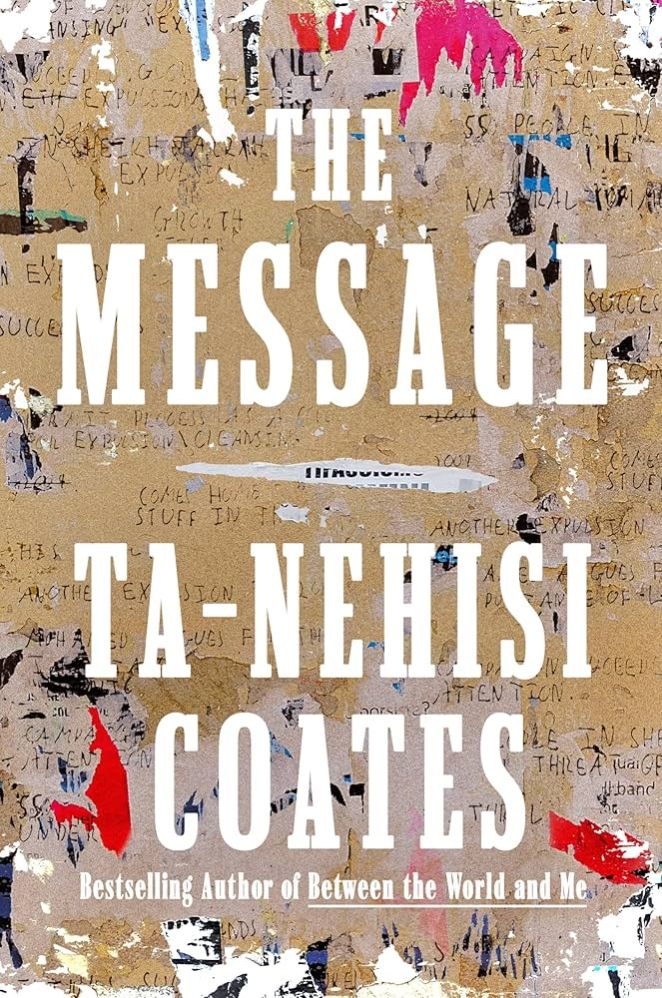
In beige, with flashes of white and red, the background image looks like a collage or a wall where messages have been posted and torn down repeatedly.

by Ben H.

Though we do not wholly believe it yet, the interior life is a real life, and the intangible dreams of people have a tangible effect on the world.

James Baldwin 

Ta-Nehisi Coates opens The Message with the above quote, and it’s a great frame for his book. Coates, the esteemed public intellectual from Baltimore and author of many excellent works such as Between the World and Me and We Were Eight Years in Power, explores three places in The Message: Senegal, South Carolina, and Palestine. Returning to the Baldwin quote for context enriched and expanded my understanding of the book.

Coates first takes us to Senegal, “I had indeed come home, and ghosts had come back with me.” He processes his own history, constantly referencing his parents, and the history of slavery and the slave trade. Coates intermingles the unbearably heavy and the humorous in the same way those things blur together in real life. He visits the “Door of No Return” and eats a delicious meal by the ocean. He stays at a luxurious hotel and thinks about, “blood in the bricks and ghosts in the attic.” He regrets the fancy hotel. The juxtaposition of heavy and humorous stretches back to his childhood and the “inheritance of the mass rape that shadows all those DNA jokes” he and his friends would make. Though we come from different backgrounds, I find Coates constantly relatable. 

After Senegal, he moves us to South Carolina. He’s flying to South Carolina to support Mary Wood. Wood, a high school English teacher, assigned Between the World and Me to her class but was ordered to stop teaching the book. What is censorship and the uproar about Critical Race Theory other than an attempt to control the intangible inner life of people to keep it from having a tangible effect on the world? Coates writes, “the arts tell us what is possible and what is not, because, among other things, they tell us who is human and who is not.” As a librarian, this chapter dealing with representation in the arts, censorship, and education felt written for me. 

After South Carolina, he visits East Jerusalem and the West Bank. Coates opens in Yad Vashem with the Book of Names. The Book of Names is a project to collect the names of all the Jews murdered in the Holocaust and display them. It’s overwhelming. Coates considers genocides and how the efforts to remember them, memorialize them, or recognize the horror of them can result in a second tragedy where the murdered men, women, and children are “reduced to a gruel of misery.” Coates is devastated by the holocaust memorial and crushed by the suffering of Palestinians. 

Coates sees Palestinians living, at best, in a Jim Crow state. He can’t unsee this connection to his own country, life, and history. In the Jim Crow South, there was a privileged group with full rights and a disadvantaged group with partial rights. In East Jerusalem and the West Bank, he sees a privileged group with full rights and a disadvantaged group with partial rights. He drives on roads with his Israeli guides that he can’t drive on with his Palestinian guides. As he travels with Palestinians, he feels the “glare of racism,” and he sees soldiers with the “sun glinting off their shades like Georgia sheriffs.” His narrative is compelling; his argument is strong. I think his assessment of the situation is accurate.

What ties Coates’s journeys together? What connects Senegal and South Carolina and the West Bank? Let’s return to Baldwin’s quote and assume that Coates included it for a reason. All three situations reflect the tangible effect of the interior life of people. The interior lives of his mother and father had a tangible effect on him as a child and he expands on this in Senegal, constantly wondering what his father was thinking or how he thought about things. The high school in South Carolina wanted to ban his book for fear of the tangible effects that would result from the change in interior lives. The heartbreaking suffering and misery in Gaza is the horrendous tangible effect of generations of interior lives.

I appreciate Coates’ approach. He’s not a sophist. This isn’t an empty academic argument or intellectual exercise. He calls his books his children. He puts his whole self into his writing. His whole being is in his work. If you’ve seen his interviews or headlines about his book, but haven’t had time to read it, I think it’s worth the time.

Ben loves his job at HCLS Project Literacy. When he’s not at work, you might find him walking around Lake Kittamaqundi (on his break), playing pretend with his daughter Annika, reading, peeling garlic,  weeding his tiny lawn (Canada Thistle, leave me be!), eating chocolate, or listening to baseball games on the radio.
Byte-Sized Intelligence: A Crash Course on AI

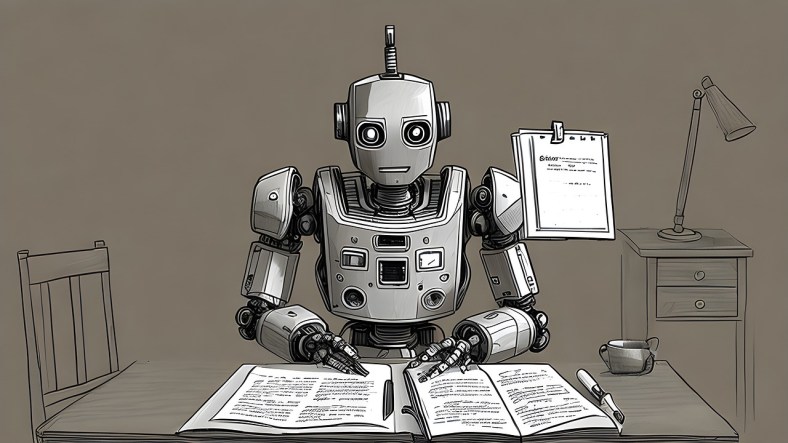
The image shows a robot seated at table, reading written materials placed in front of it. A chair is off to the side of the table and a smaller table with a lamp is in the background.

by Sahana C.

Thursday, April 20 at 7 pm
In person; Savage Branch
Register

Libraries have come a long way – from a time when including a table of contents was the most innovative, revolutionary advancement in conducting research to the advent of search engines. How we interact with information, how we keep ourselves informed, and how we use the tools at our disposal have all evolved.  

Artificial intelligence (AI) is the next wave of that evolution. Though it’s the subject of many science fiction novels, its real-world applications are wildly interesting. Artificial Intelligence refers to the development of computer systems that can perform tasks that would typically require human intelligence. These tasks may include speech recognition, image analysis, and decision-making. AI is already being used in a variety of fields, from healthcare to transportation, and its potential applications are only growing. 

Savage Branch is having a crash course and conversation about the fascinating world of AI on Thursday, April 20. We plan to explore the basics of AI, looking at what it is, how it’s used, and its potential impacts on society. Whether you’re a tech enthusiast or just someone who’s interested in staying up-to-date on the latest technological advancements, there’s something for you! 

In our AI class, you’ll learn about the different types of AI and their real-life examples. For example, machine learning is a type of AI that allows computer systems to learn and improve from experience, without being explicitly programmed. Deep learning is another type of AI that uses neural networks to process and analyze large amounts of data. We’ll also explore natural language processing, which enables computers to understand and interpret human language. 

But it’s not just about the technical aspects of AI. We’ll also delve into the ethical considerations surrounding AI, such as bias and privacy concerns. As AI becomes more integrated into our daily lives, it’s essential to evaluate the potential impact on society and address these issues. 

Our AI class is designed for anyone who wants to learn about this exciting and rapidly evolving field, regardless of technical background or experience. Our experienced instructors guide you through the basics of AI in a clear, structured, and informative manner. Don’t miss this opportunity to explore one of the most transformative technologies of our time. 

The possibilities of Artificial Intelligence appear to be limitless. And what’s more – some of this blog post was generated by AI. I asked it to analyze my other writing to create a blog post on this class in my style, and I think it did a decent job. Did you catch anything that felt off? If you want to learn more, to discuss how this is possible, or just play with the possible applications, join us at Savage on April 20 to learn more. 

Sahana is an Instructor and Research Specialist at the Savage Branch. They enjoy adding books to their “want to read” list despite having a mountain of books waiting for them already.

Empire of Pain by Patrick Radden Keefe

A spoon overflowing with pills, one of them red, sits above the title where "Empire of Pain" appears in bold red lettering.

By Rebecca W.

According to the U.S. Department of Health and Human Services, in 2019 roughly 48,000 deaths were attributed to synthetic opioid overdose, and more than 10 million people reported abusing prescription opioids. While many of us have heard, for years, reports of the devastating consequences of opioid abuse, one side of this story only recently hitting the media revolves around the Sackler family. In his book Empire of Pain: The Secret History of the Sackler Dynasty, Patrick Radden Keefe takes a pointed look at the Sackler family and their role in the current opioid epidemic. While this book is not the first of its kind, Keefe reports on the family at a time when numerous lawsuits against the family’s company, Purdue Pharma, have brought to light compelling and abundant evidence of the direct impact the family had on the current epidemic and the lack of responsibility the family has taken.

What I found most interesting about this book was Keefe’s decision to devote nearly a third of the book to Arthur Sackler. While the family patriarch could be considered the father of pharmaceutical marketing, he is very much removed, if related at all, to the modern Sackler family and Purdue Pharma. Arthur Sackler, the eldest of three brothers born to immigrant parents in early 20th-century Brooklyn, made a name for himself through his pharmaceutical ad agency’s marketing of the tranquilizing drug Valium (also know as Diazepam). Valium’s creator, Roche, and Sackler made Valium one of the most-prescribed drugs to date, earning a fortune well into the hundreds of thousands in the process. Today, there is a well-established history of abuse and over-prescription of the drug.

While this portion of the book is certainly an interesting read, it does not directly pertain to the current Sackler family machinations, with Arthur’s heir selling shares of the original company to other family members well before the development of the company’s flagship drug, Oxycontin. While an argument can be made that Arthur more or less created the playbook that future Sacklers would use to enhance their empire, I feel there was another reason Keefe devoted such length to Arthur’s story. When reading the story of Arthur’s life, I saw blatant ethical missteps fueled by greed. However, when I began reading about the modern-day Sacklers, I found myself looking back on Arthur’s story, suddenly seeming like a tip-toe over the line of ethical practice. When looking at corruption that deals with billions of dollars, millions of people, and high-level corporate practices, keeping your perspective can be challenging. For me, the knowledge of Arthur’s story, and how my thoughts changed around it throughout the book, helped me maintain my perspective when trying to follow a story with details at a higher level then my understanding.

If you are someone who has followed the story of the Sackler family, recently finished watching ‘Dopesick’, or just learned of the Sacklers, I would highly recommended reading (or, like me, listening) to this book.

Learn more about the Opioid Epidemic in the US and MD here.

Becky is an Adult Instructor and Research Specialist at the HCLS East Columbia Branch who enjoys art and everything science.

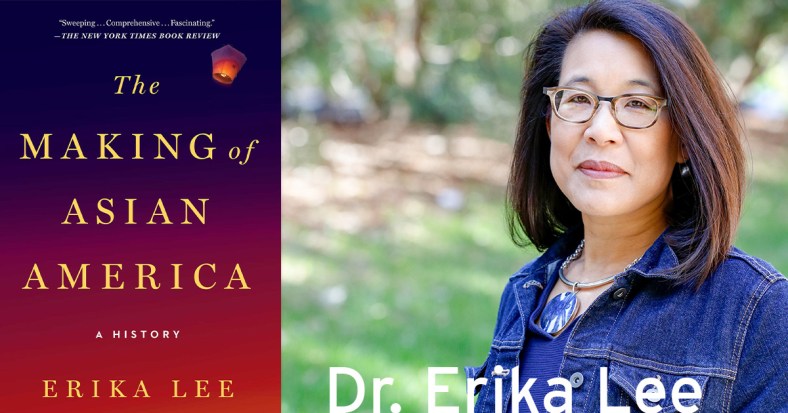
Dr. Erika Lee: The Making of Asian America

On the left, the cover of Dr. Lee's book: The color shades from deep blue to bright red with lettering in gold. A paper lantern floats in the top right corner. On the right: A photo of Dr. Lee wearing a denim jacket and large blue necklace, her hair is shoulder length and she wears glasses. A sunny green yard is out of focus behind her.

Monumental. . . . Lee handles her scholarly materials with grace, never overwhelming the reader with too many facts or incidents. She tells an American story familiar to anyone who has read Walt Whitman, seeking to capture America in all its diversity and difference, while at the same time pleading for America to realize its democratic potential. . . . Powerful Asian American stories . . . are inspiring, and Lee herself does them justice in a book that is long overdue.” ― LA Times

On Wednesday, May 26 at 7 pm, Dr. Erika Lee discusses her acclaimed book The Making of Asian-AmericaIn the past fifty years, Asian Americans have helped change the face of America and are now the fastest-growing group in the United States. As award-winning historian Erika Lee also reminds us, Asian Americans also have deep roots in the country. The Making of Asian America tells the little-known history of Asian Americans and their role in American life, from their first arrival to the present-day.

An epic history of global journeys and new beginnings, this book shows how generations of Asian immigrants and their American-born descendants have made and remade Asian American life in the United States: sailors who came on the first trans-Pacific ships in the 1500s; indentured “coolies” who worked alongside African slaves in the Caribbean; and Chinese, Japanese, Filipino, Korean, and South Asian immigrants who were recruited to work in the United States only to face massive racial discrimination, Asian exclusion laws, and, for Japanese Americans, incarceration during World War II. During the past fifty years, a new Asian America has emerged out of community activism and the arrival of new immigrants and refugees. No longer a “despised minority,” Asian Americans are now held up as America’s “model minorities” in ways that reveal the complicated role that race still plays in the United States.

Copies of The Making of Asian America are available to borrow (also as an eAudiobook) from HCLS or to purchase from Books with a Past. 

A stunning achievement, The Making of Asian America establishes the centrality of Asians to American history, and poses alternatives to US national and immigration histories. Asians, this remarkable text reveals, transformed the face of America, and they locate the US firmly within a hemispheric and global order.” ― Gary Y. Okihiro, Professor of International and Public Affairs, Columbia University

ABOUT DR. ERIKA LEE One of the nation’s leading immigration and Asian American historians, Erika Lee teaches American history at the University of Minnesota, where she is a Regents Professor, a Distinguished McKnight University Professor, the Rudolph J. Vecoli Chair in Immigration History, and the Director of the Immigration History Research Center. The granddaughter of Chinese immigrants, Lee grew up in the San Francisco Bay Area, attended Tufts University, and received her Ph.D. from the University of California, Berkeley. She was recently elected into the American Academy of Arts & Sciences, testified before Congress during its historic hearings on discrimination and violence against Asian Americans, was awarded an Andrew Carnegie Fellowship, and named Vice President of the Organization of American Historians.