Sunday, October 5 2 – 4 pm HCLS Miller Branch Registration encouraged, as space may be limited.
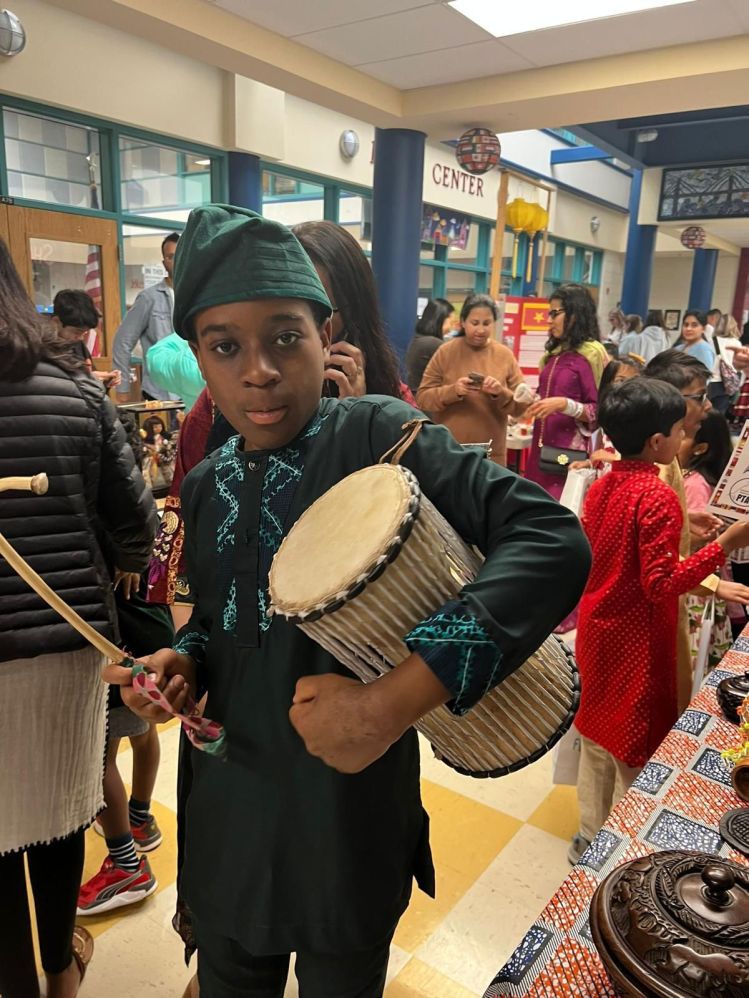
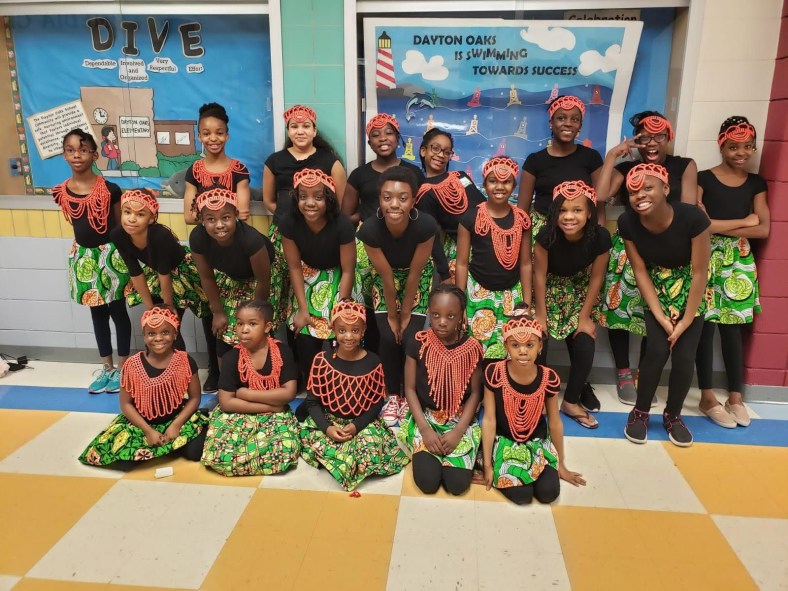
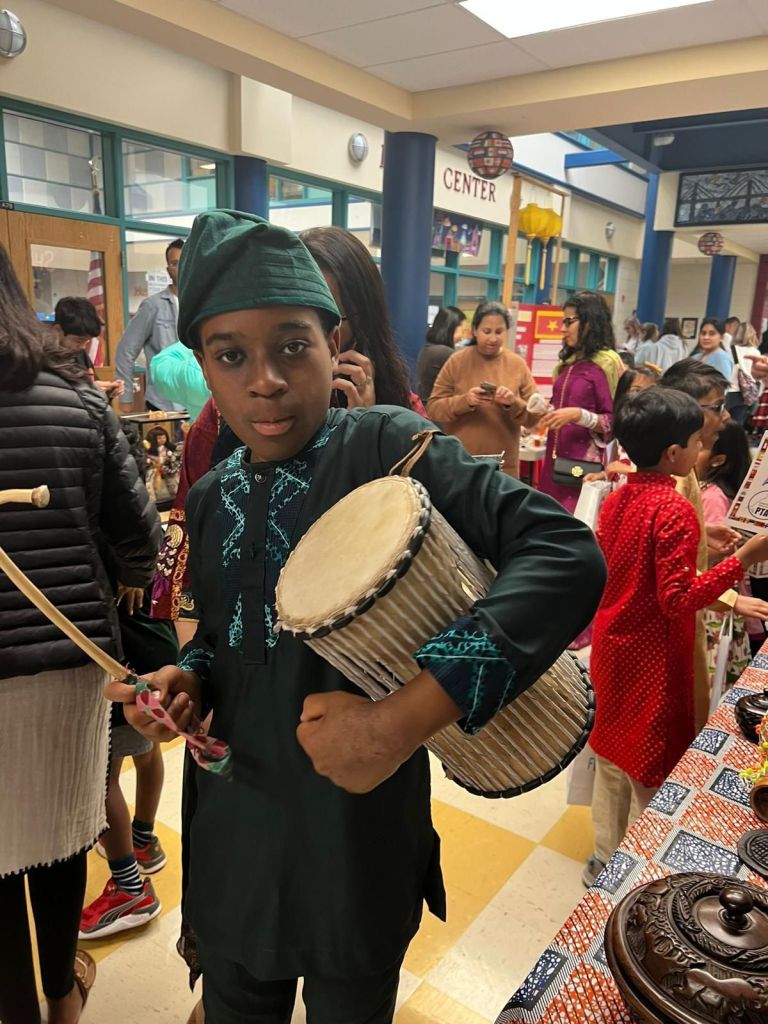
The Global Neighbors team invites you to join in a heartfelt celebration of the traditions, stories, and values that bind us together across generations at our upcoming Global Neighbors Africa: Experience the Continent event on Sunday, October 5 from 2 – 4 pm at HCLS Miller Branch! This special program invites our community to celebrate the vibrancy and diversity of Africa through storytelling, music, dance, and food. Connect with your neighbors to share in the wisdom of the past and the promise of the future.
An interactive and personal experience, Global Neighbors Africa showcases performances and demonstrations that highlight the continent’s regional richness. The event features art displays and offers additional layers of connection and inspiration. Intentionally inter-generational, this is about feeling, remembering, and being part of something bigger. It’s a reminder that the best lessons in life are often shared through the moments we create together.
Guests can enjoy the opportunity to sample regional African food (as long as supplies last) and take home a door prize (also as long as supplies last). Celebrate connection, joy, and cultural discovery. Everyone is welcome – bring your family, friends, and curiosity as we travel the continent together, right here at the library.
Piyali is an instructor and research specialist at HCLS Miller Branch, where she facilitates two book discussion groups: Light But Not Fluffy and Global Reads. She keeps the hope alive that someday she will reach the bottom of her to-read list.
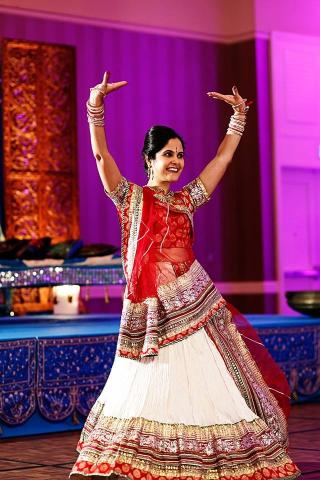
Jaya Mathur is back at HCLS Miller Branch on Thursday, May 29 from 7 to 8 pm to teach us the basic steps of Bollywood dancing. Rock On With Bollywood is a lively, beginner-friendly class for adults that invites participants to explore the colorful world of Bollywood dance. In this interactive session, Jaya introduces us to basic steps and gestures inspired by Bollywood films—India’s globally beloved movie industry known for its music, energy, and expressive storytelling. You don’t need any dance experience to join in—just a willingness to move, smile, and have fun! It’s a great way to learn something new, connect with your community, and enjoy a little bit of Bollywood magic—right at your library.
Register below to attend. Space is limited, so sign up today to reserve a spot.
Howard County Chinese SchoolIndian classical dancer Jaya Mathur
The Global Neighbors team is back with an exciting cultural journey into the various dance forms that our neighbors from around the world bring to Howard County. We invite you to celebrate the rich diversity of movement, rhythm, and storytelling on Sunday, May 4 from 2 to 4 pm in Global Neighbors: Dance Edition at Miller Branch.
Irish dancer Coco Ward from Kavanagh Porter Dance Academy
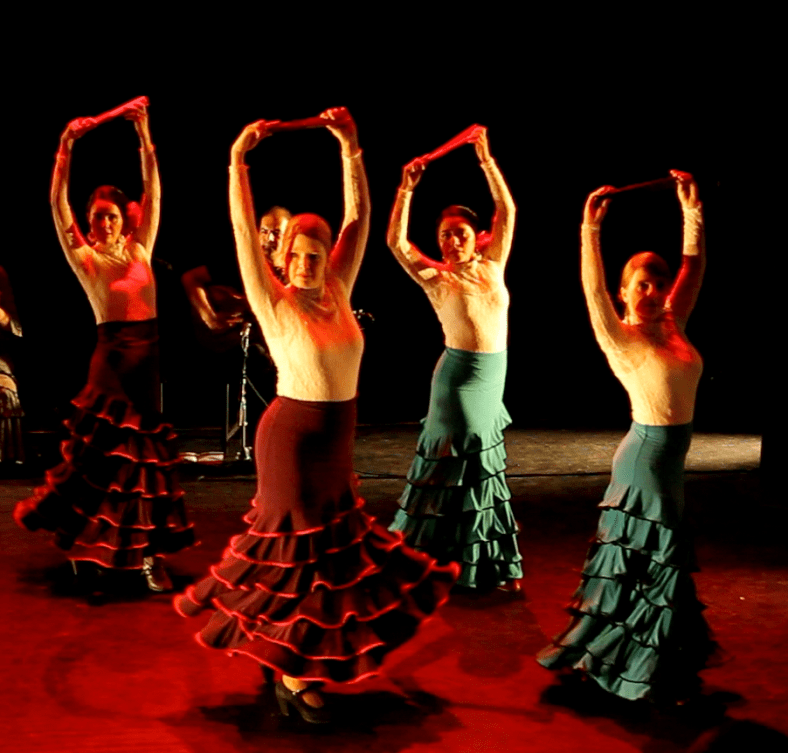
From the elegance of traditional Korean dance to the strength and fluidity of Chinese dance forms to the intricate storytelling of Indian classical dance to the rapid footwork and rhythmic precision of Irish dancing to expressive and passionate Flamenco to high-energy Hip Hop, Global Neighbors: Dance Edition hopes to showcase the artistry, emotion, and cultural significance of movement across the world.
Arte Flamenco Studio
Join us in celebrating the power of dance to unite communities and share stories beyond words! Let us learn about the richness of the cultures that surround us, connect with our neighbors, and grow in our knowledge of each other to form a more cohesive society.
B. Funk Dance Company.
Register via the link below to attend Global Neighbors: Dance Edition on Sunday, May 4 from 2 – 4 pm at Howard County Library System’s Miller Branch.
Piyali is an instructor and research specialist at HCLS Miller Branch, where she facilitates two book discussion groups: Light But Not Fluffy and Global Reads. She keeps the hope alive that someday she will reach the bottom of her to-read list.
“A vibrant and captivating look at five trailblazing women.” —Arlington Magazine
Hear the story of The Swans of Harlem directly from former dancer Sheila Rohan, a founding member of the Dance Theatre of Harlem. These ground-breaking dancers performed for the Queen of England, Mick Jagger, Stevie Wonder, at the White House, and beyond. But decades later, almost no record existed of their history. Out of a sisterhood that had grown even deeper with the years, these Swans joined forces again—to share their story with the world.
Rohan toured extensively in the United States, the Caribbean and Europe, performing as soloist in several works in the repertoire, including Geoffrey Holder’s Dougla, Arthur Mitchell’s Rhythmetron. She was soloist and Ballet Mistress with the Nanette Bearden Contemporary Dance Theatre and toured China and Korea with the Myung Sook Chun Dance Company, a modern dance troupe. She performed the role of Rosa Parks in Gordon Parks’ televised ballet Martin and, as a choreographer, assisted legends such as Louis Johnson and Walter Rutledge.
Karen Valby’s book, The Swans of Harlem: Five Black Ballerinas, Fifty Years of Sisterhood, and Their Reclamation of a Groundbreaking History, tells the captivating tale in vivid detail, steeped in the glamour and grit of professional ballet. The Swans of Harlem offers a riveting account of five extraordinarily accomplished women, a celebration of both their historic careers, and the sustaining, grounding power of female friendship, and a window into the robust history of Black ballet, hidden for too long.
The Swans of Harlem: Five Black Ballerinas, Fifty Years of Sisterhood, and Their Reclamation of a Groundbreaking History is available in print and large print formats, and as an e-book and an e-audiobook on Libby/OverDrive.
Dia stretches her arm over her head and forms a mudra with her fingers as she answers phones at a call center, Voizone, in Mumbai. Her customer is irritable and rude. However, if she can resolve the call within seventeen seconds, she has a chance at a promotion in Manali. Thus begins the story of a young woman, Dia Mittal, a passionate dancer who is financing her education by working at a call center in Mumbai and taking care of her family. Dia, however, is representative of modern Indian youth who refuses to stay contained within borders, be it geographic or societal. So instead of listening to her mother’s remonstrations about getting married, Dia dreams of a life that has a higher purpose than matrimony. Although dancing is Dia’s passion, she is realistic enough to know she will not make a name by dancing as a junior artist in Bollywood movies.
Dia wants more from life. Her desire to create her own destiny takes her far from home to the United States where she discovers the dichotomy of belonging to more than one country. After many years of living afar, Dia cannot fully belong to India or relate to her family including her widowed mother. While in United States, Dia is unable to assimilate to the culture and people, even her own people – the desis. She exists in a strange limbo. Namrata Poddar proves her expertise as a storyteller by dividing Dia’s journey in two parts – Roots and Routes. We meet young Dia in Roots. She is still vulnerable, slightly unsure of how her journey in life will unfold, but despite the uncertainty we discover her steely determination to embark on that journey. In Routes, we travel with Dia as she meets new people, finds love and a successful career that transcends borders. Through her eyes we read about the experiences and perspectives of the South Asian diaspora in United States. Through her we discover that although many Indian men and women left their country for better opportunities, they brought with them the patriarchy and prejudices that were, perhaps, a part of their lives when they emigrated.
Poddar intersperses certain chapters within her story with perspectives of narrators other than Dia without really telling us whose voice we are hearing. Each voice is unique and gives us a glimpse of a slice of life, be it on a passenger train in Mumbai or the struggles of an immigrant who came to the US in the 1960s and built a successful life from scratch. As I read those chapters, I felt a little lost but Poddar guides her readers back to Dia’s life, and it all makes sense at the end. Dia Mittal’s life is by no means smooth or untroubled, however, through it all, her fierce determination to fight boundaries remains constant and just when we think she is going to lose her love and her family, she manages to steer her life back into the path that she has created without losing herself. Not once does she give in to the established patriarchy that threatens to engulf her.
Although Dia Mittal’s journey is the common thread in this lyrical, superbly told story, many layers interweave to explore themes of belonging, otherness, assimilation, gender, identity, expectation, and as the book jacket says, “a negotiation of power struggles, mediated by race, class, caste, gender, religion, place or migration.” The title Border Less itself, I am sure, will evoke many thoughts among those who like to read and discuss books. I hope book clubs choose this title not only to enjoy Namrata Poddar’s beautiful storytelling but also, perhaps, to understand what it means to cross borders to forge a new path, both physically and metaphorically.
Piyali is an instructor and research specialist at the Miller Branch of HCLS, where she co-facilitates both Global Reads and Strictly Historical Fiction and keeps the hope alive that someday she will reach the bottom of her to-read list.
Dance is an ancient and celebrated cultural tradition in India and its origins go back into the ancient times. There are eight schools of classical Indian dance, each of which can be traced to different parts of the country. Register to join us on Wednesday, June 16 at 7 pm to learn more about these dance forms from Jaya Mathur.
During an enlightening and entertaining evening of virtual Indian Classical Dance class, Jaya Mathur, of ‘Rock on with Bollywood’ fame, will share an overview of the history of two famous dance forms from India – Kathak and Bharatnatyam, as well as her personal journey of continuing these traditional dance forms as a first-generation American. She will demonstrate some mudras: the portrayal of mood through facial expression and hand gestures, and the audience will have the opportunity to experience dance performances through videos.
According to kathadance.org, the Kathak form of Indian classical dance originated in Hindu temples in the northern part of India to aid in worshipful storytelling, portraying the epic tales of Ramayana and Mahabharata (the two grand Indian epics). However, this particular dance form was not confined within the walls of temples for long. Nomadic Kathak dancers and storytellers took this dance and traveled throughout the nation with added emotions and theatricality, and it soon transitioned to a means of storytelling and entertainment. Over time, Kathak became an integral part of court culture under the patronage of Mughal kings and, as a result, this dance form imbued within itself influences of both Hindu and Islamic traditions.
Bharatnatyam, according to nrutyashala.com, was performed in the temples of southern India by devadasis, or dancers dedicated to God. The devadasis were women who were trained in this dance form since childhood, and they dedicated their lives to performing in front of idols in temples. They were educated in Sanskrit and were trained to perform as well as choreograph Bharatnatyam, accompanied by singers and musicians. Over the years, Bharatnatyam also underwent changes as devadasis lost their status in society and rajnartakis (or court dancers), under the patronage of Hindu kings in southern kingdoms in India, continued this form of dance in courts to entertain kings and royalty.
Bharatnatyam and Kathak remain two very popular forms of Indian classical dancing to this day in India and are practiced by Indians all over the world. Jaya has performed at many different venues, including the Kennedy Center for the Performing Arts and Wolf Trap National Park for the Performing Arts. Locally, she has choreographed with the Kinetics Dance Theater.
Piyali is an instructor and research specialist at the Miller Branch of HCLS, where she co-facilitates both Global Reads and Strictly Historical Fiction.




 CHAPTER CHATS