
Deaf History Month

Graphics of four hands against brightly colored segments, showing the ASL letters: D, E, A, F. With text Deaf History Month, March 13 - April 15, 2005.

by Brandon B.

During March, we celebrate Deaf History Month as an opportunity to highlight the extraordinary achievements of the hearing impaired and deaf community. The first public school for the Deaf opened on April 15, 1817. Since 1997, the National Association of the Deaf has promoted National Deaf History Month, in partnership with the American Library Association.

You can browse our diverse collection on American Sign Language and other resources by visiting hclibrary.org. You can also find accessibility resources, request an interpreter for in person classes, or browse the Maryland Deaf Culture Digital Library at bit.ly/hcls-accessibility.

Throughout history, people have refused to allow their hearing disability to keep them from achieving excellence, furthering the cause for all Deaf people. Helen Keller was an advocate for the disabled and the women’s suffrage movement. Keller’s autobiography, The Story of My Life, chronicles her profound experiences, as well as her activism as a member of the socialist party of America and founding member of the American Civil Liberties Union.

Another great person to celebrate is Oscar Award-winning actress Halle Berry. In 2001, Berry won the Oscar for best actress in a supporting role in the film Monster’s Ball. She lost eighty percent of her hearing due to a traumatic incident but continues to have success in her field.

Former President of the United States William Jefferson Clinton often encourages people to pursue medical treatment for hearing loss. He is speaking from experience. According to experts, Bill Clinton lost his hearing because of many years of listening to loud music.

Regardless of your race, gender or background, the library values everyone. You can visit any of the HCLS branches, where you will find staff members who will be eager to assist you.

Brandon is a Customer Service Specialist at HCLS Central Branch who loves reading, football, and taking nice long walks around his neighborhood.

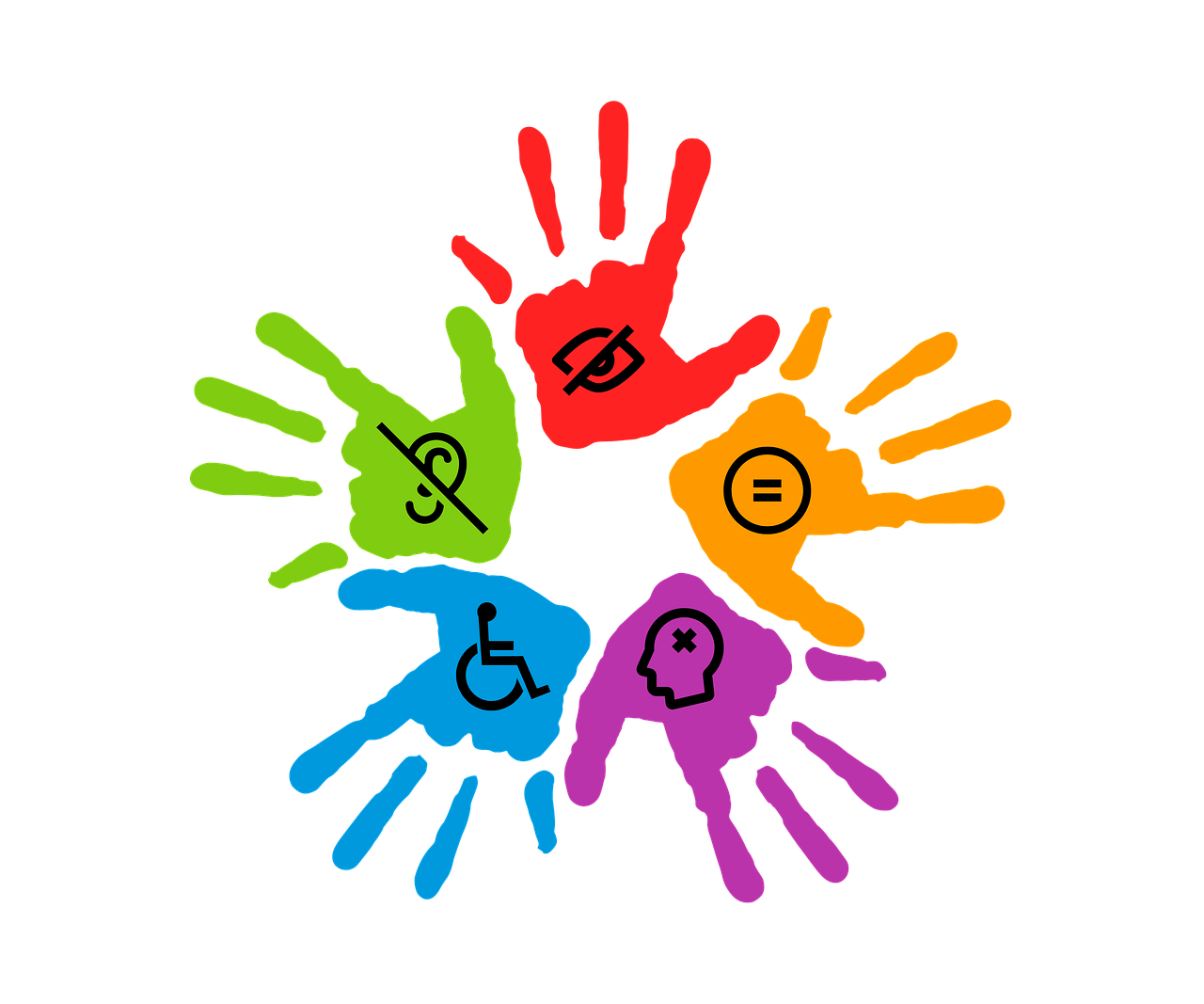
July is Disability Pride Month

Five handprints in a circle, each with an icon depicting a disability: blind, deaf, mobility, and mental. The final hand has an equal sign.

by Sahana C.

In 1990, the American Disabilities Act was signed into law, and since then, we’ve celebrated Disability Pride Month in July. The American Bar Association calls Disability Pride Month a way to ensure that we are “accepting and honoring each person’s uniqueness and seeing it as a natural and beautiful part of human diversity.”

Disability Pride Month is even more than that — it is a time to reject shame and internalized ableism, to uplift members of the community, and to provide another chance for allies to take stock of what types of work can be done to make spaces truly more accessible. It’s also a time to consider how race, class, and gender impact people with disabilities, and what intersectional approaches can be taken to meet those needs.

At HCLS, we take seriously our mission of public education for all — we want to do this inclusion work, both inviting everyone into our physical spaces, and simultaneously making those spaces as easy and accessible as possible. We’re constantly working to improve, and, in part, it happens because of suggestions from our community. In case you haven’t seen already, we’re including a request for ASL interpreters upon registration for our classes, which is a new part of the process. Launched in May, the streamlined process makes it so our Deaf and Hard of Hearing community members don’t have to work harder — it is built in.

Whenever classes and library activities are planned, we take accessibility into account. We try to make this community space open to everyone, from how we arrange the room during classes to how we distribute library materials. We have sensory friendly visit bags, which contain noise canceling headphones, a liquid timer, and fidget toys, and can be borrowed for the duration of a visit to the library.

We have an American Sign Language collection at Central Branch, with DVDs of movies in sign, DVDs teaching sign, as well as materials on Deaf history and culture. We have a Pajama Time class at Savage Branch that has ASL instruction. Our collection, which is ever-growing, includes fiction and nonfiction stories about a whole range of identities, experiences, and abilities, so community members can see themselves reflected in the stories they consume.

We collaborate with our partners throughout the state, like the Howard County Autism Society, the Maryland Deaf Culture Digital Library, and the Maryland State Library for the Blind and Print Disabled, to name a few. And we’re constantly working to improve, because inclusion work cannot be stagnant. The library is a community center, and if there’s anything you’d like to see, any suggestions on how the library can better serve you this Disability Pride Month and always, please let us know.

Sahana is an Instructor and Research Specialist at the Savage Branch. They enjoy adding books to their “want to read” list despite having a mountain of books waiting for them already