

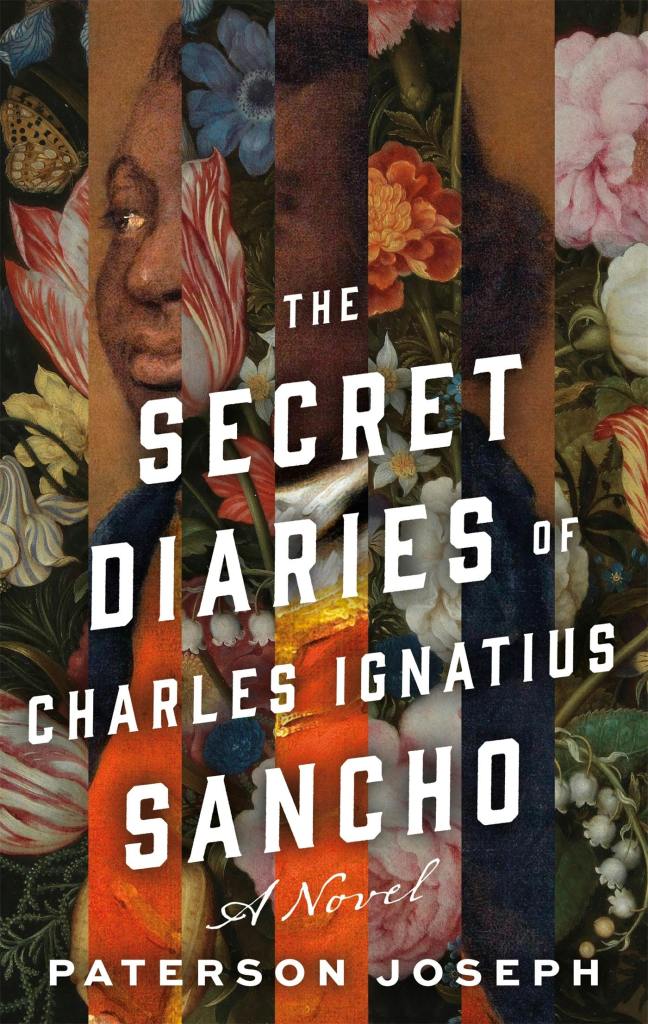
Paterson Joseph & The Secret Diaries of Charles Ignatius Sancho
Tue, Apr 15 | 7 – 8:30 pm
HCLS Miller Branch
For adults. Register at bit.ly/Paterson-Joseph
“[T]he rollicking fictionalized memoirs of a real-life Black British trailblazer … An entertaining portrait that also illuminates rare opportunities for Black people in 18th-century London.” ~ Kirkus Review
The Secret Diaries of Ignatius Sancho is Paterson Joseph’s debut novel and is a story that begins on a slave ship in the Atlantic and ends at the very center of London life. It is a lush and immersive tale of adventure, artistry, romance, and freedom set in 18th-century England and based on the true story of the first Black person to vote in Britain, who fought to end slavery. Joseph channels the writing style of the day and draws on the real-life Sancho’s diaries to give voice to his hero’s interior life.
Joseph is a beloved British actor and writer. Recently seen on Vigil, Noughts + Crosses, and Boat Story, he has also starred in The Leftovers and Law & Order UK. He also plays Arthur Slugworth in the Wonka movie. He has won the Royal Society of Literature’s Christopher Bland prize and the Historical Writers’ Association Debut Historical Crown 2023 award. Books available for purchase and signing.
More About the Era of Charles Ignatius Sancho
by Ian L-F
Often celebrated as the Age of Enlightenment, the 18th century is regarded as an era of immense scientific progress, with philosophy and reason expanding the boundaries of thought that, at times, challenged authority. However, the radiant optimism of this period must be understood alongside its darker tendencies, where ideals of liberty coexisted with systemic exploitation. England’s economic rise, framed as a triumph of innovation and industry, was fueled by the profits of slavery and European imperialism.
Following the War of Spanish Succession, Britain was granted by treaty the asiento de negros, a monopoly on the sale of enslaved people to Spain’s colonies, solidifying its position as the largest slave-trading nation by 1730. Despite slavery being nominally outlawed in England since the 12th century, Britain, like other European powers, externalized its reliance on slavery to their colonies. This policy enabled them to condemn the trade morally while still reaping its profits, in every cup of sugared coffee and nutmeg-spiced delicacy.
Amidst this sea of madness, Charles Ignatius Sancho emerged as a beacon of erudition and resilience. Born on a slave ship and sold into bondage in New Granada, Sancho overcame incredible odds to achieve freedom and defy the prejudices of his time. A self-educated man of letters, a composer, and a businessman, he became a celebrated voice in Britain’s abolition movement. Yet, opposition to slavery in Britain remained scarce until the late 18th century, and as W.E.B. DuBois later observed, abolitionist efforts often aligned with economic interests: “The moral force they represented would have met greater resistance had it not been working along lines favorable to English investment and colonial profit.”
The 18th-century era contended with forces not too dissimilar from our own. In echoes of history’s tribulations and the lives of remarkable individuals, we find lessons that challenge us to confront injustice, question power, and strive for a more equitable world. If your interest in history has been piqued, our online research tools, like Gale OneFile’s World History database, are a fantastic starting point for an educational journey.
Ian is an Instructor and Research Specialist at HCLS East Columbia Branch. He is a huge nerd with too many interests to list here. Currently, he is fixated on the interconnection between history and fiction. His favorite kind of stories are stories about stories.



 CHAPTER CHATS